
Administrative Rulemaking Introduction to Regulatory Governance Board Member
Administrative Rulemaking Introduction to Regulatory Governance Board Member Training Program

Session Introduction
Upon completion of the session, you will be able to: Learning Objectives Define the steps of rulemaking Apply the best practices identified in this module in your own administrative rulemaking Discuss the board’s role in oversight and decision making
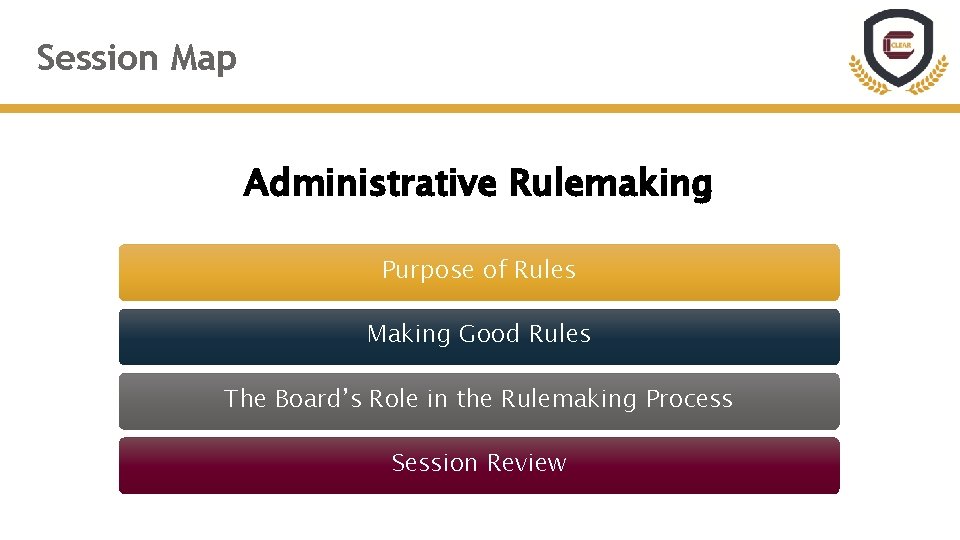
Session Map Administrative Rulemaking Purpose of Rules Making Good Rules The Board’s Role in the Rulemaking Process Session Review

Purpose of Rules
What is a Rule? Prescribes, implements, or interprets Defines procedures and practices Statement of general application
What does a Rule do? Establishes requirements Sets standards Establishes rates or fees Provides procedures Implements the law Guidance for compliance Describes requirements for organization structure
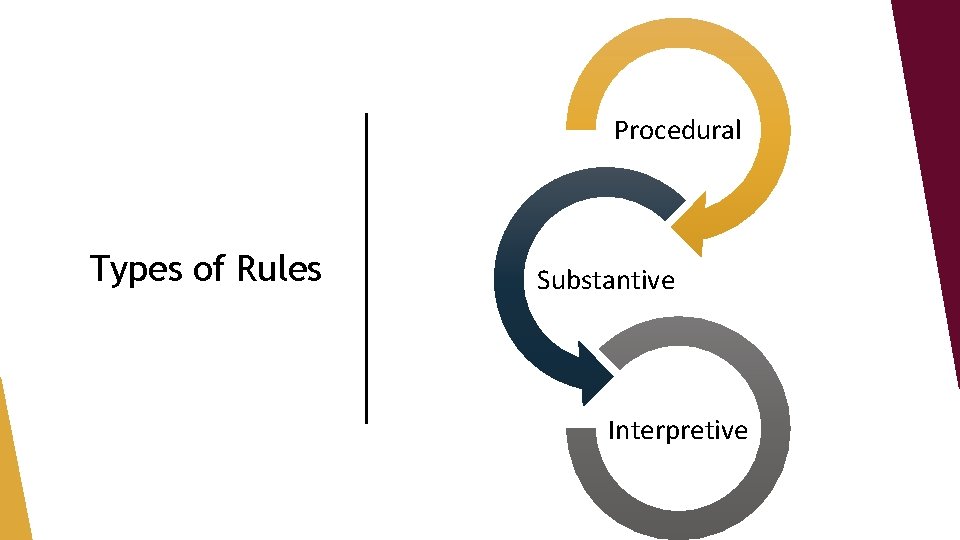
Procedural Types of Rules Substantive Interpretive
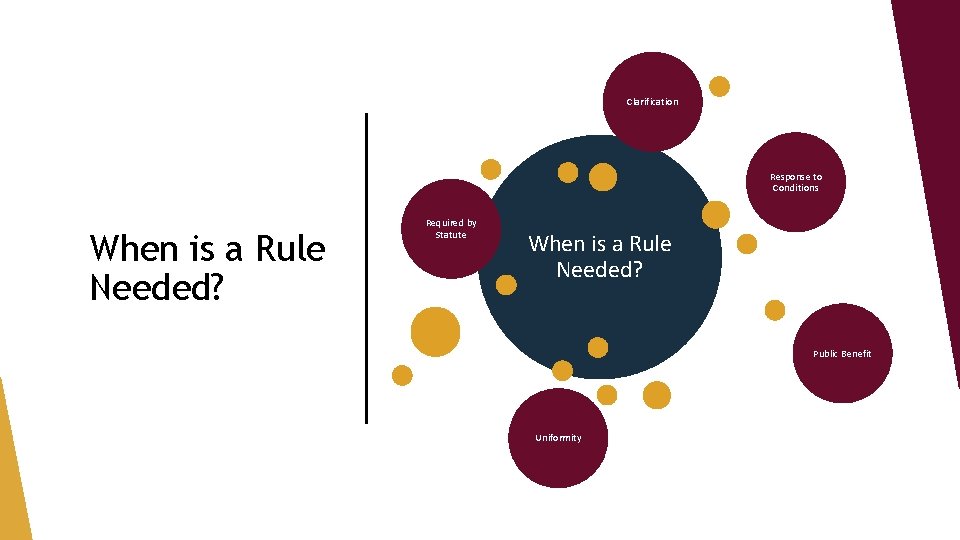
Clarification Response to Conditions When is a Rule Needed? Required by Statute When is a Rule Needed? Public Benefit Uniformity

Making Good Rules
Writing Good Rules Identify need Review enabling legislation Consider § Public interest § Who is affected § Costs and benefits § Consultations § Options to accomplish goal § Defensible and/or enforceable Drafting Manual
Drafting Considerations Understandable Multiple interpretations Clear standards Clear definitions No vague language Enforcement
Avoid Problem Areas Repeat or change statute Improperly delegate or reference Use unclear standards Use ambiguous language Unnecessarily burden
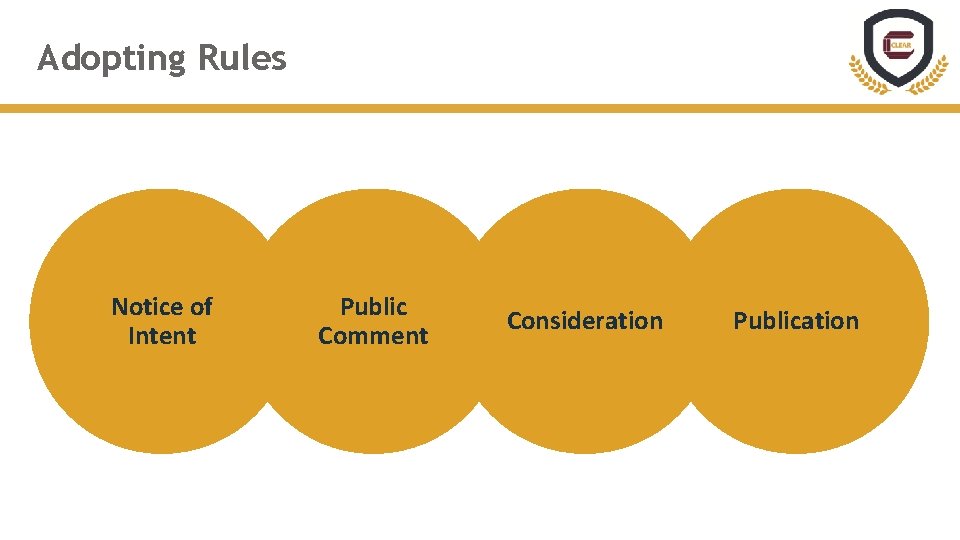
Adopting Rules Notice of Intent Public Comment Consideration Publication
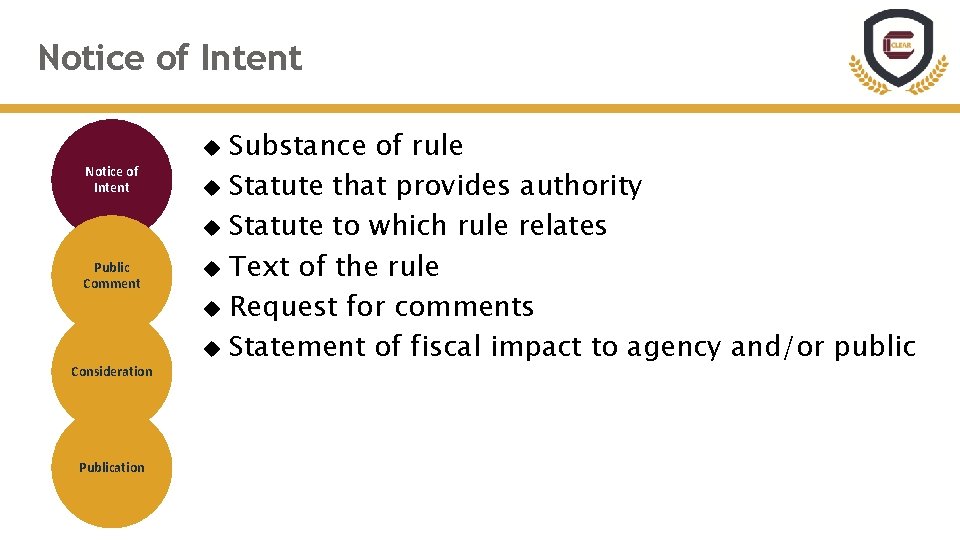
Notice of Intent Substance of rule Statute that provides authority Statute to which rule relates Text of the rule Request for comments Statement of fiscal impact to agency and/or public Notice of Intent Public Comment Consideration Publication
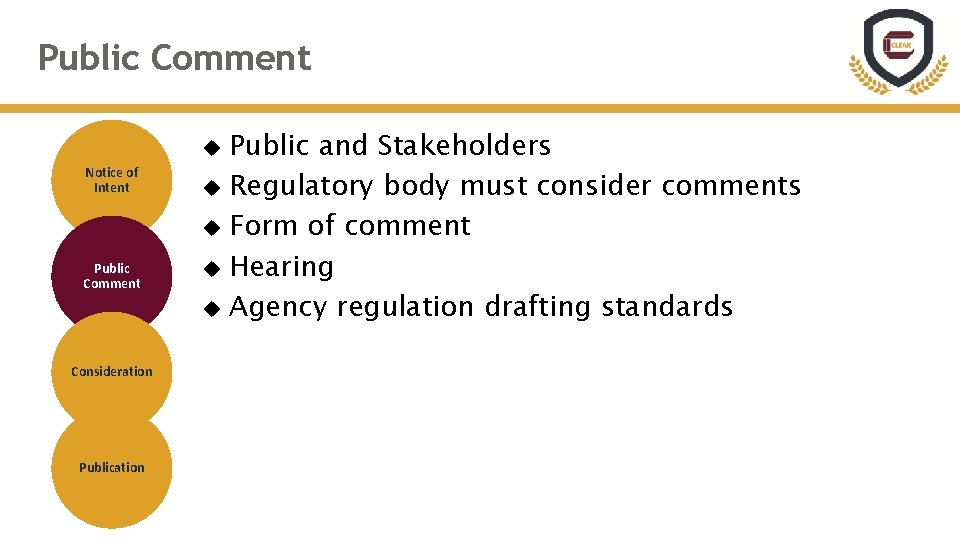
Public Comment Public and Stakeholders Regulatory body must consider comments Form of comment Hearing Agency regulation drafting standards Notice of Intent Public Comment Consideration Publication
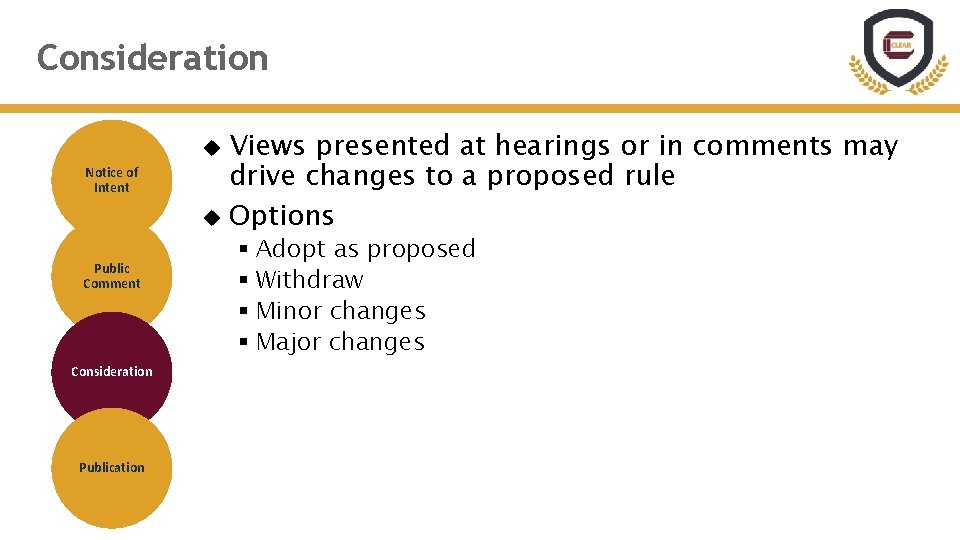
Consideration Views presented at hearings or in comments may drive changes to a proposed rule Options Notice of Intent Public Comment Consideration Publication § Adopt as proposed § Withdraw § Minor changes § Major changes
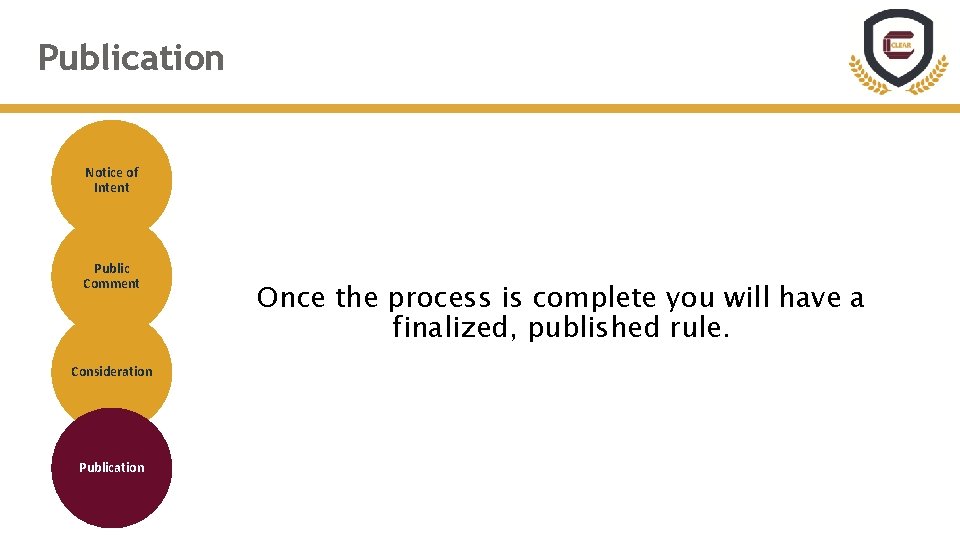
Publication Notice of Intent Public Comment Consideration Publication Once the process is complete you will have a finalized, published rule.
Emergency Rulemaking Special circumstances Doesn’t require standard process Must adhere to emergency standards Generally limited in scope to respond to specific situation
Sunset Provisions May impact rulemaking authority Must be familiar with provisions Plan rulemaking accordingly
The Board’s Role in the Rulemaking Process
Authority No inherent power Statutory authority Requirements § Consistent with statute and policy § Respects rights § Not arbitrary or capricious § Rulemaking procedures
Oversight and Decision-Making Identify or confirm the need Provide resources for a sound process Approve rule in principle Consider input Focus on purpose Decide

Session Review
Clear Session Review and simply stated rules Comply with notice requirements Make sure all interested parties have opportunity to obtain a copy of the rule
Provide Session Review adequate notice of hearing Keep a record of the comments or testimony and official responses Remember: Board members are responsible for ensuring that rules are fair and in the public interest
You Learning Objectives Review should now be able to: § Define the steps of rulemaking § Apply the best practices identified in this module in your own administrative rulemaking § Discuss the board’s role in oversight and decision making

Practical Exercise

Questions ?
- Slides: 29