
Administrative DWI Driver License Sanctions Drivers License DWI
- Slides: 29
Administrative DWI Driver License Sanctions
Driver’s License DWI Administrative Sanction Initiative � Comprehensive review of DWI administrative license sanctions � Project Goal – Recommend effective sanctions that: › Reduce alcohol-related fatalities › Increase legal driving � Two year project that included nearly 70 multidisciplinary members � Encourage use of effective technology › Ignition Interlock
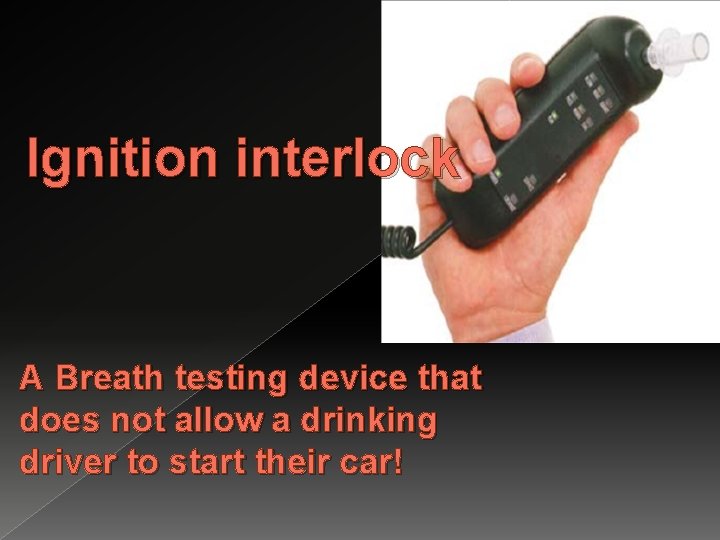
Ignition interlock A Breath testing device that does not allow a drinking driver to start their car!
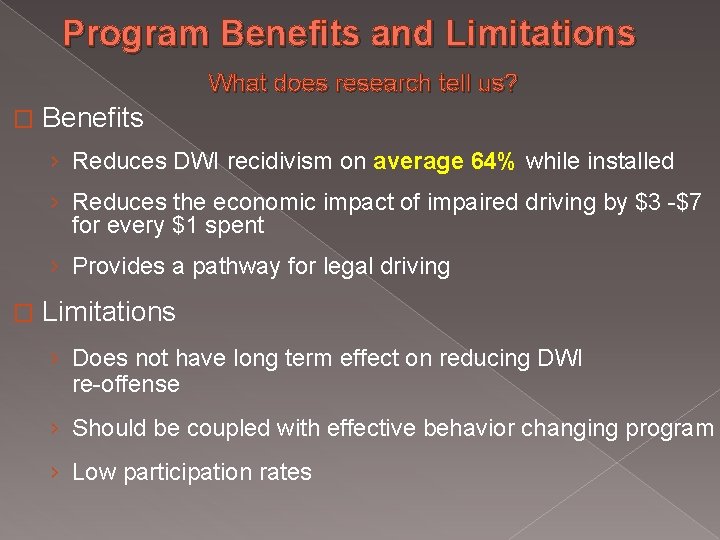
Program Benefits and Limitations What does research tell us? � Benefits › Reduces DWI recidivism on average 64% while installed › Reduces the economic impact of impaired driving by $3 -$7 for every $1 spent › Provides a pathway for legal driving � Limitations › Does not have long term effect on reducing DWI re-offense › Should be coupled with effective behavior changing program › Low participation rates
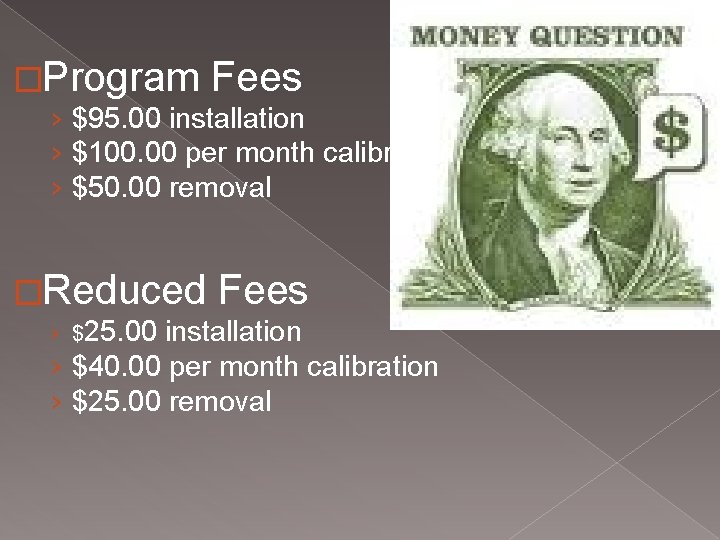
�Program Fees › $95. 00 installation › $100. 00 per month calibration › $50. 00 removal �Reduced › $25. 00 Fees installation › $40. 00 per month calibration › $25. 00 removal
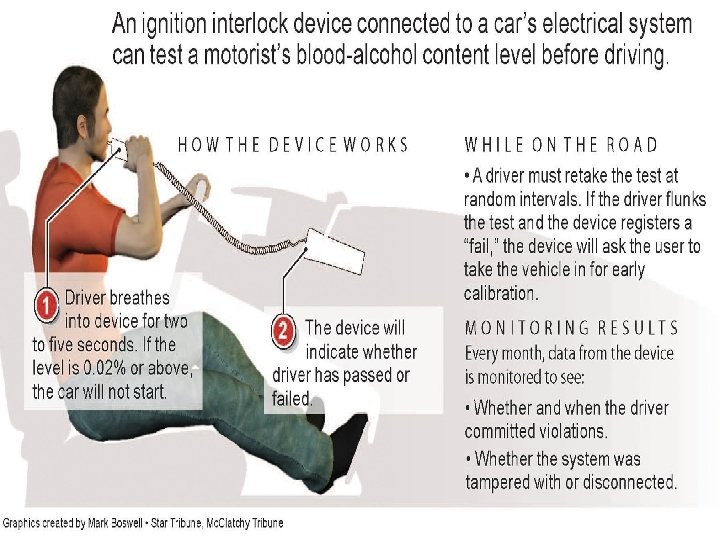
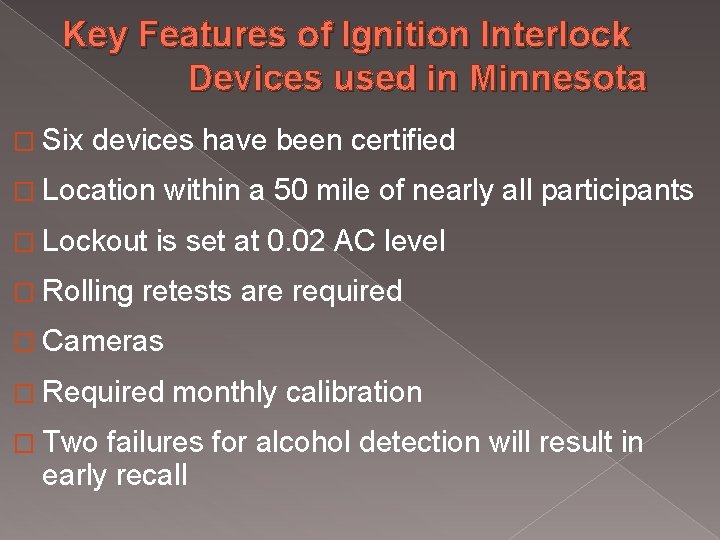
Key Features of Ignition Interlock Devices used in Minnesota � Six devices have been certified � Location � Lockout � Rolling within a 50 mile of nearly all participants is set at 0. 02 AC level retests are required � Cameras � Required � Two monthly calibration failures for alcohol detection will result in early recall
Administrative DWI Driver License Sanctions Law Change Effective July 1, 2011
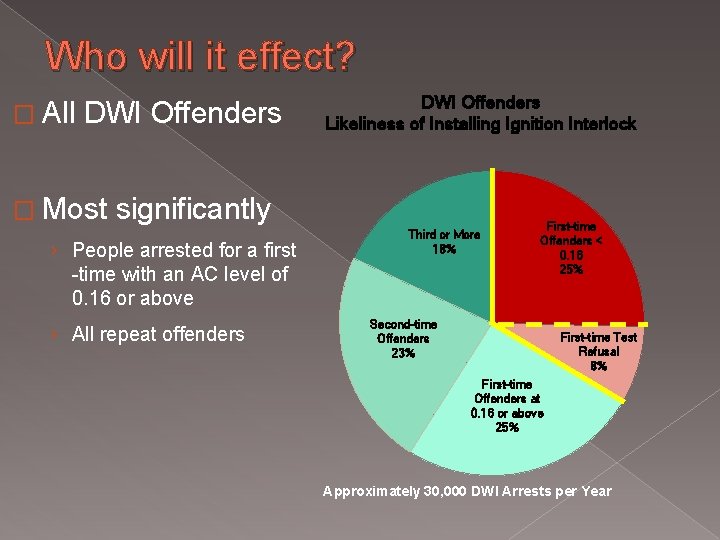
Who will it effect? � All DWI Offenders � Most DWI Offenders Likeliness of Installing Ignition Interlock significantly › People arrested for a first -time with an AC level of 0. 16 or above › All repeat offenders Third or More 18% First-time Offenders < 0. 16 25% Second-time Offenders 23% First-time Test Refusal 8% First-time Offenders at 0. 16 or above 25% Approximately 30, 000 DWI Arrests per Year
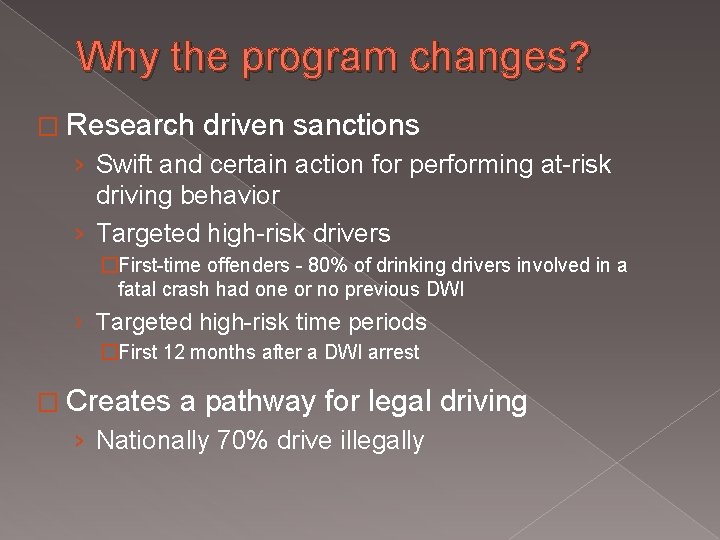
Why the program changes? � Research driven sanctions › Swift and certain action for performing at-risk driving behavior › Targeted high-risk drivers �First-time offenders - 80% of drinking drivers involved in a fatal crash had one or no previous DWI › Targeted high-risk time periods �First 12 months after a DWI arrest � Creates a pathway for legal driving › Nationally 70% drive illegally
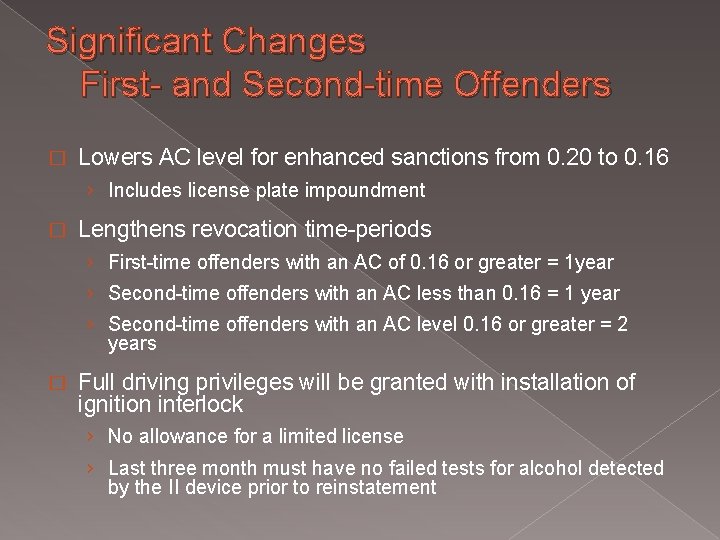
Significant Changes First- and Second-time Offenders � Lowers AC level for enhanced sanctions from 0. 20 to 0. 16 › Includes license plate impoundment � Lengthens revocation time-periods › First-time offenders with an AC of 0. 16 or greater = 1 year › Second-time offenders with an AC less than 0. 16 = 1 year › Second-time offenders with an AC level 0. 16 or greater = 2 years � Full driving privileges will be granted with installation of ignition interlock › No allowance for a limited license › Last three month must have no failed tests for alcohol detected by the II device prior to reinstatement
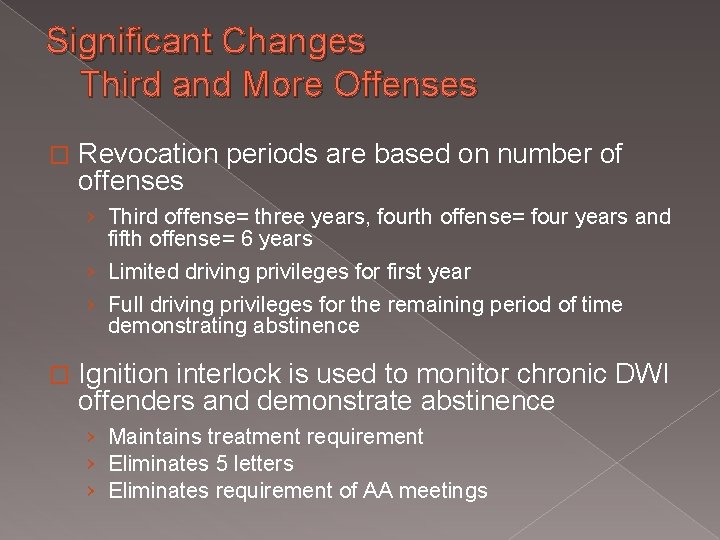
Significant Changes Third and More Offenses � Revocation periods are based on number of offenses › Third offense= three years, fourth offense= four years and fifth offense= 6 years › Limited driving privileges for first year › Full driving privileges for the remaining period of time demonstrating abstinence � Ignition interlock is used to monitor chronic DWI offenders and demonstrate abstinence › Maintains treatment requirement › Eliminates 5 letters › Eliminates requirement of AA meetings
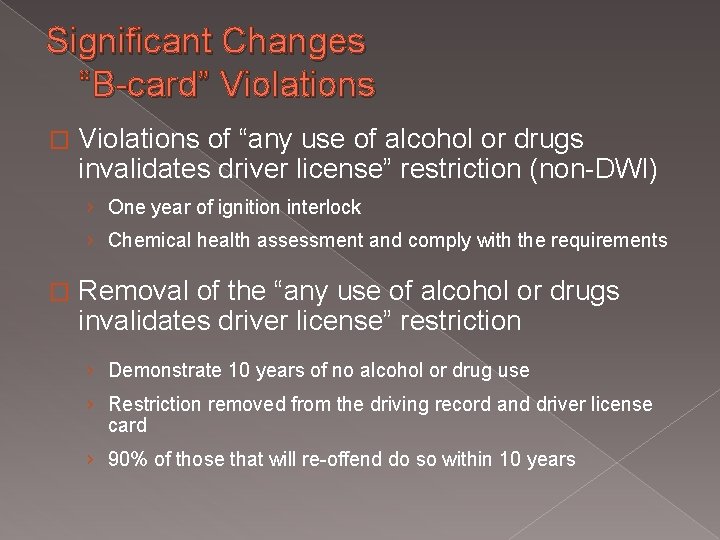
Significant Changes “B-card” Violations � Violations of “any use of alcohol or drugs invalidates driver license” restriction (non-DWI) › One year of ignition interlock › Chemical health assessment and comply with the requirements � Removal of the “any use of alcohol or drugs invalidates driver license” restriction › Demonstrate 10 years of no alcohol or drug use › Restriction removed from the driving record and driver license card › 90% of those that will re-offend do so within 10 years
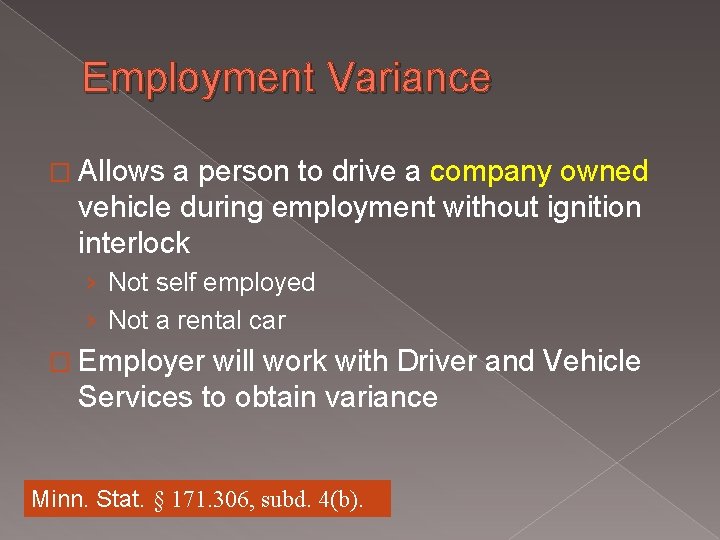
Employment Variance � Allows a person to drive a company owned vehicle during employment without ignition interlock › Not self employed › Not a rental car � Employer will work with Driver and Vehicle Services to obtain variance Minn. Stat. § 171. 306, subd. 4(b).
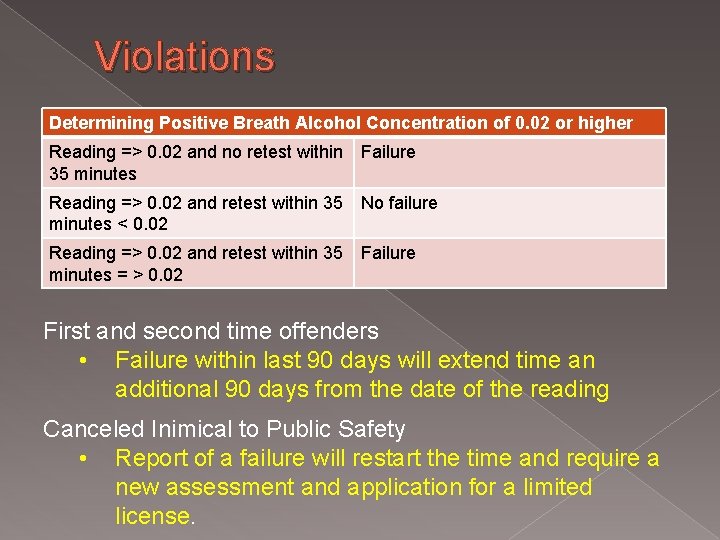
Violations Determining Positive Breath Alcohol Concentration of 0. 02 or higher Reading => 0. 02 and no retest within Failure 35 minutes Reading => 0. 02 and retest within 35 No failure minutes < 0. 02 Reading => 0. 02 and retest within 35 Failure minutes = > 0. 02 First and second time offenders • Failure within last 90 days will extend time an additional 90 days from the date of the reading Canceled Inimical to Public Safety • Report of a failure will restart the time and require a new assessment and application for a limited license.
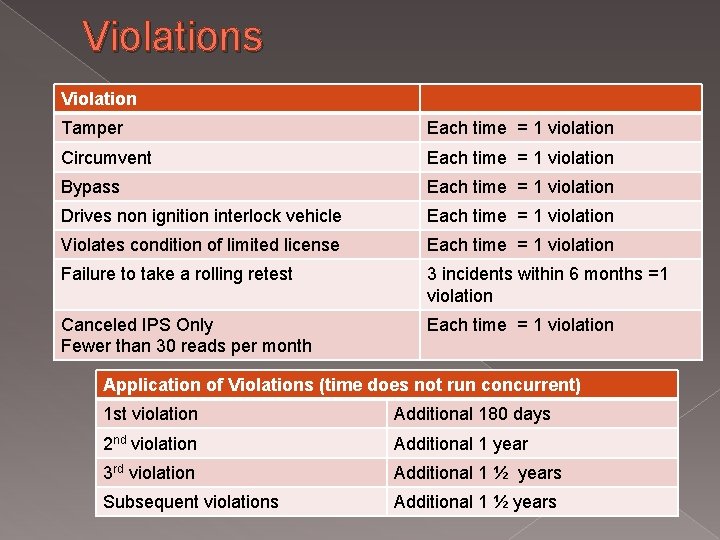
Violations Violation Tamper Each time = 1 violation Circumvent Each time = 1 violation Bypass Each time = 1 violation Drives non ignition interlock vehicle Each time = 1 violation Violates condition of limited license Each time = 1 violation Failure to take a rolling retest 3 incidents within 6 months =1 violation Canceled IPS Only Fewer than 30 reads per month Each time = 1 violation Application of Violations (time does not run concurrent) 1 st violation Additional 180 days 2 nd violation Additional 1 year 3 rd violation Additional 1 ½ years Subsequent violations Additional 1 ½ years
Sentencing Statute provides an exception to mandatory minimum penalties provided in 169 A. 275 if judge requires a person as a condition of probation to only drive a vehicle with an ignition interlock installed Minn. Stat. § 169 A. 275, subd. 7.
Sentencing The probationary time period for required use of ignition interlock may not be consistent with the drivers license sanctions time period
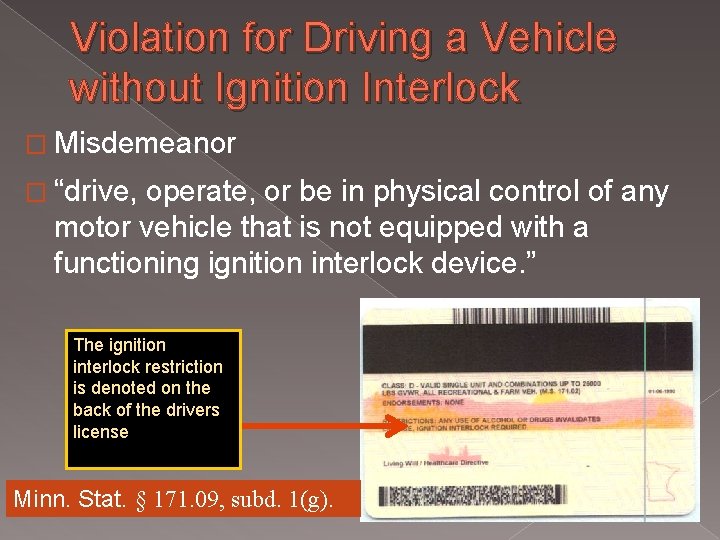
Violation for Driving a Vehicle without Ignition Interlock � Misdemeanor � “drive, operate, or be in physical control of any motor vehicle that is not equipped with a functioning ignition interlock device. ” The ignition interlock restriction is denoted on the back of the drivers license Minn. Stat. § 171. 09, subd. 1(g).
Violation of Tampering, Circumventing, or Bypassing � Misdemeanor � “who tampers with, circumvents, or bypasses the ignition interlock device, or assists another to tamper with, circumvent, or bypass the device” � Exceptions: emergency purposes and mechanical repair Minn. Stat. § 171. 306, subd. 6(b).
Violation of Lend, Rent, or Lease � Misdemeanor � “lends, rents, or leases a motor vehicle that is not equipped with a functioning ignition interlock device certified by the Commissioner to a person with a license issued under this section knowing that the person is subject to the ignition interlock restriction. ” Minn. Stat. § 171. 306, subd. 6(a).
Venue The county in which the vehicle involved in the offense is found; � The county in which the accused resides; � Any county through which the vehicle traveled in the course of the trip during or after which the offense was committed; or � The county in which the impaired driving incident occurred, which resulted in the accused being issued a driver’s license with an ignition interlock restriction. � Minn. Stat. § 171. 306, subd. 7.
Partnership with Courts System needs to encourage installation of ignition interlock and reinstatement of driving privileges
Transition Period � Participants that enroll in the ignition interlock program prior to July 1 › Comply with law and program guidelines in place prior to July 1 � Offenders that opt into the program after July 1 › Comply with new program requirements Once a person opts into the program they must complete the program
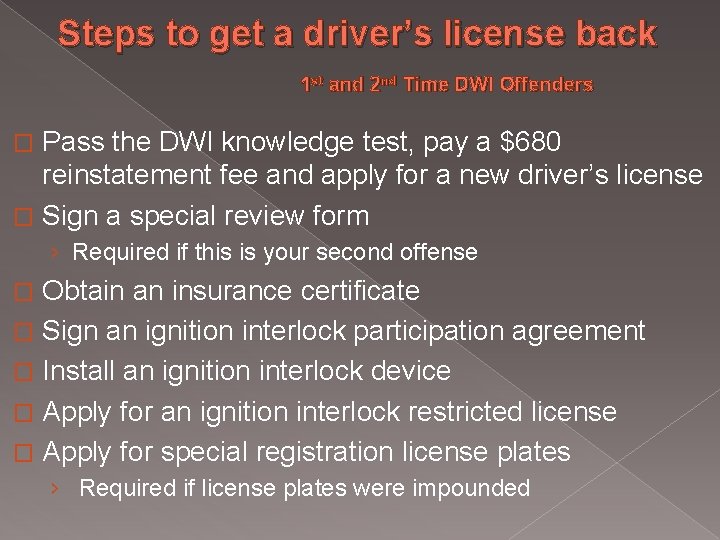
Steps to get a driver’s license back 1 st and 2 nd Time DWI Offenders Pass the DWI knowledge test, pay a $680 reinstatement fee and apply for a new driver’s license � Sign a special review form � › Required if this is your second offense Obtain an insurance certificate � Sign an ignition interlock participation agreement � Install an ignition interlock device � Apply for an ignition interlock restricted license � Apply for special registration license plates � › Required if license plates were impounded
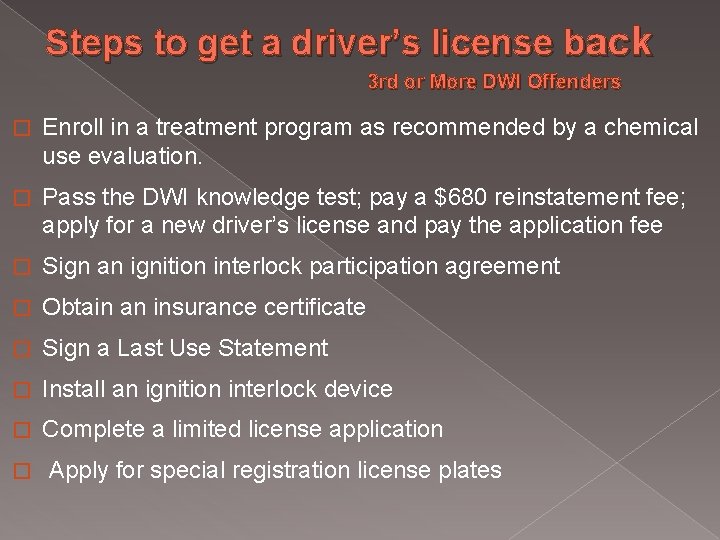
Steps to get a driver’s license back 3 rd or More DWI Offenders � Enroll in a treatment program as recommended by a chemical use evaluation. � Pass the DWI knowledge test; pay a $680 reinstatement fee; apply for a new driver’s license and pay the application fee � Sign an ignition interlock participation agreement � Obtain an insurance certificate � Sign a Last Use Statement � Install an ignition interlock device � Complete a limited license application � Apply for special registration license plates
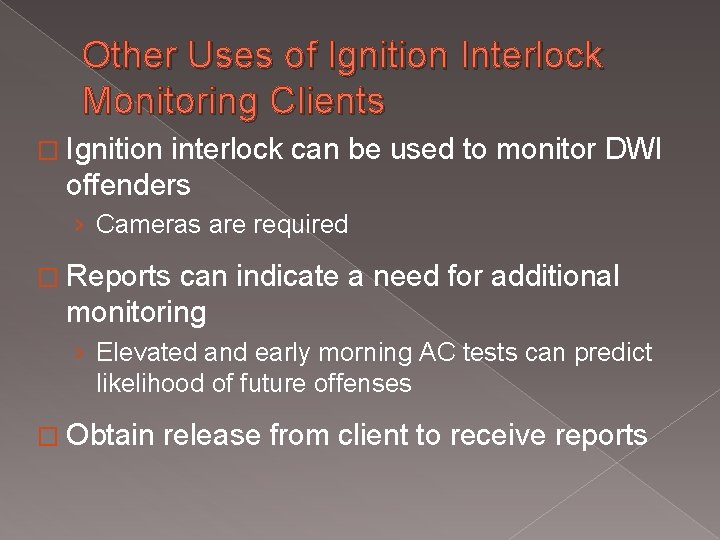
Other Uses of Ignition Interlock Monitoring Clients � Ignition interlock can be used to monitor DWI offenders › Cameras are required � Reports can indicate a need for additional monitoring › Elevated and early morning AC tests can predict likelihood of future offenses � Obtain release from client to receive reports
Not a Silver Bullet…. A change that will help us with our goal of toward zero deaths
Contact information Driver and Vehicle Services 651 -296 -2948 dvs. ii@state. mn. us