
Administration of subcutaneous fluids DR KELLY CRUICKSHANK SPECIALTY

Administration of subcutaneous fluids DR KELLY CRUICKSHANK, SPECIALTY DOCTOR IN PSYCHIATRY SALFORD MENTAL HEALTH LIAISON TEAM

Overview § § § Indications for subcutaneous fluids Contraindications Suitable sites for infusion Suitable fluids Patient Monitoring Signs of Pulmonary Oedema Complications/Side Effects Calculation of infusion rate Equipment Needed Guidelines for setting up an infusion Guidelines for removal of infusion
Indications for administration of subcutaneous fluids Dehydration can be a common problem in older people, both at home and in long term care settings. Acute problems and conditions such as mild infections, vomiting and diarrhoea and temporary confusion could all precipitate dehydration because an adequate fluid intake cannot be maintained. Subcutaneous hydration is not adequate to correct severe dehydration or electrolyte imbalance. If rehydration is considered essential, alternative methods should be considered. Relatively small amounts of fluid are administered using this method, e. g. one litre of fluid in a 24 hour period and these can be infused continuously overnight. In palliative care, indications for the need for parenteral hydration should be symptom led and following discussion with the palliative care team. Dehydration can increase the risk of pressure ulcer formation. Research suggests that artificial hydration should only be used if the patient is in some way distressed and lack of fluid and other measures cannot correct symptoms, for example, drug alteration, hypercalcaemia correction and effective oral hygiene. The primary goal of any treatment in terminal care should be the comfort of the patient and the ethical basis of most clinical decision making is the assessment of the benefit.

Contraindications Subcutaneous infusions should be used with extreme caution where there is history of cardiac/renal failure or in bleeding disorders in patients who have existing fluid overload and must be subjected to increase diagnostic monitoring. Subcutaneous fluids should not be used to treat the following conditions: § § § § § Shock; Severe dehydration; Cardiac failure; Pre-renal or renal failure; Low platelet or coagulation disorders; Existing fluid overload; Marked/pitting oedema; The patient requests not to have an invasive procedure; The sum of the burden of parenteral hydration outweighs the likely benefits; The patient is moribund for reasons other than dehydration.
Further contraindications The subcutaneous route is not suitable if any of the following apply: § § § § § Skin which has been irradiated; Where there is evidence of existing rash; Peripheral limbs, e. g. below knee or elbow; Bony prominences; Lack of sub cut tissue; Lateral aspect of upper arm or thigh; Mastectomy sites; Oedematous tissue; Close to stoma or PEG site.

Suitable Sites for Infusion Abdomen; Chest (avoiding soft breast tissue); Lateral aspect of upper arm or thigh; Back, usually below shoulder blades (may be useful in confused patients). Rotation of sites is recommended to minimise tissue damage.
Suitable Fluids Sodium Chloride 0. 9% Other fluids may be prescribed, however Sodium Chloride would be the fluid of choice in the administration of subcutaneous fluids.
Patient Monitoring The infusion site should be checked for: § § § § Pain / tenderness; Redness; Inflammation / oedema; Leakage; Bleeding / bruising; Abscess formation; Fluid overload. The patient should be monitored between one and three hours of the infusion commencing and then monitor for the next 24 hours. The butterfly needle and site should be changed every 72 hours and the change recorded in the patient notes. The giving set should be changed every 72 hours or changed each time the fluids are administered if the infusion is not continuous.
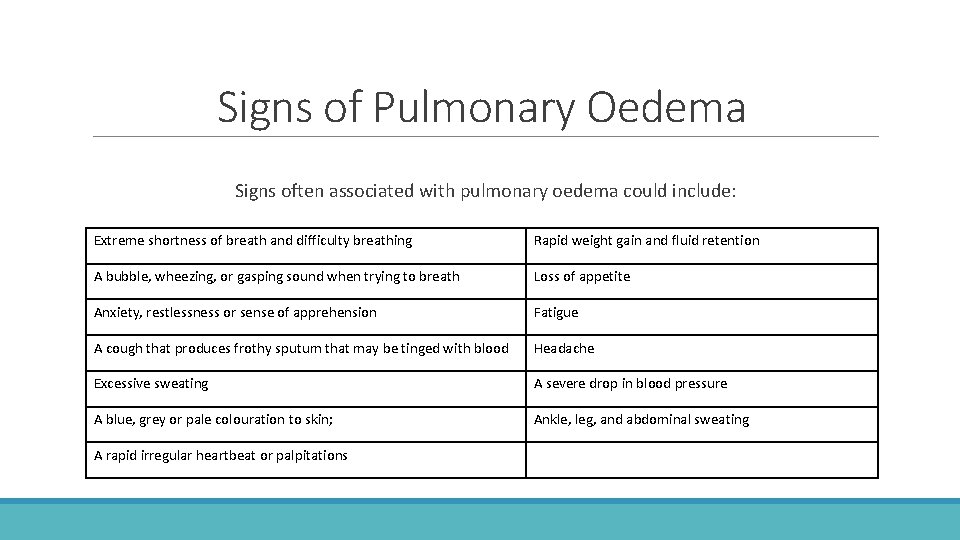
Signs of Pulmonary Oedema Signs often associated with pulmonary oedema could include: Extreme shortness of breath and difficulty breathing Rapid weight gain and fluid retention A bubble, wheezing, or gasping sound when trying to breath Loss of appetite Anxiety, restlessness or sense of apprehension Fatigue A cough that produces frothy sputum that may be tinged with blood Headache Excessive sweating A severe drop in blood pressure A blue, grey or pale colouration to skin; Ankle, leg, and abdominal sweating A rapid irregular heartbeat or palpitations
Complications/Side Effects Complications can occur at any time from hours following commencement to over three hours, dependent on the condition of the patient and the fluids infused. Possible side effects of subcutaneous fluid infusion include generalised oedema, local oedema or local skin reaction; the needle should be removed and re-sited if any of these side effects occur.
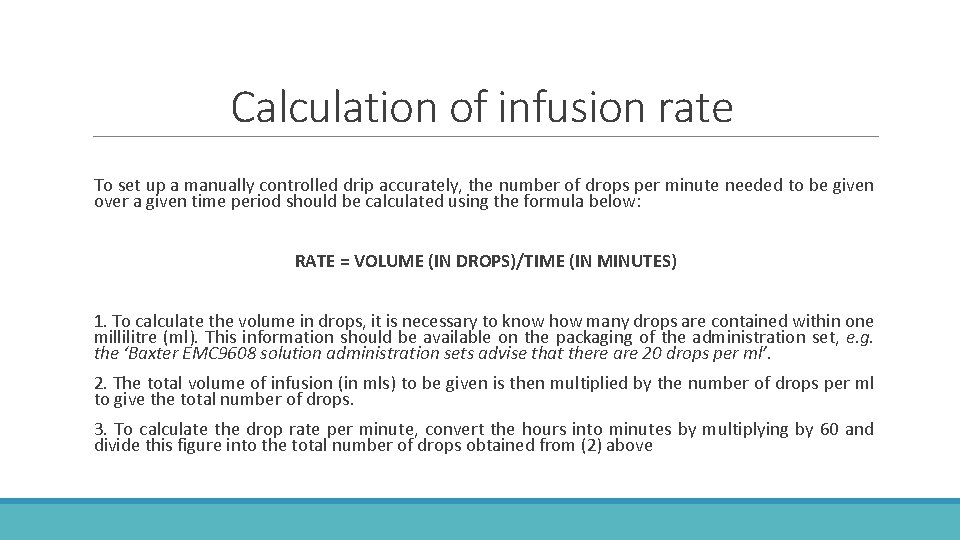
Calculation of infusion rate To set up a manually controlled drip accurately, the number of drops per minute needed to be given over a given time period should be calculated using the formula below: RATE = VOLUME (IN DROPS)/TIME (IN MINUTES) 1. To calculate the volume in drops, it is necessary to know how many drops are contained within one millilitre (ml). This information should be available on the packaging of the administration set, e. g. the ‘Baxter EMC 9608 solution administration sets advise that there are 20 drops per ml’. 2. The total volume of infusion (in mls) to be given is then multiplied by the number of drops per ml to give the total number of drops. 3. To calculate the drop rate per minute, convert the hours into minutes by multiplying by 60 and divide this figure into the total number of drops obtained from (2) above
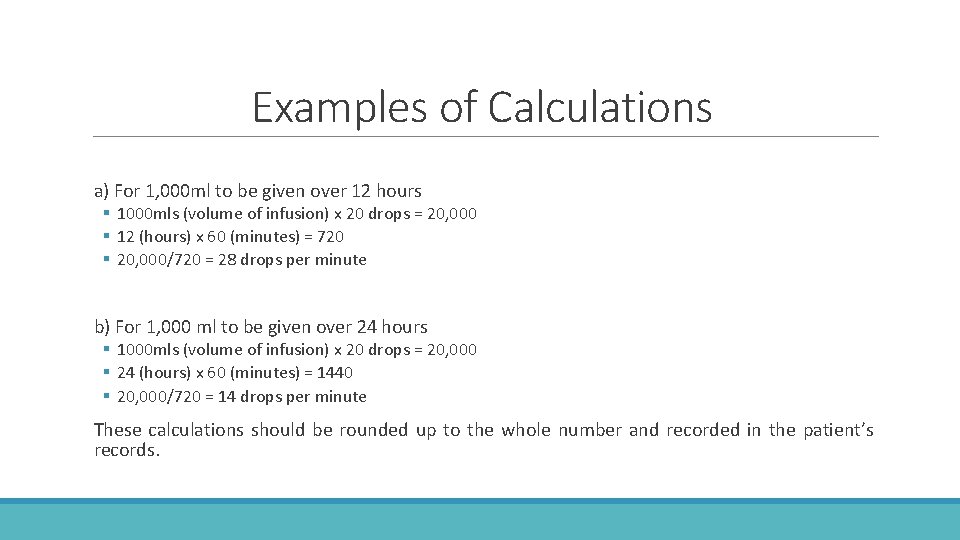
Examples of Calculations a) For 1, 000 ml to be given over 12 hours § 1000 mls (volume of infusion) x 20 drops = 20, 000 § 12 (hours) x 60 (minutes) = 720 § 20, 000/720 = 28 drops per minute b) For 1, 000 ml to be given over 24 hours § 1000 mls (volume of infusion) x 20 drops = 20, 000 § 24 (hours) x 60 (minutes) = 1440 § 20, 000/720 = 14 drops per minute These calculations should be rounded up to the whole number and recorded in the patient’s records.
Equipment Required Sterile dressing pack with gloves and apron; 0. 9% sodium chloride 1000 L; Signed medication authorisation sheet; 21 -25 g butterfly needle infusion set; Fluid administration sets; Semi-permeable film dressing; Sharps bin; Drip hook; Chlorprep wipes.
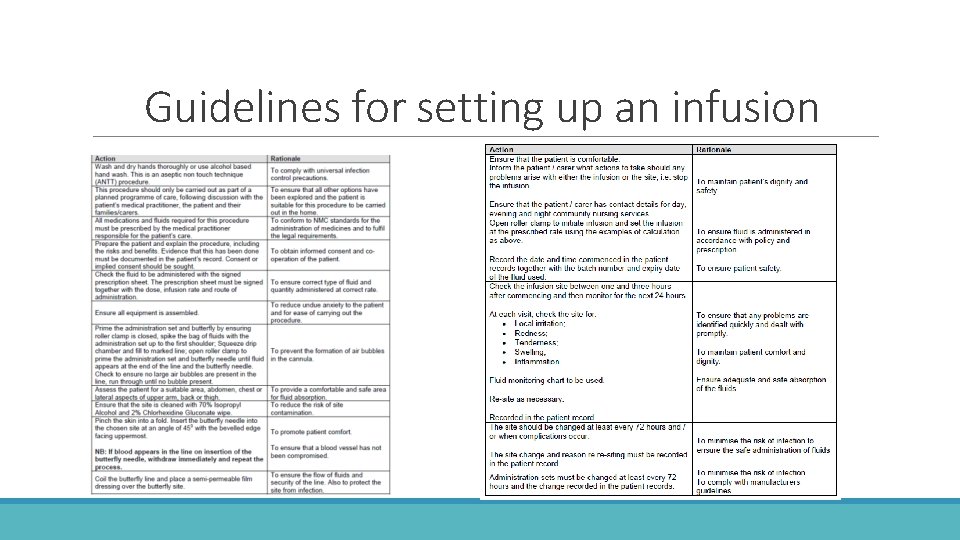
Guidelines for setting up an infusion
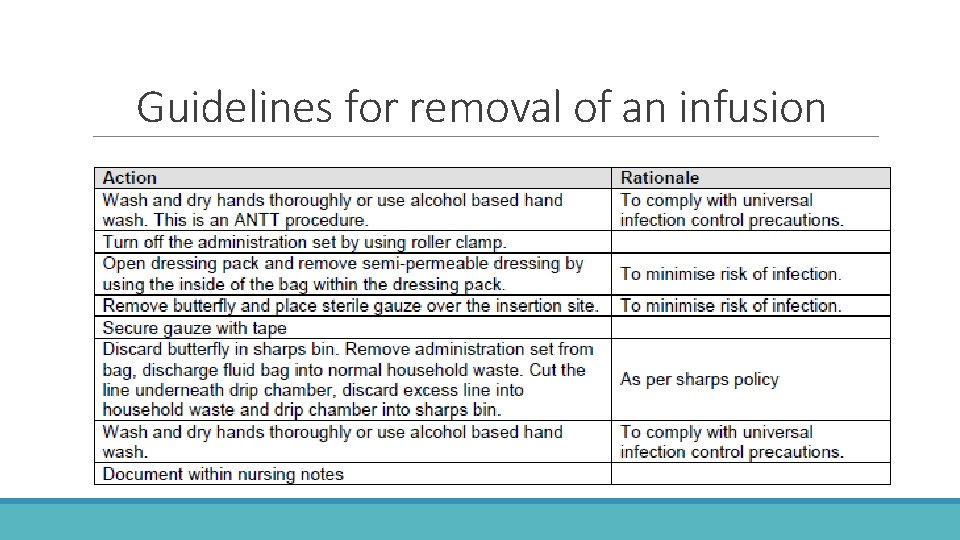
Guidelines for removal of an infusion
Disposal of Waste If patient is suspected of having COVID-19, or is confirmed COVID-19 positive, then please follow local procedures for disposal of waste

Videos https: //youtu. be/t. Puv. Tm. U_WWQ https: //youtu. be/w. Ig_blkuyfo
- Slides: 17