
ADMINISTRATION OF MEDICATION THROUGH TUBES NUR 104 Module
ADMINISTRATION OF MEDICATION THROUGH TUBES NUR 104 Module F
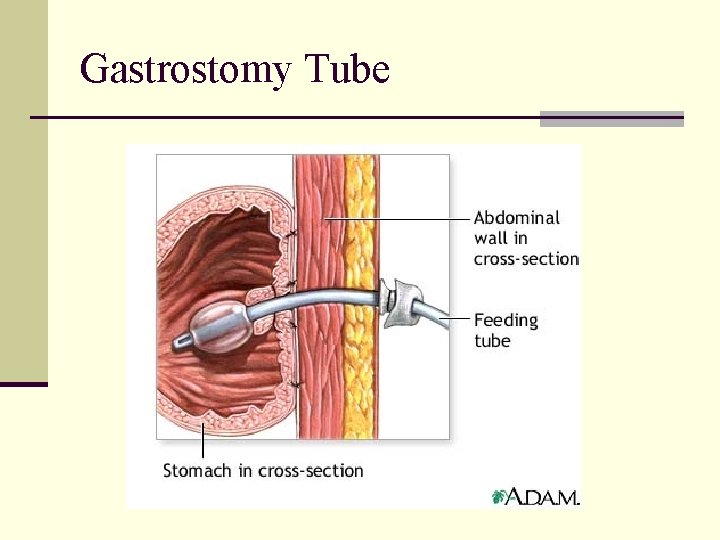
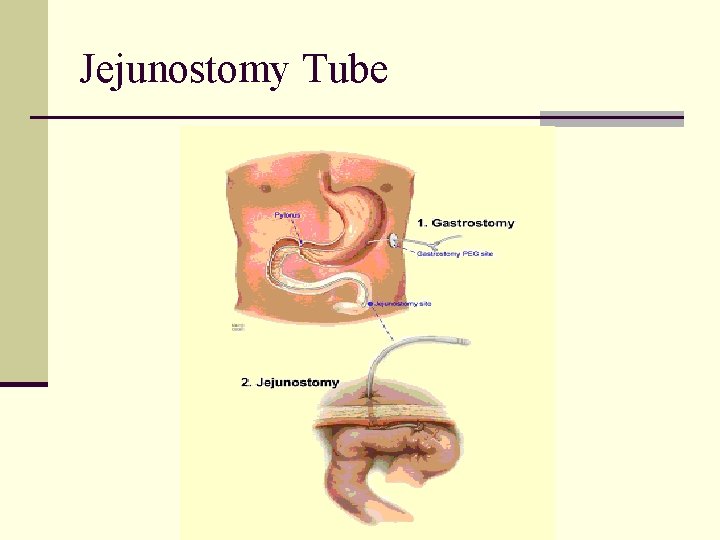
GASTROINTESTINAL TUBES n Nasogastric (NG) tube—used to intubate the stomach by way of the nasal passages n Gastrostomy tube—placed through a surgical incision in the stomach n Jejunostomy tube—placed surgically into the jejunum
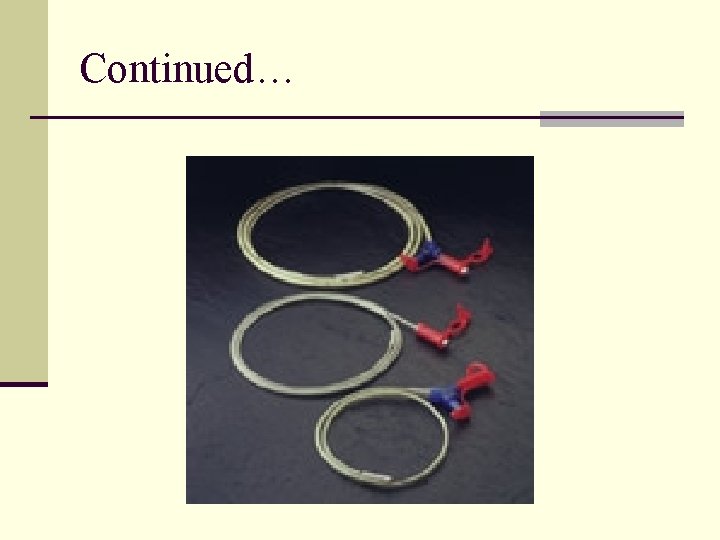
Nasogastric Tube n Used in patients with impaired swallowing, who are comatose, or have a disorder of the esophagus n Use the liquid form of the medication when possible n Can crush tablet or pull capsule apart and mix with water n DO NOT crush or open enteric-coated or delayed release capsules
Continued…
Procedure for administering medications n Assemble all needed equipment n Follow the 6 Rights of Drug Administration: n Right Drug n Right Time n Right Dose n Right Patient n Right Route n Right Documentation
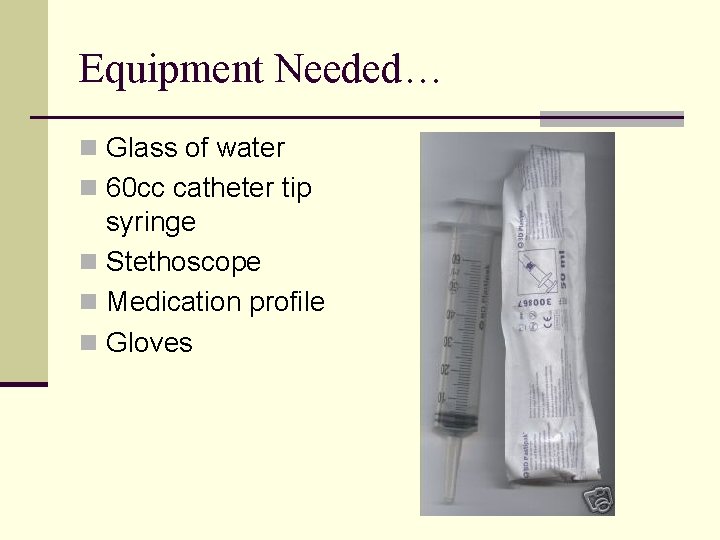
Equipment Needed… n Glass of water n 60 cc catheter tip syringe n Stethoscope n Medication profile n Gloves
Technique n Check medication profile for correct patient, medication, dosage, route, and time n Verify patient’s ID by bracelet n Explain what you will be doing to the patient n Verify placement of tube before administering any liquids n Method 1—Put on gloves and place stethoscope over the stomach; using catheter tip syringe, insert 10 cc of air into the NG tube and listen for a gurgling sound; withdraw the amount of air inserted
Continued… n Method 2—Put on gloves and unclamp the NG tube; place tube next to your ear and listen for gurgling timed with respirations; if heard, tube is probably in the lungs and should be removed and reinserted n Once placement has been verified, clamp tubing and attach syringe; pour the medication into the syringe and unclamp the tubing; allow the medication to run in by gravity
Continued… n Reclamp the tubing and add approximately 50 cc of water; unclamp and allow the water to run in by gravity; reclamp the tube as soon as the water has gone in n DO NOT ATTACH THE NG TUBE TO SUCTION FOR AT LEAST 30 MINUTES AFTER GIVING MEDICATIONS n Provide oral hygiene n Record all water as intake
Gastrostomy Tube
Jejunostomy Tube
Placement Verification of G-tube and J -tube n Put on gloves and clamp tubing n Attach 60 cc syringe to tubing and aspirate stomach contents n Notify MD if residual (amount aspirated) is greater than 100 cc n Re-instill aspirate n Flush with 30 cc water n Administer medication as with NG tube
Rectal Suppositories n Suppositories dissolve at body temperature n Should be stored in a cool place to prevent softening n Should not be used for patients who have had recent prostate or rectal surgery or trauma
Administration of Rectal Suppositories n Assemble medication and wash hands n Follow the 6 Rights of Drug Administration n Verify patient’s identification and explain procedure n If possible, have patient defecate prior to administration n Place patient on left side in Sim’s position n Put on gloves
Continued… n Open the suppository and apply water-soluble lubricant n Place the tip of the suppository at the anus and ask patient to take deep breath in and out n Insert the suppository approximately 1 inch n Keep patient on side for 15 -20 minutes to allow for absorption of the medication n Remove gloves and wash hands
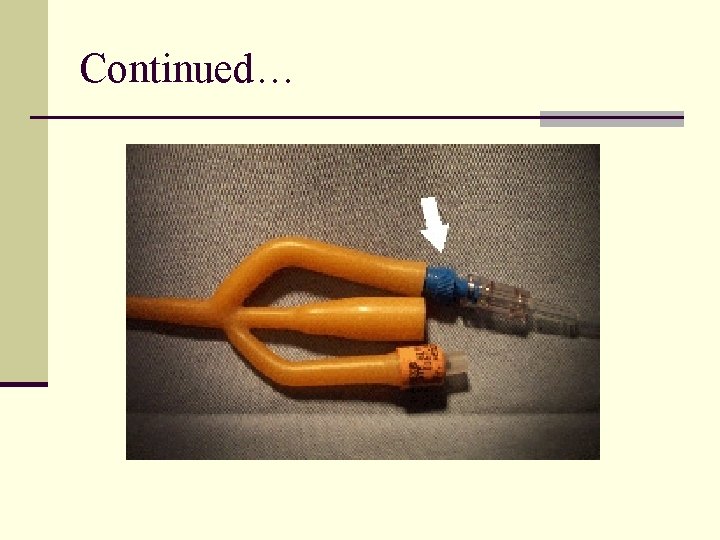
Continuous Bladder Irrigations n Continuous infusion of a sterile solution into the bladder n Usually a triple-lumen catheter— 1 inflates balloon, 1 irrigates, and 1 drains n Usually following genitourinary surgery to keep bladder clear and free from blood clots and sediment
Continued…
Continued… n MD will order solution, strength, and flow rate n Label the bag “GU IRRIGATION ONLY” n Spike bag with irrigation tubing using aseptic technique n Close clamp on tubing and fill chamber half full with fluid, unclamp tubing and fill to remove all air, and close clamp n Clean port with antiseptic swab
Continued… n Calculate drip rate and adjust roller clamp n Observe intake and output n If intake continues to be greater than output, the catheter may be blocked by a blood clot— over-distention can result in discomfort, bladder damage, or rupture
Vaginal Irrigations n Douche n Not necessary for normal hygiene but may be required if a vaginal infection and discharge are present n Not an effective method of birth control
Continued… n Procedure n Wash hands n Follow 6 Rights of Drug Administration n Provide privacy n Explain the procedure n Put on gloves n Ask patient to void and place on the bedpan n Hang bag of solution on IV pole approximately 12 inches above vagina
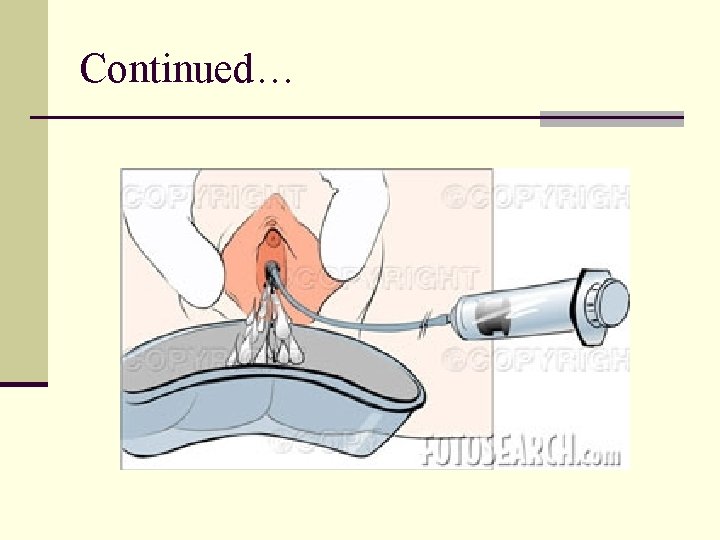
Continued… Apply water-soluble lubricant to plastic vaginal tip n Cleanse the vulva by allowing a small amount of the solution to flow over n Gently insert the nozzle directing it down and back 2 -3 inches n Hold labia together to facilitate filling the vagina n Rotate the nozzle to irrigate all parts n Intermittently release the labia to allow solution to flow out n
Continued…
Continued… n After all of the solution has infused, have patient sit up and lean forward to thoroughly empty the vagina n Dry external area n Discard equipment and wash hands
- Slides: 24