
Adlerian Group Counseling and Therapy StepbyStep James Robert
Adlerian Group Counseling and Therapy: Step-by-Step James Robert Bitter, Ed. D. Adlerian Training Institute East Tennessee State University
Adlerian Group Therapy: • Is a form of Adlerian Brief Therapy; • Parallels effective living in everyday life; • Engages peers in the process and support of change within individuals and the group.

Five who influenced me and the development of this model • Alfred Adler (1870 – 1937) • Rudolf Dreikurs (1897 – 1972) • Virginia Satir (1916 – 1988) • Erv & Miriam Polster
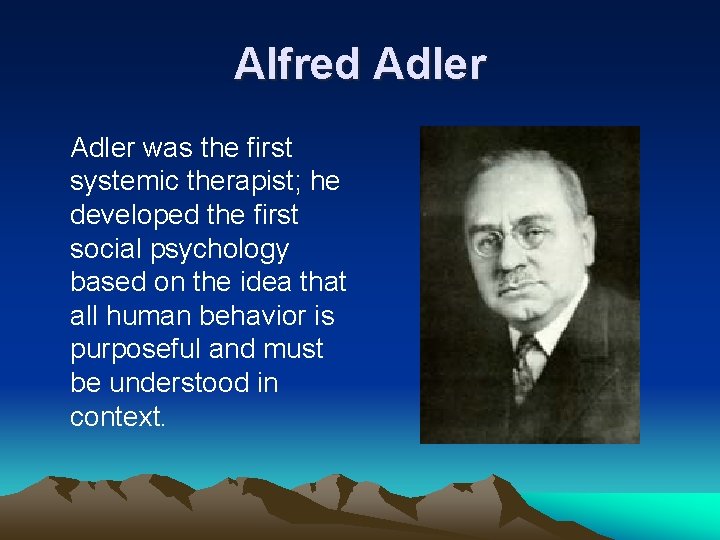
Alfred Adler was the first systemic therapist; he developed the first social psychology based on the idea that all human behavior is purposeful and must be understood in context.
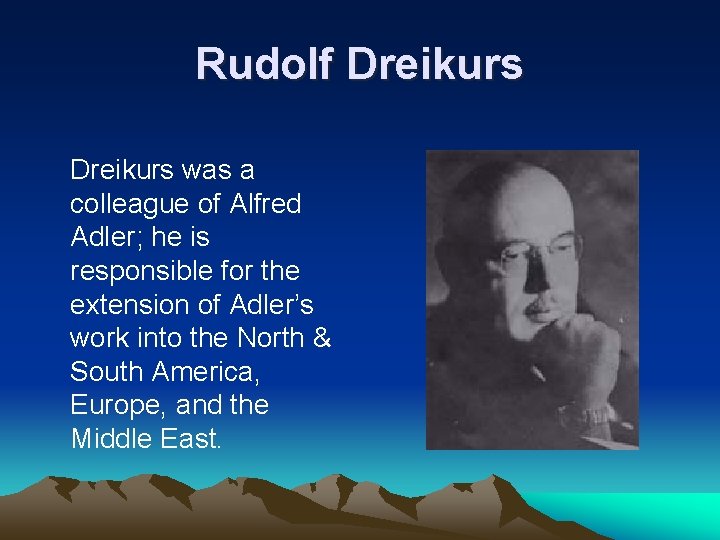
Rudolf Dreikurs was a colleague of Alfred Adler; he is responsible for the extension of Adler’s work into the North & South America, Europe, and the Middle East.
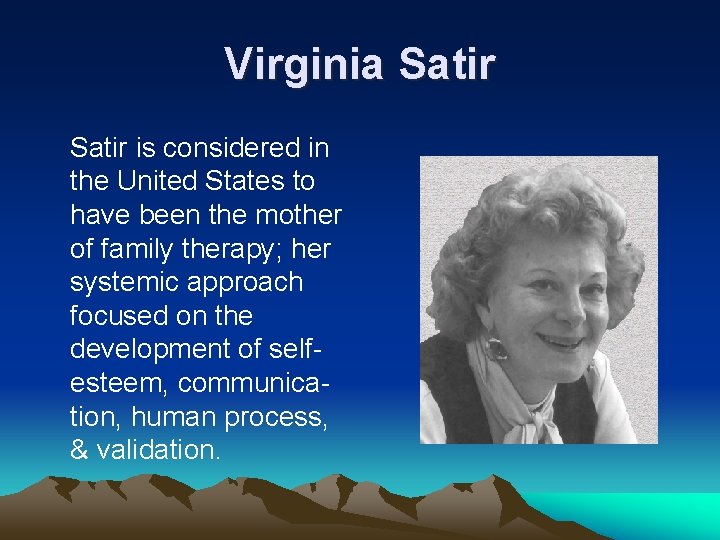
Virginia Satir is considered in the United States to have been the mother of family therapy; her systemic approach focused on the development of selfesteem, communication, human process, & validation.
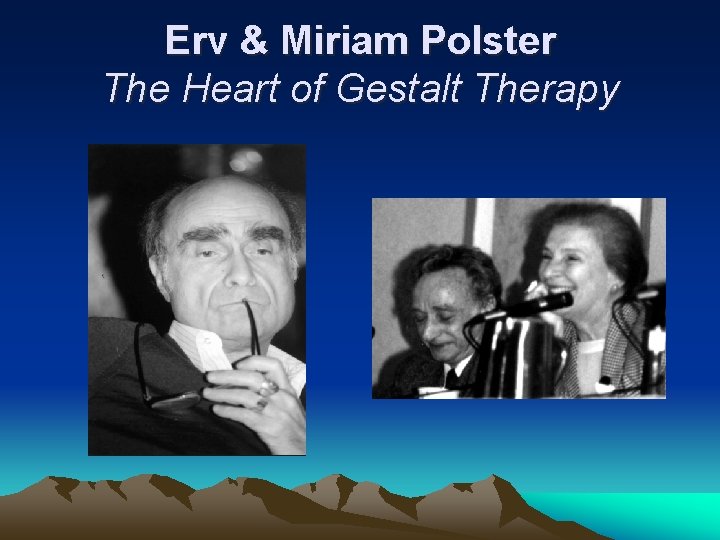
Erv & Miriam Polster The Heart of Gestalt Therapy
Groups require and support democracy • • • Groups encourage the development of voice; Groups are experiential learning; Groups provide support & encouragement; Groups engage in values-clarification; Groups initiate & develop what Adler called “a community feeling” and its implementation in social interest.
Qualities of Group Leadership • • Presence Assertiveness and confidence Courage and risk Acceptance, interest, & caring Modeling & collaboration Adaptability & a sense of humor Holism: Listening teleologically & working in patterns • Tending the group process
Initial Steps: • Meeting group members – Adlerians do not pre-screen members – Democracy requires acceptance of all • Establishing group agreements rather than laying down ground rules or imposing structure • Facilitating a subjective interview
Psychological Investigations • Family Constellation • The Tasks of Life • Early Recollections • “The Question”
Re-orientation & Change • Psychological Disclosure • Experiment (Engaging in a Safe Emergency) & Experience • Group Problem-Solving • Group Commitment & Group Support
- Slides: 12