
ADKAR and Change Using PROSCIS ADKAR Model Adapted
- Slides: 31
ADKAR and Change Using PROSCI’S ADKAR Model Adapted from Prosci 2008
Agenda • Introduction to Change Management • ADKAR process • ADKAR individual change assessment Adapted from Prosci 2008
What is Change Management? People side of change Adapted from Prosci 2008
Change management is: The process, tools and techniques to manage the people-side of change to achieve the required business outcome. Adapted from Prosci 2008
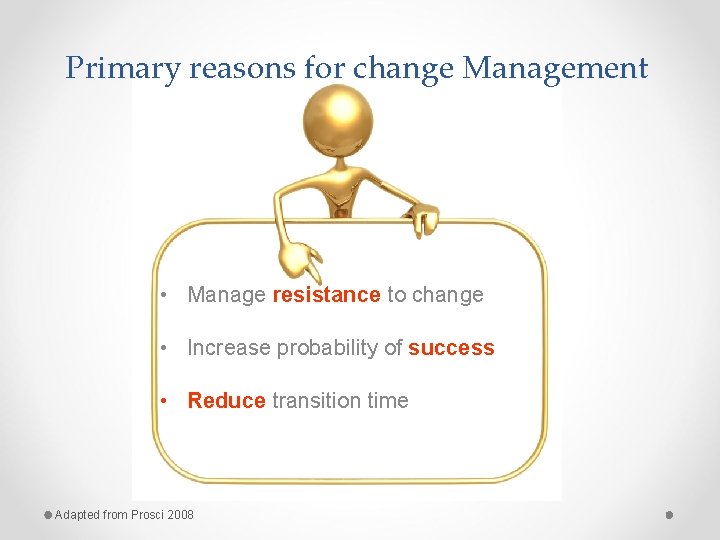
Primary reasons for change Management • Manage resistance to change • Increase probability of success • Reduce transition time Adapted from Prosci 2008
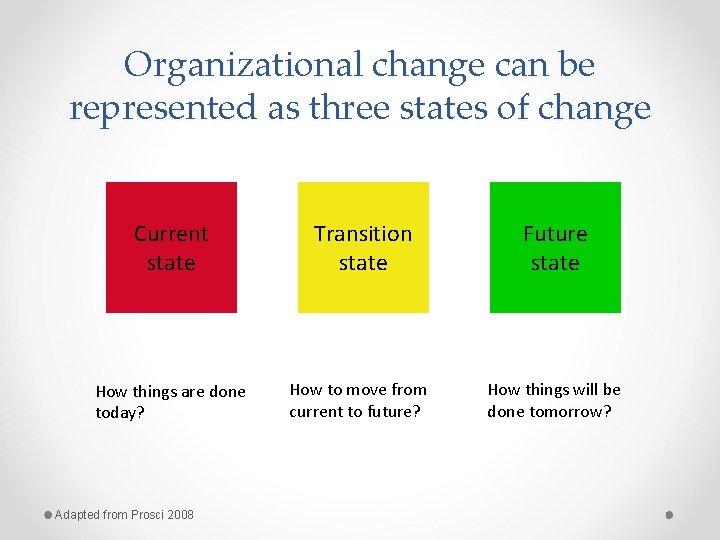
Organizational change can be represented as three states of change Current state Transition state Future state How things are done today? How to move from current to future? How things will be done tomorrow? Adapted from Prosci 2008
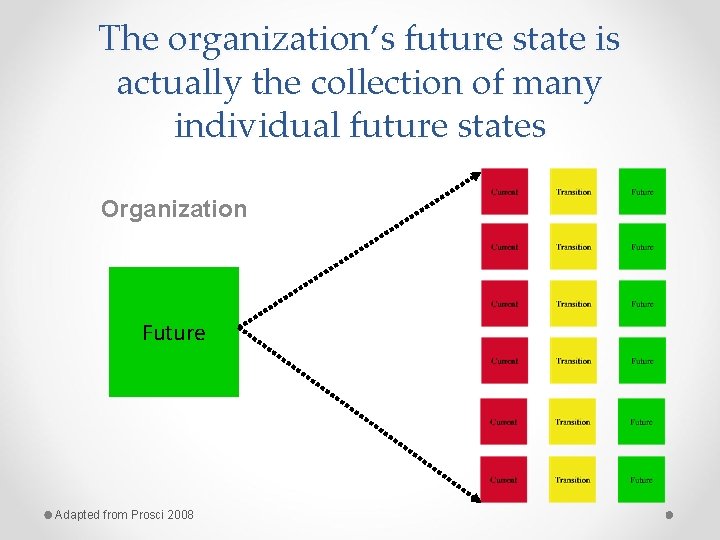
The organization’s future state is actually the collection of many individual future states Organization Future Adapted from Prosci 2008
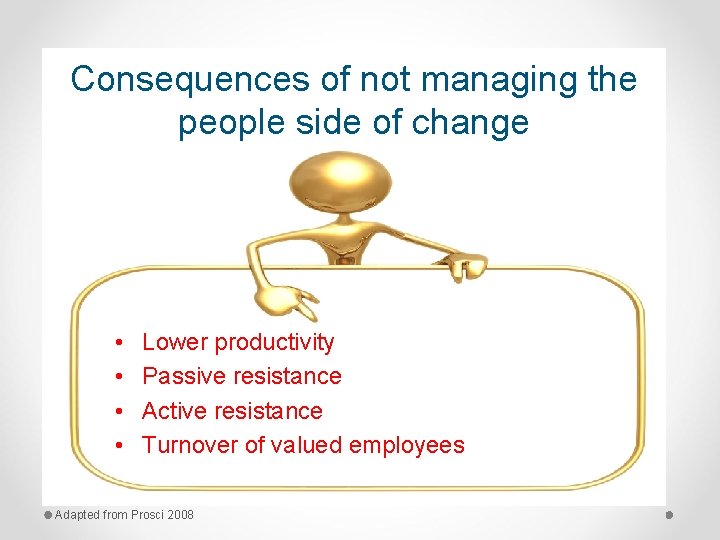
Consequences of not managing the people side of change • • Lower productivity Passive resistance Active resistance Turnover of valued employees Adapted from Prosci 2008
Consequences of not managing the people side of change • • Disinterest in the current or future state Arguing about the need for change More sick days Change not fully implemented Adapted from Prosci 2008
Consequences of not managing the people side of change • • People finding work arounds People revert to the old way of doing things The change being totally scrapped Divides are created between ‘us’ and ‘them’ Adapted from Prosci 2008
Change “Organizations don’t change - people within organizations change. ” Any business change requires individuals to do their jobs differently to be successful Adapted from Prosci 2008
Change is not always easy! Adapted from Prosci 2008
The ADKAR Model ADKAR describes the required phases that an individual will go through when faced with change. Adapted from Prosci 2008
The ADKAR Model ADKAR is a foundational tool for understanding “how, why and when” to use different change management tools. Adapted from Prosci 2008
The five building blocks of successful change Awareness of the need for change Desire to participate and support the change Knowledge on how to change Ability to implement required skills and behaviors Reinforcement to sustain the change Adapted from Prosci 2008
The ADKAR Model Awareness Adapted from Prosci 2008 of the need for change. • What is the nature of the change? • Why is the change happening? • What is the risk of not changing?
The ADKAR Model Awareness Think about the change your team is working on currently. Write a number 1 – 5 on the Post-It note to indicate your Awareness of this change. Adapted from Prosci 2008
The ADKAR Model Desire to support the change. • Personal motivation to support the change • Organizational drivers to support change Adapted from Prosci 2008
The ADKAR Model Desire Think about the change your team is working on currently. Write a number 1 – 5 on the Post-It note to indicate your Desire for this change. Adapted from Prosci 2008
The ADKAR Model Knowledge Adapted from Prosci 2008 on how to change. • Knowledge, skills and behaviors required during and after the change • Understanding how to change
The ADKAR Model Knowledge Think about the change your team is working on currently. Write a number 1 – 5 on the Post-It note to indicate your Knowledge needed to implement this change. Adapted from Prosci 2008
The ADKAR Model Ability Adapted from Prosci 2008 to implement new skills. • Demonstrated ability to implement the change • Barriers that may inhibit implementing the change
The ADKAR Model Ability Think about the change your team is working on currently. Write a number 1 – 5 on the Post -It note to indicate your Ability to implement this change. Adapted from Prosci 2008
The ADKAR Model Reinforcement Adapted from Prosci 2008 to sustain the change. • Mechanisms to keep the change in place • Recognition, rewards, incentives, successes
The ADKAR Model Reinforcement Think about the change your team is working on currently. Write a number 1 – 5 on the Post-It note to indicate your feeling of Reinforcement for this change. Adapted from Prosci 2008
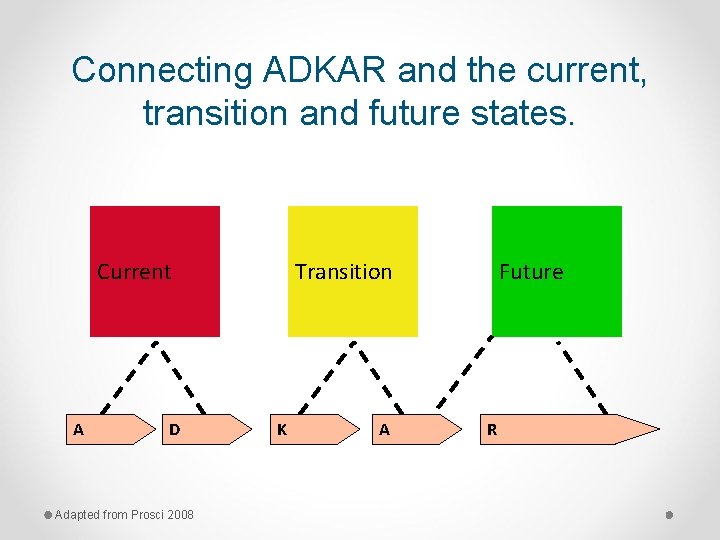
Connecting ADKAR and the current, transition and future states. Current A D Adapted from Prosci 2008 Transition K A Future R
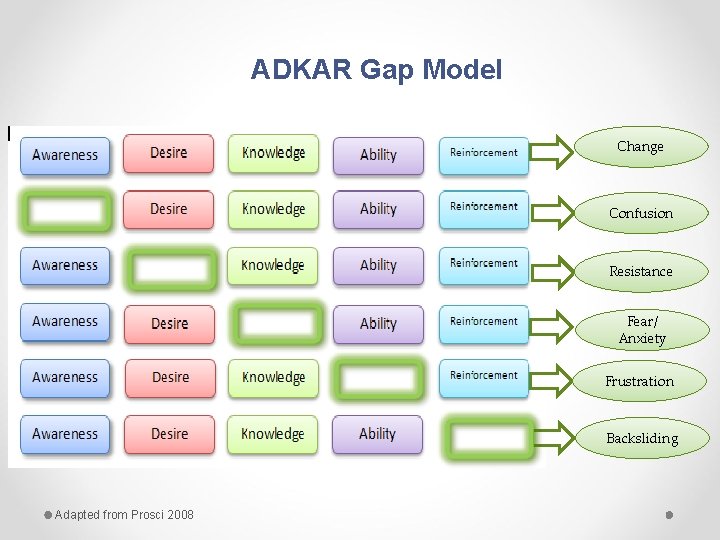
ADKAR Gap Model Change Confusion Resistance Fear/ Anxiety Frustration Backsliding Adapted from Prosci 2008
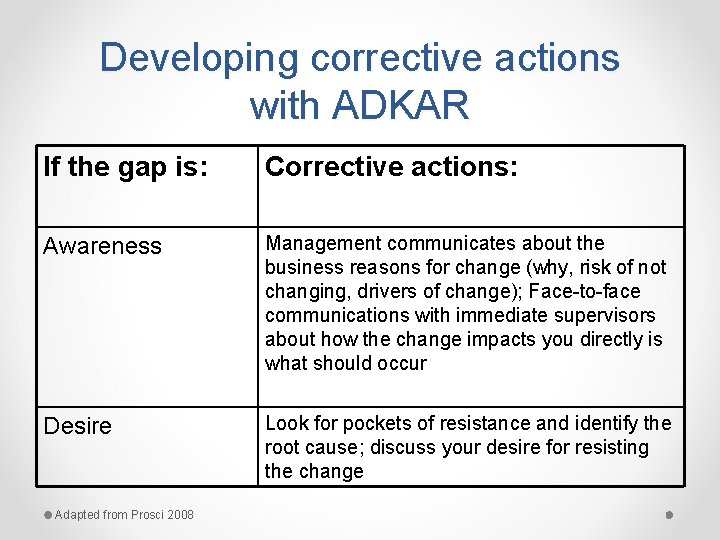
Developing corrective actions with ADKAR If the gap is: Corrective actions: Awareness Management communicates about the business reasons for change (why, risk of not changing, drivers of change); Face-to-face communications with immediate supervisors about how the change impacts you directly is what should occur Desire Look for pockets of resistance and identify the root cause; discuss your desire for resisting the change Adapted from Prosci 2008
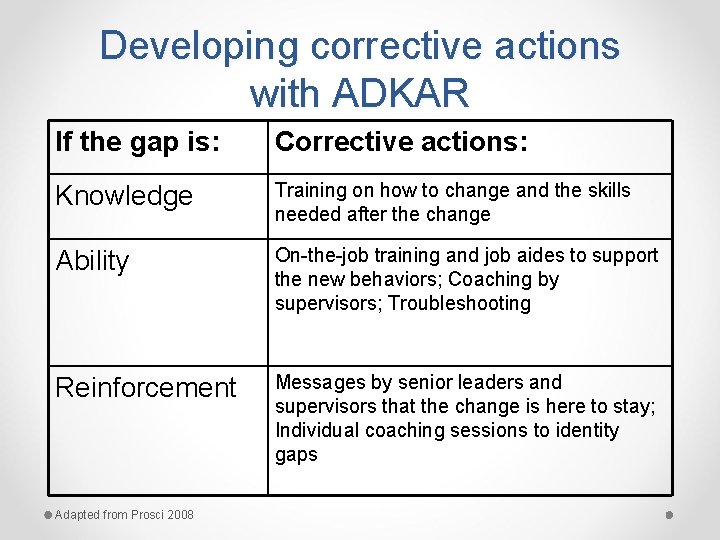
Developing corrective actions with ADKAR If the gap is: Corrective actions: Knowledge Training on how to change and the skills needed after the change Ability On-the-job training and job aides to support the new behaviors; Coaching by supervisors; Troubleshooting Reinforcement Messages by senior leaders and supervisors that the change is here to stay; Individual coaching sessions to identity gaps Adapted from Prosci 2008
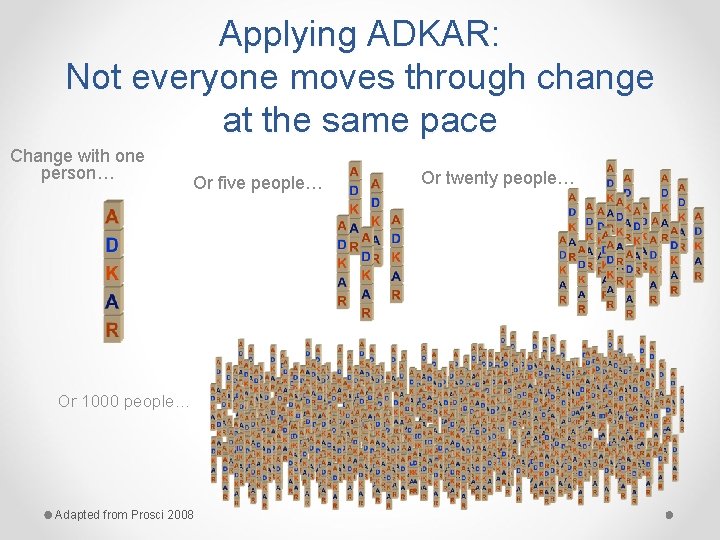
Applying ADKAR: Not everyone moves through change at the same pace Change with one person… Or five people… Or 1000 people… Adapted from Prosci 2008 Or twenty people…
Group Activity Adapted from Prosci 2008