
Adjuvant Therapy of Triple Negative Breast Cancer Eric
Adjuvant Therapy of Triple Negative Breast Cancer Eric P. Winer, MD Dana-Farber Cancer Institute Boston, USA
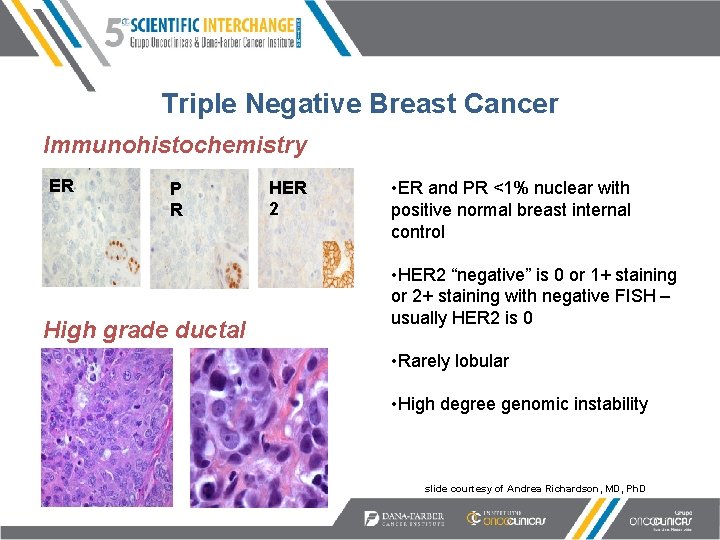
Triple Negative Breast Cancer Immunohistochemistry ER P R High grade ductal HER 2 • ER and PR <1% nuclear with positive normal breast internal control • HER 2 “negative” is 0 or 1+ staining or 2+ staining with negative FISH – usually HER 2 is 0 • Rarely lobular • High degree genomic instability slide courtesy of Andrea Richardson, MD, Ph. D
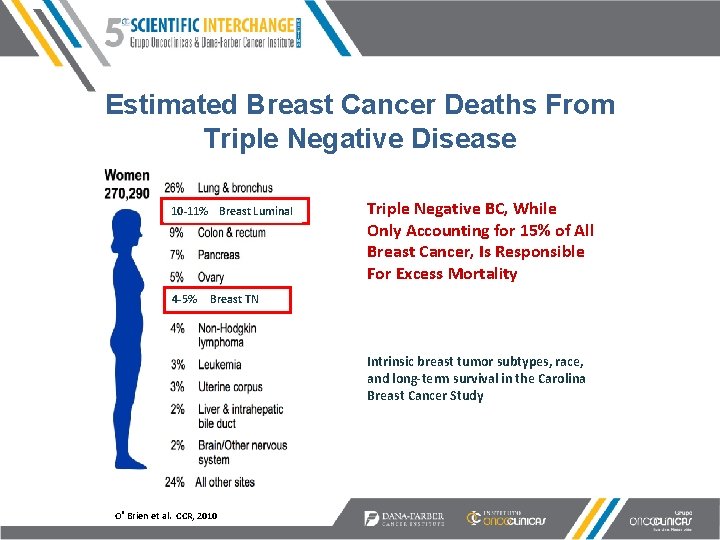
Estimated Breast Cancer Deaths From Triple Negative Disease 10 -11% Breast Luminal 4 -5% Triple Negative BC, While Only Accounting for 15% of All Breast Cancer, Is Responsible For Excess Mortality Breast TN Intrinsic breast tumor subtypes, race, and long-term survival in the Carolina Breast Cancer Study O’Brien et al. CCR, 2010

Heterogeneity of TNBC • • Genomic instability common Multiple subsets with varying targets – – – Basal-like 1 Basal-like 2 Immunomodulatory Mesenchymal and mesenchymal / stem cell – (PI 3 K/m. TOR pathway) LAR – (androgen receptor signaling) Lehmann et al, JCI 2011
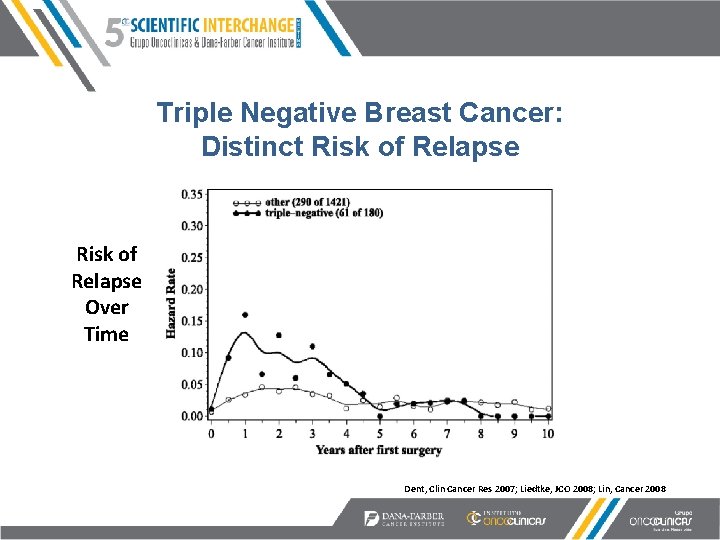
Triple Negative Breast Cancer: Distinct Risk of Relapse Over Time Dent, Clin Cancer Res 2007; Liedtke, JCO 2008; Lin, Cancer 2008
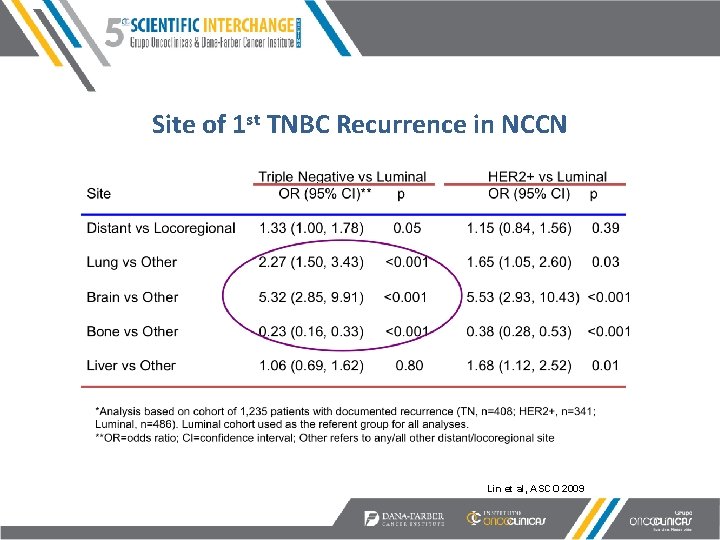
Site of 1 st TNBC Recurrence in NCCN Lin et al, ASCO 2009
What is Optimal ADJUVANT Therapy for STAGE II/III TNBC?
For over a 15 years, the use of anthracyclines and taxanes have been a standard approach for high risk triple negative disease
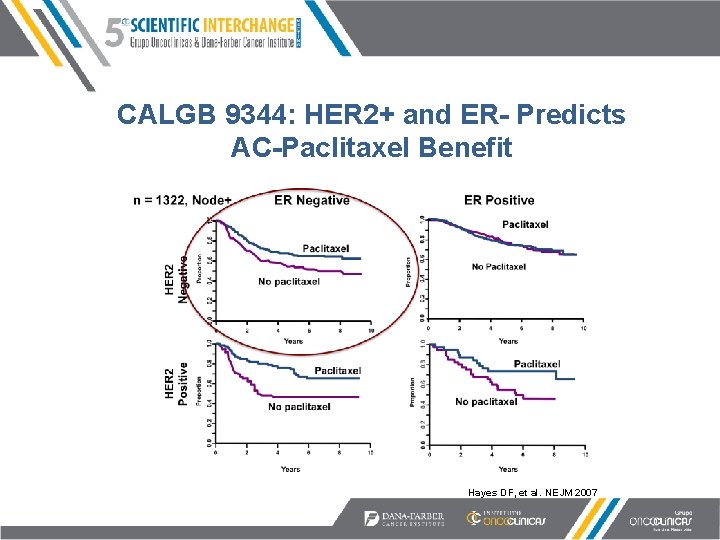
CALGB 9344: HER 2+ and ER- Predicts AC-Paclitaxel Benefit Hayes DF, et al. NEJM 2007
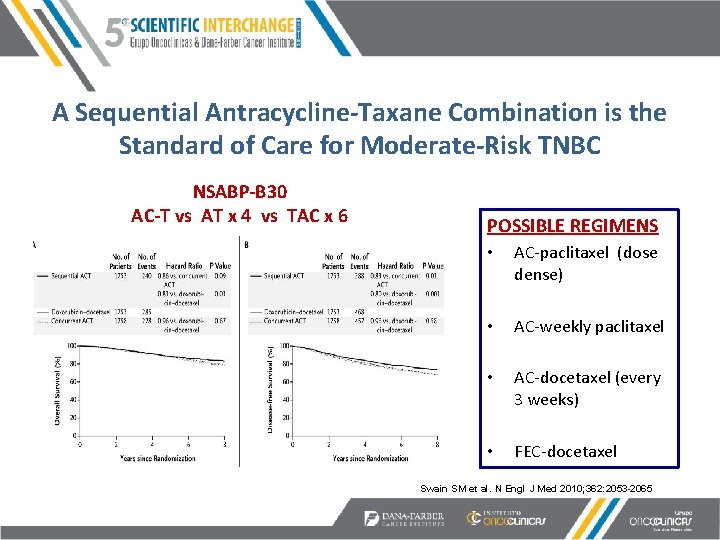
A Sequential Antracycline-Taxane Combination is the Standard of Care for Moderate-Risk TNBC NSABP-B 30 AC-T vs AT x 4 vs TAC x 6 POSSIBLE REGIMENS • AC-paclitaxel (dose dense) • AC-weekly paclitaxel • AC-docetaxel (every 3 weeks) • FEC-docetaxel Swain SM et al. N Engl J Med 2010; 362: 2053 -2065
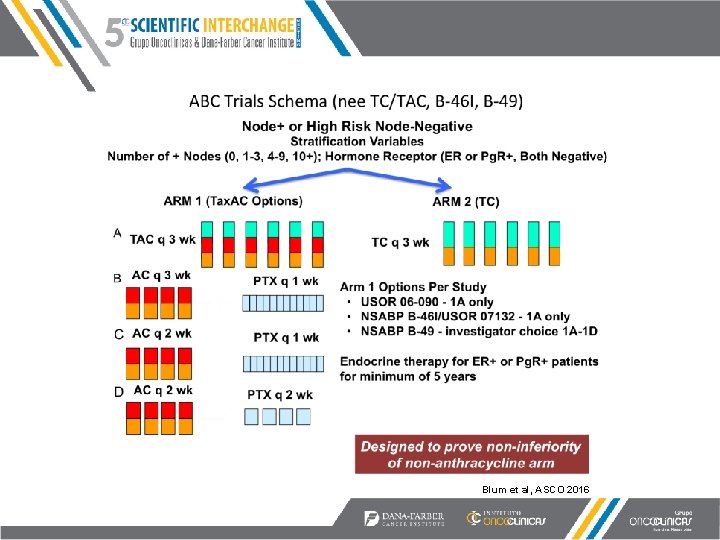
Blum et al, ASCO 2016
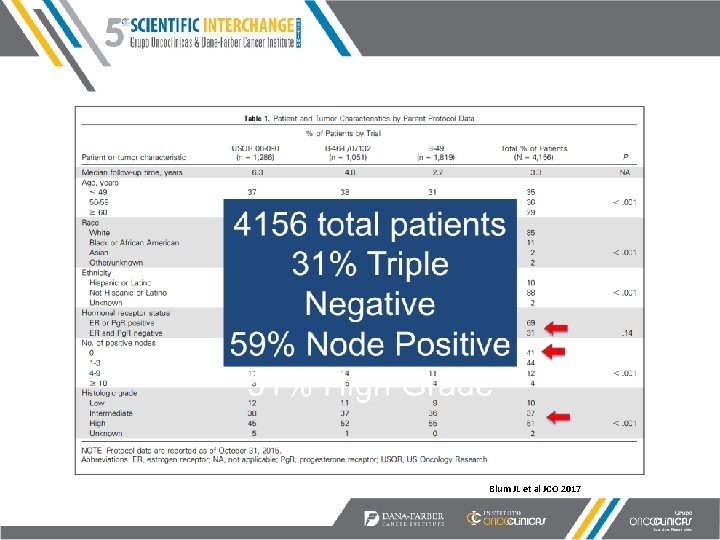
ABC Trials “The primary aim of the joint efficacy analysis was to determine if the nonanthracycline regimen (TC) was noninferior to the standard doxorubicincontaining regimens (Tax. AC)” Primary endpoint: invasive disease-free survival (IDFS) Secondary endpoints: Recurrence-free interval (local, regional, distant breast recurrence/death only) DFS-DCIS (incorporates DCIS) Overall survival Toxicity Stratification attempted via: Pathologic nodal status (0, 1 -3, 4 -9, >10) Hormone receptor status (ER and PR negative vs. ER or PR positive) Trial Blum JL et al JCO 2017
Blum JL et al JCO 2017
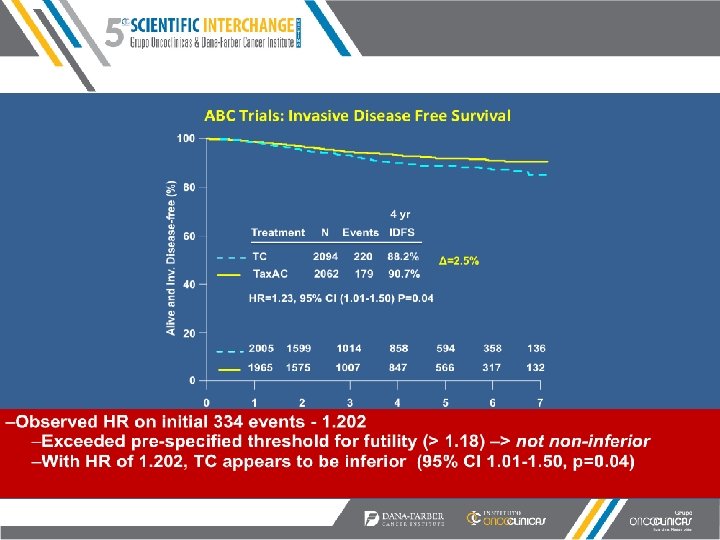
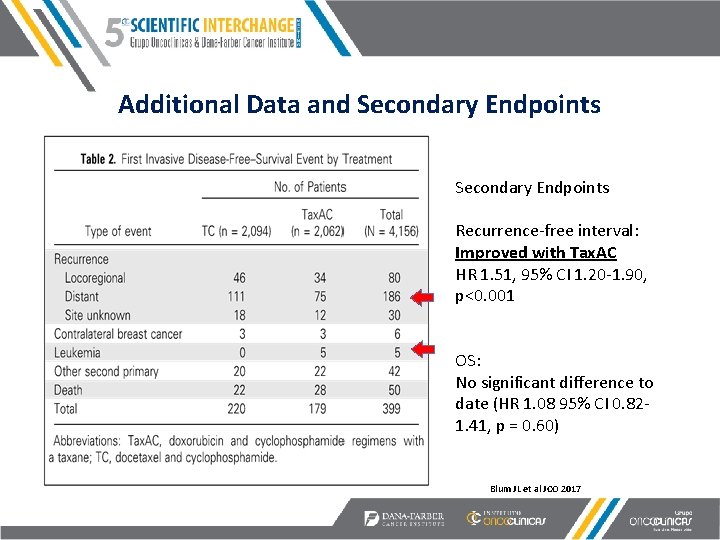
Additional Data and Secondary Endpoints Recurrence-free interval: Improved with Tax. AC HR 1. 51, 95% CI 1. 20 -1. 90, p<0. 001 OS: No significant difference to date (HR 1. 08 95% CI 0. 821. 41, p = 0. 60) Blum JL et al JCO 2017
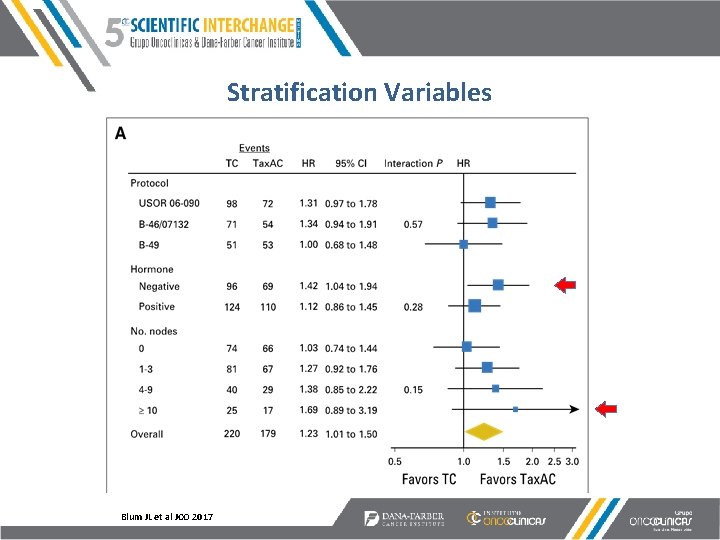
Stratification Variables Blum JL et al JCO 2017
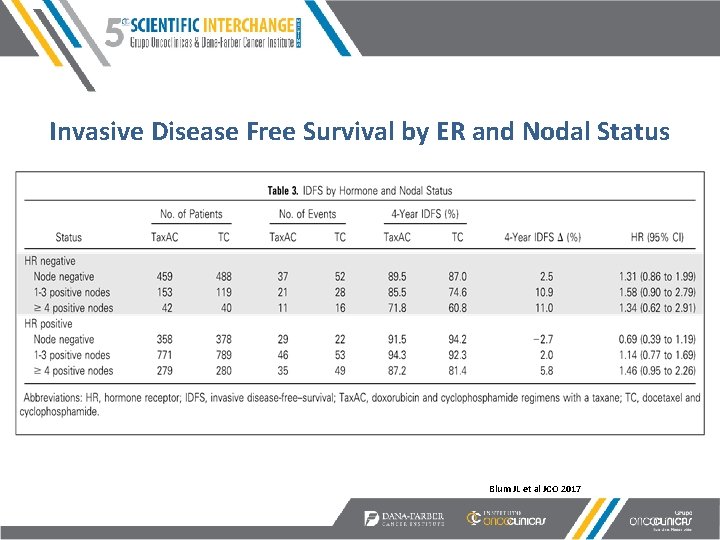
Invasive Disease Free Survival by ER and Nodal Status Blum JL et al JCO 2017
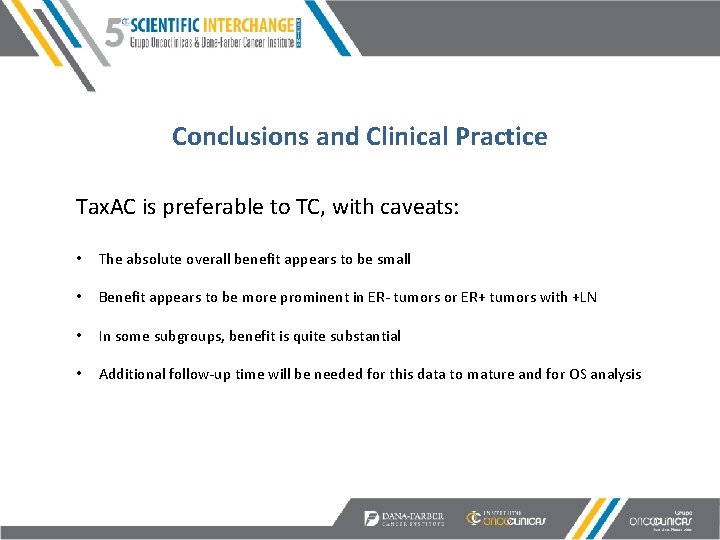
Conclusions and Clinical Practice Tax. AC is preferable to TC, with caveats: • The absolute overall benefit appears to be small • Benefit appears to be more prominent in ER- tumors or ER+ tumors with +LN • In some subgroups, benefit is quite substantial • Additional follow-up time will be needed for this data to mature and for OS analysis
Should Stage Affect the Choice of of a Treatment Regimen? What is the optimal treatment for small, node negative TNBC tumors?
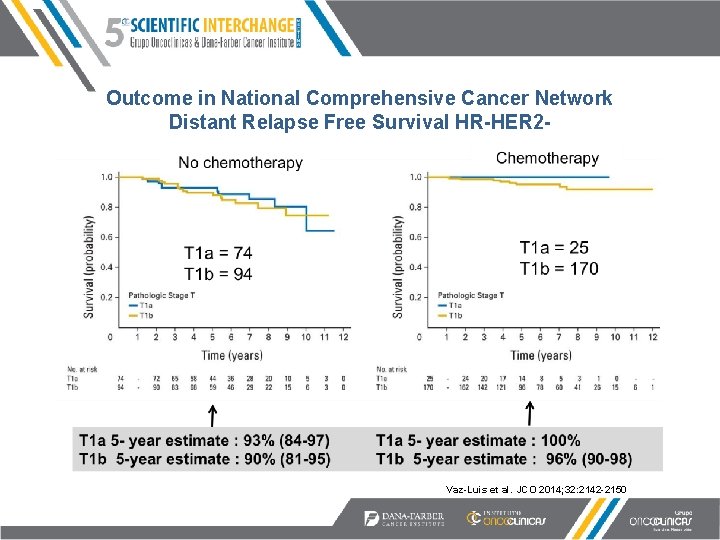
Outcome in National Comprehensive Cancer Network Distant Relapse Free Survival HR-HER 2 - Vaz-Luis et al. JCO 2014; 32: 2142 -2150
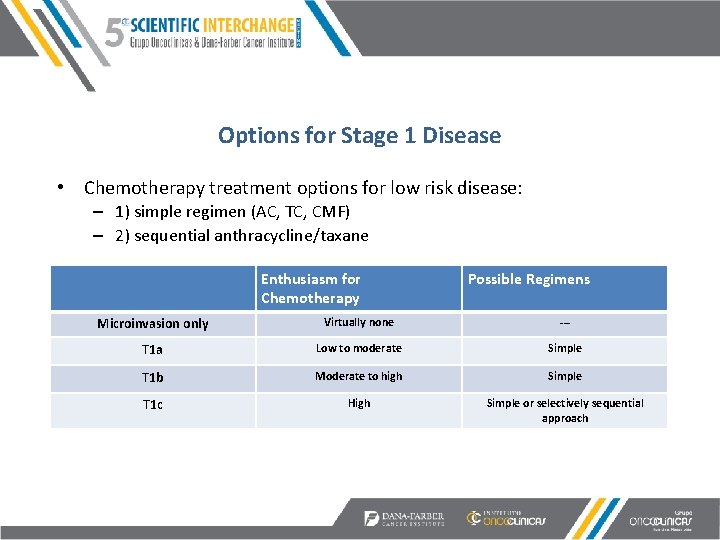
Options for Stage 1 Disease • Chemotherapy treatment options for low risk disease: – 1) simple regimen (AC, TC, CMF) – 2) sequential anthracycline/taxane Enthusiasm for Chemotherapy Possible Regimens Microinvasion only Virtually none --- T 1 a Low to moderate Simple T 1 b Moderate to high Simple T 1 c High Simple or selectively sequential approach
Is There a Role for Platinum Chemotherapy in the Neo/Adjuvant Management of Triple Negative Breast Cancer?
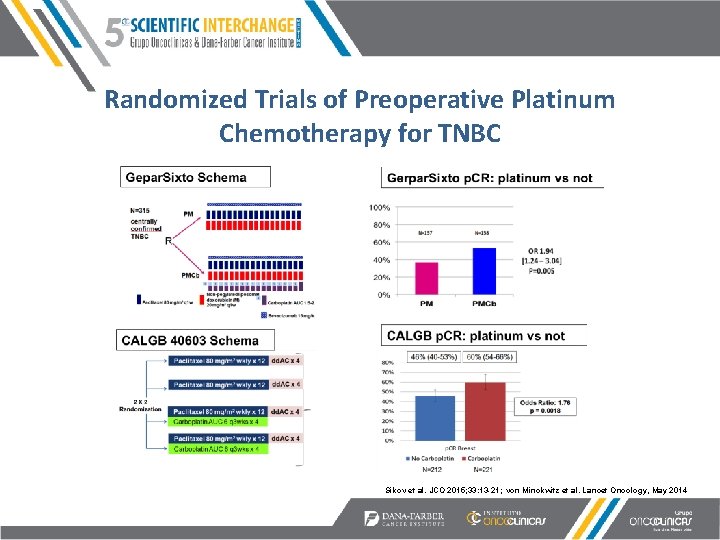
Randomized Trials of Preoperative Platinum Chemotherapy for TNBC Sikov et al. JCO 2015; 33: 13 -21; von Minckwitz et al. Lancet Oncology, May 2014
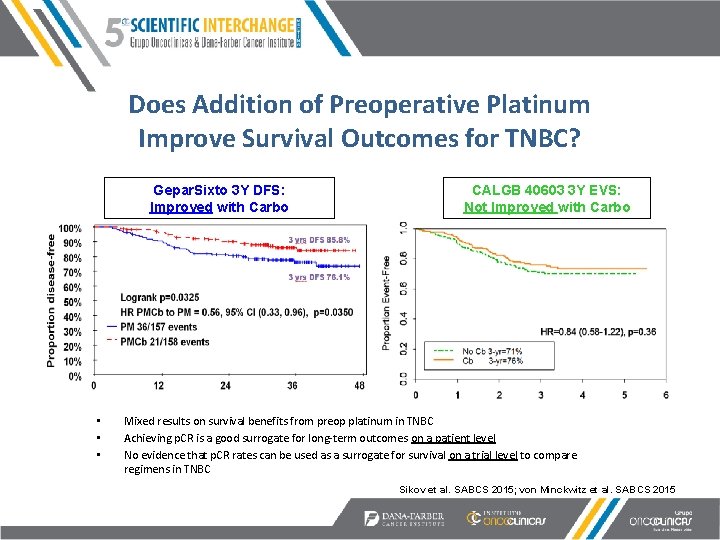
Does Addition of Preoperative Platinum Improve Survival Outcomes for TNBC? Gepar. Sixto 3 Y DFS: Improved with Carbo • • • CALGB 40603 3 Y EVS: Not Improved with Carbo Mixed results on survival benefits from preop platinum in TNBC Achieving p. CR is a good surrogate for long-term outcomes on a patient level No evidence that p. CR rates can be used as a surrogate for survival on a trial level to compare regimens in TNBC Sikov et al. SABCS 2015; von Minckwitz et al. SABCS 2015
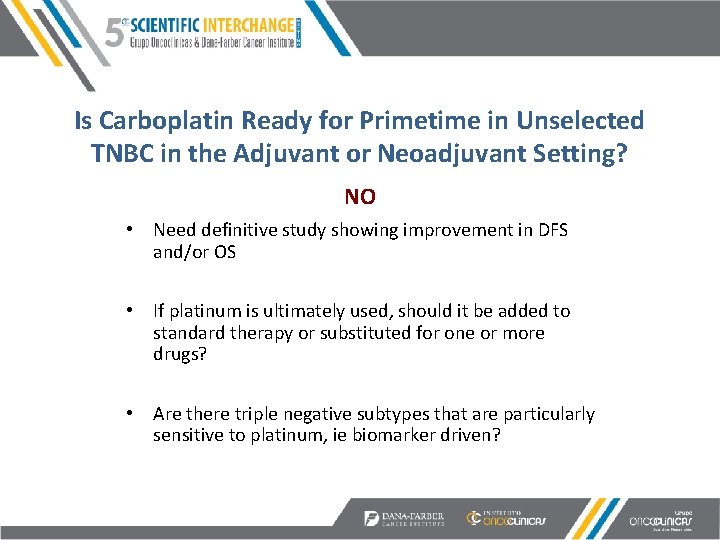
Is Carboplatin Ready for Primetime in Unselected TNBC in the Adjuvant or Neoadjuvant Setting? NO • Need definitive study showing improvement in DFS and/or OS • If platinum is ultimately used, should it be added to standard therapy or substituted for one or more drugs? • Are there triple negative subtypes that are particularly sensitive to platinum, ie biomarker driven?
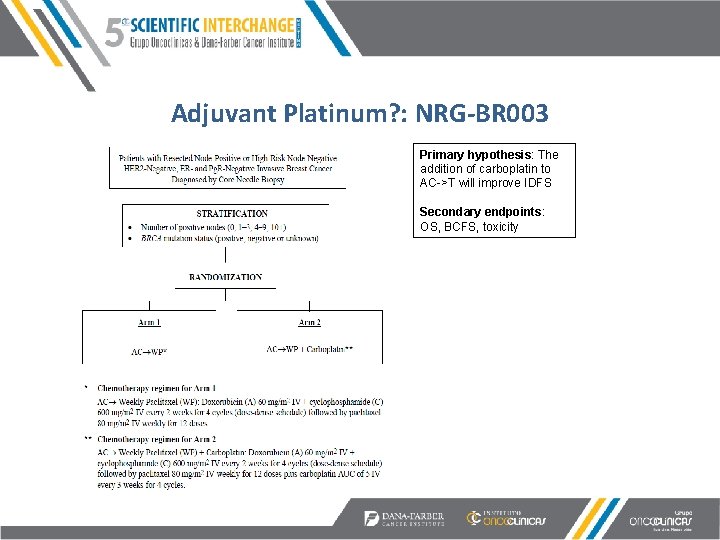
Adjuvant Platinum? : NRG-BR 003 Primary hypothesis: The addition of carboplatin to AC->T will improve IDFS Secondary endpoints: OS, BCFS, toxicity
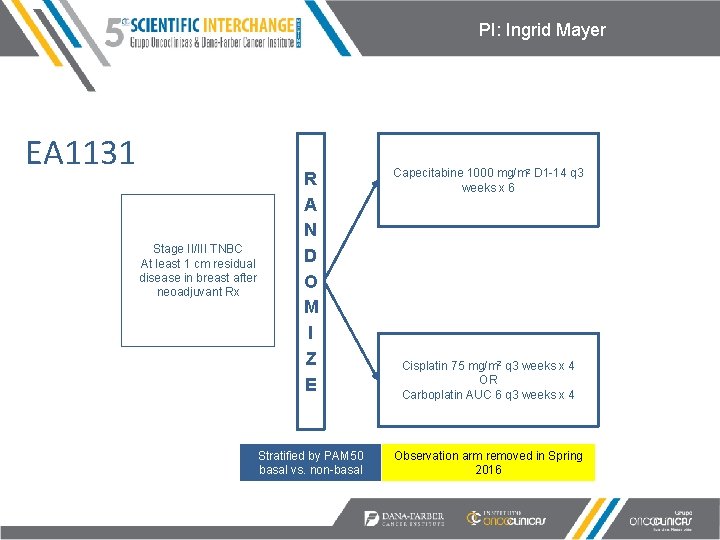
PI: Ingrid Mayer EA 1131 Stage II/III TNBC At least 1 cm residual disease in breast after neoadjuvant Rx R A N D O M I Z E Capecitabine 1000 mg/m 2 D 1 -14 q 3 weeks x 6 Stratified by PAM 50 basal vs. non-basal Observation arm removed in Spring 2016 Cisplatin 75 mg/m 2 q 3 weeks x 4 OR Carboplatin AUC 6 q 3 weeks x 4
What About Platinum in Patients with Inherited BRCA Mutation?
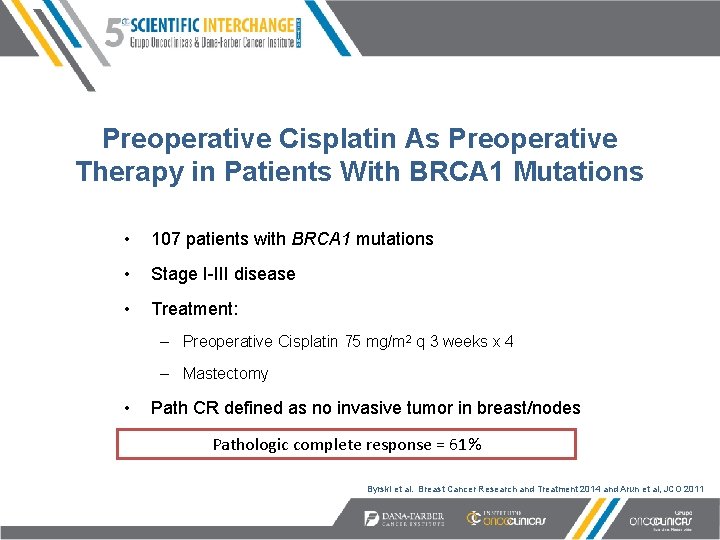
Preoperative Cisplatin As Preoperative Therapy in Patients With BRCA 1 Mutations • 107 patients with BRCA 1 mutations • Stage I-III disease • Treatment: – Preoperative Cisplatin 75 mg/m 2 q 3 weeks x 4 – Mastectomy • Path CR defined as no invasive tumor in breast/nodes Pathologic complete response = 61% Byrski et al. Breast Cancer Research and Treatment 2014 and Arun et al, JCO 2011
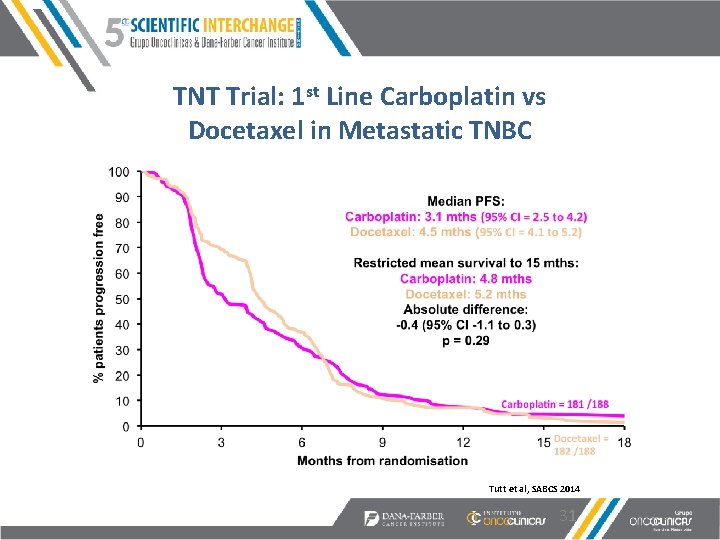
TNT Trial: 1 st Line Carboplatin vs Docetaxel in Metastatic TNBC Tutt et al, SABCS 2014 31
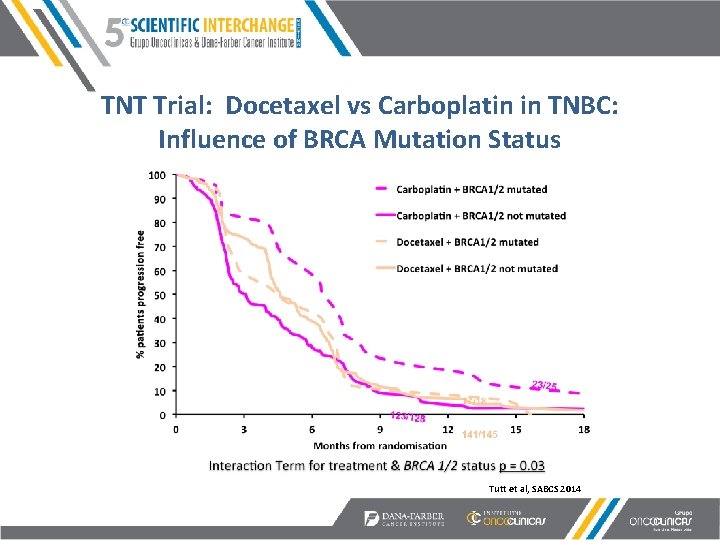
TNT Trial: Docetaxel vs Carboplatin in TNBC: Influence of BRCA Mutation Status Tutt et al, SABCS 2014
Do We Have Sufficient Data To Incorporate Platinum in Early Treatment of BRCA Associated TNBC? • May never have large, definitive trial • Mounting evidence in neoadjuvant and metastatic settings • Biology is consistent with clinical observations • Probably ready or close to it – ideally would like to see results of neoadjuvant INFORM trial • How do we do it? Add to standard? Substitute for one or more agents?
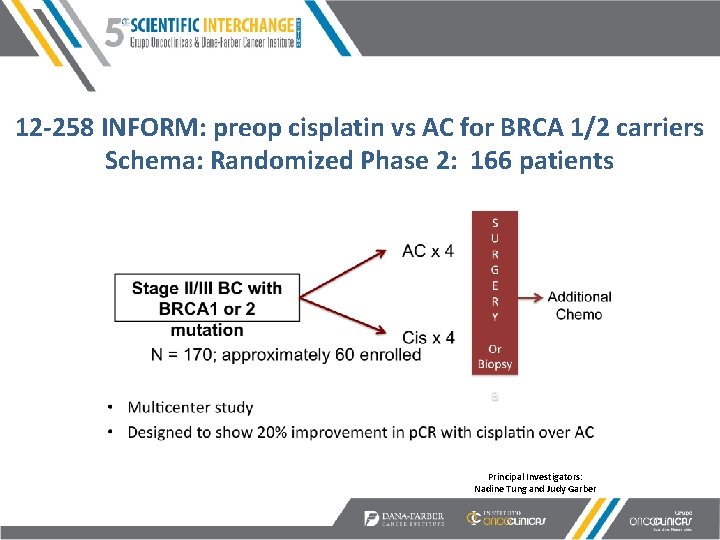
12 -258 INFORM: preop cisplatin vs AC for BRCA 1/2 carriers Schema: Randomized Phase 2: 166 patients Principal Investigators: Nadine Tung and Judy Garber
Summary • In general, high risk TNBC should be treated with a sequential anthraycline/taxane regimen • Patients with stage I disease, who are at lower risk, can be comfortably managed with CMF, AC, or TC • A variety of new treatment approaches are under evaluation, including immunotherapy, PARP inhibitors, and platinum • TNBC remains a challenging area and one that is ripe for intensive translational and clinical research

- Slides: 36