
Adjustment of Triangulation Introduction Triangulation was the preferred

- Slides: 28
Adjustment of Triangulation
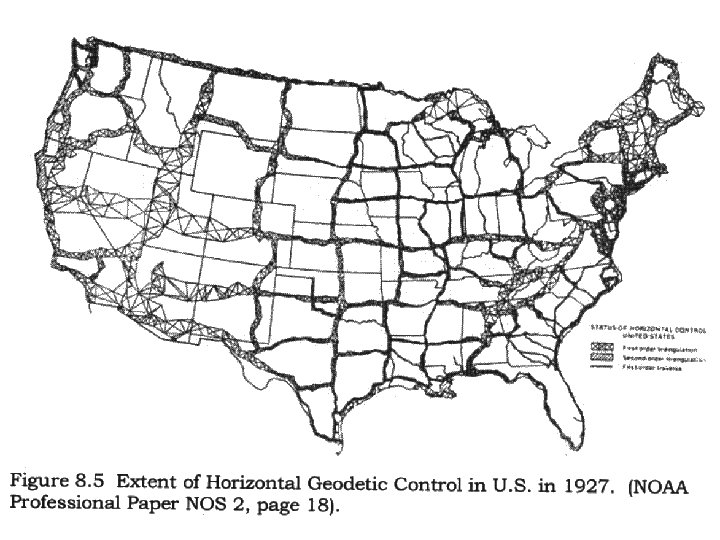
Introduction • Triangulation was the preferred method for horizontal control surveys until the EDM was developed • Angles could be measured to a high level of accuracy • Measured baseline distances were included every so often to strengthen the network
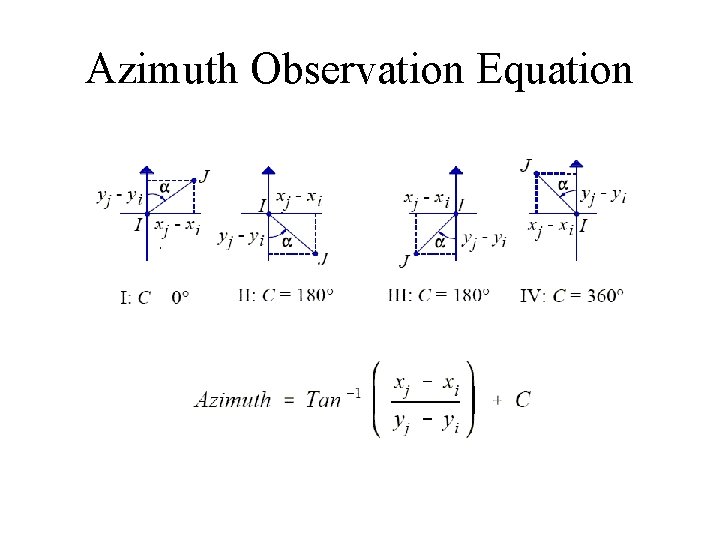
Azimuth Observation Equation
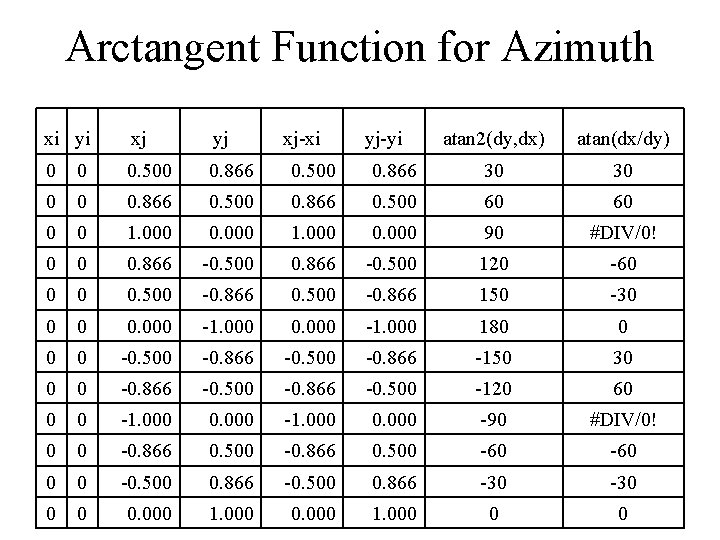
Arctangent Function for Azimuth xi yi xj yj xj-xi 0 0 0. 500 0. 866 0. 500 0 0 1. 000 0 yj-yi atan 2(dy, dx) atan(dx/dy) 0. 866 30 30 0. 866 0. 500 60 60 0. 000 1. 000 0. 000 90 #DIV/0! 0. 866 -0. 500 120 -60 0 0. 500 -0. 866 150 -30 0 0 0. 000 -1. 000 180 0 -0. 500 -0. 866 -150 30 0 0 -0. 866 -0. 500 -120 60 0 0 -1. 000 0. 000 -90 #DIV/0! 0 0 -0. 866 0. 500 -60 0 0 -0. 500 0. 866 -30 0 0 0. 000 1. 000 0 0
Azimuth Examples
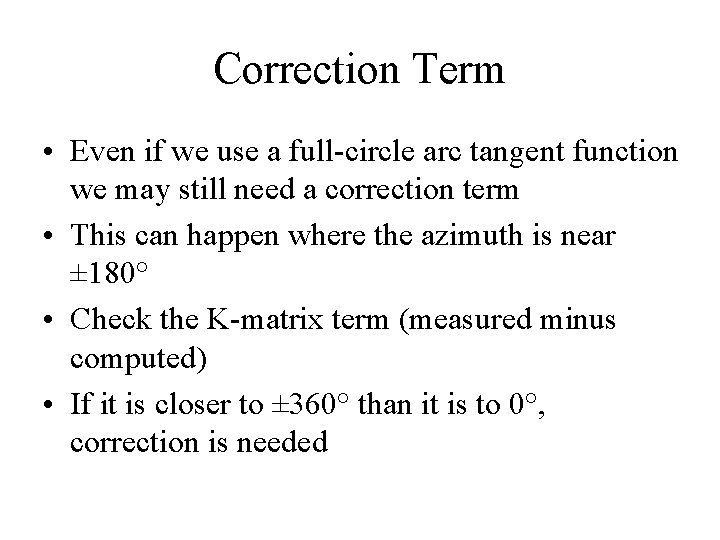
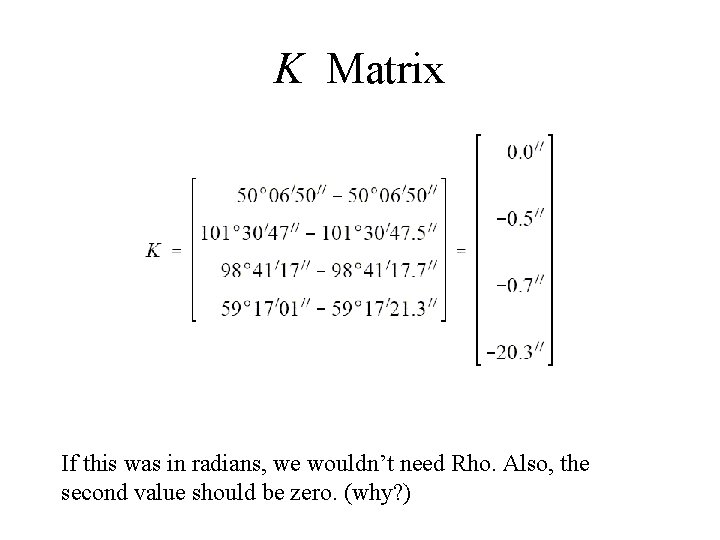
Correction Term • Even if we use a full-circle arc tangent function we may still need a correction term • This can happen where the azimuth is near ± 180° • Check the K-matrix term (measured minus computed) • If it is closer to ± 360° than it is to 0°, correction is needed
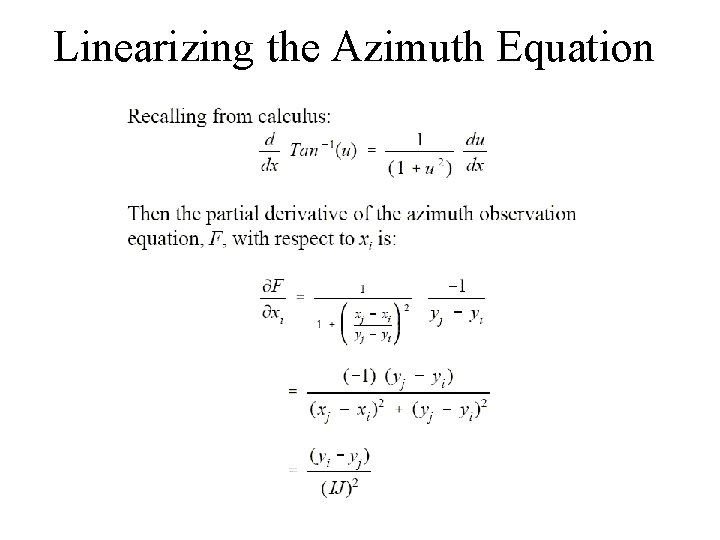
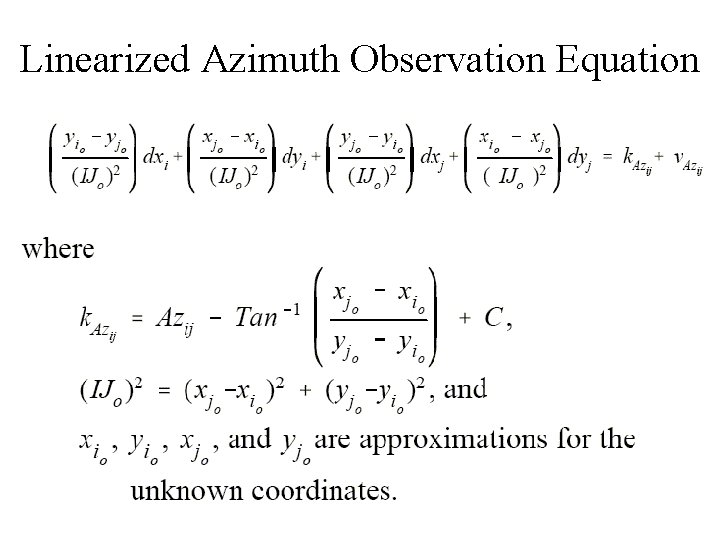
Linearizing the Azimuth Equation
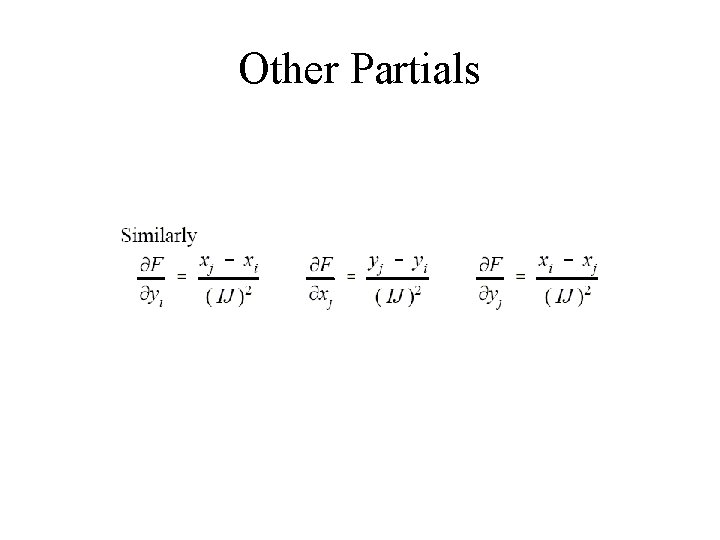
Other Partials
Linearized Azimuth Observation Equation
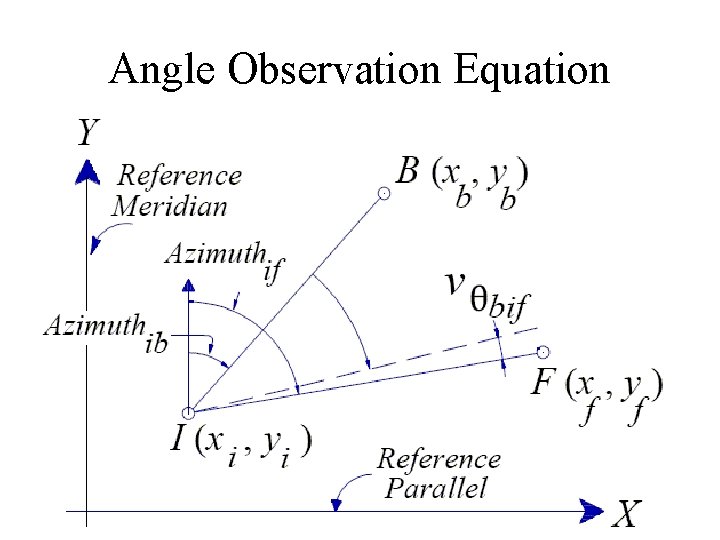
Angle Observation Equation
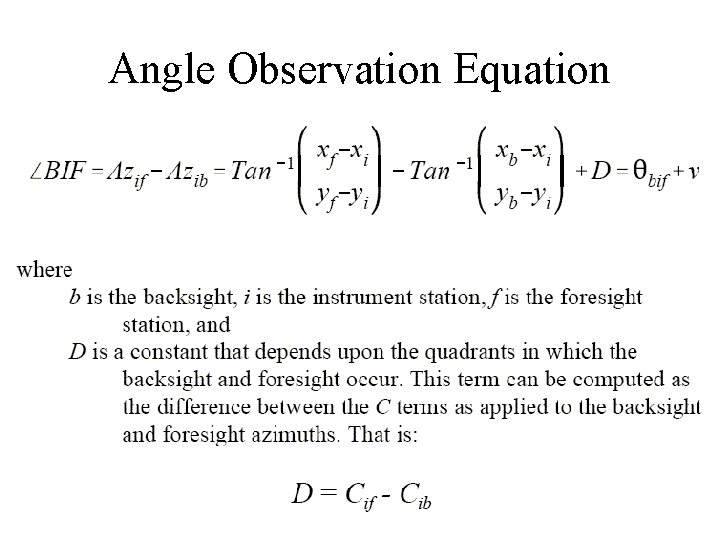
Angle Observation Equation
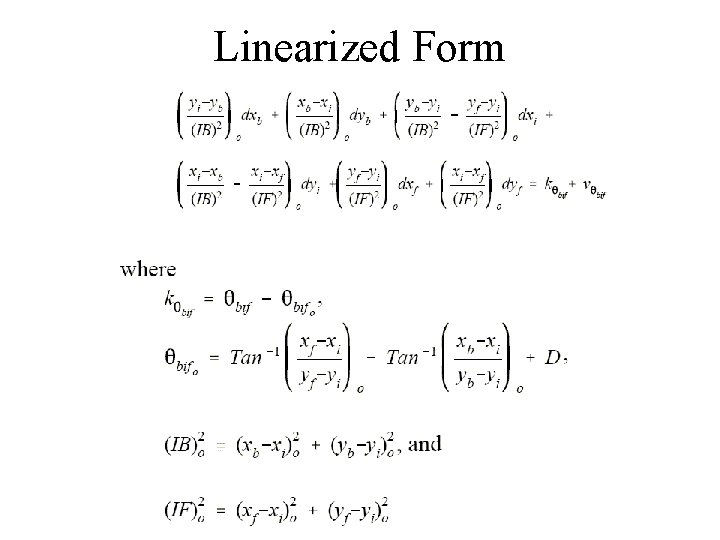
Linearized Form
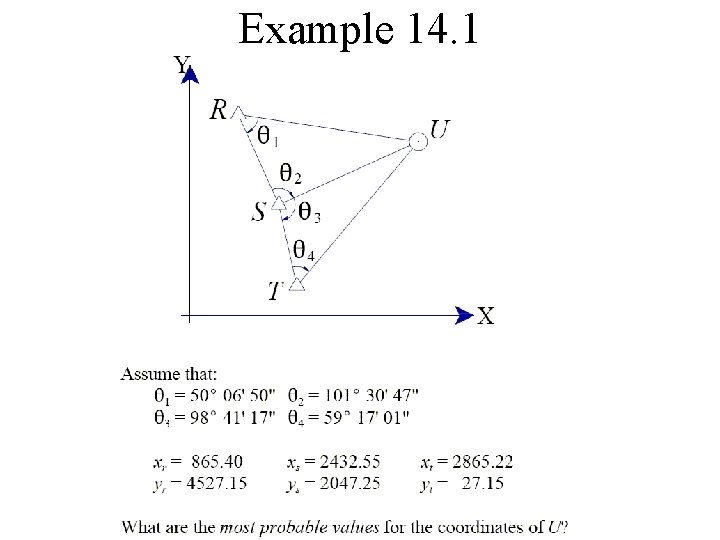
Example 14. 1
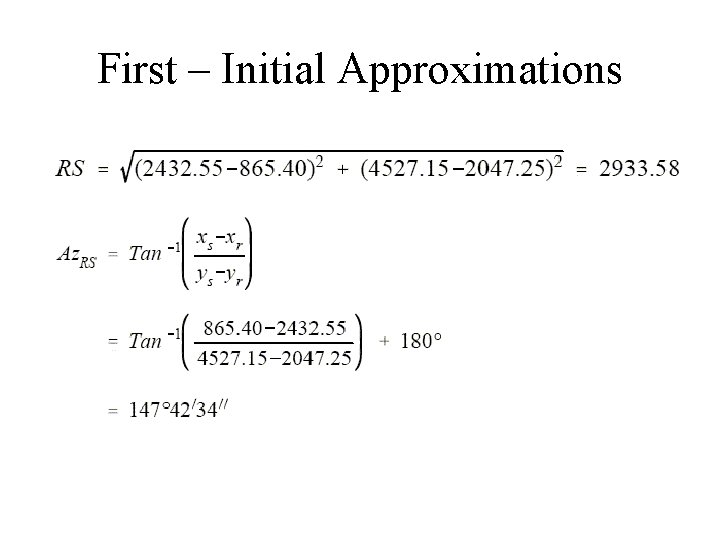
First – Initial Approximations
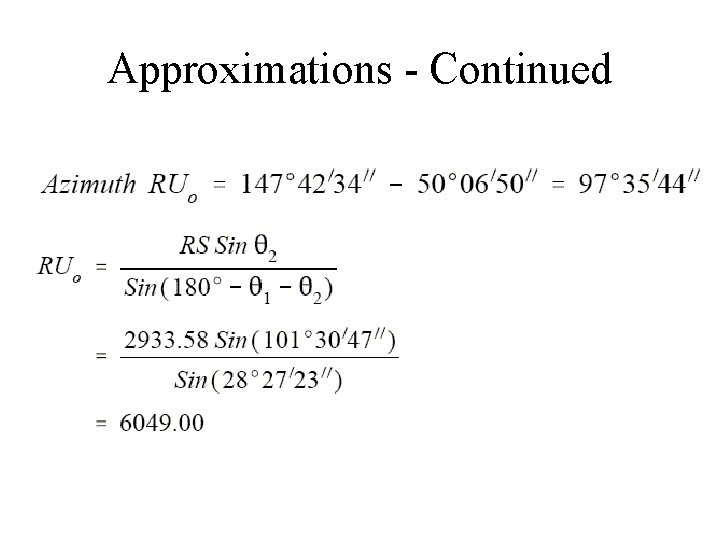
Approximations - Continued
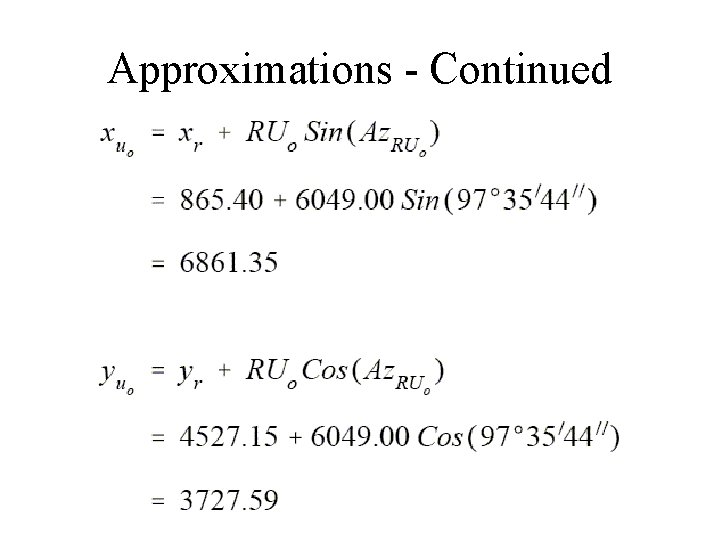
Approximations - Continued
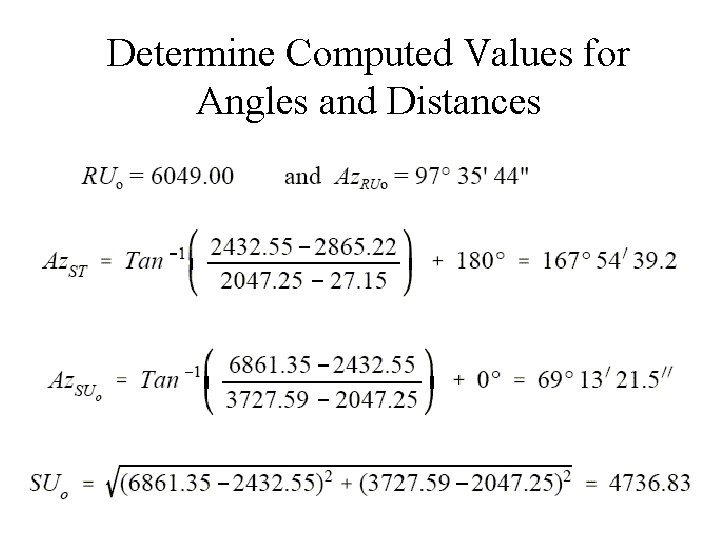
Determine Computed Values for Angles and Distances
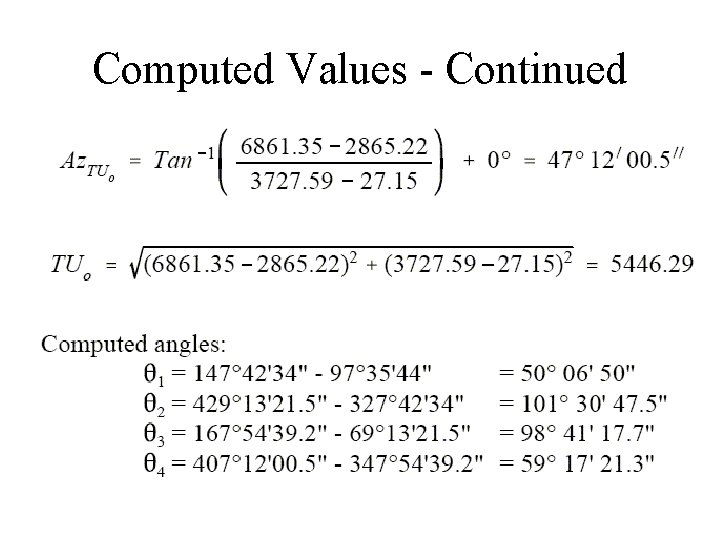
Computed Values - Continued
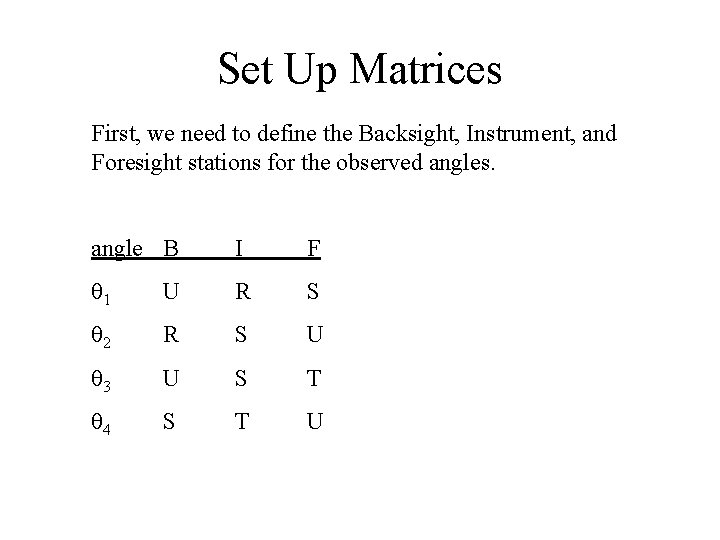
Set Up Matrices First, we need to define the Backsight, Instrument, and Foresight stations for the observed angles. angle B I F θ 1 U R S θ 2 R S U θ 3 U S T θ 4 S T U
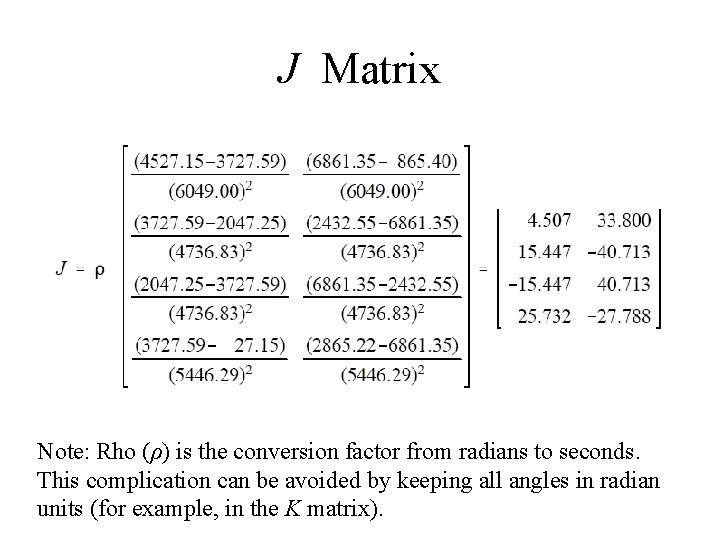
J Matrix Note: Rho (ρ) is the conversion factor from radians to seconds. This complication can be avoided by keeping all angles in radian units (for example, in the K matrix).
K Matrix If this was in radians, we wouldn’t need Rho. Also, the second value should be zero. (why? )
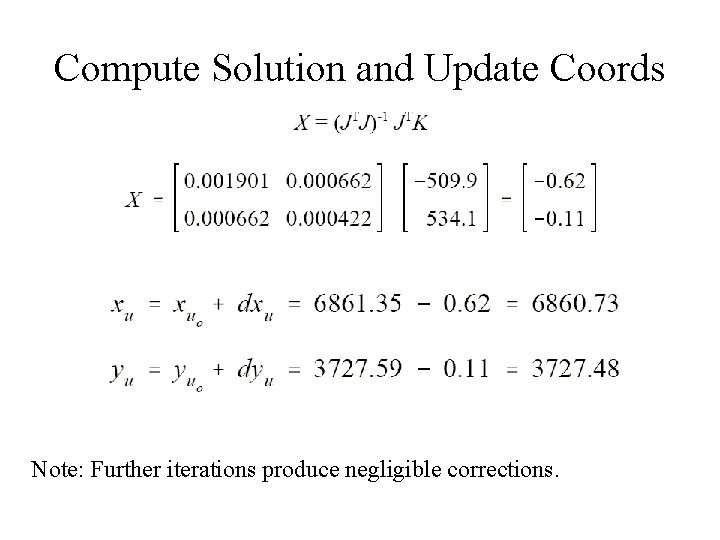
Compute Solution and Update Coords Note: Further iterations produce negligible corrections.
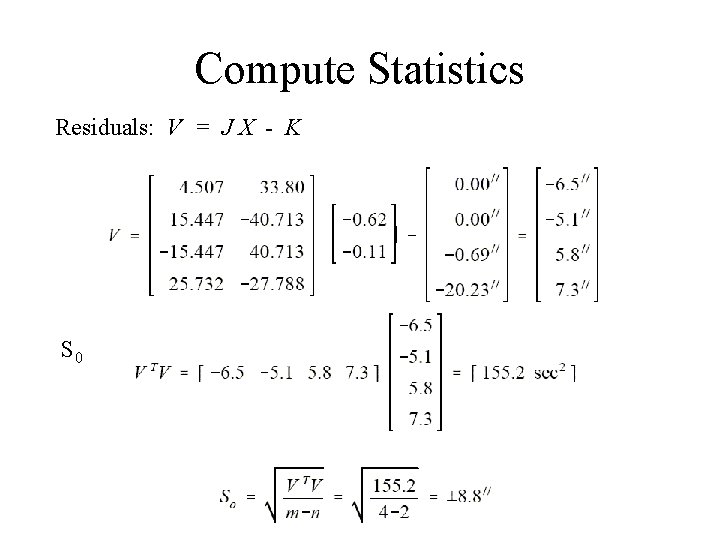
Compute Statistics Residuals: V = J X - K S 0
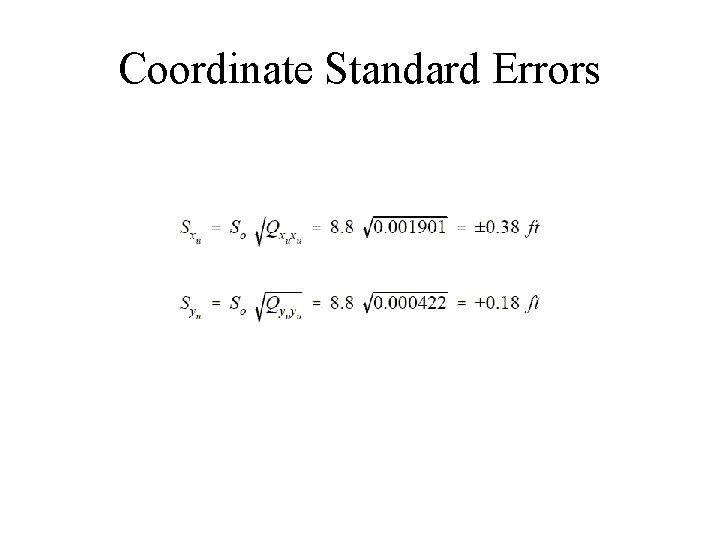
Coordinate Standard Errors
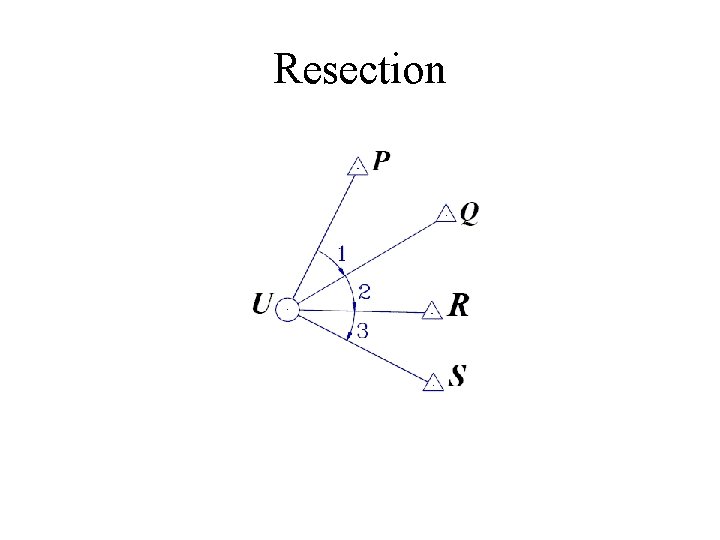
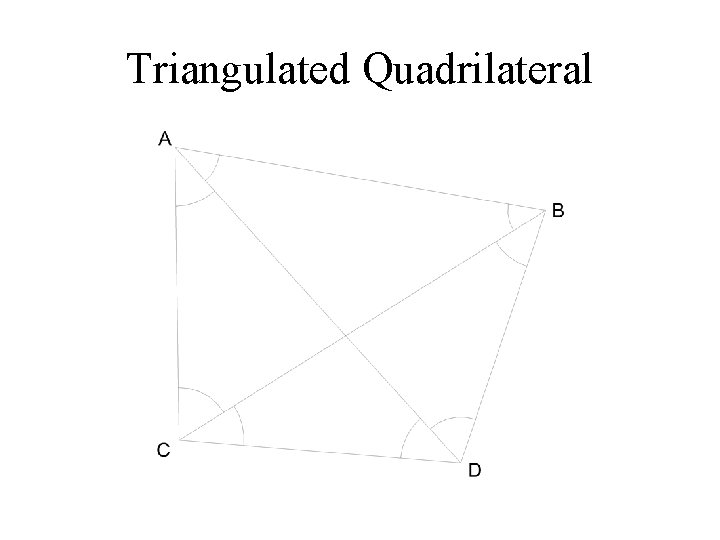
Other Angle Networks • Resection – more than 3 points is redundant • Triangulated quadrilaterals • Other geometric shapes
Resection
Triangulated Quadrilateral