
Adjectives What is the function of adjectives An
- Slides: 47
Adjectives
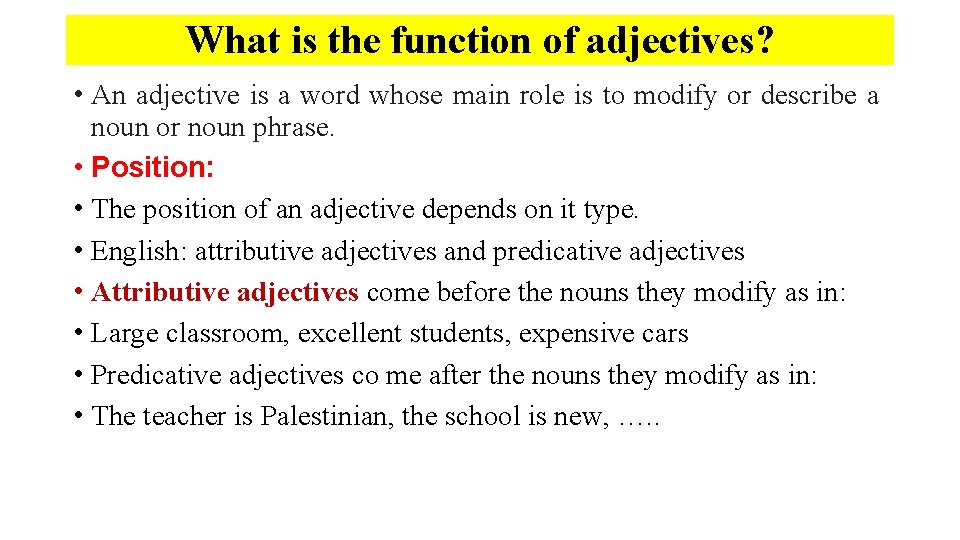
What is the function of adjectives? • An adjective is a word whose main role is to modify or describe a noun or noun phrase. • Position: • The position of an adjective depends on it type. • English: attributive adjectives and predicative adjectives • Attributive adjectives come before the nouns they modify as in: • Large classroom, excellent students, expensive cars • Predicative adjectives co me after the nouns they modify as in: • The teacher is Palestinian, the school is new, …. .
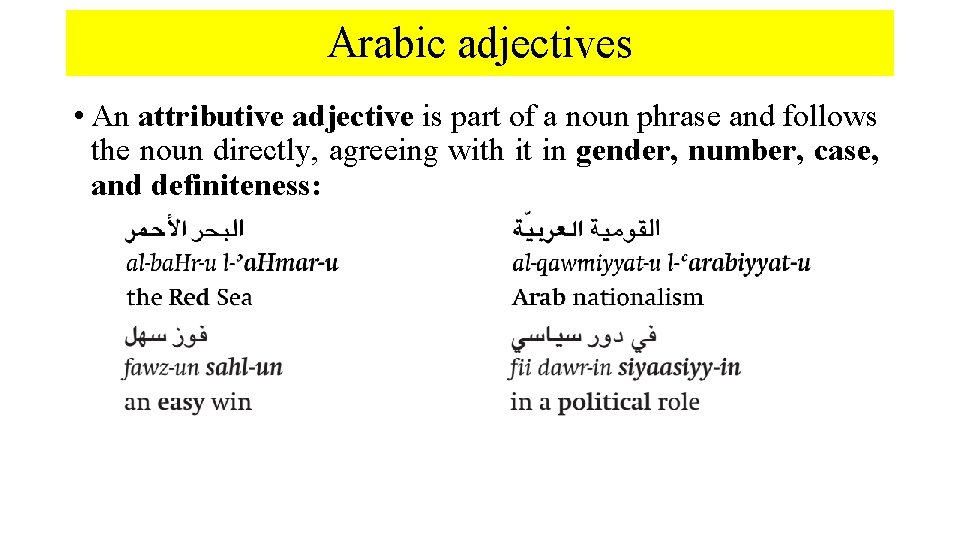
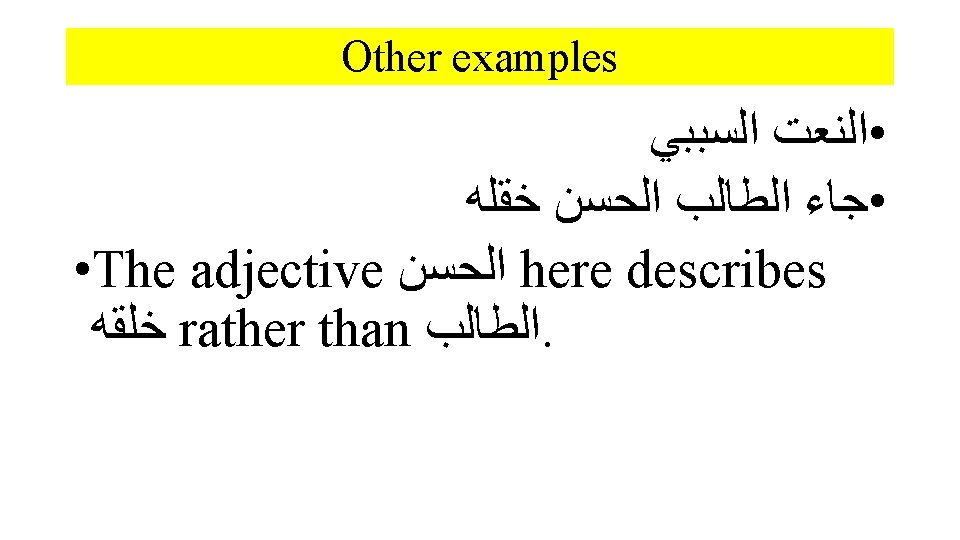
Arabic adjectives • An attributive adjective is part of a noun phrase and follows the noun directly, agreeing with it in gender, number, case, and definiteness:
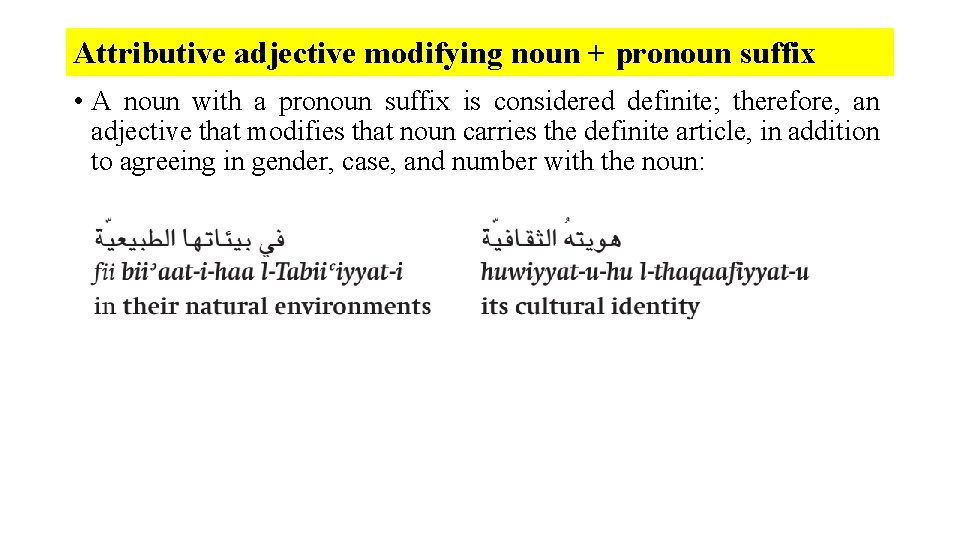
Attributive adjective modifying noun + pronoun suffix • A noun with a pronoun suffix is considered definite; therefore, an adjective that modifies that noun carries the definite article, in addition to agreeing in gender, case, and number with the noun:
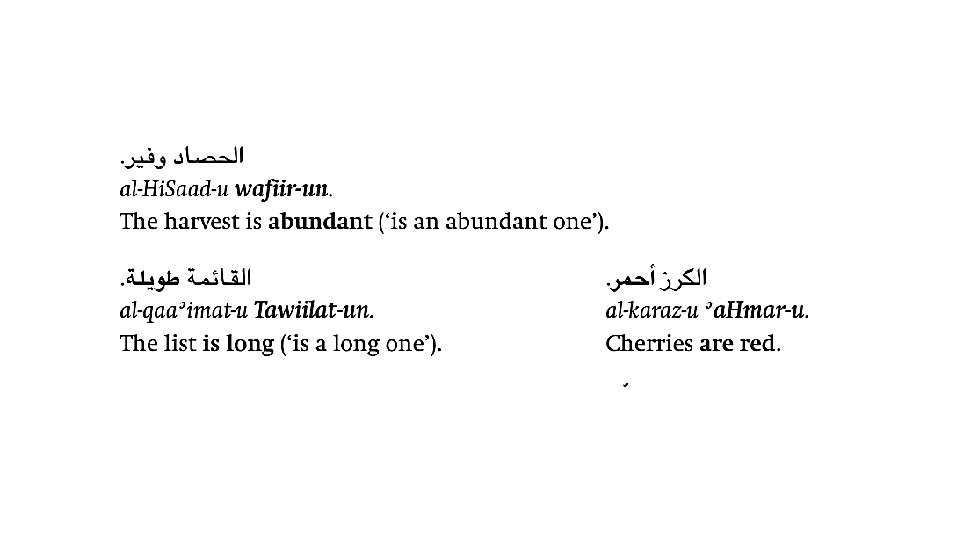
Predicate adjectives • A predicate adjective is used in an equational (verbless) sentence to provide information about the subject of the sentence, thus completing the clause. • In an Arabic equational sentence, there is usually no overt copula, or present tense form of the verb “to be, ” linking the subject and predicate. • When acting as a predicate, the adjective agrees with the noun or pronoun subject in gender and number. It is usually in the nominative case. However, it does not normally take the definite article because it is predicating a quality or attribute to the subject.
Fixed phrases • In some fixed structures, attributive adjectives come after nouns in some fixed phrases. Consider the following examples: • Secretary General, • President elect, • court martial (= military court) • Poet Laureate, • Attorney General
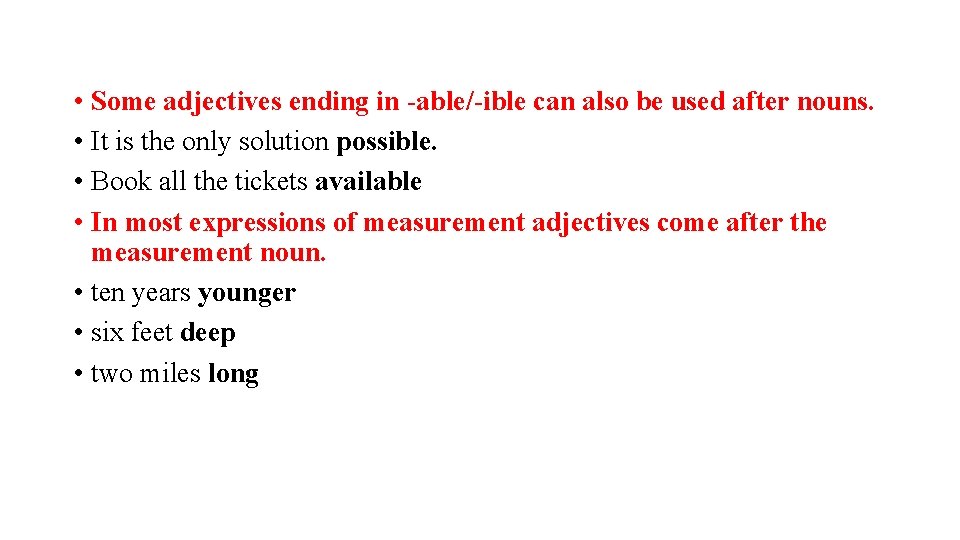
• Some adjectives ending in -able/-ible can also be used after nouns. • It is the only solution possible. • Book all the tickets available • In most expressions of measurement adjectives come after the measurement noun. • ten years younger • six feet deep • two miles long
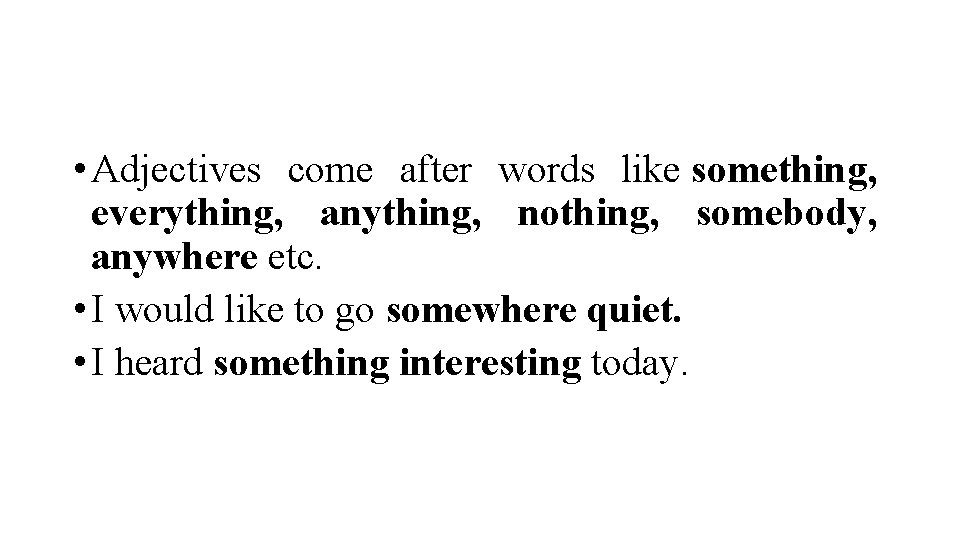
• Adjectives come after words like something, everything, anything, nothing, somebody, anywhere etc. • I would like to go somewhere quiet. • I heard something interesting today.
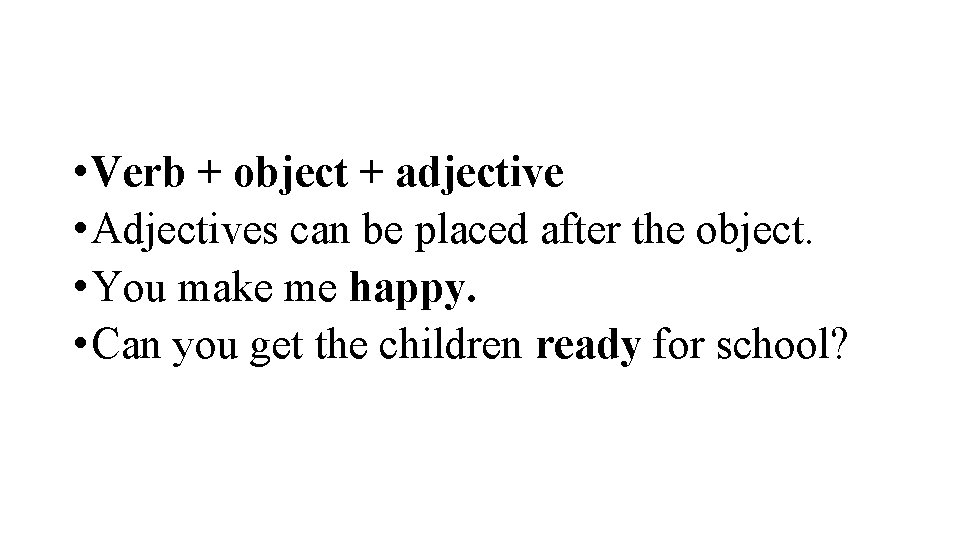
• Verb + object + adjective • Adjectives can be placed after the object. • You make me happy. • Can you get the children ready for school?
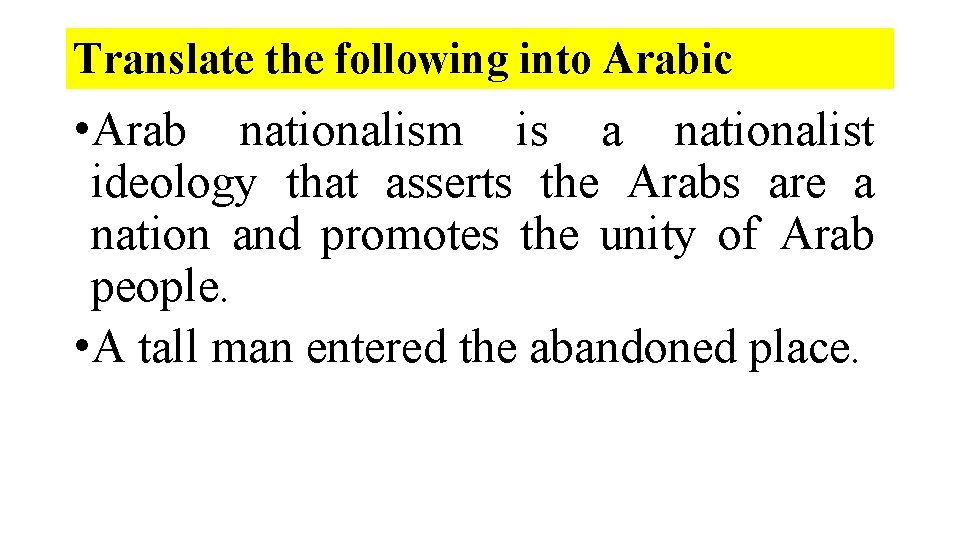
Translate the following into Arabic • Arab nationalism is a nationalist ideology that asserts the Arabs are a nation and promotes the unity of Arab people. • A tall man entered the abandoned place.
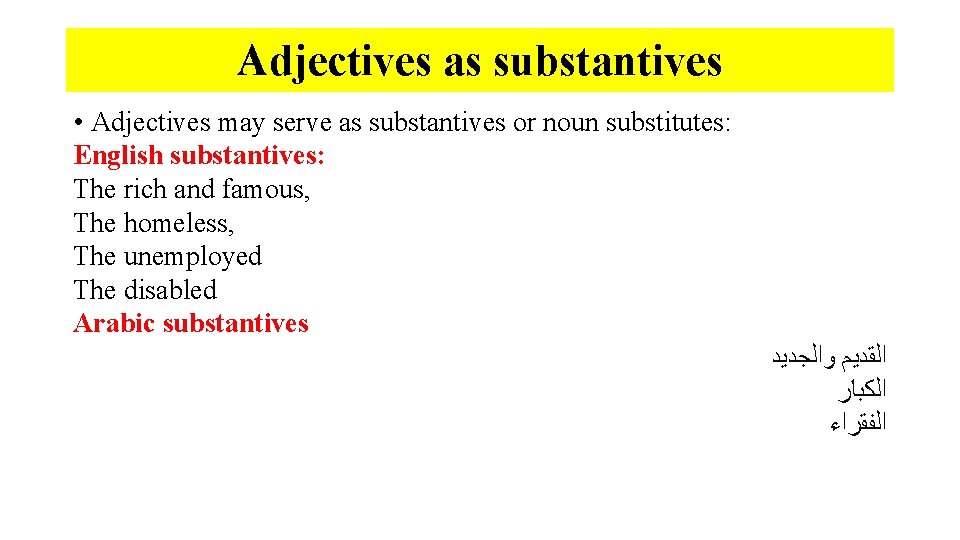
Adjectives as substantives • Adjectives may serve as substantives or noun substitutes: English substantives: The rich and famous, The homeless, The unemployed The disabled Arabic substantives ﺍﻟﻘﺪﻳﻢ ﻭﺍﻟﺠﺪﻳﺪ ﺍﻟﻜﺒﺎﺭ ﺍﻟﻔﻘﺮﺍﺀ
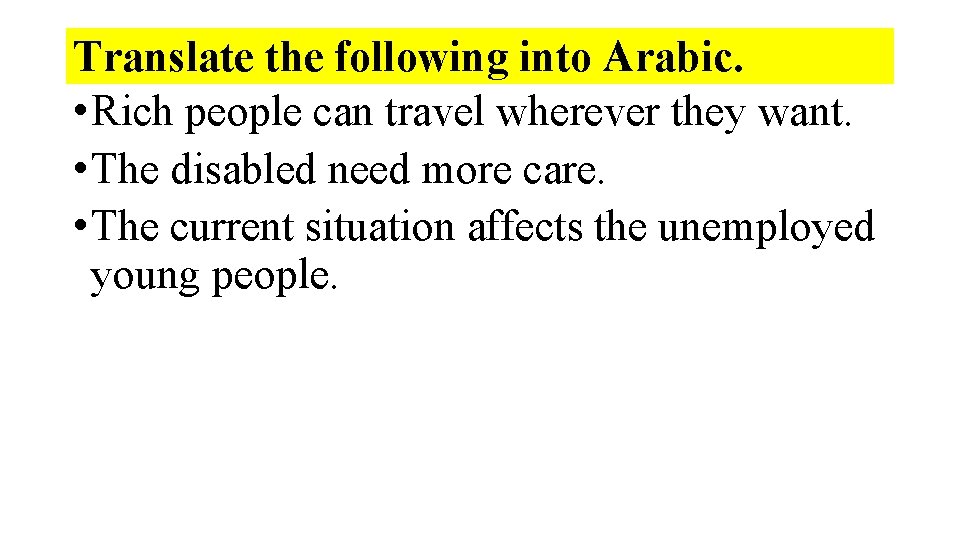
Translate the following into Arabic. • Rich people can travel wherever they want. • The disabled need more care. • The current situation affects the unemployed young people.
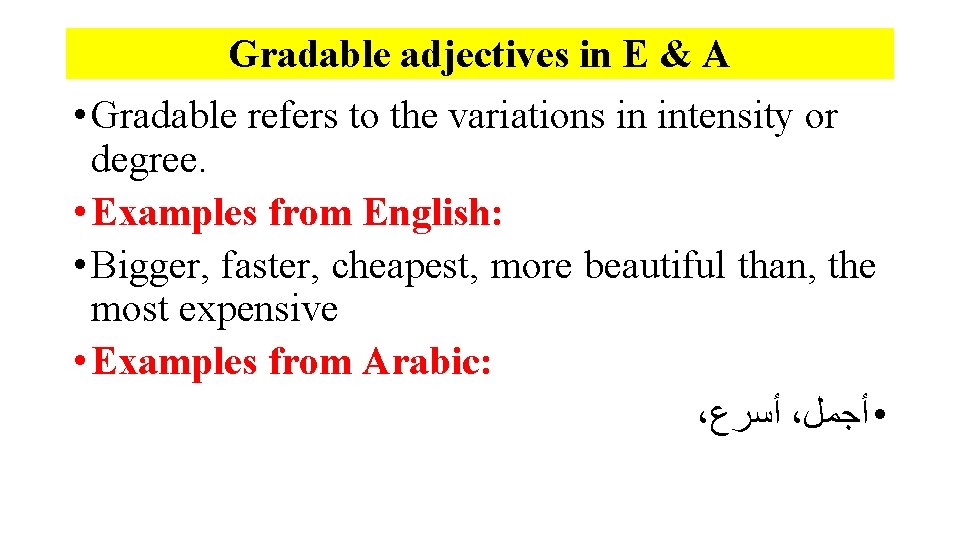
Gradable adjectives in E & A • Gradable refers to the variations in intensity or degree. • Examples from English: • Bigger, faster, cheapest, more beautiful than, the most expensive • Examples from Arabic: ، ﺃﺴﺮﻉ ، • ﺃﺠﻤﻞ
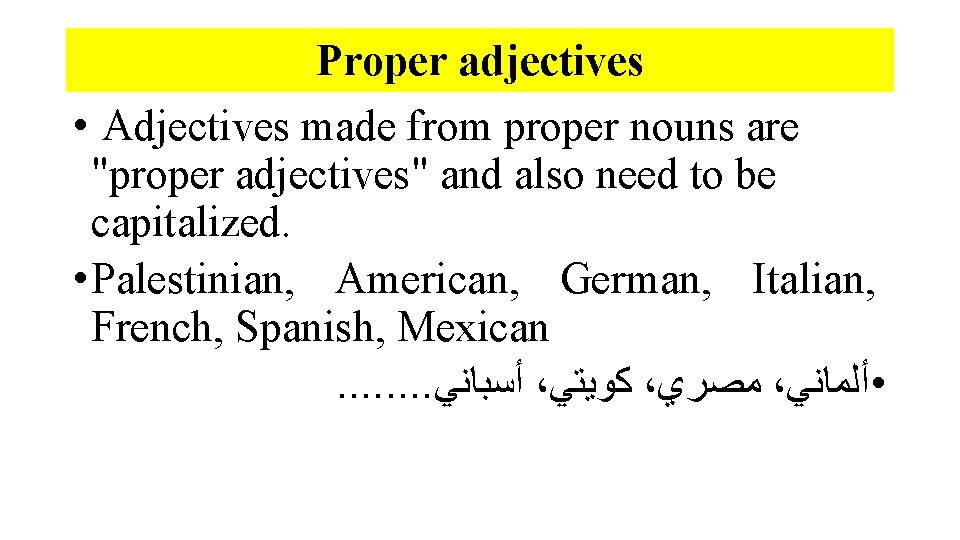
Proper adjectives • Adjectives made from proper nouns are "proper adjectives" and also need to be capitalized. • Palestinian, American, German, Italian, French, Spanish, Mexican. . . . ﺃﺴﺒﺎﻧﻲ ، ﻛﻮﻳﺘﻲ ، ﻣﺼﺮﻱ ، • ﺃﻠﻤﺎﻧﻲ
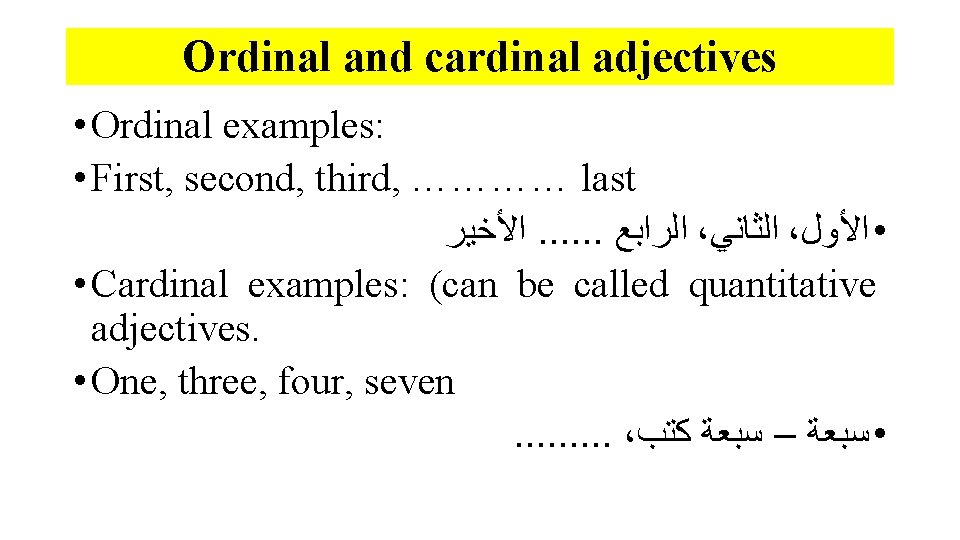
Ordinal and cardinal adjectives • Ordinal examples: • First, second, third, ………… last ﺍﻷﺨﻴﺮ. . . ﺍﻟﺮﺍﺑﻊ ، ﺍﻟﺜﺎﻧﻲ ، • ﺍﻷﻮﻝ • Cardinal examples: (can be called quantitative adjectives. • One, three, four, seven. . ، • ﺳﺒﻌﺔ – ﺳﺒﻌﺔ ﻛﺘﺐ
• What are the major differences between proper adjectives and gradable adjectives.
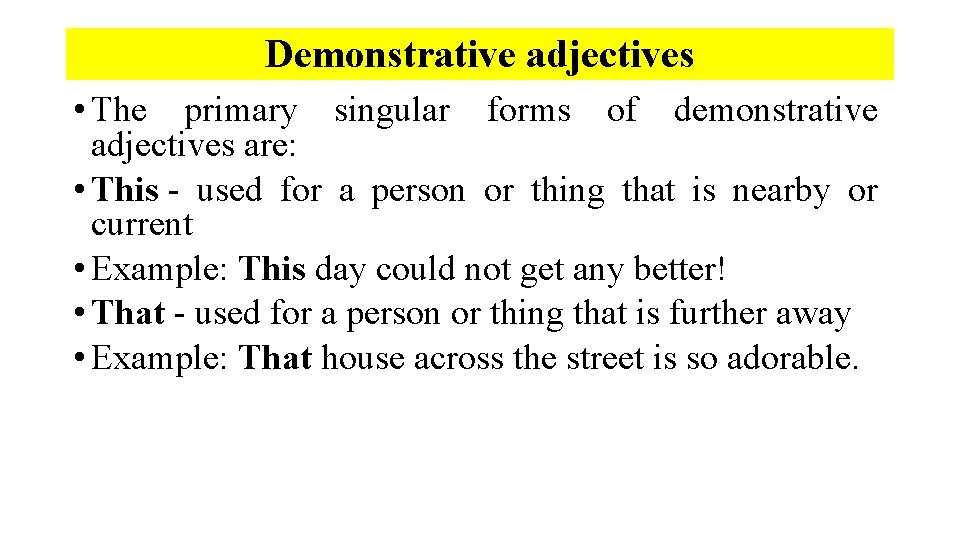
Demonstrative adjectives • The primary singular forms of demonstrative adjectives are: • This - used for a person or thing that is nearby or current • Example: This day could not get any better! • That - used for a person or thing that is further away • Example: That house across the street is so adorable.
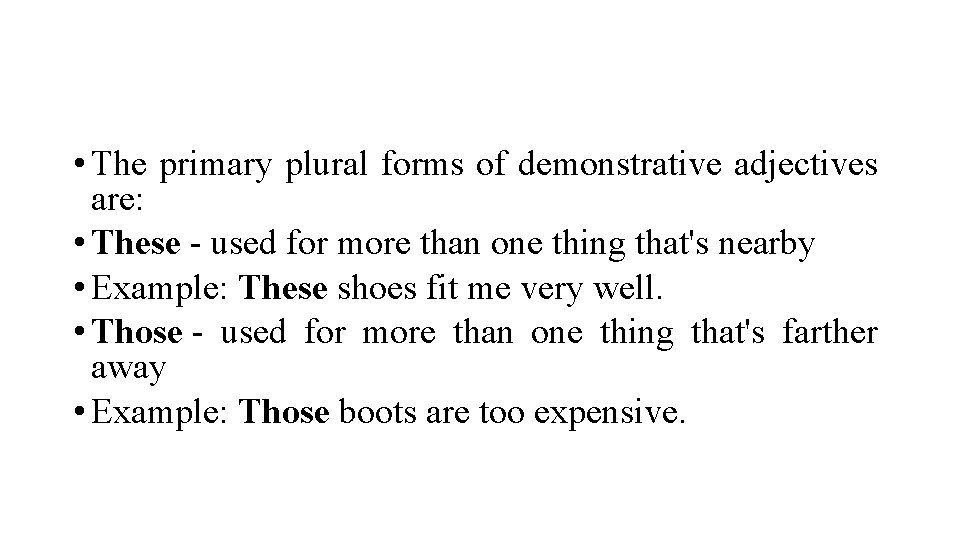
• The primary plural forms of demonstrative adjectives are: • These - used for more than one thing that's nearby • Example: These shoes fit me very well. • Those - used for more than one thing that's farther away • Example: Those boots are too expensive.
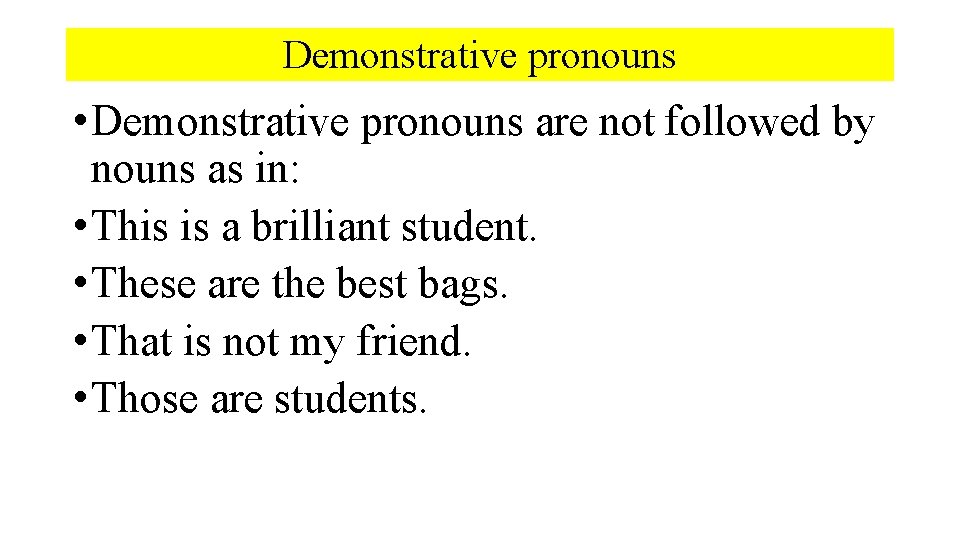
Demonstrative pronouns • Demonstrative pronouns are not followed by nouns as in: • This is a brilliant student. • These are the best bags. • That is not my friend. • Those are students.
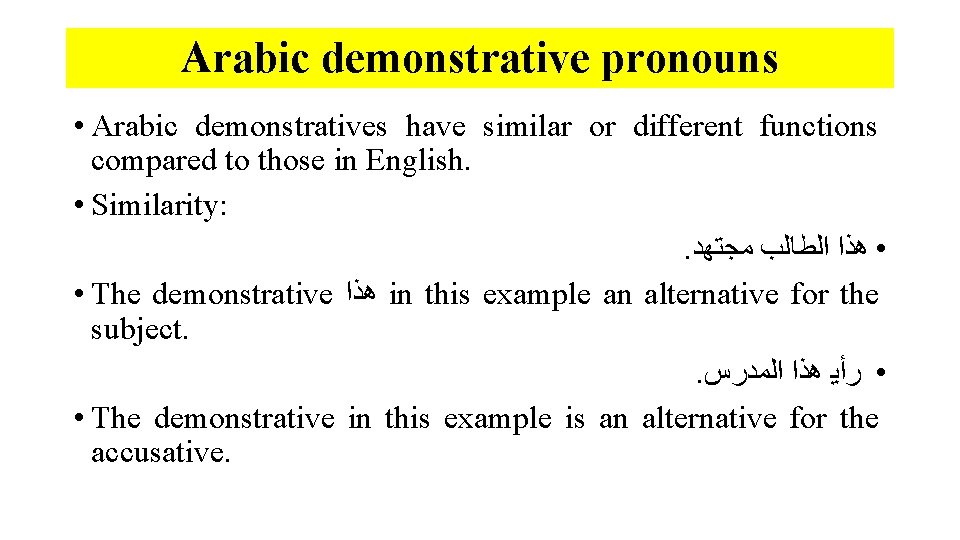
Arabic demonstrative pronouns • Arabic demonstratives have similar or different functions compared to those in English. • Similarity: . • ﻫﺬﺍ ﺍﻟﻄﺎﻟﺐ ﻣﺠﺘﻬﺪ • The demonstrative ﻫﺬﺍ in this example an alternative for the subject. . • ﺭﺃﻴ ﻫﺬﺍ ﺍﻟﻤﺪﺭﺱ • The demonstrative in this example is an alternative for the accusative.
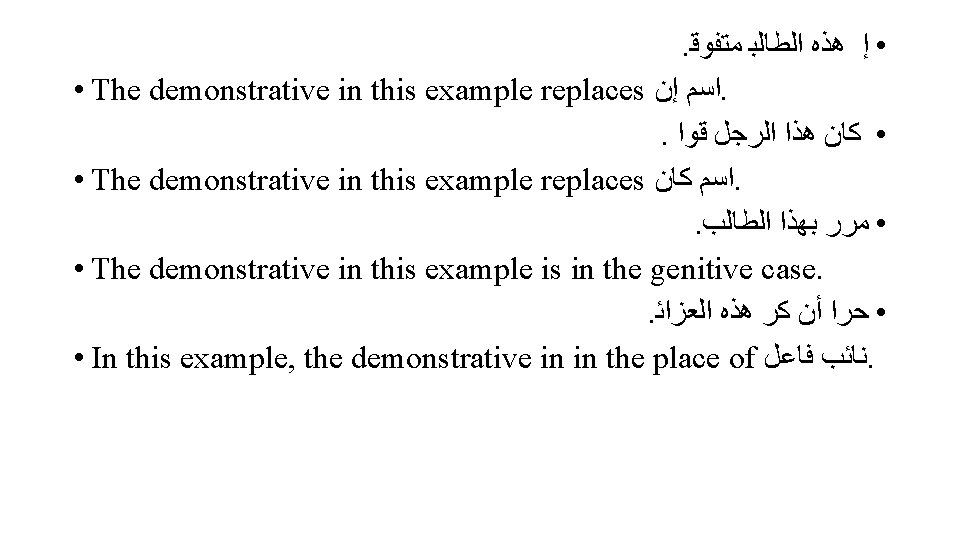
. • ﺇ ﻫﺬﻩ ﺍﻟﻄﺎﻟﺒ ﻣﺘﻔﻮﻗ • The demonstrative in this example replaces ﺍﺳﻢ ﺇﻥ. . • ﻛﺎﻥ ﻫﺬﺍ ﺍﻟﺮﺟﻞ ﻗﻮﺍ • The demonstrative in this example replaces ﺍﺳﻢ ﻛﺎﻥ. . • ﻣﺮﺭ ﺑﻬﺬﺍ ﺍﻟﻄﺎﻟﺐ • The demonstrative in this example is in the genitive case. . • ﺣﺮﺍ ﺃﻦ ﻛﺭ ﻫﺬﻩ ﺍﻟﻌﺰﺍﺋ • In this example, the demonstrative in in the place of ﻧﺎﺋﺐ ﻓﺎﻋﻞ.
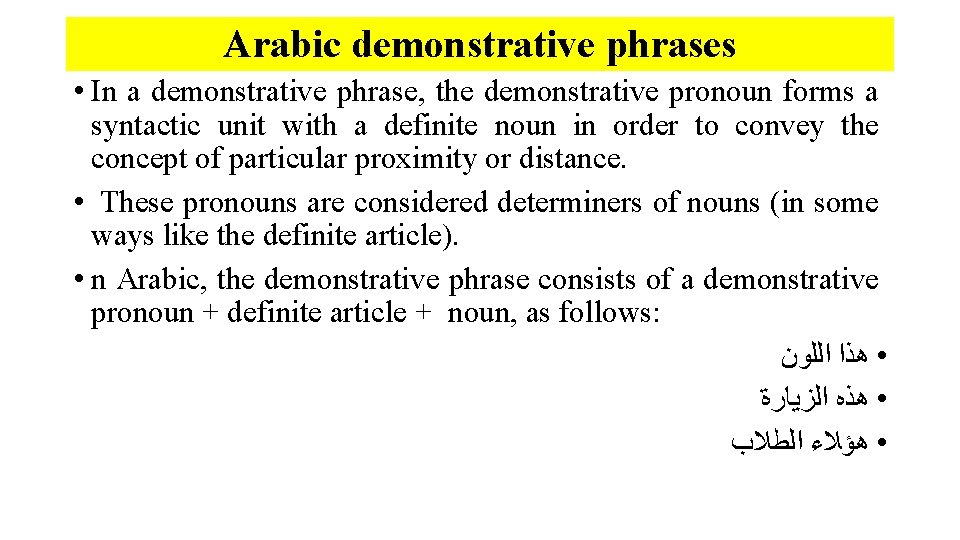
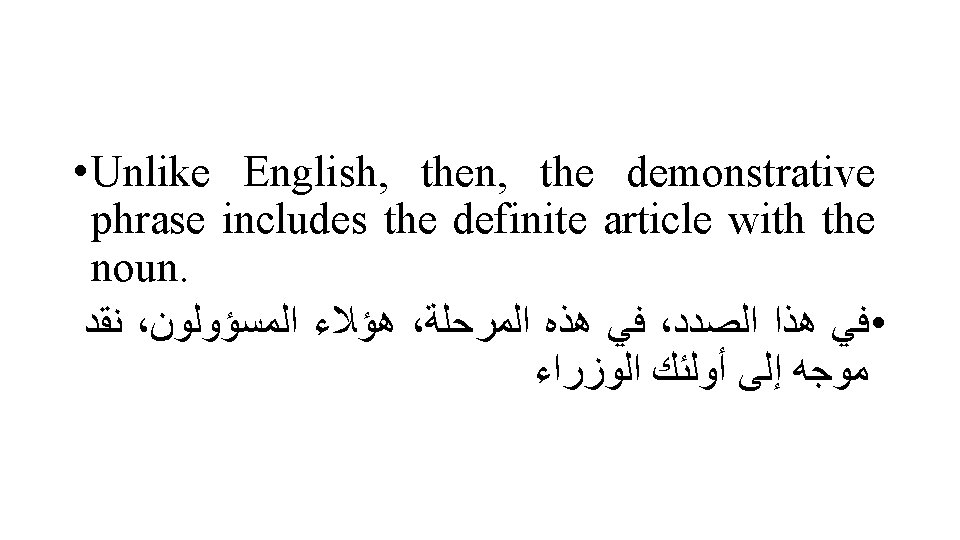
Arabic demonstrative phrases • In a demonstrative phrase, the demonstrative pronoun forms a syntactic unit with a definite noun in order to convey the concept of particular proximity or distance. • These pronouns are considered determiners of nouns (in some ways like the definite article). • n Arabic, the demonstrative phrase consists of a demonstrative pronoun + definite article + noun, as follows: • ﻫﺬﺍ ﺍﻟﻠﻮﻥ • ﻫﺬﻩ ﺍﻟﺰﻳﺎﺭﺓ • ﻫﺆﻼﺀ ﺍﻟﻄﻼﺏ
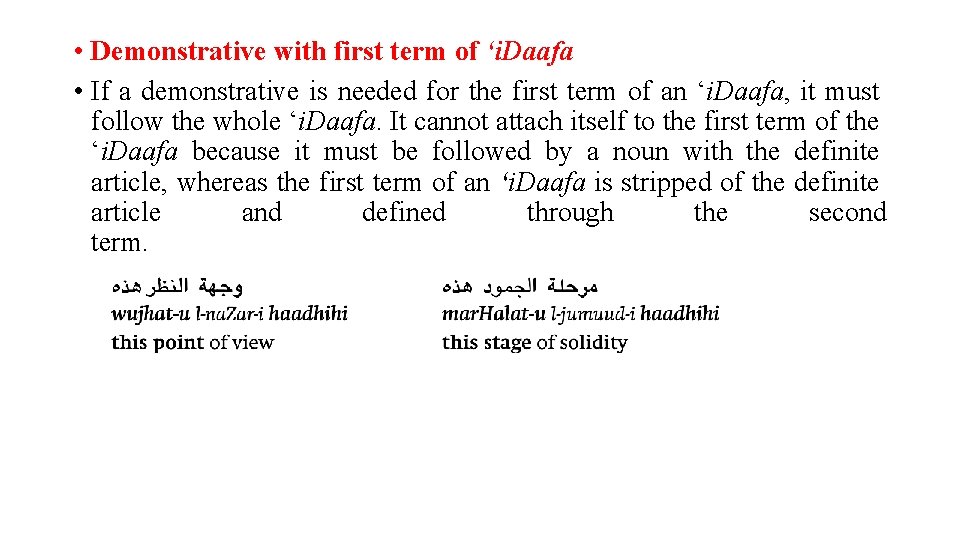
• Demonstrative with first term of ‘i. Daafa • If a demonstrative is needed for the first term of an ‘i. Daafa, it must follow the whole ‘i. Daafa. It cannot attach itself to the first term of the ‘i. Daafa because it must be followed by a noun with the definite article, whereas the first term of an ‘i. Daafa is stripped of the definite article and defined through the second term.
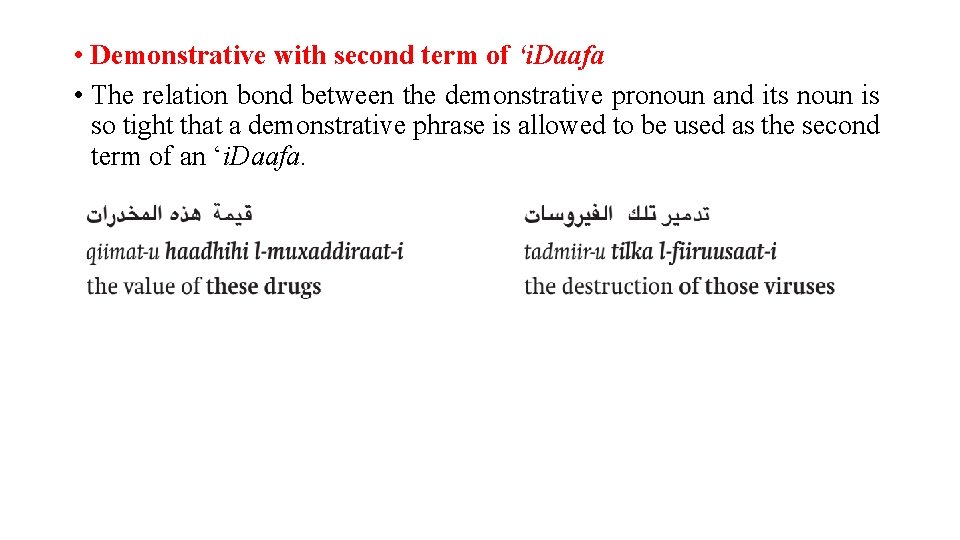
• Demonstrative with second term of ‘i. Daafa • The relation bond between the demonstrative pronoun and its noun is so tight that a demonstrative phrase is allowed to be used as the second term of an ‘i. Daafa.
Inflection of Arabic Adjectives • Adjectives in Arabic inflect for four morphological categories: gender, number, case, and definiteness. • Many of them also inflect for a fifth category: degree (comparative and superlative). • As far as the first four categories are concerned, adjectives mirror the inflectional categories of the nouns that they modify, that is, they agree or are in concord with those nouns. In most cases the agreement or concord is direct or “strict. ”
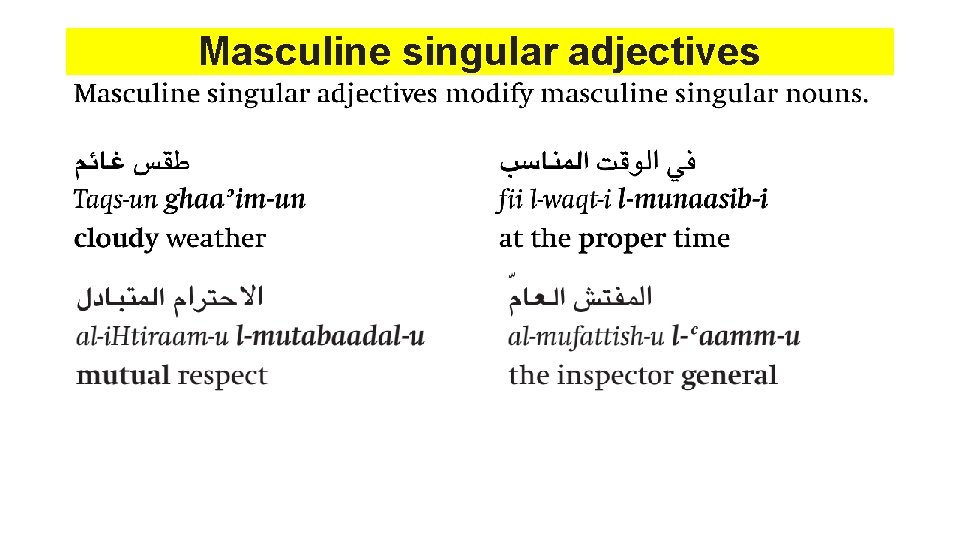
Masculine singular adjectives
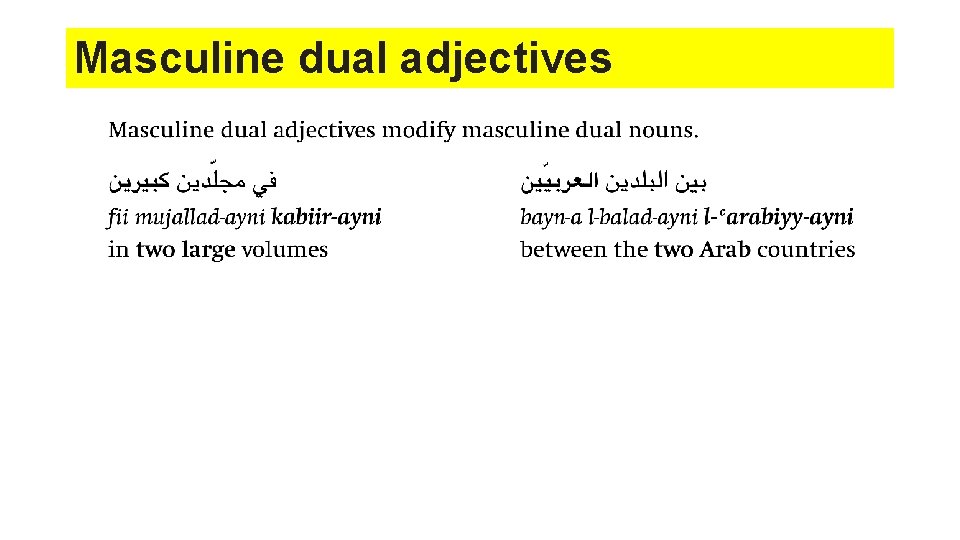
Masculine dual adjectives
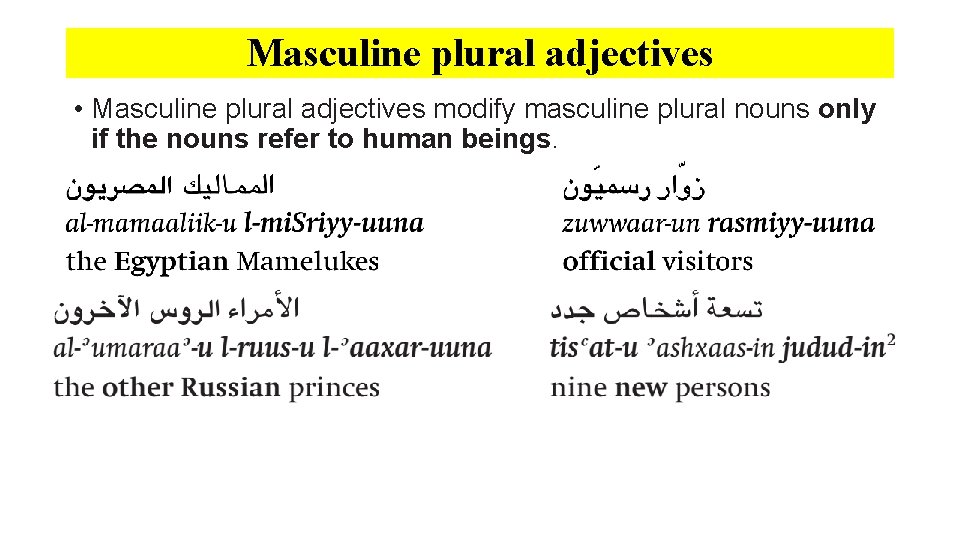
Masculine plural adjectives • Masculine plural adjectives modify masculine plural nouns only if the nouns refer to human beings.
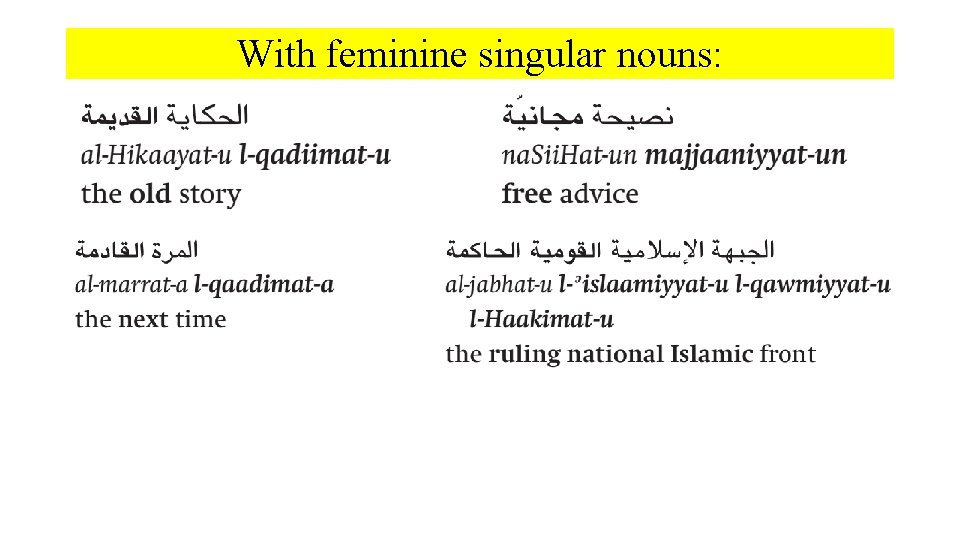
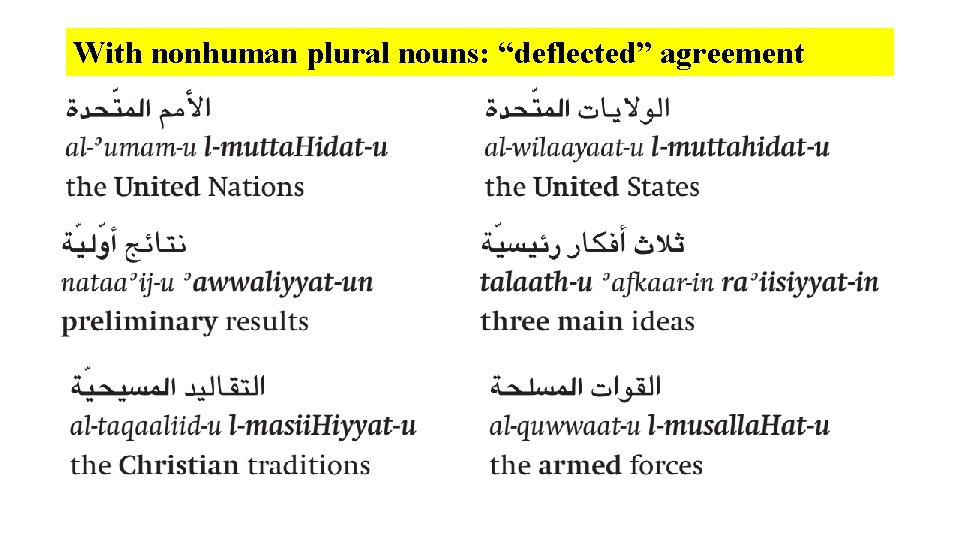
Feminine singular adjectives • The feminine singular adjective is used to modify feminine singular nouns and also for nonhuman plural nouns. The use of the feminine singular to modify nonhuman plural nouns is referred to as “deflected” agreement rather than “strict” agreement.
With feminine singular nouns:
With nonhuman plural nouns: “deflected” agreement
Differentiate between English and Arabic adjectives with reference to humanness.
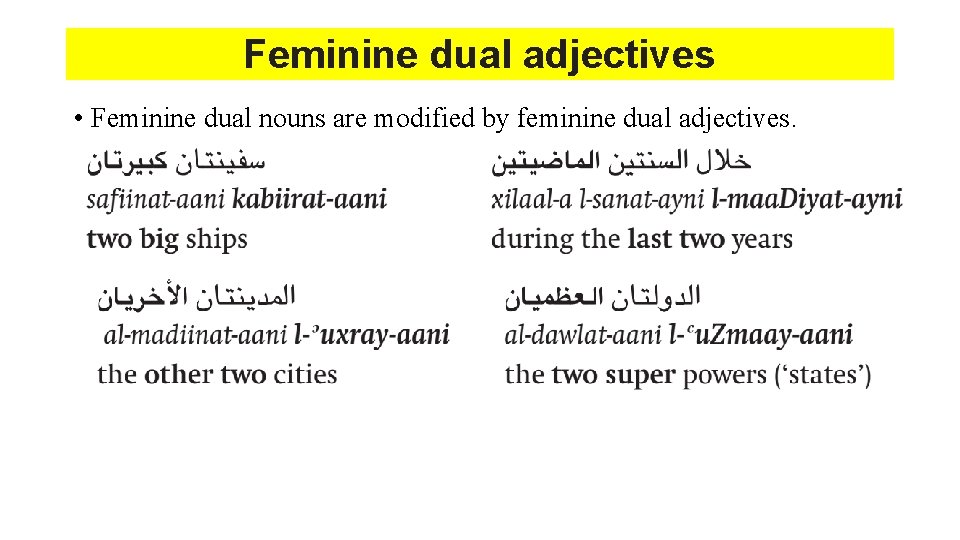
Feminine dual adjectives • Feminine dual nouns are modified by feminine dual adjectives.
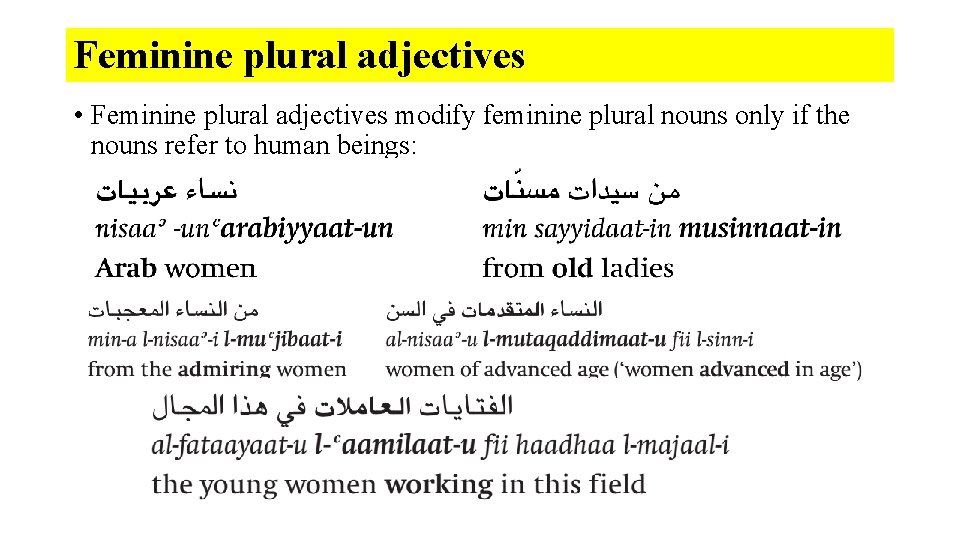
Feminine plural adjectives • Feminine plural adjectives modify feminine plural nouns only if the nouns refer to human beings:
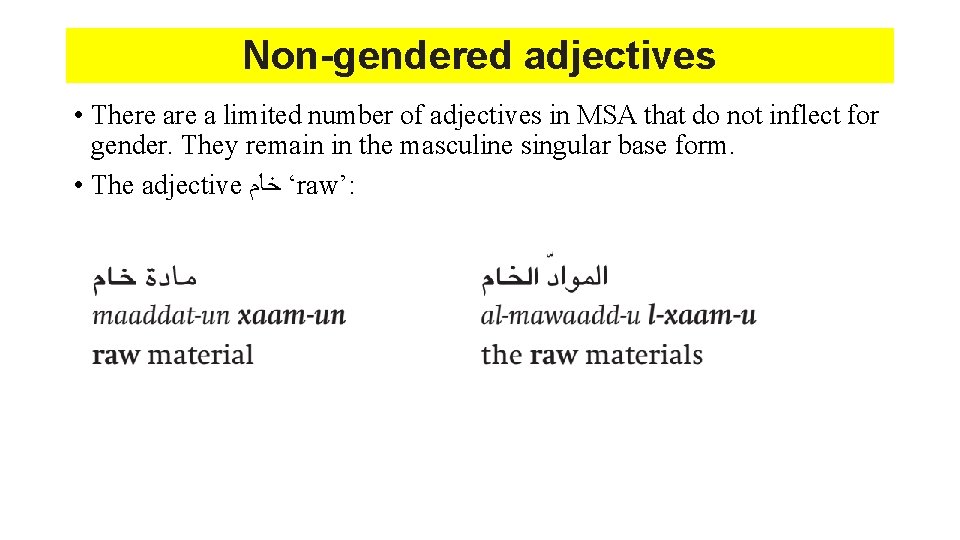
Non-gendered adjectives • There a limited number of adjectives in MSA that do not inflect for gender. They remain in the masculine singular base form. • The adjective ‘ ﺧﺎﻡ raw’:
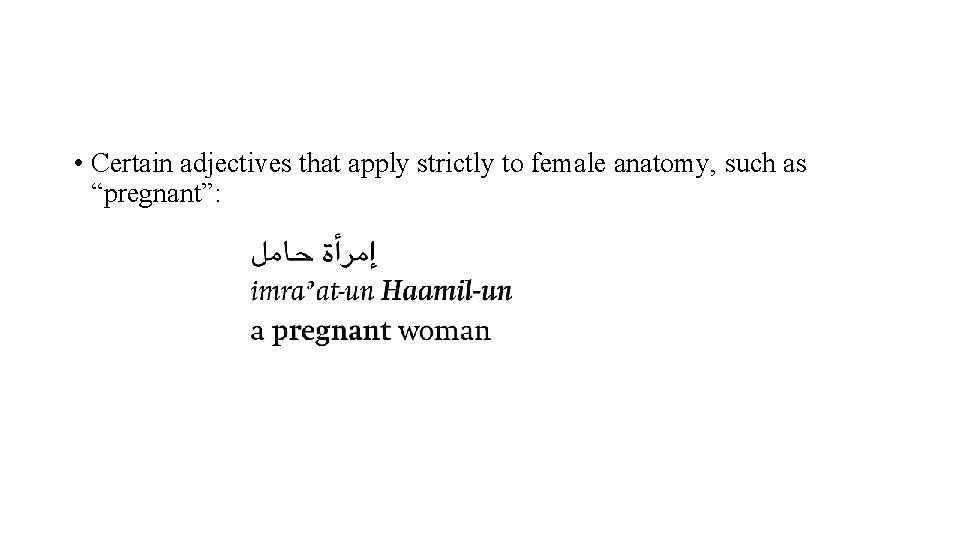
• Certain adjectives that apply strictly to female anatomy, such as “pregnant”:
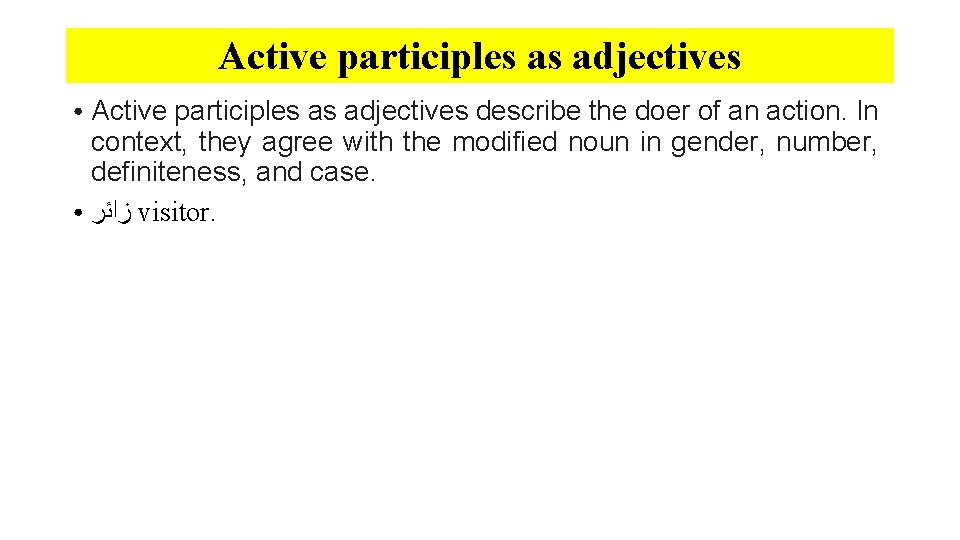
Active participles as adjectives describe the doer of an action. In context, they agree with the modified noun in gender, number, definiteness, and case. ● ﺯﺍﺋﺮ visitor. ●
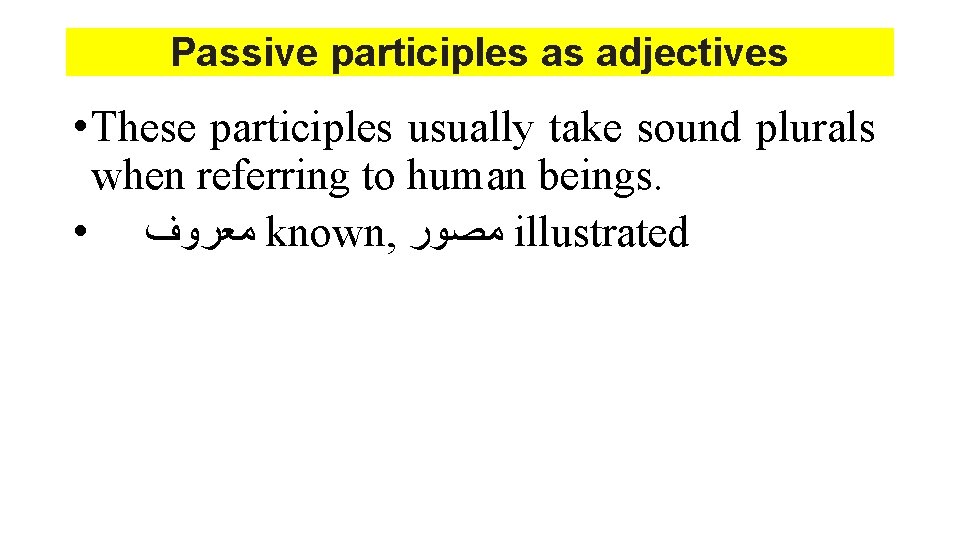
Passive participles as adjectives • These participles usually take sound plurals when referring to human beings. • ﻣﻌﺮﻭﻑ known, ﻣﺼﻮﺭ illustrated
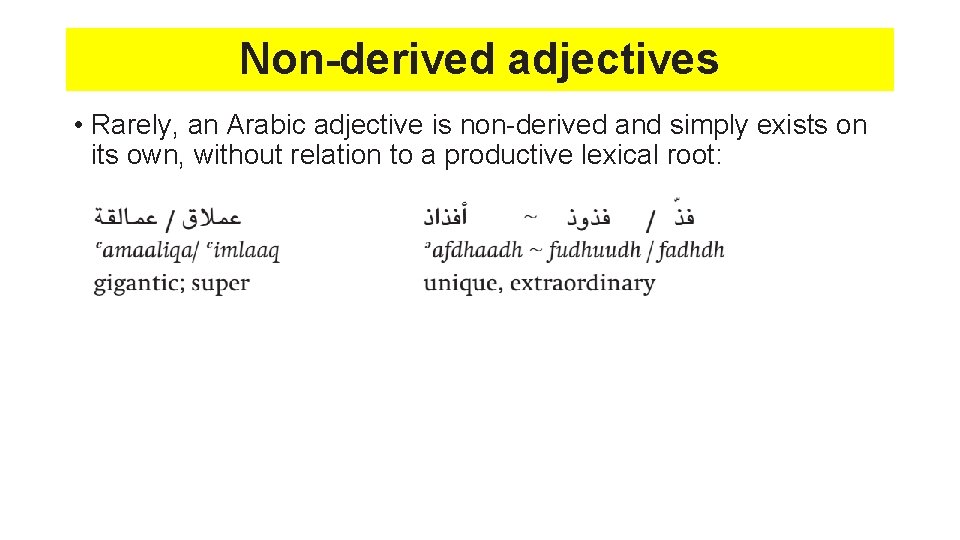
Non-derived adjectives • Rarely, an Arabic adjective is non-derived and simply exists on its own, without relation to a productive lexical root:
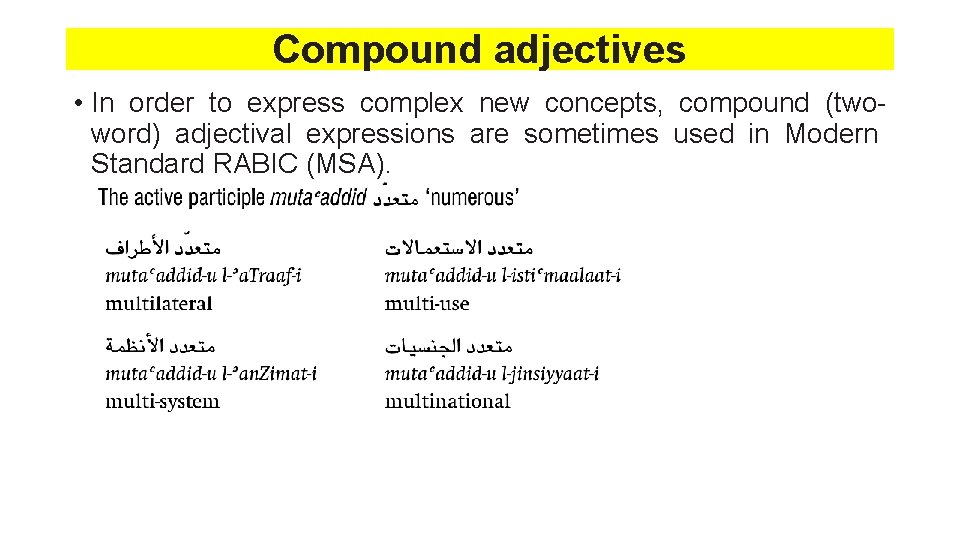
Compound adjectives • In order to express complex new concepts, compound (twoword) adjectival expressions are sometimes used in Modern Standard RABIC (MSA).
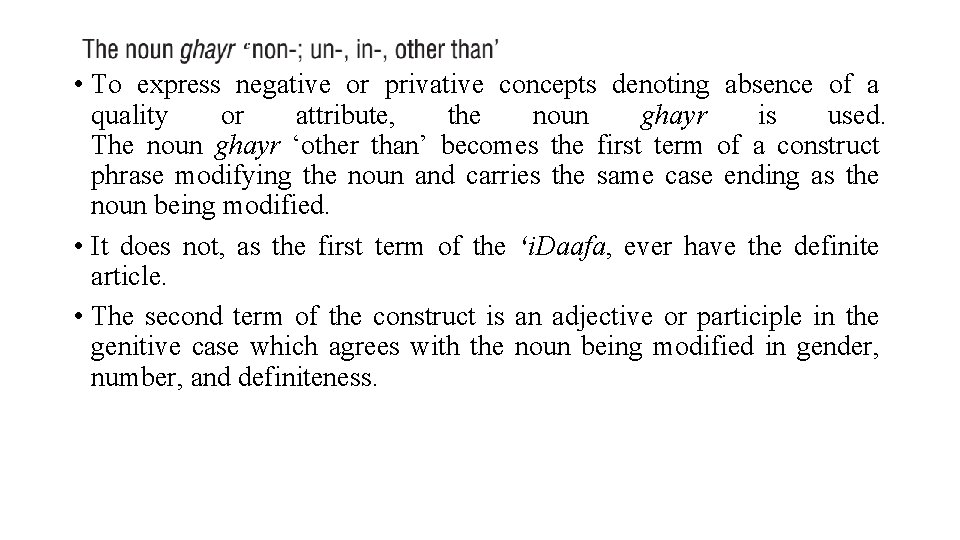
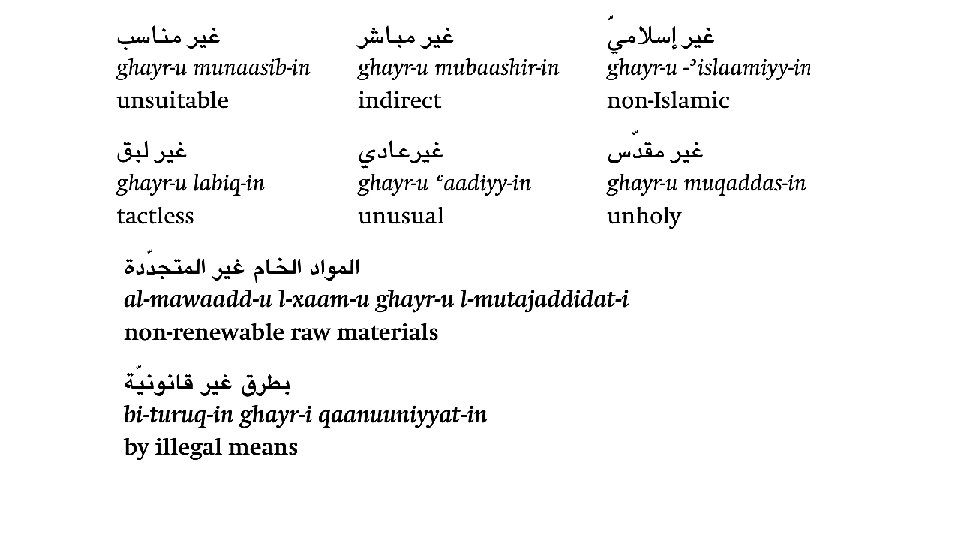
• To express negative or privative concepts denoting absence of a quality or attribute, the noun ghayr is used. The noun ghayr ‘other than’ becomes the first term of a construct phrase modifying the noun and carries the same case ending as the noun being modified. • It does not, as the first term of the ‘i. Daafa, ever have the definite article. • The second term of the construct is an adjective or participle in the genitive case which agrees with the noun being modified in gender, number, and definiteness.
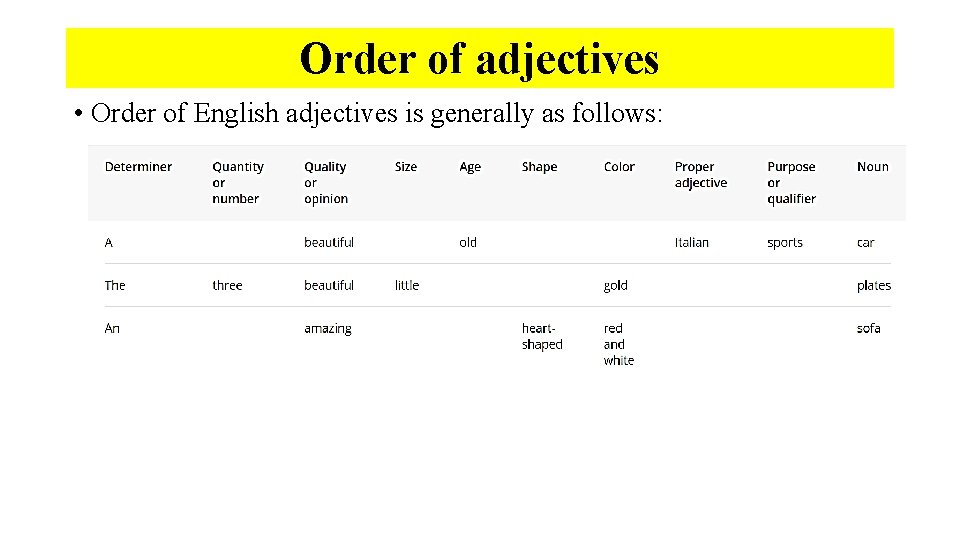
Order of adjectives • Order of English adjectives is generally as follows:
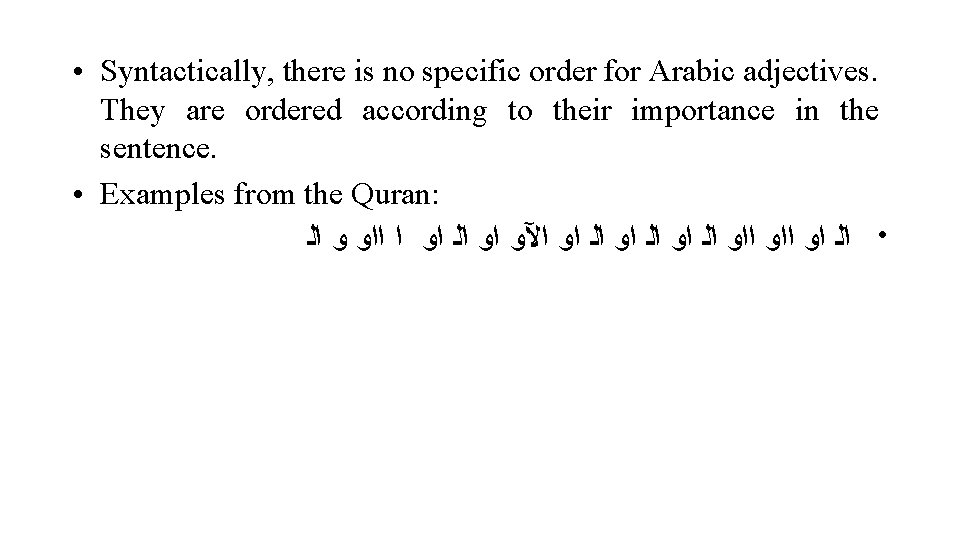
• Syntactically, there is no specific order for Arabic adjectives. They are ordered according to their importance in the sentence. • Examples from the Quran: • ﺍﻟ ﺍﻭ ﺍﺍﻭ ﺍﻟ ﺍﻭ ﺍﻵﻭ ﺍﻭ ﺍﻟ ﺍﻭ ﺍ ﺍﺍﻭ ﻭ ﺍﻟ