
Adjective with suffix ed or ing Edi Sunjayanto


- Slides: 16
Adjective with suffix –ed or –ing Edi Sunjayanto
• Many adjectives ending in ‘-ing’ describe the effect that something has on someone's feelings. • Some adjectives ending in ‘-ing’ describe a process or state that continues over a period of time.
Sentence • The girl is (frustate). . . frustated seeing the murder. • The motorcycle is (charm). . . charming.
Sentence 1. 2. 3. 4. The show is (bore). . . to see. She looks (bore). . . The performance is (terrify). . . The black is so (terrify). . .
Phrase Determiner + Adjective + Noun Det + Adj + N Det: The, A/ an, Some, Many, Few, Much, One, Two. . . , Such, My, your, her. . . Adj: OSASCOM
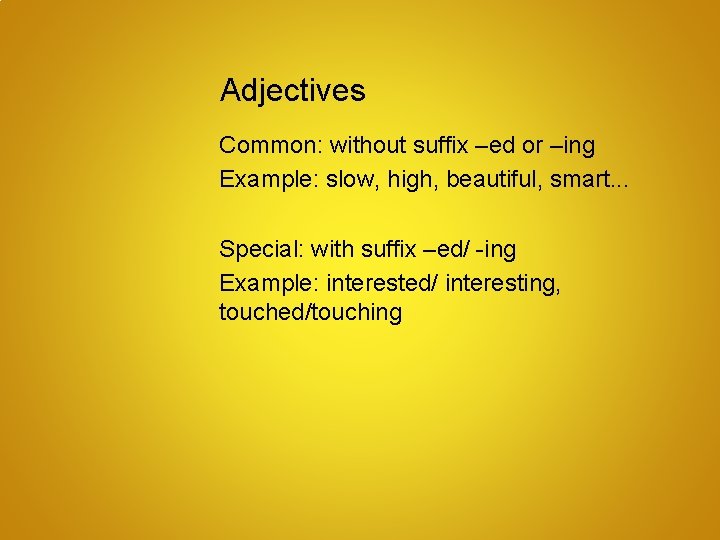
Adjectives Common: without suffix –ed or –ing Example: slow, high, beautiful, smart. . . Special: with suffix –ed/ -ing Example: interested/ interesting, touched/touching
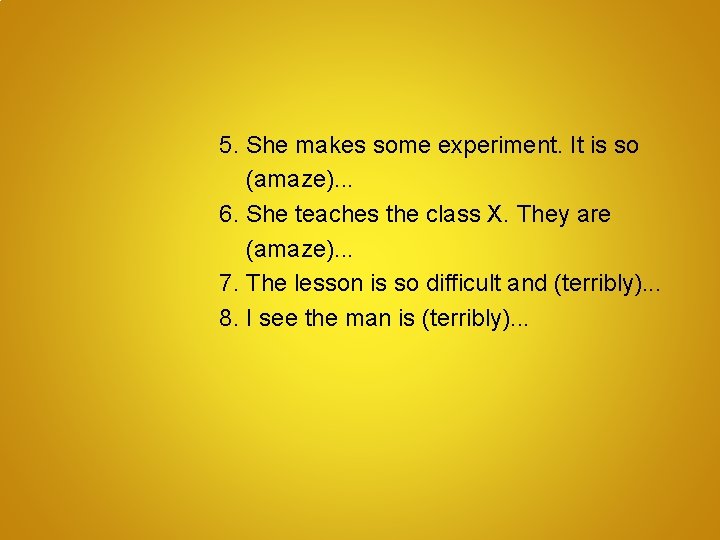
5. She makes some experiment. It is so (amaze). . . 6. She teaches the class X. They are (amaze). . . 7. The lesson is so difficult and (terribly). . . 8. I see the man is (terribly). . .
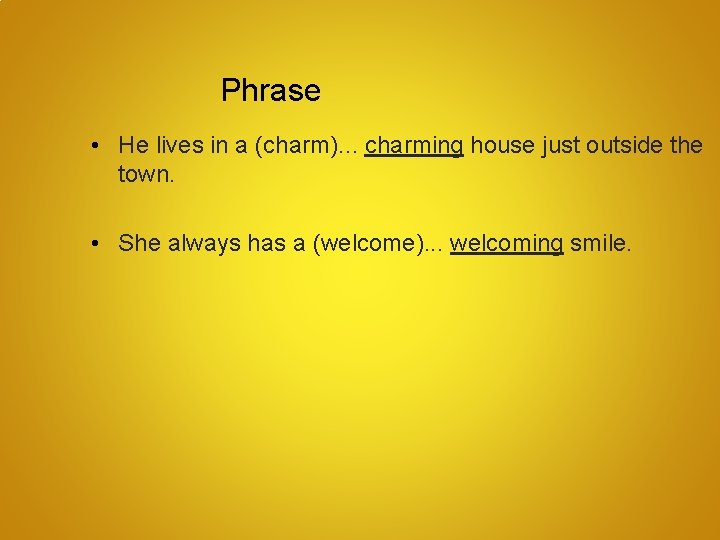
Phrase • He lives in a (charm). . . charming house just outside the town. • She always has a (welcome). . . welcoming smile.
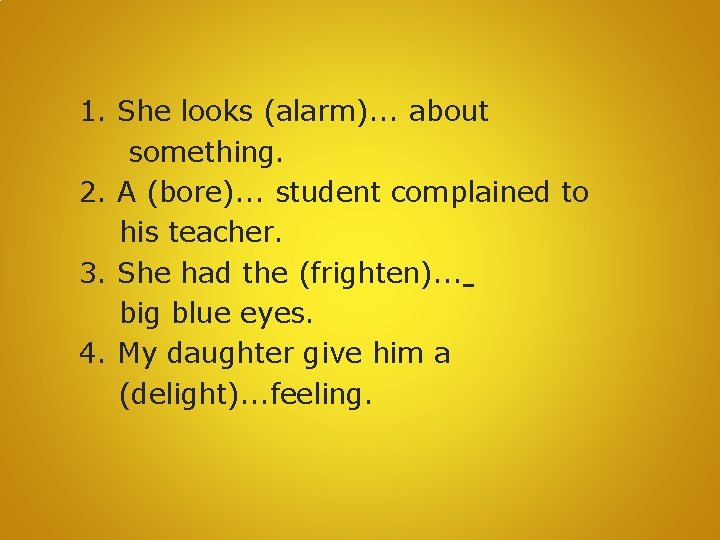
1. She looks (alarm). . . about something. 2. A (bore). . . student complained to his teacher. 3. She had the (frighten). . . big blue eyes. 4. My daughter give him a (delight). . . feeling.
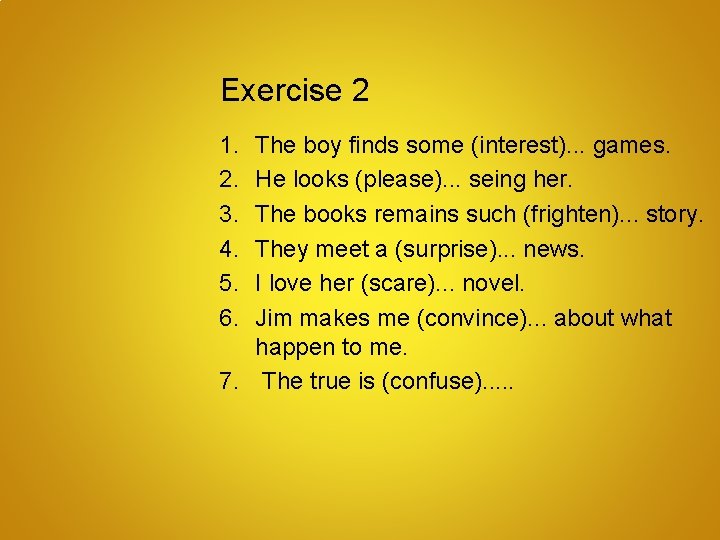
Exercise 2 1. 2. 3. 4. 5. 6. The boy finds some (interest). . . games. He looks (please). . . seing her. The books remains such (frighten). . . story. They meet a (surprise). . . news. I love her (scare). . . novel. Jim makes me (convince). . . about what happen to me. 7. The true is (confuse). . .
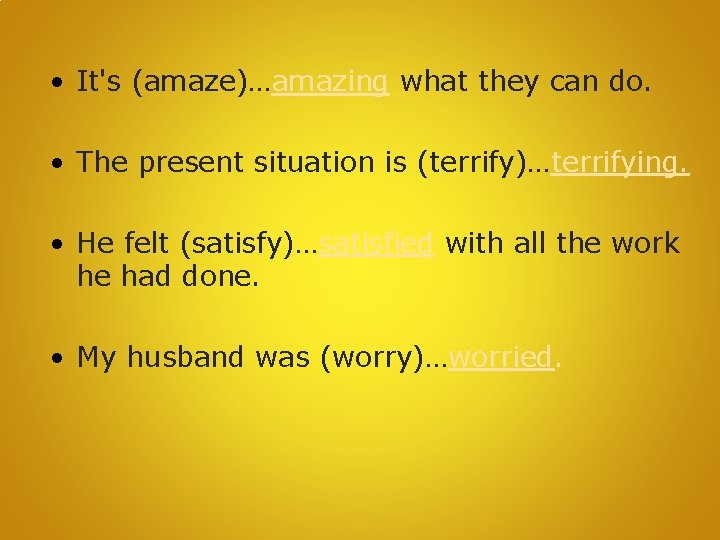
• It's (amaze)…amazing what they can do. • The present situation is (terrify)…terrifying. • He felt (satisfy)…satisfied with all the work he had done. • My husband was (worry)…worried.
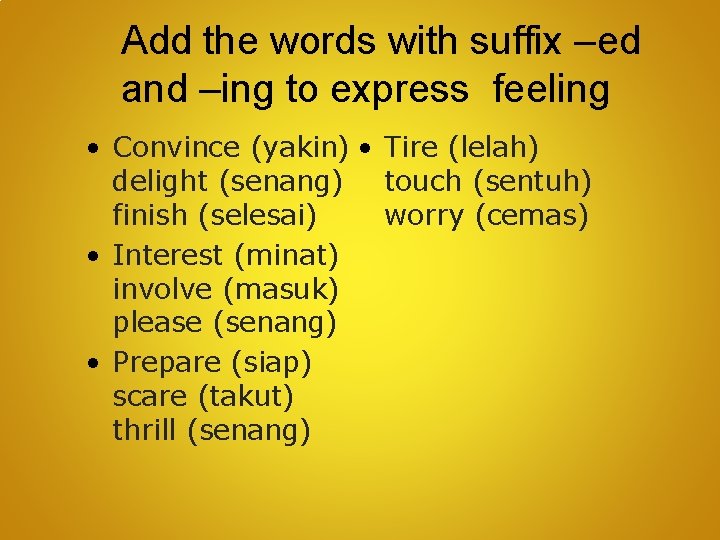
Add the words with suffix –ed and –ing to express feeling • Convince (yakin) • Tire (lelah) delight (senang) touch (sentuh) finish (selesai) worry (cemas) • Interest (minat) involve (masuk) please (senang) • Prepare (siap) scare (takut) thrill (senang)
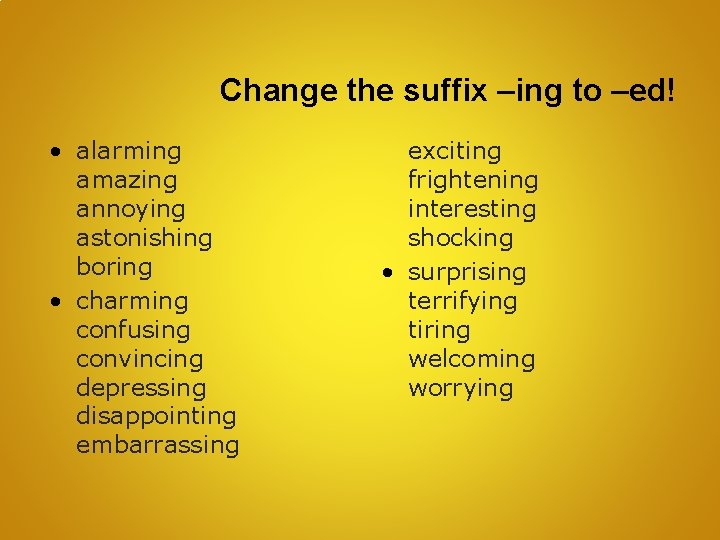
Change the suffix –ing to –ed! • alarming amazing annoying astonishing boring • charming confusing convincing depressing disappointing embarrassing exciting frightening interesting shocking • surprising terrifying tiring welcoming worrying
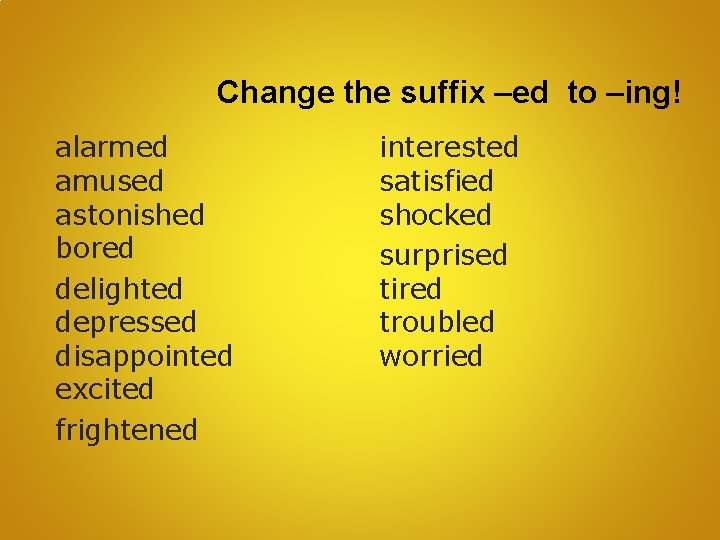
Change the suffix –ed to –ing! alarmed amused astonished bored delighted depressed disappointed excited frightened interested satisfied shocked surprised tired troubled worried
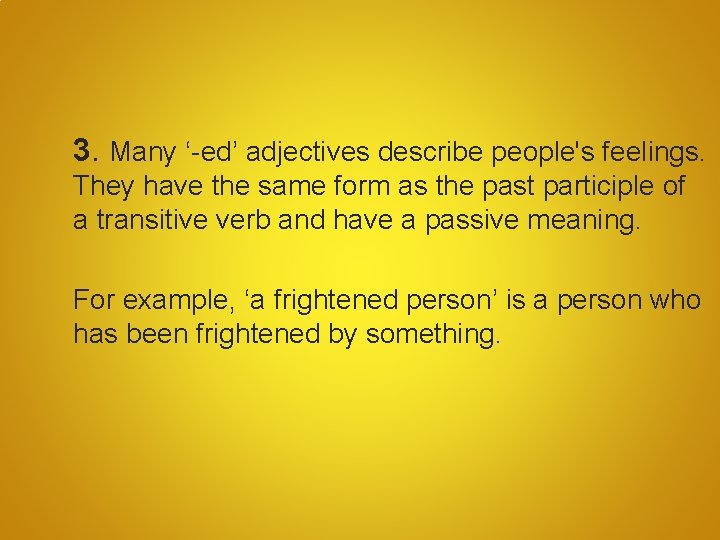
3. Many ‘-ed’ adjectives describe people's feelings. They have the same form as the past participle of a transitive verb and have a passive meaning. For example, ‘a frightened person’ is a person who has been frightened by something.
• The end