
Adherence to the healthy Nordic food index dietary
- Slides: 20
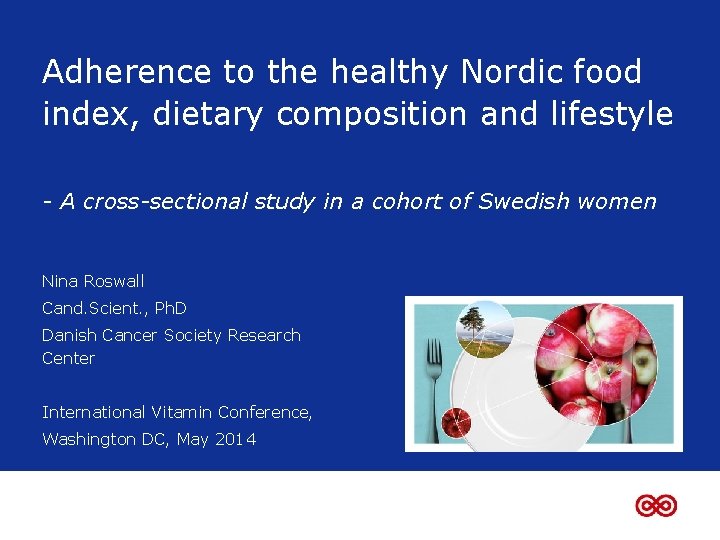
Adherence to the healthy Nordic food index, dietary composition and lifestyle - A cross-sectional study in a cohort of Swedish women Nina Roswall Cand. Scient. , Ph. D Danish Cancer Society Research Center International Vitamin Conference, Washington DC, May 2014
Nutrient or dietary pattern approach to diet research? Nutrients: • Nutrient specific recommendations (e. g. the Nordic Nutrition Recommendation) • Dietary supplements • Fortification => Deficiency diseases Dietary patterns: • Nutrients interact with other nutrients and food compounds • Present-day nutrition-related health problems are primarily related to overconsumption rather than deficiency in industrialized countries => Lifestyle Diseases
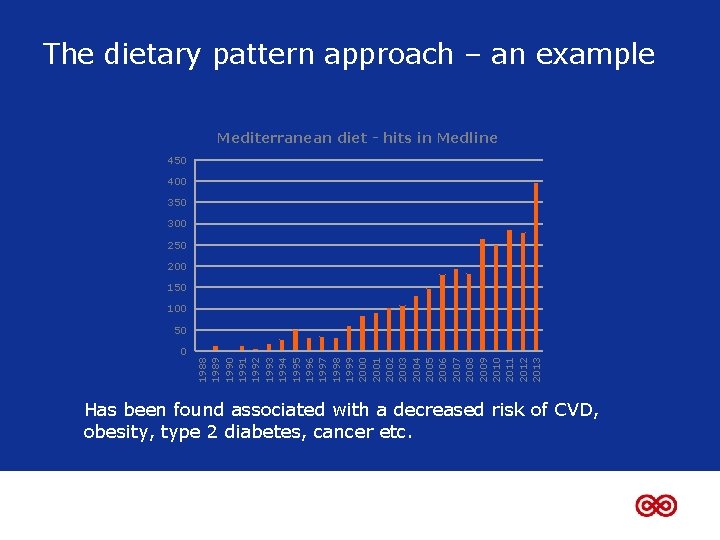
The dietary pattern approach – an example Mediterranean diet - hits in Medline 450 400 350 300 250 200 150 100 50 1988 1989 1990 1991 1992 1993 1994 1995 1996 1997 1998 1999 2000 2001 2002 2003 2004 2005 2006 2007 2008 2009 2010 2011 2012 2013 0 Has been found associated with a decreased risk of CVD, obesity, type 2 diabetes, cancer etc.
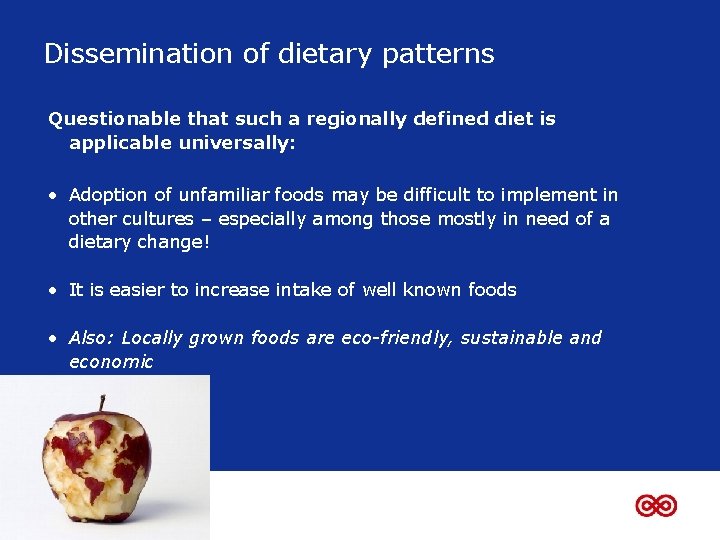
Dissemination of dietary patterns Questionable that such a regionally defined diet is applicable universally: • Adoption of unfamiliar foods may be difficult to implement in other cultures – especially among those mostly in need of a dietary change! • It is easier to increase intake of well known foods • Also: Locally grown foods are eco-friendly, sustainable and economic
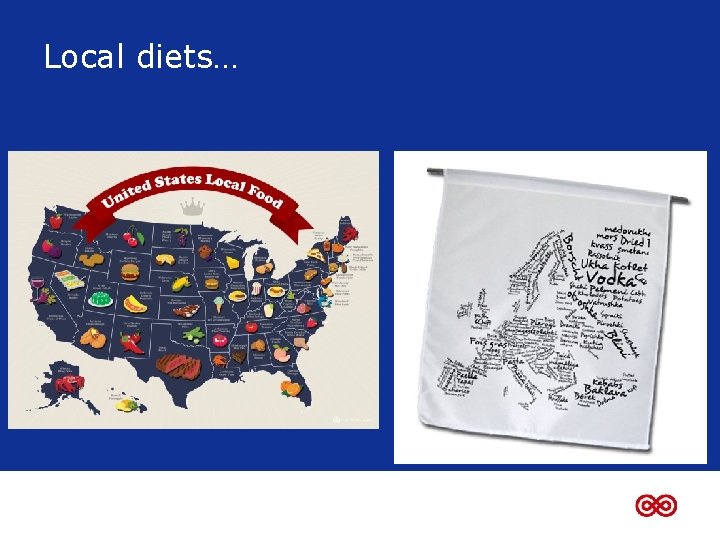
Local diets…
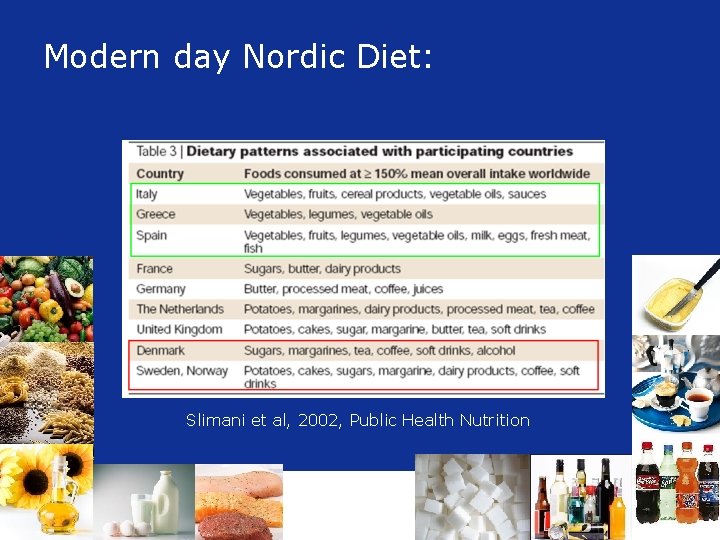
Modern day Nordic Diet: Slimani et al, 2002, Public Health Nutrition
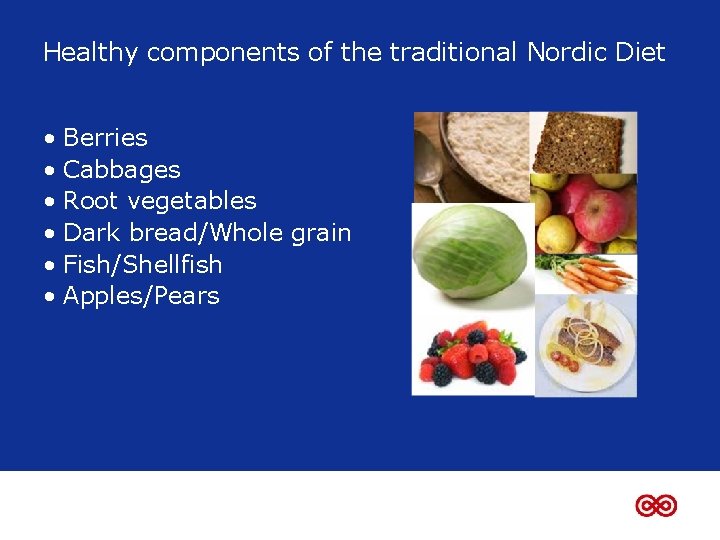
Healthy components of the traditional Nordic Diet • Berries • Cabbages • Root vegetables • Dark bread/Whole grain • Fish/Shellfish • Apples/Pears
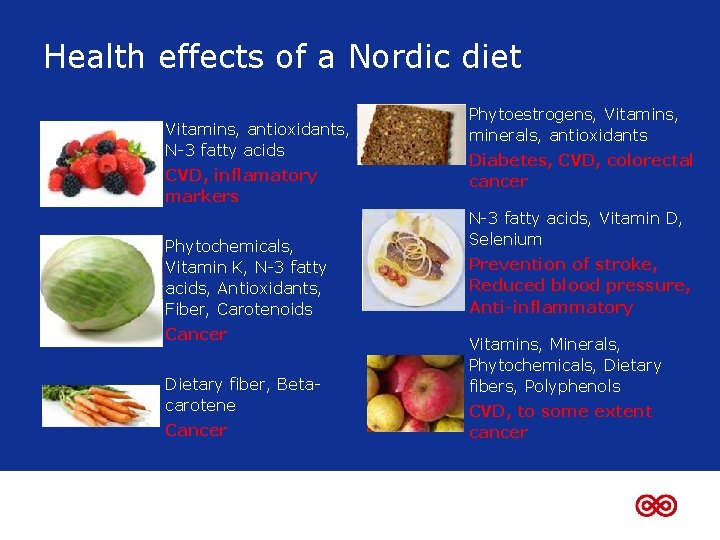
Health effects of a Nordic diet Vitamins, antioxidants, N-3 fatty acids CVD, inflamatory markers Phytochemicals, Vitamin K, N-3 fatty acids, Antioxidants, Fiber, Carotenoids Cancer Dietary fiber, Betacarotene Cancer Phytoestrogens, Vitamins, minerals, antioxidants Diabetes, CVD, colorectal cancer N-3 fatty acids, Vitamin D, Selenium Prevention of stroke, Reduced blood pressure, Anti-inflammatory Vitamins, Minerals, Phytochemicals, Dietary fibers, Polyphenols CVD, to some extent cancer
Nordic diet in the Swedish WLH cohort -Dietary composition and lifestyle
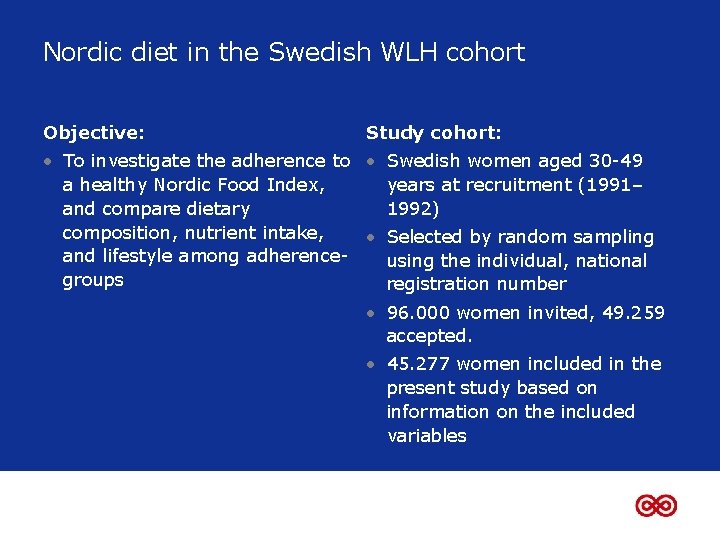
Nordic diet in the Swedish WLH cohort Objective: Study cohort: • To investigate the adherence to • Swedish women aged 30 -49 a healthy Nordic Food Index, years at recruitment (1991– and compare dietary 1992) composition, nutrient intake, • Selected by random sampling and lifestyle among adherenceusing the individual, national groups registration number • 96. 000 women invited, 49. 259 accepted. • 45. 277 women included in the present study based on information on the included variables
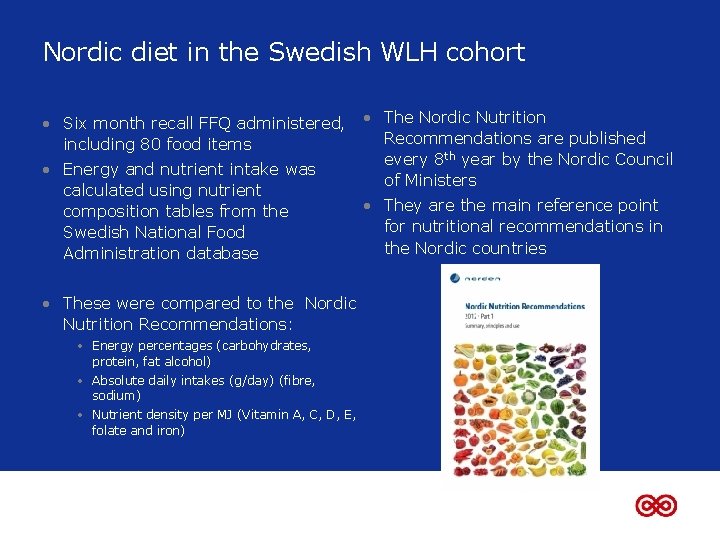
Nordic diet in the Swedish WLH cohort • Six month recall FFQ administered, including 80 food items • Energy and nutrient intake was calculated using nutrient composition tables from the Swedish National Food Administration database • These were compared to the Nordic Nutrition Recommendations: • Energy percentages (carbohydrates, protein, fat alcohol) • Absolute daily intakes (g/day) (fibre, sodium) • Nutrient density per MJ (Vitamin A, C, D, E, folate and iron) • The Nordic Nutrition Recommendations are published every 8 th year by the Nordic Council of Ministers • They are the main reference point for nutritional recommendations in the Nordic countries
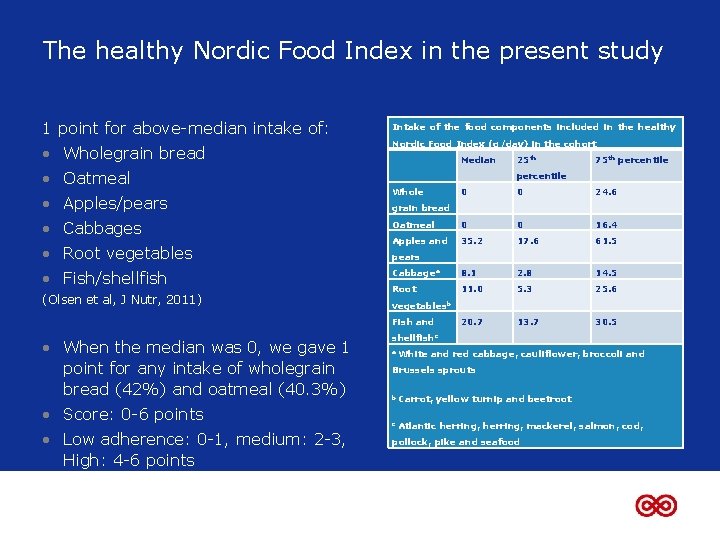
The healthy Nordic Food Index in the present study 1 point for above-median intake of: • Wholegrain bread • Oatmeal • Apples/pears Intake of the food components included in the healthy Nordic Food Index (g/day) in the cohort Median 25 th 75 th percentile Whole 0 0 24. 6 grain bread • Cabbages Oatmeal 0 0 16. 4 • Root vegetables Apples and 35. 2 17. 6 61. 5 pears Cabbagea 8. 1 2. 8 14. 5 Root 11. 0 5. 3 25. 6 20. 7 13. 7 30. 5 • Fish/shellfish (Olsen et al, J Nutr, 2011) vegetablesb Fish and • When the median was 0, we gave 1 point for any intake of wholegrain bread (42%) and oatmeal (40. 3%) • Score: 0 -6 points • Low adherence: 0 -1, medium: 2 -3, High: 4 -6 points shellfishc a White and red cabbage, cauliflower, broccoli and Brussels sprouts b Carrot, yellow turnip and beetroot c Atlantic herring, mackerel, salmon, cod, pollock, pike and seafood
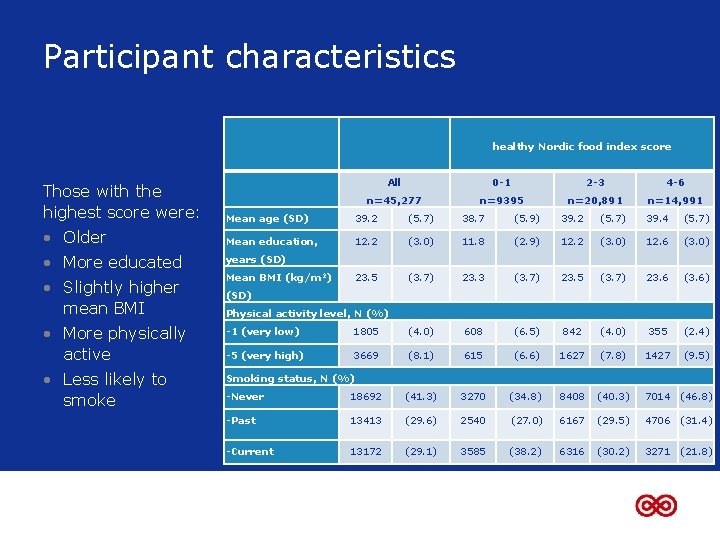
Participant characteristics healthy Nordic food index score All 0 -1 2 -3 4 -6 n=45, 277 n=9395 n=20, 891 n=14, 991 Those with the highest score were: Mean age (SD) 39. 2 (5. 7) 38. 7 (5. 9) 39. 2 (5. 7) 39. 4 (5. 7) • Older Mean education, 12. 2 (3. 0) 11. 8 (2. 9) 12. 2 (3. 0) 12. 6 (3. 0) 23. 5 (3. 7) 23. 3 (3. 7) 23. 5 (3. 7) 23. 6 (3. 6) • More educated years (SD) • Slightly higher mean BMI Mean BMI (kg/m 2) (SD) • More physically active -1 (very low) 1805 (4. 0) 608 (6. 5) 842 (4. 0) 355 (2. 4) -5 (very high) 3669 (8. 1) 615 (6. 6) 1627 (7. 8) 1427 (9. 5) • Less likely to smoke Smoking status, N (%) Physical activity level, N (%) -Never 18692 (41. 3) 3270 (34. 8) 8408 (40. 3) 7014 (46. 8) -Past 13413 (29. 6) 2540 (27. 0) 6167 (29. 5) 4706 (31. 4) -Current 13172 (29. 1) 3585 (38. 2) 6316 (30. 2) 3271 (21. 8)
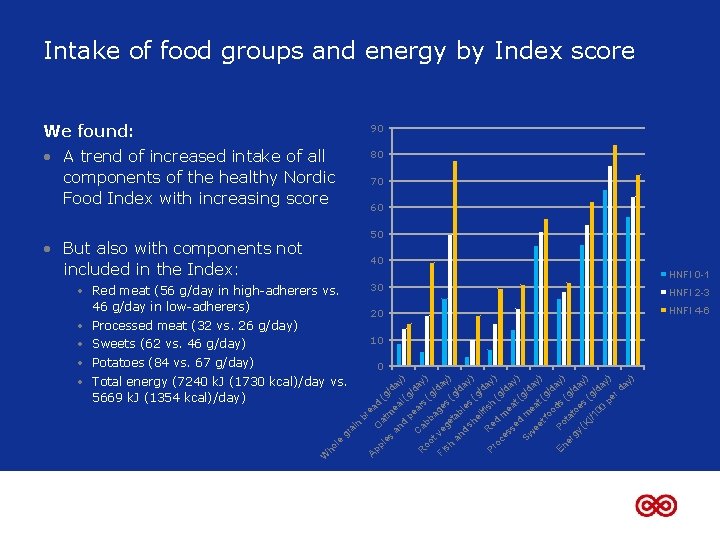
Intake of food groups and energy by Index score We found: 90 • A trend of increased intake of all components of the healthy Nordic Food Index with increasing score 80 70 60 50 • But also with components not included in the Index: 40 HNFI 0 -1 30 • Red meat (56 g/day in high-adherers vs. 46 g/day in low-adherers) • Processed meat (32 vs. 26 g/day) • Sweets (62 vs. 46 g/day) • Potatoes (84 vs. 67 g/day) • Total energy (7240 k. J (1730 kcal)/day vs. 5669 k. J (1354 kcal)/day) 20 10 O pl Ap W ho le gr ai n br ea d a es tm (g/d a an ea l ( y) d pe g/d R Cab ars ay) oo ba (g/ t da g Fi ve sh ge es ( y) an tab g/d l a d sh es ( y) g/ el d lf Pr Re ish ay) oc d ( es me g/da se at y) d ( Sw m g/d ee eat ay) tf ( oo g/d En Po ds ay) (g t er /d gy ato ay (K es j/1 (g/ ) 00 da pe y) rd ay ) 0 HNFI 2 -3 HNFI 4 -6
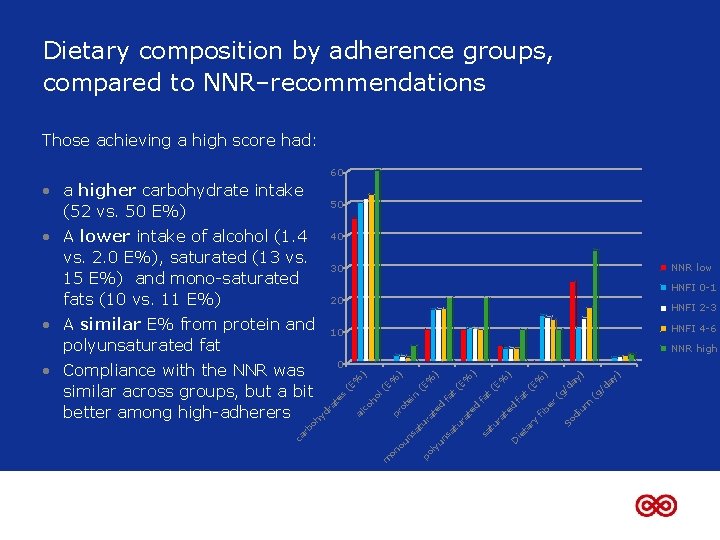
Dietary composition by adherence groups, compared to NNR–recommendations Those achieving a high score had: 60 • a higher carbohydrate intake (52 vs. 50 E%) 50 • A lower intake of alcohol (1. 4 vs. 2. 0 E%), saturated (13 vs. 15 E%) and mono-saturated fats (10 vs. 11 E%) 40 NNR low 30 HNFI 0 -1 20 • A similar E% from protein and polyunsaturated fat HNFI 4 -6 10 NNR high un ly ) fa sa t tu (E ra % te ) d D fa ie ta t (E ry % fib ) er (g /d So ay di ) um (g /d ay ) d sa tu ra te ed at ur at po ou ns on m (E fa t (E n ei ot pr ca rb % ) E% l( oh o oh al c ra te s (E % ) 0 yd • Compliance with the NNR was similar across groups, but a bit better among high-adherers HNFI 2 -3
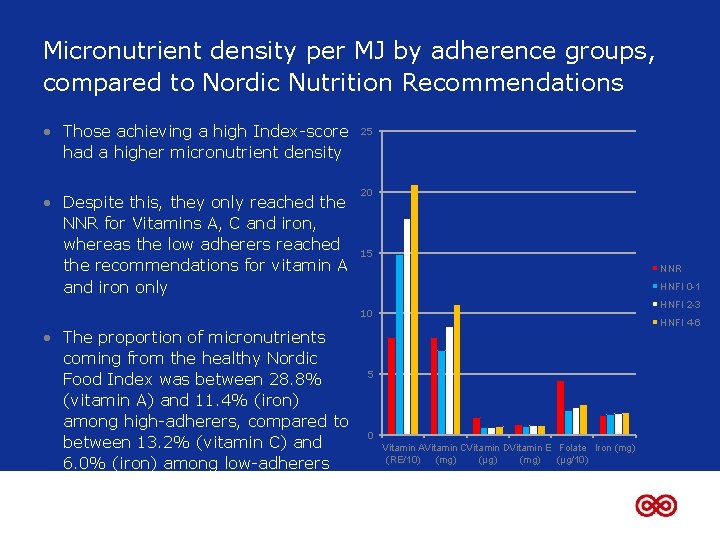
Micronutrient density per MJ by adherence groups, compared to Nordic Nutrition Recommendations • Those achieving a high Index-score had a higher micronutrient density • Despite this, they only reached the NNR for Vitamins A, C and iron, whereas the low adherers reached the recommendations for vitamin A and iron only 25 20 15 NNR HNFI 0 -1 HNFI 2 -3 10 • The proportion of micronutrients coming from the healthy Nordic Food Index was between 28. 8% (vitamin A) and 11. 4% (iron) among high-adherers, compared to between 13. 2% (vitamin C) and 6. 0% (iron) among low-adherers HNFI 4 -6 5 0 Vitamin AVitamin CVitamin DVitamin E Folate Iron (mg) (RE/10) (mg) (µg/10)
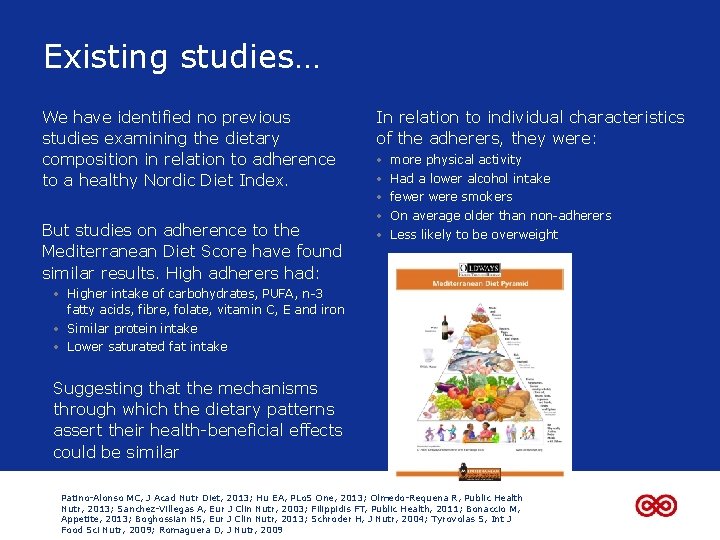
Existing studies… We have identified no previous studies examining the dietary composition in relation to adherence to a healthy Nordic Diet Index. But studies on adherence to the Mediterranean Diet Score have found similar results. High adherers had: In relation to individual characteristics of the adherers, they were: • • • more physical activity Had a lower alcohol intake fewer were smokers On average older than non-adherers Less likely to be overweight • Higher intake of carbohydrates, PUFA, n-3 fatty acids, fibre, folate, vitamin C, E and iron • Similar protein intake • Lower saturated fat intake Suggesting that the mechanisms through which the dietary patterns assert their health-beneficial effects could be similar Patino-Alonso MC, J Acad Nutr Diet, 2013; Hu EA, PLo. S One, 2013; Olmedo-Requena R, Public Health Nutr, 2013; Sanchez-Villegas A, Eur J Clin Nutr, 2003; Filippidis FT, Public Health, 2011; Bonaccio M, Appetite, 2013; Boghossian NS, Eur J Clin Nutr, 2013; Schroder H, J Nutr, 2004; Tyrovolas S, Int J Food Sci Nutr, 2009; Romaguera D, J Nutr, 2009
Discussion We found a direct association between adherence and dietary items with no or adverse health-effects: • • Potatoes Red/processed meats Sweets. Included because they represent an important part of total energy intake We also found a direct association with energy intake. This may be explained by: • Higher energy expenditure among highadherers, given their higher level of physical activity • Higher degree of underreporting among low-adheres • Taken together, our results suggests that residual confounding could operate in studies on Nordic Diet and health outcomes, if not controlled properly • The fact that we see an association with both a healthy lifestyle and unhealthy dietary items not included in the Index suggest that residual confounding could operate in both directions; both strengthening and diluting associations between the healthy Nordic Food Index and outcome.
Take home message • In conclusion, a high score on the • Given the increasing focus on healthy Nordic Food Index was Nordic diet, there is a need for associated with being older, higher further clarification of the educated, non-smoking, and having association between adherence to a higher physical activity level, and such diet, dietary composition, and higher intake of fibre and a higher lifestyle, to allow causal micronutrient density interpretation of future studies on adherence and health outcomes • Despite this, high-adherers did not reach the NNR for several micronutrients • High-adherers also had a higher intake of more questionable dietary items: Red/processed meats, potatoes, and sweets.
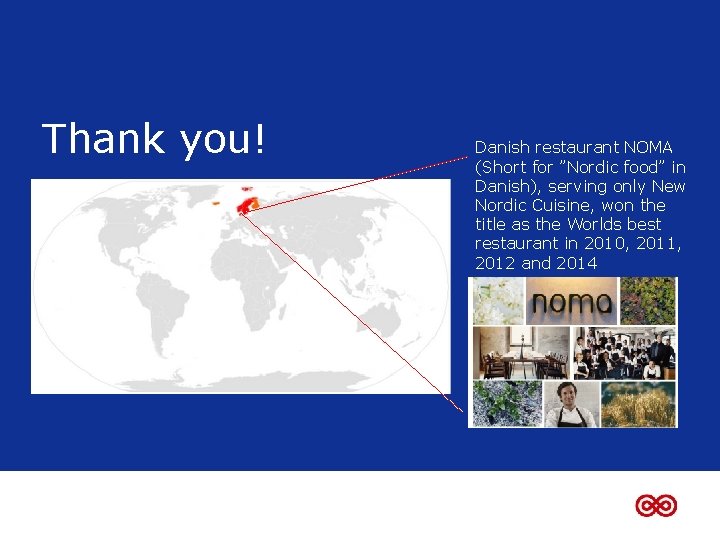
Thank you! Danish restaurant NOMA (Short for ”Nordic food” in Danish), serving only New Nordic Cuisine, won the title as the Worlds best restaurant in 2010, 2011, 2012 and 2014