
ADHD PART ADHD DIAGNOSIS TREATMENT IN PEDIATRIC PRIMARY

- Slides: 57
ADHD PART ADHD DIAGNOSIS & TREATMENT IN PEDIATRIC PRIMARY CARE ABIGAIL SCHLESINGER, MD COLE MEMORIAL HOSPITAL OCTOBER 2019
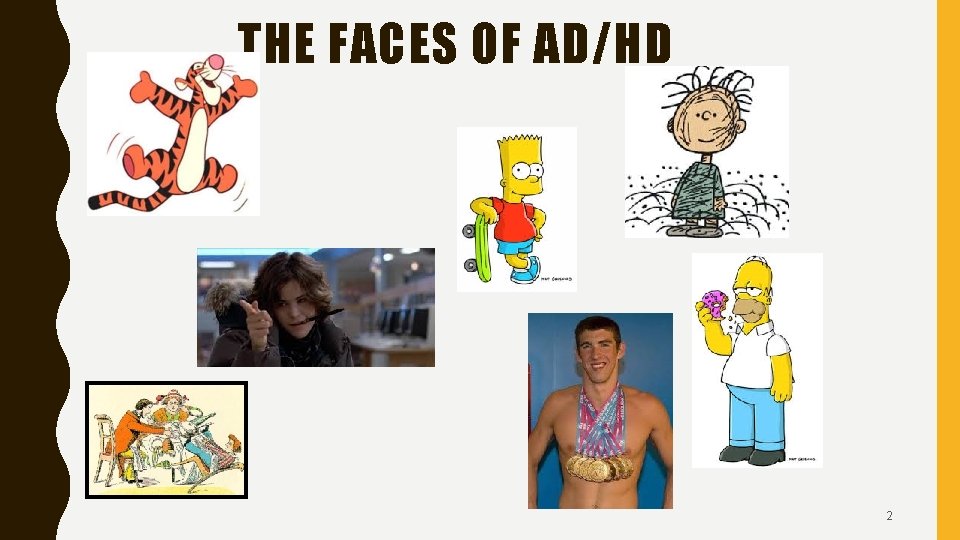
THE FACES OF AD/HD 2
OUTLINE q. DSM V Diagnosis q. National Recommendations for ADHD Management q. Stimulant overview q. Guidance/Anticipatory Guidance q. SLEEP 3
TAKE HOME POINTS • Inattention ≠≠ Attention Deficit/Hyperactivity Disorder – In other words– ADHD is never just one symptom • Medication helps the core symptoms of ADHD – Quality medication management may impact comorbidities • Non-pharmacologic intervention has a vital role • Comorbidity is the RULE with ADHD • ADHD is a lifelong condition – with serious lifelong implications • A consistent approach(with follow-up) can make the difference 4
ADHD FOR THE PRIMARY CARE PROVIDER 5
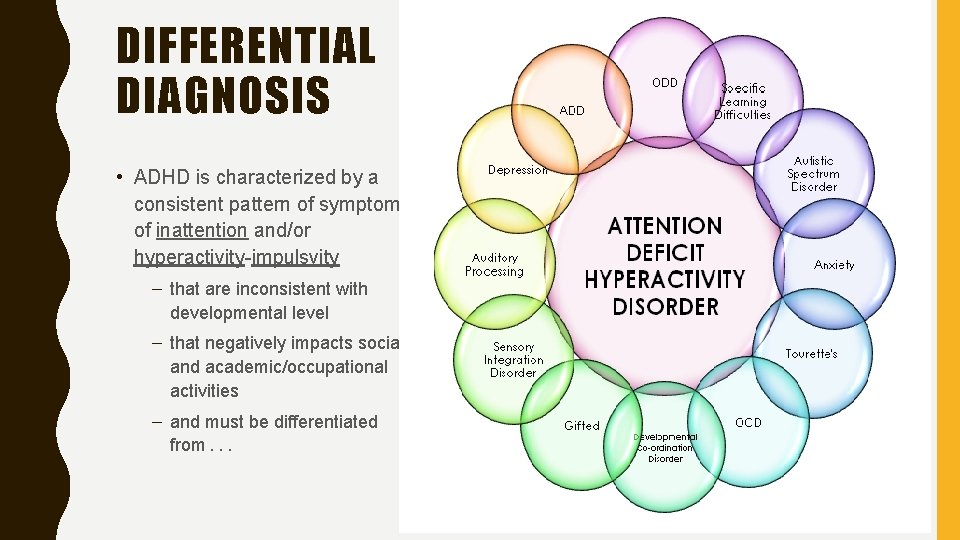
DIFFERENTIAL DIAGNOSIS • ADHD is characterized by a consistent pattern of symptoms of inattention and/or hyperactivity-impulsvity – that are inconsistent with developmental level – that negatively impacts social and academic/occupational activities – and must be differentiated from. . . 6
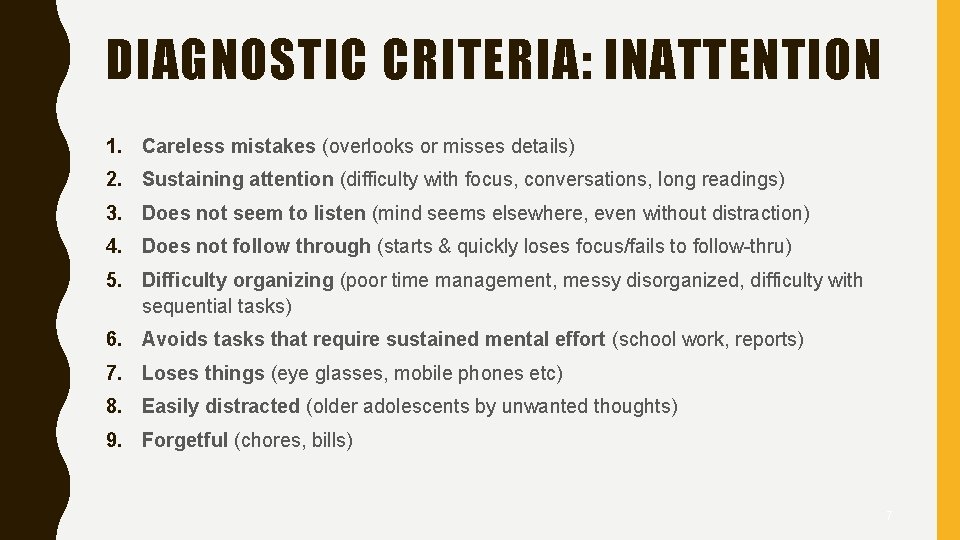
DIAGNOSTIC CRITERIA: INATTENTION 1. Careless mistakes (overlooks or misses details) 2. Sustaining attention (difficulty with focus, conversations, long readings) 3. Does not seem to listen (mind seems elsewhere, even without distraction) 4. Does not follow through (starts & quickly loses focus/fails to follow-thru) 5. Difficulty organizing (poor time management, messy disorganized, difficulty with sequential tasks) 6. Avoids tasks that require sustained mental effort (school work, reports) 7. Loses things (eye glasses, mobile phones etc) 8. Easily distracted (older adolescents by unwanted thoughts) 9. Forgetful (chores, bills) 7
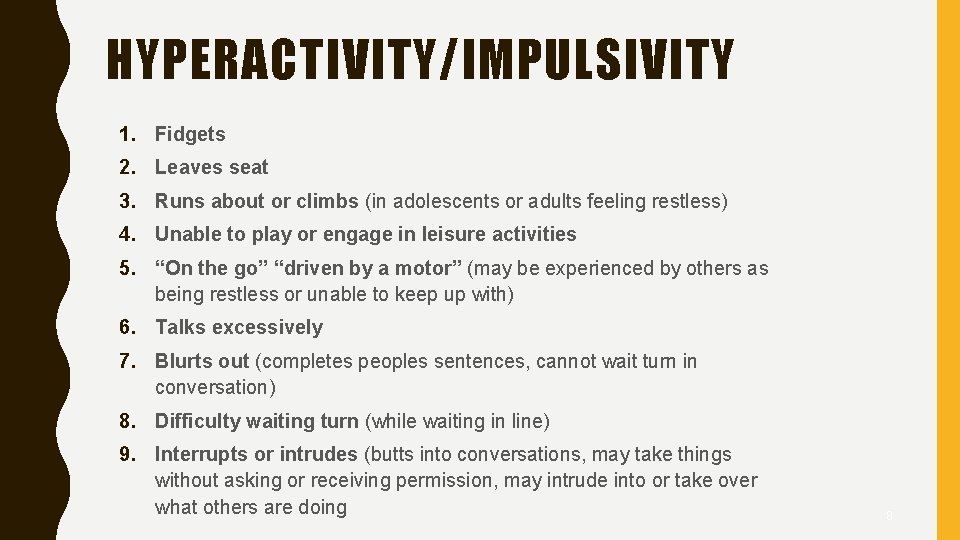
HYPERACTIVITY/IMPULSIVITY 1. Fidgets 2. Leaves seat 3. Runs about or climbs (in adolescents or adults feeling restless) 4. Unable to play or engage in leisure activities 5. “On the go” “driven by a motor” (may be experienced by others as being restless or unable to keep up with) 6. Talks excessively 7. Blurts out (completes peoples sentences, cannot wait turn in conversation) 8. Difficulty waiting turn (while waiting in line) 9. Interrupts or intrudes (butts into conversations, may take things without asking or receiving permission, may intrude into or take over what others are doing 8
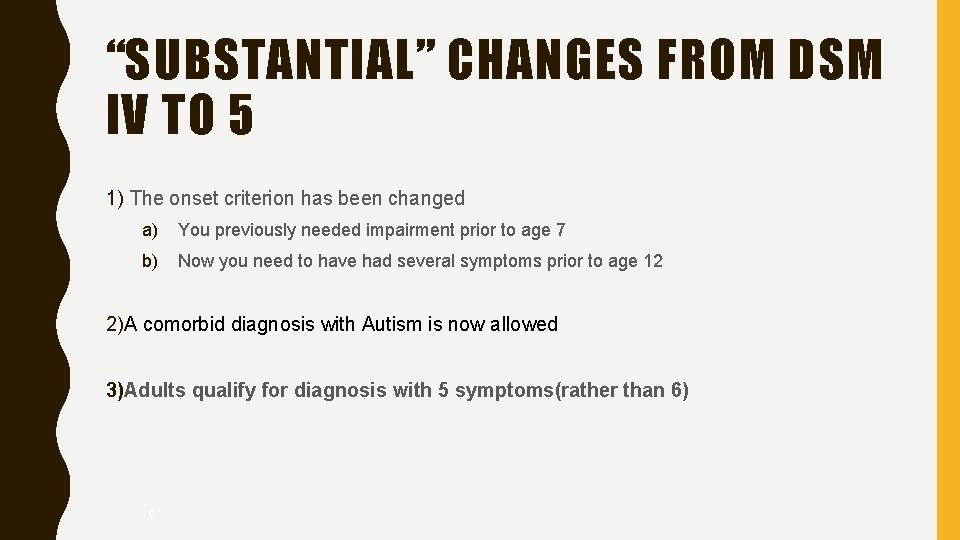
“SUBSTANTIAL” CHANGES FROM DSM IV TO 5 1) The onset criterion has been changed a) You previously needed impairment prior to age 7 b) Now you need to have had several symptoms prior to age 12 2)A comorbid diagnosis with Autism is now allowed 3)Adults qualify for diagnosis with 5 symptoms(rather than 6) 9
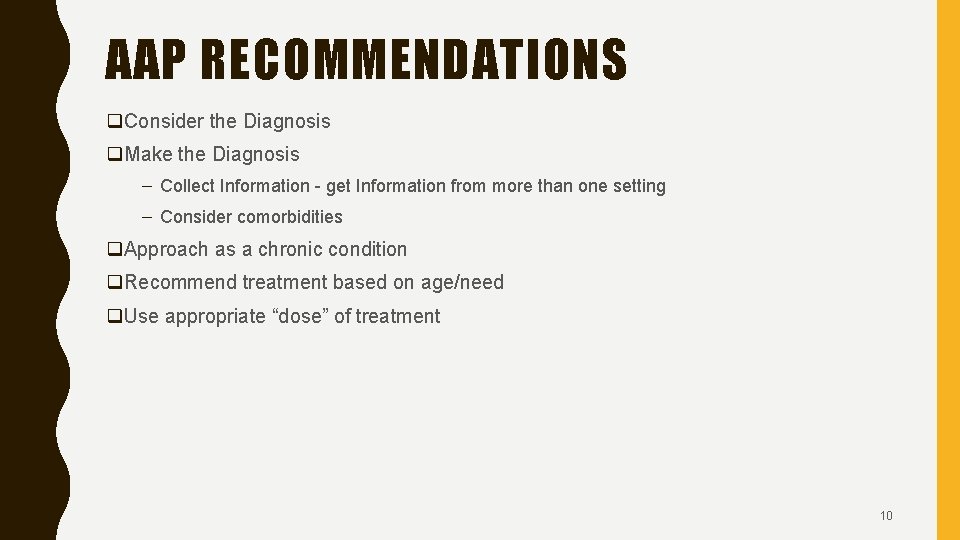
AAP RECOMMENDATIONS q. Consider the Diagnosis q. Make the Diagnosis – Collect Information - get Information from more than one setting – Consider comorbidities q. Approach as a chronic condition q. Recommend treatment based on age/need q. Use appropriate “dose” of treatment 10
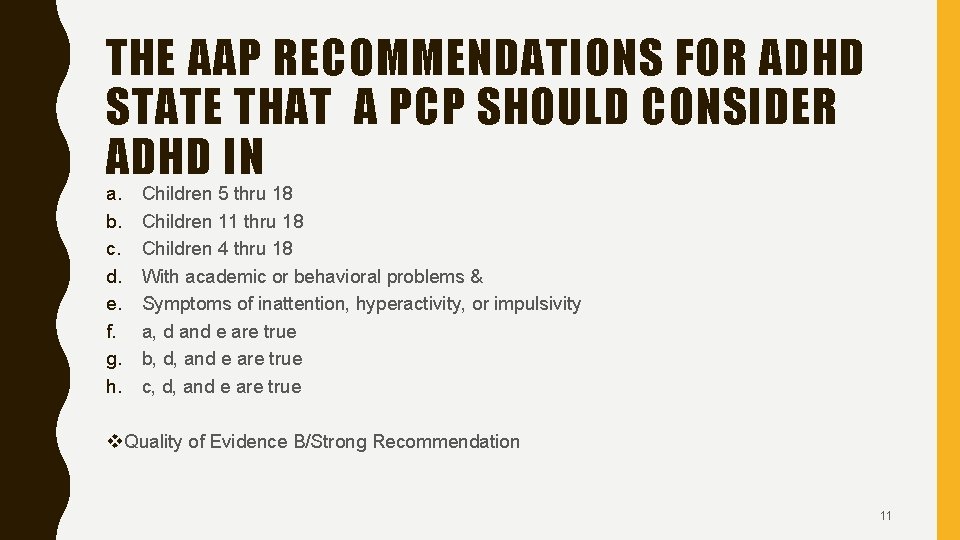
THE AAP RECOMMENDATIONS FOR ADHD STATE THAT A PCP SHOULD CONSIDER ADHD IN a. b. c. d. e. f. g. h. Children 5 thru 18 Children 11 thru 18 Children 4 thru 18 With academic or behavioral problems & Symptoms of inattention, hyperactivity, or impulsivity a, d and e are true b, d, and e are true c, d, and e are true v Quality of Evidence B/Strong Recommendation 11
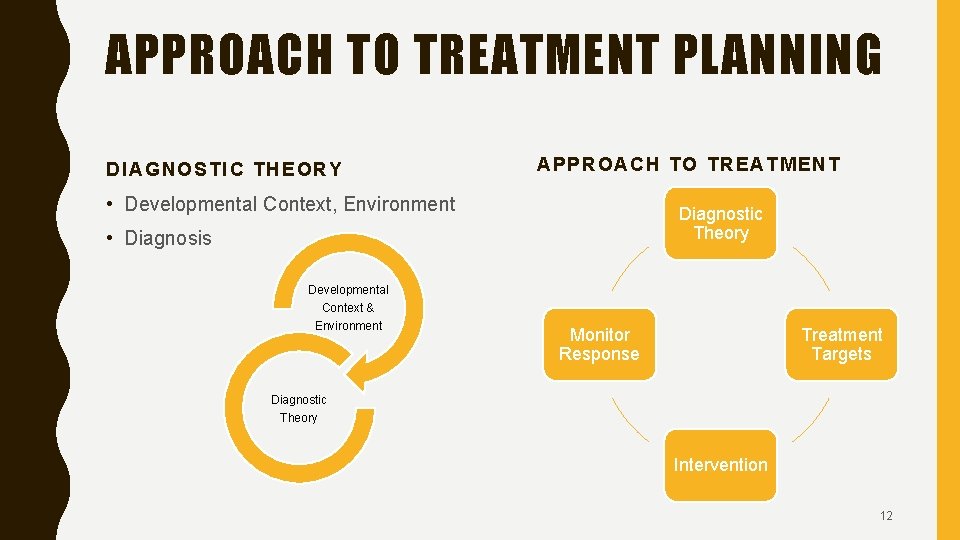
APPROACH TO TREATMENT PLANNING DIAGNOSTIC THEORY APPROACH TO TREATMENT • Developmental Context, Environment Diagnostic Theory • Diagnosis Developmental Context & Environment Monitor Response Treatment Targets Diagnostic Theory Intervention 12
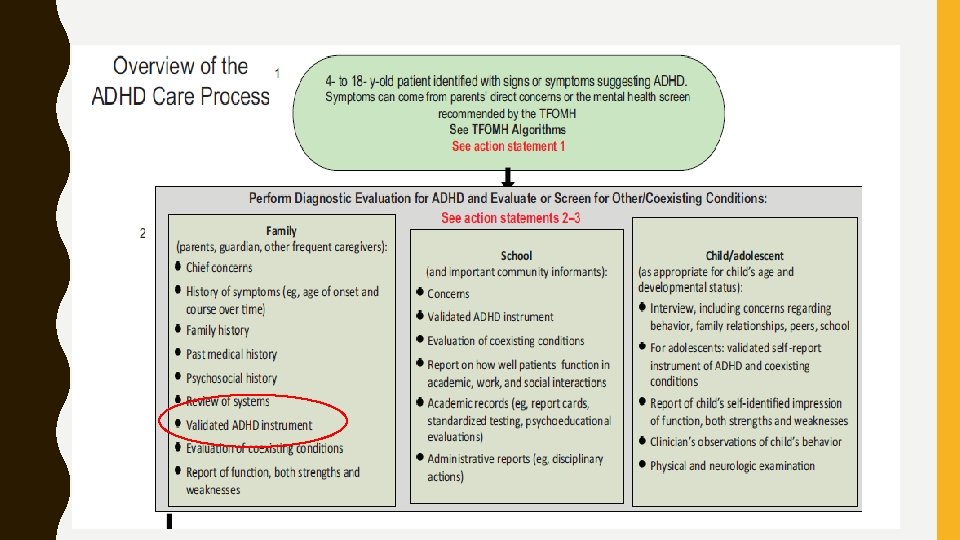
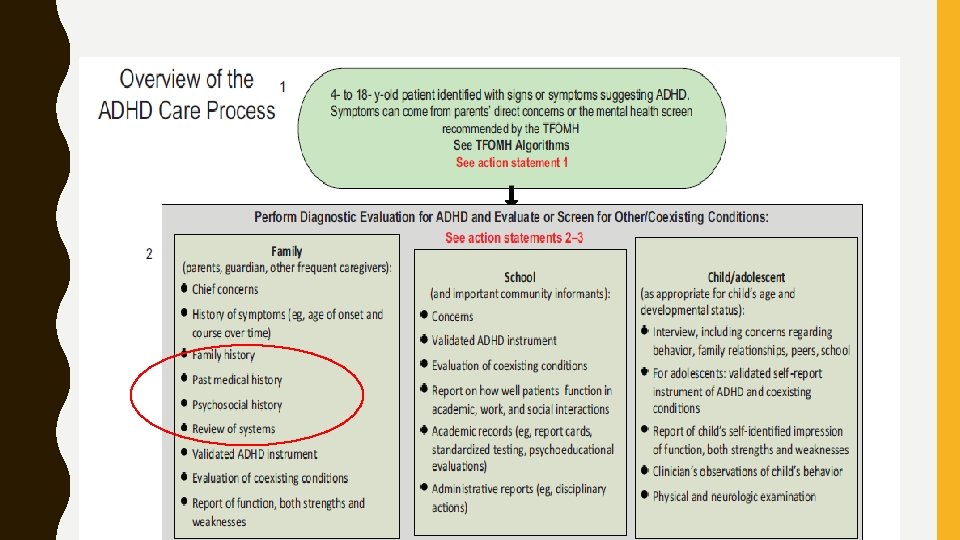
MAKE THE DIAGNOSIS : RULE IN ADHD & RULE OUT OTHERS q. Determine DSM Criteria are met(including impairment in more than 1 major setting); q. Information should be obtained primarily from reports from parents or guardians, teachers, and other school and mental health clinicians involved in the child’s care. q. Rule out any alternative cause v. Quality of Evidence B/Strong Recommendation 13
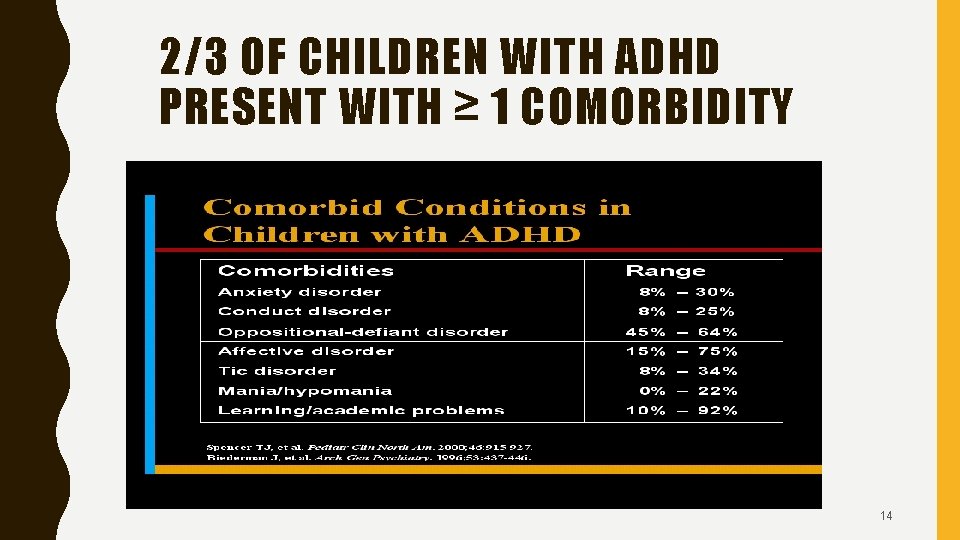
2/3 OF CHILDREN WITH ADHD PRESENT WITH ≥ 1 COMORBIDITY 14
EVALUATION – ASSESS FOR POTENTIAL COEXISTING CONDITIONS q. Developmental (eg, learning and language disorders or other neurodevelopmental disorders), and q. Emotional or behavioral (eg, anxiety, depressive, oppositional defiant/conduct disorders & trauma response), q. Physical (eg, tics, sleep apnea, substance use) conditions v. Quality of Evidence B/Strong Recommendation 15
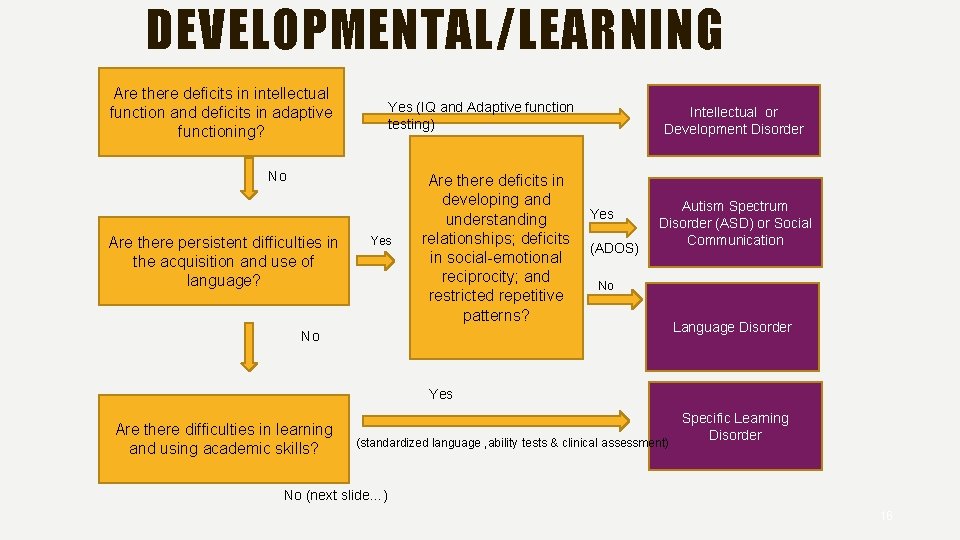
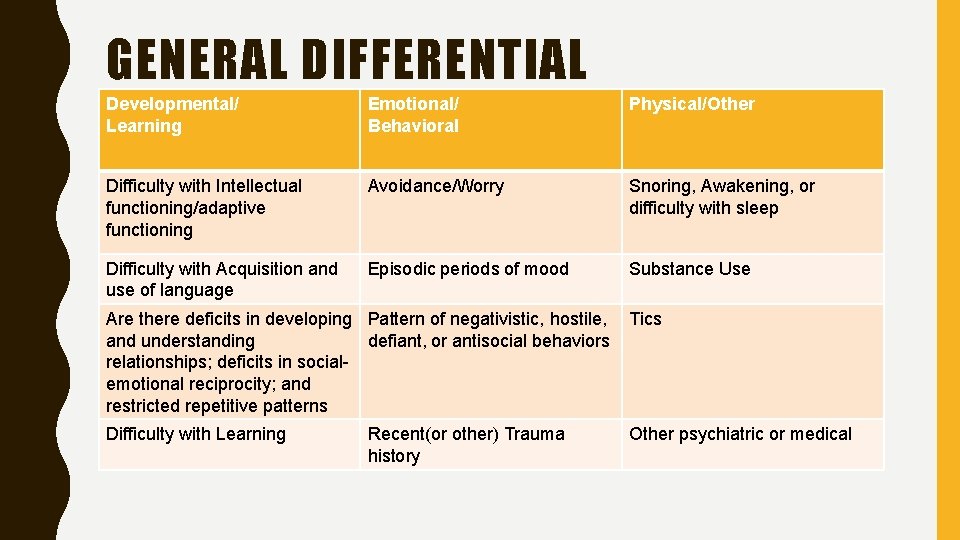
DEVELOPMENTAL/LEARNING Are there deficits in intellectual function and deficits in adaptive functioning? Yes (IQ and Adaptive function testing) No Are there persistent difficulties in the acquisition and use of language? Yes Are there deficits in developing and understanding relationships; deficits in social-emotional reciprocity; and restricted repetitive patterns? Intellectual or Development Disorder Yes (ADOS) Autism Spectrum Disorder (ASD) or Social Communication No No Language Disorder Yes Are there difficulties in learning and using academic skills? (standardized language , ability tests & clinical assessment) Specific Learning Disorder No (next slide…) 16
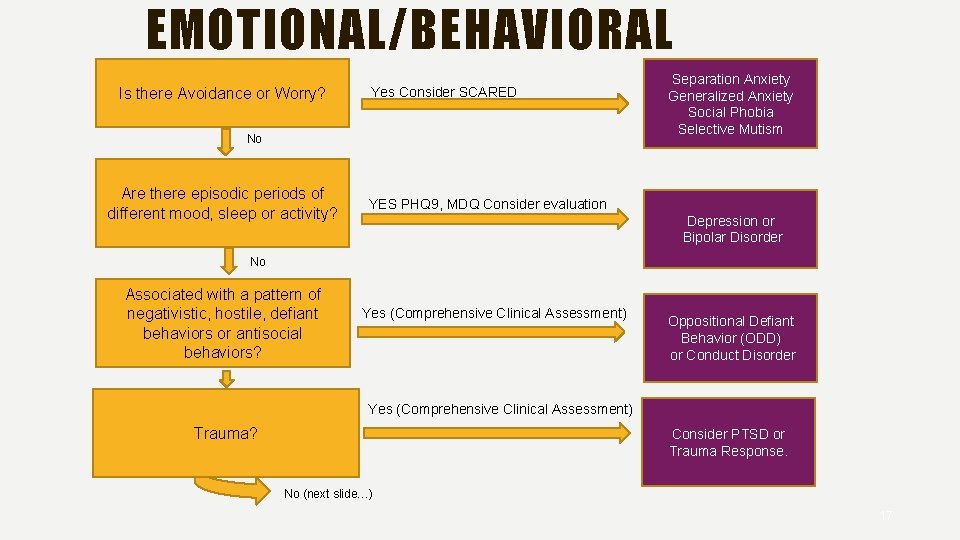
EMOTIONAL/BEHAVIORAL Is there Avoidance or Worry? Yes Consider SCARED No Are there episodic periods of different mood, sleep or activity? Separation Anxiety Generalized Anxiety Social Phobia Selective Mutism YES PHQ 9, MDQ Consider evaluation Depression or Bipolar Disorder No Associated with a pattern of negativistic, hostile, defiant behaviors or antisocial behaviors? Yes (Comprehensive Clinical Assessment) Oppositional Defiant Behavior (ODD) or Conduct Disorder Yes (Comprehensive Clinical Assessment) Trauma? Consider PTSD or Trauma Response. No (next slide…) 17
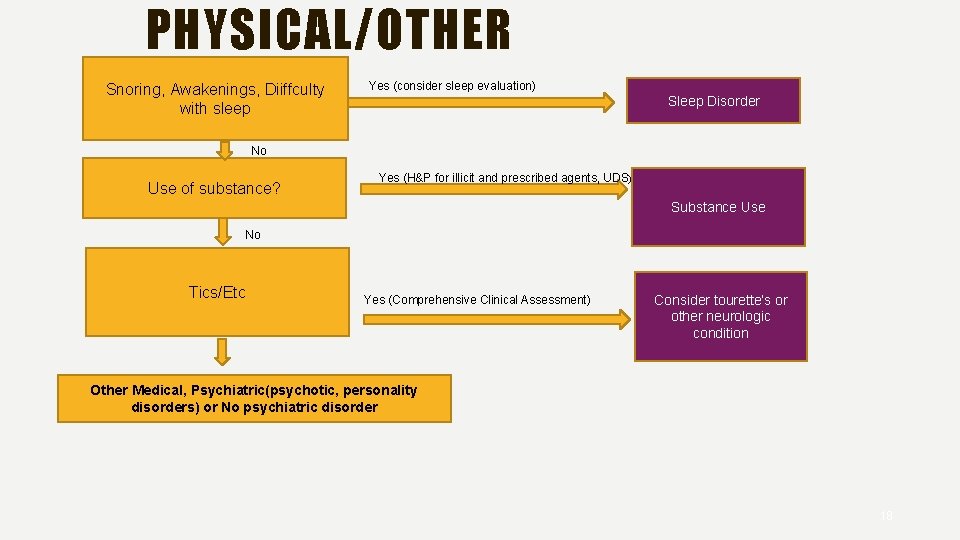
PHYSICAL/OTHER Snoring, Awakenings, Diiffculty with sleep Yes (consider sleep evaluation) Sleep Disorder No Use of substance? Yes (H&P for illicit and prescribed agents, UDS) Substance Use No Tics/Etc Yes (Comprehensive Clinical Assessment) Consider tourette’s or other neurologic condition Other Medical, Psychiatric(psychotic, personality disorders) or No psychiatric disorder 18
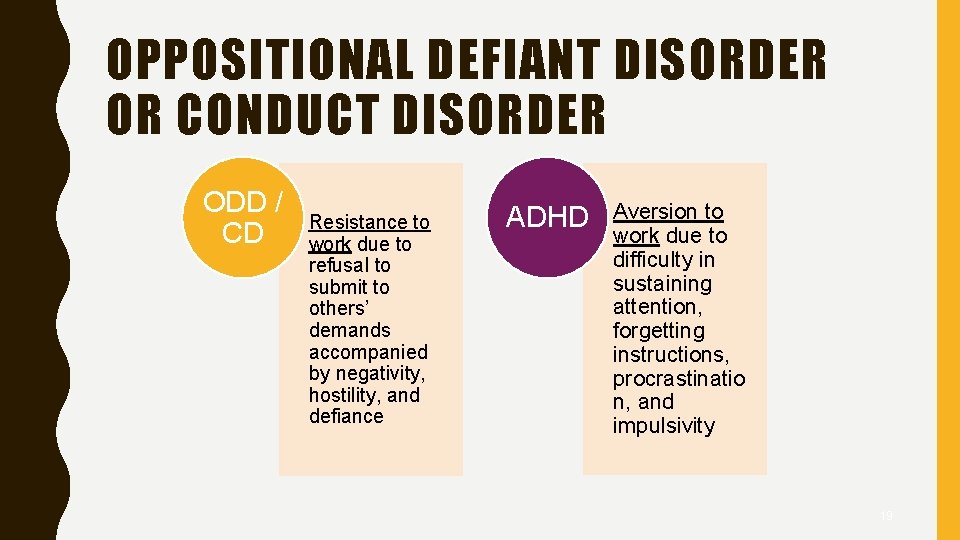
OPPOSITIONAL DEFIANT DISORDER OR CONDUCT DISORDER ODD / CD Resistance to work due to refusal to submit to others’ demands accompanied by negativity, hostility, and defiance ADHD Aversion to work due to difficulty in sustaining attention, forgetting instructions, procrastinatio n, and impulsivity 19
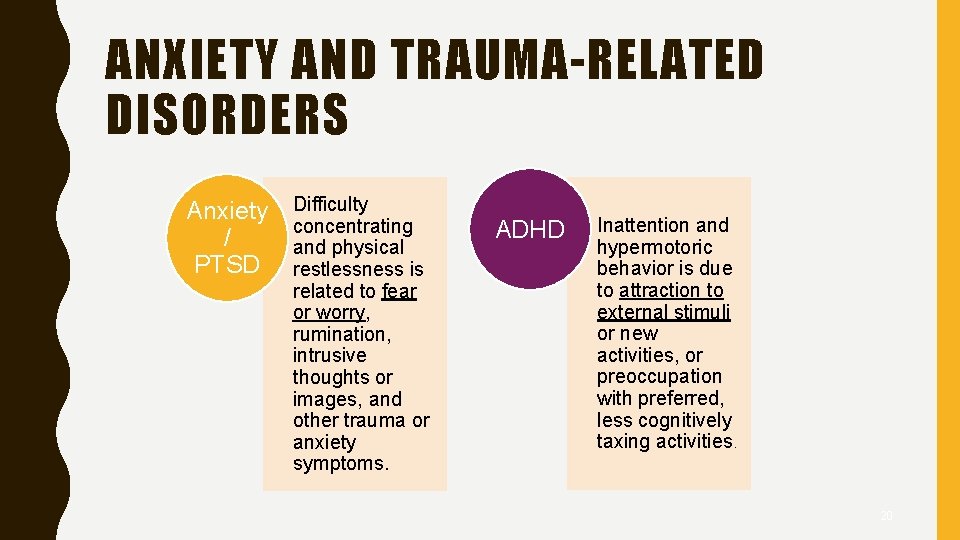
ANXIETY AND TRAUMA-RELATED DISORDERS Anxiety / PTSD Difficulty concentrating and physical restlessness is related to fear or worry, rumination, intrusive thoughts or images, and other trauma or anxiety symptoms. ADHD Inattention and hypermotoric behavior is due to attraction to external stimuli or new activities, or preoccupation with preferred, less cognitively taxing activities. 20
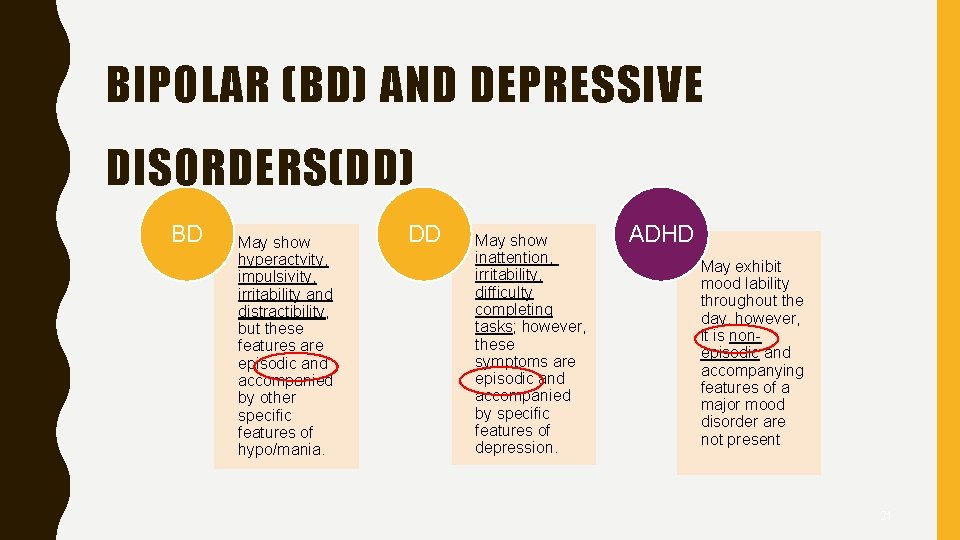
BIPOLAR (BD) AND DEPRESSIVE DISORDERS(DD) BD May show hyperactvity, impulsivity, irritability and distractibility, but these features are episodic and accompanied by other specific features of hypo/mania. DD May show inattention, irritability, difficulty completing tasks; however, these symptoms are episodic and accompanied by specific features of depression. ADHD May exhibit mood lability throughout the day, however, it is nonepisodic and accompanying features of a major mood disorder are not present 21
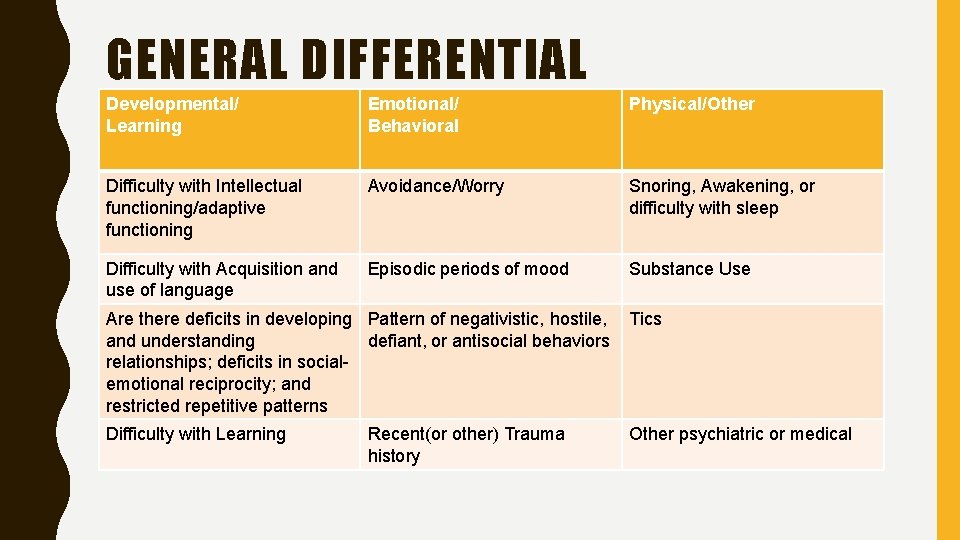
GENERAL DIFFERENTIAL Developmental/ Learning Emotional/ Behavioral Physical/Other Difficulty with Intellectual functioning/adaptive functioning Avoidance/Worry Snoring, Awakening, or difficulty with sleep Difficulty with Acquisition and use of language Episodic periods of mood Substance Use Are there deficits in developing Pattern of negativistic, hostile, and understanding defiant, or antisocial behaviors relationships; deficits in socialemotional reciprocity; and restricted repetitive patterns Tics Difficulty with Learning Other psychiatric or medical Recent(or other) Trauma history
23
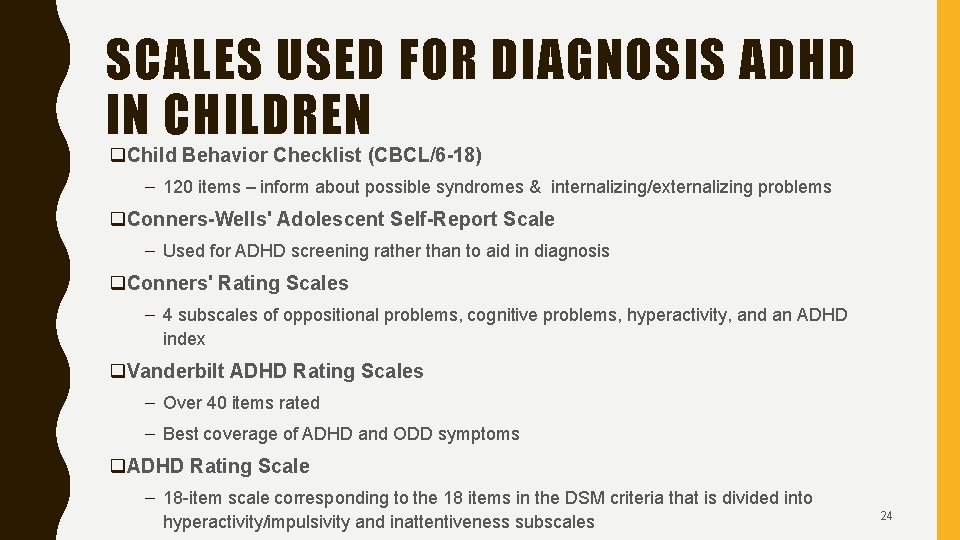
SCALES USED FOR DIAGNOSIS ADHD IN CHILDREN q. Child Behavior Checklist (CBCL/6 -18) – 120 items – inform about possible syndromes & internalizing/externalizing problems q. Conners-Wells' Adolescent Self-Report Scale – Used for ADHD screening rather than to aid in diagnosis q. Conners' Rating Scales – 4 subscales of oppositional problems, cognitive problems, hyperactivity, and an ADHD index q. Vanderbilt ADHD Rating Scales – Over 40 items rated – Best coverage of ADHD and ODD symptoms q. ADHD Rating Scale – 18 -item scale corresponding to the 18 items in the DSM criteria that is divided into hyperactivity/impulsivity and inattentiveness subscales 24
25
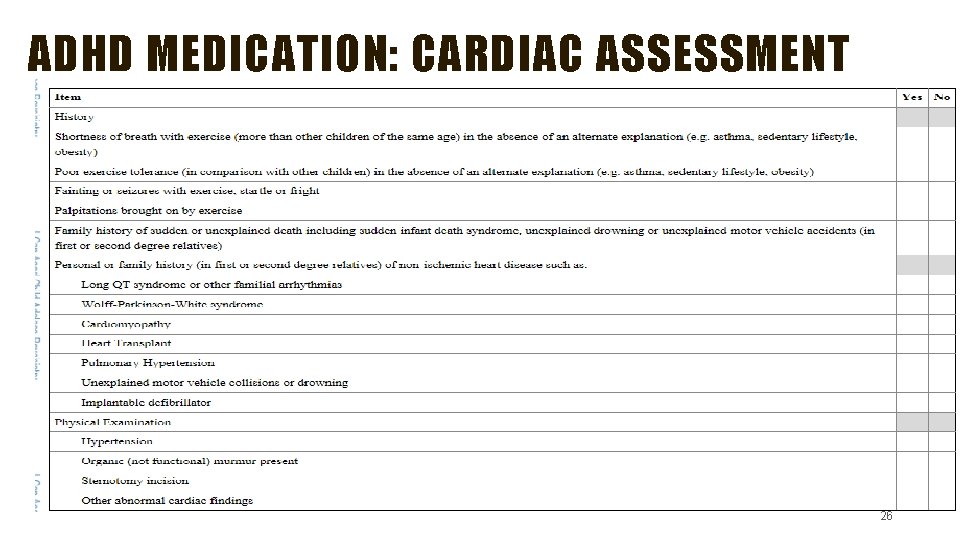
ADHD MEDICATION: CARDIAC ASSESSMENT 26
ONGOING TREATMENT – CHRONIC CONDITION q. Recognize ADHD as a chronic condition q. Consider children and adolescents with ADHD as children and youth with special health care needs q. Follow the principles of the chronic care model and the medical home q. Have a systematic follow-up plan that includes in person visits, v. Quality of Evidence B/Strong Recommendation 27
TREATMENT RECOMMENDATIONS VARY BY AGE q. The AAP Recommendations for treatment of children and youth with ADHD vary depending on the patient’s age. 28
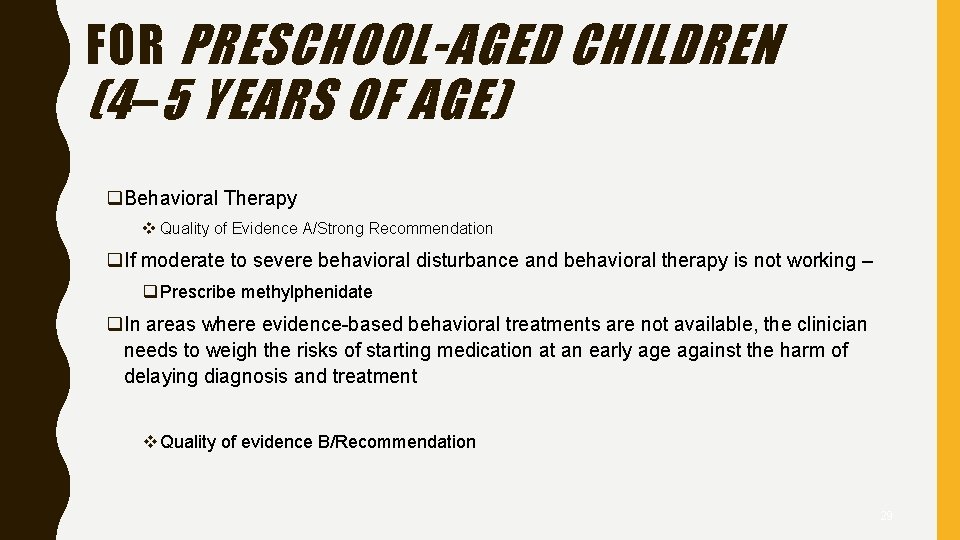
FOR PRESCHOOL-AGED CHILDREN (4 – 5 YEARS OF AGE) q. Behavioral Therapy v Quality of Evidence A/Strong Recommendation q. If moderate to severe behavioral disturbance and behavioral therapy is not working – q Prescribe methylphenidate q. In areas where evidence-based behavioral treatments are not available, the clinician needs to weigh the risks of starting medication at an early age against the harm of delaying diagnosis and treatment v Quality of evidence B/Recommendation 29
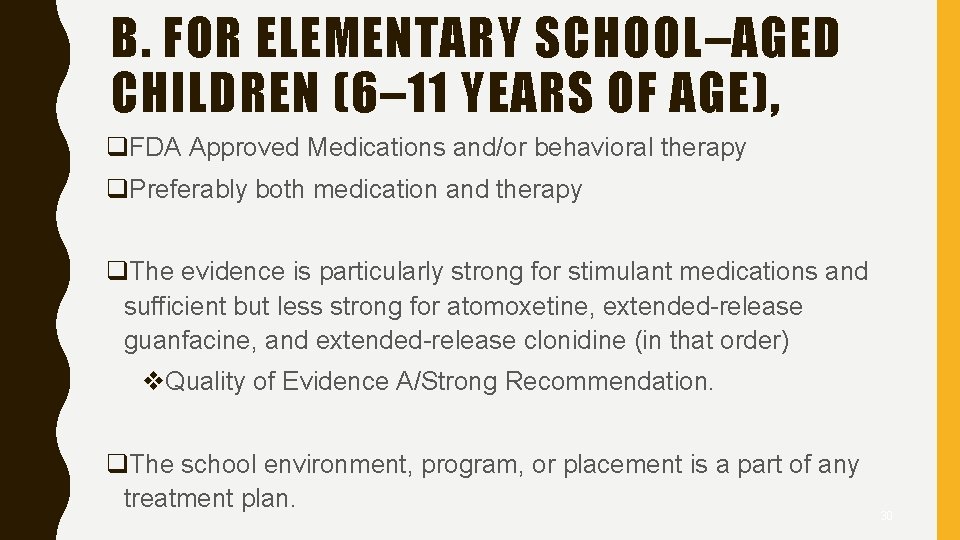
B. FOR ELEMENTARY SCHOOL–AGED CHILDREN (6– 11 YEARS OF AGE), q. FDA Approved Medications and/or behavioral therapy q. Preferably both medication and therapy q. The evidence is particularly strong for stimulant medications and sufficient but less strong for atomoxetine, extended-release guanfacine, and extended-release clonidine (in that order) v. Quality of Evidence A/Strong Recommendation. q. The school environment, program, or placement is a part of any treatment plan. 30
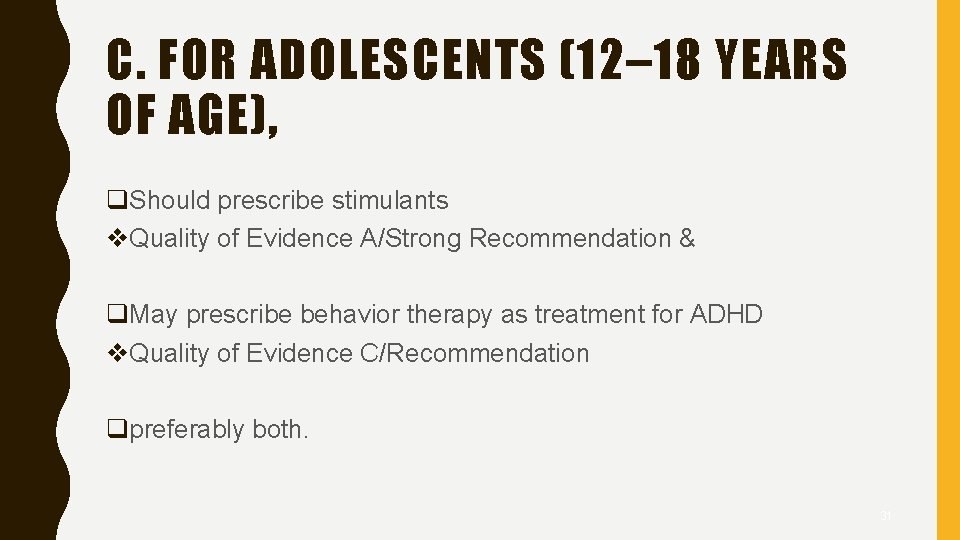
C. FOR ADOLESCENTS (12– 18 YEARS OF AGE), q. Should prescribe stimulants v. Quality of Evidence A/Strong Recommendation & q. May prescribe behavior therapy as treatment for ADHD v. Quality of Evidence C/Recommendation qpreferably both. 31
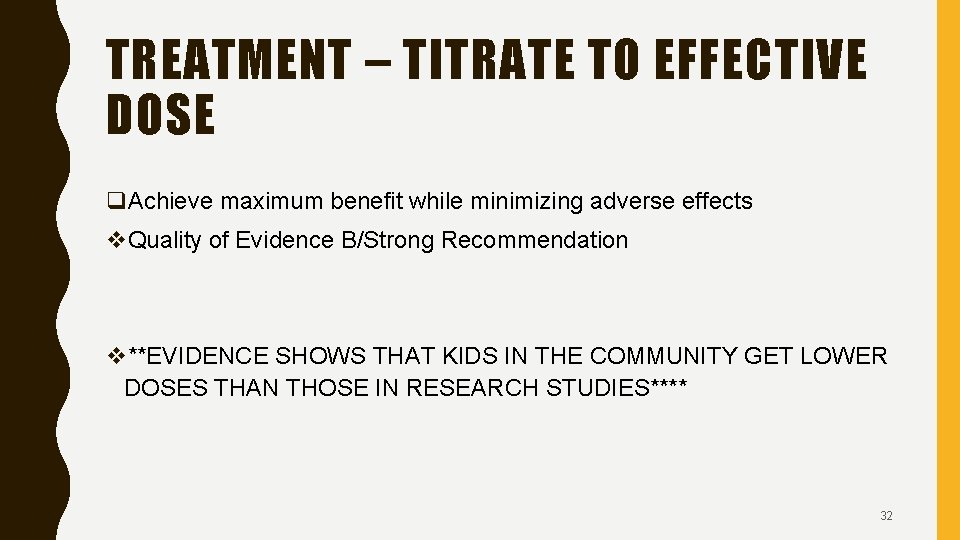
TREATMENT – TITRATE TO EFFECTIVE DOSE q. Achieve maximum benefit while minimizing adverse effects v. Quality of Evidence B/Strong Recommendation v**EVIDENCE SHOWS THAT KIDS IN THE COMMUNITY GET LOWER DOSES THAN THOSE IN RESEARCH STUDIES**** 32
ADHD FOR THE PRIMARY CARE PROVIDER 33
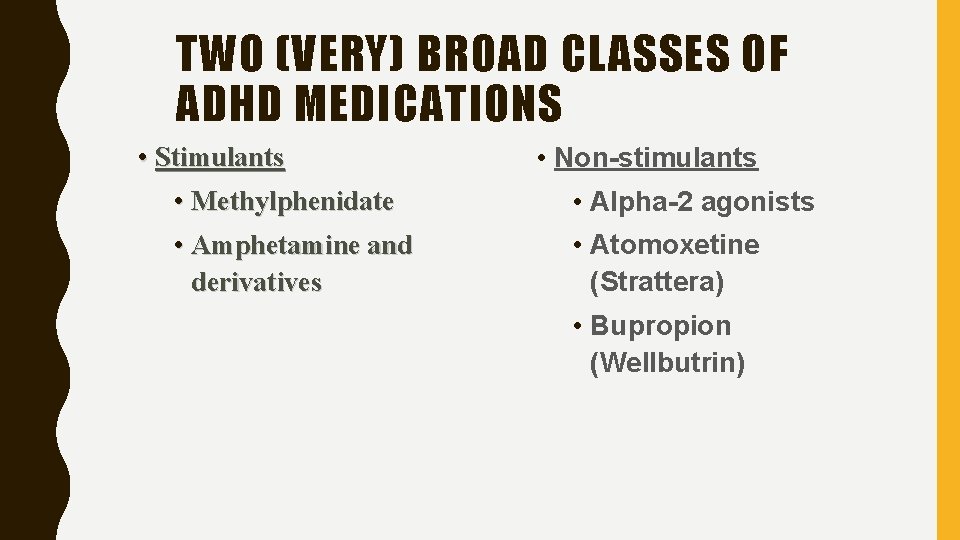
TWO (VERY) BROAD CLASSES OF ADHD MEDICATIONS • Stimulants • Non-stimulants • Methylphenidate • Alpha-2 agonists • Amphetamine and derivatives • Atomoxetine (Strattera) • Bupropion (Wellbutrin)
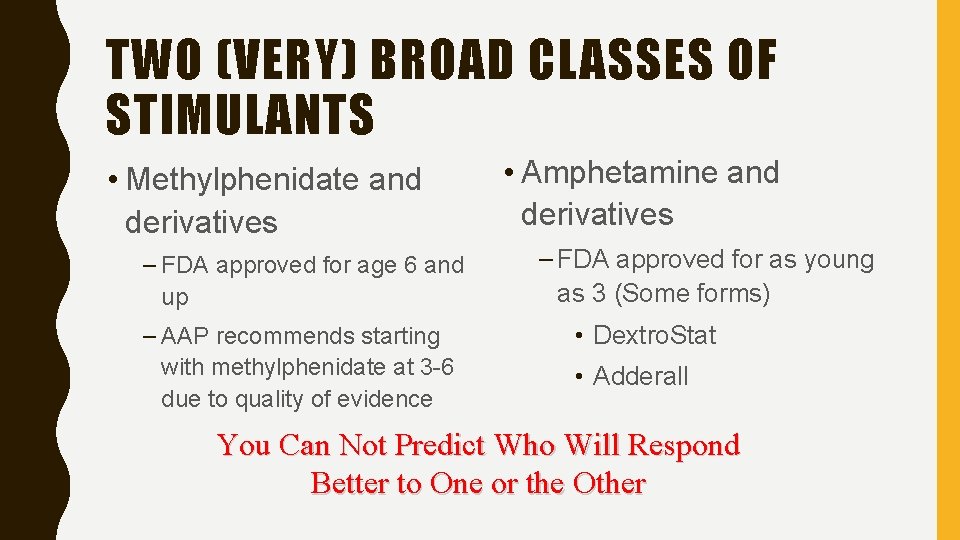
TWO (VERY) BROAD CLASSES OF STIMULANTS • Methylphenidate and derivatives – FDA approved for age 6 and up – AAP recommends starting with methylphenidate at 3 -6 due to quality of evidence • Amphetamine and derivatives – FDA approved for as young as 3 (Some forms) • Dextro. Stat • Adderall You Can Not Predict Who Will Respond Better to One or the Other
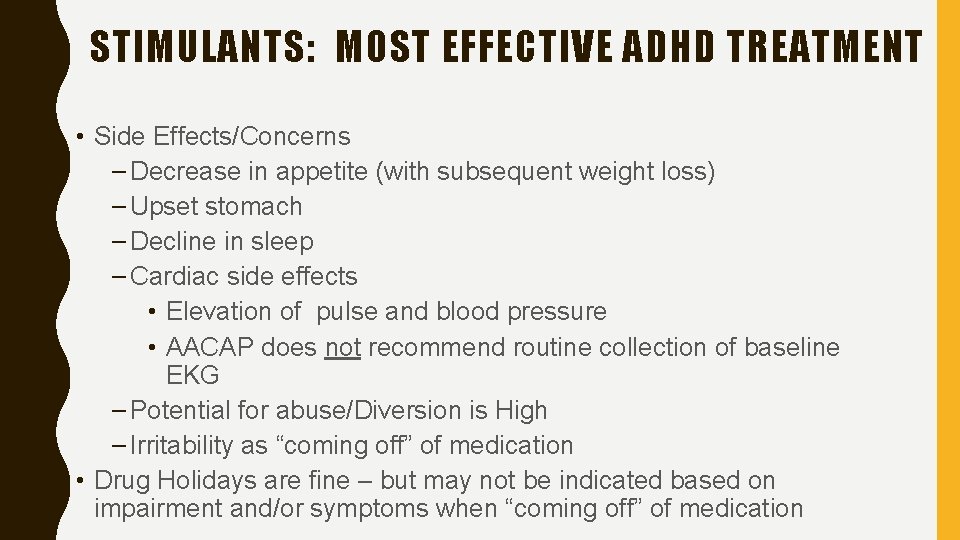
STIMULANTS: MOST EFFECTIVE ADHD TREATMENT • Side Effects/Concerns – Decrease in appetite (with subsequent weight loss) – Upset stomach – Decline in sleep – Cardiac side effects • Elevation of pulse and blood pressure • AACAP does not recommend routine collection of baseline EKG – Potential for abuse/Diversion is High – Irritability as “coming off” of medication • Drug Holidays are fine – but may not be indicated based on impairment and/or symptoms when “coming off” of medication
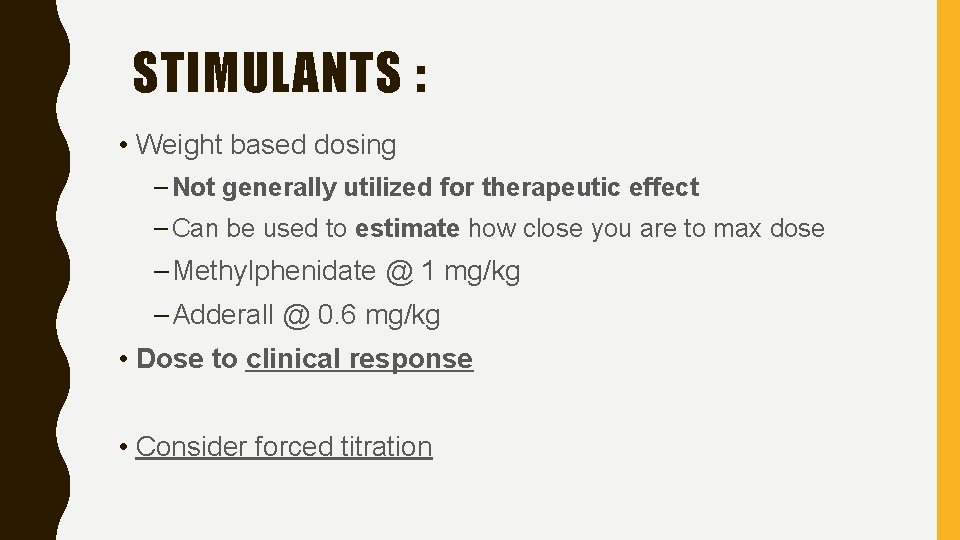
STIMULANTS : • Weight based dosing – Not generally utilized for therapeutic effect – Can be used to estimate how close you are to max dose – Methylphenidate @ 1 mg/kg – Adderall @ 0. 6 mg/kg • Dose to clinical response • Consider forced titration
STIMULANT DOSING • Start low, go up, and follow-up • Collect data from teachers and parents to assess progress • Can tell very rapidly if a medication is going to work or not • Side effects (esp GI) often get better if patients can persevere
FORCED TITRATION – KIDS OVER 5 AND WITHOUT DEV. DELAY • Concerta 18 – 1 pill for 1 week then increase to 2 pills • Vyvanse 20 mg – 1 pill for 1 week then increase to 2 pills • Adderall XR 10 mg ****NOTE THESE ARE NOT EQUIVALENT DOSES***** – 1 pill for 1 week then increase to 2 pills • • Phone call or visit in 2 weeks If no significant side effects but no significant improvement increase dose Follow-up in 4 week either way Consider follow-up vanderbilts(only the ADHD questions)
CONCERTA - In Nov 2014 the FDA said that only 2 generics were equivalent to Concerta – two others may not be releasing in the same way - The possible impact is the medication not working as long, or working differently earlier in the day. - If your prescription does not say concerta on it pharmacies can substitute the generics that have not been approved as equivalent to concerta. - Not all long-acting methylphenidate is created equal 40
OPTIMAL MANAGEMENT • Assess for comorbidities and treat appropriately • Encourage Therapy & School supports • When titrating medications increase aggressively & check-in more frequently( every 4 -6 weeks) until behavior optimized. • Brief Follow-up visits – 3 -4 times a year when stable – Follow-up on ADHD and potential comorbidities at each followup – Start conversation about what child thinks about medication young • Have a system in your office for refills – Nurse triage looks for last visit and schedules follow-up if not 41
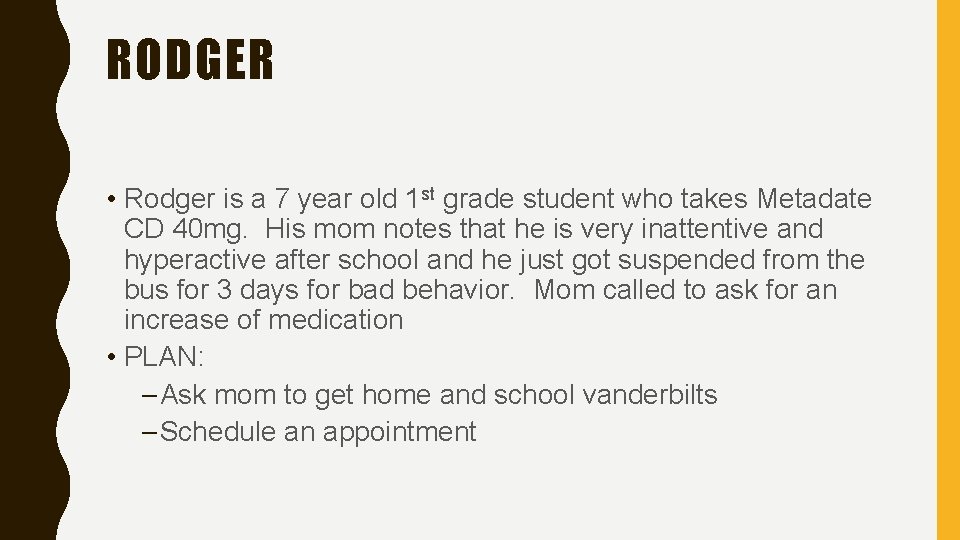
RODGER • Rodger is a 7 year old 1 st grade student who takes Metadate CD 40 mg. His mom notes that he is very inattentive and hyperactive after school and he just got suspended from the bus for 3 days for bad behavior. Mom called to ask for an increase of medication • PLAN: – Ask mom to get home and school vanderbilts – Schedule an appointment
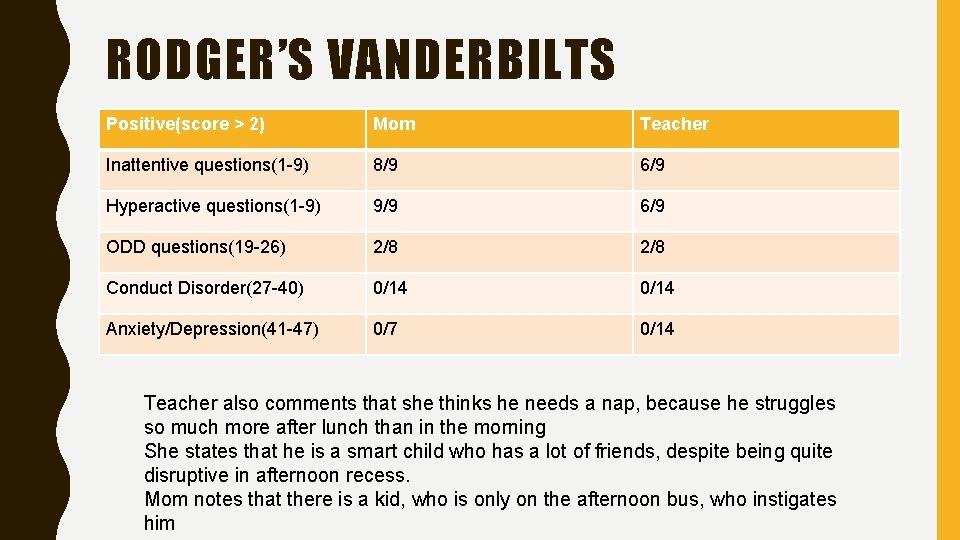
RODGER’S VANDERBILTS Positive(score > 2) Mom Teacher Inattentive questions(1 -9) 8/9 6/9 Hyperactive questions(1 -9) 9/9 6/9 ODD questions(19 -26) 2/8 Conduct Disorder(27 -40) 0/14 Anxiety/Depression(41 -47) 0/7 0/14 Teacher also comments that she thinks he needs a nap, because he struggles so much more after lunch than in the morning She states that he is a smart child who has a lot of friends, despite being quite disruptive in afternoon recess. Mom notes that there is a kid, who is only on the afternoon bus, who instigates him
GENERAL DIFFERENTIAL Developmental/ Learning Emotional/ Behavioral Physical/Other Difficulty with Intellectual functioning/adaptive functioning Avoidance/Worry Snoring, Awakening, or difficulty with sleep Difficulty with Acquisition and use of language Episodic periods of mood Substance Use Are there deficits in developing Pattern of negativistic, hostile, and understanding defiant, or antisocial behaviors relationships; deficits in socialemotional reciprocity; and restricted repetitive patterns Tics Difficulty with Learning Other psychiatric or medical Recent(or other) Trauma history
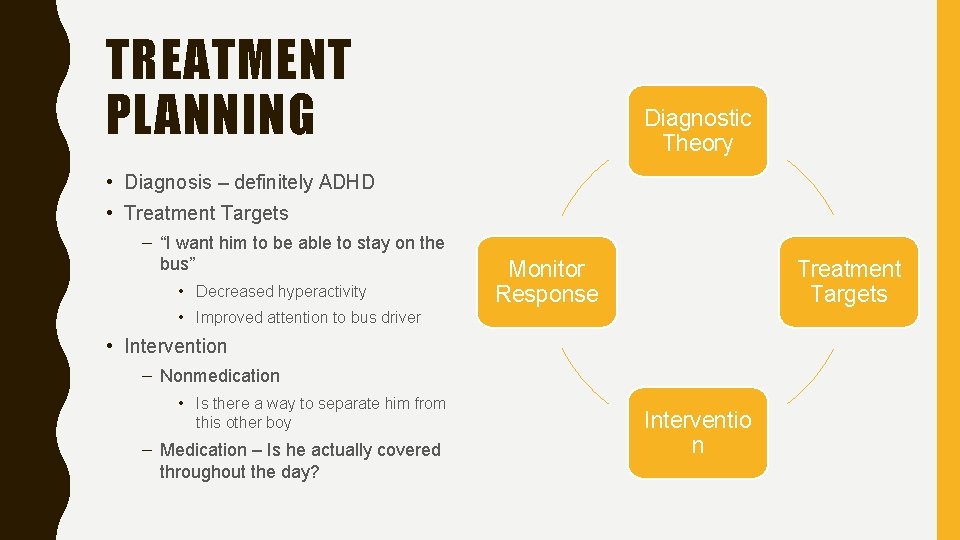
TREATMENT PLANNING Diagnostic Theory • Diagnosis – definitely ADHD • Treatment Targets – “I want him to be able to stay on the bus” • Decreased hyperactivity Monitor Response Treatment Targets • Improved attention to bus driver • Intervention – Nonmedication • Is there a way to separate him from this other boy – Medication – Is he actually covered throughout the day? Interventio n
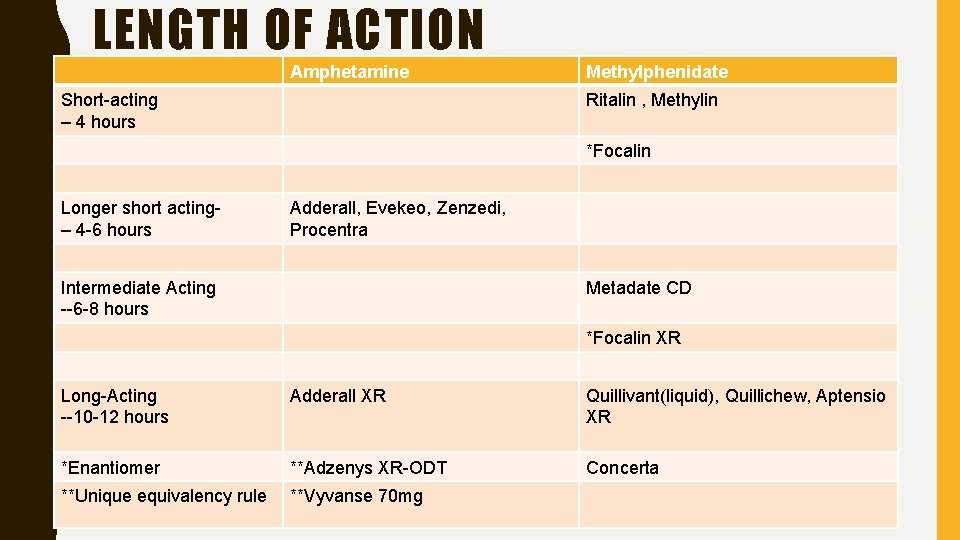
LENGTH OF ACTION Amphetamine Short-acting – 4 hours Methylphenidate Ritalin , Methylin *Focalin Longer short acting– 4 -6 hours Adderall, Evekeo, Zenzedi, Procentra Intermediate Acting --6 -8 hours Metadate CD *Focalin XR Long-Acting --10 -12 hours Adderall XR Quillivant(liquid), Quillichew, Aptensio XR *Enantiomer **Adzenys XR-ODT Concerta **Unique equivalency rule **Vyvanse 70 mg 46
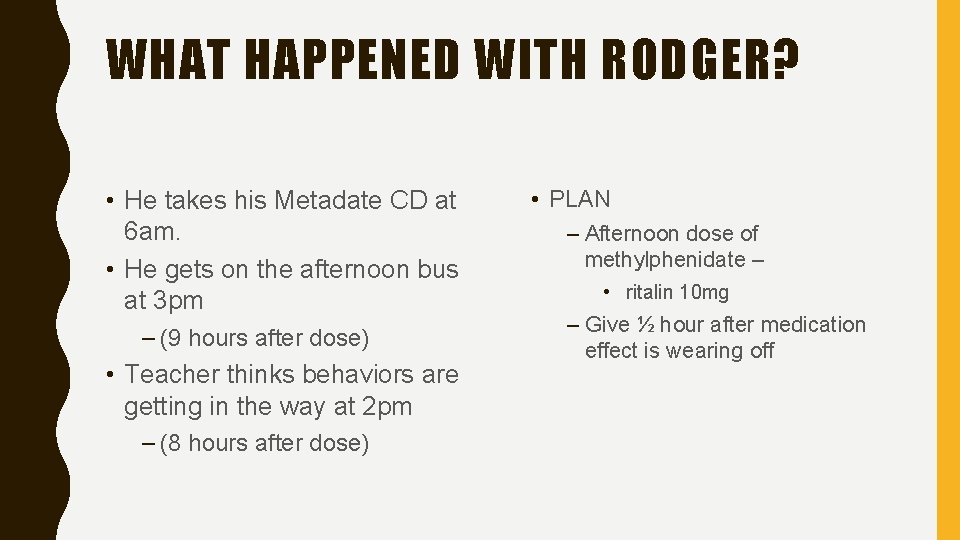
WHAT HAPPENED WITH RODGER? • He takes his Metadate CD at 6 am. • He gets on the afternoon bus at 3 pm – (9 hours after dose) • Teacher thinks behaviors are getting in the way at 2 pm – (8 hours after dose) • PLAN – Afternoon dose of methylphenidate – • ritalin 10 mg – Give ½ hour after medication effect is wearing off
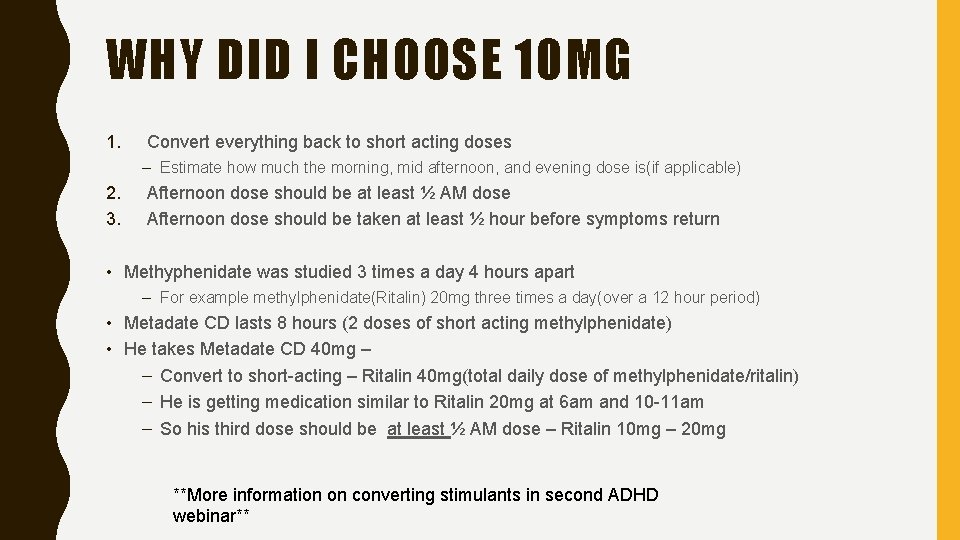
WHY DID I CHOOSE 10 MG 1. Convert everything back to short acting doses – Estimate how much the morning, mid afternoon, and evening dose is(if applicable) 2. 3. Afternoon dose should be at least ½ AM dose Afternoon dose should be taken at least ½ hour before symptoms return • Methyphenidate was studied 3 times a day 4 hours apart – For example methylphenidate(Ritalin) 20 mg three times a day(over a 12 hour period) • Metadate CD lasts 8 hours (2 doses of short acting methylphenidate) • He takes Metadate CD 40 mg – – Convert to short-acting – Ritalin 40 mg(total daily dose of methylphenidate/ritalin) – He is getting medication similar to Ritalin 20 mg at 6 am and 10 -11 am – So his third dose should be at least ½ AM dose – Ritalin 10 mg – 20 mg **More information on converting stimulants in second ADHD webinar**
ADHD FOR THE PRIMARY CARE PROVIDER 49
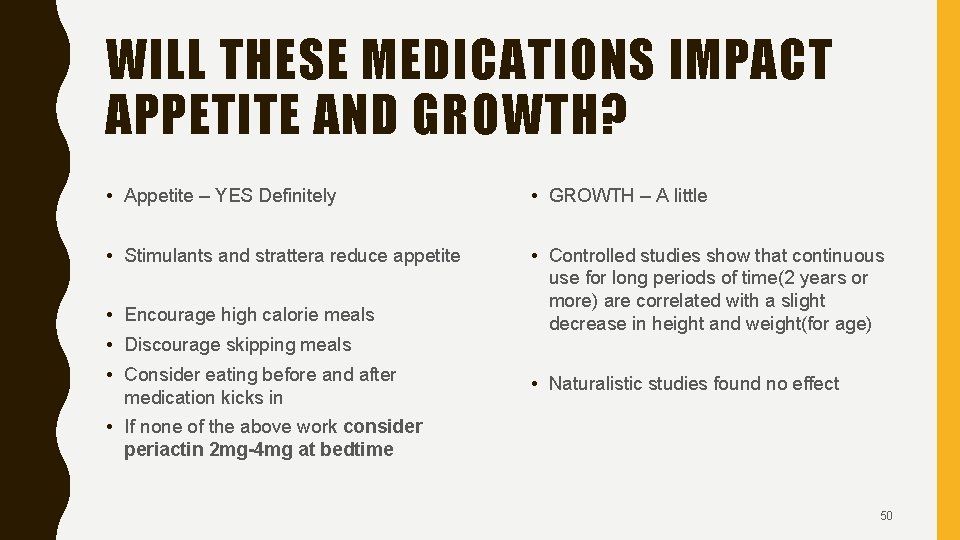
WILL THESE MEDICATIONS IMPACT APPETITE AND GROWTH? • Appetite – YES Definitely • GROWTH – A little • Stimulants and strattera reduce appetite • Controlled studies show that continuous use for long periods of time(2 years or more) are correlated with a slight decrease in height and weight(for age) • Encourage high calorie meals • Discourage skipping meals • Consider eating before and after medication kicks in • Naturalistic studies found no effect • If none of the above work consider periactin 2 mg-4 mg at bedtime 50
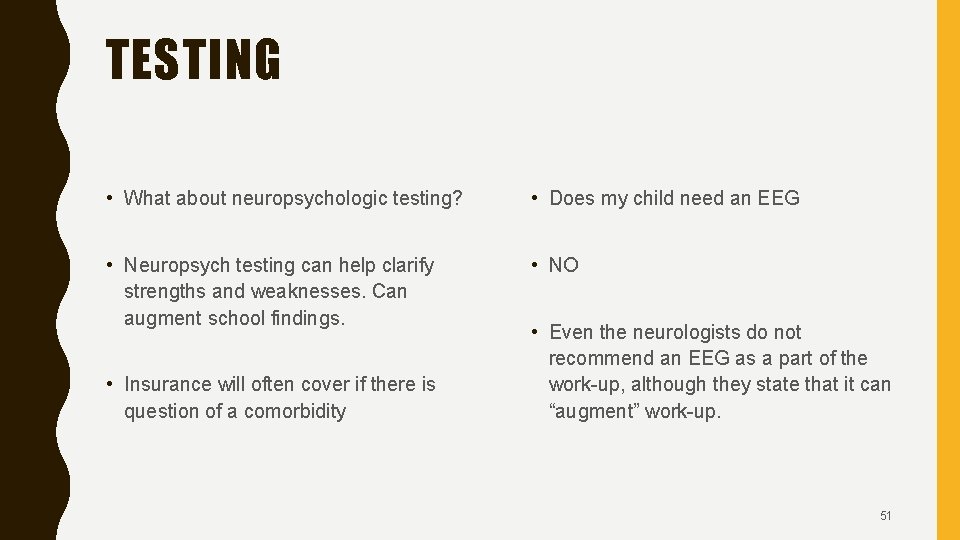
TESTING • What about neuropsychologic testing? • Does my child need an EEG • Neuropsych testing can help clarify strengths and weaknesses. Can augment school findings. • NO • Insurance will often cover if there is question of a comorbidity • Even the neurologists do not recommend an EEG as a part of the work-up, although they state that it can “augment” work-up. 51
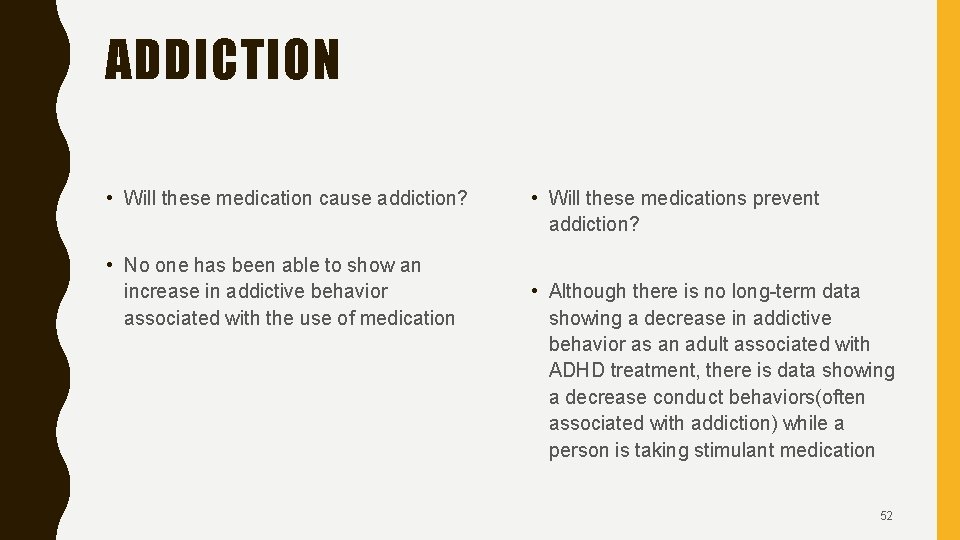
ADDICTION • Will these medication cause addiction? • No one has been able to show an increase in addictive behavior associated with the use of medication • Will these medications prevent addiction? • Although there is no long-term data showing a decrease in addictive behavior as an adult associated with ADHD treatment, there is data showing a decrease conduct behaviors(often associated with addiction) while a person is taking stimulant medication 52
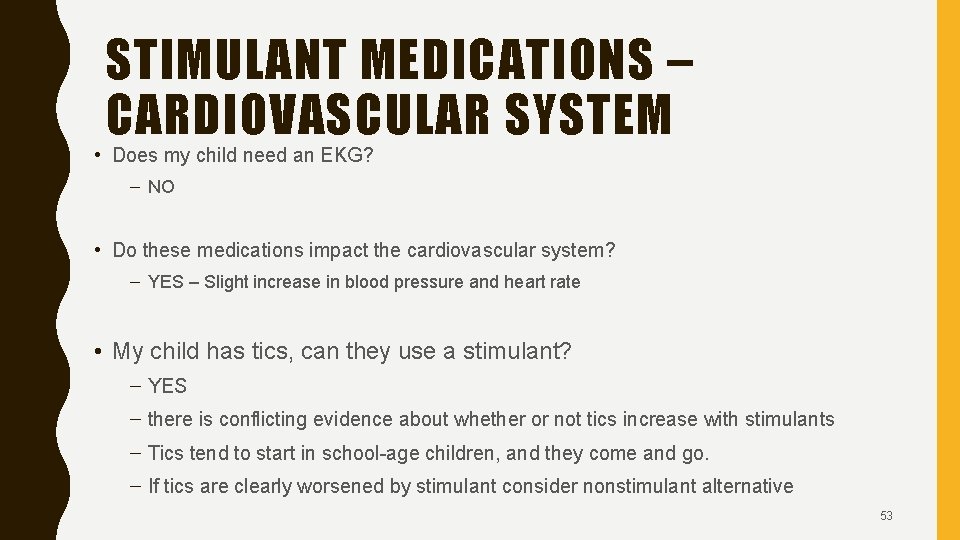
STIMULANT MEDICATIONS – CARDIOVASCULAR SYSTEM • Does my child need an EKG? – NO • Do these medications impact the cardiovascular system? – YES – Slight increase in blood pressure and heart rate • My child has tics, can they use a stimulant? – YES – there is conflicting evidence about whether or not tics increase with stimulants – Tics tend to start in school-age children, and they come and go. – If tics are clearly worsened by stimulant consider nonstimulant alternative 53
MY CHILD HAS DIFFICULTY WITH SENSORY PROCESSING – NOT ADHD • Often times kids with ADHD also have difficulties with sensory processing. (again comorbidity is the rule) – They have poor handwriting – They are clumsy(have trouble with knowing where their body is in space) • It is reasonable to send for PT and OT evaluations – kids with ADHD can benefit from that. • If parent is resistant to the ADHD diagnosis – schedule a follow-up with repeat measures from the rehab providers and school in order to assess further
CAN MY CHILD GET SUPPORT FROM THE SCHOOL? • In public schools children do qualify for an IEP based on the qualification of “other health impaired. ” • Many schools prefer to handle ADHD with a 504 plan • If you have a 504 plan make sure that the parent is aware what is on it and discusses with the teacher – OPEN COMMUNICATION IS KEY • If a 504 plan is not enough the family must request testing for an IEP IN WRITING. 55
PRESCHOOL • Therapy – Focused on helping parent develop unique skills needed for child with behavioral problems (although these skills will help with all children – PMT, PCIT, (Or trauma-focused treatment) • Preschoolers do respond to medication, but have less consistent response, and more side effects. – Start low escalate slowly – ritalin 2. 5 mg in the morning or morning and noon • How much are the behaviors impacting ability to reach expected development – walking, talking, social, maintaining in school, etc. 56
SCHOOL AGED CHILD • My child seems immature. Is that normal? – Children with ADHD will typically seem immature compared to their peers. – This may be particularly problematic if a child is blurting out and interrupting repeatedly with jokes that are not age appropriate. • Should we consider an afternoon dose? • YES – Is there after school homework? – Are ADHD behaviors worsening the home environment? – Do ADHD behaviors make it harder for your child to interact with their peers? 57