
ADHD and the Inclusive Classroom Strategies for Success




- Slides: 33
ADHD and the Inclusive Classroom: Strategies for Success of ALL Students Presented by The Misfiring Synapses: Lonna Carrier, Jim Hodges, Stephen Kolze, Jeff Walker
Overview • Intro to ADHD • Classroom management strategies • Instructional strategies
Workshop Goal Teachers will be able to describe ADHD symptoms, origins, and common treatments. Teachers will also learn classroom management techniques and instructional strategies for creating a more productive educational environment for all students that enhances learning for ADHD students without compromising learning for other student populations.
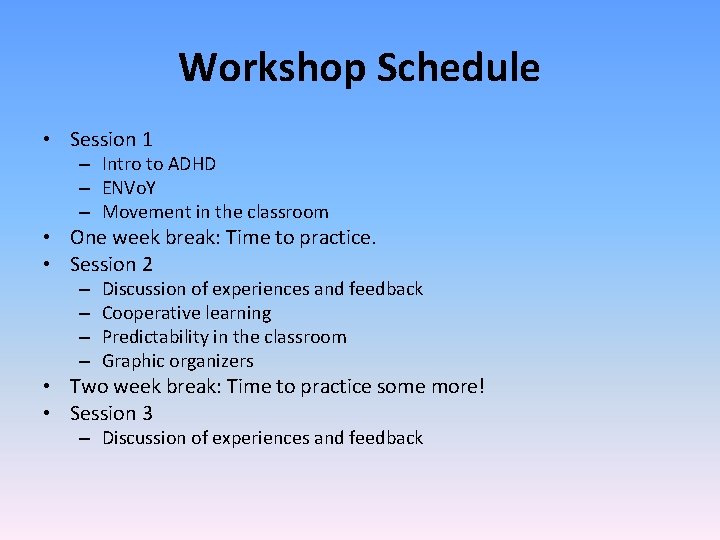
Workshop Schedule • Session 1 – Intro to ADHD – ENVo. Y – Movement in the classroom • One week break: Time to practice. • Session 2 – – Discussion of experiences and feedback Cooperative learning Predictability in the classroom Graphic organizers • Two week break: Time to practice some more! • Session 3 – Discussion of experiences and feedback
What is ADHD? ADHD is a neurobehavioral development disorder that affects how well someone can sit still, focus and pay attention.
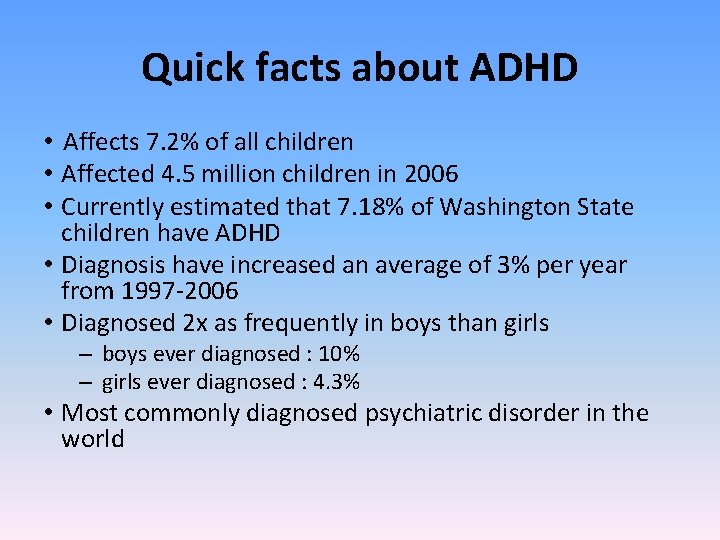
Quick facts about ADHD • Affects 7. 2% of all children • Affected 4. 5 million children in 2006 • Currently estimated that 7. 18% of Washington State children have ADHD • Diagnosis have increased an average of 3% per year from 1997‐ 2006 • Diagnosed 2 x as frequently in boys than girls – boys ever diagnosed : 10% – girls ever diagnosed : 4. 3% • Most commonly diagnosed psychiatric disorder in the world
ADHD Symptoms • Impulsiveness: Acting before thinking of consequences, general disorganization and tendency to jump from one activity to another. • Hyperactivity: Restlessness, fidgeting, talks excessively and has problems organizing tasks. • Inattention: Easily distracted, day dreamer, forgets about daily activities and has problems organizing tasks.
ADHD Causes • Genetic: 75% of all cases. No single gene has been clearly identified but research suggests that Dopamine transporters play a developmental role. • Environmental: 9‐ 20% of all cases. Researchers believe that alcohol, tobacco and environmental exposure to lead may play a significant role. • Diet: Research is inconclusive but studies suggest that too much sugar or poor eating habits do not contribute significantly.
ADHD Treatment • Medication: Stimulants are often prescribed to boost and balance levels of chemicals within brain neurotransmitters. However, these medications wear off quickly and correct dosage varies widely from child to child. • Behavior Modification: These strategies often employ rewards systems, organizational strategies and implementation of disciplinary “Timeouts”. • Life style changes: These methods often work with parents to understand guide their child’s behavior. Implementation of schedules and routines also helps. • Counseling: Includes working with a psychiatrist, social worker or participation in social support groups.
ADHD Consequences and Implications • In the Unites States, 37% of those diagnosed DO NOT attain a high school diploma. Some studies suggest this number may be almost 50%. • Less than 5% of those diagnosed ever get a college degree. • Teens are at a greater risk for car accidents, early pregnancy, and tobacco and alcohol abuse.
Small Group Discussion • How do you currently handle students with ADHD? – Behaviorally? – Academically? • How effective are these practices?
Classroom Discussion • How do you currently handle students with ADHD? – Behaviorally? – Academically? • How effective are these practices?
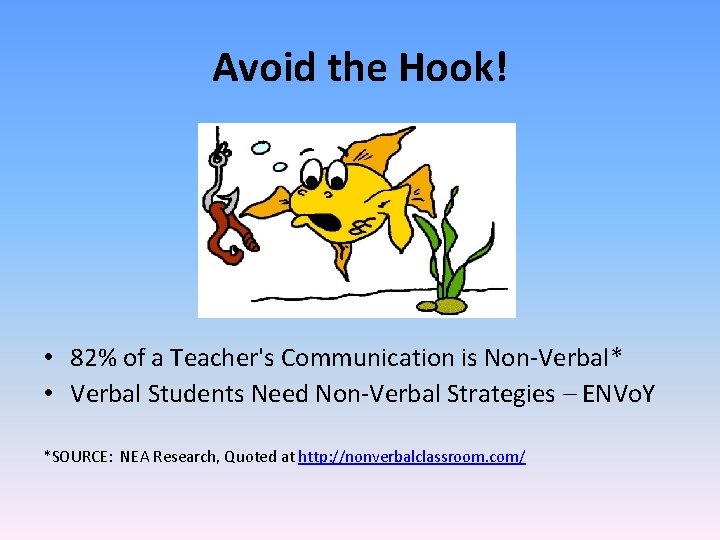
Avoid the Hook! • 82% of a Teacher's Communication is Non‐Verbal* • Verbal Students Need Non‐Verbal Strategies – ENVo. Y *SOURCE: NEA Research, Quoted at http: //nonverbalclassroom. com/
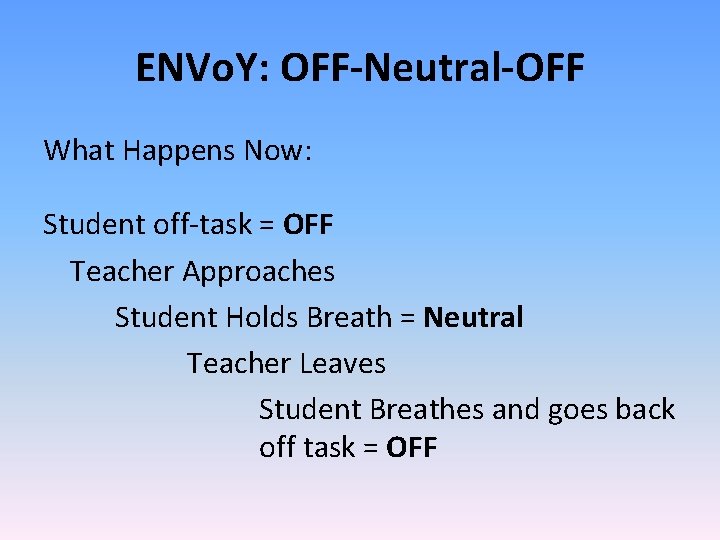
ENVo. Y: OFF-Neutral-OFF What Happens Now: Student off‐task = OFF Teacher Approaches Student Holds Breath = Neutral Teacher Leaves Student Breathes and goes back off task = OFF
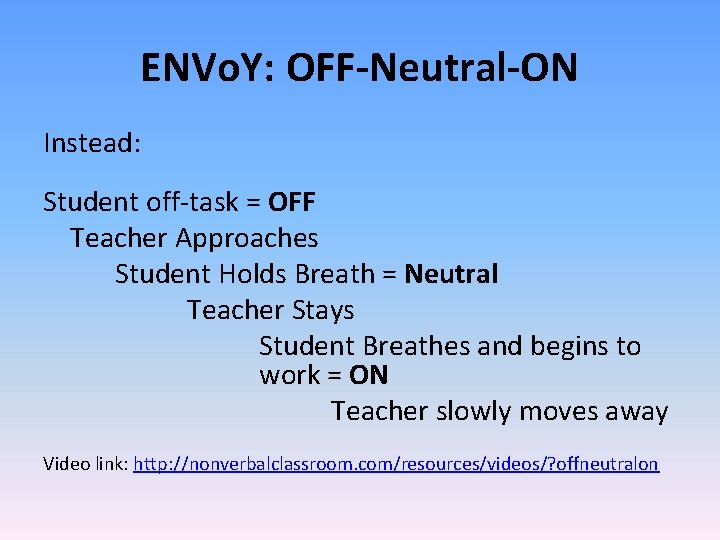
ENVo. Y: OFF-Neutral-ON Instead: Student off‐task = OFF Teacher Approaches Student Holds Breath = Neutral Teacher Stays Student Breathes and begins to work = ON Teacher slowly moves away Video link: http: //nonverbalclassroom. com/resources/videos/? offneutralon
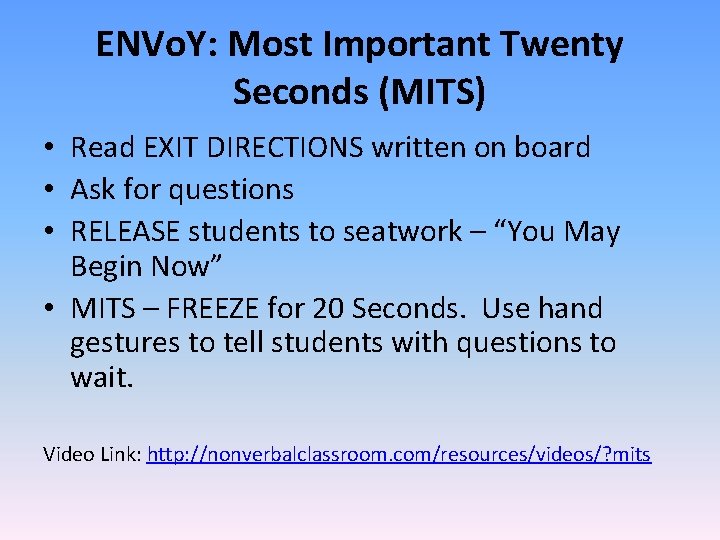
ENVo. Y: Most Important Twenty Seconds (MITS) • Read EXIT DIRECTIONS written on board • Ask for questions • RELEASE students to seatwork – “You May Begin Now” • MITS – FREEZE for 20 Seconds. Use hand gestures to tell students with questions to wait. Video Link: http: //nonverbalclassroom. com/resources/videos/? mits
Get Out the Wiggles! • Harness Student Energy! – Four Corners – Save the Drama for Your Llama! – Alternate Assignments
One Week Break • Practice these strategies. • Come back ready to discuss your experiences and learn more strategies.
Session 2
Session 2 Schedule • Discussion of experiences and feedback • Cooperative learning • Predictability in the classroom – Rules – Classroom structure • Graphic organizers
Small Group Discussion • Did you try implementing any of the strategies from last week? • What went well? • What did not? • What can you do differently in the future?
Classroom Discussion • Did you try implementing any of the strategies from last week? • What went well? • What did not? • What can you do differently in the future? • Tips for each other. • Feedback from the instructors.
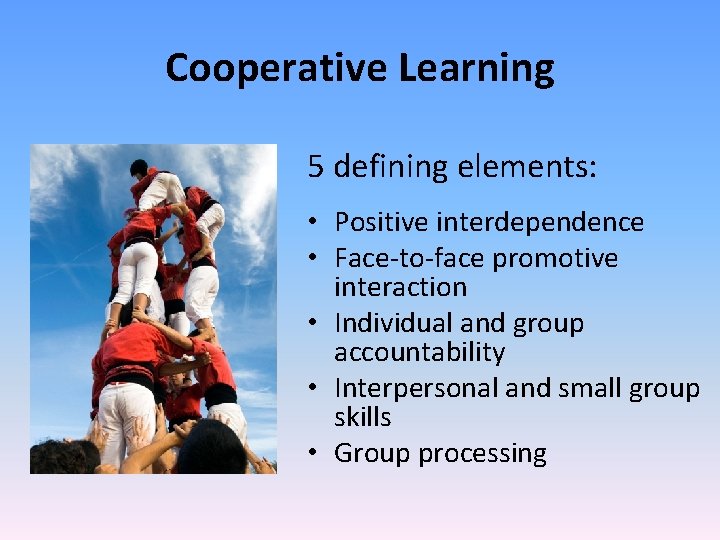
Cooperative Learning 5 defining elements: • Positive interdependence • Face‐to‐face promotive interaction • Individual and group accountability • Interpersonal and small group skills • Group processing
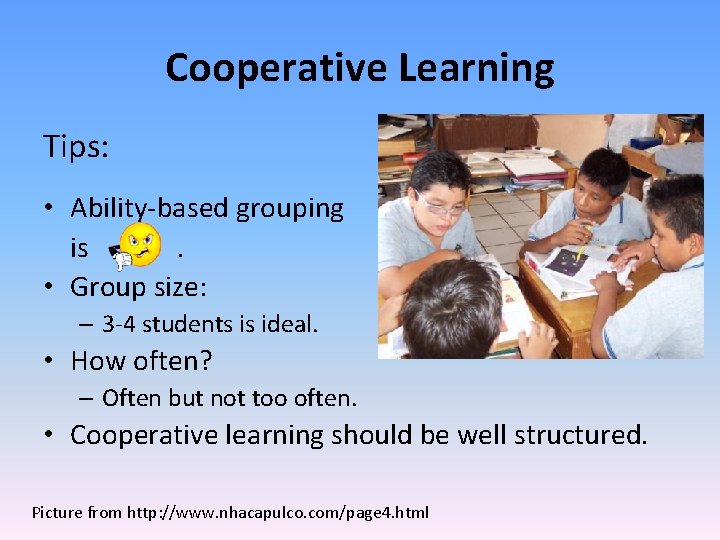
Cooperative Learning Tips: • Ability‐based grouping is. • Group size: – 3‐ 4 students is ideal. • How often? – Often but not too often. • Cooperative learning should be well structured. Picture from http: //www. nhacapulco. com/page 4. html
Predictability: Rules • Rules should be: – Clear – Concise – Posted • Consistency: – Enforcement – Sincere praise • Focus on the positive • Bad behavior ≠bad person/student Picture from https: //forestglen. ltschools. org/deptclass/teachers/davidshafer/index. htm
Predictability: Classroom Structure • Every class the students participate in has the same routine and timeframe. • Students know what is expected of them and outcomes are clearly stated by the teacher. • Enables all students in the class to participate to the best of their abilities. • No one teaching strategy is required for ADHD students.
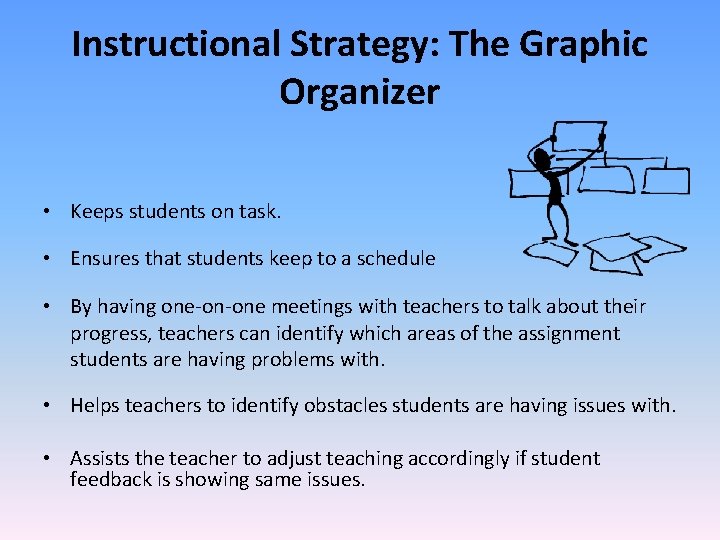
Instructional Strategy: The Graphic Organizer • Keeps students on task. • Ensures that students keep to a schedule • By having one‐on‐one meetings with teachers to talk about their progress, teachers can identify which areas of the assignment students are having problems with. • Helps teachers to identify obstacles students are having issues with. • Assists the teacher to adjust teaching accordingly if student feedback is showing same issues.
Two Week Break • Practice these strategies. • Come back ready to discuss your experiences and learn more strategies.
Session 3
Session 3 Schedule • Discussion of experiences and feedback
Small Group Discussion • Did you try implementing any of the strategies from the first 2 sessions? • What went well? • What did not? • What can you do differently in the future?
Classroom Discussion • Did you try implementing any of the strategies from the first 2 sessions? • What went well? • What did not? • What can you do differently in the future? • Tips for each other. • Feedback from the instructors.
Sources • ENVo. Y: www. nonverbalclassroom. com; www. michaelgrinder. com • Cooperative Learning: Classroom Instruction that Works by Robert Marzano, Debra Pickering, and Jane Pollock.