
Adenoma Detection Sheila E Crowe MD FRCP Professor



- Slides: 29
Adenoma Detection Sheila E. Crowe, MD, FRCP Professor of Medicine University of California, San Diego
Learning Objectives Upon completion of this session, participants should be able to: 1. Be aware of recent MSTF ranking of current CRC screening tests 2. Understand the reasons for improving adenoma detection in the colon 3. Know how to optimize the bowel preparation 4. Improve detection and remove colonic adenomas
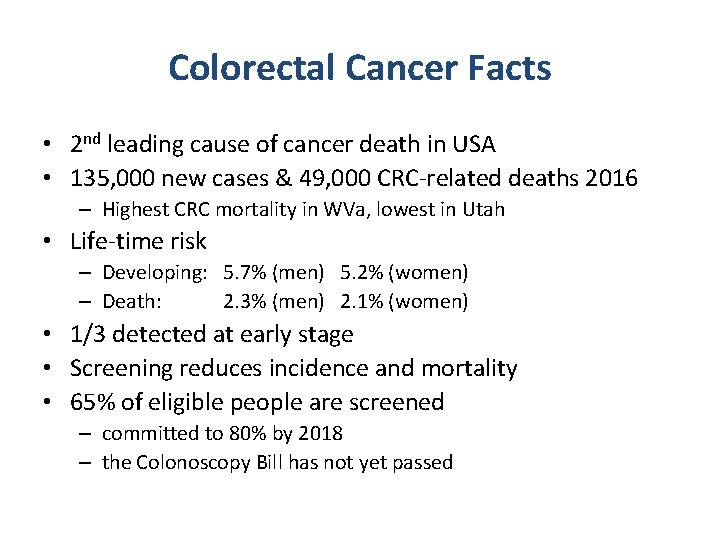
Colorectal Cancer Facts • 2 nd leading cause of cancer death in USA • 135, 000 new cases & 49, 000 CRC-related deaths 2016 – Highest CRC mortality in WVa, lowest in Utah • Life-time risk – Developing: 5. 7% (men) 5. 2% (women) – Death: 2. 3% (men) 2. 1% (women) • 1/3 detected at early stage • Screening reduces incidence and mortality • 65% of eligible people are screened – committed to 80% by 2018 – the Colonoscopy Bill has not yet passed
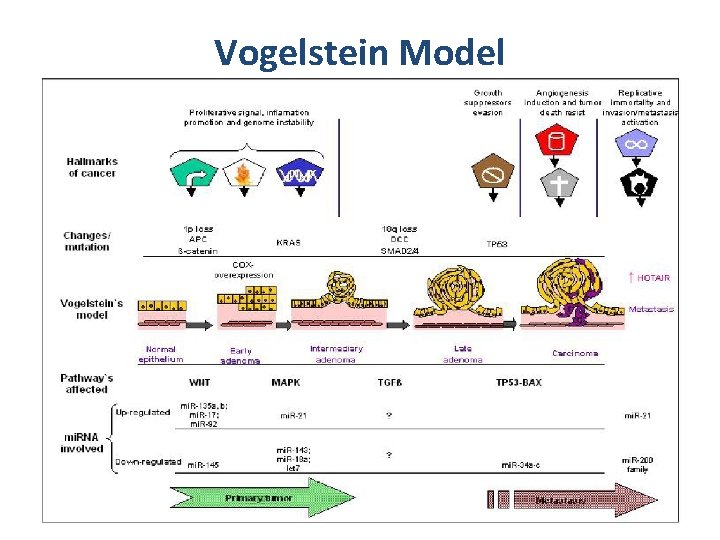
Vogelstein Model
Progression from polyp to cancer
Specific CRC Screening Tests • Colonoscopy • Fecal Immunochemical Test (FIT) • FIT-Fecal DNA Test – Guaiac based (false positives) • • CT colonography Flexible sigmoidoscopy Capsule colonoscopy Septin 9 assay (not currently recommended) Rex, DK, et al. CRC Screening: Recommendations for Physicians and Patients from US Multi-Society Task Force on CRC. Gastroenterol 2017; 153: 307
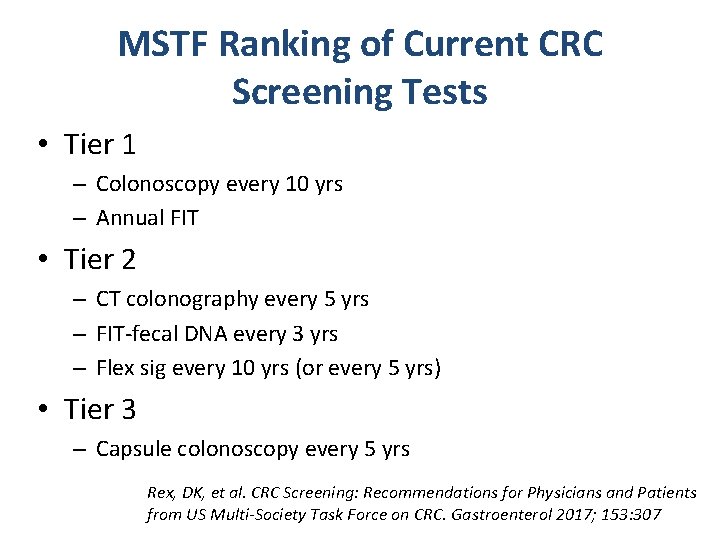
MSTF Ranking of Current CRC Screening Tests • Tier 1 – Colonoscopy every 10 yrs – Annual FIT • Tier 2 – CT colonography every 5 yrs – FIT-fecal DNA every 3 yrs – Flex sig every 10 yrs (or every 5 yrs) • Tier 3 – Capsule colonoscopy every 5 yrs Rex, DK, et al. CRC Screening: Recommendations for Physicians and Patients from US Multi-Society Task Force on CRC. Gastroenterol 2017; 153: 307
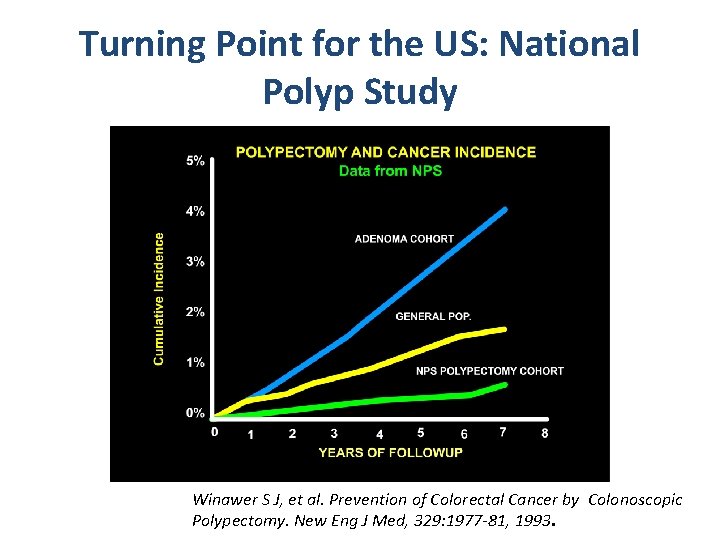
FOBT/FIT or Colonoscopy as Gold Standard? • FOBT reduced CRC death by 32% in a 30 year follow up study (Shaukat NEJM 2013. 369: 1106 -1114) • Effectiveness of Colonoscopy in CRC Mortality Reduction – Winawer NEJM 1993. 329: 1977 -1981 (National Polyp Study) – Zauber NEJM 2012. 366: 687 -696 (NPS 20 Year Follow Up) – Baxter Ann Int Med 2009. 150: 1 -8 • CRC Reduction in risk substantial in the distal colon but negligible in the proximal Colon • 2 Ongoing RTC’s with FIT and Colonoscopy – Spain – USA (CONFIRM Trial)
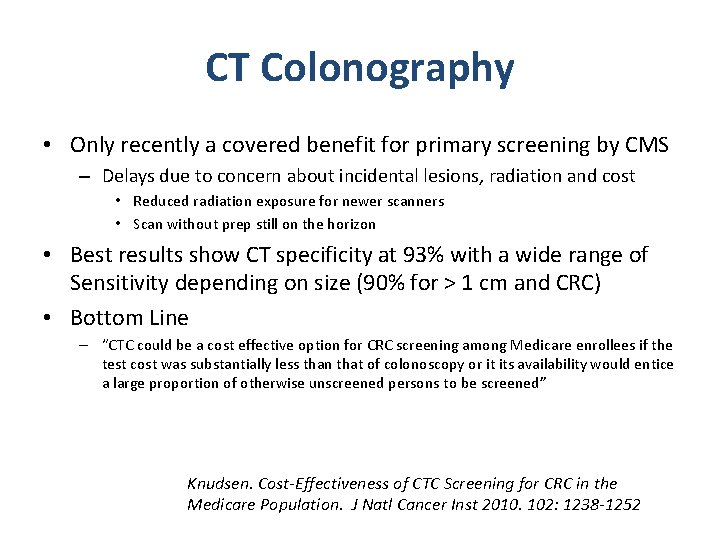
CT Colonography • Only recently a covered benefit for primary screening by CMS – Delays due to concern about incidental lesions, radiation and cost • Reduced radiation exposure for newer scanners • Scan without prep still on the horizon • Best results show CT specificity at 93% with a wide range of Sensitivity depending on size (90% for > 1 cm and CRC) • Bottom Line – “CTC could be a cost effective option for CRC screening among Medicare enrollees if the test cost was substantially less than that of colonoscopy or it its availability would entice a large proportion of otherwise unscreened persons to be screened” Knudsen. Cost-Effectiveness of CTC Screening for CRC in the Medicare Population. J Natl Cancer Inst 2010. 102: 1238 -1252
Turning Point for the US: National Polyp Study Winawer S J, et al. Prevention of Colorectal Cancer by Colonoscopic Polypectomy. New Eng J Med, 329: 1977 -81, 1993.
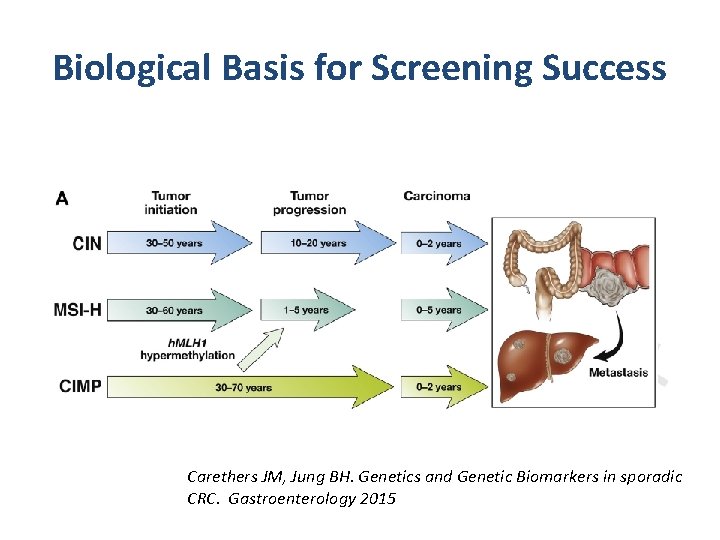
Biological Basis for Screening Success Carethers JM, Jung BH. Genetics and Genetic Biomarkers in sporadic CRC. Gastroenterology 2015
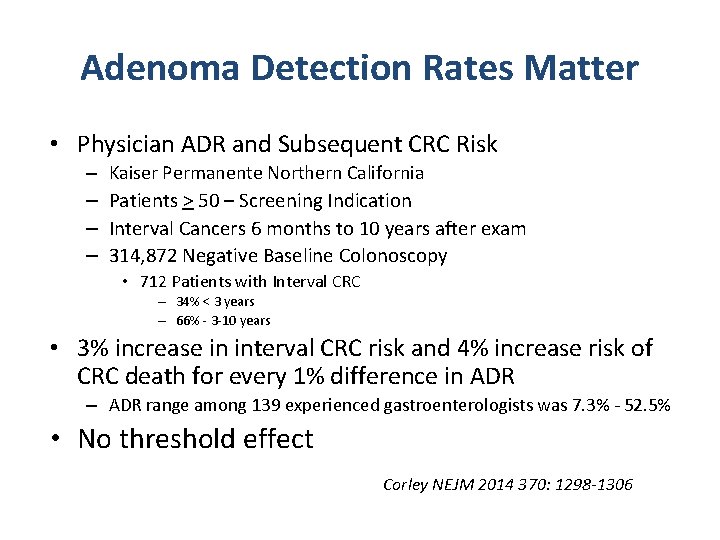
Adenoma Detection Rates Matter • Physician ADR and Subsequent CRC Risk – – Kaiser Permanente Northern California Patients > 50 – Screening Indication Interval Cancers 6 months to 10 years after exam 314, 872 Negative Baseline Colonoscopy • 712 Patients with Interval CRC – 34% < 3 years – 66% - 3 -10 years • 3% increase in interval CRC risk and 4% increase risk of CRC death for every 1% difference in ADR – ADR range among 139 experienced gastroenterologists was 7. 3% - 52. 5% • No threshold effect Corley NEJM 2014 370: 1298 -1306
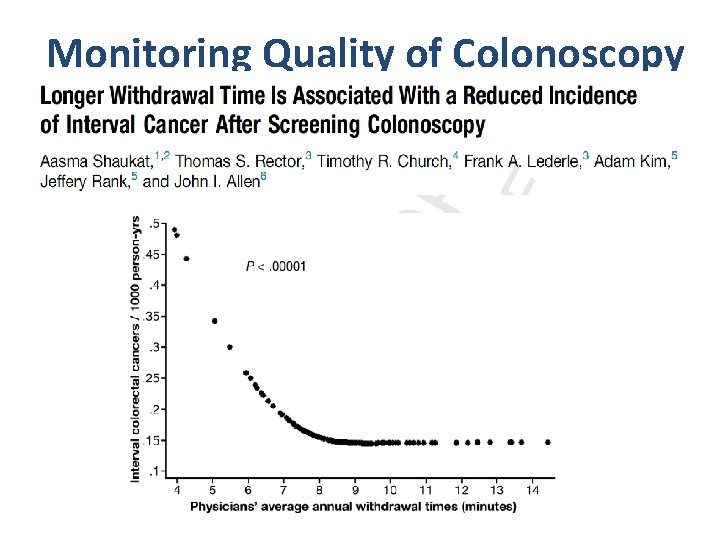
Monitoring Quality of Colonoscopy
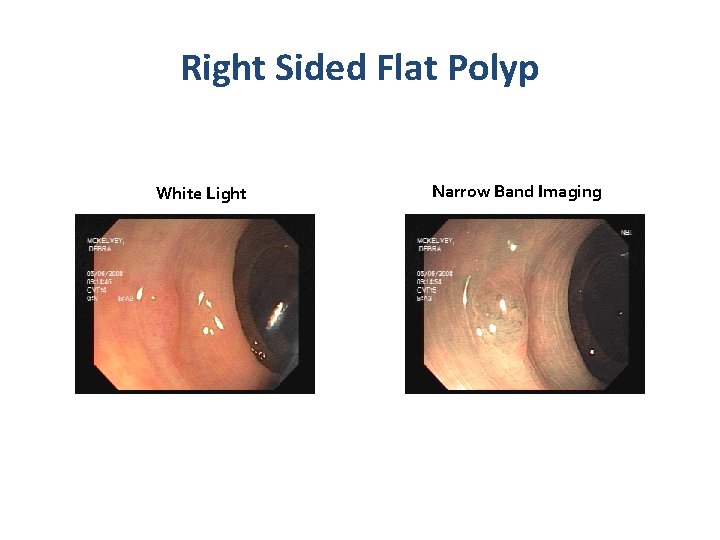
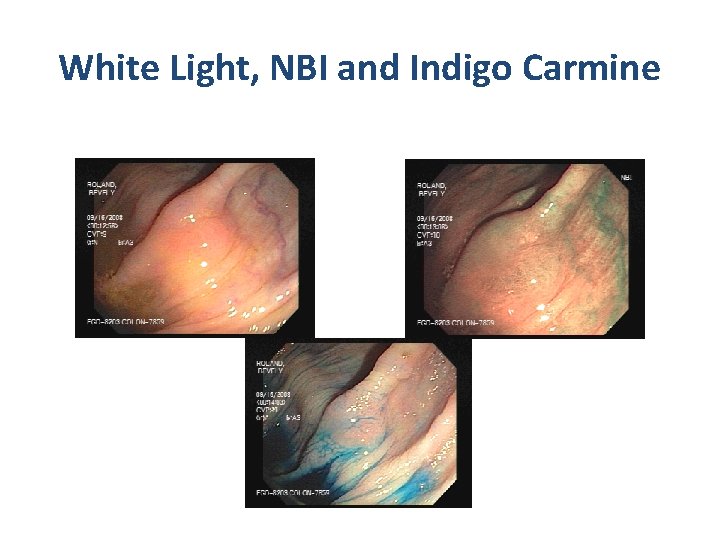
Right Sided Flat Polyp White Light Narrow Band Imaging
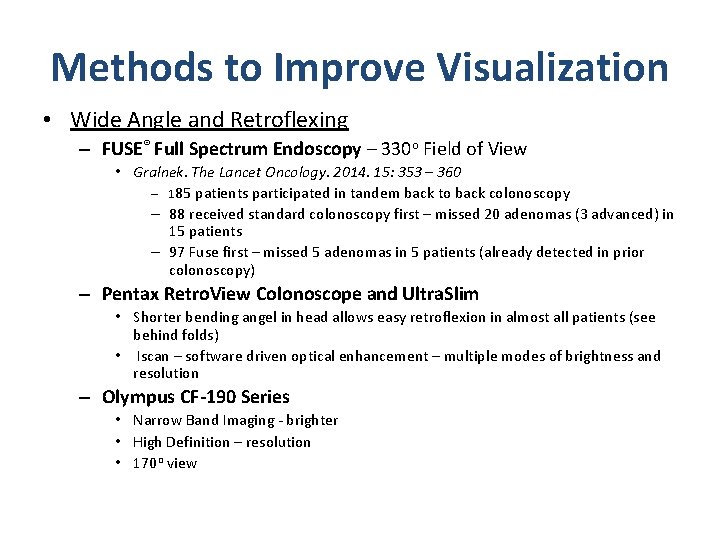
Methods to Improve Visualization • Wide Angle and Retroflexing – FUSE® Full Spectrum Endoscopy – 330 o Field of View • Gralnek. The Lancet Oncology. 2014. 15: 353 – 360 – 185 patients participated in tandem back to back colonoscopy – 88 received standard colonoscopy first – missed 20 adenomas (3 advanced) in 15 patients – 97 Fuse first – missed 5 adenomas in 5 patients (already detected in prior colonoscopy) – Pentax Retro. View Colonoscope and Ultra. Slim • Shorter bending angel in head allows easy retroflexion in almost all patients (see behind folds) • Iscan – software driven optical enhancement – multiple modes of brightness and resolution – Olympus CF-190 Series • Narrow Band Imaging - brighter • High Definition – resolution • 170 o view
White Light, NBI and Indigo Carmine
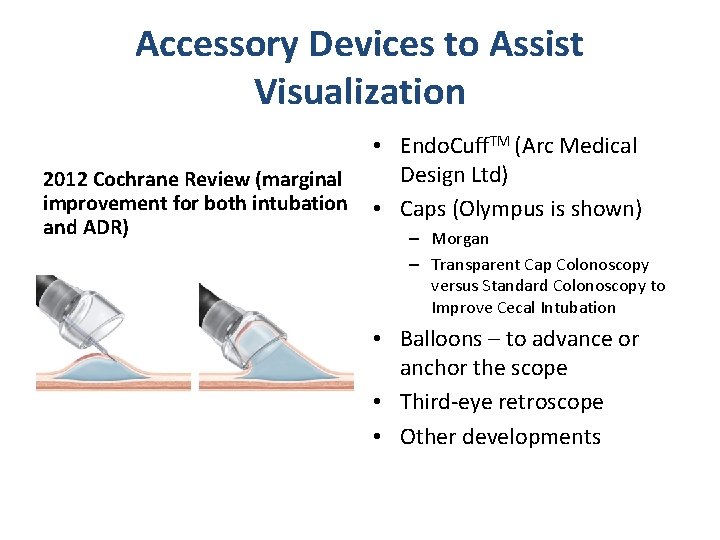
Accessory Devices to Assist Visualization 2012 Cochrane Review (marginal improvement for both intubation and ADR) • Endo. Cuff. TM (Arc Medical Design Ltd) • Caps (Olympus is shown) – Morgan – Transparent Cap Colonoscopy versus Standard Colonoscopy to Improve Cecal Intubation • Balloons – to advance or anchor the scope • Third-eye retroscope • Other developments
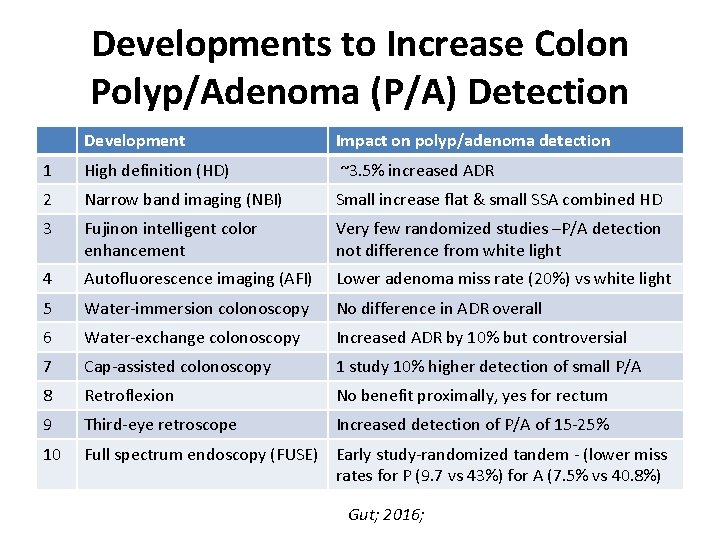
Developments to Increase Colon Polyp/Adenoma (P/A) Detection Development Impact on polyp/adenoma detection 1 High definition (HD) ~3. 5% increased ADR 2 Narrow band imaging (NBI) Small increase flat & small SSA combined HD 3 Fujinon intelligent color enhancement Very few randomized studies –P/A detection not difference from white light 4 Autofluorescence imaging (AFI) Lower adenoma miss rate (20%) vs white light 5 Water-immersion colonoscopy No difference in ADR overall 6 Water-exchange colonoscopy Increased ADR by 10% but controversial 7 Cap-assisted colonoscopy 1 study 10% higher detection of small P/A 8 Retroflexion No benefit proximally, yes for rectum 9 Third-eye retroscope Increased detection of P/A of 15 -25% 10 Full spectrum endoscopy (FUSE) Early study-randomized tandem - (lower miss rates for P (9. 7 vs 43%) for A (7. 5% vs 40. 8%) Gut; 2016;
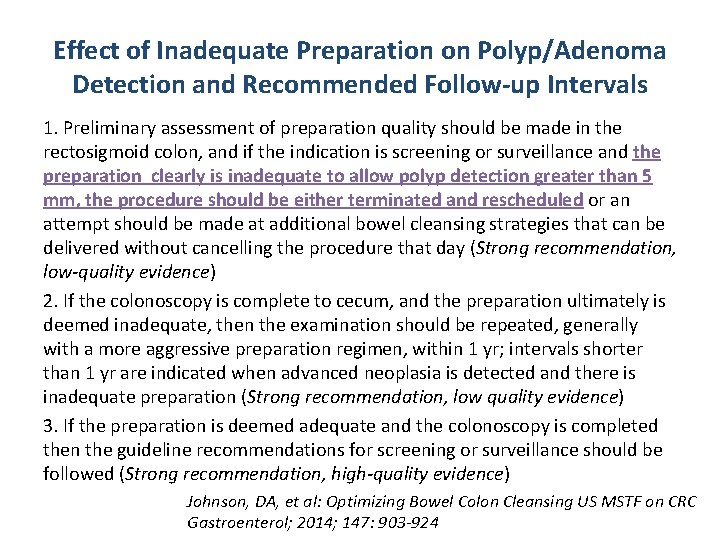
Effect of Inadequate Preparation on Polyp/Adenoma Detection and Recommended Follow-up Intervals 1. Preliminary assessment of preparation quality should be made in the rectosigmoid colon, and if the indication is screening or surveillance and the preparation clearly is inadequate to allow polyp detection greater than 5 mm, the procedure should be either terminated and rescheduled or an attempt should be made at additional bowel cleansing strategies that can be delivered without cancelling the procedure that day (Strong recommendation, low-quality evidence) 2. If the colonoscopy is complete to cecum, and the preparation ultimately is deemed inadequate, then the examination should be repeated, generally with a more aggressive preparation regimen, within 1 yr; intervals shorter than 1 yr are indicated when advanced neoplasia is detected and there is inadequate preparation (Strong recommendation, low quality evidence) 3. If the preparation is deemed adequate and the colonoscopy is completed then the guideline recommendations for screening or surveillance should be followed (Strong recommendation, high-quality evidence) Johnson, DA, et al: Optimizing Bowel Colon Cleansing US MSTF on CRC Gastroenterol; 2014; 147: 903 -924
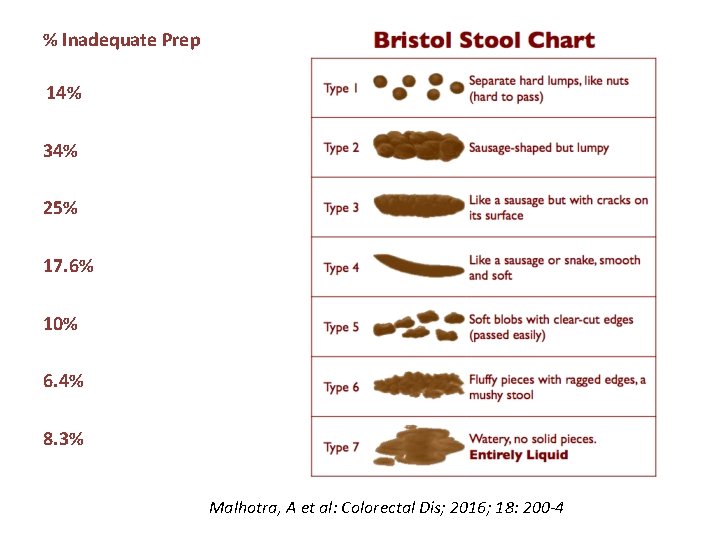
% Inadequate Prep 14% 34% 25% 17. 6% 10% 6. 4% 8. 3% Malhotra, A et al: Colorectal Dis; 2016; 18: 200 -4
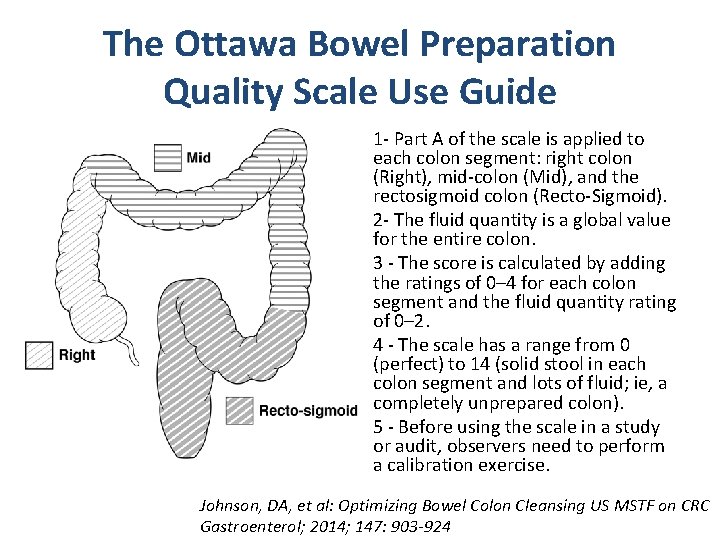
The Ottawa Bowel Preparation Quality Scale Use Guide 1 - Part A of the scale is applied to each colon segment: right colon (Right), mid-colon (Mid), and the rectosigmoid colon (Recto-Sigmoid). 2 - The fluid quantity is a global value for the entire colon. 3 - The score is calculated by adding the ratings of 0– 4 for each colon segment and the fluid quantity rating of 0– 2. 4 - The scale has a range from 0 (perfect) to 14 (solid stool in each colon segment and lots of fluid; ie, a completely unprepared colon). 5 - Before using the scale in a study or audit, observers need to perform a calibration exercise. Johnson, DA, et al: Optimizing Bowel Colon Cleansing US MSTF on CRC Gastroenterol; 2014; 147: 903 -924
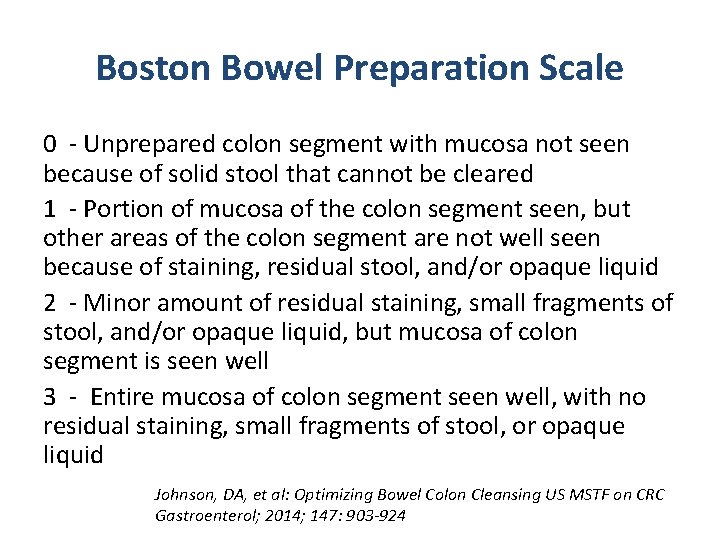
Boston Bowel Preparation Scale 0 - Unprepared colon segment with mucosa not seen because of solid stool that cannot be cleared 1 - Portion of mucosa of the colon segment seen, but other areas of the colon segment are not well seen because of staining, residual stool, and/or opaque liquid 2 - Minor amount of residual staining, small fragments of stool, and/or opaque liquid, but mucosa of colon segment is seen well 3 - Entire mucosa of colon segment seen well, with no residual staining, small fragments of stool, or opaque liquid Johnson, DA, et al: Optimizing Bowel Colon Cleansing US MSTF on CRC Gastroenterol; 2014; 147: 903 -924
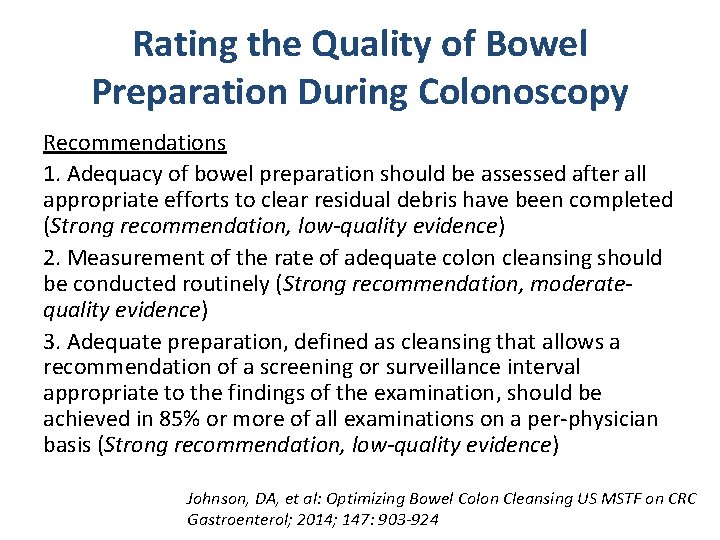
Rating the Quality of Bowel Preparation During Colonoscopy Recommendations 1. Adequacy of bowel preparation should be assessed after all appropriate efforts to clear residual debris have been completed (Strong recommendation, low-quality evidence) 2. Measurement of the rate of adequate colon cleansing should be conducted routinely (Strong recommendation, moderatequality evidence) 3. Adequate preparation, defined as cleansing that allows a recommendation of a screening or surveillance interval appropriate to the findings of the examination, should be achieved in 85% or more of all examinations on a per-physician basis (Strong recommendation, low-quality evidence) Johnson, DA, et al: Optimizing Bowel Colon Cleansing US MSTF on CRC Gastroenterol; 2014; 147: 903 -924
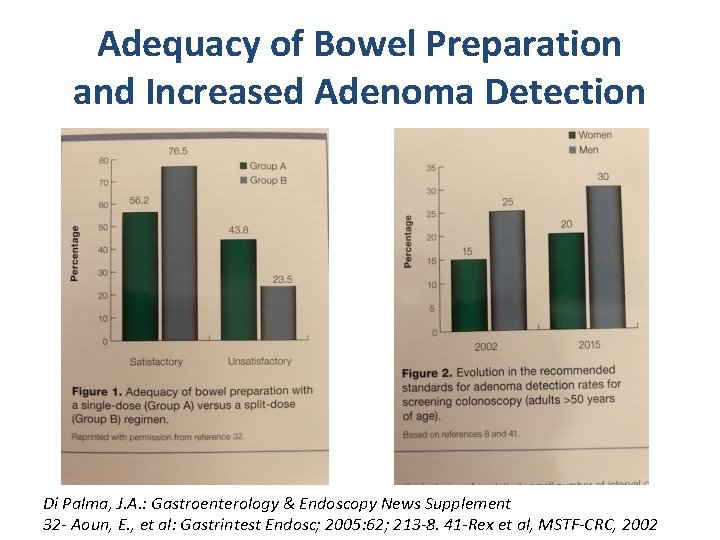
Adequacy of Bowel Preparation and Increased Adenoma Detection Di Palma, J. A. : Gastroenterology & Endoscopy News Supplement 32 - Aoun, E. , et al: Gastrintest Endosc; 2005: 62; 213 -8. 41 -Rex et al, MSTF-CRC, 2002
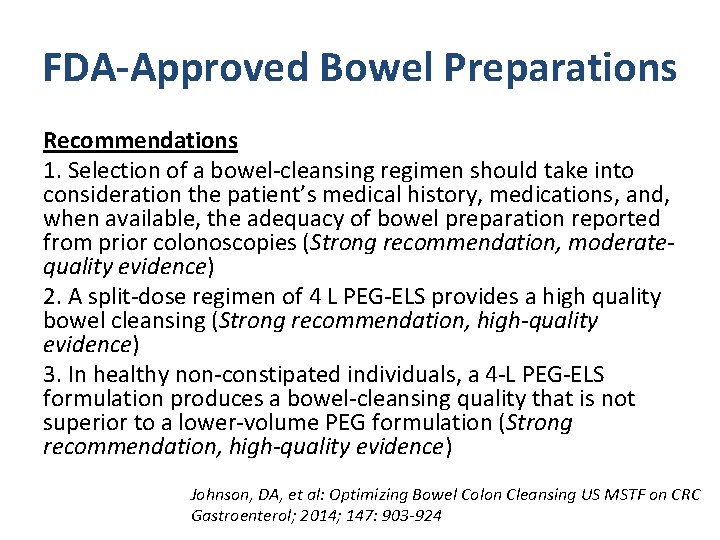
FDA-Approved Bowel Preparations Recommendations 1. Selection of a bowel-cleansing regimen should take into consideration the patient’s medical history, medications, and, when available, the adequacy of bowel preparation reported from prior colonoscopies (Strong recommendation, moderatequality evidence) 2. A split-dose regimen of 4 L PEG-ELS provides a high quality bowel cleansing (Strong recommendation, high-quality evidence) 3. In healthy non-constipated individuals, a 4 -L PEG-ELS formulation produces a bowel-cleansing quality that is not superior to a lower-volume PEG formulation (Strong recommendation, high-quality evidence) Johnson, DA, et al: Optimizing Bowel Colon Cleansing US MSTF on CRC Gastroenterol; 2014; 147: 903 -924
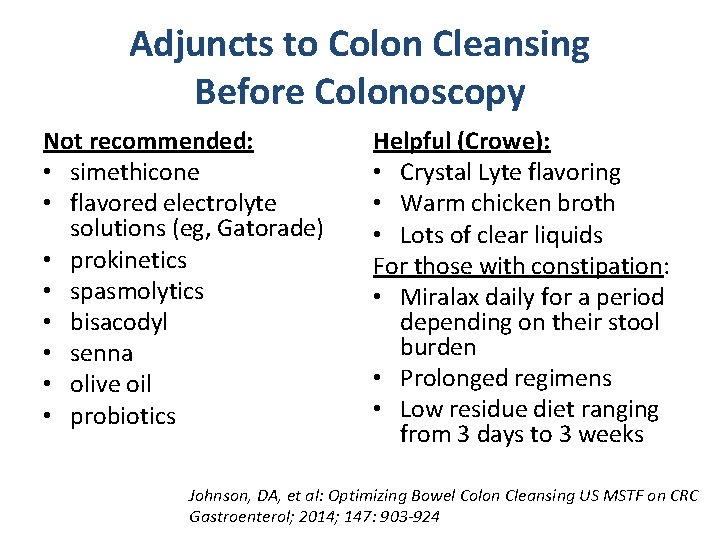
Adjuncts to Colon Cleansing Before Colonoscopy Not recommended: • simethicone • flavored electrolyte solutions (eg, Gatorade) • prokinetics • spasmolytics • bisacodyl • senna • olive oil • probiotics Helpful (Crowe): • Crystal Lyte flavoring • Warm chicken broth • Lots of clear liquids For those with constipation: • Miralax daily for a period depending on their stool burden • Prolonged regimens • Low residue diet ranging from 3 days to 3 weeks Johnson, DA, et al: Optimizing Bowel Colon Cleansing US MSTF on CRC Gastroenterol; 2014; 147: 903 -924
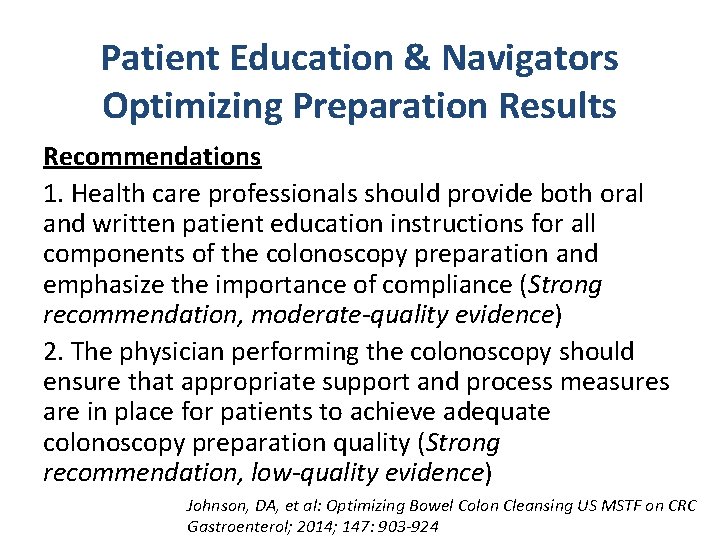
Patient Education & Navigators Optimizing Preparation Results Recommendations 1. Health care professionals should provide both oral and written patient education instructions for all components of the colonoscopy preparation and emphasize the importance of compliance (Strong recommendation, moderate-quality evidence) 2. The physician performing the colonoscopy should ensure that appropriate support and process measures are in place for patients to achieve adequate colonoscopy preparation quality (Strong recommendation, low-quality evidence) Johnson, DA, et al: Optimizing Bowel Colon Cleansing US MSTF on CRC Gastroenterol; 2014; 147: 903 -924
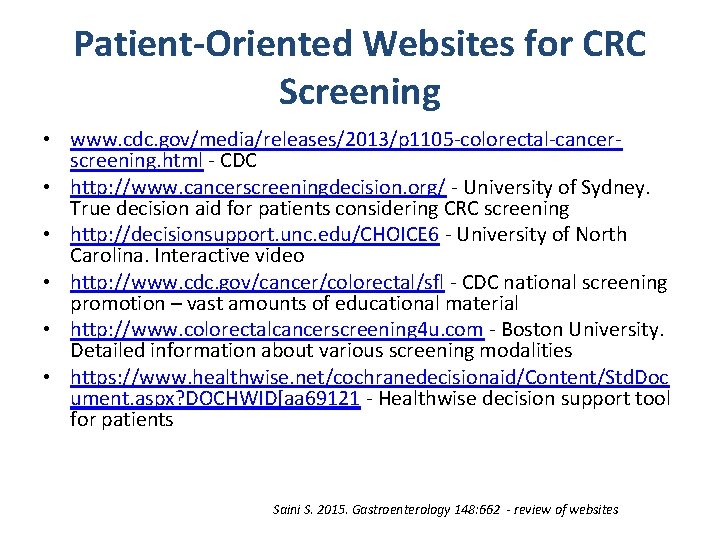
Patient-Oriented Websites for CRC Screening • www. cdc. gov/media/releases/2013/p 1105 -colorectal-cancerscreening. html - CDC • http: //www. cancerscreeningdecision. org/ - University of Sydney. True decision aid for patients considering CRC screening • http: //decisionsupport. unc. edu/CHOICE 6 - University of North Carolina. Interactive video • http: //www. cdc. gov/cancer/colorectal/sfl - CDC national screening promotion – vast amounts of educational material • http: //www. colorectalcancerscreening 4 u. com - Boston University. Detailed information about various screening modalities • https: //www. healthwise. net/cochranedecisionaid/Content/Std. Doc ument. aspx? DOCHWID[aa 69121 - Healthwise decision support tool for patients Saini S. 2015. Gastroenterology 148: 662 - review of websites
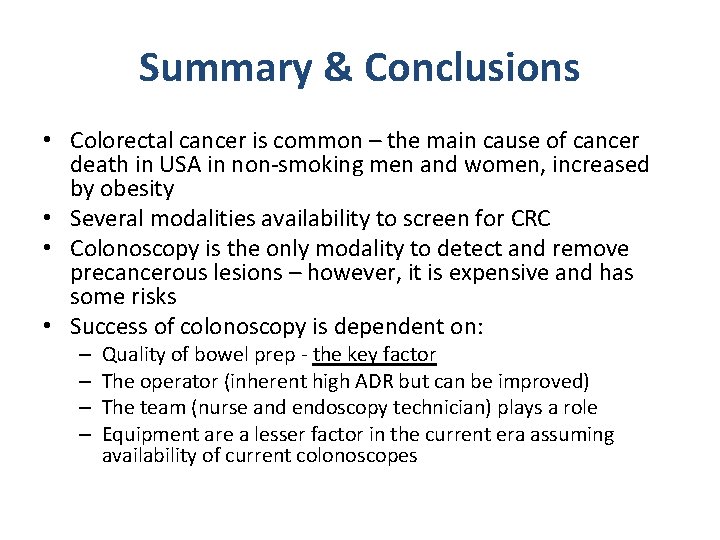
Summary & Conclusions • Colorectal cancer is common – the main cause of cancer death in USA in non-smoking men and women, increased by obesity • Several modalities availability to screen for CRC • Colonoscopy is the only modality to detect and remove precancerous lesions – however, it is expensive and has some risks • Success of colonoscopy is dependent on: – – Quality of bowel prep - the key factor The operator (inherent high ADR but can be improved) The team (nurse and endoscopy technician) plays a role Equipment are a lesser factor in the current era assuming availability of current colonoscopes