
Addressing the straggler problem for iterative convergent parallel
Addressing the straggler problem for iterative convergent parallel ML Aaron Harlap, Henggang Cui, Wei Dai, Jinliang Wei, Gregory R. Ganger, Phillip B. Gibbons, Garth A. Gibson, Eric P. Xing PARALLEL DATA LABORATORY Carnegie Mellon Parallel Data Laboratory Carnegie Mellon University
One slide overview • Workers are a single thread on a machine • Stragglers are bad! • Flex. RR combines flexible consistency and temporary work shedding • Designer for efficiency operation @ large scale - helper groups • Show big improvement across different computing clusters and workloads Carnegie Mellon Parallel Data Laboratory http: //www. pdl. cmu. edu/ 2 Aaron Harlap © October 15
Iterative Convergent ML • MF, LDA, MLR, Page. Rank, etc… • Start with an initial guess • Iterate over training data improving solution • Converge to a “good” solution Carnegie Mellon Parallel Data Laboratory http: //www. pdl. cmu. edu/ 3 Aaron Harlap © October 15
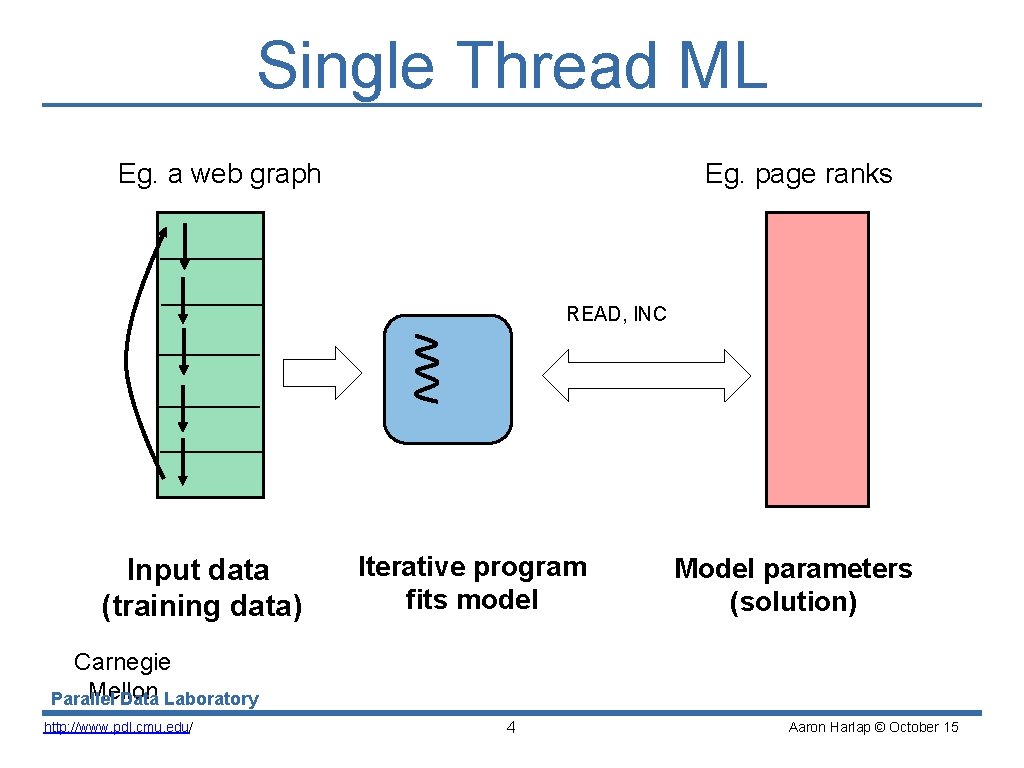
Single Thread ML Eg. a web graph Eg. page ranks READ, INC Input data (training data) Iterative program fits model Model parameters (solution) Carnegie Mellon Parallel Data Laboratory http: //www. pdl. cmu. edu/ 4 Aaron Harlap © October 15
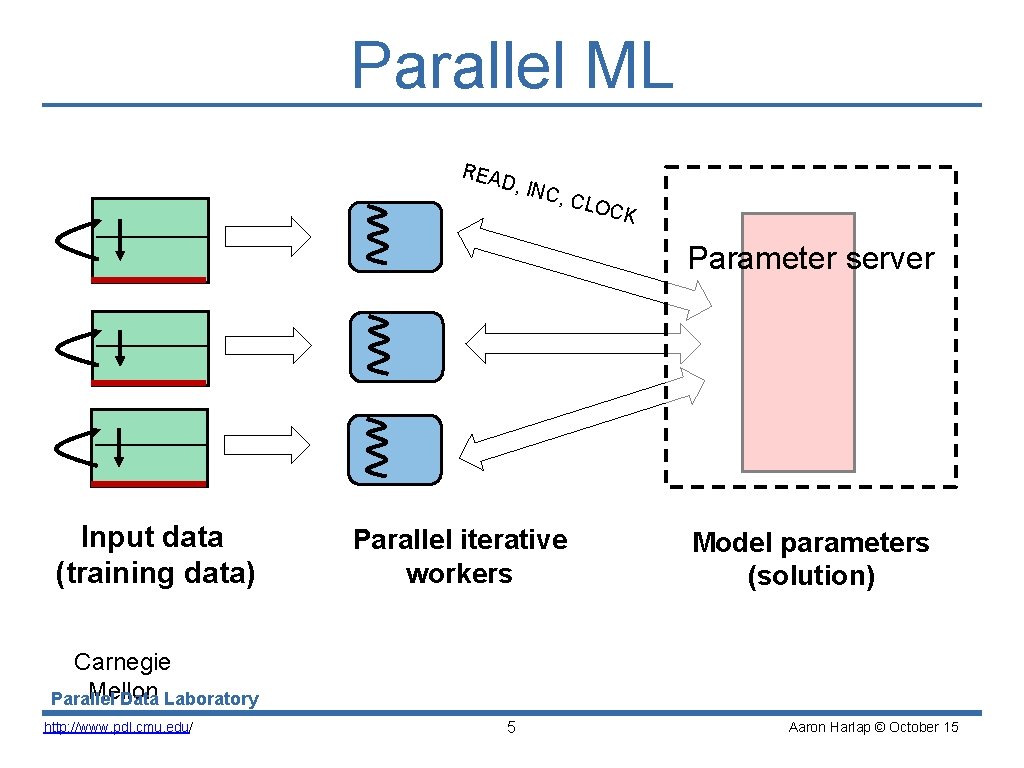
Parallel ML REA D, IN C, C LOC K Parameter server Input data (training data) Parallel iterative workers Model parameters (solution) Carnegie Mellon Parallel Data Laboratory http: //www. pdl. cmu. edu/ 5 Aaron Harlap © October 15
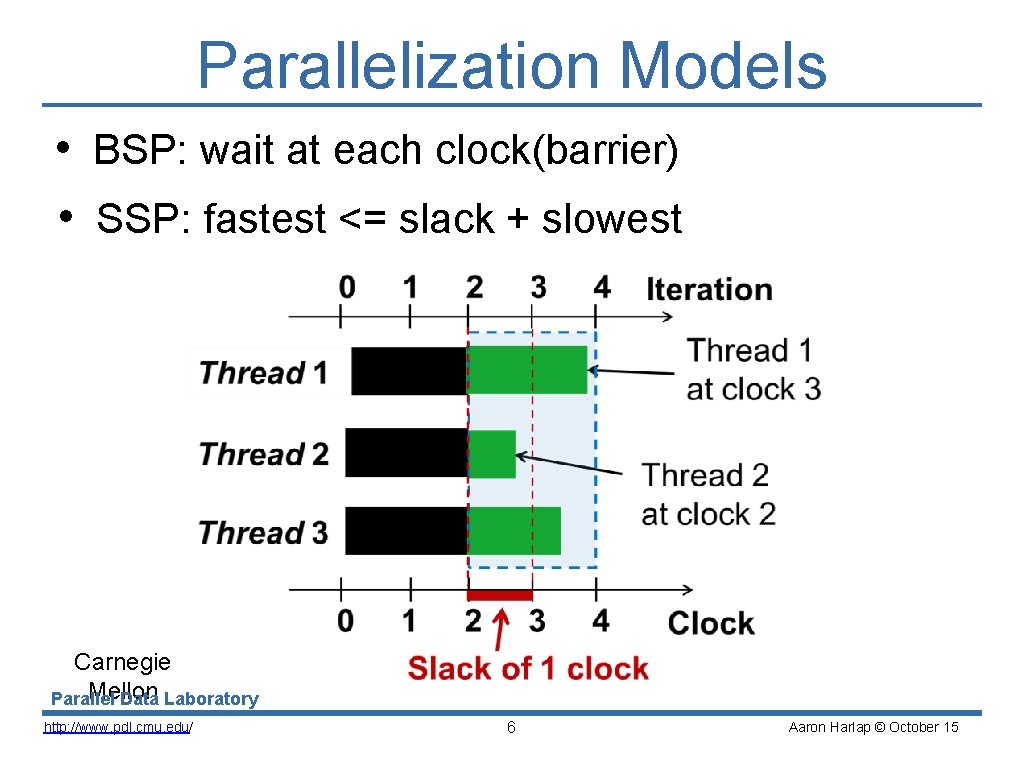
Parallelization Models • BSP: wait at each clock(barrier) • SSP: fastest <= slack + slowest Carnegie Mellon Parallel Data Laboratory http: //www. pdl. cmu. edu/ 6 Aaron Harlap © October 15
Origin of Stragglers • One worker slower than others • Short Term Causes • Garbage collection, Objective function computation (computing stopping criteria), resource contention • Long Term Causes • Load imbalance, heterogeneity of hardware Carnegie Mellon Parallel Data Laboratory http: //www. pdl. cmu. edu/ 7 Aaron Harlap © October 15
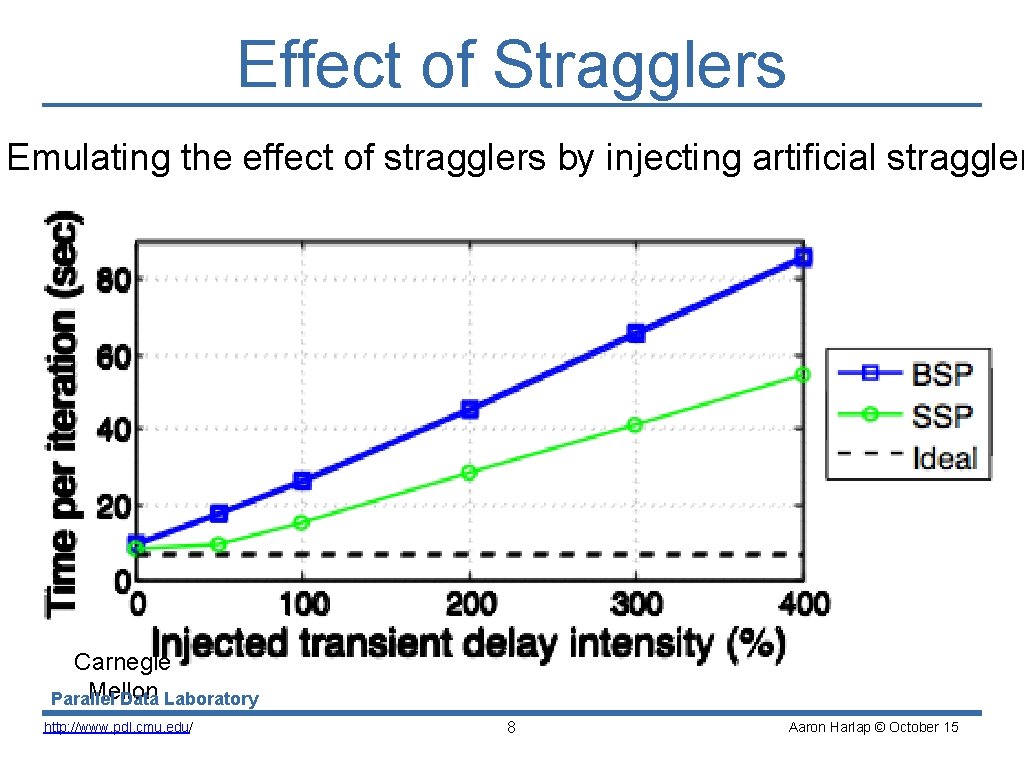
Effect of Stragglers Emulating the effect of stragglers by injecting artificial straggler Carnegie Mellon Parallel Data Laboratory http: //www. pdl. cmu. edu/ 8 Aaron Harlap © October 15
Existing Solutions • Eliminating Performance Variation - Problem: difficult / sometimes impossible • Blacklisting struggling nodes - Problem: kills healthy nodes • Speculative Execution - Problem: Not suitable for iterative ML - start redundant workers Carnegie Mellon Parallel Data Laboratory http: //www. pdl. cmu. edu/ 9 Aaron Harlap © October 15
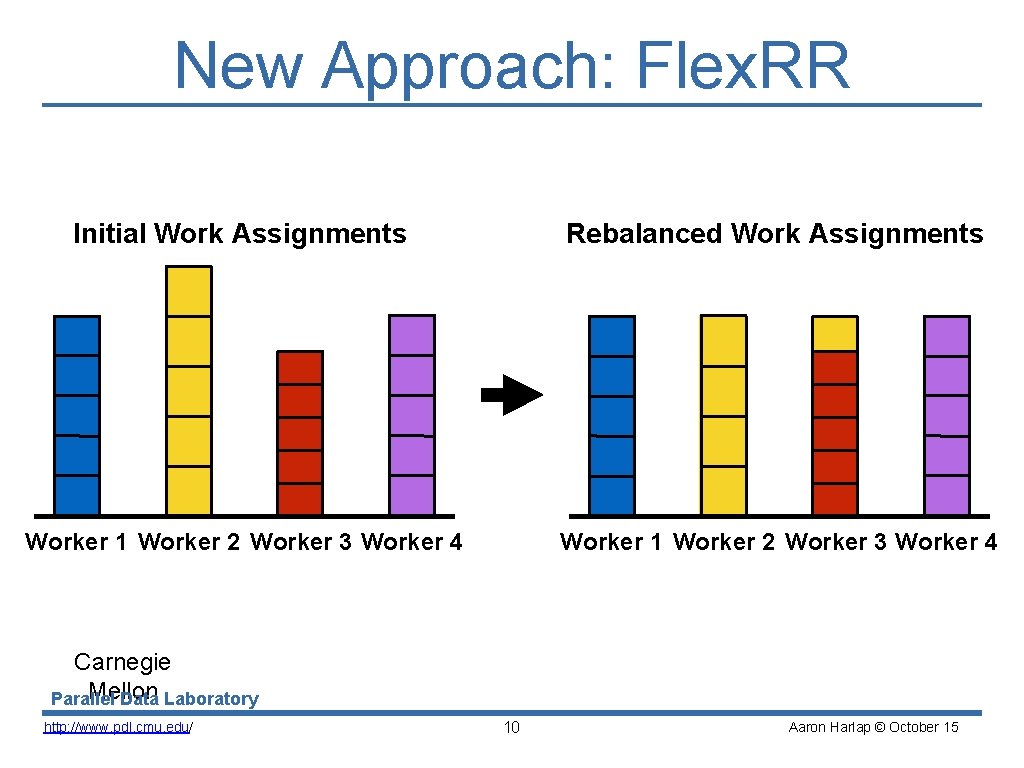
New Approach: Flex. RR Initial Work Assignments Rebalanced Work Assignments Worker 1 Worker 2 Worker 3 Worker 4 Carnegie Mellon Parallel Data Laboratory http: //www. pdl. cmu. edu/ 10 Aaron Harlap © October 15
RR Constraints • Input data too big fit all of it into memory • All - to - All communication / synchronization is expensive • Central arbiter can be a bottleneck Carnegie Mellon Parallel Data Laboratory http: //www. pdl. cmu. edu/ 11 Aaron Harlap © October 15
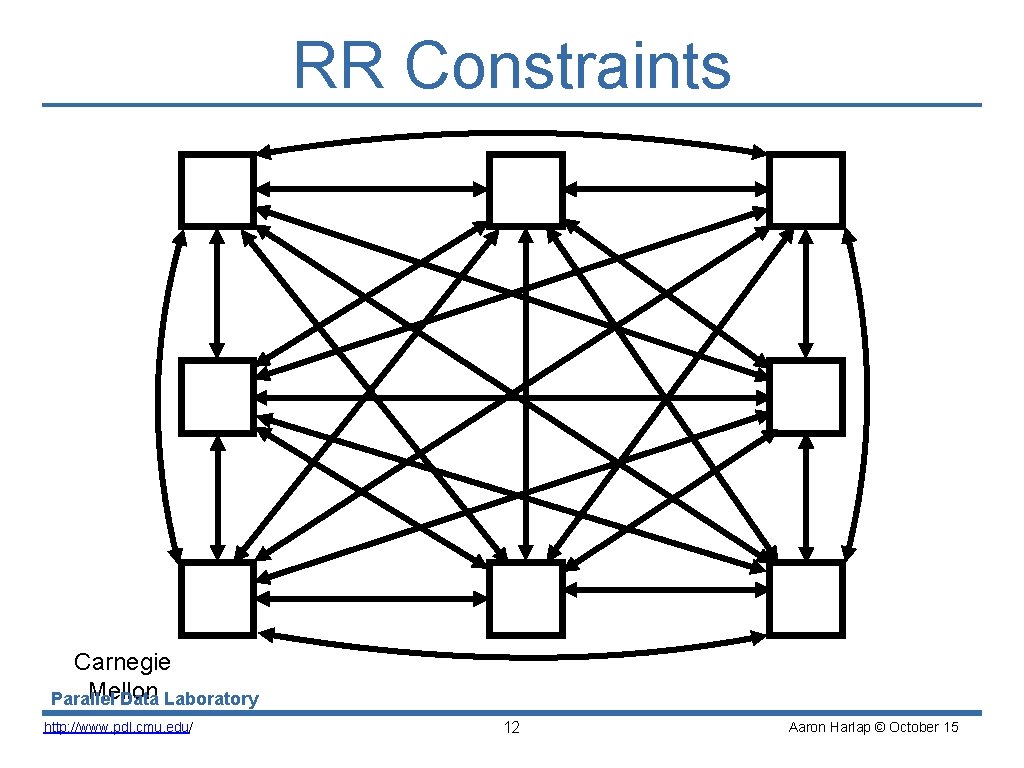
RR Constraints Carnegie Mellon Parallel Data Laboratory http: //www. pdl. cmu. edu/ 12 Aaron Harlap © October 15
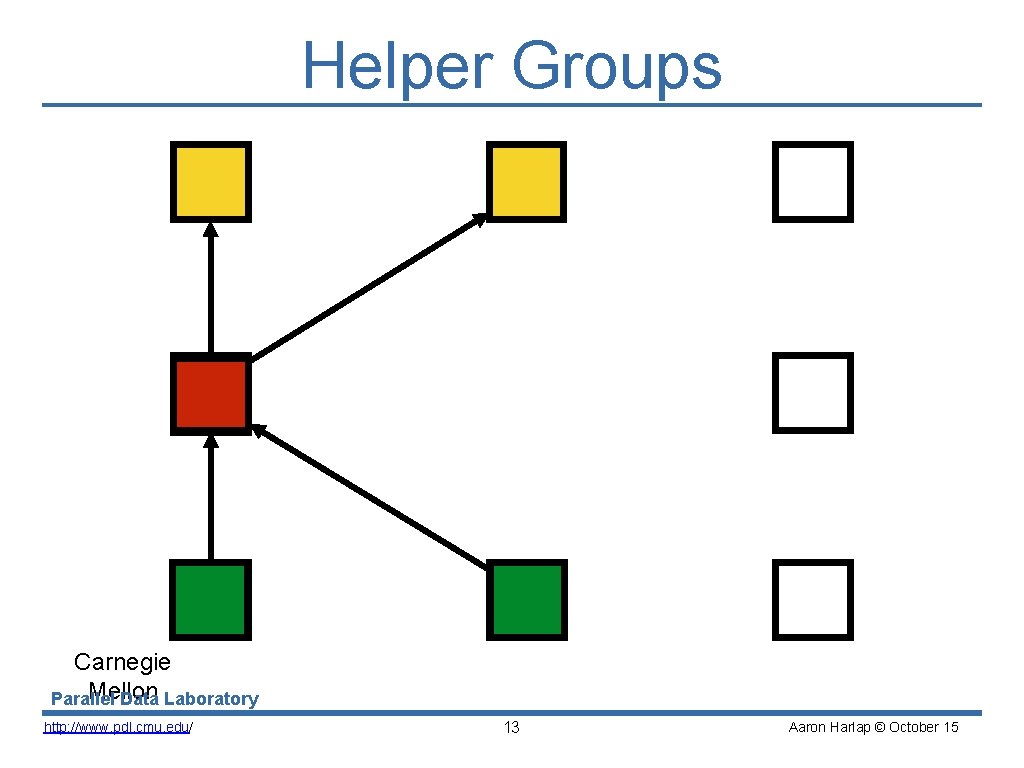
Helper Groups Carnegie Mellon Parallel Data Laboratory http: //www. pdl. cmu. edu/ 13 Aaron Harlap © October 15
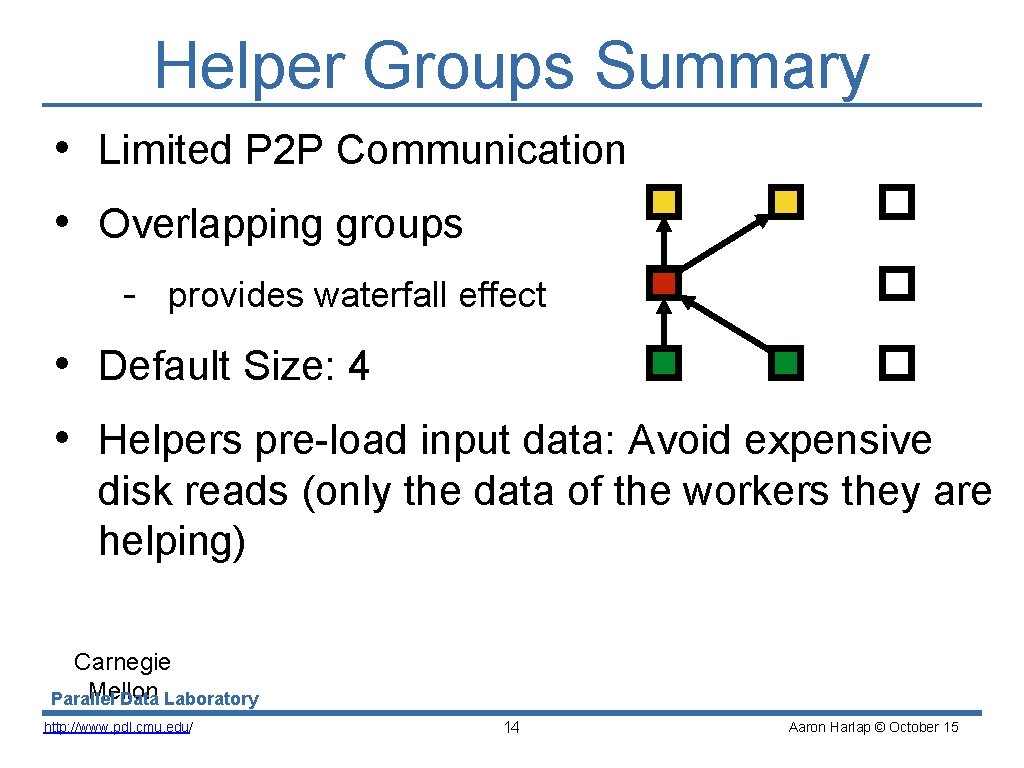
Helper Groups Summary • Limited P 2 P Communication • Overlapping groups - provides waterfall effect • Default Size: 4 • Helpers pre-load input data: Avoid expensive disk reads (only the data of the workers they are helping) Carnegie Mellon Parallel Data Laboratory http: //www. pdl. cmu. edu/ 14 Aaron Harlap © October 15
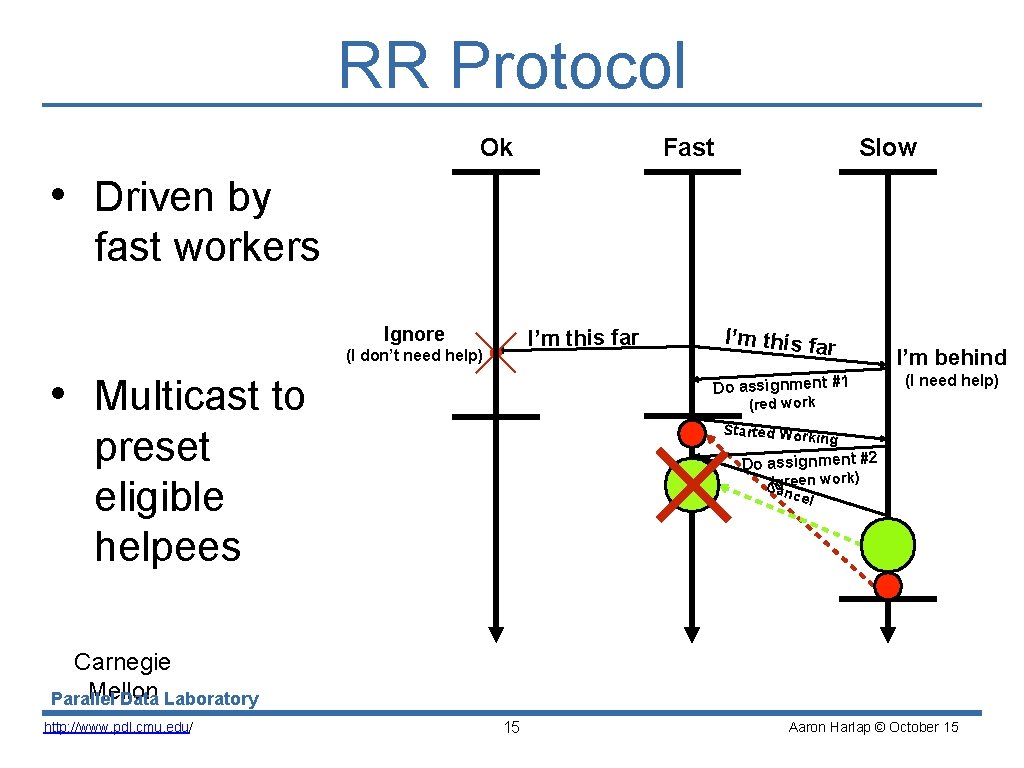
RR Protocol Fast Ok Slow • Driven by fast workers Ignore I’m this far (I don’t need help) • Multicast to I’m this far Do assignment #1 I’m behind (I need help) (red work Started Work preset eligible helpees ing Do assignment #2 reen work) C(g anc el Carnegie Mellon Parallel Data Laboratory http: //www. pdl. cmu. edu/ 15 Aaron Harlap © October 15
Experimental Clusters • 16 Node Dedicated Local Cluster - 8 Core machines • 64 Node Amazon EC 2 Clusters - c 4. xlarge (4 - core instances) - $0. 22 / hr - c 4. 2 xlarge (8 - core instacnes) - $0. 44 /hr • 128 Node NSF Probe Cluster - 16 Core machines Carnegie Mellon Parallel Data Laboratory http: //www. pdl. cmu. edu/ 16 Aaron Harlap © October 15
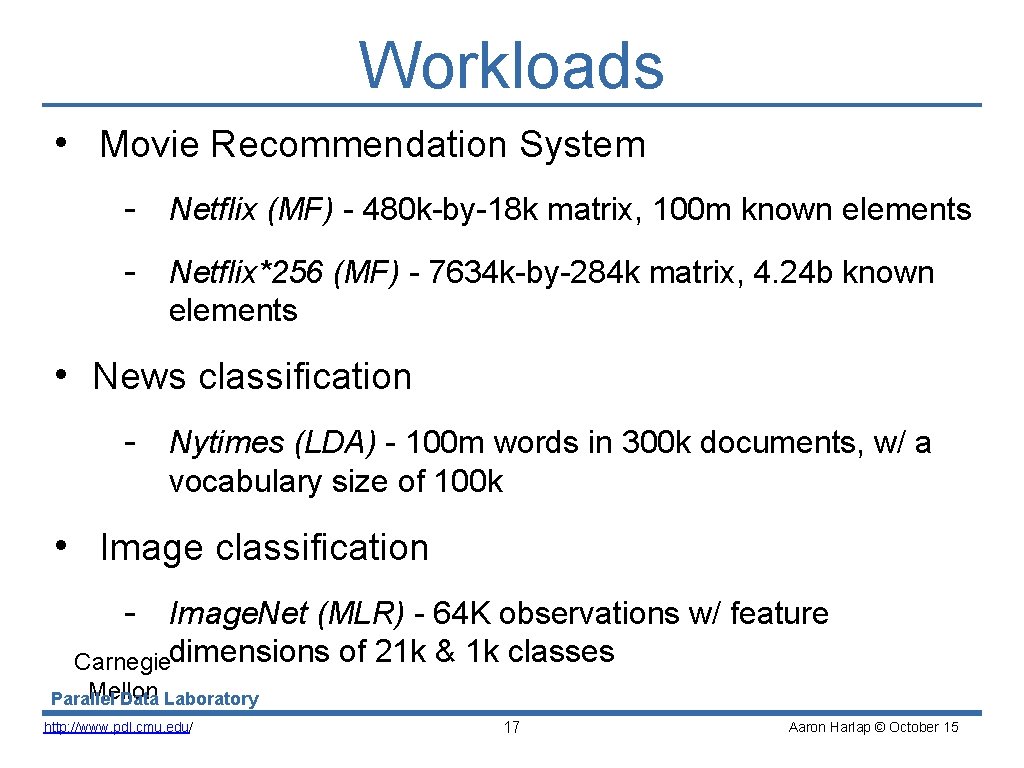
Workloads • Movie Recommendation System - Netflix (MF) - 480 k-by-18 k matrix, 100 m known elements - Netflix*256 (MF) - 7634 k-by-284 k matrix, 4. 24 b known elements • News classification - Nytimes (LDA) - 100 m words in 300 k documents, w/ a vocabulary size of 100 k • Image classification - Image. Net (MLR) - 64 K observations w/ feature Carnegiedimensions Mellon Parallel Data Laboratory http: //www. pdl. cmu. edu/ of 21 k & 1 k classes 17 Aaron Harlap © October 15
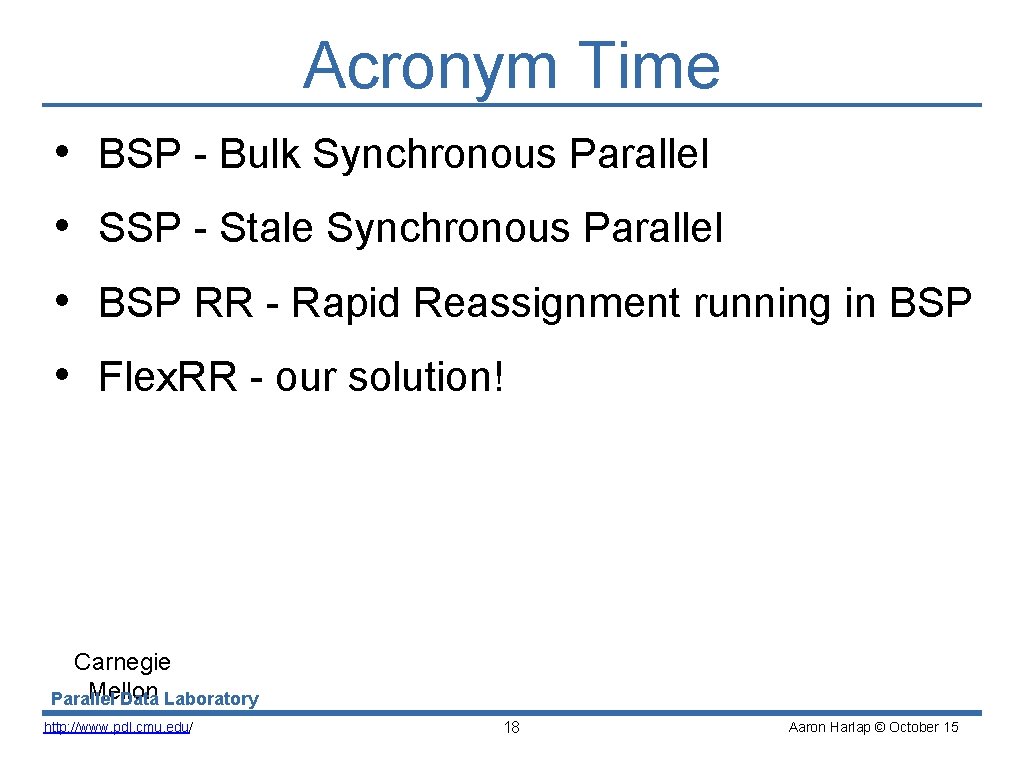
Acronym Time • BSP - Bulk Synchronous Parallel • SSP - Stale Synchronous Parallel • BSP RR - Rapid Reassignment running in BSP • Flex. RR - our solution! Carnegie Mellon Parallel Data Laboratory http: //www. pdl. cmu. edu/ 18 Aaron Harlap © October 15
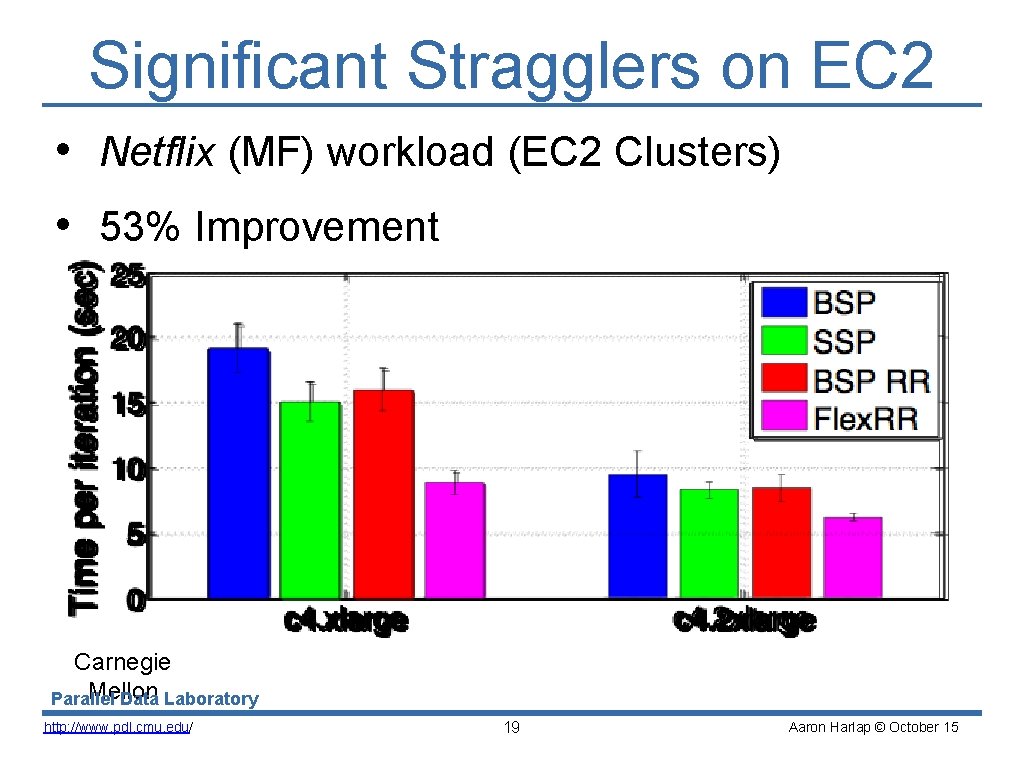
Significant Stragglers on EC 2 • Netflix (MF) workload (EC 2 Clusters) • 53% Improvement Carnegie Mellon Parallel Data Laboratory http: //www. pdl. cmu. edu/ 19 Aaron Harlap © October 15
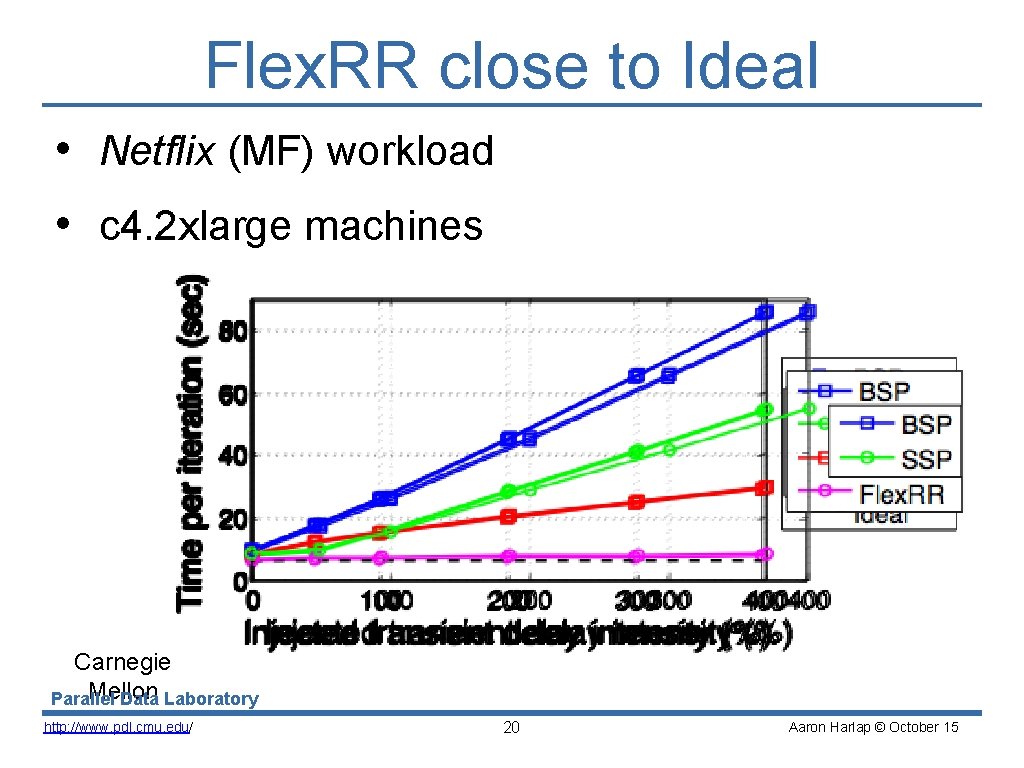
Flex. RR close to Ideal • Netflix (MF) workload • c 4. 2 xlarge machines Carnegie Mellon Parallel Data Laboratory http: //www. pdl. cmu. edu/ 20 Aaron Harlap © October 15
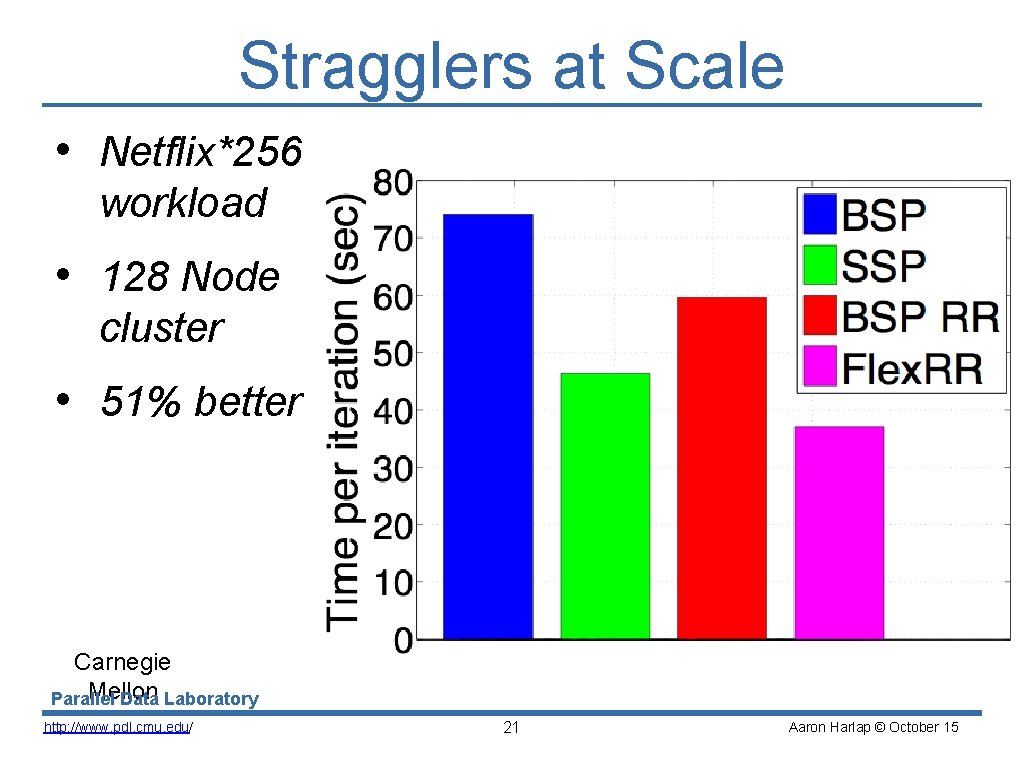
Stragglers at Scale • Netflix*256 workload • 128 Node cluster • 51% better Carnegie Mellon Parallel Data Laboratory http: //www. pdl. cmu. edu/ 21 Aaron Harlap © October 15
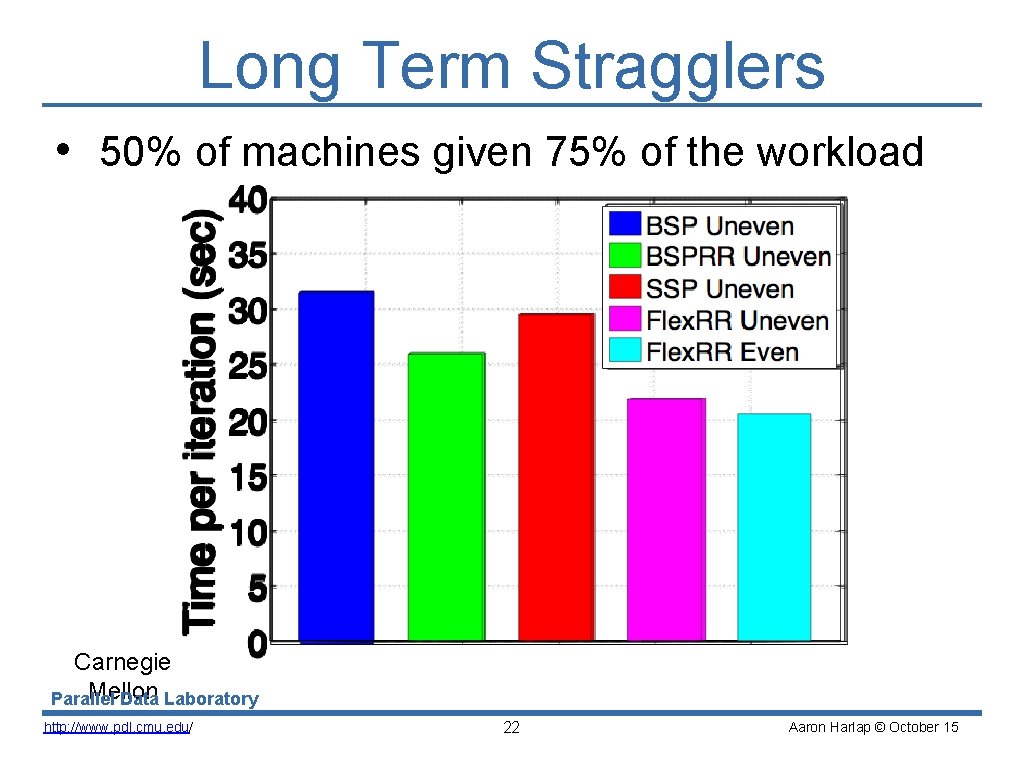
Long Term Stragglers • 50% of machines given 75% of the workload Carnegie Mellon Parallel Data Laboratory http: //www. pdl. cmu. edu/ 22 Aaron Harlap © October 15
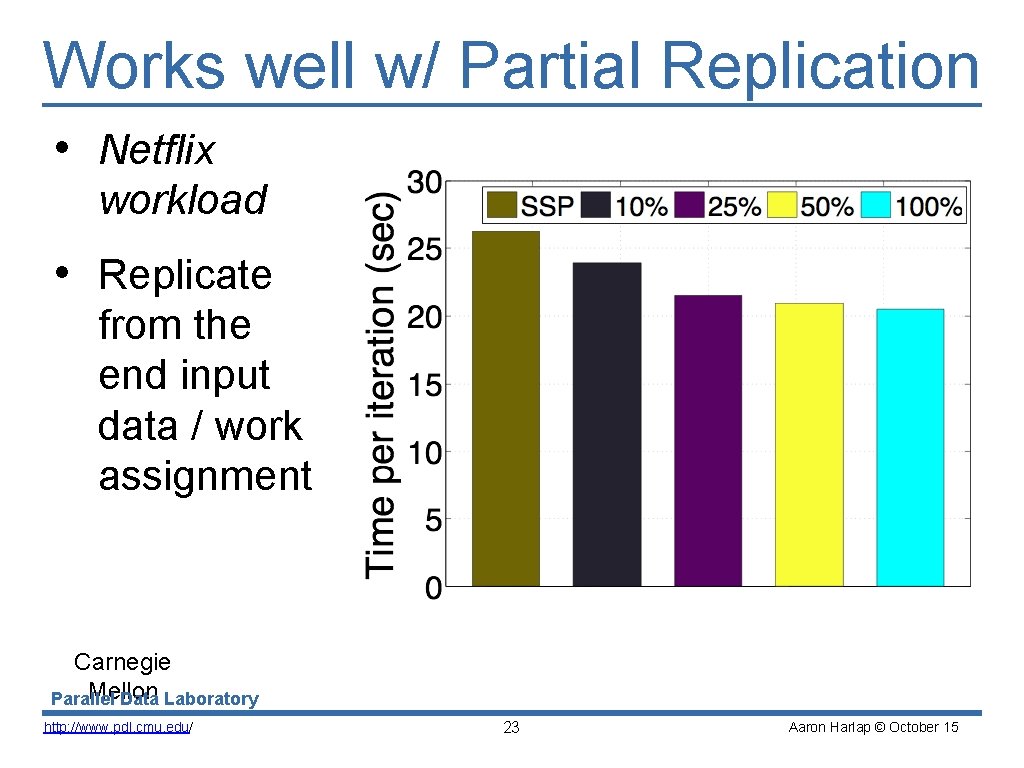
Works well w/ Partial Replication • Netflix workload • Replicate from the end input data / work assignment Carnegie Mellon Parallel Data Laboratory http: //www. pdl. cmu. edu/ 23 Aaron Harlap © October 15
Summary • Flex. RR solves the straggler problem - combines flexible consistency & rapid reassignment - helper groups are important for efficiency @ scale • 35% - 53% improvement on EC 2 • Handles uneven workloads • Full replication not required Carnegie Mellon Parallel Data Laboratory http: //www. pdl. cmu. edu/ 24 Aaron Harlap © October 15
Ongoing Work • Elasticity to take advantage of EC 2 spot pricing - Computing resources often 90% cheaper - tiers of expected reliability • ex: Parameter Servers on “on-demand” & workers on “spot instances” - node failures vs. EC 2 evictions • overhead of changing computing resources - able to meet deadlines & reduce cost Carnegie Mellon Parallel Data Laboratory http: //www. pdl. cmu. edu/ 25 Aaron Harlap © October 15
Summary • Flex. RR solves the straggler problem - combines flexible consistency & rapid reassignment - helper groups are important for efficiency @ scale • 35% - 53% improvement on EC 2 • Handles uneven workloads • Full replication not required Carnegie Mellon Parallel Data Laboratory http: //www. pdl. cmu. edu/ 26 Aaron Harlap © October 15

Backup Slides
![References • [1] Ananthanarayanan, G. , Ghosdi, A. , Shenker, S. , and Stoica,](http://slidetodoc.com/presentation_image/26730f2bfb8290e2417e8a71b98566dc/image-28.jpg "References • [1] Ananthanarayanan, G. , Ghosdi, A. , Shenker, S. , and Stoica,")
References • [1] Ananthanarayanan, G. , Ghosdi, A. , Shenker, S. , and Stoica, I. Effective straggler mitigation: Attack of the clones. • [2] Cipar, J. , Ho, Q. , Kim, J. K. , Lee, S. , Ganger, G. R. , Gibson, G. , Keeton, K. , and Xing, E. Solving the straggler problem with bounded staleness. • [3] Cui, H. , Cipar, J. , Ho, Q. , Kim, J. K. , Lee, S. , Kumar, A. , Wei, J. , Dai, W. , Ganger, G. R. , Gibbons, P. B. , Gibson, G. A. , and Xing, E. P. Exploiting bounded staleness to speed up big data analytics. • [4] Ho, Q. , Cipar, J. , Cui, H. , Lee, S. , Kim, J. K. , Gibbons, P. B. , Gibson, G. A. , Ganger, G. R. , AND Xing, E. P. More effective distributed ML via a Stale Synchronous Parallel parame- ter server. Carnegie Mellon Parallel Data Laboratory http: //www. pdl. cmu. edu/ 28 Aaron Harlap © October 15
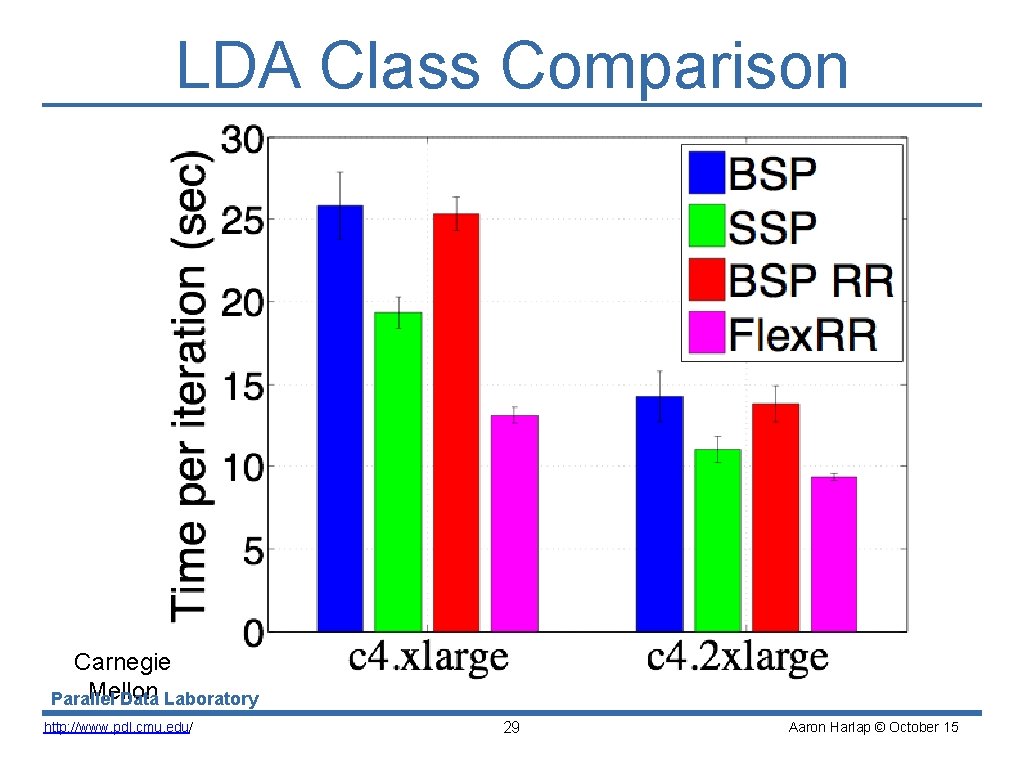
LDA Class Comparison Carnegie Mellon Parallel Data Laboratory http: //www. pdl. cmu. edu/ 29 Aaron Harlap © October 15
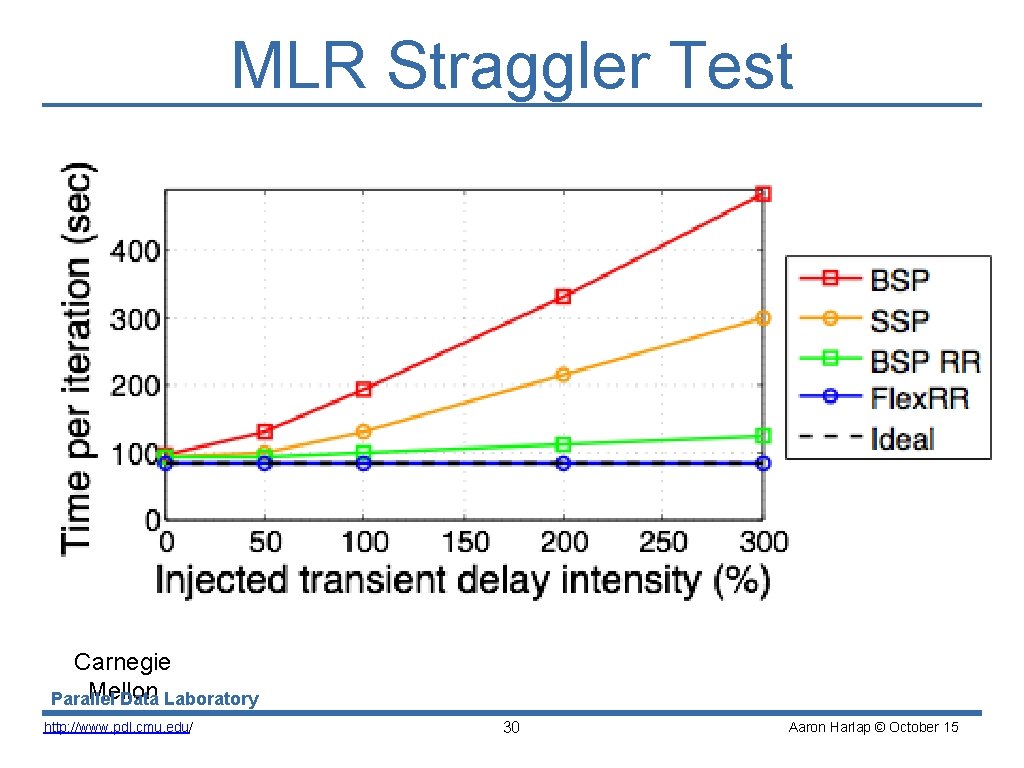
MLR Straggler Test Carnegie Mellon Parallel Data Laboratory http: //www. pdl. cmu. edu/ 30 Aaron Harlap © October 15
- Slides: 30