
Addressing the Network IPv 4 by Dodi Heriadi
Addressing the Network – IPv 4 by Dodi Heriadi

IP Addressing Structure • Describe the dotted decimal structure of a binary IP address and label its parts
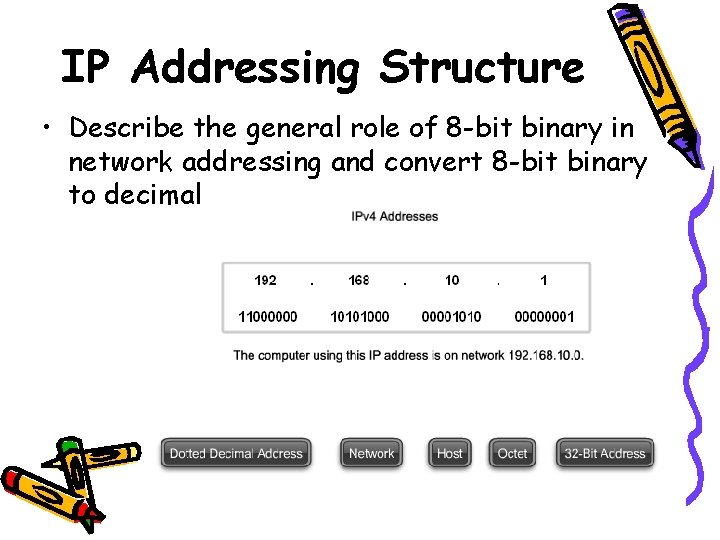
IP Addressing Structure • Describe the general role of 8 -bit binary in network addressing and convert 8 -bit binary to decimal
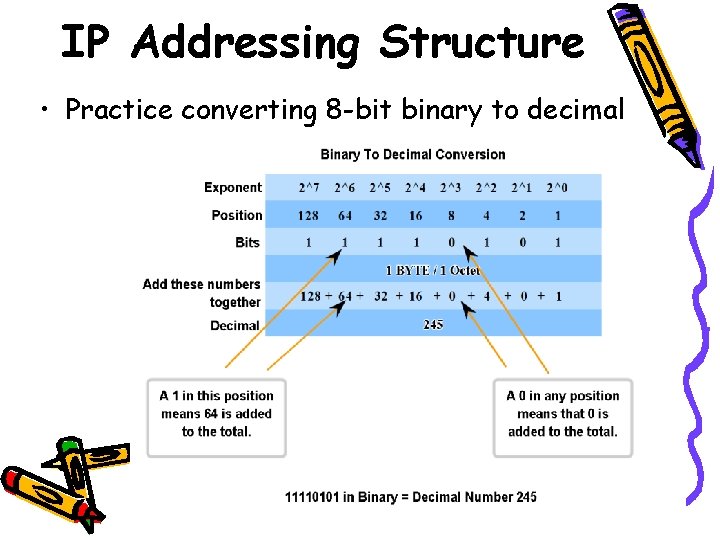
IP Addressing Structure • Practice converting 8 -bit binary to decimal
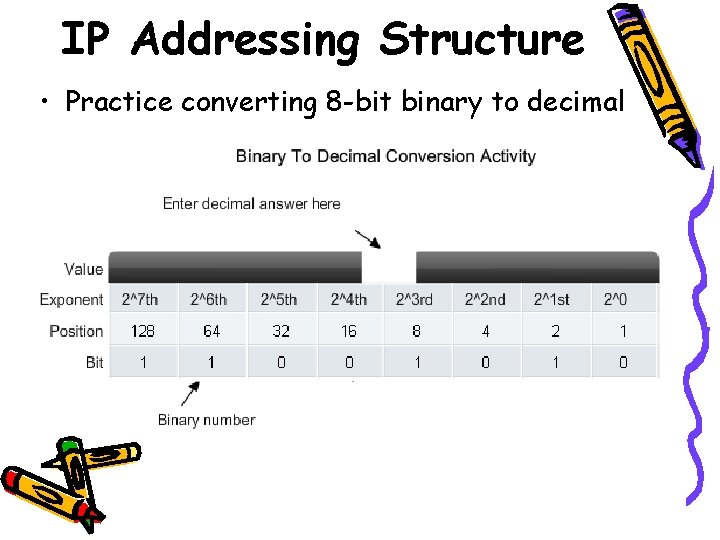
IP Addressing Structure • Practice converting 8 -bit binary to decimal
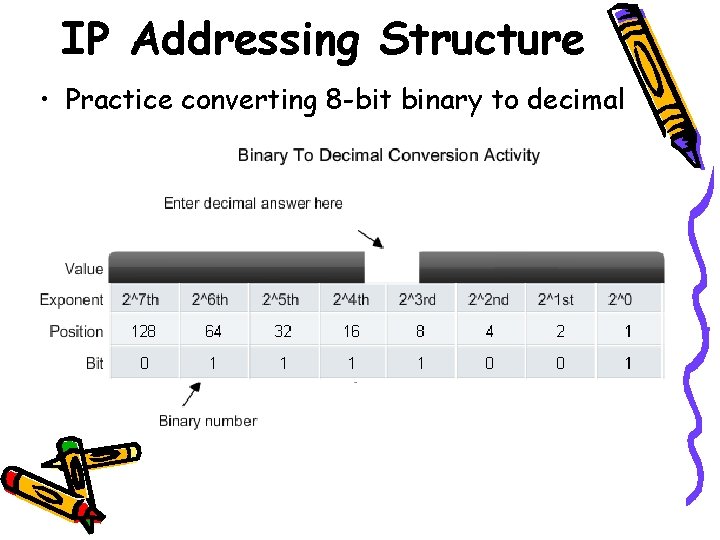
IP Addressing Structure • Practice converting 8 -bit binary to decimal
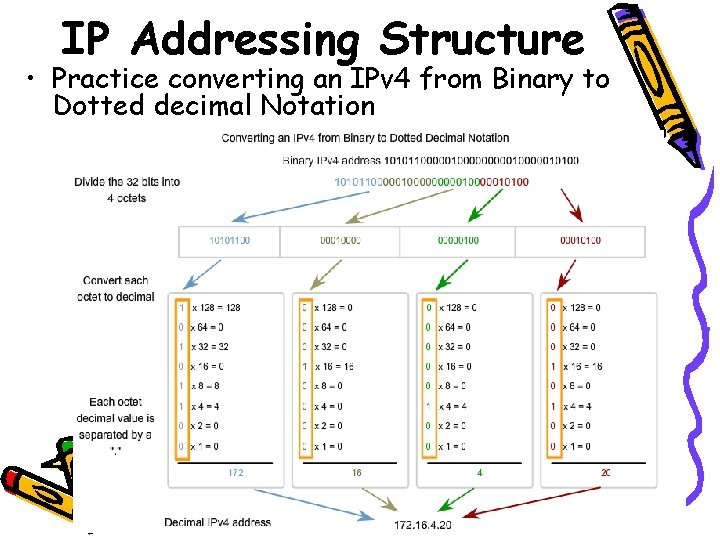
IP Addressing Structure • Practice converting an IPv 4 from Binary to Dotted decimal Notation
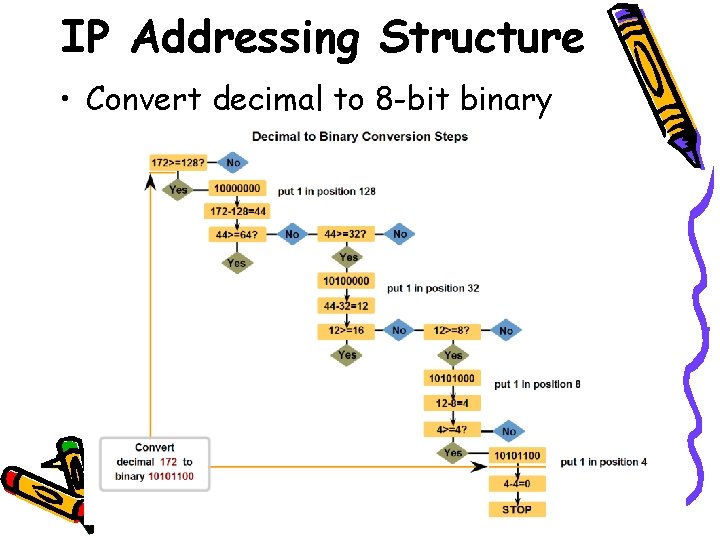
IP Addressing Structure • Convert decimal to 8 -bit binary
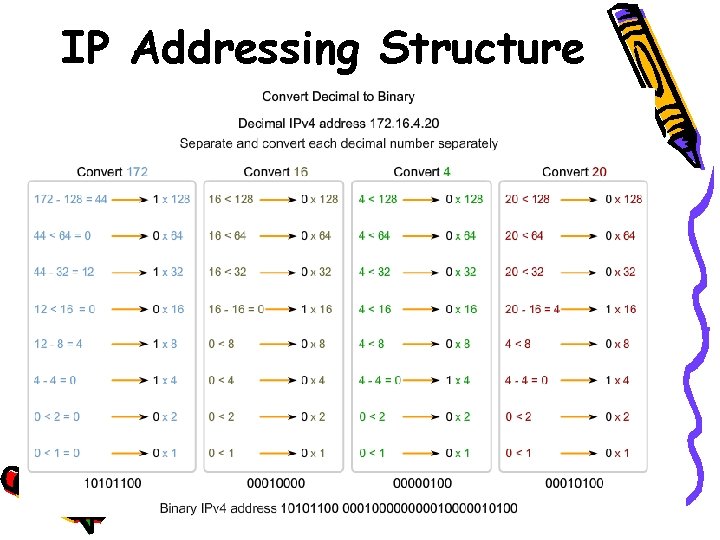
IP Addressing Structure
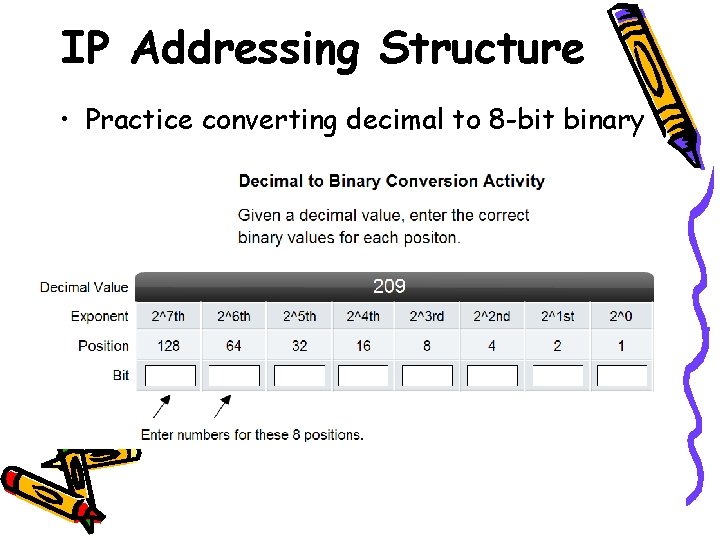
IP Addressing Structure • Practice converting decimal to 8 -bit binary
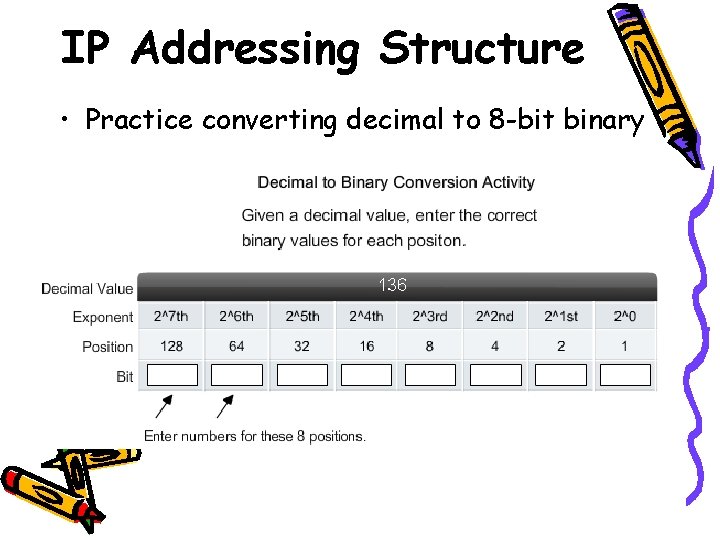
IP Addressing Structure • Practice converting decimal to 8 -bit binary
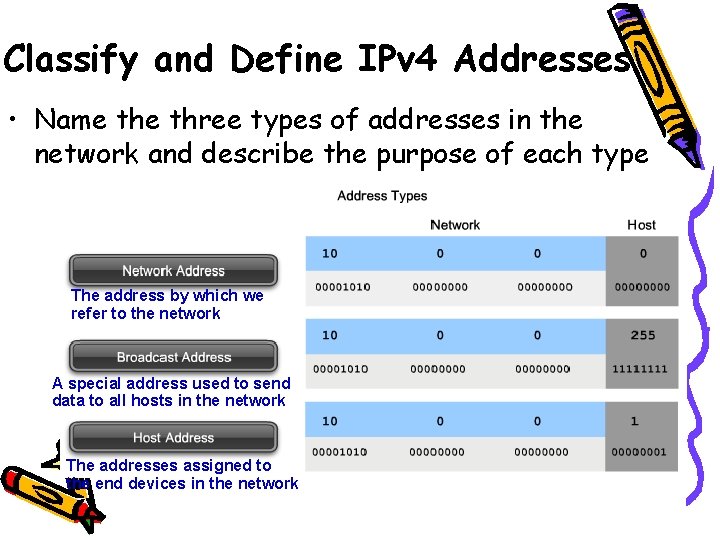
Classify and Define IPv 4 Addresses • Name three types of addresses in the network and describe the purpose of each type The address by which we refer to the network A special address used to send data to all hosts in the network The addresses assigned to the end devices in the network
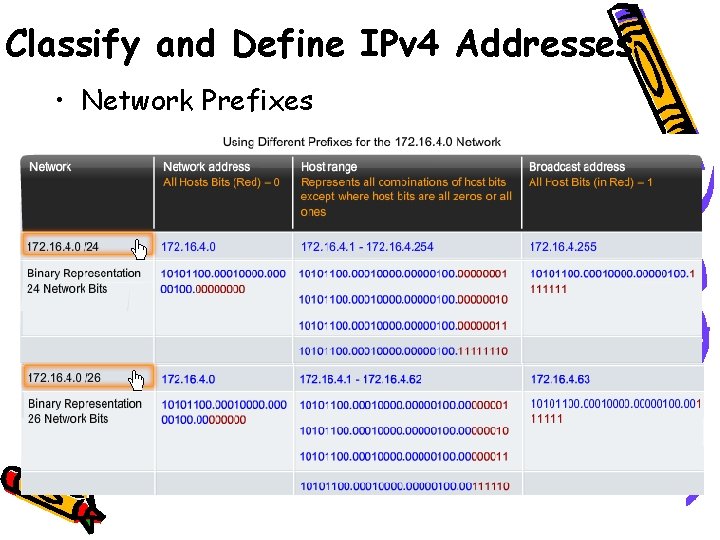
Classify and Define IPv 4 Addresses • Network Prefixes
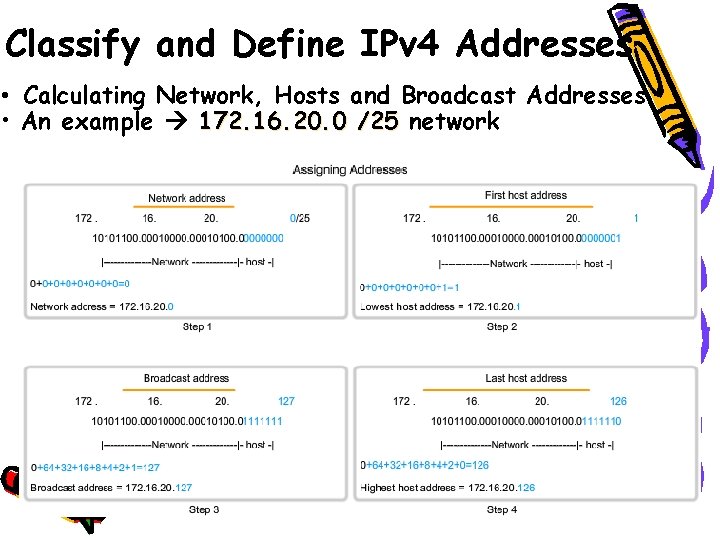
Classify and Define IPv 4 Addresses • Calculating Network, Hosts and Broadcast Addresses • An example 172. 16. 20. 0 /25 network
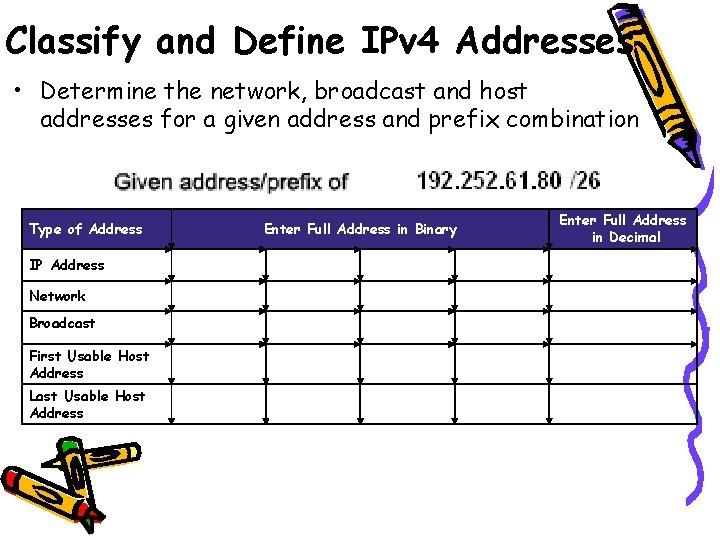
Classify and Define IPv 4 Addresses • Determine the network, broadcast and host addresses for a given address and prefix combination Type of Address IP Address Network Broadcast First Usable Host Address Last Usable Host Address Enter Full Address in Binary Enter Full Address in Decimal
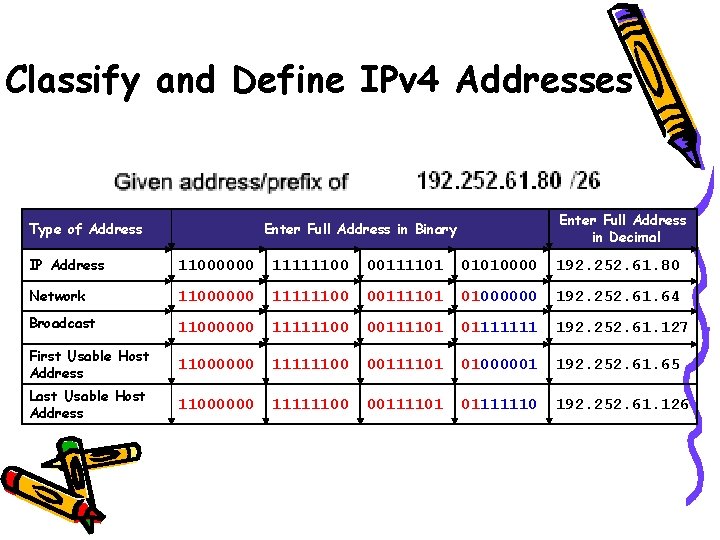
Classify and Define IPv 4 Addresses Type of Address Enter Full Address in Decimal Enter Full Address in Binary IP Address 11000000 11111100 00111101 01010000 192. 252. 61. 80 Network 11000000 11111100 00111101 01000000 192. 252. 61. 64 Broadcast 11000000 11111100 00111101 01111111 192. 252. 61. 127 First Usable Host Address 11000000 11111100 00111101 01000001 192. 252. 61. 65 Last Usable Host Address 11000000 11111100 00111101 01111110 192. 252. 61. 126
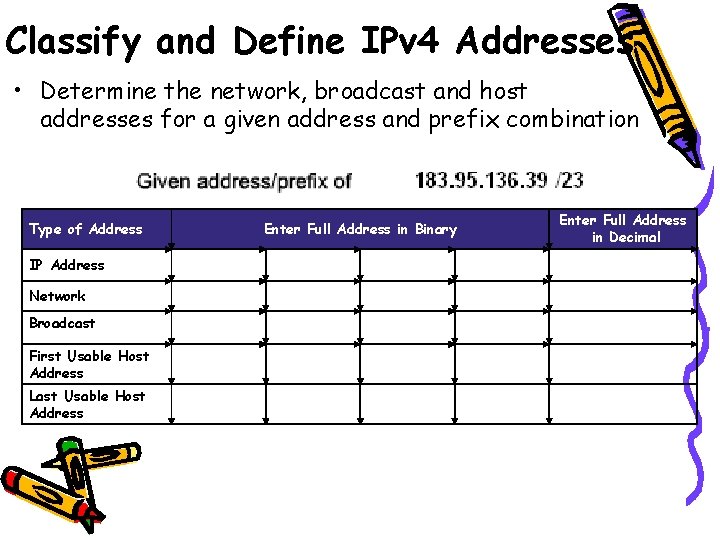
Classify and Define IPv 4 Addresses • Determine the network, broadcast and host addresses for a given address and prefix combination Type of Address IP Address Network Broadcast First Usable Host Address Last Usable Host Address Enter Full Address in Binary Enter Full Address in Decimal
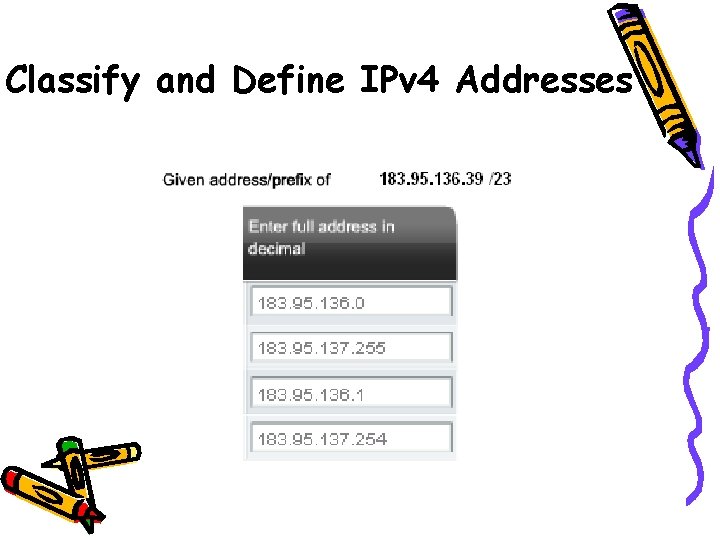
Classify and Define IPv 4 Addresses
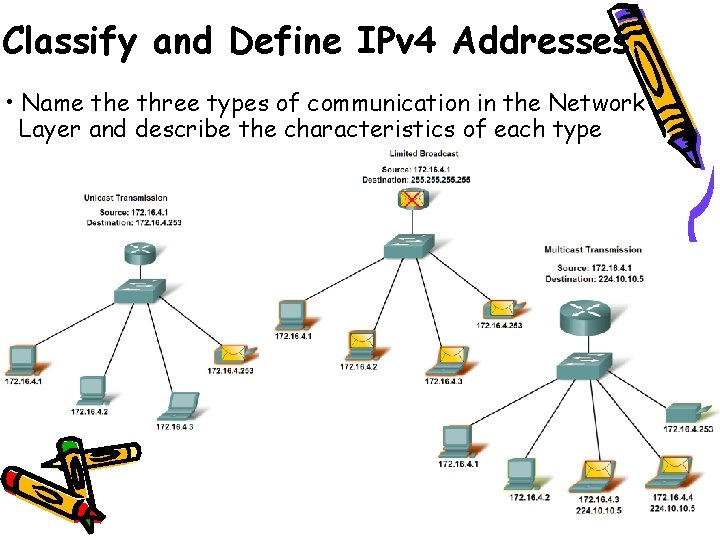
Classify and Define IPv 4 Addresses • Name three types of communication in the Network Layer and describe the characteristics of each type
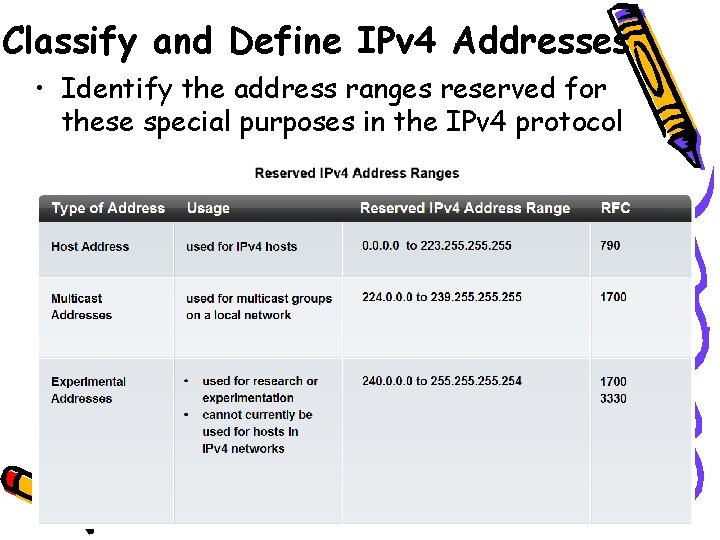
Classify and Define IPv 4 Addresses • Identify the address ranges reserved for these special purposes in the IPv 4 protocol
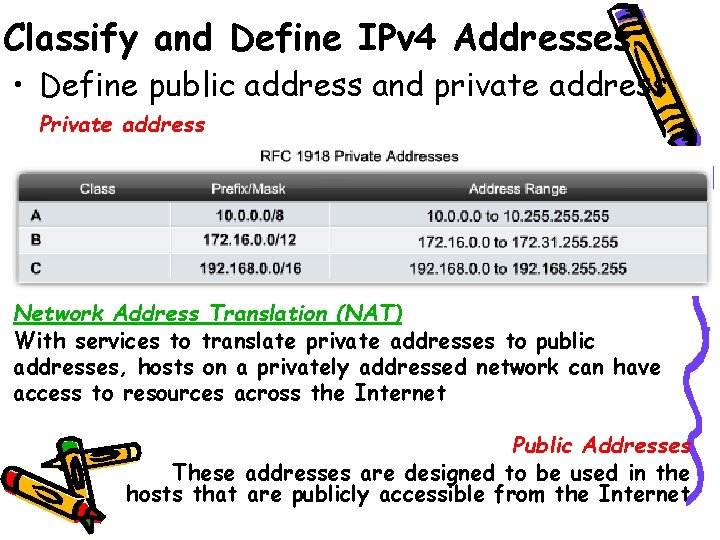
Classify and Define IPv 4 Addresses • Define public address and private address Private address Network Address Translation (NAT) With services to translate private addresses to public addresses, hosts on a privately addressed network can have access to resources across the Internet Public Addresses These addresses are designed to be used in the hosts that are publicly accessible from the Internet
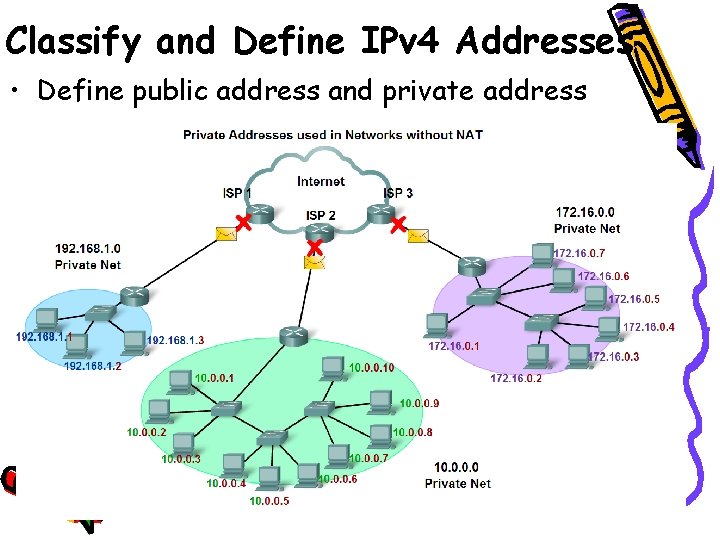
Classify and Define IPv 4 Addresses • Define public address and private address
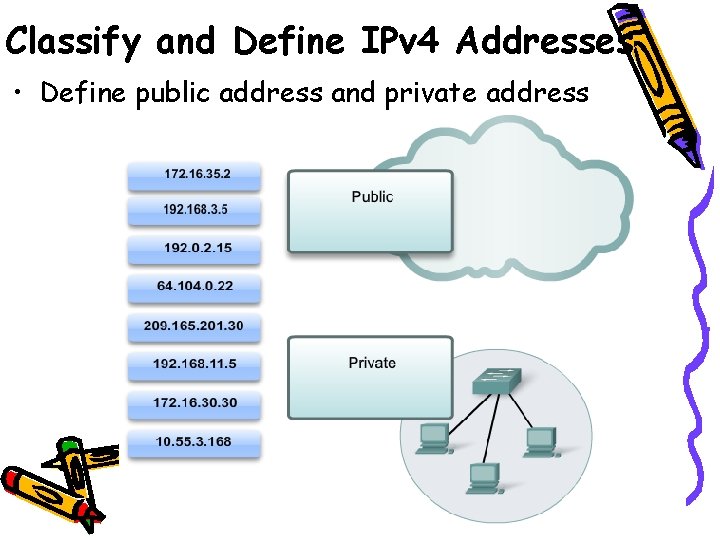
Classify and Define IPv 4 Addresses • Define public address and private address
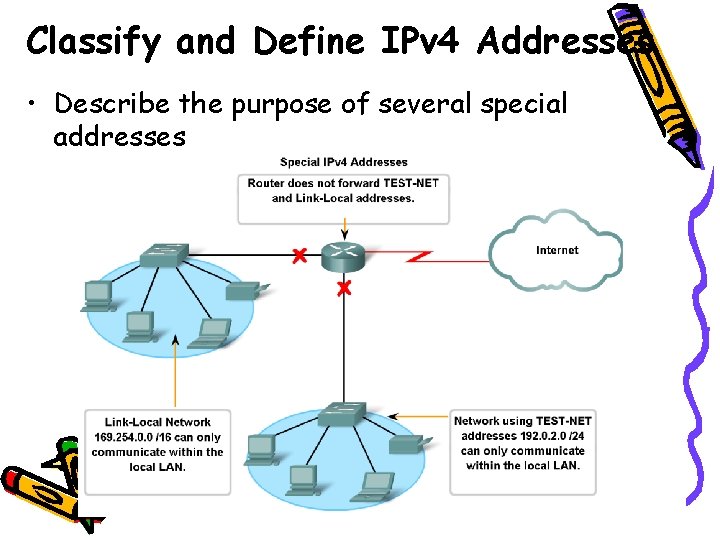
Classify and Define IPv 4 Addresses • Describe the purpose of several special addresses
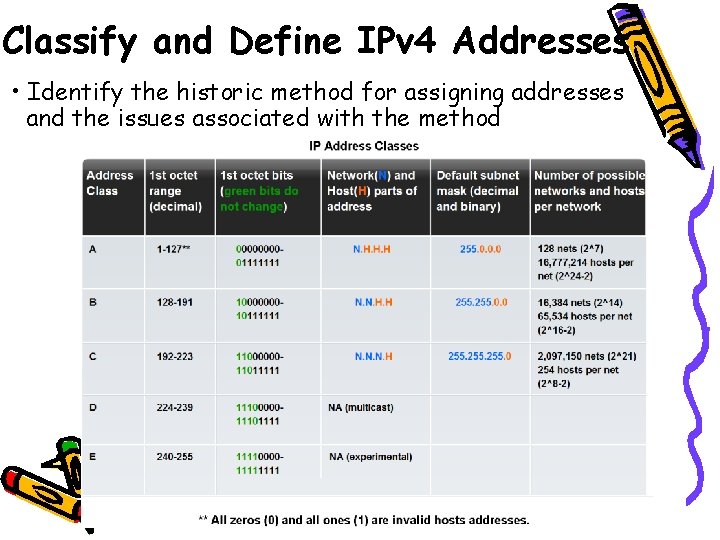
Classify and Define IPv 4 Addresses • Identify the historic method for assigning addresses and the issues associated with the method
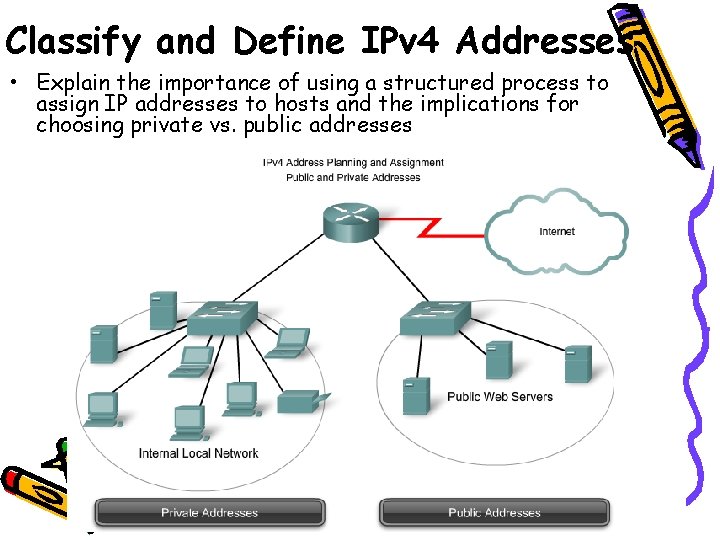
Classify and Define IPv 4 Addresses • Explain the importance of using a structured process to assign IP addresses to hosts and the implications for choosing private vs. public addresses
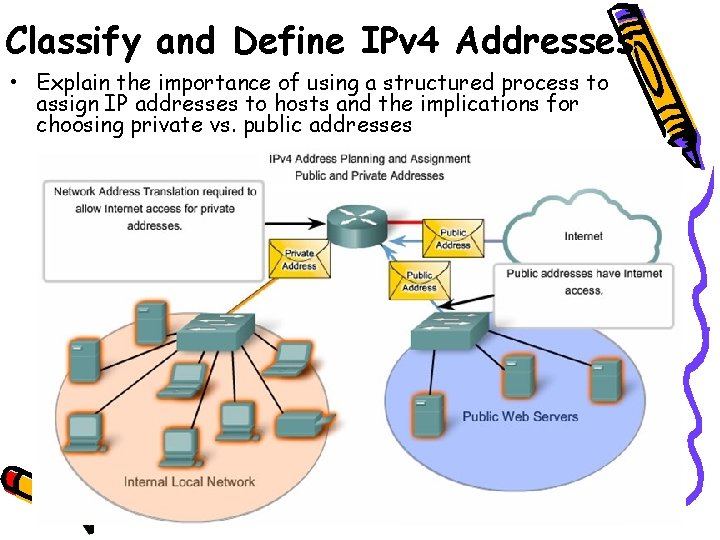
Classify and Define IPv 4 Addresses • Explain the importance of using a structured process to assign IP addresses to hosts and the implications for choosing private vs. public addresses
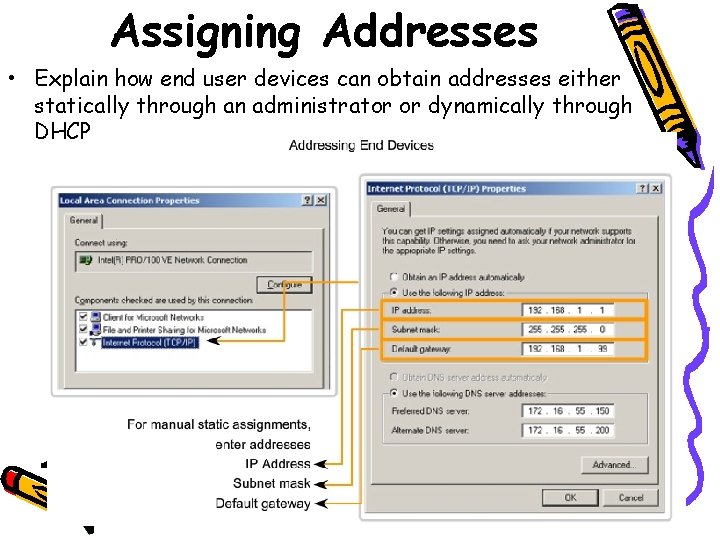
Assigning Addresses • Explain how end user devices can obtain addresses either statically through an administrator or dynamically through DHCP
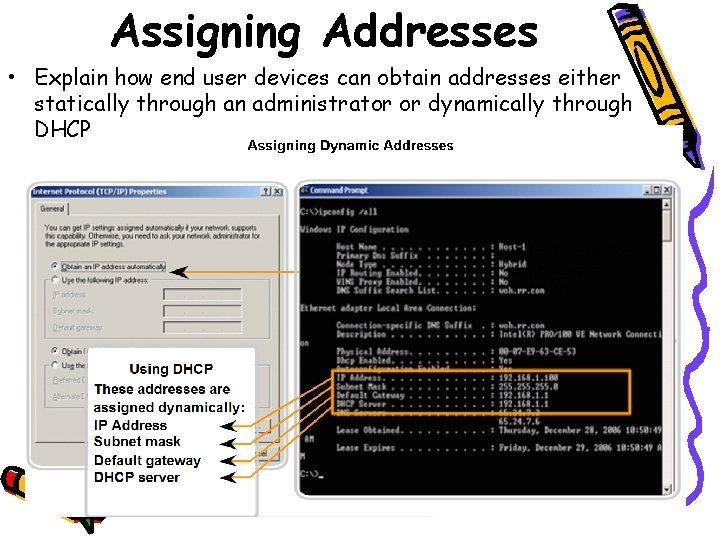
Assigning Addresses • Explain how end user devices can obtain addresses either statically through an administrator or dynamically through DHCP
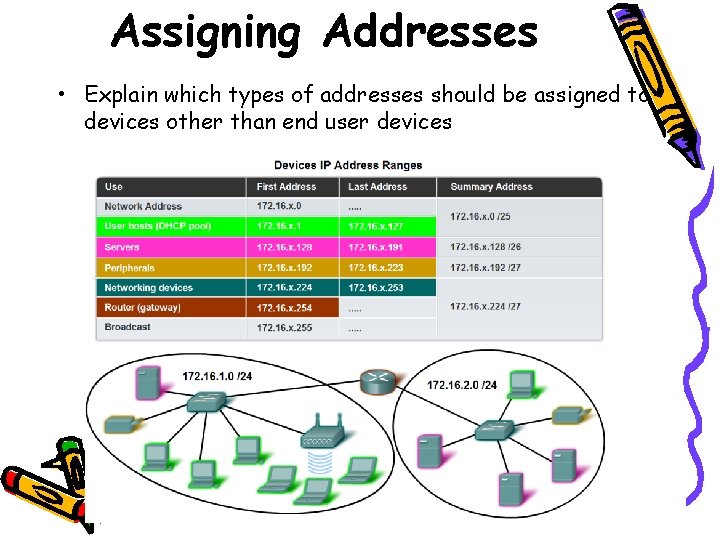
Assigning Addresses • Explain which types of addresses should be assigned to devices other than end user devices
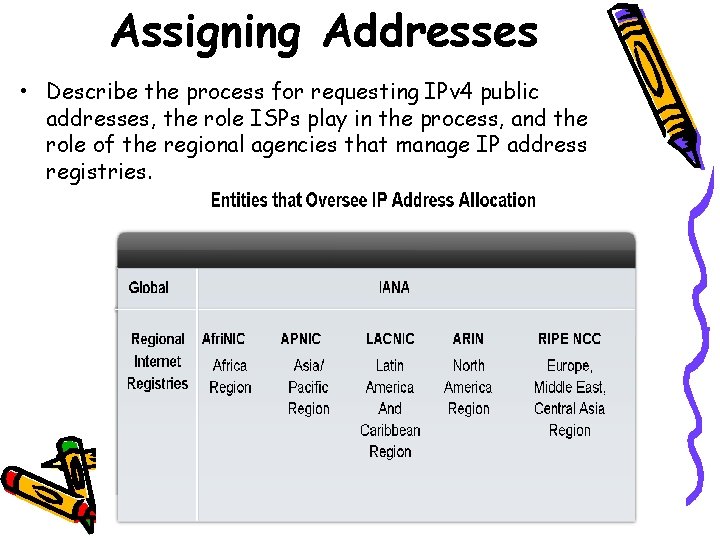
Assigning Addresses • Describe the process for requesting IPv 4 public addresses, the role ISPs play in the process, and the role of the regional agencies that manage IP address registries.
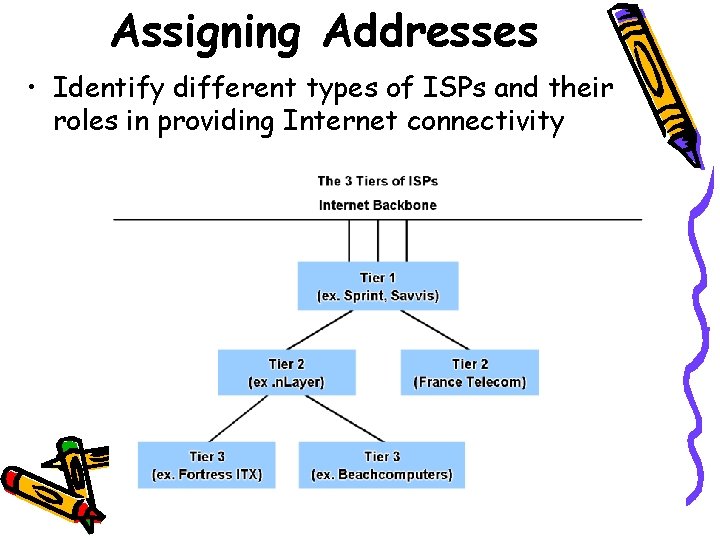
Assigning Addresses • Identify different types of ISPs and their roles in providing Internet connectivity
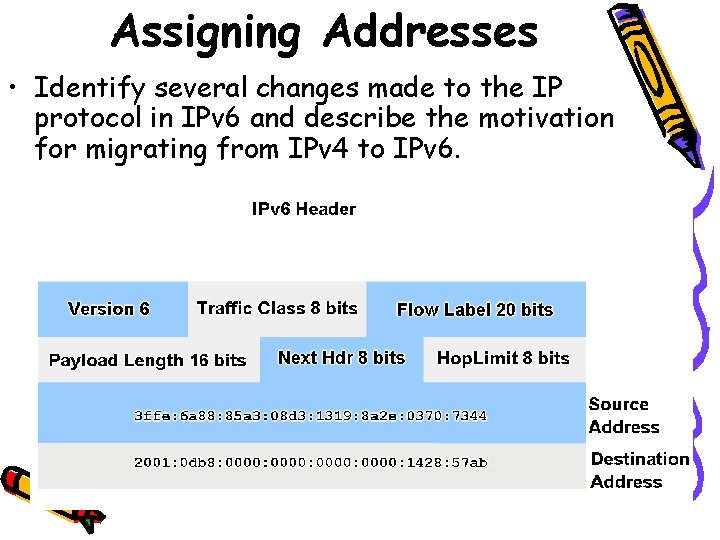
Assigning Addresses • Identify several changes made to the IP protocol in IPv 6 and describe the motivation for migrating from IPv 4 to IPv 6.
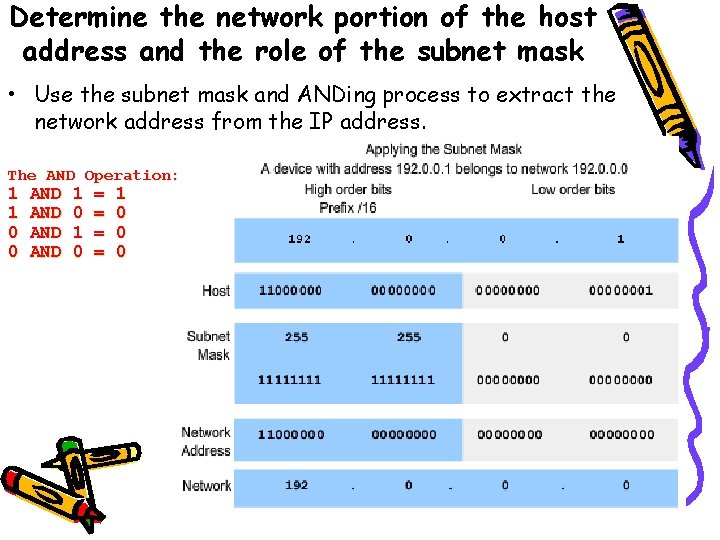
Determine the network portion of the host address and the role of the subnet mask • Use the subnet mask and ANDing process to extract the network address from the IP address. The AND Operation: 1 1 0 0 AND AND 1 0 = = 1 0 0 0
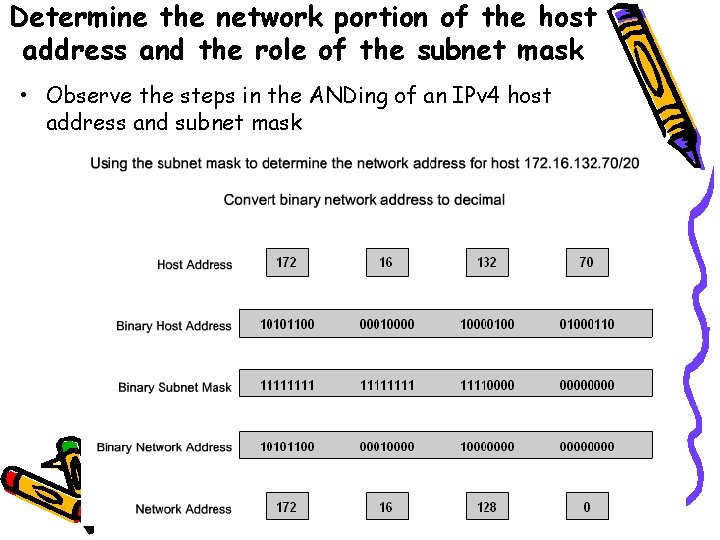
Determine the network portion of the host address and the role of the subnet mask • Observe the steps in the ANDing of an IPv 4 host address and subnet mask
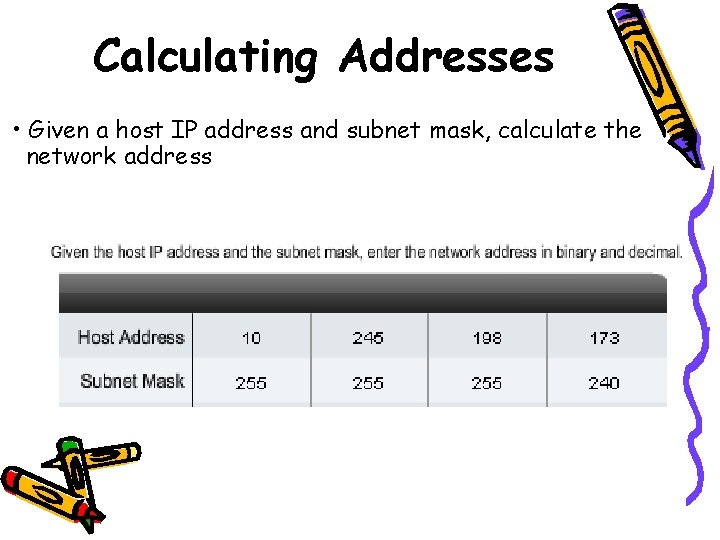
Calculating Addresses • Given a host IP address and subnet mask, calculate the network address
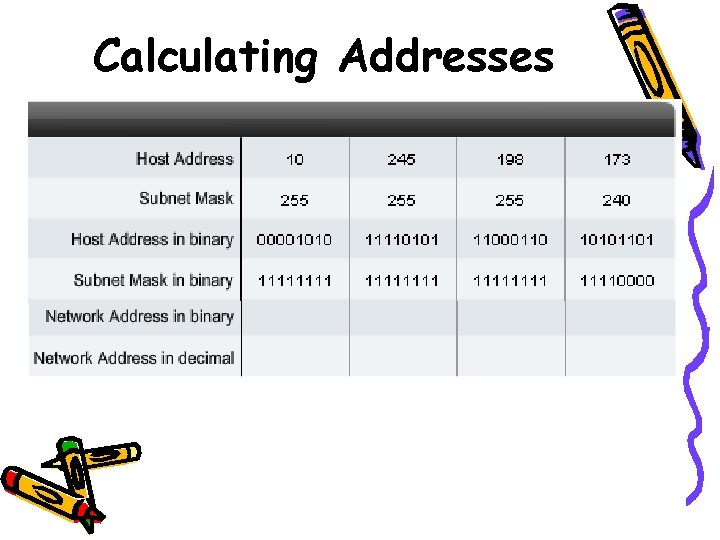
Calculating Addresses
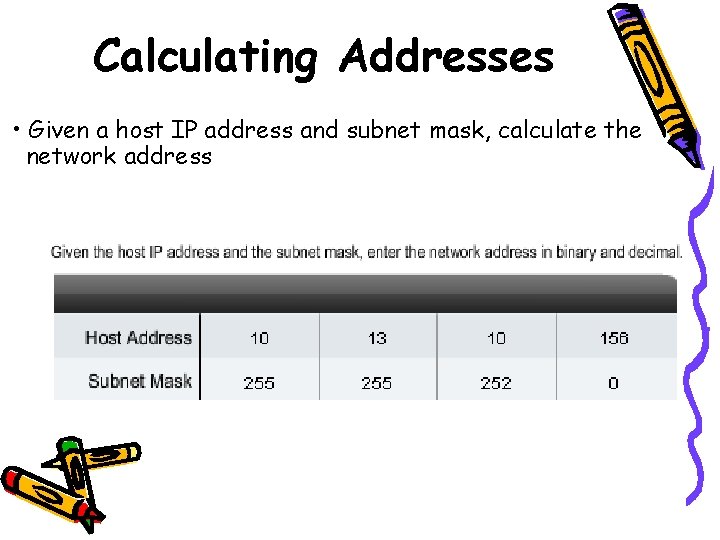
Calculating Addresses • Given a host IP address and subnet mask, calculate the network address
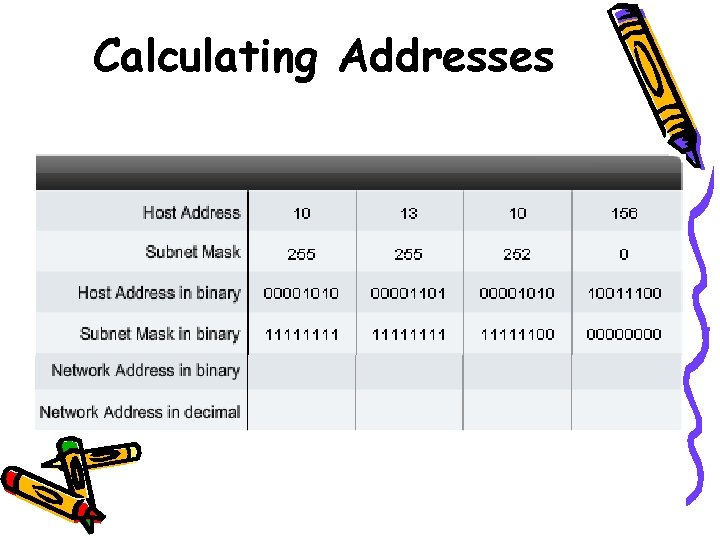
Calculating Addresses
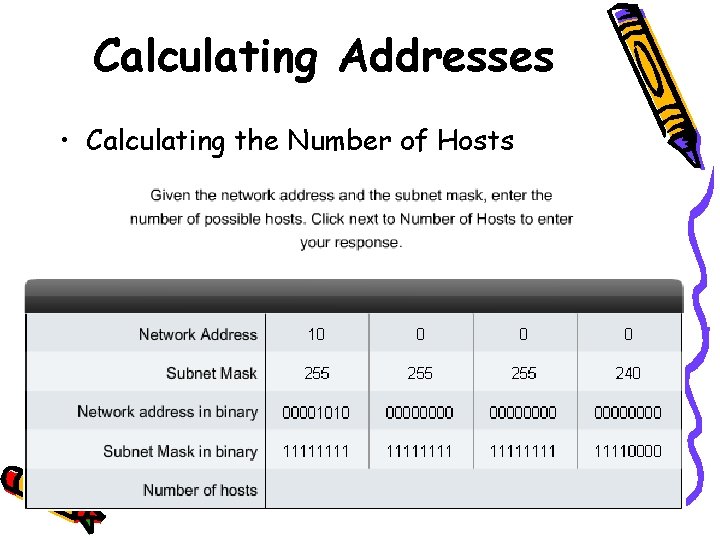
Calculating Addresses • Calculating the Number of Hosts
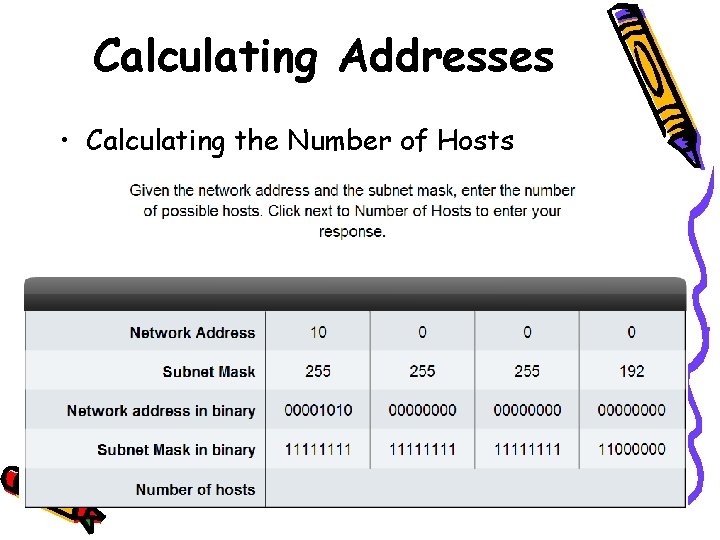
Calculating Addresses • Calculating the Number of Hosts
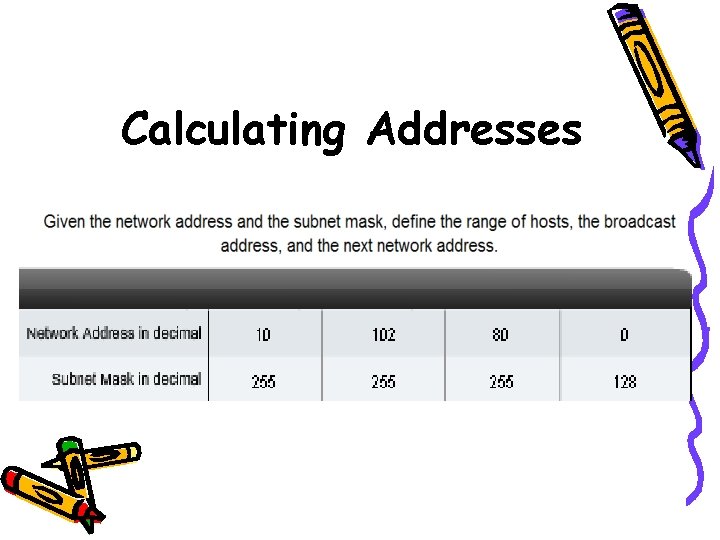
Calculating Addresses
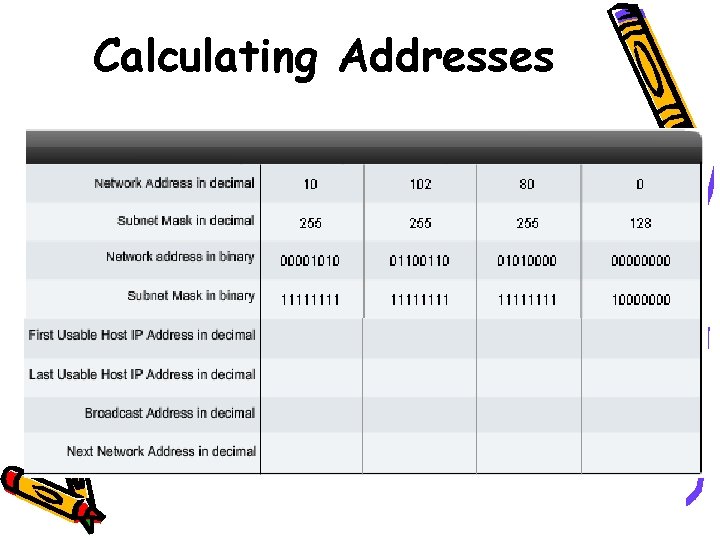
Calculating Addresses
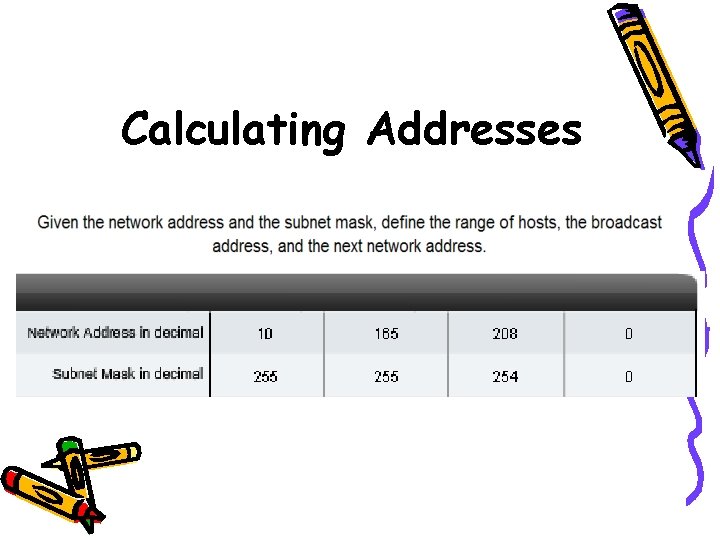
Calculating Addresses
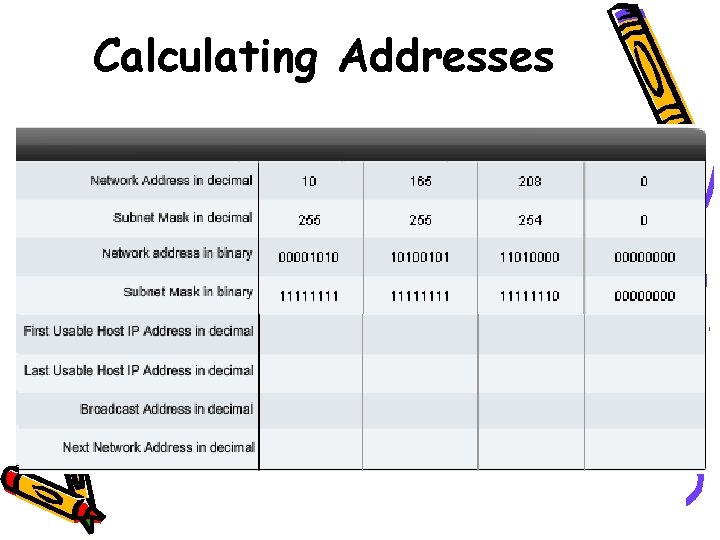
Calculating Addresses
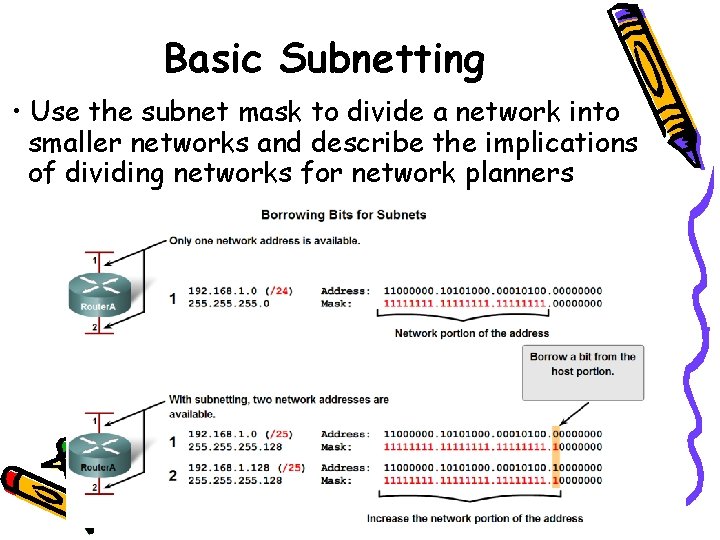
Basic Subnetting • Use the subnet mask to divide a network into smaller networks and describe the implications of dividing networks for network planners
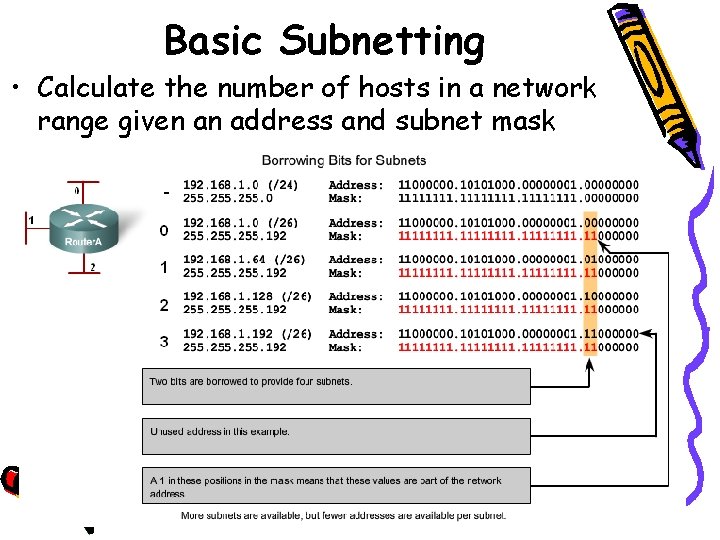
Basic Subnetting • Calculate the number of hosts in a network range given an address and subnet mask
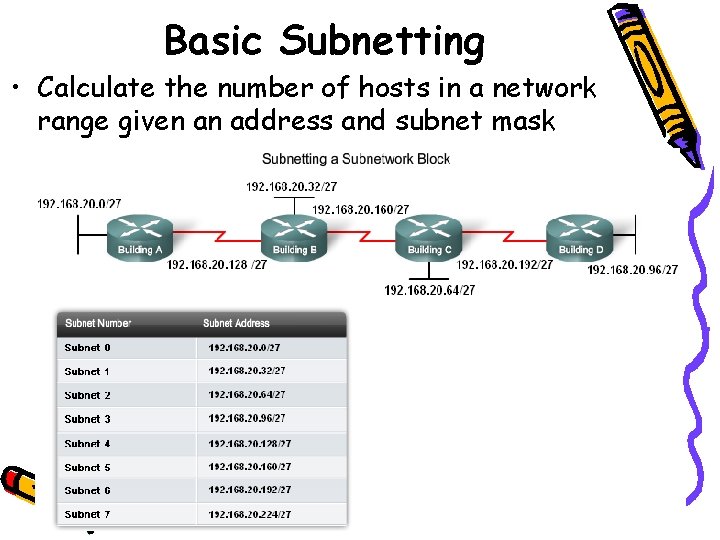
Basic Subnetting • Calculate the number of hosts in a network range given an address and subnet mask
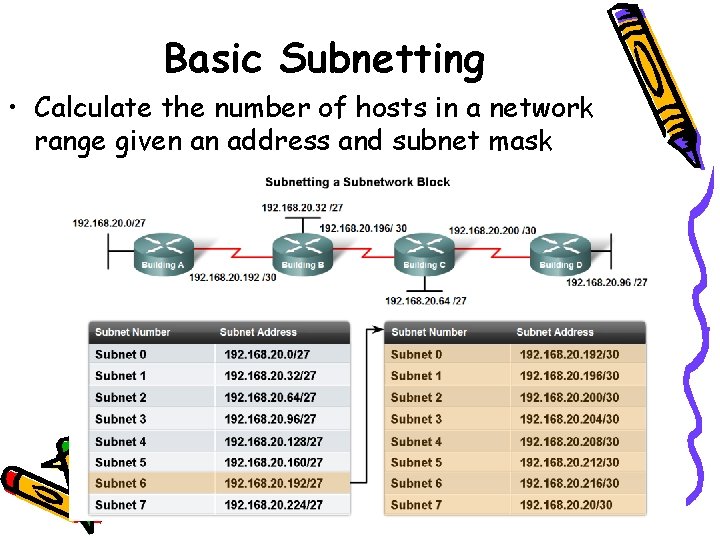
Basic Subnetting • Calculate the number of hosts in a network range given an address and subnet mask
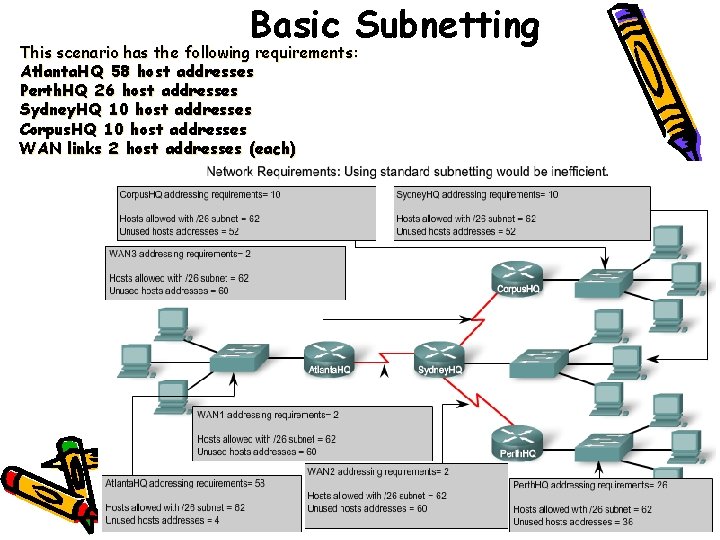
Basic Subnetting This scenario has the following requirements: Atlanta. HQ 58 host addresses Perth. HQ 26 host addresses Sydney. HQ 10 host addresses Corpus. HQ 10 host addresses WAN links 2 host addresses (each)
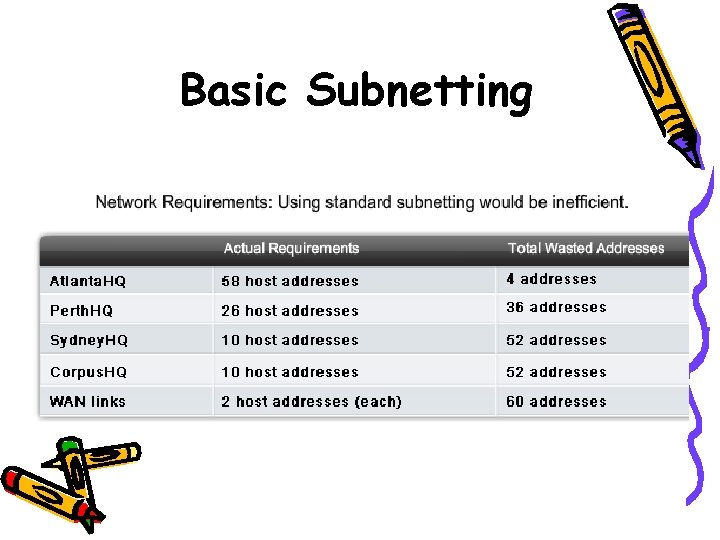
Basic Subnetting
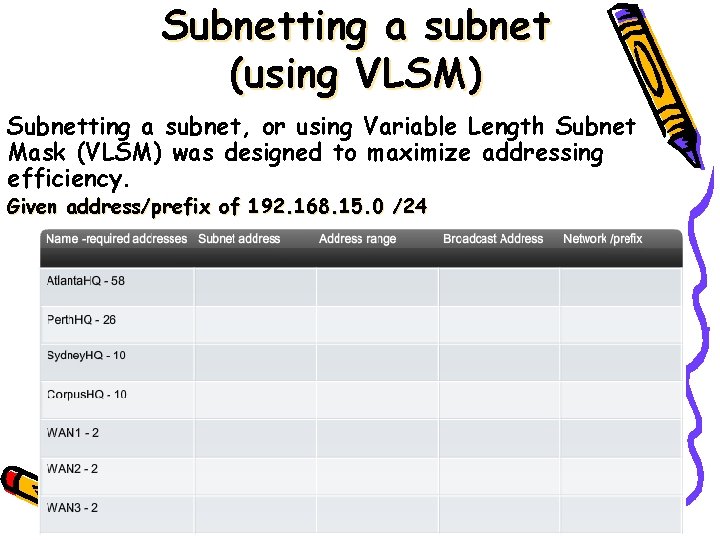
Subnetting a subnet (using VLSM) Subnetting a subnet, or using Variable Length Subnet Mask (VLSM) was designed to maximize addressing efficiency. Given address/prefix of 192. 168. 15. 0 /24
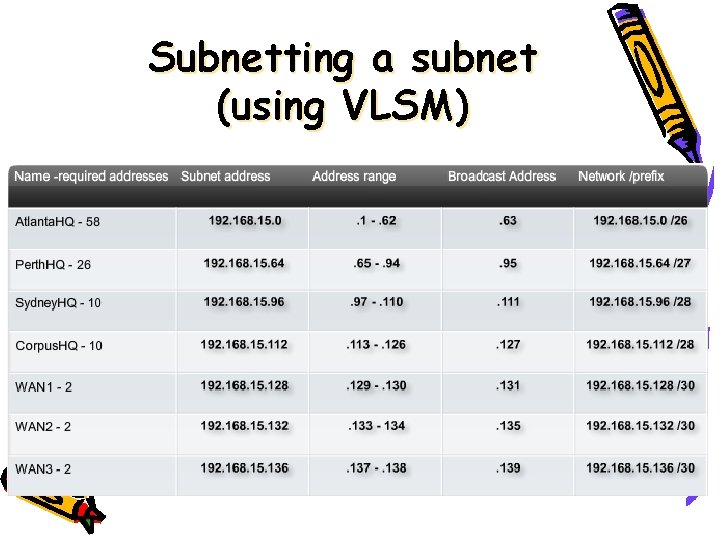
Subnetting a subnet (using VLSM)
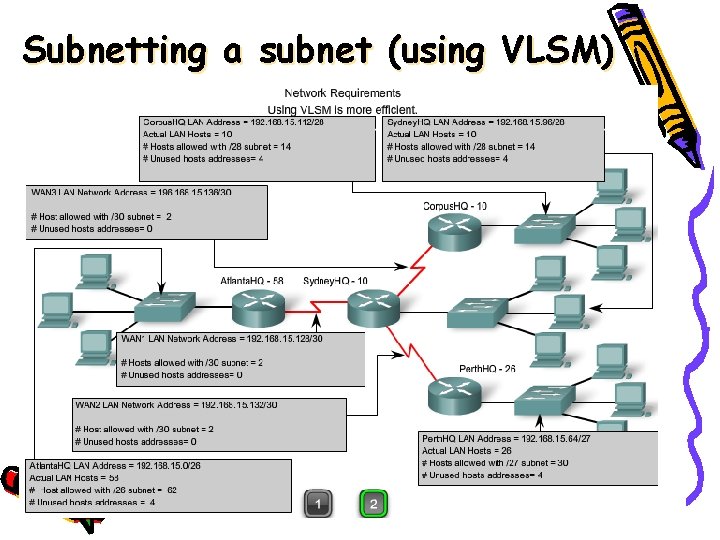
Subnetting a subnet (using VLSM)
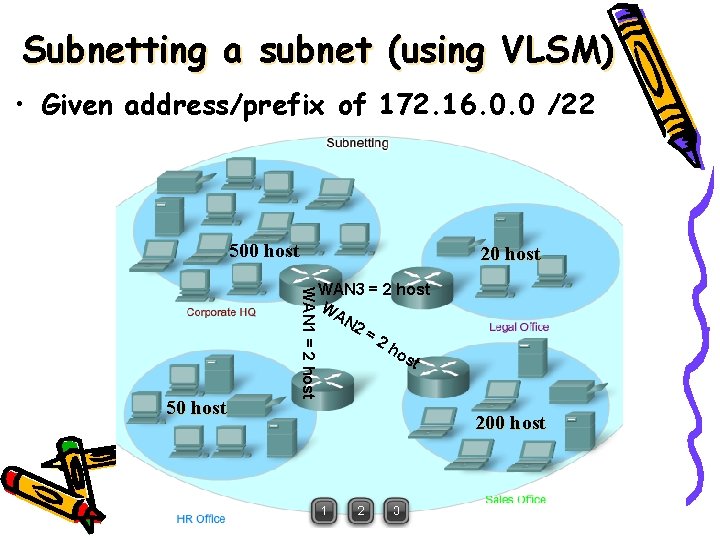
Subnetting a subnet (using VLSM) • Given address/prefix of 172. 16. 0. 0 /22 500 host 20 host 50 host WAN 1 = 2 host WAN 3 = 2 host WA N 2 =2 ho st 200 host
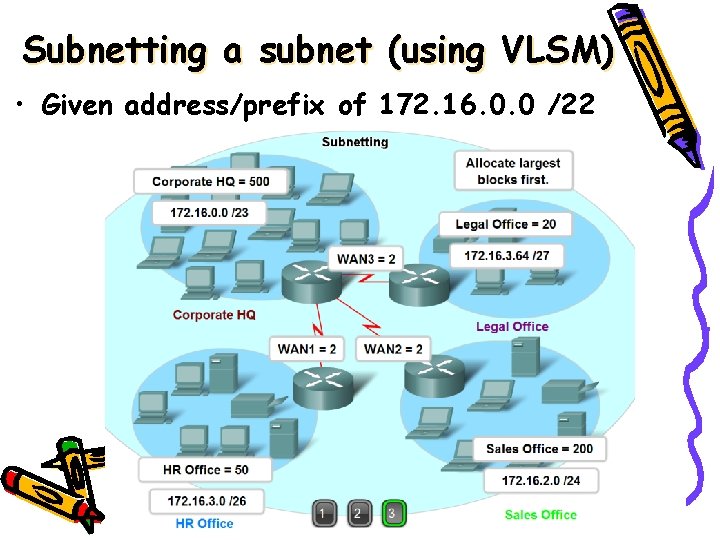
Subnetting a subnet (using VLSM) • Given address/prefix of 172. 16. 0. 0 /22
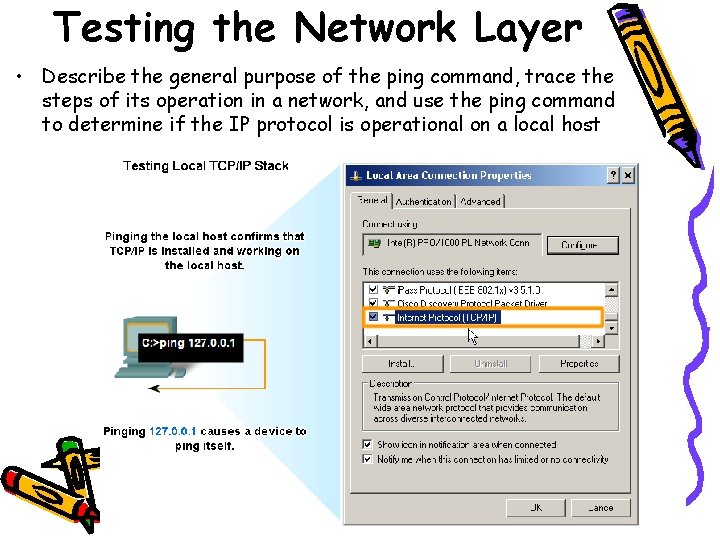
Testing the Network Layer • Describe the general purpose of the ping command, trace the steps of its operation in a network, and use the ping command to determine if the IP protocol is operational on a local host
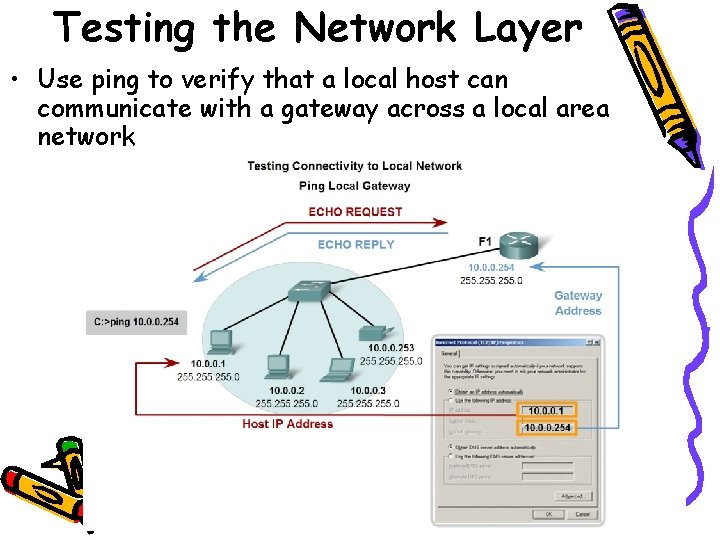
Testing the Network Layer • Use ping to verify that a local host can communicate with a gateway across a local area network
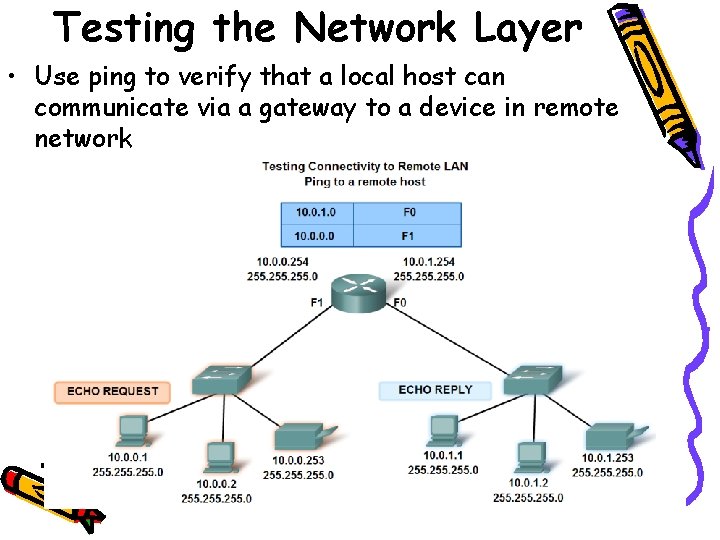
Testing the Network Layer • Use ping to verify that a local host can communicate via a gateway to a device in remote network
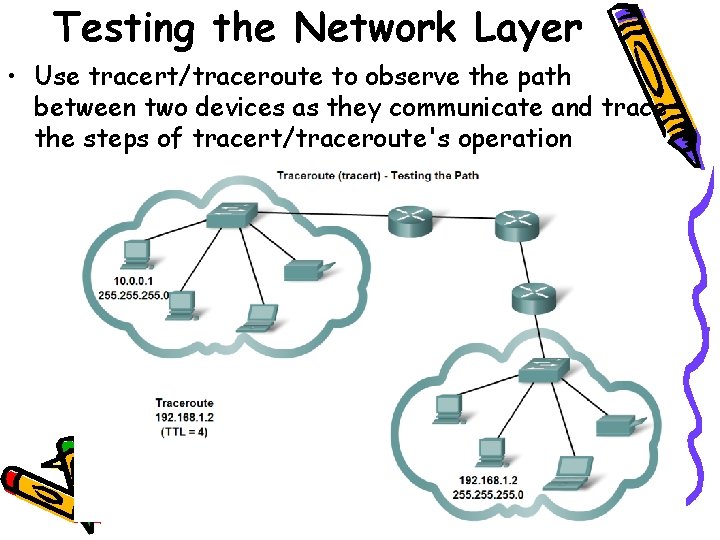
Testing the Network Layer • Use tracert/traceroute to observe the path between two devices as they communicate and trace the steps of tracert/traceroute's operation
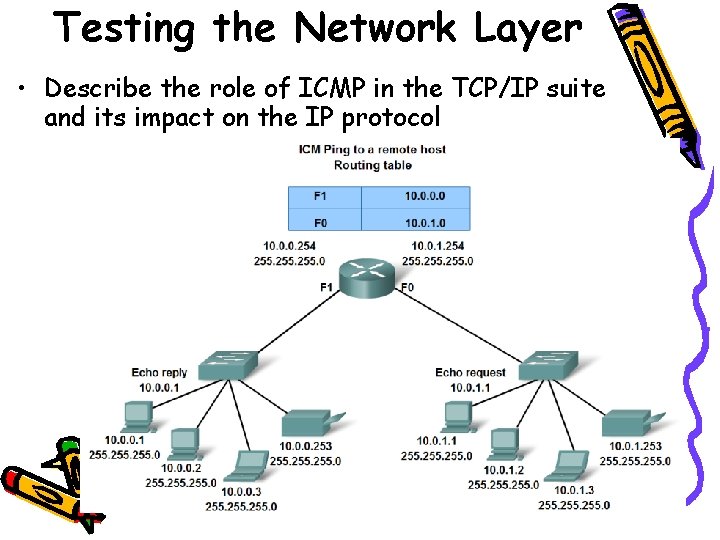
Testing the Network Layer • Describe the role of ICMP in the TCP/IP suite and its impact on the IP protocol
- Slides: 61