
Addressing Stereotype Threat in the Classroom 2012 TA
- Slides: 20
Addressing Stereotype Threat in the Classroom 2012 TA training
Take home message Understanding stereotype threat and wise criticism is essential for being an effective teacher in a diverse class/lab See handout for more information
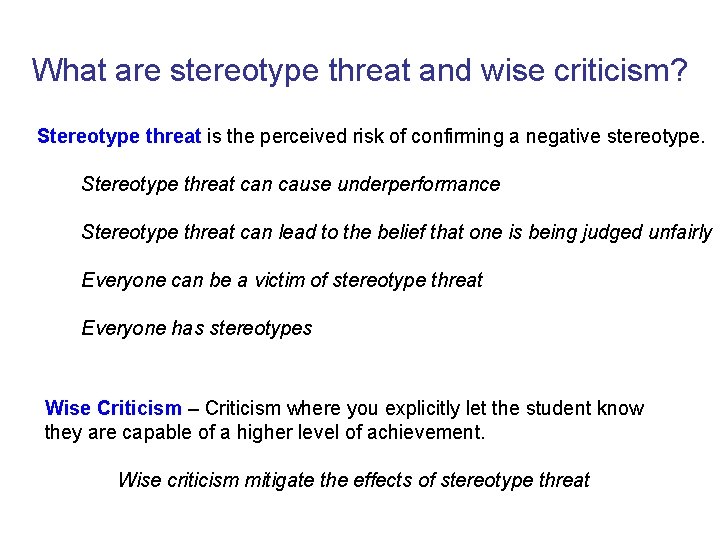
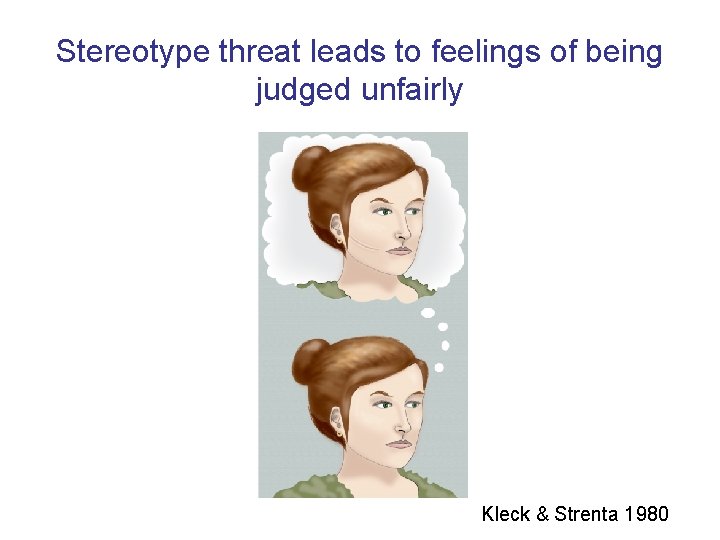
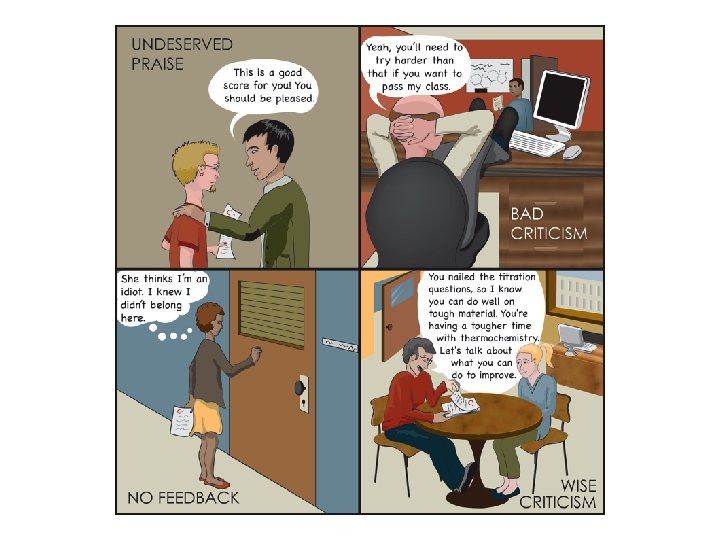
What are stereotype threat and wise criticism? Stereotype threat is the perceived risk of confirming a negative stereotype. Stereotype threat can cause underperformance Stereotype threat can lead to the belief that one is being judged unfairly Everyone can be a victim of stereotype threat Everyone has stereotypes Wise Criticism – Criticism where you explicitly let the student know they are capable of a higher level of achievement. Wise criticism mitigate the effects of stereotype threat
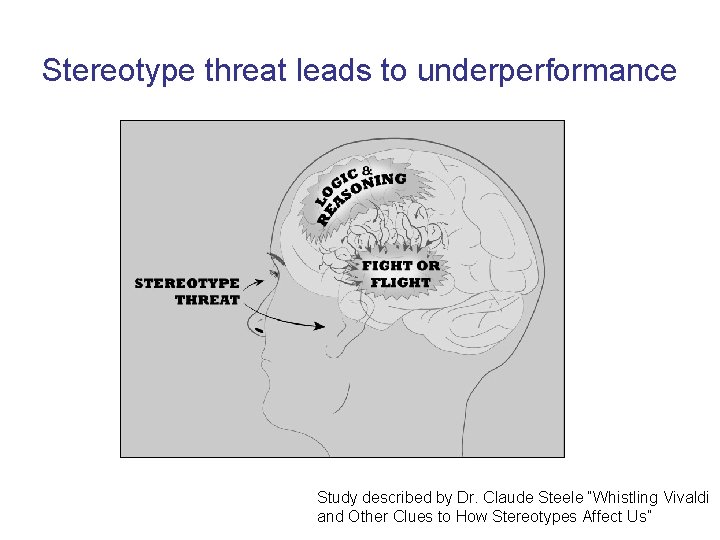
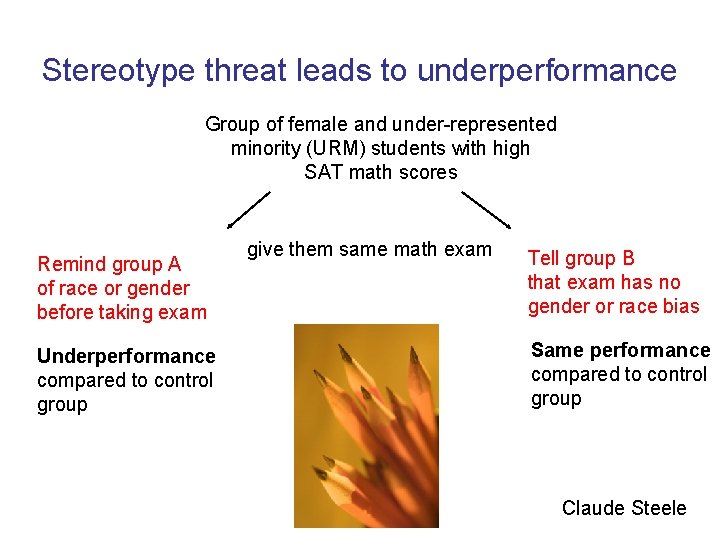
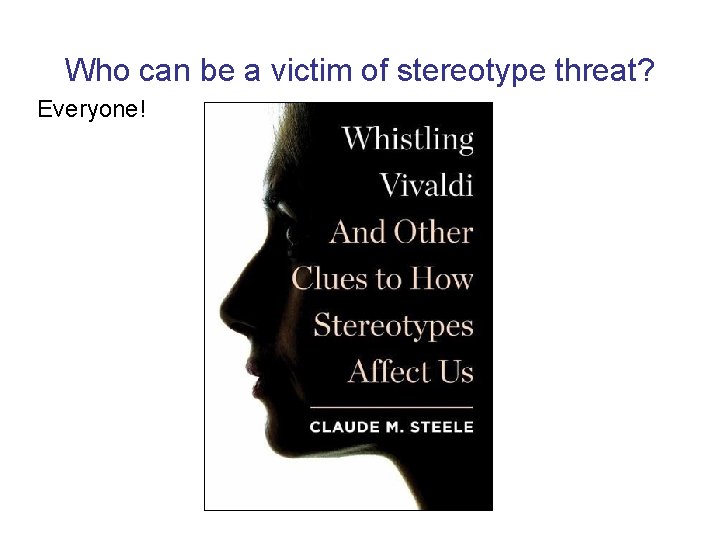
Stereotype threat leads to underperformance Study described by Dr. Claude Steele “Whistling Vivaldi and Other Clues to How Stereotypes Affect Us”
Stereotype threat leads to underperformance Group of female and under-represented minority (URM) students with high SAT math scores Remind group A of race or gender before taking exam Underperformance compared to control group give them same math exam Tell group B that exam has no gender or race bias Same performance compared to control group Claude Steele
Stereotype threat leads to feelings of being judged unfairly Kleck & Strenta 1980
Exercise Recall a time that you felt judged by some for a superficial characteristic or when you worried about confirming a negative stereotype
Who can be a victim of stereotype threat? Everyone! Studies show that the STRONGEST students are often the most affected. A top reputation can lead to Imposter syndrome. Laursen, Lucas (15 February 2008). Science Careers.
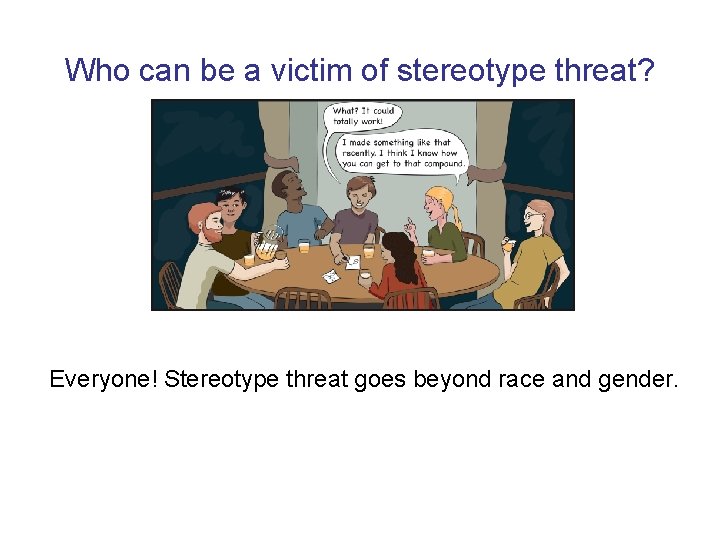
Who can be a victim of stereotype threat? Everyone! Stereotype threat goes beyond race and gender.
Who can be a victim of stereotype threat? Everyone!
Who has stereotypes? Identical CV with male name or female name Which candidate is better?
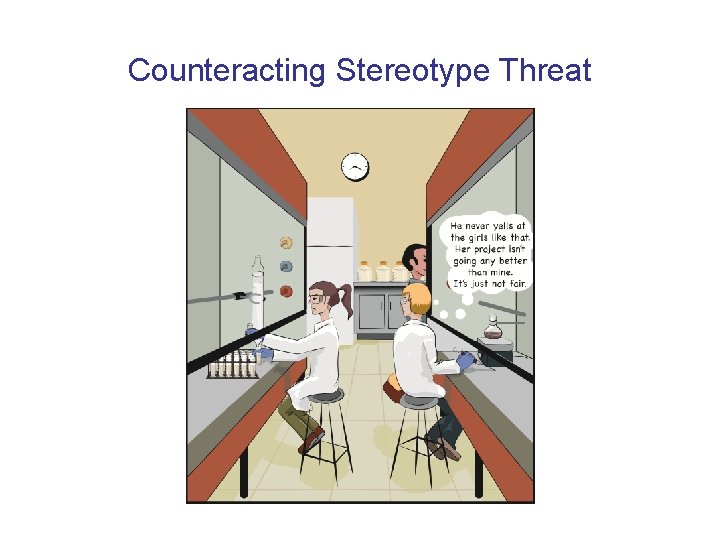
Counteracting Stereotype Threat Use wise criticism to create trust Definition of Wise criticism—criticism in which you explicitly tell the student that you think they are capable of attaining a high level of success and achievement—helps students feel less defensive and less threatened. For more information: see "But I Don't Like Beer"
Exercise Share an example of a time when you were given “constructive” criticism in a negative way. How did this affect your performance? Propose a “wise” way to phrase it. Or Share an example of a time when you were given wise criticism that helped you reach a higher level of achievement.
Counteracting Stereotype Threat Giving no feedback
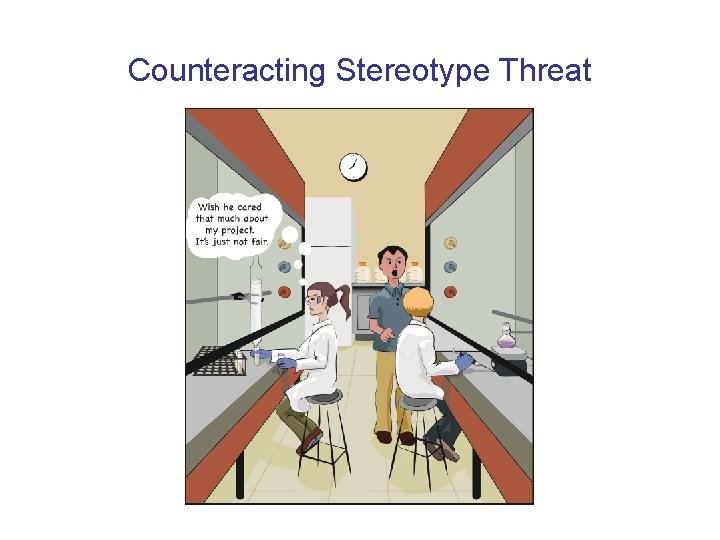
Counteracting Stereotype Threat
Counteracting Stereotype Threat
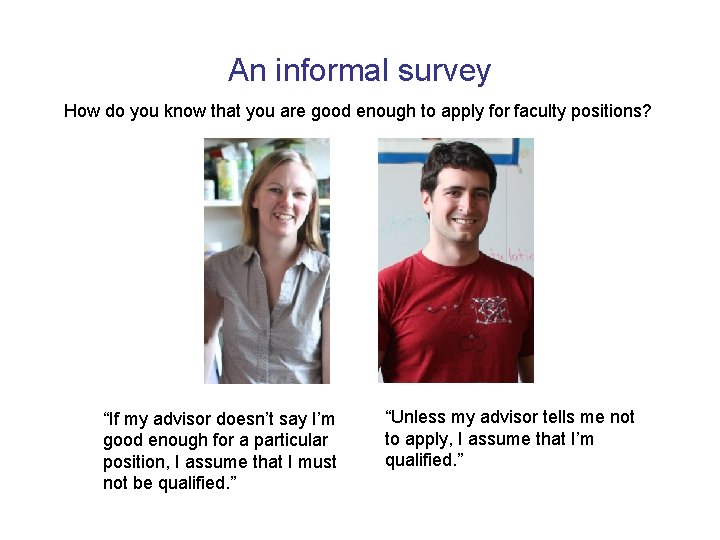
An informal survey How do you know that you are good enough to apply for faculty positions? “If my advisor doesn’t say I’m good enough for a particular position, I assume that I must not be qualified. ” “Unless my advisor tells me not to apply, I assume that I’m qualified. ”
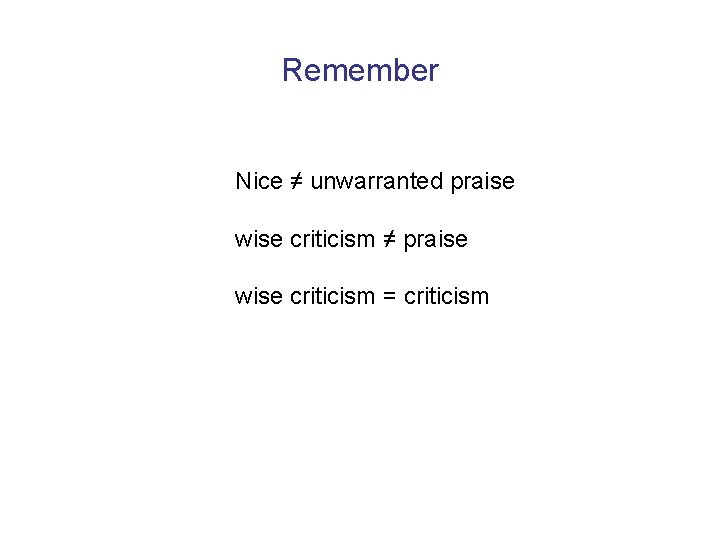
Remember Nice ≠ unwarranted praise wise criticism ≠ praise wise criticism = criticism
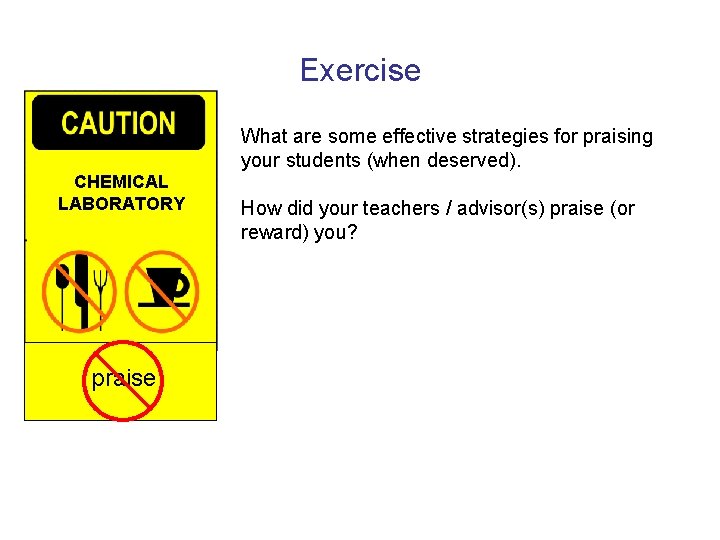
Exercise What are some effective strategies for praising your students (when deserved). CHEMICAL LABORATORY praise How did your teachers / advisor(s) praise (or reward) you?