
Addressing Performance Issues Session Objectives Discipline and the
Addressing Performance Issues
Session Objectives Discipline and the Law Investigations of Disciplinary Concerns Progressive Discipline or Performance Improvement Plan (PIP) Steps in Progressive Discipline Designing an Effective PIP Disciplinary Meetings Documentation of Disciplinary Actions
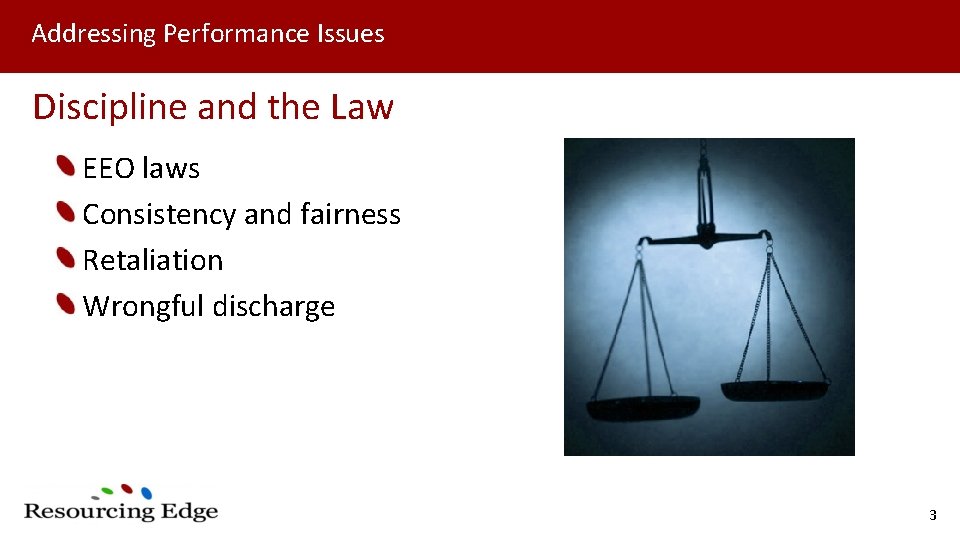
Addressing Performance Issues Discipline and the Law EEO laws Consistency and fairness Retaliation Wrongful discharge 3
Addressing Performance Issues Discipline Policy Provides legal protection Reassures “good” employees Puts potential offenders on notice Protects employees from inappropriate actions of co-workers Gives violators the opportunity to improve 4
Addressing Performance Issues Employee Handbook Informs employees of policy Advises that the policy will be enforced Allows some flexibility 5
Addressing Performance Issues Common Discipline Problems Attendance Performance or behavior Safety Equipment and materials Substance abuse Harassment, fighting, or violence 6
Addressing Performance Issues Consistency Always follow the company’s progressive discipline policy Respond and counsel all rule violations immediately Use discipline only for genuine violations Discipline all similar offenses the same way Make discipline appropriate to the offense Give the employee an opportunity to correct the problem Document discipline conversations 7
Addressing Performance Issues Investigate the situation Make sure you have all the facts Document findings Give workers the chance to explain Interview witnesses 8
Progressive Discipline OR Performance Improvement Plan (PIP) Determining and Developing Effective Plans
Addressing Performance Issues Why Progressive Discipline? Establishes expectations and predictability Applies consequences fairly and consistently Corrects inappropriate behavior and poor performance Helps rehabilitate employees with potential Reduces the risk of complaints and lawsuits 10
Performance Improvement Plan (PIP) Why Performance Improvement Plan (PIP)? Establishes a timeline for improvement To include regularly scheduled follow-ups! Sets measurable expectations Defines serious areas of concerns Acknowledgement of underperformance Documented acceptance of necessary improvement Fundamental instrument in the constructive discussion of employee performance issues 11
Addressing Performance Issues How do I determine which route to take? If after counseling the behavior/performance has not improved, what options are available? Performance Improvement Plan (PIP) - OR Progressive Discipline Progressive discipline – the process of using increasingly severe steps when an employee fails to correct a problem after being given a reasonable opportunity to do so. Performance Improvement Plan – a plan of action used to remedy behavior or performance issues and seen as a way to open dialogue to uncover the causes. 12
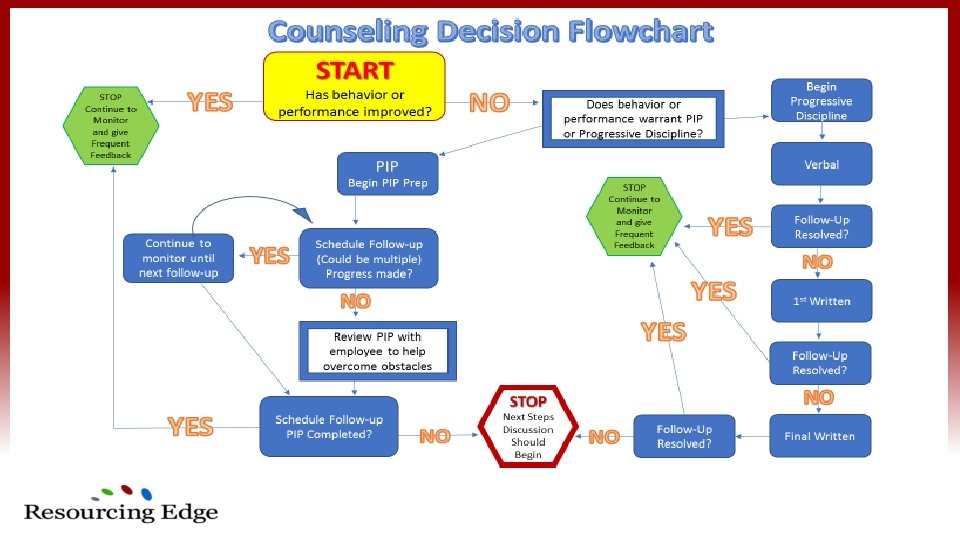
Steps of Progressive Discipline
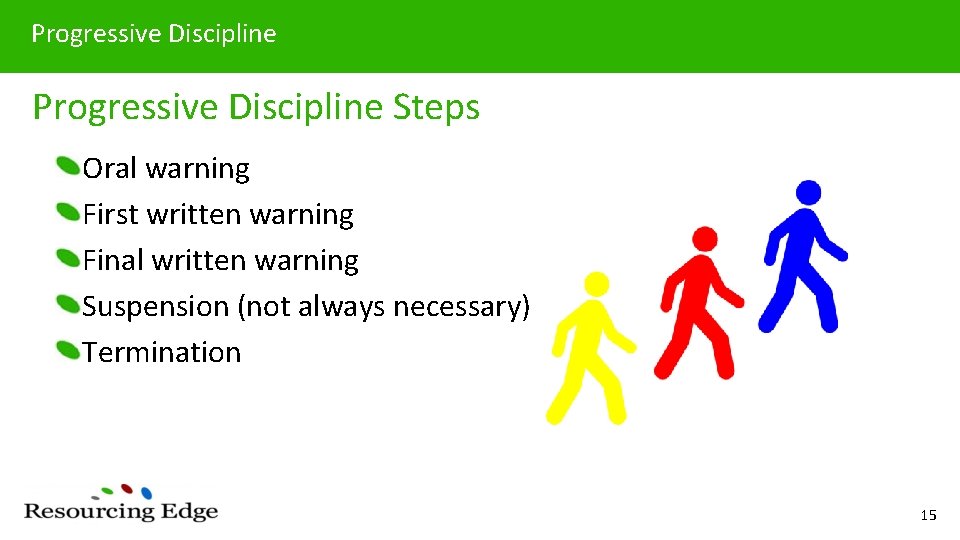
Progressive Discipline Steps Oral warning First written warning Final written warning Suspension (not always necessary) Termination 15
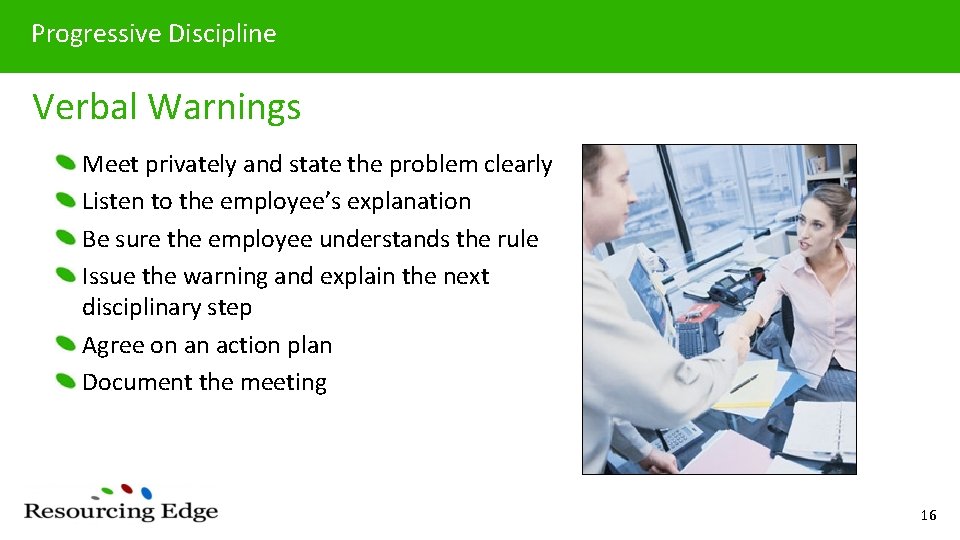
Progressive Discipline Verbal Warnings Meet privately and state the problem clearly Listen to the employee’s explanation Be sure the employee understands the rule Issue the warning and explain the next disciplinary step Agree on an action plan Document the meeting 16
Progressive Discipline Written Warnings (1 st and Final) For repeated or serious problems Get prior approval from HR State the facts clearly and objectively Include an action plan for improvement Allow employee to add their comments Sign and have the employee sign ~ notate on the form if employee refuses to sign Give the employee a copy and file a copy 17
Progressive Discipline Suspension (dependent upon severity) Confer with HR Services Meet with the employee At the client’s request HR Services will assist in conducting employee meetings Sign the forms Meet with the employee again after suspension Follow up 18
Progressive Discipline Termination Use only as a last resort or for very serious violations Consult with HR Services and investigate carefully Follow required termination procedures Meet with the employee At the client’s request HR Services will assist in conducting employee meetings Document the meeting in a signed report 19
Performance Improvement Plan (PIP) Preparation
Performance Improvement Plan (PIP) PIP Prep Define performance needing improvement Gather dates of all previous counseling/warnings re: Issues Decide length of improvement plan Does infraction justify length? Define job expectations and objectives Follow SMART criteria: ~ ~ ~ Specific Measurable Assignable Realistic Time-Related 21
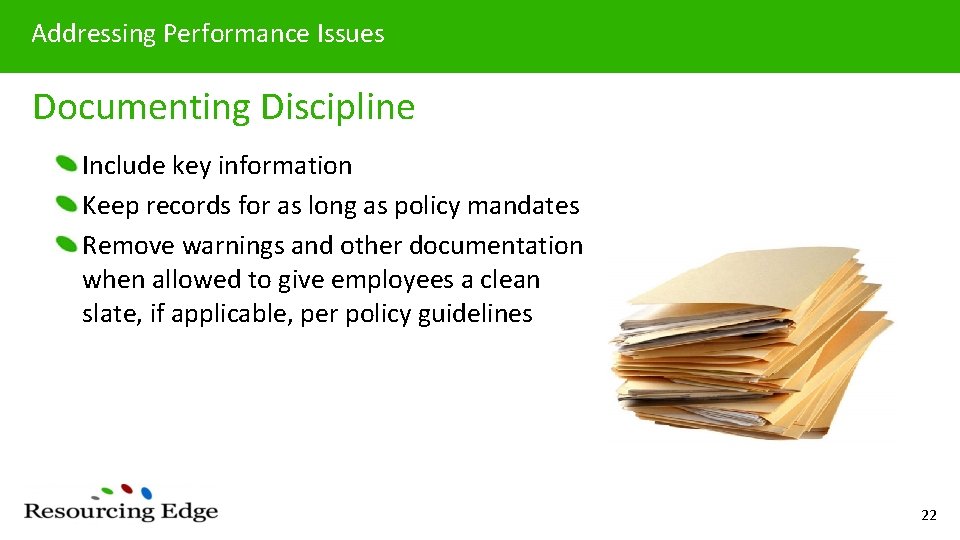
Addressing Performance Issues Documenting Discipline Include key information Keep records for as long as policy mandates Remove warnings and other documentation when allowed to give employees a clean slate, if applicable, per policy guidelines 22
Addressing Performance Issues Key Points to Remember Determining the correct course of action is an important step in the disciplinary process. Steps in progressive discipline: verbal warning, 1 st written warning, Final written warning, suspension, and termination (steps may be escalated) PIPs are used to create a written action plan to allow the employee time to improve their performance Be consistent and follow company policy Help employees correct discipline problems Protect yourself and the organization by documenting disciplinary actions Consult with HR Services to ensure you mitigate your risk in these situations 23
Questions ?
Disclaimer This webinar is designed to provide accurate and authoritative information about the subject matter covered. The publisher is not engaged in rendering legal services. This webinar provides general information only and does not constitute legal advice. No attorney-client relationship has been created. If legal advice or other expert assistance is required, the services of a competent professional should be sought. We recommend that you consult with qualified local counsel familiar with your specific situation before taking any action.
Thank You! If you have any additional questions, please don’t hesitate to let us know. We’re here to help.
- Slides: 26