
Addressing ME Challenges in Fragility Conflict and Violence

- Slides: 15
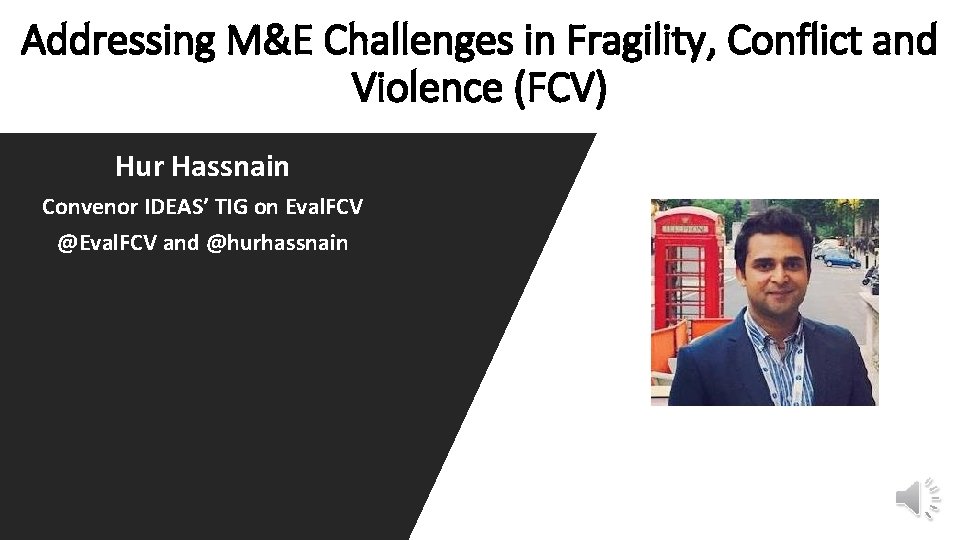
Addressing M&E Challenges in Fragility, Conflict and Violence (FCV) Hur Hassnain Convenor IDEAS’ TIG on Eval. FCV @Eval. FCV and @hurhassnain
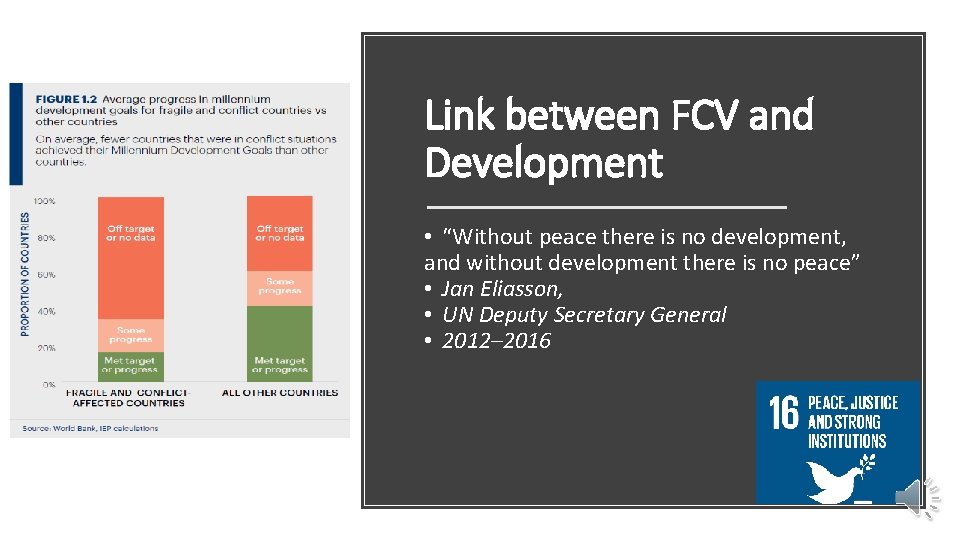
Link between FCV and Development • “Without peace there is no development, and without development there is no peace” • Jan Eliasson, • UN Deputy Secretary General • 2012– 2016
What is fragility? • OECD defines fragility as the combination of exposure to risk and insufficient coping capacity of the state, system and/or communities to manage, absorb or mitigate those risks. Fragility can lead to negative outcomes including violence, the breakdown of institutions, displacement, humanitarian crises or other emergencies (States of Fragility report, 2016: 22). • G 7+ defines “[A] state of fragility can be understood as a period of time during nationhood when sustainable socioeconomic development requires greater emphasis on complementary peacebuilding and State-building activities such as building inclusive political settlements, security, justice, jobs, good management of resources, and accountable and fair service delivery”.
Challenges of Evaluation in FCV Contexts • Defining How Change Happens • Area of focus: Fragile states or fragile situations? • Transitional nature: countries may be fragile today not tomorrow • Measuring fragility: Tools, indicators, frameworks • Trust: No one is neutral • What standard/criteria to use • How to adapt to the changing context • Understanding and distinguishing between the nuances of fragile situations: crises, fragility and conflict • What works today may not work tomorrow
• Better understand the context by consulting or conducting: • Conflict analysis • Power analysis – political analysis • Gender analysis • Be conflict-sensitive in your approach 1 - Security is paramount
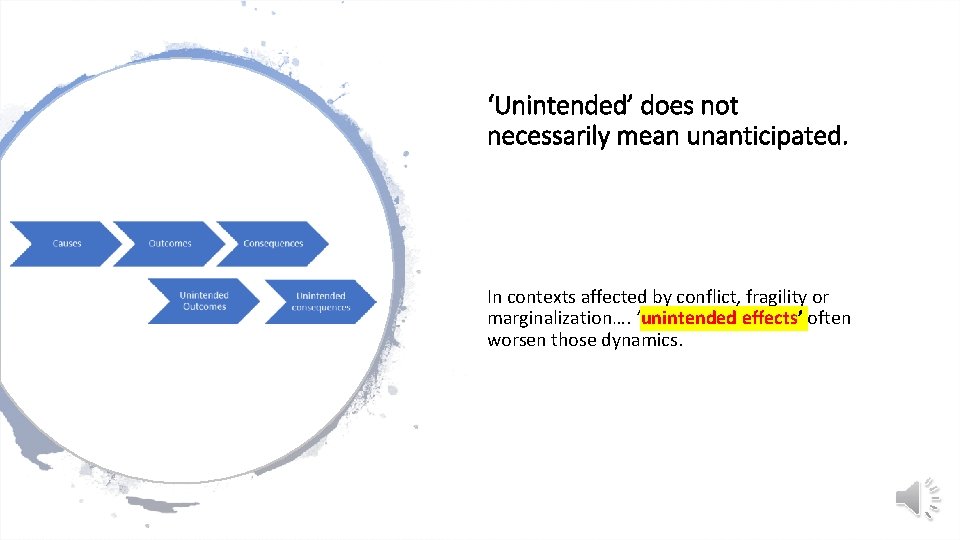
‘Unintended’ does not necessarily mean unanticipated. In contexts affected by conflict, fragility or marginalization…. ‘unintended effects’ often worsen those dynamics.
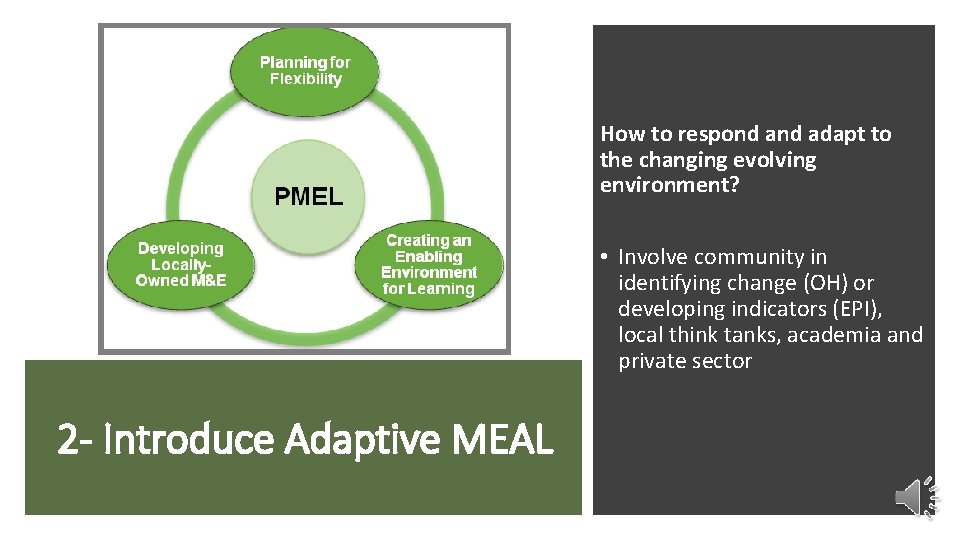
How to respond adapt to the changing evolving environment? • Involve community in identifying change (OH) or developing indicators (EPI), local think tanks, academia and private sector 2 - Introduce Adaptive MEAL
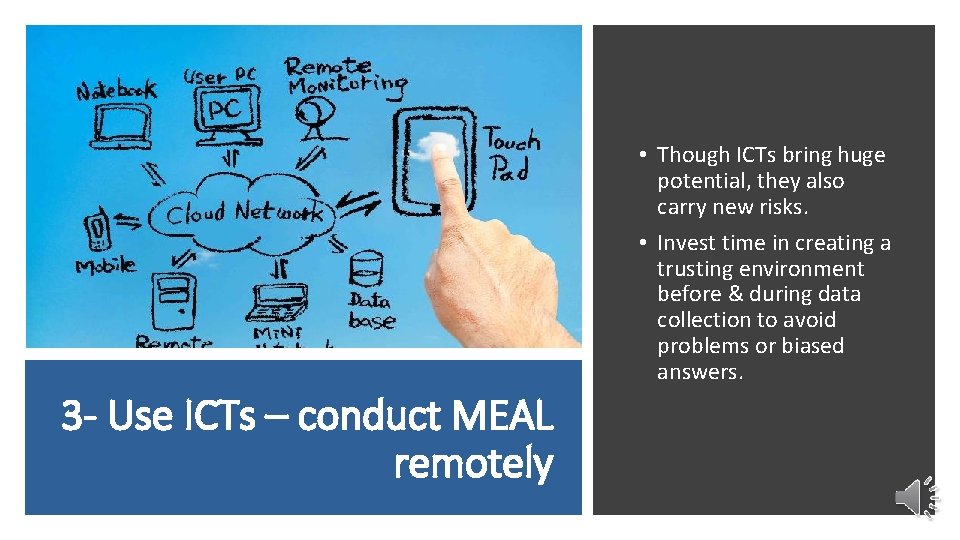
• Though ICTs bring huge potential, they also carry new risks. • Invest time in creating a trusting environment before & during data collection to avoid problems or biased answers. 3 - Use ICTs – conduct MEAL remotely
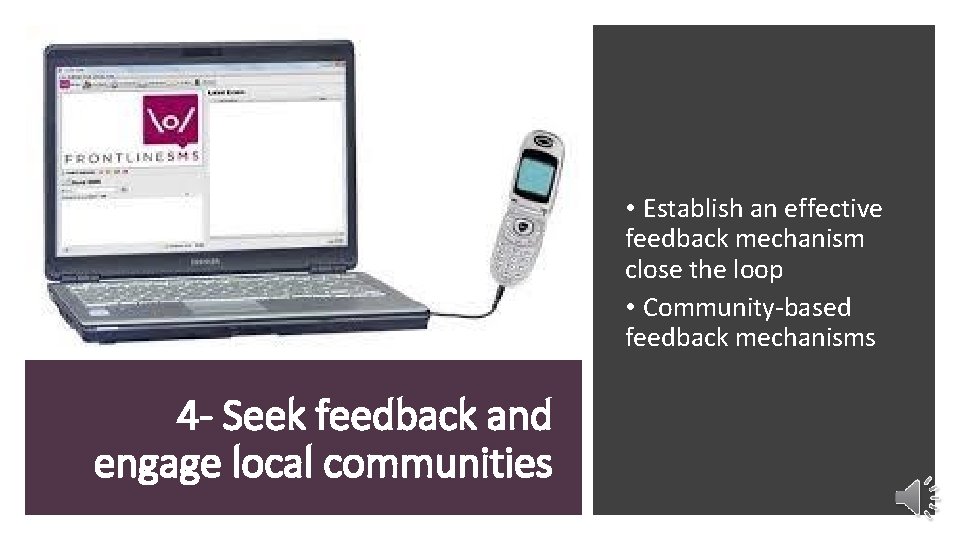
• Establish an effective feedback mechanism close the loop • Community-based feedback mechanisms 4 - Seek feedback and engage local communities
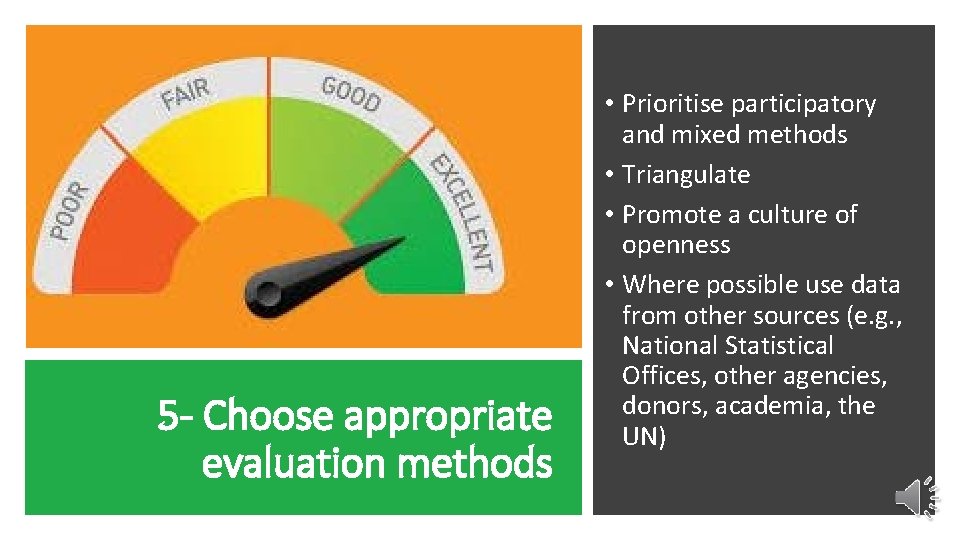
5 - Choose appropriate evaluation methods • Prioritise participatory and mixed methods • Triangulate • Promote a culture of openness • Where possible use data from other sources (e. g. , National Statistical Offices, other agencies, donors, academia, the UN)
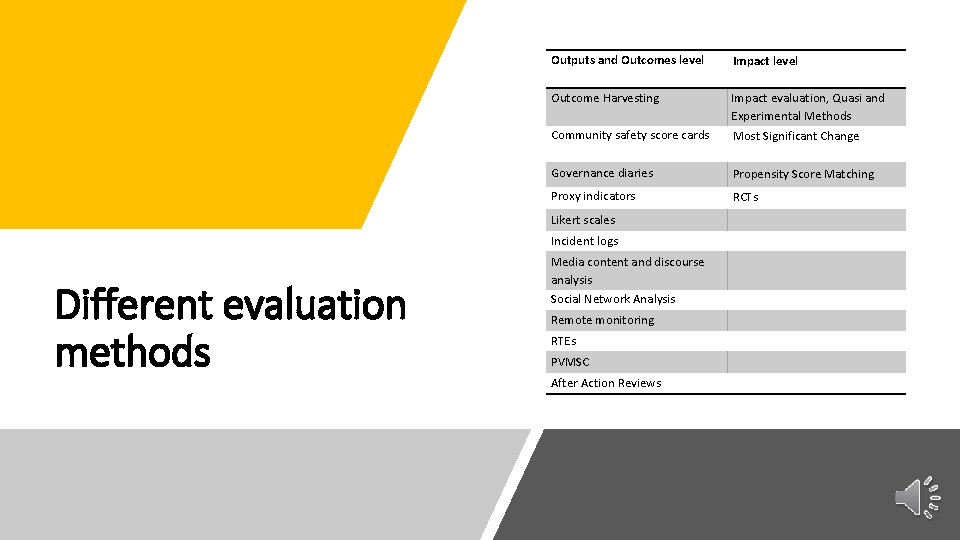
Outputs and Outcomes level Impact level Outcome Harvesting Impact evaluation, Quasi and Experimental Methods Community safety score cards Most Significant Change Governance diaries Propensity Score Matching Proxy indicators RCTs Likert scales Incident logs Different evaluation methods Media content and discourse analysis Social Network Analysis Remote monitoring RTEs PVMSC After Action Reviews
‘This validation workshop was special, since it was the first time after a survey that the evaluation team shared the results with us’. 6 - Close the evaluation learning loop • Online interactive Sprockler Report • Evaluation Report • Videos • Blogposts • Podcasts
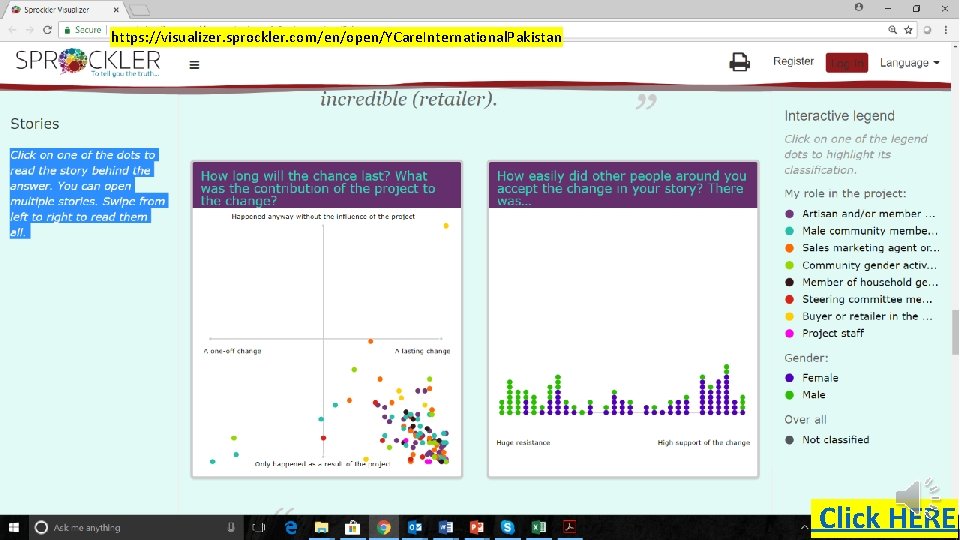
Sprockler https: //visualizer. sprockler. com/en/open/YCare. International. Pakistan Click HERE
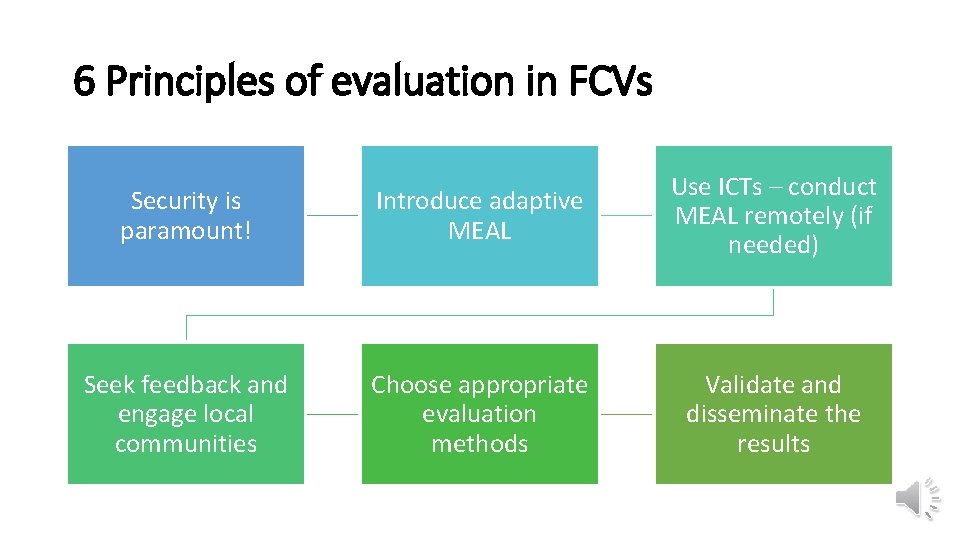
6 Principles of evaluation in FCVs Security is paramount! Introduce adaptive MEAL Use ICTs – conduct MEAL remotely (if needed) Seek feedback and engage local communities Choose appropriate evaluation methods Validate and disseminate the results
ch u o t n get i o t e l fre e n e o f i t e a s. com l i Plea re inform a m ot o for m snain@H s hurha Thank you