
Addressing Bullying By Debra Miller Types of Bullying
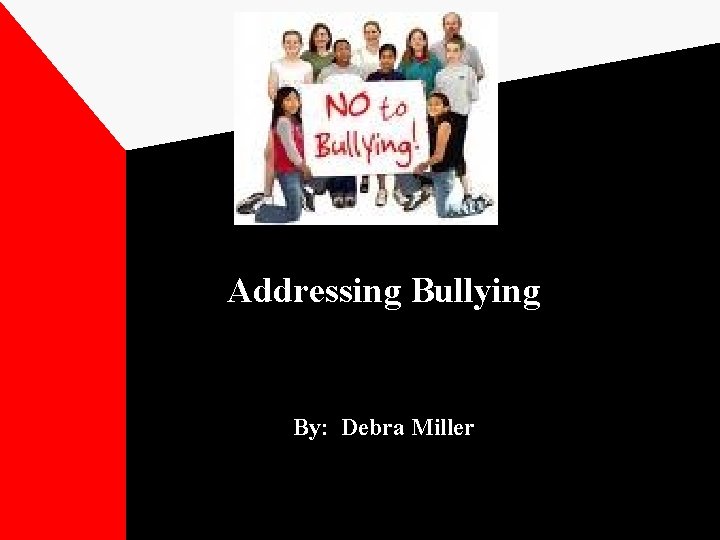
Addressing Bullying By: Debra Miller
Types of Bullying There are 4 types of bullying According to the Merriam-Webster dictionary, bully means: "One who is habitually cruel to others who are weaker. " Basically, bullying is when someone is being mean to others who don't have as much power as them. There are four forms of bullying. http: //www. bullyfreekealing. synthasite. com/types. php

Physical: hitting, kicking, pinching, punching, scratching, spitting or any other form of physical attack. Damage to or taking someone else’s belongings may also constitute as physical bullying.
Verbal 2) Verbal: Name-calling, insulting, making racist, sexist or homophobic jokes, remarks or teasing, using sexually suggestive or abusive language, offensive remarks. This is the most common form of bullying.
Cyber 3) Cyber: any type of bullying that is carried out by electronic medium such as : • Text message bullying • Picture/video clip bullying via mobile phone cameras • Phone call bullying via mobile phones • E-mail bullying • Chat-room bullying • Bullying through Instant Messaging (IM) • Bullying via websites
Emotional 4) Emotional: spreading nasty stories about someone, exclusion from social groups, being made the subject of malicious rumors.
What Parents, Teachers and Administrators Can Do • Initiate conversations with students about bullying. • Be prepared to intervene. • Don’t expect students to solve things themselves. • Encourage students to report incidents of bullying. • Express strong disapproval of bullying when it occurs or comes up in conversation. • Work with students on developing assertiveness and conflict resolution skills. • Focus on developing empathy and respect for others. • Avoid physical forms of discipline, such as spanking. • Keep a log of bullying incidents. • Deal with bullying incidents consistently, in a manner appropriate to the situation.
What Schools Can Do to Prevent Bullying • Assess school’s needs and goals. • Develop an anti-bullying policy. • Provide training for teachers, administrators, and other school staff. • Involve parents. • Identify resources for bullies, victims, and families. • Provide increased supervision in areas where bullying tends to occur. • Integrate anti-bullying themes and activities into curriculum.
- Slides: 8