
Addressing ACEs in Home Visiting Using NEAR Science




![Staff Outcomes/Reflections "I'm more than just the child's teacher" � "[Staff are] seeing their](https://slidetodoc.com/presentation_image_h2/621174fd5a300a45889e064219634456/image-39.jpg "Staff Outcomes/Reflections \"I'm more than just the child's teacher\" � \"[Staff are] seeing their")
- Slides: 46
Addressing ACEs in Home Visiting Using NEAR Science Model HOW IMPLEMENTING THIS APPROACH IS LEADING TO BIG CULTURE CHANGE FOR ONE HOME VISITING PROGRAM
� Introductions � Rebecca Miller, LMFT � Mental Health Manager at Reach Dane WELCOME! We're Glad You're Here! � Infant Mental Health Consultant � Lisa Seidl-Gafner, MSW, APSW � Early Head Start Home-Based Manager at Reach Dane � HOUSEKEEPING (bathroom location, brain breaks, take care of yourself!)
Who is here today ? • If you feel comfortable, please share at your tables/rows • Name • Employer name, location • Are you currently implementing ACEs in your program? If so, what model are you using to support this process? • Any particular hope from the presentation today? Can we have a few people share what you hope to gain from this presentation today?
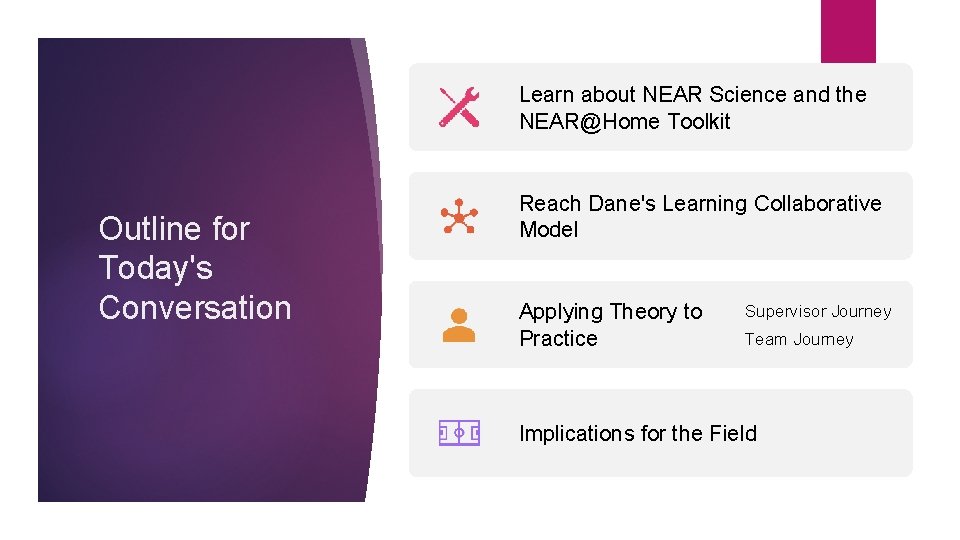
Learn about NEAR Science and the NEAR@Home Toolkit Outline for Today's Conversation Reach Dane's Learning Collaborative Model Applying Theory to Practice Supervisor Journey Team Journey Implications for the Field
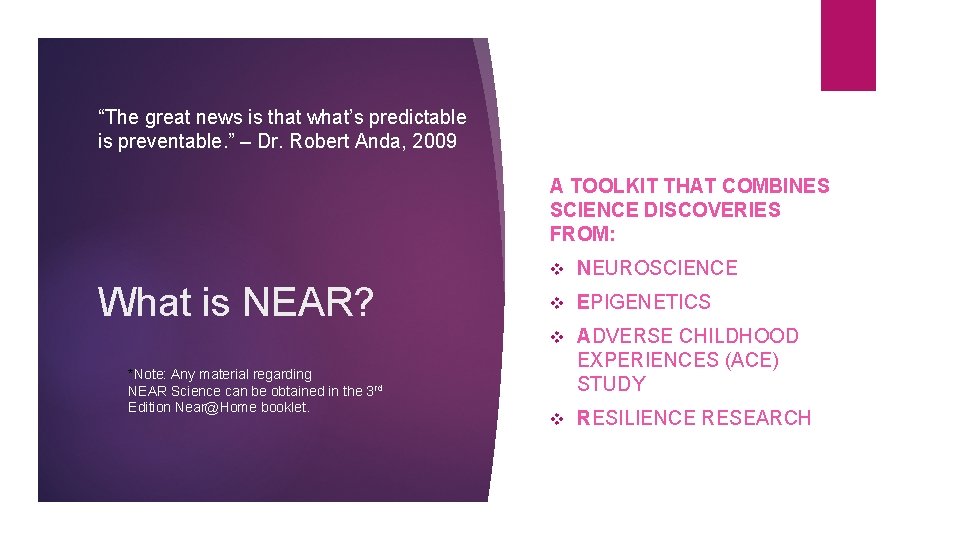
“The great news is that what’s predictable is preventable. ” – Dr. Robert Anda, 2009 A TOOLKIT THAT COMBINES SCIENCE DISCOVERIES FROM: What is NEAR? *Note: Any material regarding NEAR Science can be obtained in the 3 rd Edition Near@Home booklet. v NEUROSCIENCE v EPIGENETICS v ADVERSE CHILDHOOD EXPERIENCES (ACE) STUDY v RESILIENCE RESEARCH
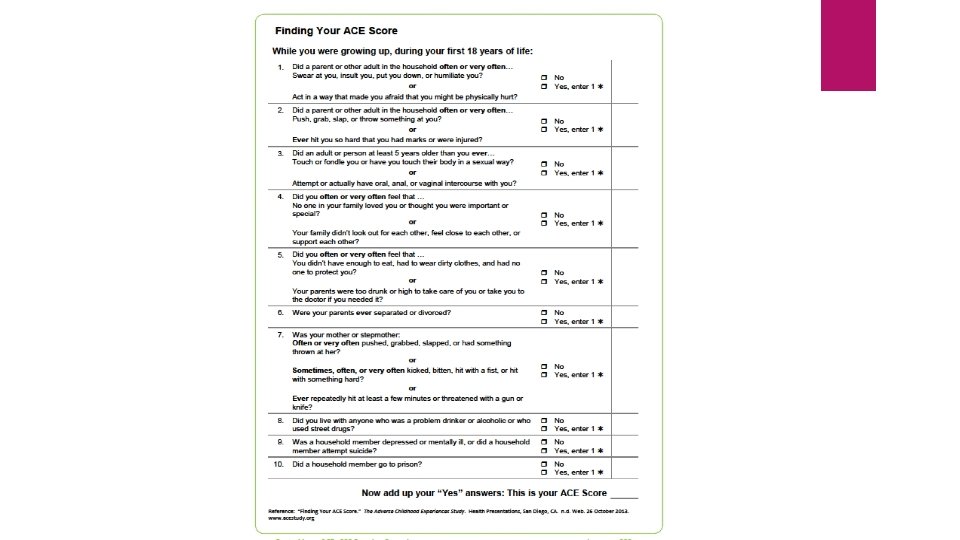
History of NEAR@Home THE ADVERSE CHILDHOOD EXPERIENCES STUDY (ACE STUDY) IS THE LARGEST EPIDEMIOLOGIC STUDY OF ITS KIND AND REVEALS THE MOST POWERFUL DETERMINANT OF THE PUBLIC'S HEALTH
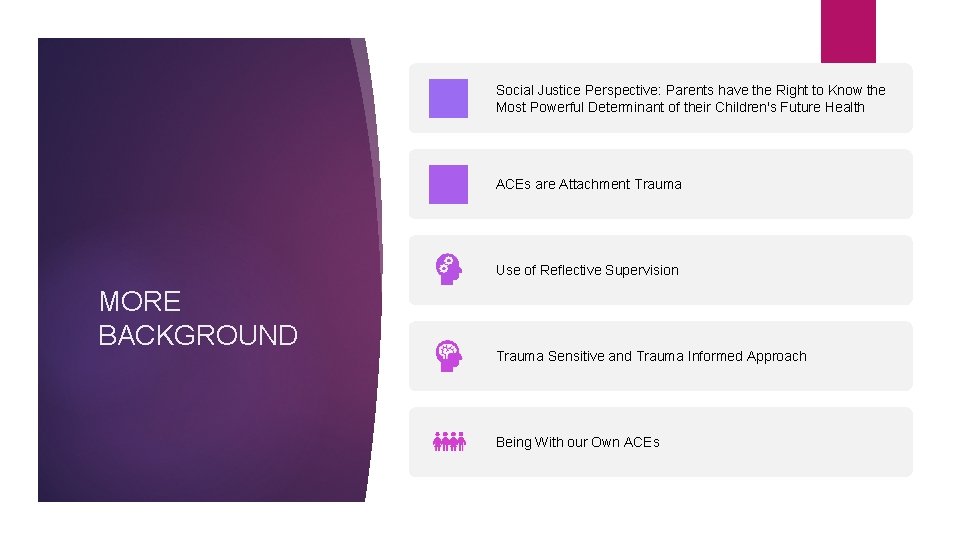
Social Justice Perspective: Parents have the Right to Know the Most Powerful Determinant of their Children's Future Health ACEs are Attachment Trauma Use of Reflective Supervision MORE BACKGROUND Trauma Sensitive and Trauma Informed Approach Being With our Own ACEs
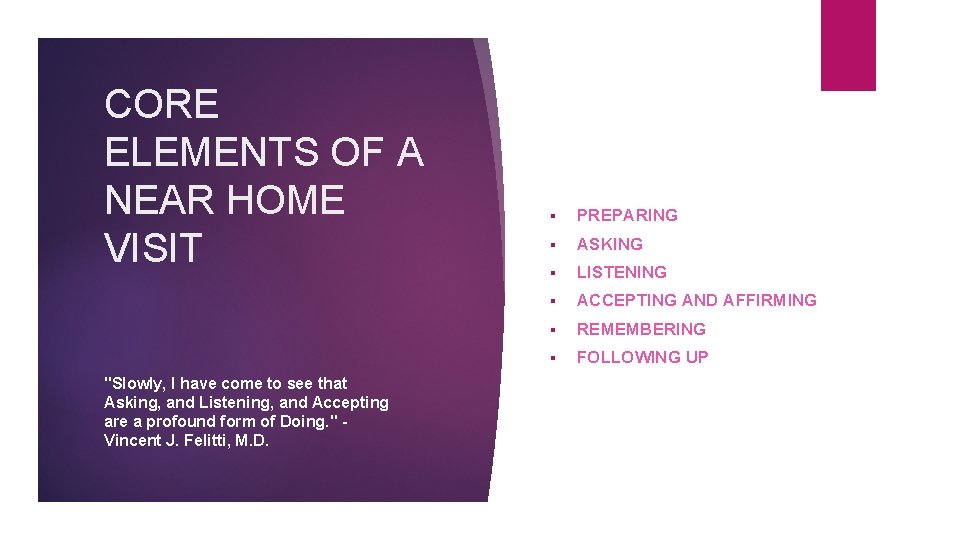
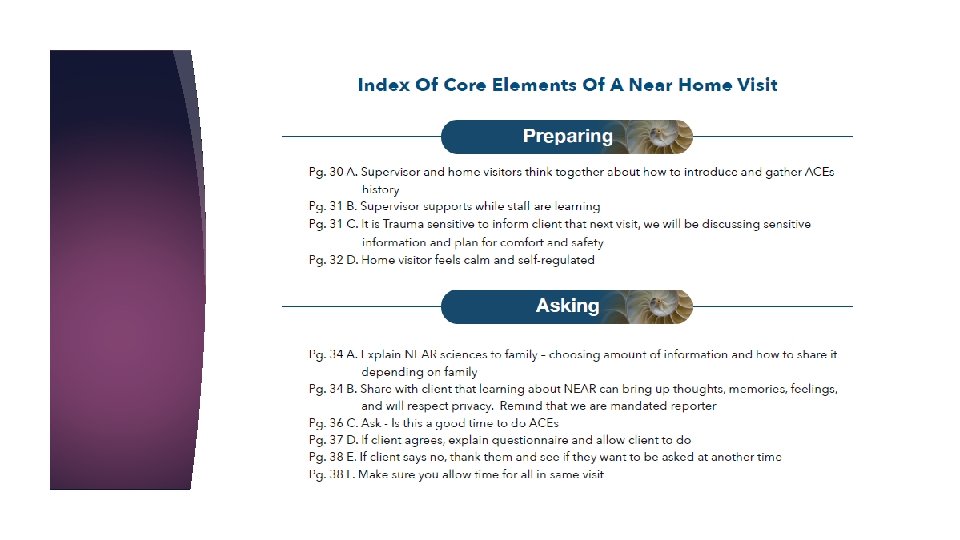
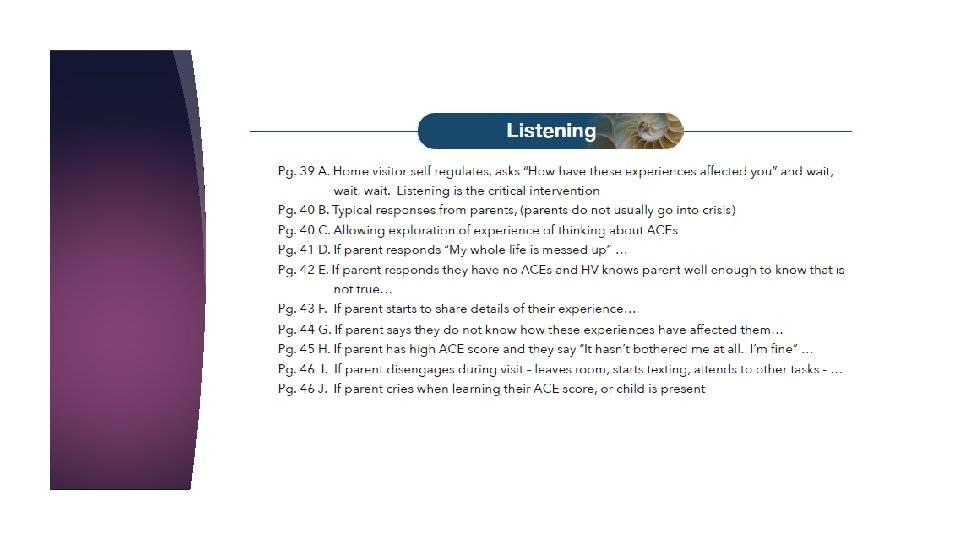
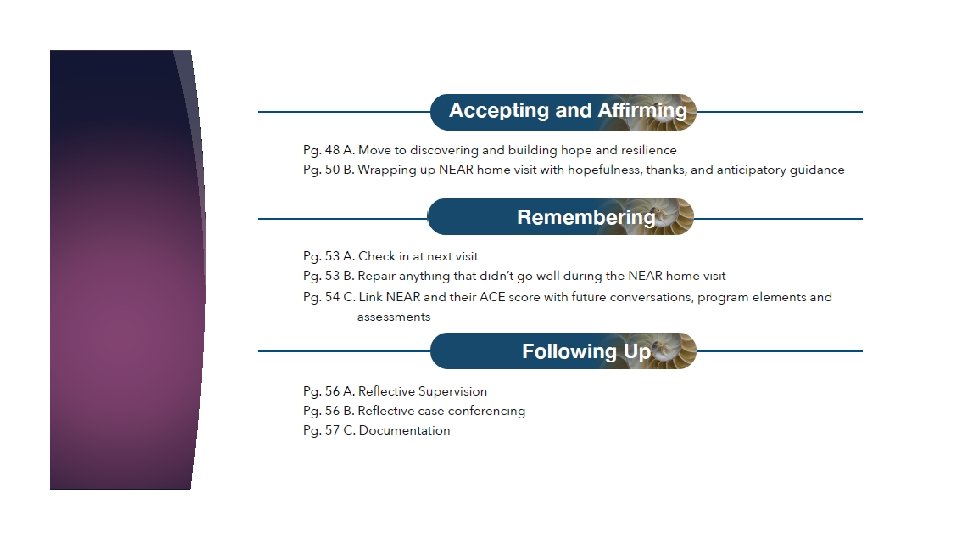
CORE ELEMENTS OF A NEAR HOME VISIT "Slowly, I have come to see that Asking, and Listening, and Accepting are a profound form of Doing. " Vincent J. Felitti, M. D. § PREPARING § ASKING § LISTENING § ACCEPTING AND AFFIRMING § REMEMBERING § FOLLOWING UP
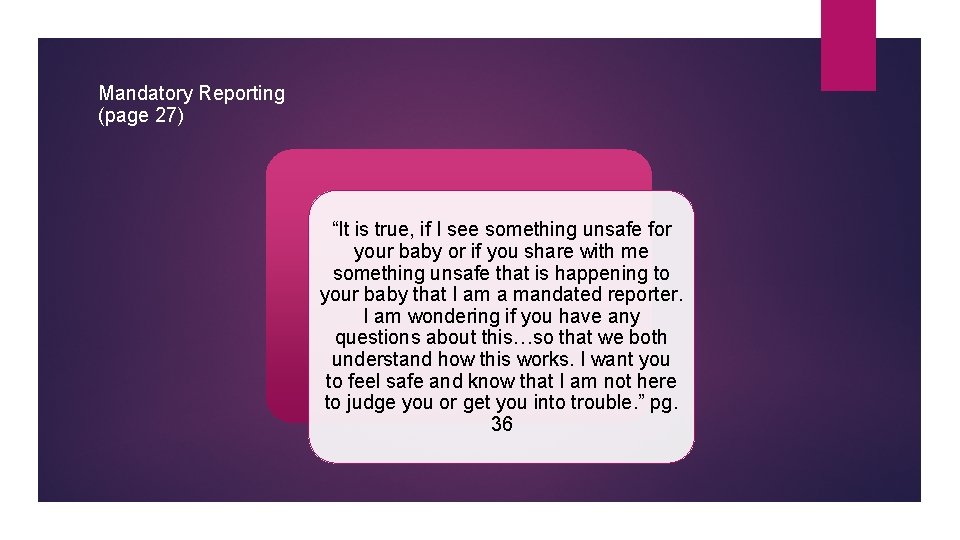
Mandatory Reporting (page 27) “It is true, if I see something unsafe for your baby or if you share with me something unsafe that is happening to your baby that I am a mandated reporter. I am wondering if you have any questions about this…so that we both understand how this works. I want you to feel safe and know that I am not here to judge you or get you into trouble. ” pg. 36
Listening Considerations � Understanding a parent's adverse childhood experience takes nothing away from understanding her resilience. It puts into perspective how spectacularly resilient she may be, the strengths she is building on for the next phase of her life and opens the space to talk about the life she wants for her family and her new baby" -Laura Porter
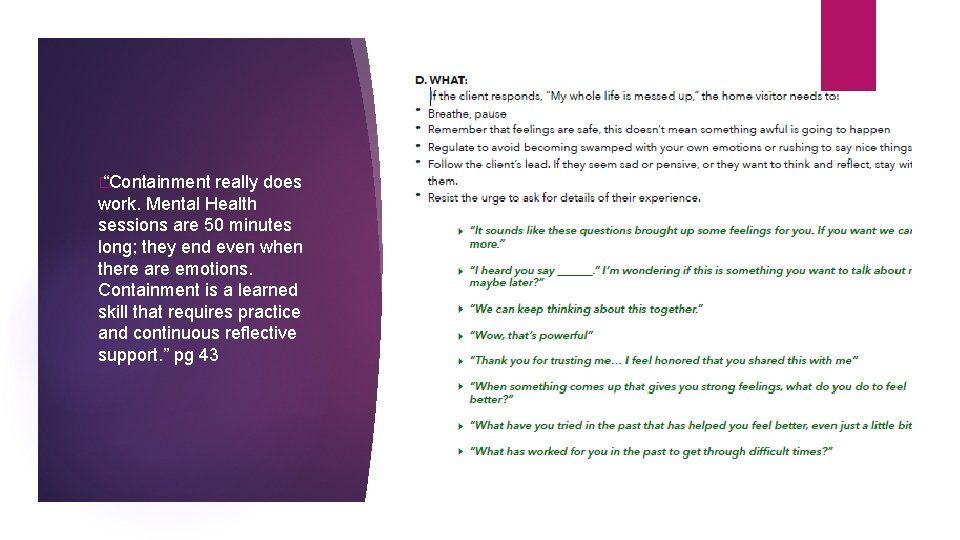
� “Containment really does work. Mental Health sessions are 50 minutes long; they end even when there are emotions. Containment is a learned skill that requires practice and continuous reflective support. ” pg 43
Brain Break � Regulation Strategy � Feeling my Feet C
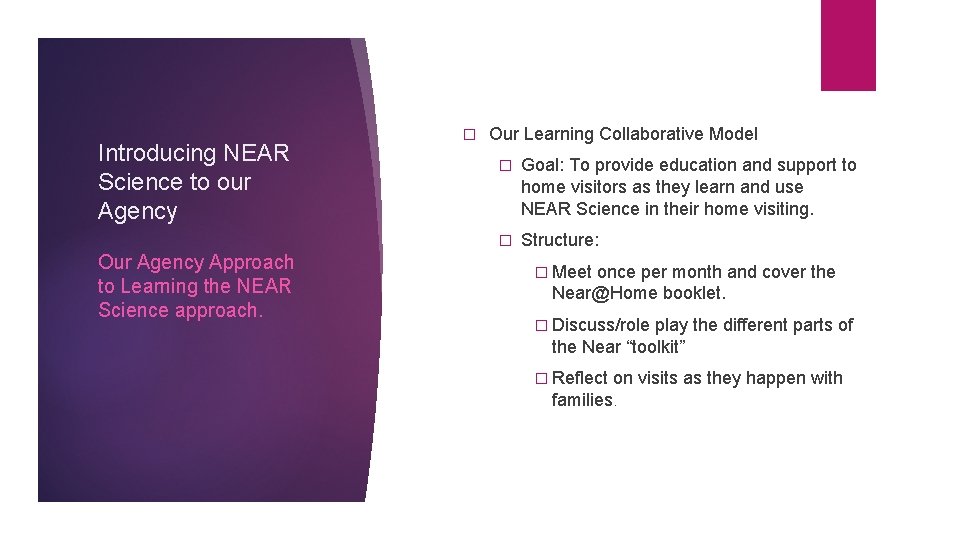
Introducing NEAR Science to our Agency Our Agency Approach to Learning the NEAR Science approach. � Our Learning Collaborative Model � Goal: To provide education and support to home visitors as they learn and use NEAR Science in their home visiting. � Structure: � Meet once per month and cover the Near@Home booklet. � Discuss/role play the different parts of the Near “toolkit” � Reflect on visits as they happen with families.
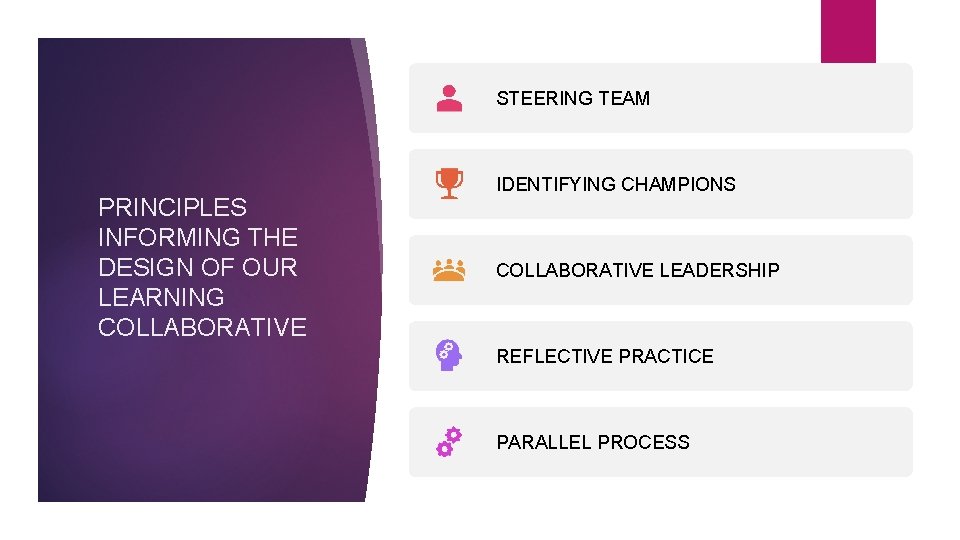
STEERING TEAM PRINCIPLES INFORMING THE DESIGN OF OUR LEARNING COLLABORATIVE IDENTIFYING CHAMPIONS COLLABORATIVE LEADERSHIP REFLECTIVE PRACTICE PARALLEL PROCESS
Nuts and Bolts of Reach Dane’s Near@Home Training We had a 4 hour “kick off” training lead by Rebecca. We handed out the Near@Home booklet and covered some of the nuts and bolts of the collaborate which included… v v v We will meet monthly for 2 hours. We will meet for 12 months. We will cover the contents of the Near@Home. We will encourage reflection and discussion. We will converse about how first visits are going. We will create a safe and supportive environment.
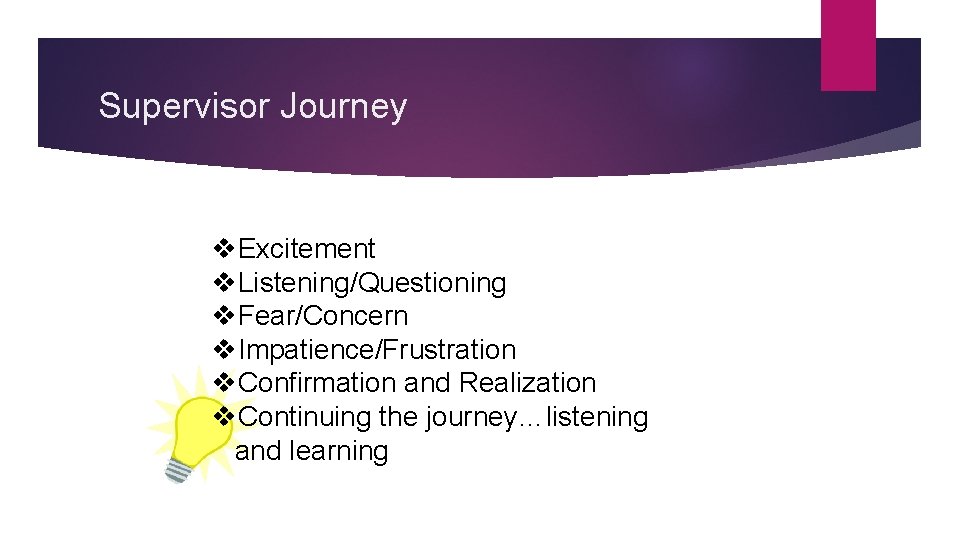
Supervisor Journey v. Excitement v. Listening/Questioning v. Fear/Concern v. Impatience/Frustration v. Confirmation and Realization v. Continuing the journey…listening and learning
Excitement
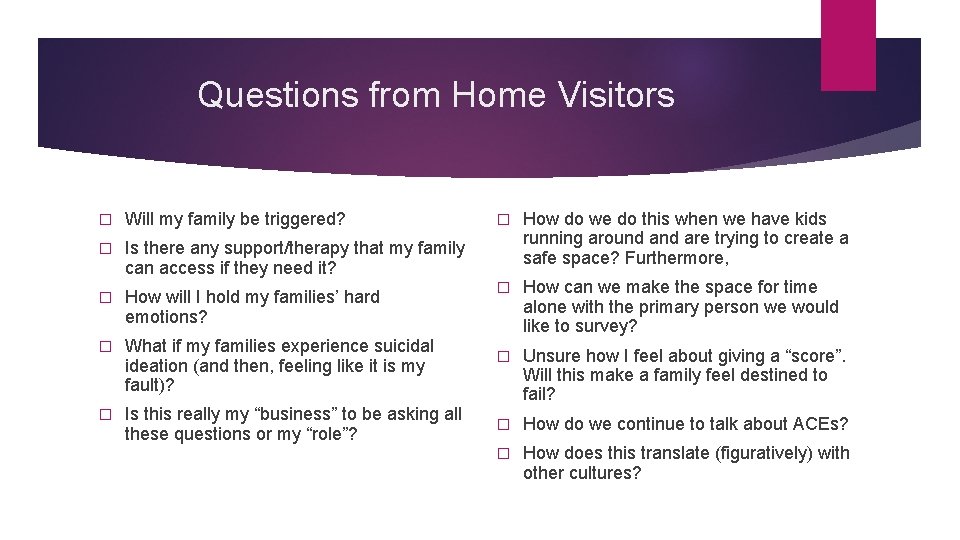
Questions from Home Visitors � Will my family be triggered? � Is there any support/therapy that my family can access if they need it? � How will I hold my families’ hard emotions? � What if my families experience suicidal ideation (and then, feeling like it is my fault)? � Is this really my “business” to be asking all these questions or my “role”? � How do we do this when we have kids running around are trying to create a safe space? Furthermore, � How can we make the space for time alone with the primary person we would like to survey? � Unsure how I feel about giving a “score”. Will this make a family feel destined to fail? � How do we continue to talk about ACEs? � How does this translate (figuratively) with other cultures?
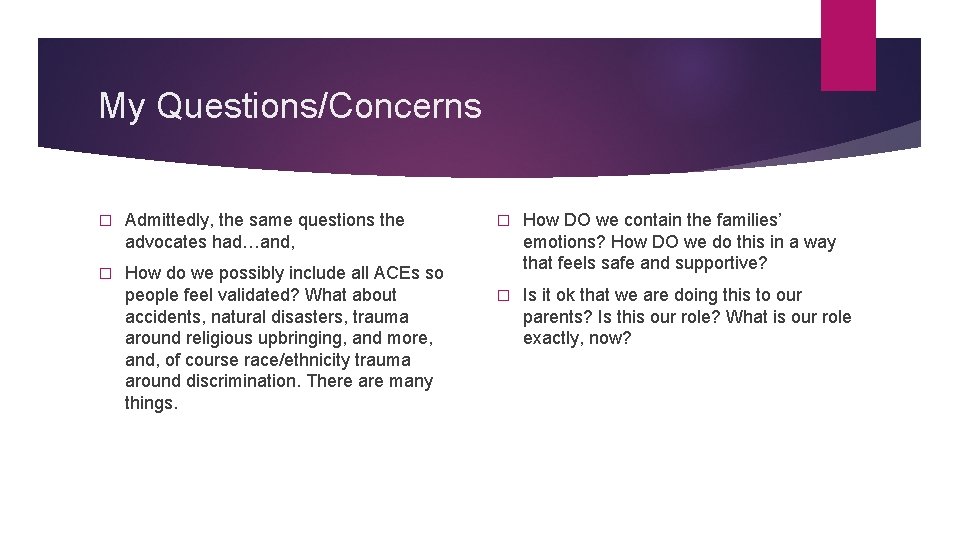
My Questions/Concerns � Admittedly, the same questions the advocates had…and, � How do we possibly include all ACEs so people feel validated? What about accidents, natural disasters, trauma around religious upbringing, and more, and, of course race/ethnicity trauma around discrimination. There are many things. � How DO we contain the families’ emotions? How DO we do this in a way that feels safe and supportive? � Is it ok that we are doing this to our parents? Is this our role? What is our role exactly, now?
Frustration This Photo by Unknown Author is licensed under CC BY-SA-NC
Can we just move forward? ! This Photo by Unknown Author is liensed under CC BY-NC
Is it ok that we are doing this to our parents? (re: ACE survey) � What is inaccurate about this concern/question?
“The world is full of magic things, patiently waiting for our senses to grow sharper. ” ― W. B. Yeats The start of this journey was not the magical experience I envisioned.
What we are not: Role of Home Visitors “What is shareable is bearable” – Daniel Siegel “We are not therapists. ”
“ MANY PEOLE THINK THAT IF A PARENT IS IN THERAPY THAT THEIR THERAPIST IS TALKING ABOUT TRAUMA AND ACES – SO WHY DO IT ON A HOME VISIT…? TRUE, A THERAPIST IS HOPEFULLY ADDRESSING TRAUMA, BUT THESE CONVERSATIONS ARE OFTEN LIMITED TO THE VERY SPECIFIC EVENTS THAT A CLIENT BRINGS UP ON THEIR OWN…HOME VISITORS CANNOT ASSUME THESE PIVOTAL CONVERSATIONS ARE HAPPENING…” ” EARLY CHILDHOOD MENTAL HEALTH THERAPIST
“ “Slowly, I have come to see that Asking, and Listening, and Accepting are a profound form of Doing. ” VINCENT J. FELITTI, M. D. Near Sciences Home Visit/ACE survey ”
“ Social Justice Perspective: Parents have the right to know the most powerful determinant of their children’s future health. ” NEAR@HOME ” Are we as worried about our client’s feelings as we are about our own discomfort discussing this information?
“Shame can increase the risk of intergenerational transmission because it reinforces one of the pathways for transmission: avoidance. Near@Home pg. 12
“When we identify where our privilege intersects with somebody else’s oppression, we’ll find our opportunities to make real change. ” Ijeoma Oluo, So You Want to Talk About Race FOR PEOPLE OF COLOR, CAN DISCRIMINATION BE OVERLOOKED WITHIN THE CONTEXT OF ADVERSE CHILDHOOD EXPERIENCES?
“ My 5 -year-old daughter came home from school and asked, is brown skin bad? HOME VISITOR ” ACEs and Racism: I believe, Discrimination as a direct result of systemic racism and a nation built on white supremacy, has direct impacts on people of color. This can have traumatic impacts on a child.
Race, Culture, Ethnicity and Near Home Visits
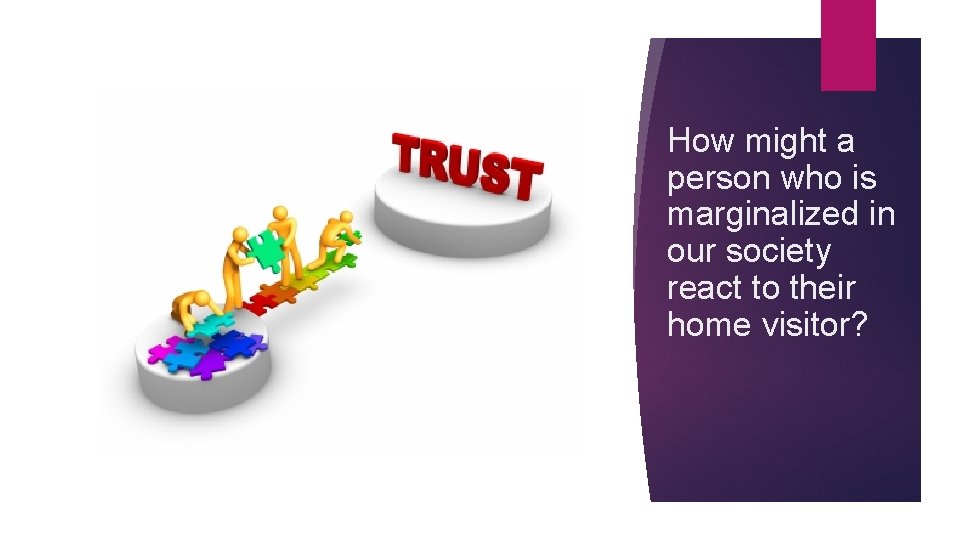
How might a person who is marginalized in our society react to their home visitor?
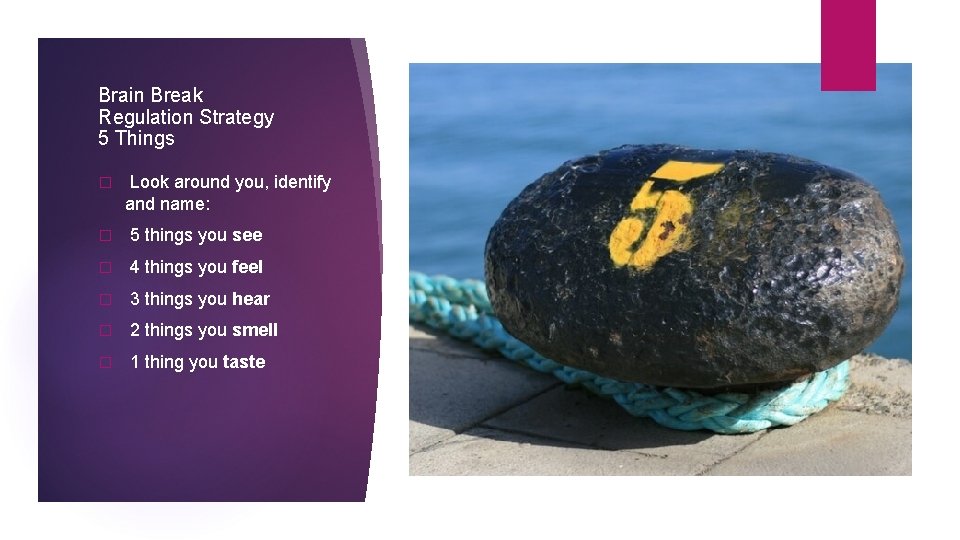
Brain Break Regulation Strategy 5 Things � Look around you, identify and name: � 5 things you see � 4 things you feel � 3 things you hear � 2 things you smell � 1 thing you taste
Staff Outcomes/Reflections "I'm more than just the child's teacher" � Reinterpreting the Role � "The perspective of the responsibilities of my role changed. I have a duty to ensure trauma informed practices are consistently an expectation for myself and other staff. This means: � Holding myself accountable for knowing I can be a change agent for individuals we serve that our more vulnerable to ACE’s. � Helping families understand the positives to learning about their ACE’s - knowing the importance of listening and accepting what happened to them in their past that could be current barriers. � Empowering individuals to understand they hold the power to reverse the effects of trauma and prevent ACE’s for their children" - a Home Visitor
Staff Outcomes/Reflections "I'm more than just the child's teacher" � "[Staff are] seeing their role as less of a “teacher” and interventionist with the baby or someone who emotionally supports the parents…instead more of someone who supports the parent-child relationship. I am hearing more dyadic thinking. They are finding those ports of entry into helping a parent connect their story with their parenting. " -a program Mental Health Consultant
Staff Outcomes/Reflections "How you are IS as important as what you do? " � � A journey of self-discovery � Noticing feelings within context of work with families and aware of potential impact � Intentional Self-Regulation � Using Collaborative to make meaning of those thoughts and feelings Improved Practice � Increased use of self and increased empathy � Thinking holistically and supporting families to make connections � Incresed use of Containment
NEAR@Home as a Platform for Better Integrating IMH Concepts into Program Manual provided structure to make concepts accessible Learning Collaborative as an Intentional Mirror to their work
Next Steps for Implementation � � Keeping it present: � Group discussion � Reflective supervision Continuing the conversation of equity and social justice.
What are Implications for the Field of Early Childhood and/or Home Visiting?
� EHS Family Advocate Team of Reach Dane � Acknowledgments For their gracious vulnerability in allowing us to film and/or share their quotes and sentiments: Kalpana Rizal, Maria Luisa Sanchez-Segura, Andrea Dwyer � Jen Bailey- Reach Dane Executive Director � Amy Selenske- EHS Director � Janna Hack and Katie Fischer- IMH Consultants � Jen Patton and Darla Krieger- EHS Managers � Kelsey Greenwood- filmography
Thank you! � Please contact us: � Rebecca Miller, rmiller@reachdane. org � Lisa Seidl-Gafner, lseidl-gafner@reachdane. org