
Additives Chapter 17 Food Processing and Labelling What
Additives Chapter 17: Food Processing and Labelling
What I Will Learn • To explain what an additive is and why they are used in food processing
What are Additives? • Additives are substances put into food during processing in order to improve it in some way. • They may be natural, e. g. spices or herbs, or artificial, e. g. tartrazine, which is a yellow colour in sweets and soft drinks. • Additives must be tested for safety before they are used in food. Once passed, they are given an ‘E’ number. The number means that the additive has been passed by EU law. • The amounts used in food are strictly controlled. • If a substance enters a food indirectly, e. g. from packaging, air or careless handling, it is known as a contaminant.
Additives on Food Labels Food labels must state: • The type of additive, e. g. colouring, flavouring or preservative • The chemical name of the additive or its E number The use of food additives must not mislead the consumer with issues related to the nature, freshness and quality of ingredients used, and must be of benefit to the consumer.
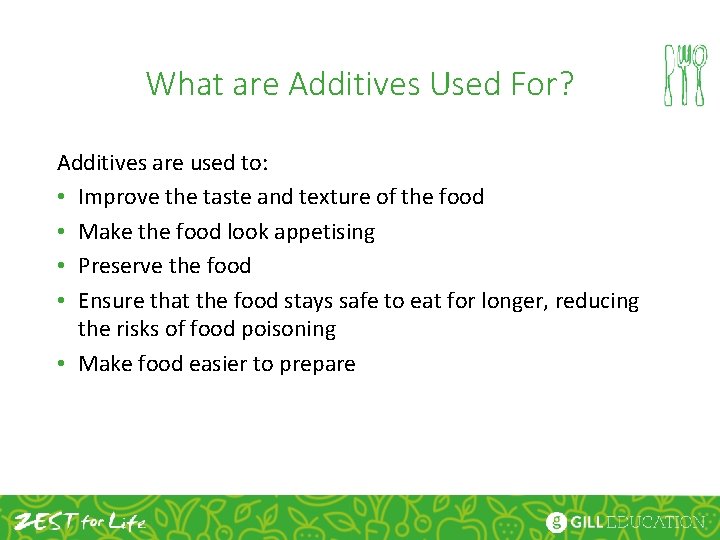
What are Additives Used For? Additives are used to: • Improve the taste and texture of the food • Make the food look appetising • Preserve the food • Ensure that the food stays safe to eat for longer, reducing the risks of food poisoning • Make food easier to prepare
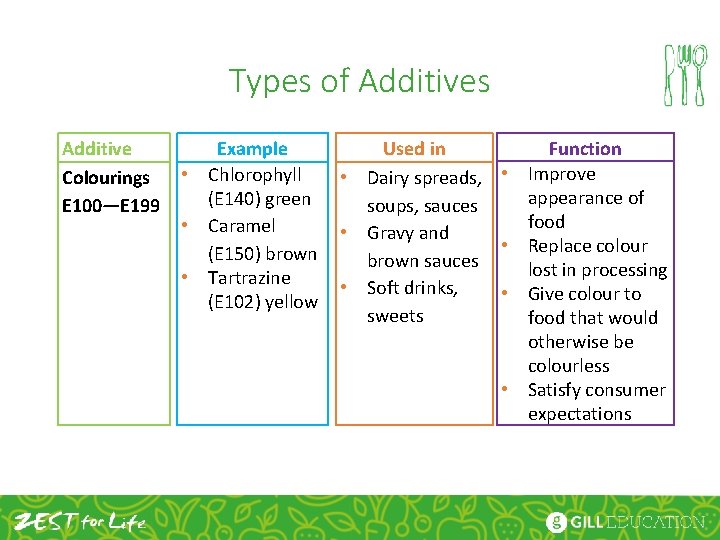
Types of Additives Additive Colourings E 100—E 199 Example • Chlorophyll (E 140) green • Caramel (E 150) brown • Tartrazine (E 102) yellow Function Used in • Dairy spreads, • Improve appearance of soups, sauces food • Gravy and • Replace colour brown sauces lost in processing • Soft drinks, • Give colour to sweets food that would otherwise be colourless • Satisfy consumer expectations
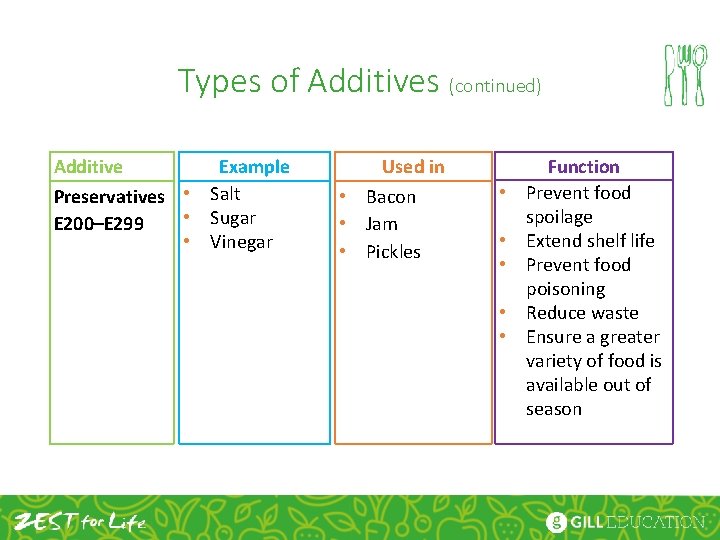
Types of Additives (continued) Additive Example Preservatives • Salt • Sugar E 200–E 299 • Vinegar Used in • Bacon • Jam • Pickles • • • Function Prevent food spoilage Extend shelf life Prevent food poisoning Reduce waste Ensure a greater variety of food is available out of season
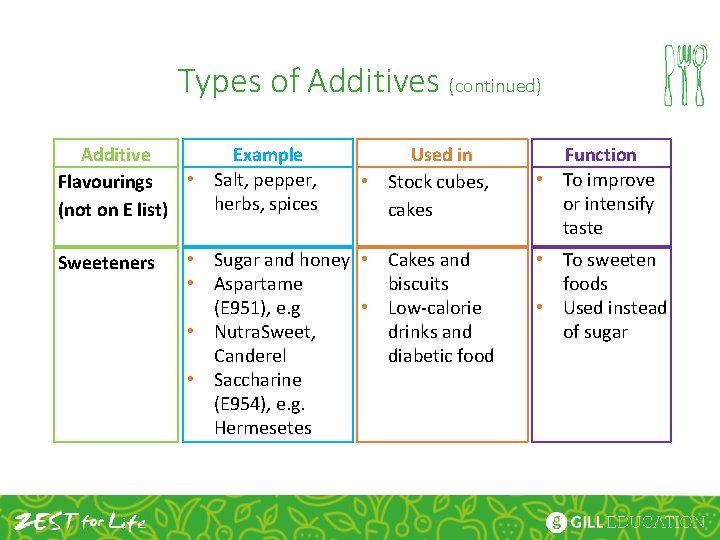
Types of Additives (continued) Additive Example • Salt, pepper, Flavourings herbs, spices (not on E list) Sweeteners Used in • Stock cubes, cakes • Sugar and honey • Cakes and • Aspartame biscuits (E 951), e. g • Low-calorie • Nutra. Sweet, drinks and Canderel diabetic food • Saccharine (E 954), e. g. Hermesetes Function • To improve or intensify taste • To sweeten foods • Used instead of sugar
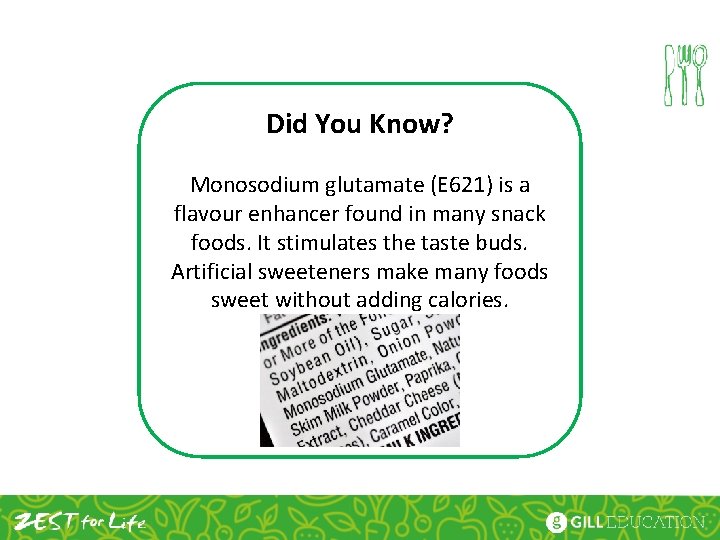
Did You Know? Monosodium glutamate (E 621) is a flavour enhancer found in many snack foods. It stimulates the taste buds. Artificial sweeteners make many foods sweet without adding calories.
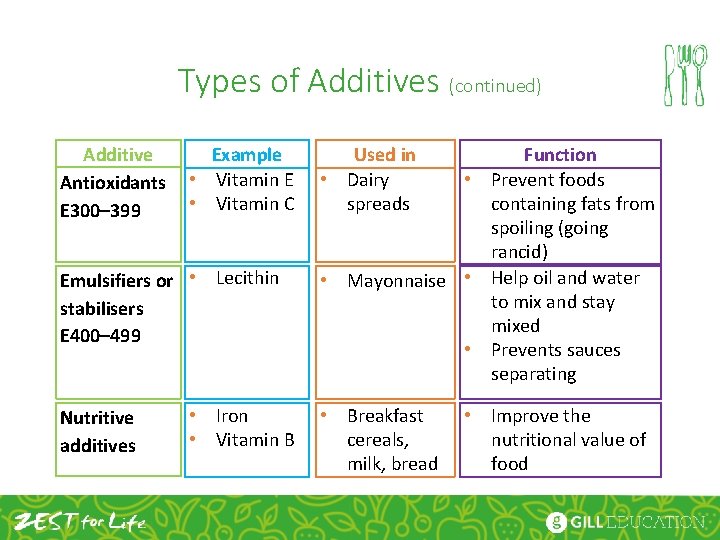
Types of Additives (continued) Additive Antioxidants E 300– 399 Example • Vitamin E • Vitamin C Emulsifiers or • Lecithin stabilisers E 400– 499 Nutritive additives • Iron • Vitamin B Used in • Dairy spreads Function • Prevent foods containing fats from spoiling (going rancid) • Mayonnaise • Help oil and water to mix and stay mixed • Prevents sauces separating • Breakfast cereals, milk, bread • Improve the nutritional value of food
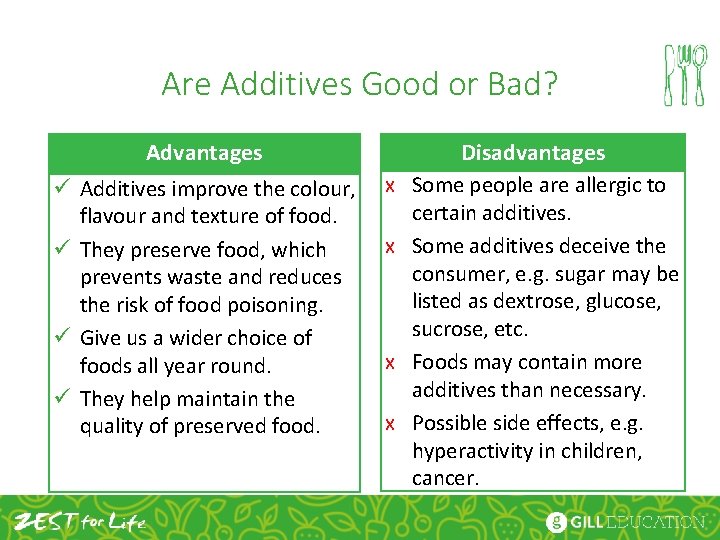
Are Additives Good or Bad? ü ü Advantages Additives improve the colour, flavour and texture of food. They preserve food, which prevents waste and reduces the risk of food poisoning. Give us a wider choice of foods all year round. They help maintain the quality of preserved food. x x Disadvantages Some people are allergic to certain additives. Some additives deceive the consumer, e. g. sugar may be listed as dextrose, glucose, sucrose, etc. Foods may contain more additives than necessary. Possible side effects, e. g. hyperactivity in children, cancer.
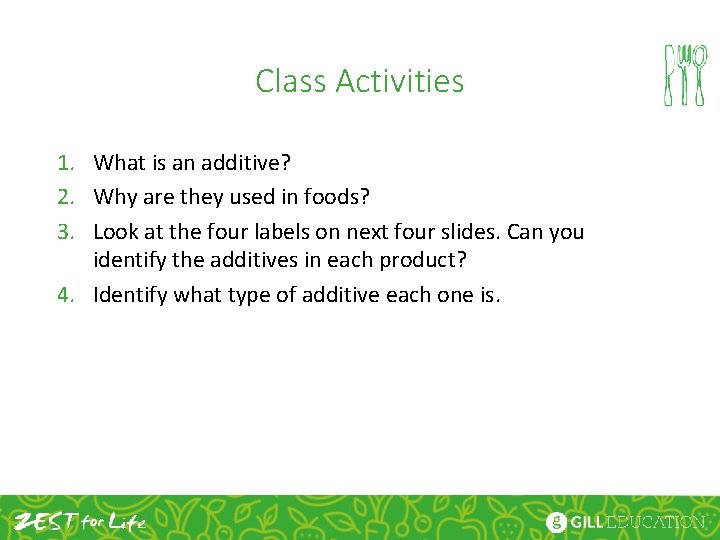
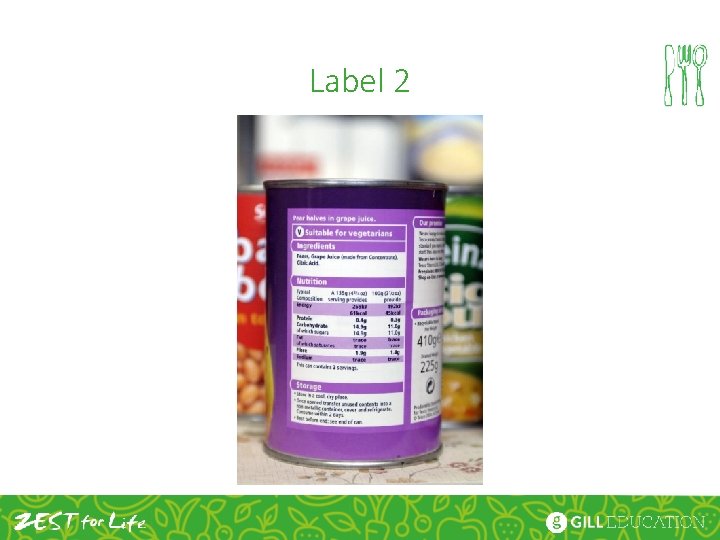
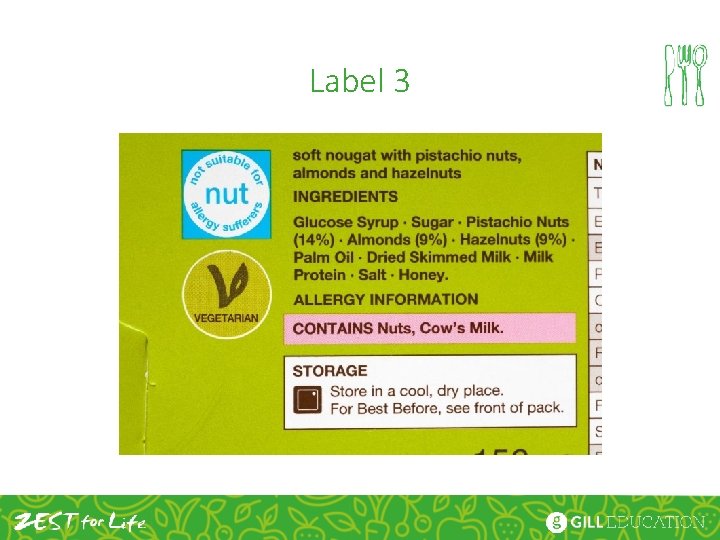
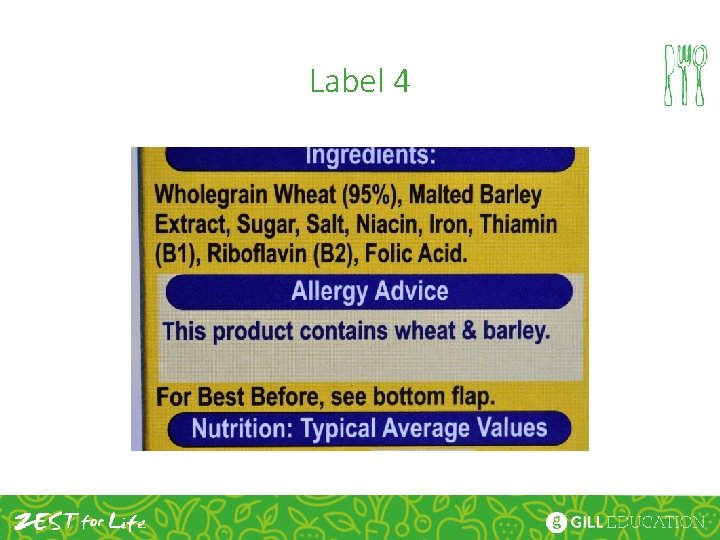
Class Activities 1. What is an additive? 2. Why are they used in foods? 3. Look at the four labels on next four slides. Can you identify the additives in each product? 4. Identify what type of additive each one is.

Label 1
Label 2
Label 3
Label 4
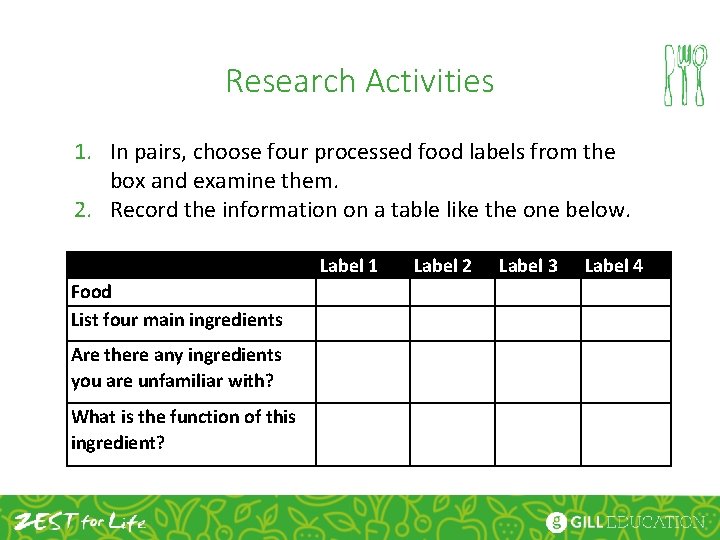
Research Activities 1. In pairs, choose four processed food labels from the box and examine them. 2. Record the information on a table like the one below. Label 1 Food List four main ingredients Are there any ingredients you are unfamiliar with? What is the function of this ingredient? Label 2 Label 3 Label 4
Practical Activities In Pairs: 1. Visit the ready meals aisle in your local supermarket and choose four ready meals to compare. 2. Note the price and number of portions contained in the meals. 3. Choose your favourite and bring it into class. 4. Cook or reheat them in class and join up with another pair. 5. Taste the two dishes and compare them under the headings on your evaluation sheet. See Activity 17. 11 in the TRB
- Slides: 18