
Additive Manufacture of Hydraulic Components Prof A R

- Slides: 26
Additive Manufacture of Hydraulic Components Prof A R Plummer Director Centre for Power Transmission & Motion Control University of Bath, UK. www. bath. ac. uk/ptmc
Acknowledgements • • Bath: Dr Jenna Tong, Prof Chris Bowen, Johan Persson Moog: Dr Paul Guerrier, Ian Brooks
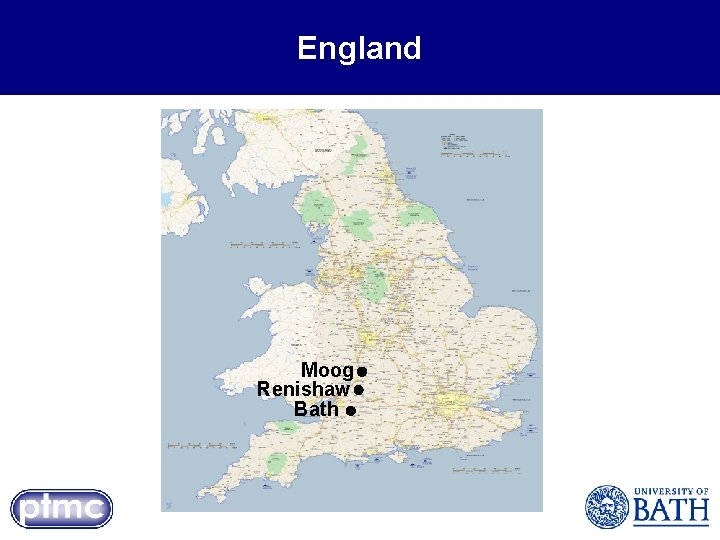
England Moog Renishaw Bath
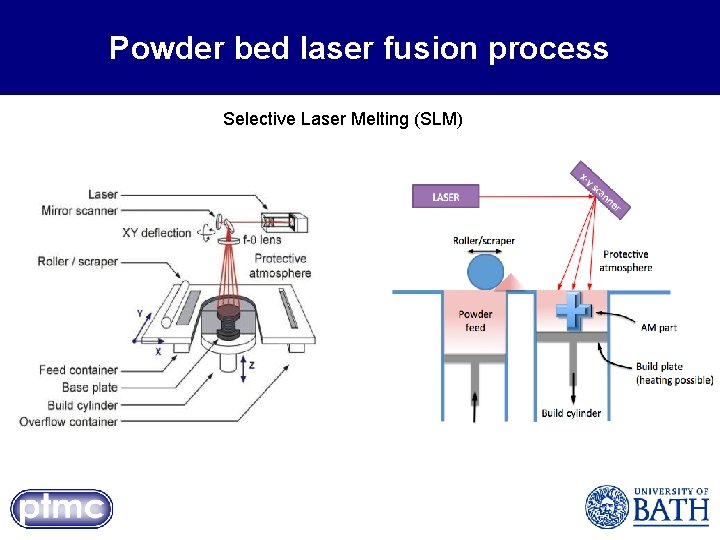
Content • Additive manufacture process (selective laser melting) • First attempts at hydraulic components: servovalve bodies • Other examples: valves, actuators, integrated systems • Possible issues with quality of parts • Material properties (titanium)
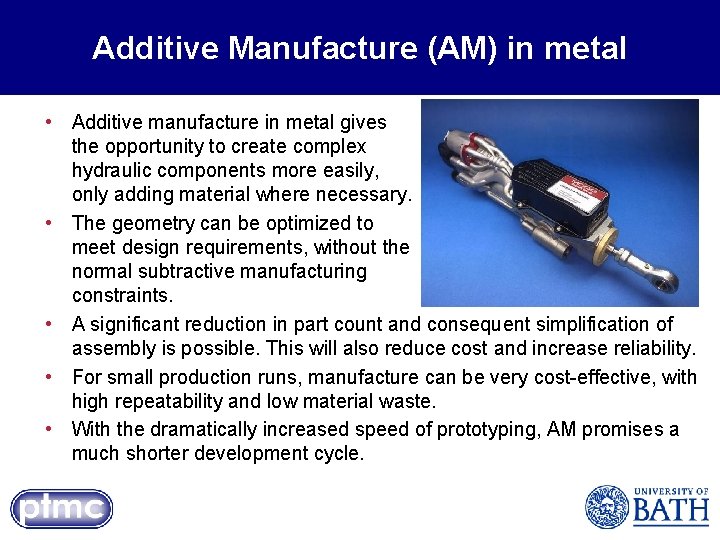
Additive Manufacture (AM) in metal • Additive manufacture in metal gives the opportunity to create complex hydraulic components more easily, only adding material where necessary. • The geometry can be optimized to meet design requirements, without the normal subtractive manufacturing constraints. • A significant reduction in part count and consequent simplification of assembly is possible. This will also reduce cost and increase reliability. • For small production runs, manufacture can be very cost-effective, with high repeatability and low material waste. • With the dramatically increased speed of prototyping, AM promises a much shorter development cycle.
Powder bed laser fusion process Selective Laser Melting (SLM)
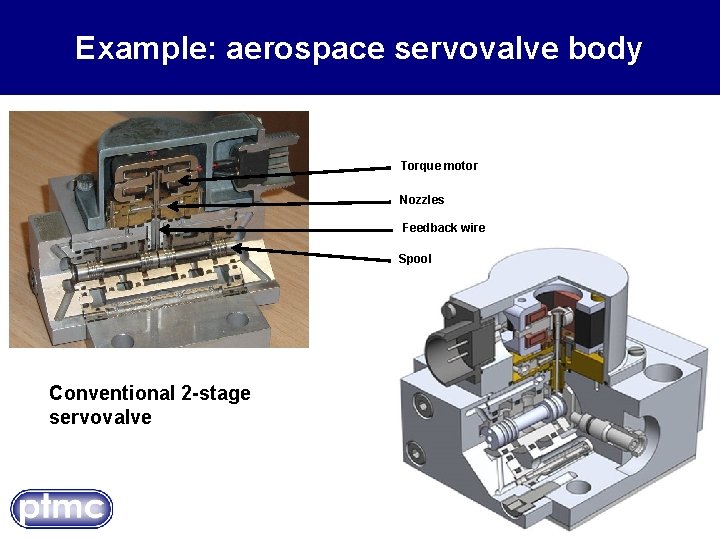
Example: aerospace servovalve body Torque motor Nozzles Feedback wire Spool Conventional 2 -stage servovalve
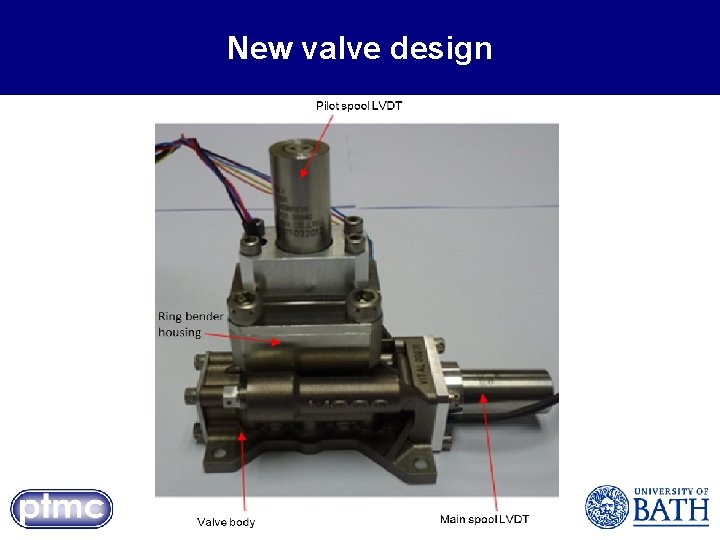
New valve design
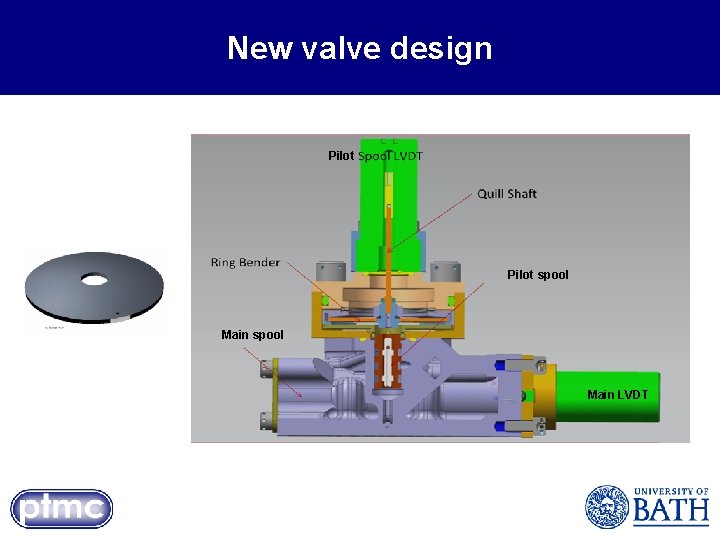
New valve design Pilot spool Main LVDT
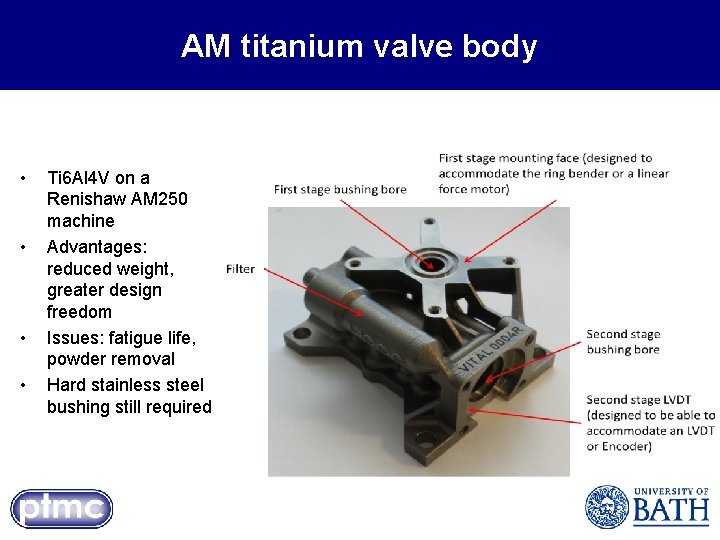
AM titanium valve body • • Ti 6 Al 4 V on a Renishaw AM 250 machine Advantages: reduced weight, greater design freedom Issues: fatigue life, powder removal Hard stainless steel bushing still required
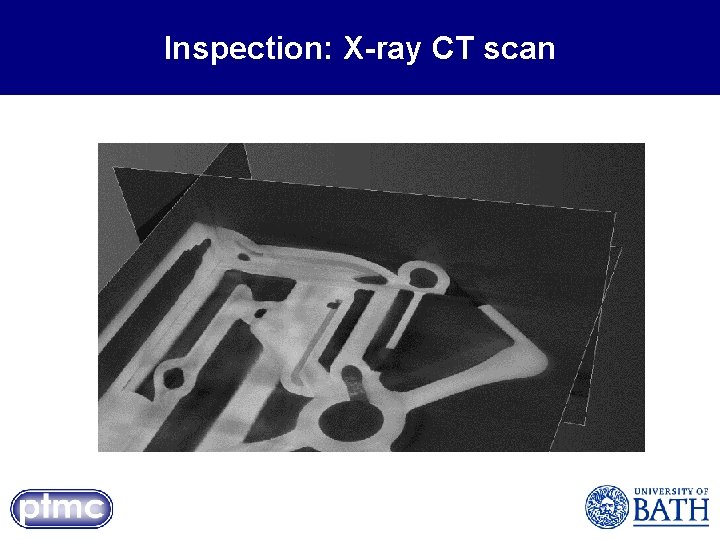
Inspection: X-ray CT scan
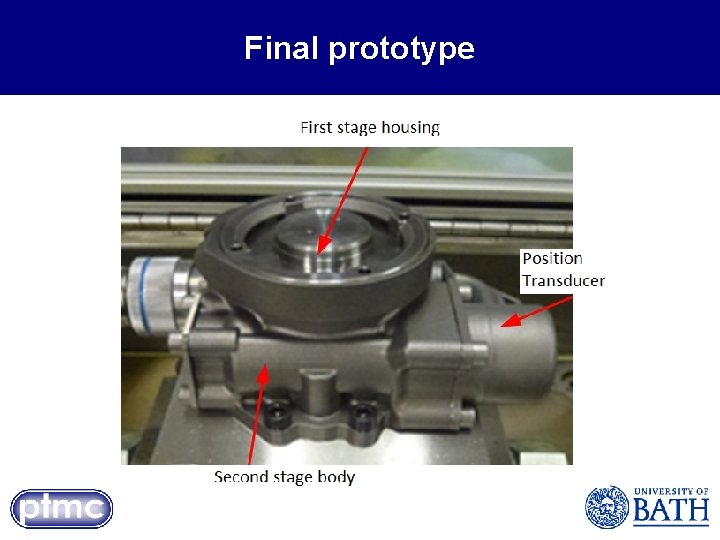
Final prototype
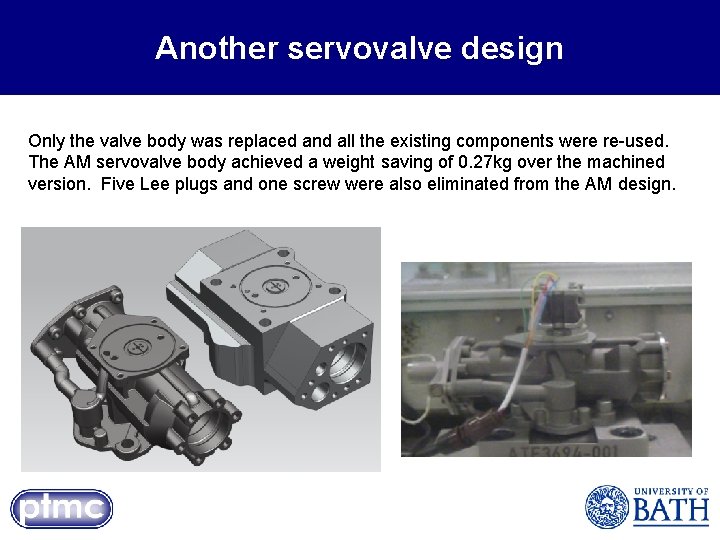
Another servovalve design Only the valve body was replaced and all the existing components were re-used. The AM servovalve body achieved a weight saving of 0. 27 kg over the machined version. Five Lee plugs and one screw were also eliminated from the AM design.
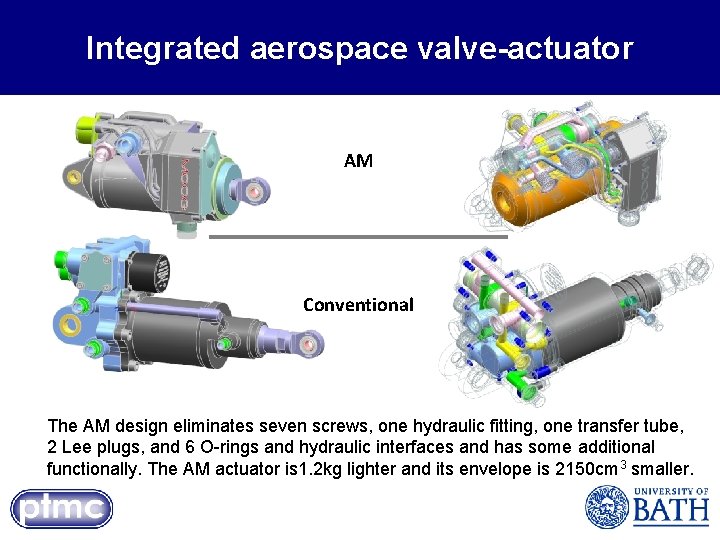
Integrated aerospace valve-actuator AM Conventional The AM design eliminates seven screws, one hydraulic fitting, one transfer tube, 2 Lee plugs, and 6 O-rings and hydraulic interfaces and has some additional functionally. The AM actuator is 1. 2 kg lighter and its envelope is 2150 cm 3 smaller.
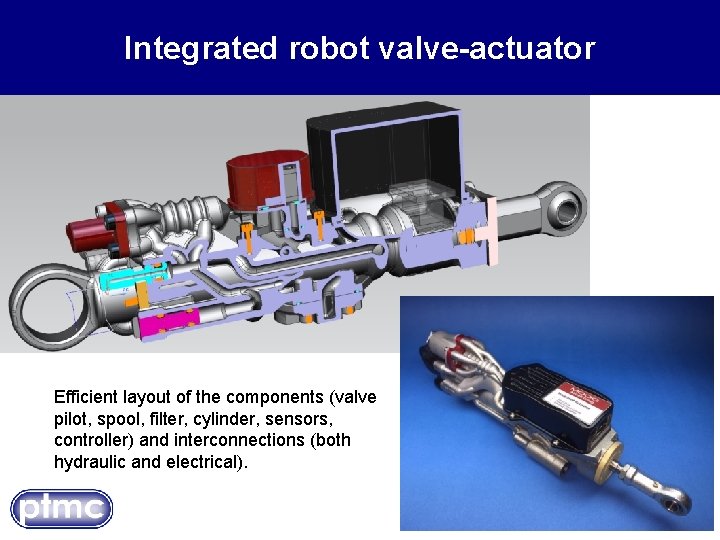
Integrated robot valve-actuator Efficient layout of the components (valve pilot, spool, filter, cylinder, sensors, controller) and interconnections (both hydraulic and electrical).
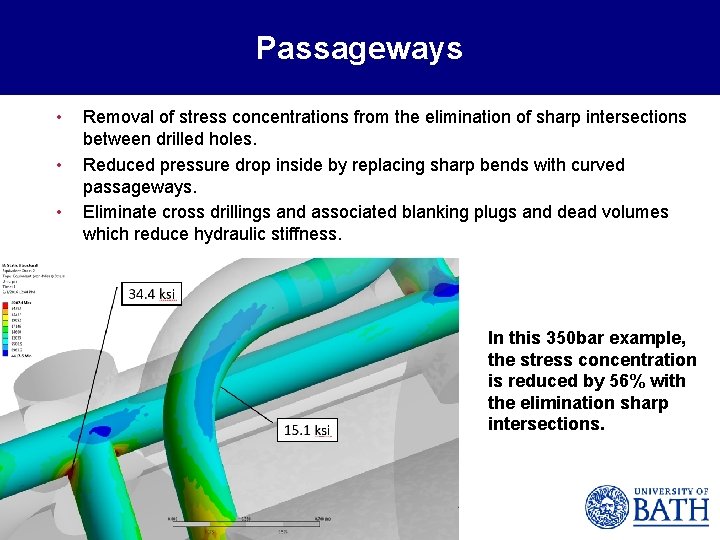
Passageways • • • Removal of stress concentrations from the elimination of sharp intersections between drilled holes. Reduced pressure drop inside by replacing sharp bends with curved passageways. Eliminate cross drillings and associated blanking plugs and dead volumes which reduce hydraulic stiffness. In this 350 bar example, the stress concentration is reduced by 56% with the elimination sharp intersections.
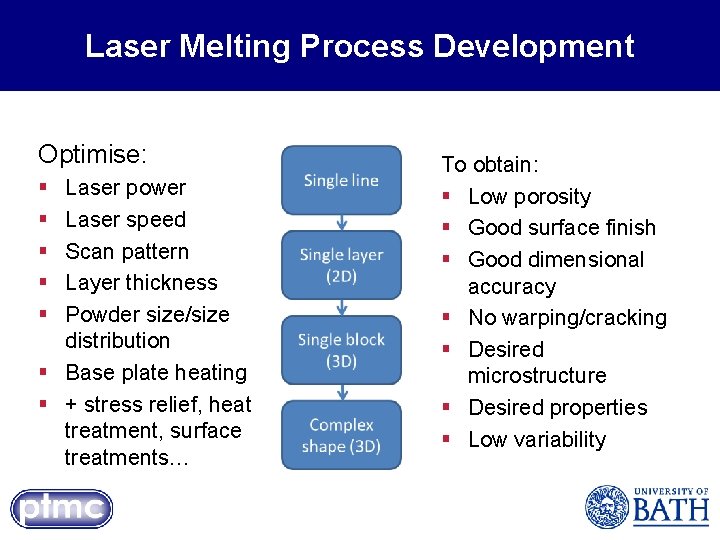
Laser Melting Process Development Optimise: § § § Laser power Laser speed Scan pattern Layer thickness Powder size/size distribution § Base plate heating § + stress relief, heat treatment, surface treatments… To obtain: § Low porosity § Good surface finish § Good dimensional accuracy § No warping/cracking § Desired microstructure § Desired properties § Low variability
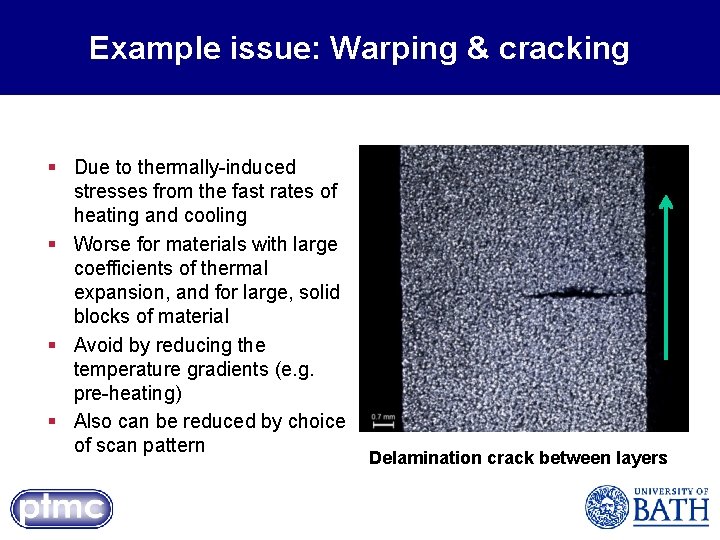
Example issue: Warping & cracking § Due to thermally-induced stresses from the fast rates of heating and cooling § Worse for materials with large coefficients of thermal expansion, and for large, solid blocks of material § Avoid by reducing the temperature gradients (e. g. pre-heating) § Also can be reduced by choice of scan pattern Delamination crack between layers
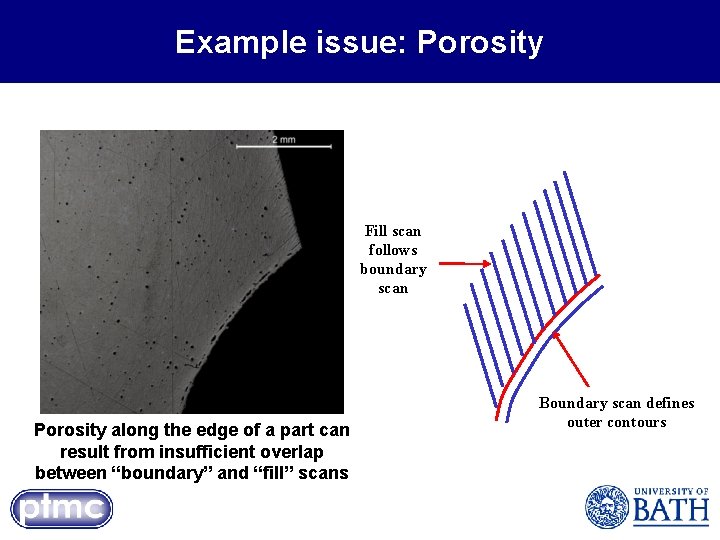
Example issue: Porosity Fill scan follows boundary scan Porosity along the edge of a part can result from insufficient overlap between “boundary” and “fill” scans Boundary scan defines outer contours
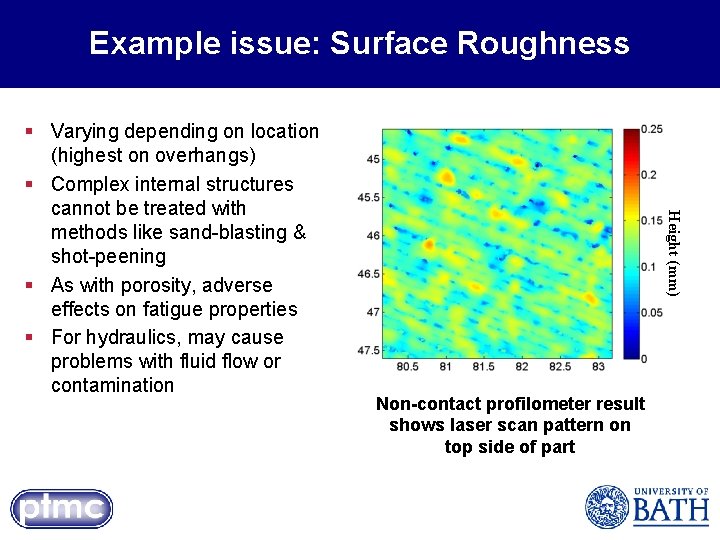
Example issue: Surface Roughness Height (mm) § Varying depending on location (highest on overhangs) § Complex internal structures cannot be treated with methods like sand-blasting & shot-peening § As with porosity, adverse effects on fatigue properties § For hydraulics, may cause problems with fluid flow or contamination Non-contact profilometer result shows laser scan pattern on top side of part
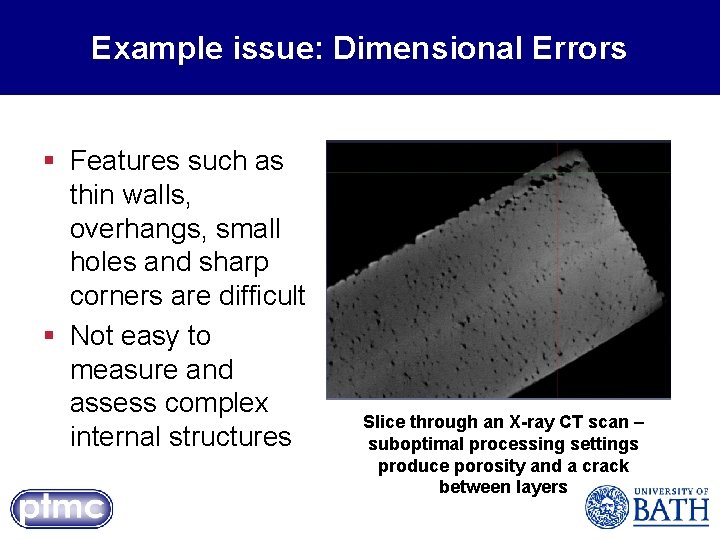
Example issue: Dimensional Errors § Features such as thin walls, overhangs, small holes and sharp corners are difficult § Not easy to measure and assess complex internal structures Slice through an X-ray CT scan – suboptimal processing settings produce porosity and a crack between layers
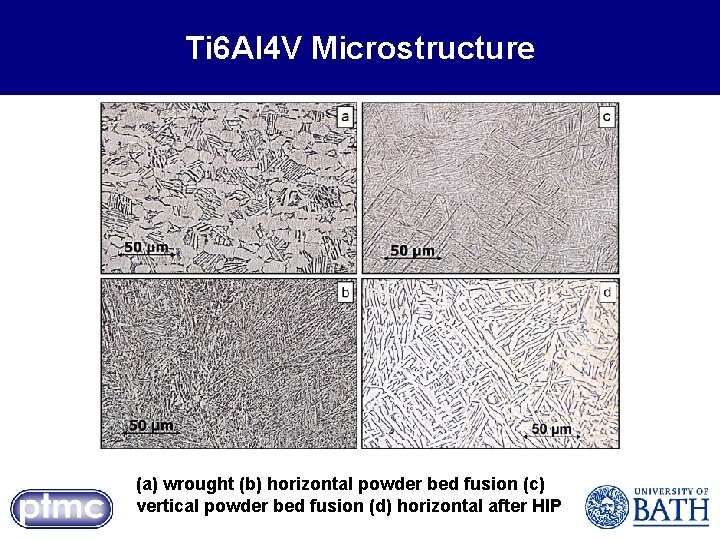
Ti 6 Al 4 V Microstructure (a) wrought (b) horizontal powder bed fusion (c) vertical powder bed fusion (d) horizontal after HIP
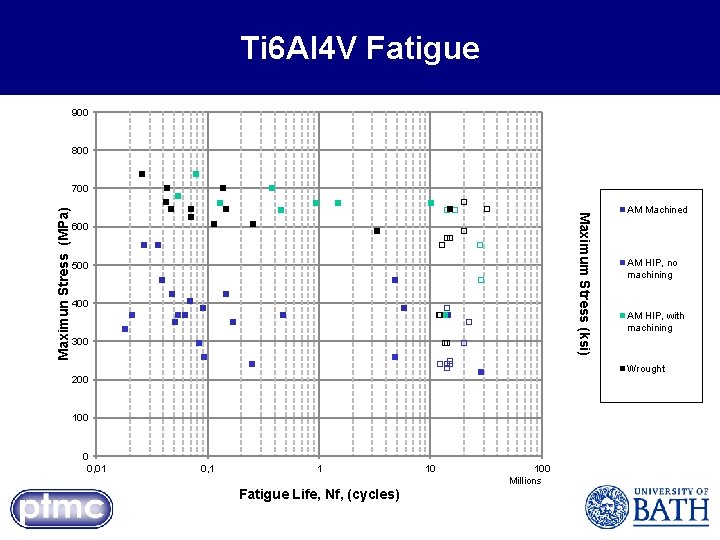
Maximum Stress (ksi) Maximun Stress (MPa) Ti 6 Al 4 V Fatigue Millions Fatigue Life, Nf, (cycles)
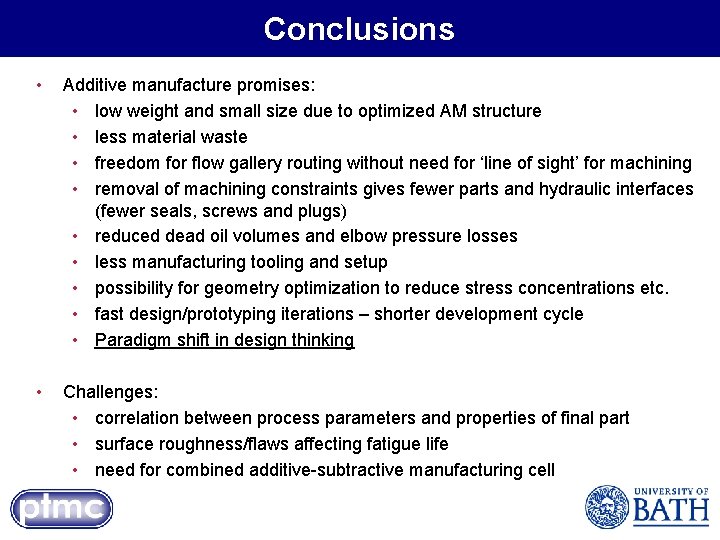
Conclusions • Additive manufacture promises: • low weight and small size due to optimized AM structure • less material waste • freedom for flow gallery routing without need for ‘line of sight’ for machining • removal of machining constraints gives fewer parts and hydraulic interfaces (fewer seals, screws and plugs) • reduced dead oil volumes and elbow pressure losses • less manufacturing tooling and setup • possibility for geometry optimization to reduce stress concentrations etc. • fast design/prototyping iterations – shorter development cycle • Paradigm shift in design thinking • Challenges: • correlation between process parameters and properties of final part • surface roughness/flaws affecting fatigue life • need for combined additive-subtractive manufacturing cell
References 1. Tong, J, Bowen, C & Plummer, A 2017, 'Mechanical properties of titaniumbased Ti– 6 Al– 4 V alloys manufactured by powder bed additive manufacture' Materials Science and Technology, vol 33, no. 2, pp. 138 -148. DOI: 10. 1080/02670836. 2016. 1172787 2. Persson, L, Plummer, A, Bowen, C & Brooks, I 2016, A lightweight, low leakage piezoelectric servovalve. in Proc Recent Advances in Aerospace Actuation Systems and Components 2016. Toulouse, France, 16 -18 March. 3. Guerrier, P. , Zazynski, T. , Gilson, E. , Bowen, C. (2016) Additive Manufacturing for Next Generation Actuation. in Proc Recent Advances in Aerospace Actuation Systems and Components 2016. Toulouse, France, 16 -18 March.
The End