
Addition reactions Addition reactions of alkenes l Reactions

- Slides: 15
Addition reactions
Addition reactions of alkenes l Reactions of alkenes with hydrogen (hydrogenation), chlorine, bromine, hydrogen chloride, and water l Polymerisation of alkenes
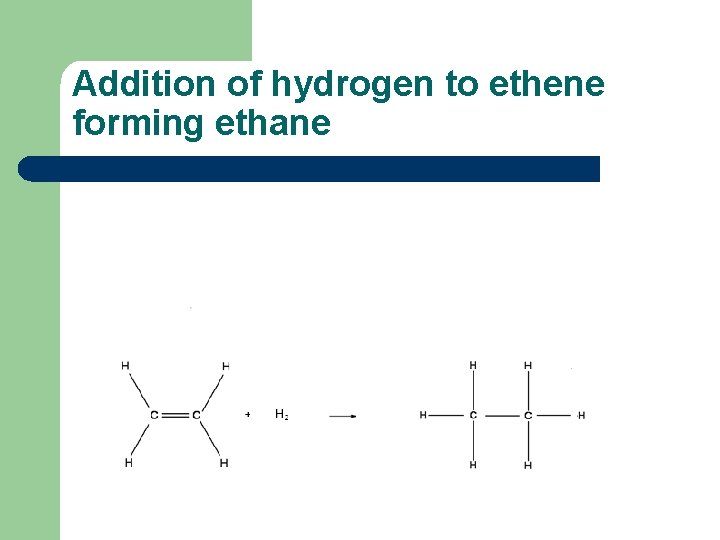
Addition of hydrogen to ethene forming ethane
Uses of hydrogenation l Addition of hydrogen to unsaturated vegetable oils produces margarine
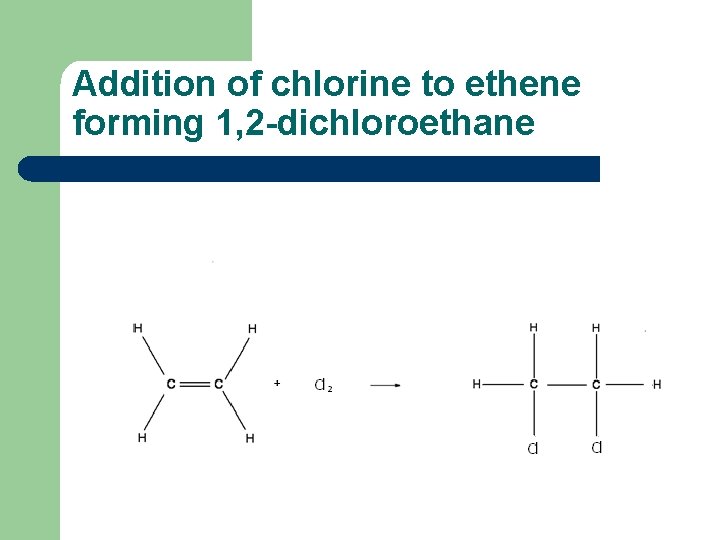
Addition of chlorine to ethene forming 1, 2 -dichloroethane
Uses of 1, 2 -dichloroethane l 1, 2 -dichloroethane is used to make chloroethene, the raw material for the manufacture of PVC
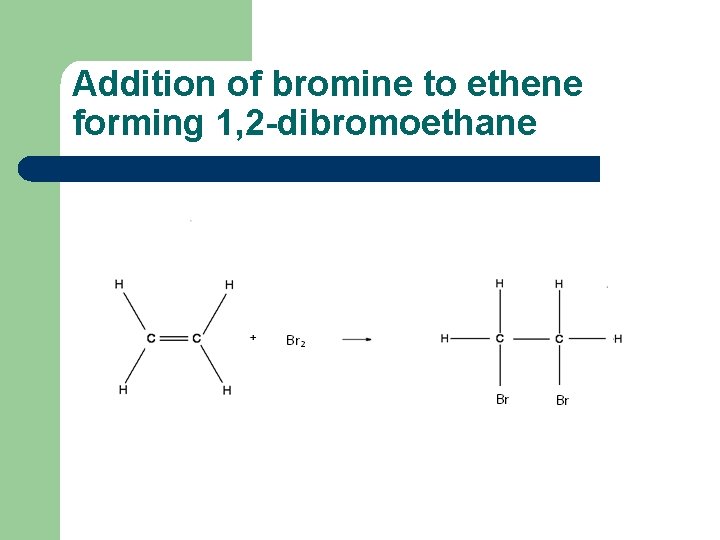
Addition of bromine to ethene forming 1, 2 -dibromoethane
Uses l l l I, 2 -dibromoethane was formerly used as an additive in leaded petrol It is still used as an insecticide The bromination of alkenes can be used as a test for unsaturation, since bromine has an orange-red colour and the reaction product is colourless
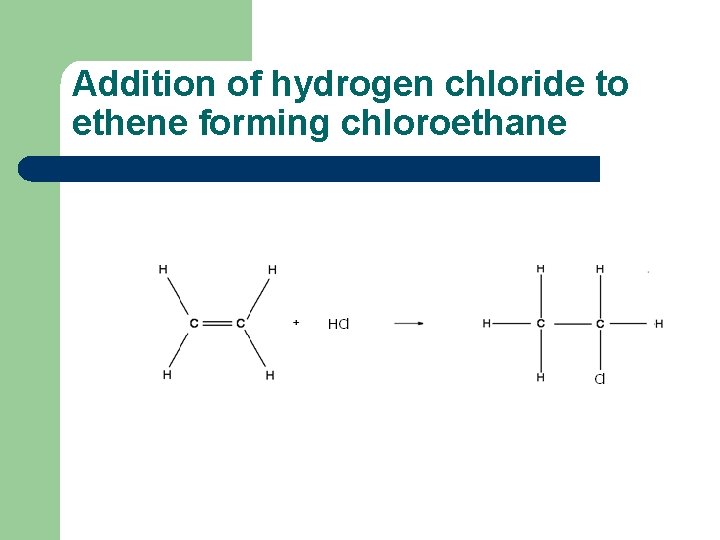
Addition of hydrogen chloride to ethene forming chloroethane
Uses l l Chloroethane was formerly used to produce tetraethyl lead (TEL), an anti-knock additive for petrol It is still used as a solvent and refrigerant
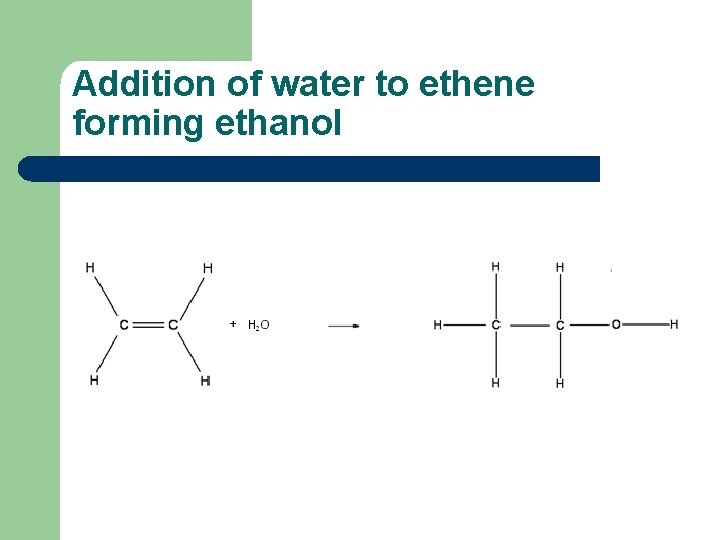
Addition of water to ethene forming ethanol
Uses l The addition of water to ethene is the most widely used reaction in industry for manufacturing ethanol, a very important industrial solvent
Industrial sources of alkenes l Catalytic cracking of the naphtha and kerosene fractions of crude oil
Unreactivity of benzene l Benzene molecules are unsaturated l Despite this, benzene does not readily undergo addition reactions l This is due to the stability of the pi bonding in benzene
Range and scope of the petrochemical industry l l Products of the petrochemical industry include Polythene PVC Ethanol