
Adding Value To the Organisation through Cost Engineering
- Slides: 31
Adding Value To the Organisation through Cost Engineering Dave Lewis - Cost Engineering Solutions Dale Shermon - Price. Systems
The Problem Cost Engineers are • under funded, • not appreciated • capabilities are not being recognised by their companies
• This presentation is provided, through the EACE, and aims to address this problem by assisting you in presenting the capabilities of the Cost Engineering Process and how it adds value to your organisation.
• Take these slides as a starting point for a presentation to “sell” the capabilities of Cost Engineering. • Select Format, Apply Design Template from the menu to customise the presentation within your organisation • Delete this slide and add, where appropriate information relating to your own organisation.
Adding Value To the Organisation through the Application of The Skills & Process For Cost Engineering
Agenda # Part 1 • Definition Of Cost Engineering • The Cost Engineer – Profile – Primary Skills – Qualifications • Requirements – Cost Data – Cost Models – Process & Procedures
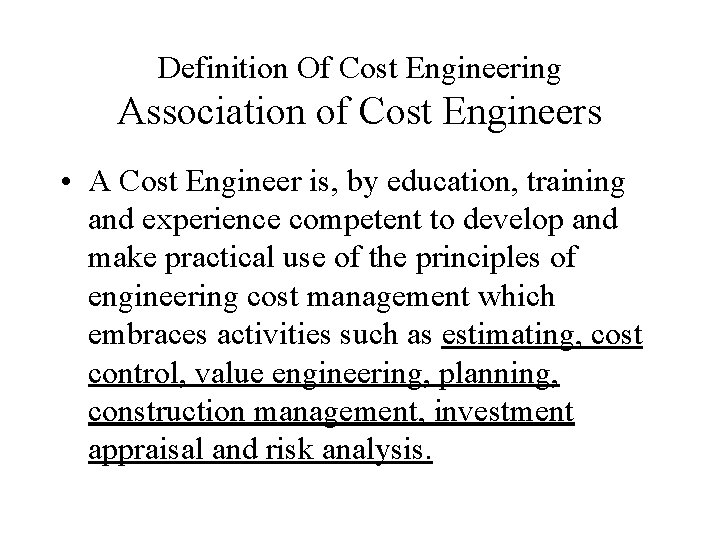
Definition Of Cost Engineering Association of Cost Engineers • A Cost Engineer is, by education, training and experience competent to develop and make practical use of the principles of engineering cost management which embraces activities such as estimating, cost control, value engineering, planning, construction management, investment appraisal and risk analysis.
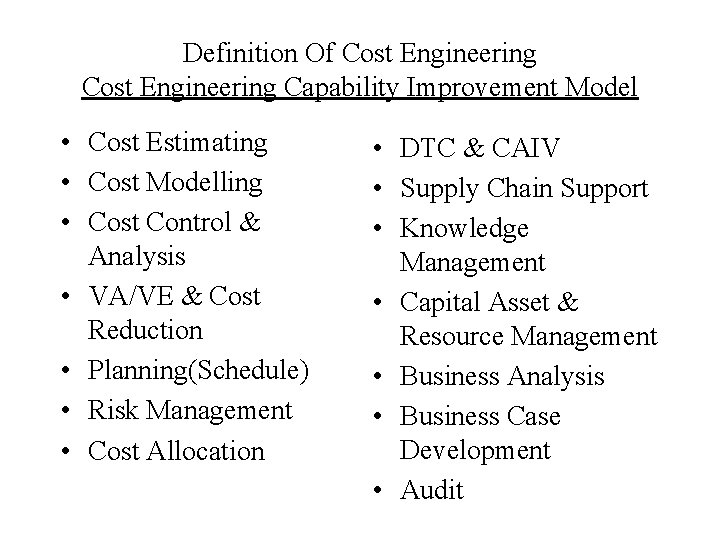
Definition Of Cost Engineering Capability Improvement Model • Cost Estimating • Cost Modelling • Cost Control & Analysis • VA/VE & Cost Reduction • Planning(Schedule) • Risk Management • Cost Allocation • DTC & CAIV • Supply Chain Support • Knowledge Management • Capital Asset & Resource Management • Business Analysis • Business Case Development • Audit
Why you should have Estimators ? Accurately forecasting the cost of future work is vital to the survival of any business. Estimators develop cost related information for managers to use in determination of resource and material requirements, making bids, and assessment of the profitability of new products. To do this estimators compile and analyse data on all the factors that can influence costs such as materials, labour, machinery, past performance, commercial conditions etc.
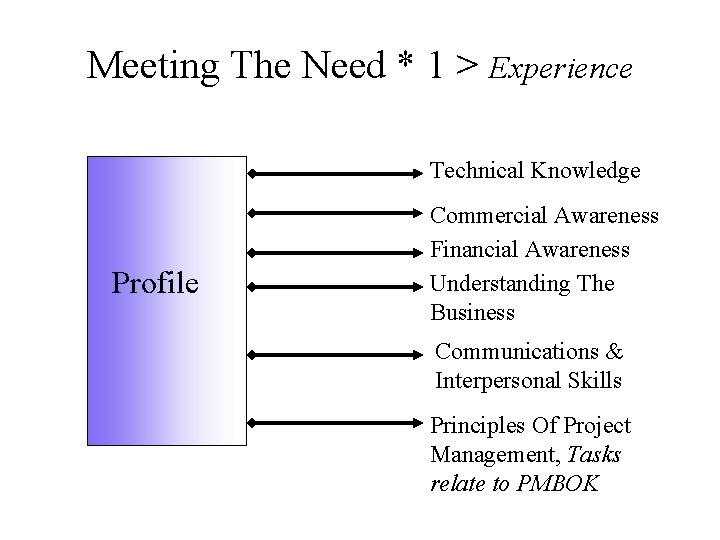
Meeting The Need * 1 > Experience Technical Knowledge Profile Commercial Awareness Financial Awareness Understanding The Business Communications & Interpersonal Skills Principles Of Project Management, Tasks relate to PMBOK
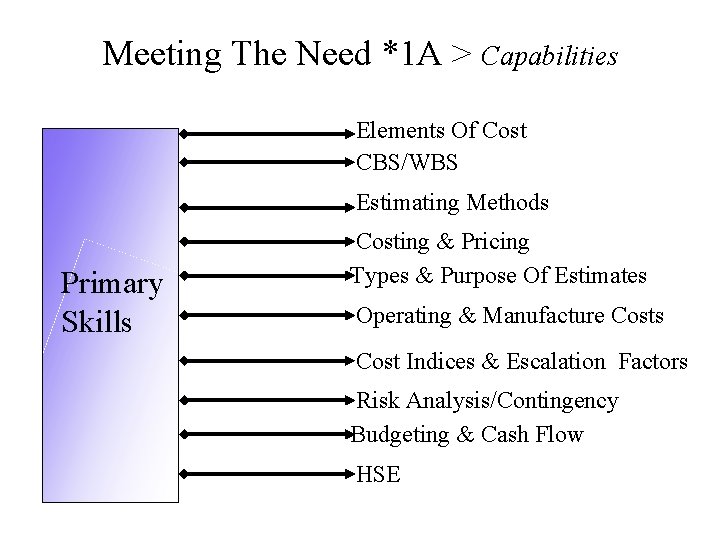
Meeting The Need *1 A > Capabilities Elements Of Cost CBS/WBS Estimating Methods Primary Skills Costing & Pricing Types & Purpose Of Estimates Operating & Manufacture Costs Cost Indices & Escalation Factors Risk Analysis/Contingency Budgeting & Cash Flow HSE
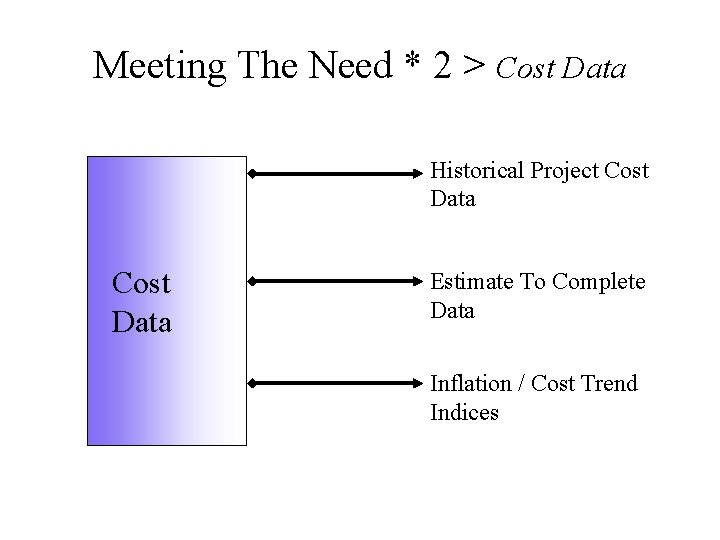
Meeting The Need * 2 > Cost Data Historical Project Cost Data Estimate To Complete Data Inflation / Cost Trend Indices
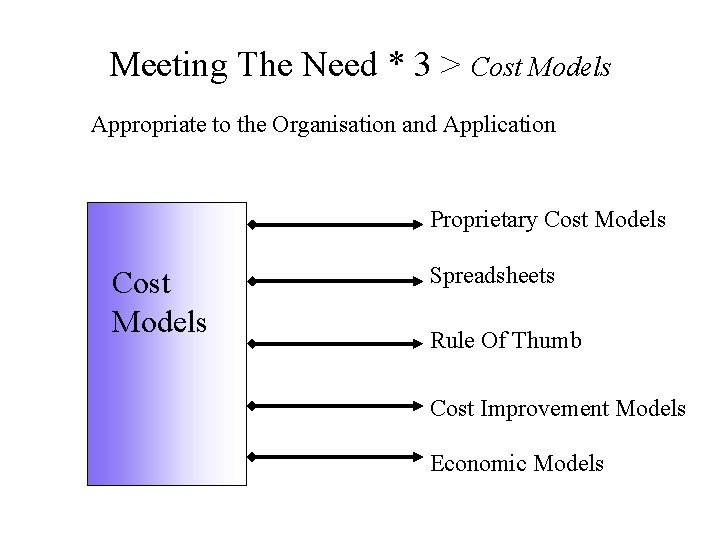
Meeting The Need * 3 > Cost Models Appropriate to the Organisation and Application Proprietary Cost Models Spreadsheets Rule Of Thumb Cost Improvement Models Economic Models
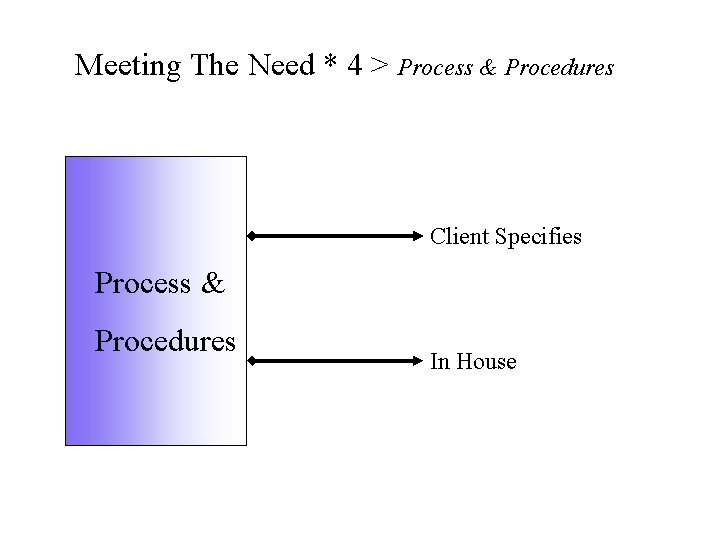
Meeting The Need * 4 > Process & Procedures Client Specifies Process & Procedures In House
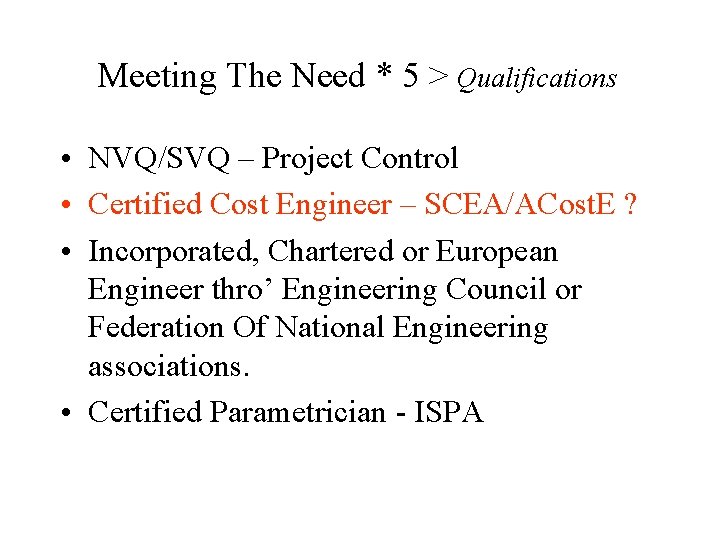
Meeting The Need * 5 > Qualifications • NVQ/SVQ – Project Control • Certified Cost Engineer – SCEA/ACost. E ? • Incorporated, Chartered or European Engineer thro’ Engineering Council or Federation Of National Engineering associations. • Certified Parametrician - ISPA
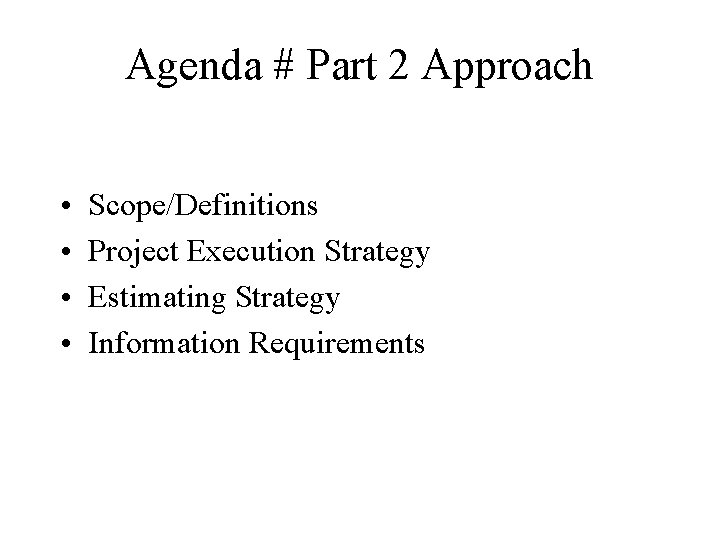
Agenda # Part 2 Approach • • Scope/Definitions Project Execution Strategy Estimating Strategy Information Requirements
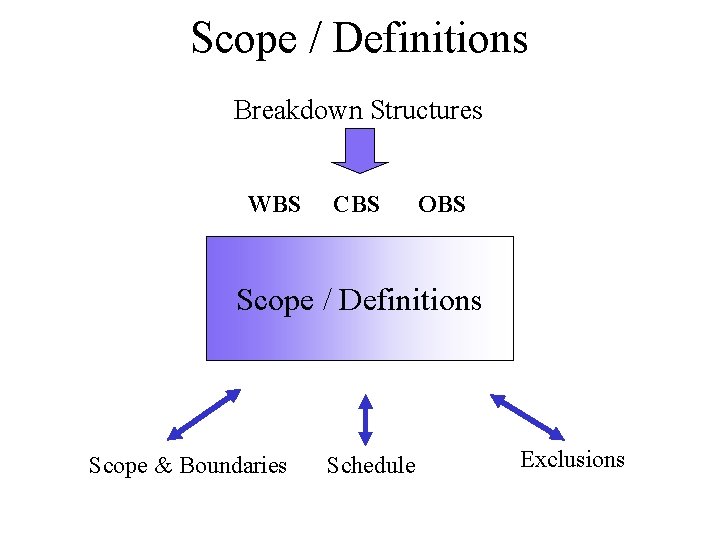
Scope / Definitions Breakdown Structures WBS CBS OBS Scope / Definitions Scope & Boundaries Schedule Exclusions
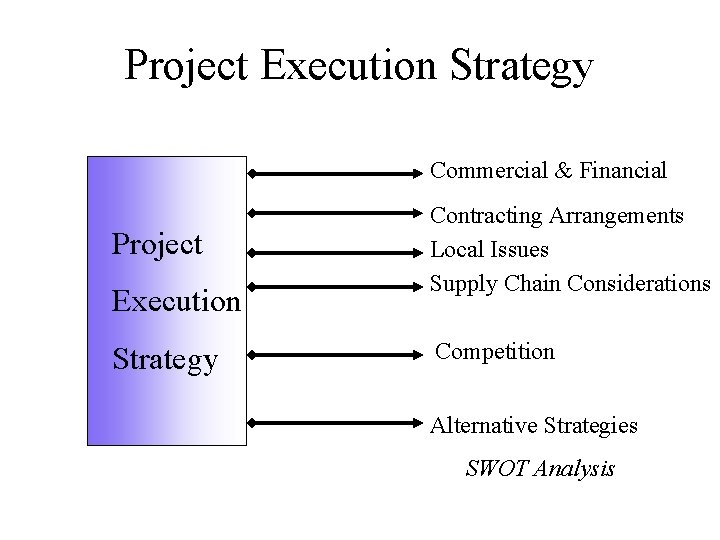
Project Execution Strategy Commercial & Financial Project Execution Strategy Contracting Arrangements Local Issues Supply Chain Considerations Competition Alternative Strategies SWOT Analysis
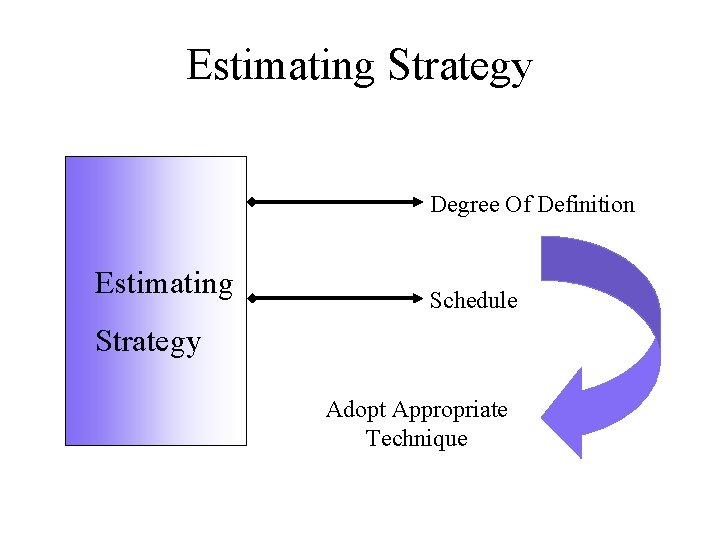
Estimating Strategy Degree Of Definition Estimating Schedule Strategy Adopt Appropriate Technique
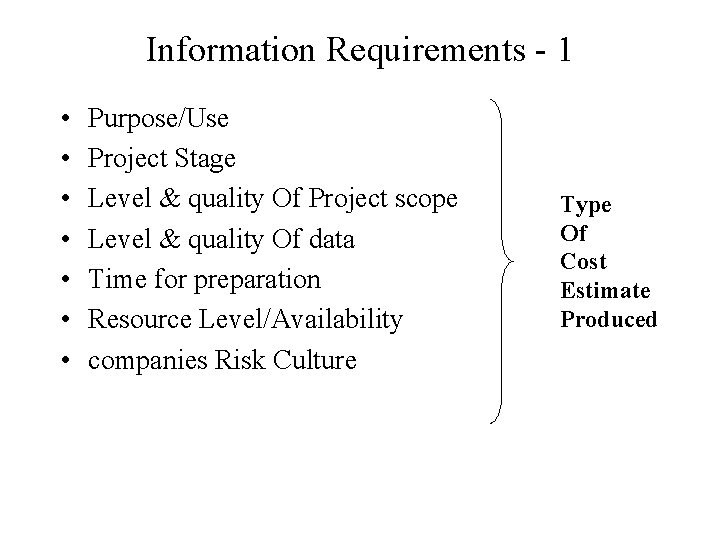
Information Requirements - 1 • • Purpose/Use Project Stage Level & quality Of Project scope Level & quality Of data Time for preparation Resource Level/Availability companies Risk Culture Type Of Cost Estimate Produced
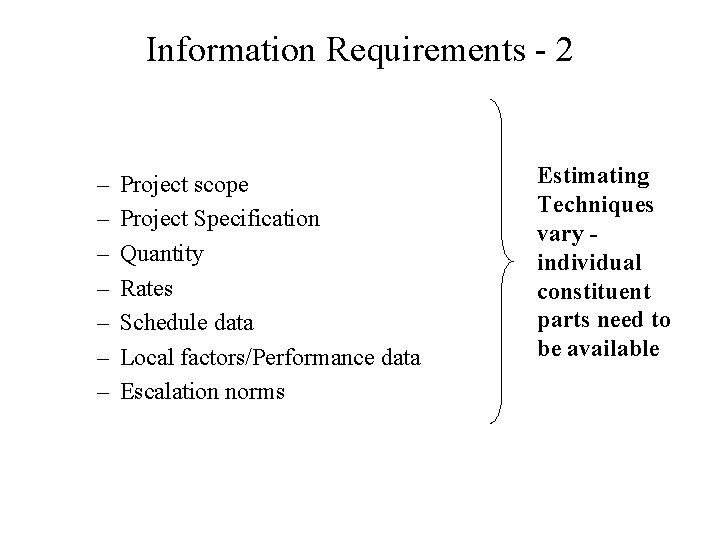
Information Requirements - 2 – – – – Project scope Project Specification Quantity Rates Schedule data Local factors/Performance data Escalation norms Estimating Techniques vary individual constituent parts need to be available
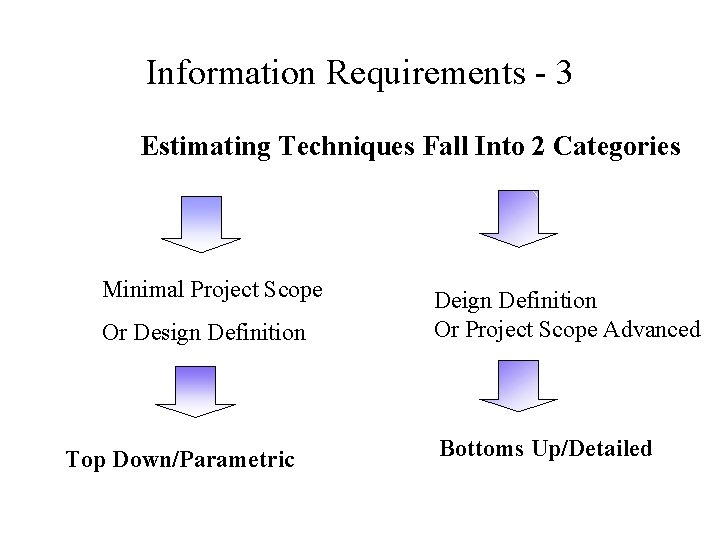
Information Requirements - 3 Estimating Techniques Fall Into 2 Categories Minimal Project Scope Or Design Definition Top Down/Parametric Deign Definition Or Project Scope Advanced Bottoms Up/Detailed
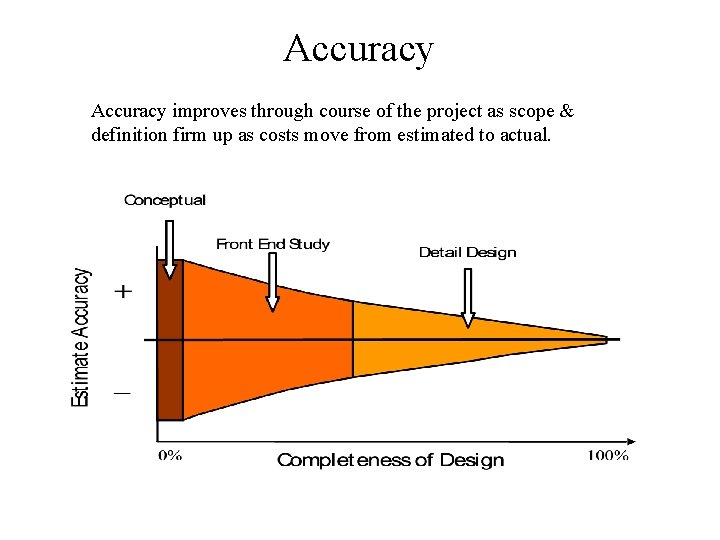
Accuracy improves through course of the project as scope & definition firm up as costs move from estimated to actual.
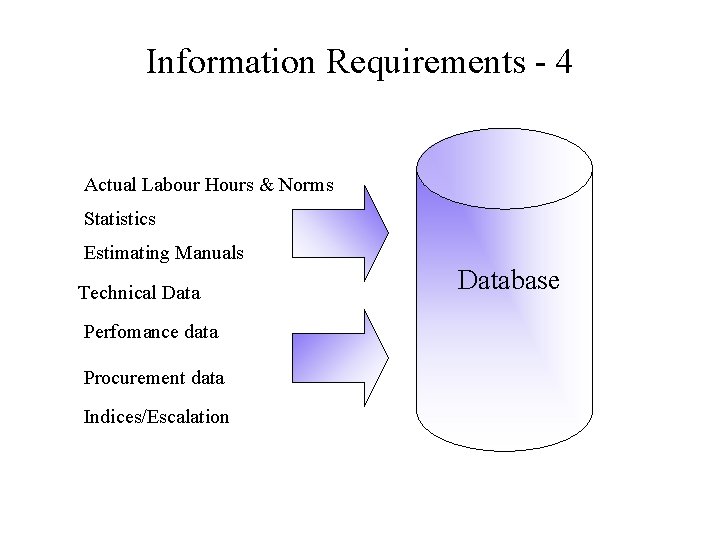
Information Requirements - 4 Actual Labour Hours & Norms Statistics Estimating Manuals Technical Data Perfomance data Procurement data Indices/Escalation Database
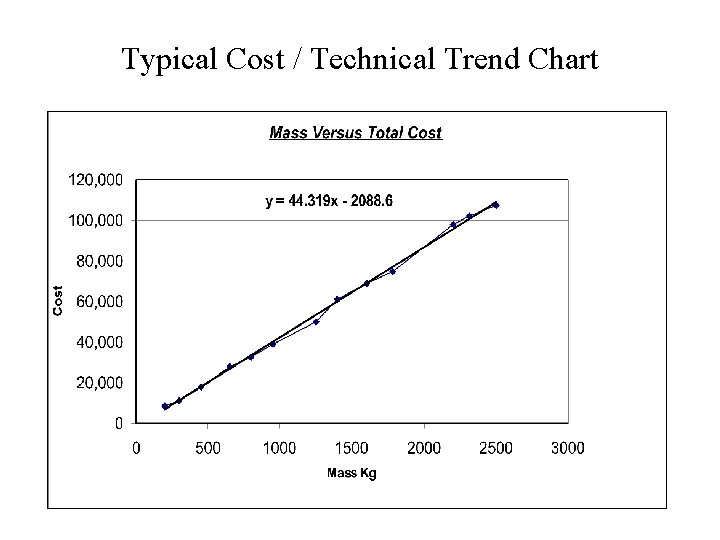
Typical Cost / Technical Trend Chart
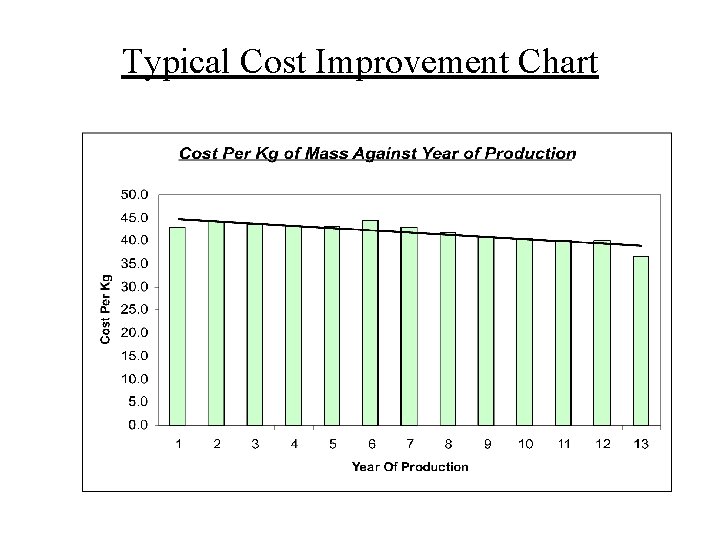
Typical Cost Improvement Chart
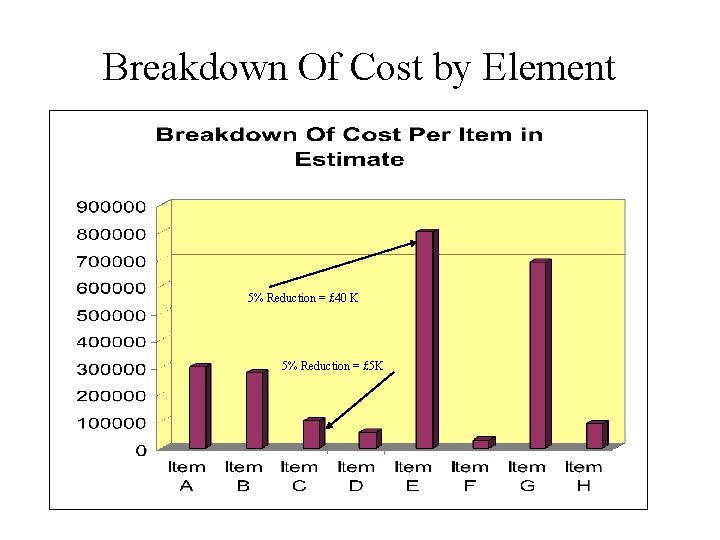
Breakdown Of Cost by Element 5% Reduction = £ 40 K 5% Reduction = £ 5 K
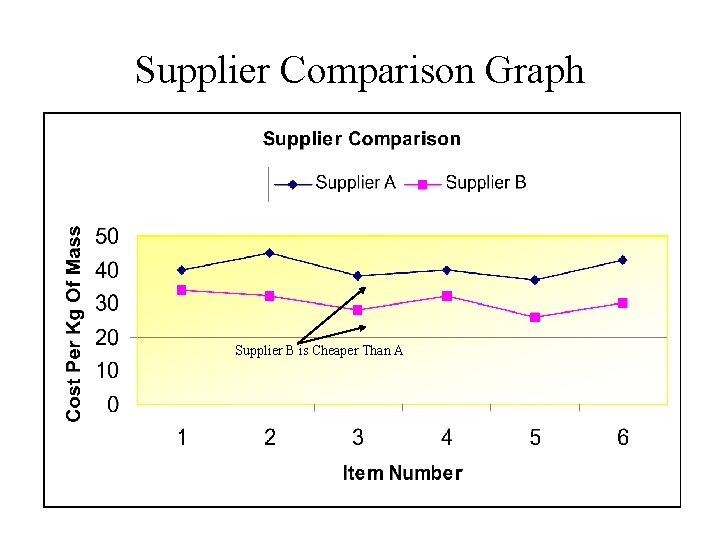
Supplier Comparison Graph Supplier B is Cheaper Than A
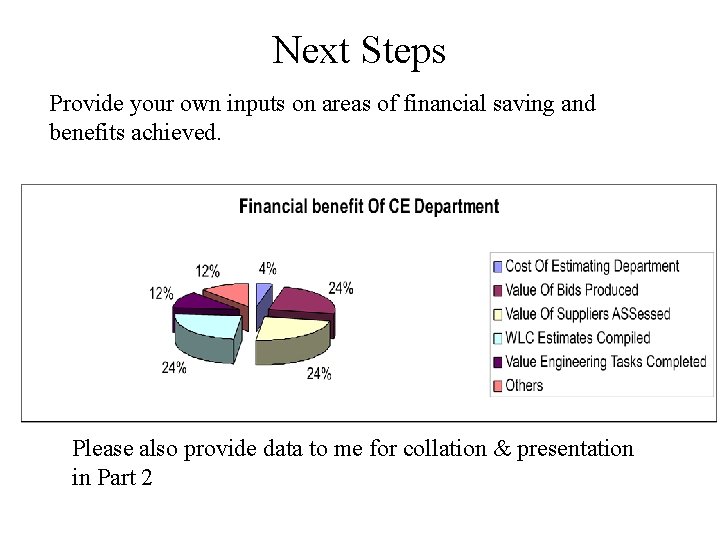
Next Steps Provide your own inputs on areas of financial saving and benefits achieved. Please also provide data to me for collation & presentation in Part 2
Next Steps # 2 • Need to Collect Best Practice Data to include in Part 2 • CECIM / Benchmarking Workshops • Expand Into Cost Analysis(EVA etc) For Part 2. • Need to generate Strengths & Key Benefits slides(Competences & Training Sub Group) • Need to generate Financial Benefits • Cost Of CE relative to Value Of work • Cost Of CE relative to savings generated.
Further Information For Further information please contact dave. lewis@costeng-solutions. com or dale. shermon@pricesystems. com