
Adding 1 Bonds to 10 Adding 10 Bridging
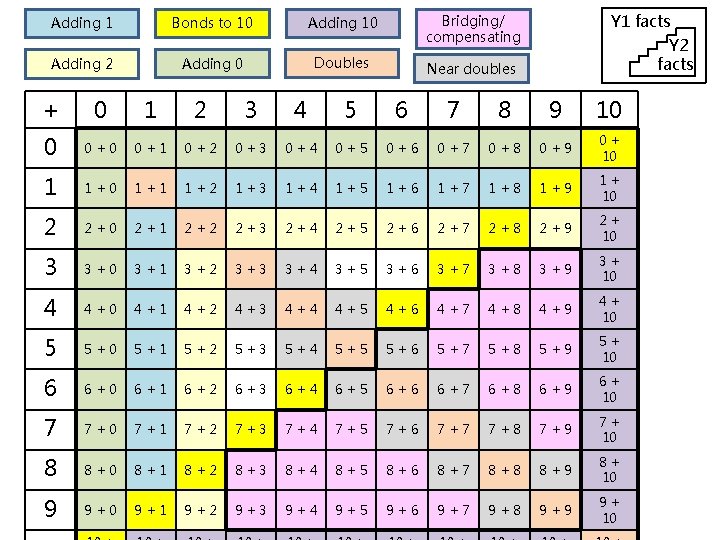
Adding 1 Bonds to 10 Adding 10 Bridging/ compensating Adding 2 Adding 0 Doubles Near doubles Y 1 facts Y 2 facts + 0 1 2 3 4 5 6 7 8 9 10 0 0+1 0+2 0+3 0+4 0+5 0+6 0+7 0+8 0+9 0+ 10 1 1+0 1+1 1+2 1+3 1+4 1+5 1+6 1+7 1+8 1+9 1+ 10 2 2+0 2+1 2+2 2+3 2+4 2+5 2+6 2+7 2+8 2+9 2+ 10 3 3+0 3+1 3+2 3+3 3+4 3+5 3+6 3+7 3+8 3+9 3+ 10 4 4+0 4+1 4+2 4+3 4+4 4+5 4+6 4+7 4+8 4+9 4+ 10 5 5+0 5+1 5+2 5+3 5+4 5+5 5+6 5+7 5+8 5+9 5+ 10 6 6+0 6+1 6+2 6+3 6+4 6+5 6+6 6+7 6+8 6+9 6+ 10 7 7+0 7+1 7+2 7+3 7+4 7+5 7+6 7+7 7+8 7+9 7+ 10 8 8+0 8+1 8+2 8+3 8+4 8+5 8+6 8+7 8+8 8+9 8+ 10 9 9+0 9+1 9+2 9+3 9+4 9+5 9+6 9+7 9+8 9+9 9+ 10
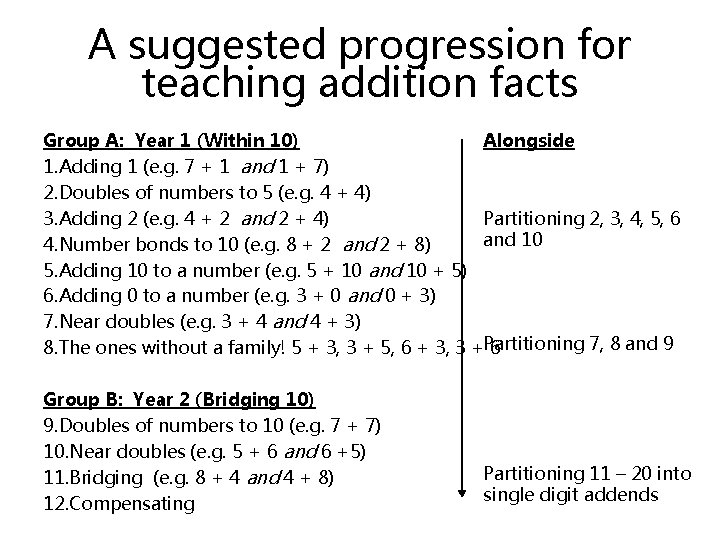
A suggested progression for teaching addition facts Group A: Year 1 (Within 10) Alongside 1. Adding 1 (e. g. 7 + 1 and 1 + 7) 2. Doubles of numbers to 5 (e. g. 4 + 4) 3. Adding 2 (e. g. 4 + 2 and 2 + 4) Partitioning 2, 3, 4, 5, 6 and 10 4. Number bonds to 10 (e. g. 8 + 2 and 2 + 8) 5. Adding 10 to a number (e. g. 5 + 10 and 10 + 5) 6. Adding 0 to a number (e. g. 3 + 0 and 0 + 3) 7. Near doubles (e. g. 3 + 4 and 4 + 3) 7, 8 and 9 8. The ones without a family! 5 + 3, 3 + 5, 6 + 3, 3 +Partitioning 6 Group B: Year 2 (Bridging 10) 9. Doubles of numbers to 10 (e. g. 7 + 7) 10. Near doubles (e. g. 5 + 6 and 6 +5) 11. Bridging (e. g. 8 + 4 and 4 + 8) 12. Compensating Partitioning 11 – 20 into single digit addends
- Slides: 2