
Addictions and Substance Abuse Flying Arrowhead Definition Substance
Addictions and Substance Abuse Flying Arrowhead

Definition ● Substance abuse: harmful or hazardous use of psychoactive substances, alcohol, and illicit drugs. Dependence Syndrome: cluster of behavioural, cognitive, and physiological phenomena ● ● ● Strong desire to take the drug Difficulties in controlling its use Persistent use, despite harms Higher priority given to drug use Increased tolerance Physical withdrawal state
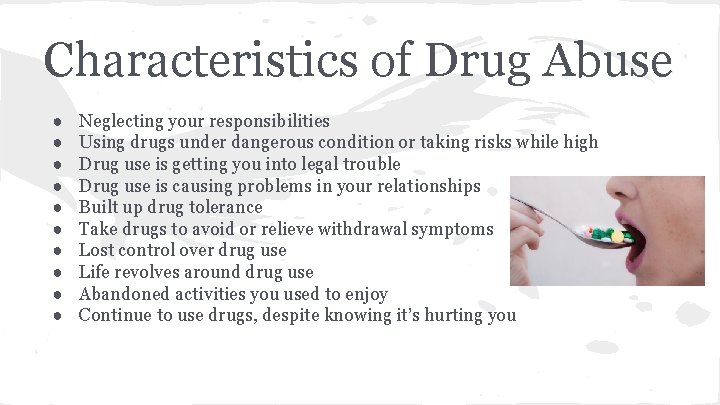
Characteristics of Drug Abuse ● ● ● ● ● Neglecting your responsibilities Using drugs under dangerous condition or taking risks while high Drug use is getting you into legal trouble Drug use is causing problems in your relationships Built up drug tolerance Take drugs to avoid or relieve withdrawal symptoms Lost control over drug use Life revolves around drug use Abandoned activities you used to enjoy Continue to use drugs, despite knowing it’s hurting you
It gets bad. http: //www. tlc. com/tv-shows/other-shows/videos/addicted-a-near-deathexperience/
Symptoms - Psychological ● ● ● Unexplained change in personality or attitude Sudden mood swings, irritability, or angry outbursts Periods of unusual hyperactivity, agitation, or giddiness Lack of motivation; appears lethargic or “spaced out” Appears fearful, anxious, or paranoid, with no reason
Symptoms - Physical ● ● Bloodshot eyes, pupils larger or smaller than usual Changes in appetite or sleep patterns Sudden weight loss or weight gain Deterioration of physical appearance, personal grooming habits ● Unusual smells on breath, body, and clothing ● Tremors, slurred speech, or impaired coordination

Think about the hottest you’ve EVER been? Where were you? What did it feel like?

Symptoms - Behavioral ● Drop in attendance and performance at work or school ● Unexplained need for money or financial problems. Borrow or steal. ● Engaging in secretive or suspicious behaviors ● Sudden change in friends, favorite hangouts, and hobbies ● Frequently getting into trouble (fights, accidents, illegal activities)
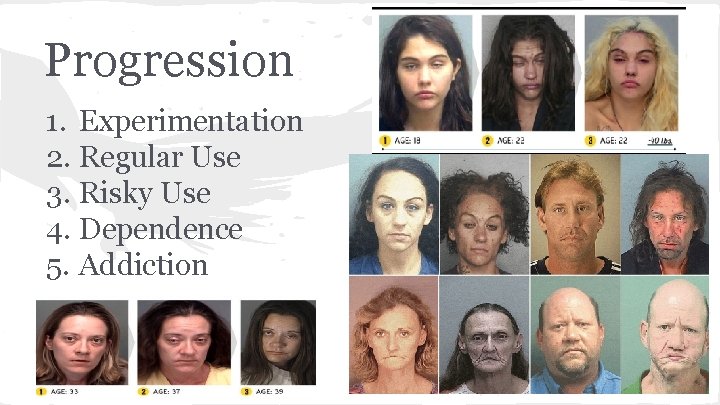
Progression 1. Experimentation 2. Regular Use 3. Risky Use 4. Dependence 5. Addiction
Specific Needs DON’T ● Attempt to punish, threaten, bribe, or preach ● Try to be a martyr. Avoid emotional appeals that increase guilt ● Cover up or make excuses for the drug abuser, or shield of consequences ● Take over their responsibilities ● Hide or throw out drugs ● Argue with the person when they are high ● Take drugs with the drug abuser ● Feel guilty or responsible for another’s behavior
Medication Can help to in detoxification but in itself it is not treatment, only the first step ● Opioids (heroin and morphine): Methadone, buprenorphine, naltrexone o Suppress withdrawal symptoms and relieve cravings ● Tobacco: Nicotine replacement therapies - patch, spray, gum, lozenges o Bupropion and varenicline: help prevent relapse ● Alcohol: Naltrexone, acamprosate, disulfiram o Blocks opioid receptors involved in rewarding effects of drinking § Reduces relapse o Reduces symptoms of protracted withdrawal o Produces unpleasant reactions
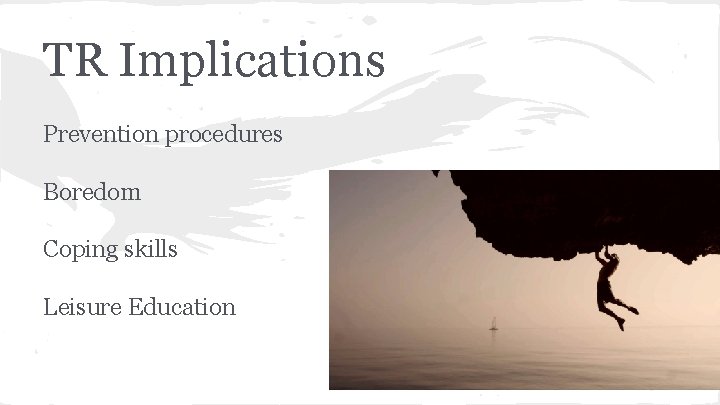
TR Implications Prevention procedures Boredom Coping skills Leisure Education
http: //www. mormonchannel. org/watch/series/his-grace/drug-addiction-and-the-loss-of-a-lovedone
- Slides: 15