
Addiction What is it What causes it What
- Slides: 13
Addiction What is it? What causes it? What can we do about it?
Definition of Addiction A chronic, relapsing behavioral disorder. Pattern: Remissions and relapses Progression theories: ◦ Gateway progression ◦ Continuum of drug use ◦ “Maturing out”
Components/Indicators of Addiction : ◦ ◦ Tolerance Physiological dependence Psychological dependence (habituation) Craving
There are many different types of Addiction… Drug Addiction is the most talked about but it is just one and many other addictions can be dangerous. There are, (and this list is not limited, ) Alcohol Addiction Tobacco Addiction Food Addictions Gambling Addictions Sex Addiction Internet Addiction
Substance Features in Addiction With regards to Drug Use some substances are more likely to be associated with addiction than others, but there are many exceptions both ways. ◦ ◦ ◦ ◦ Heroin Cocaine Methamphetamine Ecstasy Alcohol Psilocybin Mushrooms Marijuana PCP
1. Treatments for Addiction Focused on Drug Addiction but Also applicable to other addictions. The decision ◦ Denial met by intervention or reality ◦ Cognitive changes Pre-contemplation: No problem! Contemplation: Maybe there’s a problem… Preparation Action Maintenance ◦ Cognitive therapy: Motivational interviewing
2. Treatment Goals Abstinence: The 12 -step approach Controlled use Harm reduction ◦ ◦ ◦ Substitute addictions Methadone Gum-chewing Needle exchanges Water supply
3. Treatment Stages Detoxification (Detox) ◦ “Cold turkey” ◦ Gradual ◦ With pharmacological support Active treatment Relapse prevention
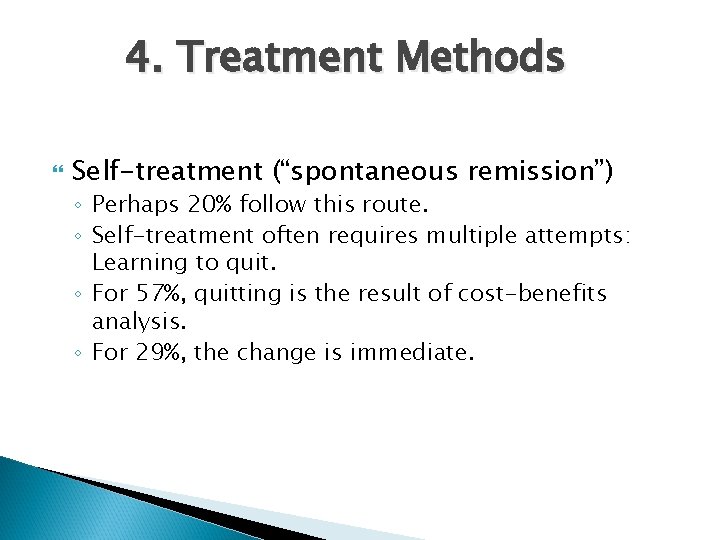
4. Treatment Methods Self-treatment (“spontaneous remission”) ◦ Perhaps 20% follow this route. ◦ Self-treatment often requires multiple attempts: Learning to quit. ◦ For 57%, quitting is the result of cost-benefits analysis. ◦ For 29%, the change is immediate.
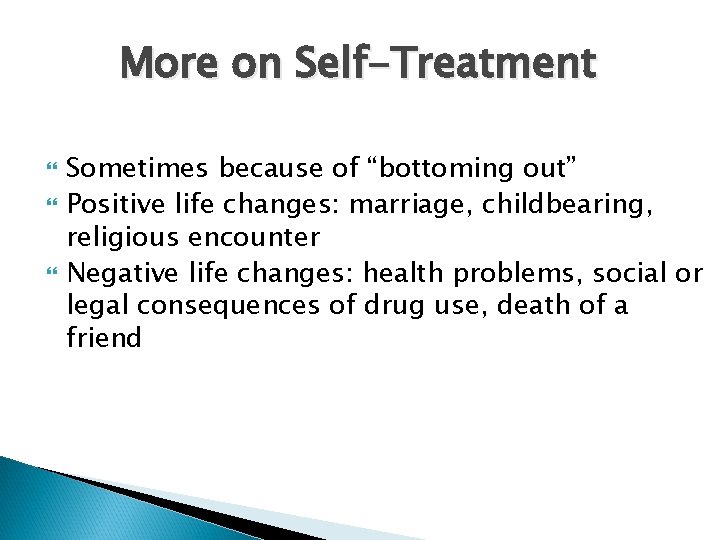
More on Self-Treatment Sometimes because of “bottoming out” Positive life changes: marriage, childbearing, religious encounter Negative life changes: health problems, social or legal consequences of drug use, death of a friend
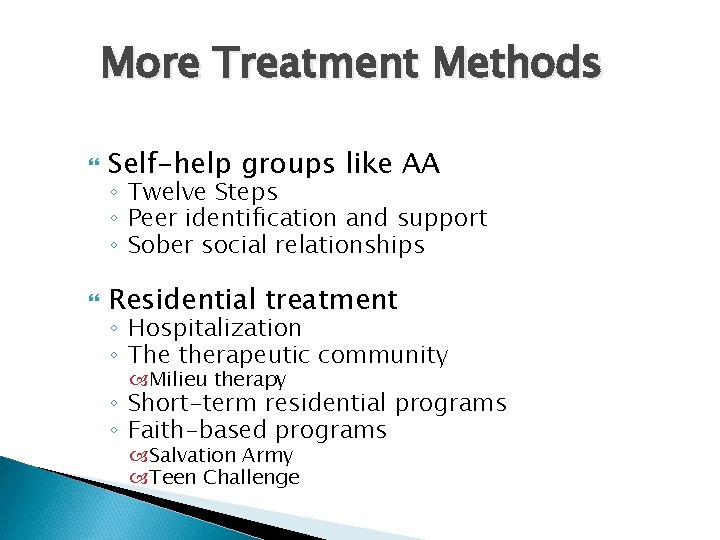
More Treatment Methods Self-help groups like AA Residential treatment ◦ Twelve Steps ◦ Peer identification and support ◦ Sober social relationships ◦ Hospitalization ◦ The therapeutic community Milieu therapy ◦ Short-term residential programs ◦ Faith-based programs Salvation Army Teen Challenge
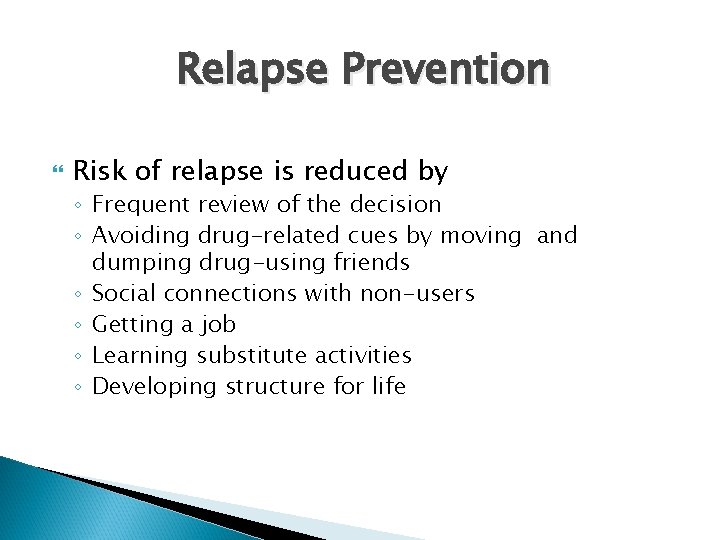
Relapse Prevention Risk of relapse is reduced by ◦ Frequent review of the decision ◦ Avoiding drug-related cues by moving and dumping drug-using friends ◦ Social connections with non-users ◦ Getting a job ◦ Learning substitute activities ◦ Developing structure for life
The Bottom Line If you, or somebody you know needs help, help them get it. See your health care professional. Don’t be afraid to ask for help.