
Addiction Part 1 Understanding the SUD continuum Alna

- Slides: 35
Addiction Part 1 Understanding the SUD continuum Alëna A. Balasanova, MD, FAPA April 5, 2019
Disclosures • I have no relevant financial relationships with commercial interests. • I have no actual or potential conflicts of interest in relation to this presentation
Objectives 1. Define addiction and substance use disorder and review related terminology 2. Outline the DSM-5 criteria for substance use disorder
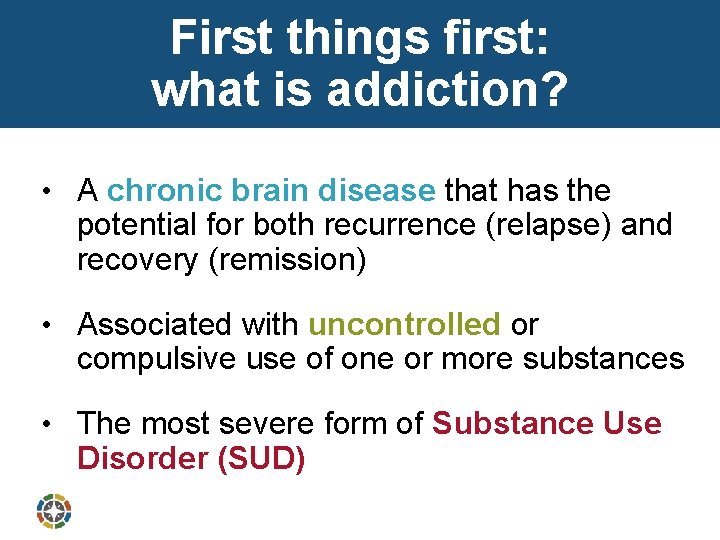
First things first: what is addiction? • A chronic brain disease that has the potential for both recurrence (relapse) and recovery (remission) • Associated with uncontrolled or compulsive use of one or more substances • The most severe form of Substance Use Disorder (SUD)
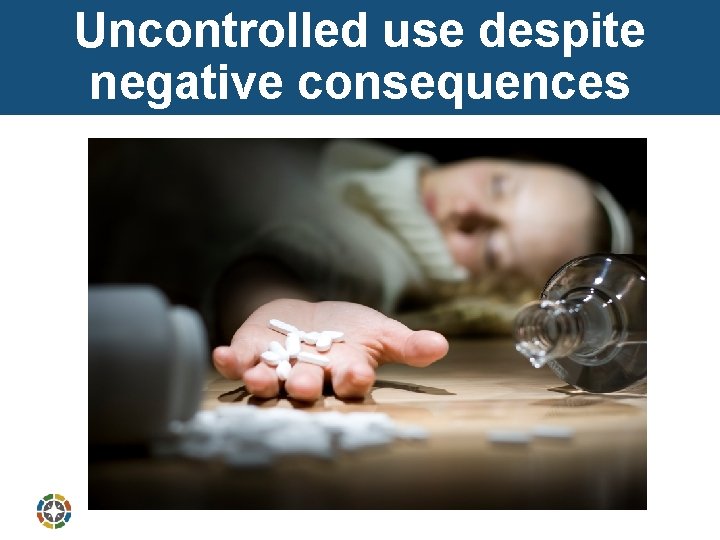
Uncontrolled use despite negative consequences 5
Okay, so what then is SUD? • A medical illness caused by repeated misuse of a substance or substances • Develops gradually over time • Leads to brain changes
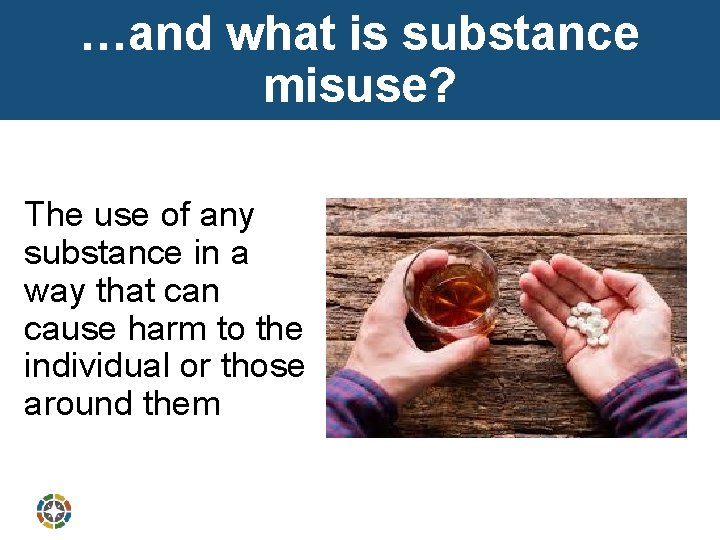
…and what is substance misuse? The use of any substance in a way that can cause harm to the individual or those around them
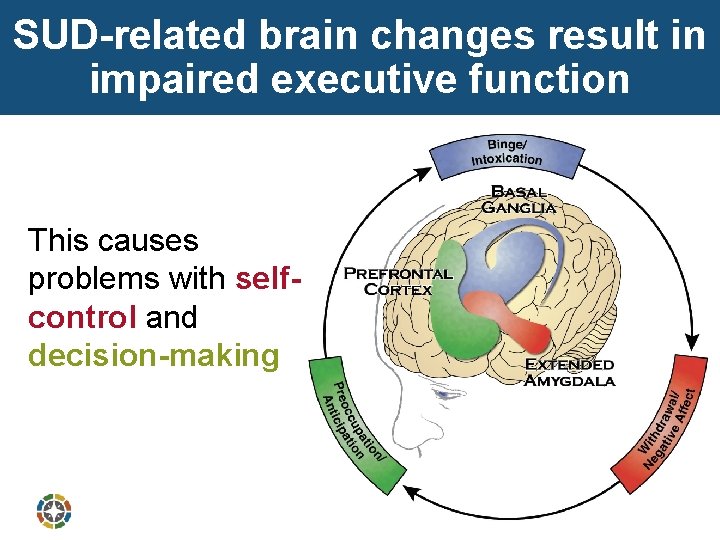
SUD-related brain changes result in impaired executive function This causes problems with selfcontrol and decision-making
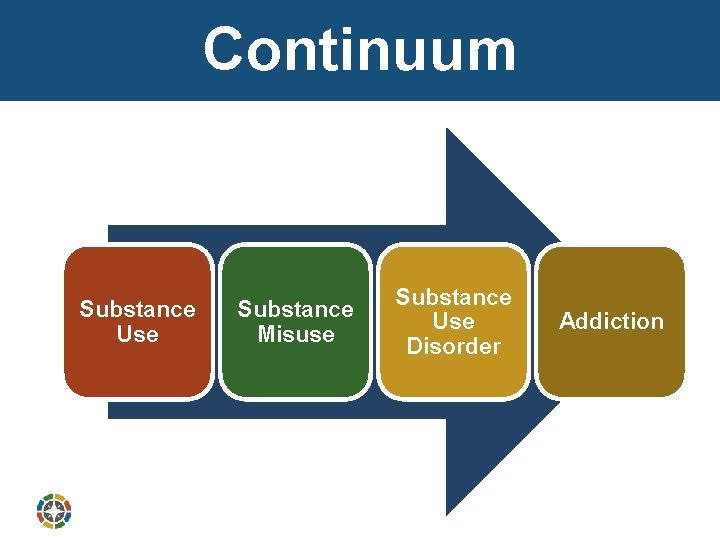
Continuum Substance Use Substance Misuse Substance Use Disorder Addiction
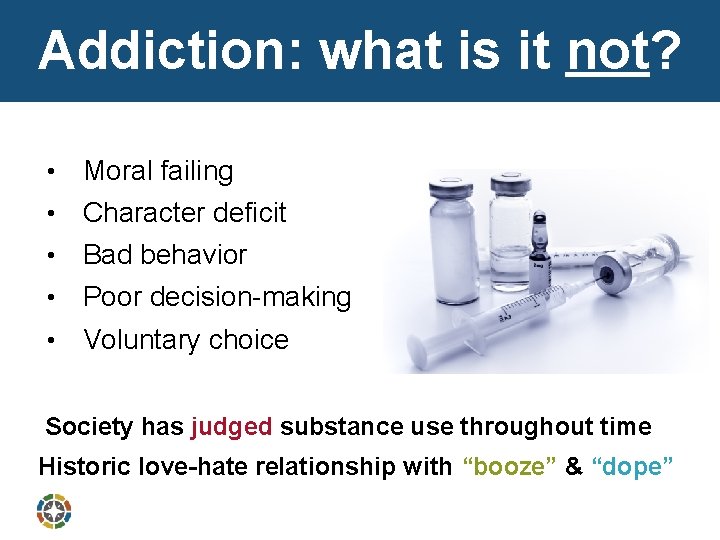
Addiction: what is it not? • Moral failing • Character deficit • Bad behavior • Poor decision-making • Voluntary choice Society has judged substance use throughout time Historic love-hate relationship with “booze” & “dope”
The Language of Addiction
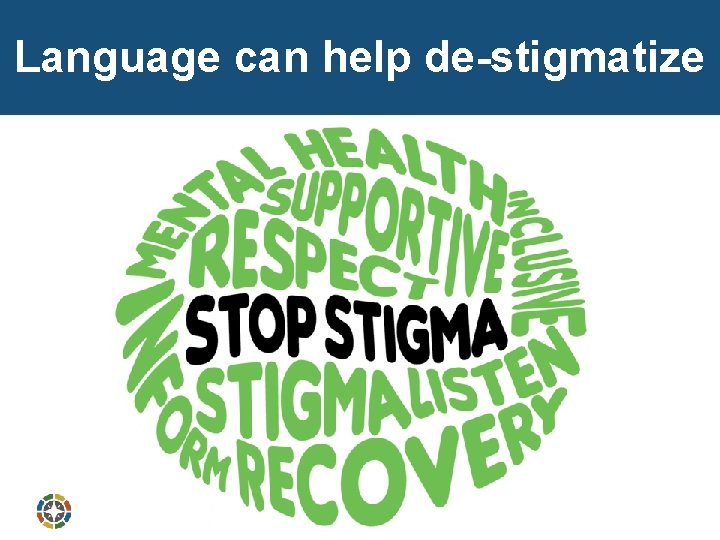
Language can help de-stigmatize
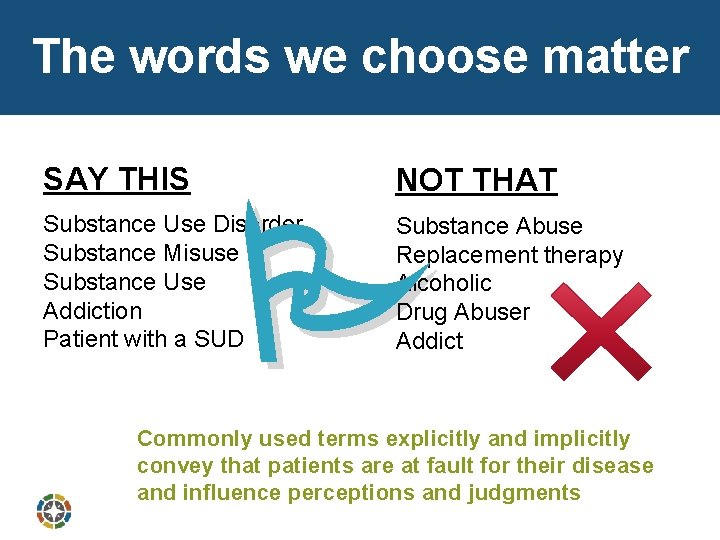
The words we choose matter SAY THIS NOT THAT Substance Use Disorder Substance Misuse Substance Use Addiction Patient with a SUD Substance Abuse Replacement therapy Alcoholic Drug Abuser Addict Commonly used terms explicitly and implicitly convey that patients are at fault for their disease and influence perceptions and judgments
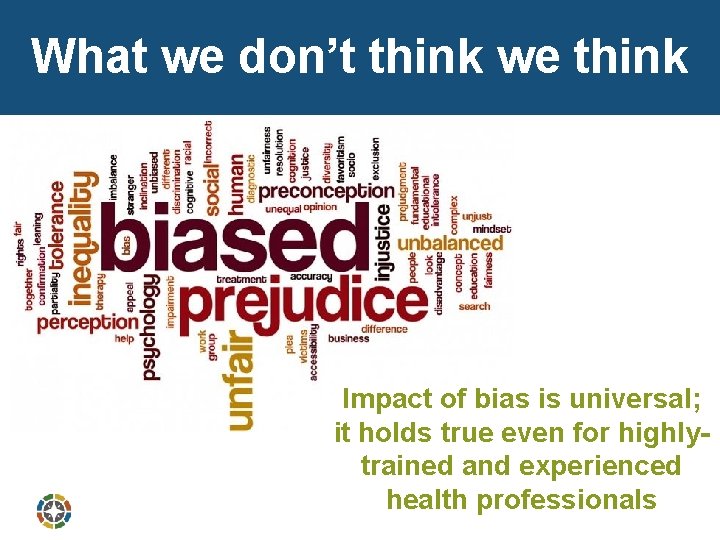
What we don’t think we think Impact of bias is universal; it holds true even for highlytrained and experienced health professionals
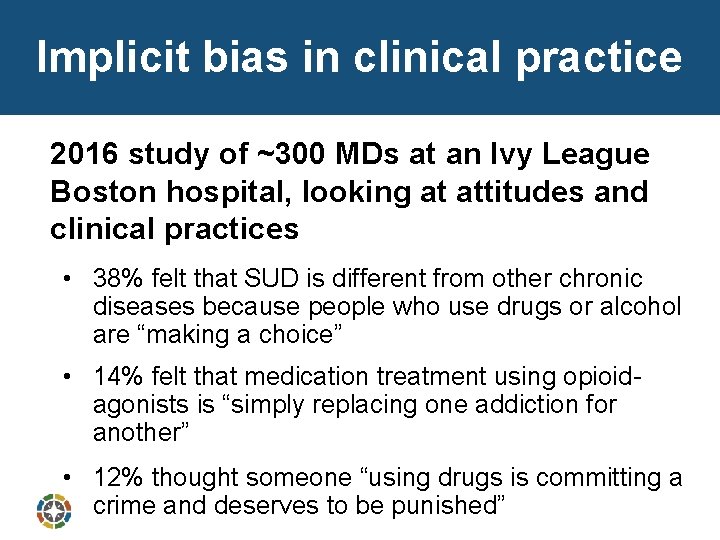
Implicit bias in clinical practice 2016 study of ~300 MDs at an Ivy League Boston hospital, looking at attitudes and clinical practices • 38% felt that SUD is different from other chronic diseases because people who use drugs or alcohol are “making a choice” • 14% felt that medication treatment using opioidagonists is “simply replacing one addiction for another” • 12% thought someone “using drugs is committing a crime and deserves to be punished”
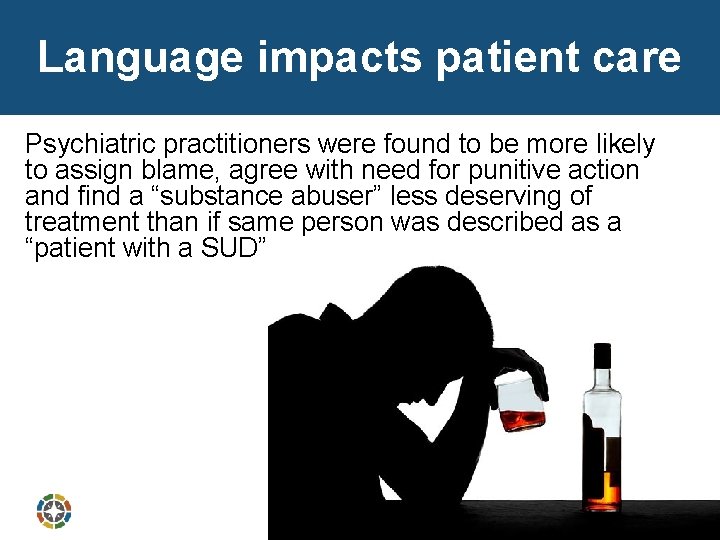
Language impacts patient care Psychiatric practitioners were found to be more likely to assign blame, agree with need for punitive action and find a “substance abuser” less deserving of treatment than if same person was described as a “patient with a SUD”
Bias impacts clinicians also Health professionals generally hold negative attitudes toward patients with SUDs. Such attitudes are linked to lower levels of clinician empathy and engagement burnout for clinician, poorer outcomes for patient
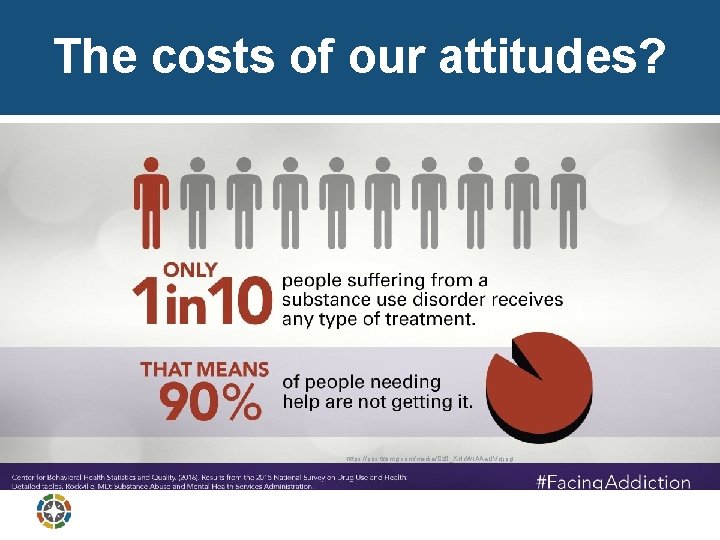
The costs of our attitudes? The costs of our attitudes…? https: //pbs. twimg. com/media/Cz 0_XHc. WIAAa. UVq. jpg
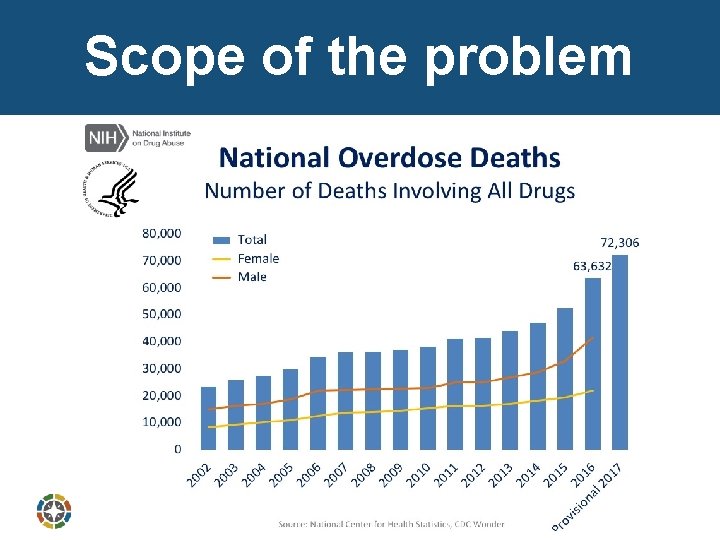
Scope of the problem
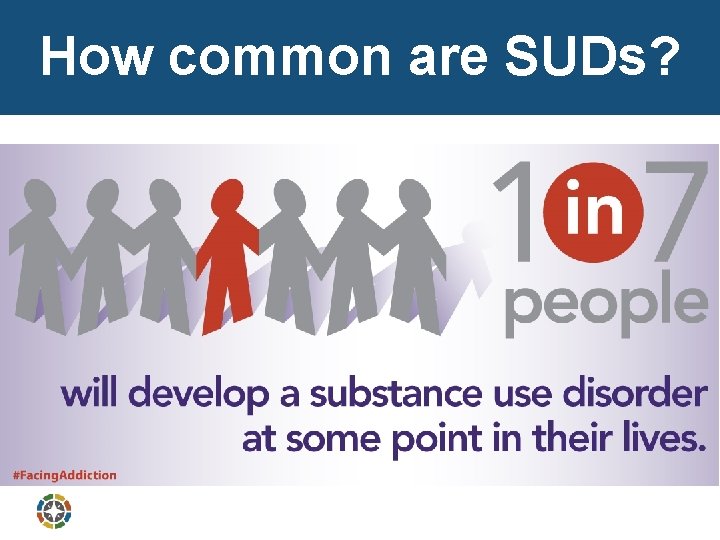
How common are SUDs?
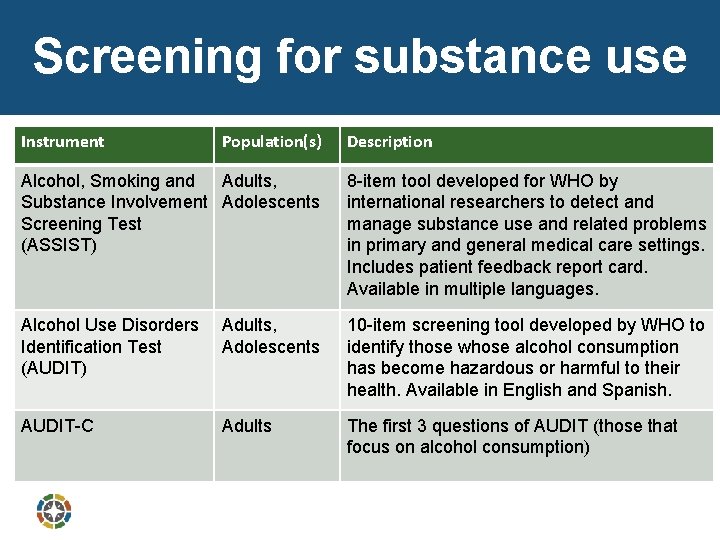
Screening for substance use Instrument Population(s) Description Alcohol, Smoking and Adults, Substance Involvement Adolescents Screening Test (ASSIST) 8 -item tool developed for WHO by international researchers to detect and manage substance use and related problems in primary and general medical care settings. Includes patient feedback report card. Available in multiple languages. Alcohol Use Disorders Identification Test (AUDIT) Adults, Adolescents 10 -item screening tool developed by WHO to identify those whose alcohol consumption has become hazardous or harmful to their health. Available in English and Spanish. AUDIT-C Adults The first 3 questions of AUDIT (those that focus on alcohol consumption)
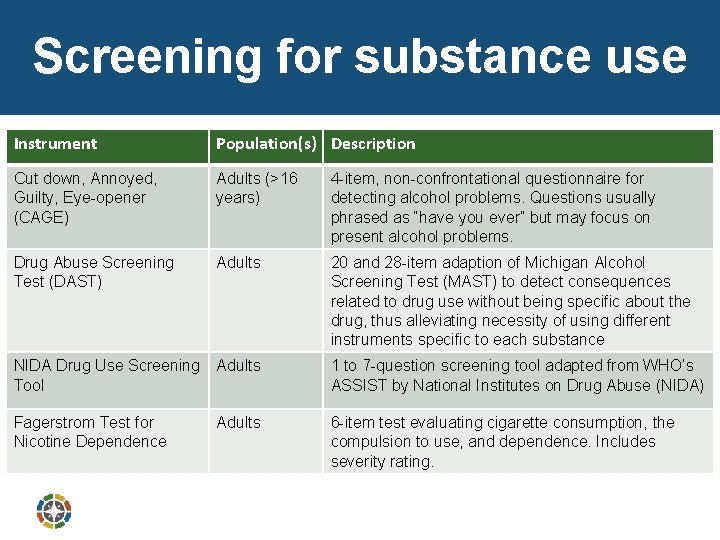
Screening for substance use Instrument Population(s) Description Cut down, Annoyed, Guilty, Eye-opener (CAGE) Adults (>16 years) 4 -item, non-confrontational questionnaire for detecting alcohol problems. Questions usually phrased as “have you ever” but may focus on present alcohol problems. Drug Abuse Screening Test (DAST) Adults 20 and 28 -item adaption of Michigan Alcohol Screening Test (MAST) to detect consequences related to drug use without being specific about the drug, thus alleviating necessity of using different instruments specific to each substance NIDA Drug Use Screening Tool Adults 1 to 7 -question screening tool adapted from WHO’s ASSIST by National Institutes on Drug Abuse (NIDA) Fagerstrom Test for Nicotine Dependence Adults 6 -item test evaluating cigarette consumption, the compulsion to use, and dependence. Includes severity rating.
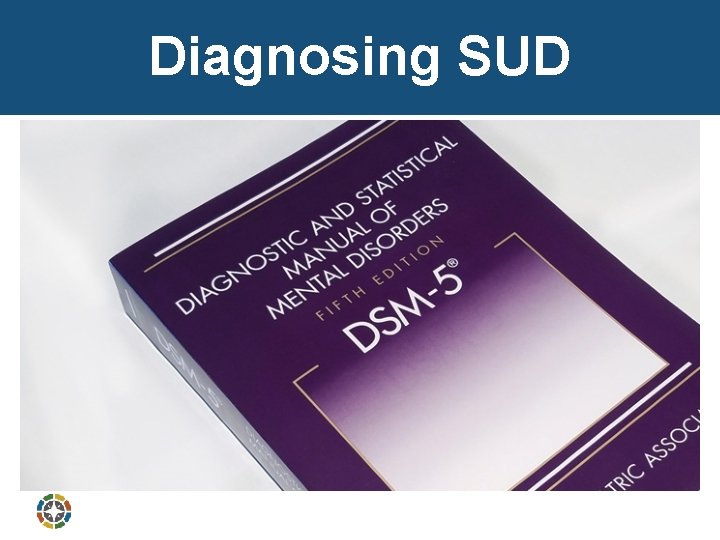
Diagnosing SUD
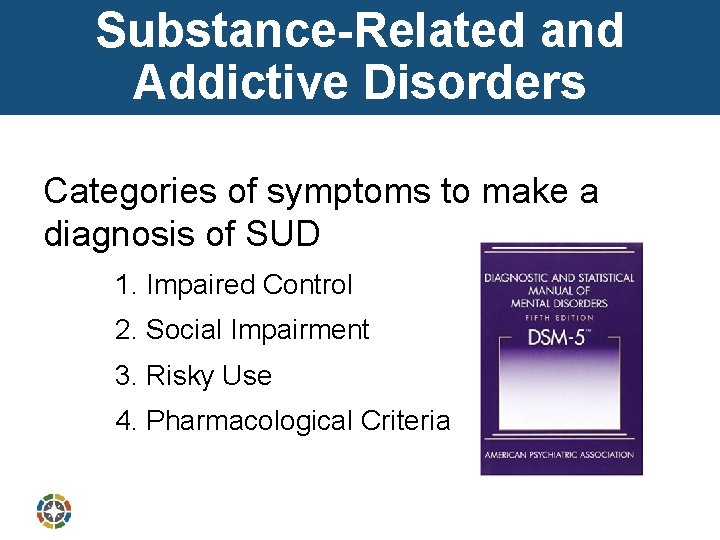
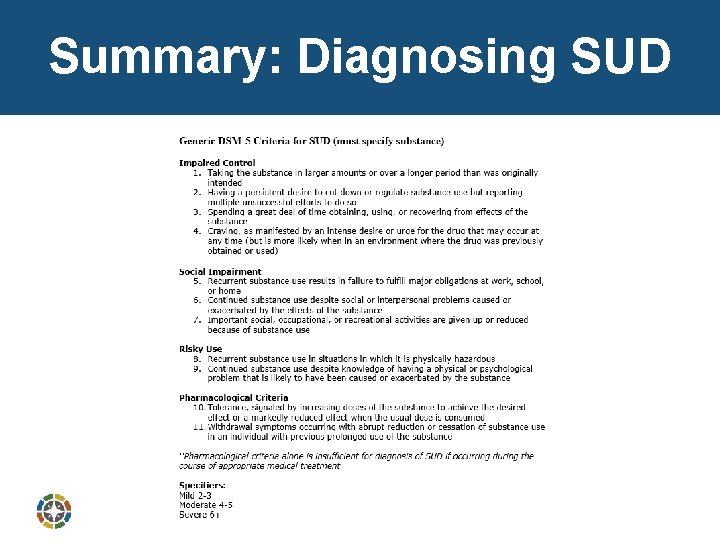
Substance-Related and Addictive Disorders Categories of symptoms to make a diagnosis of SUD 1. Impaired Control 2. Social Impairment 3. Risky Use 4. Pharmacological Criteria
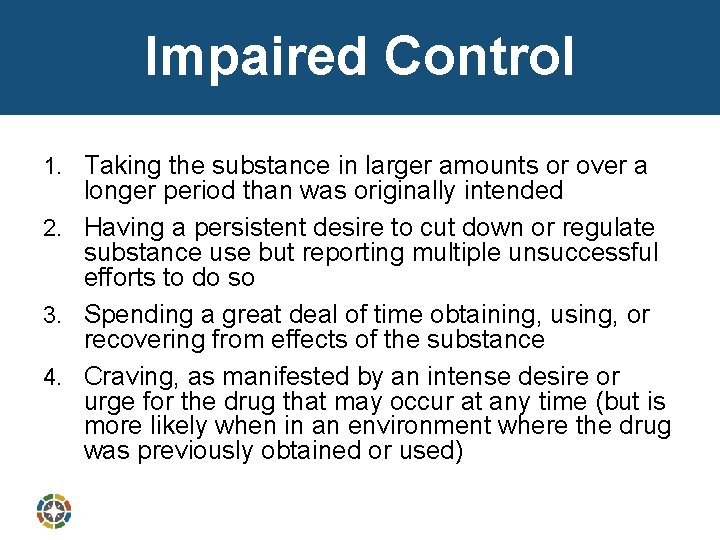
Impaired Control 1. Taking the substance in larger amounts or over a longer period than was originally intended 2. Having a persistent desire to cut down or regulate substance use but reporting multiple unsuccessful efforts to do so 3. Spending a great deal of time obtaining, using, or recovering from effects of the substance 4. Craving, as manifested by an intense desire or urge for the drug that may occur at any time (but is more likely when in an environment where the drug was previously obtained or used)
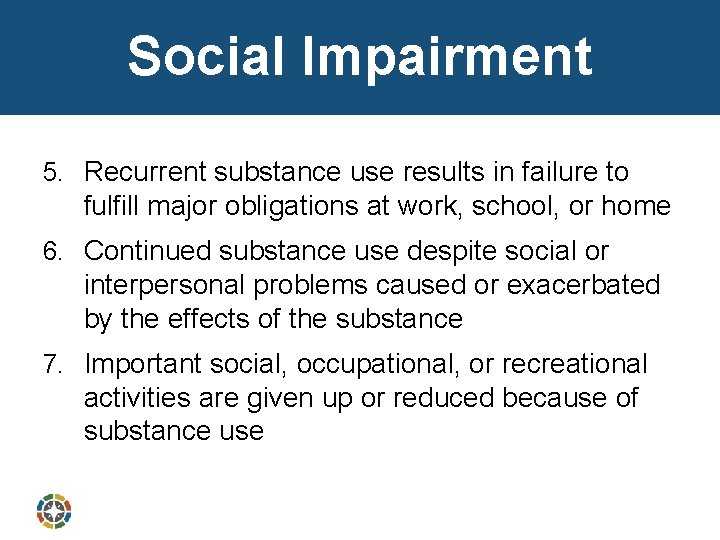
Social Impairment 5. Recurrent substance use results in failure to fulfill major obligations at work, school, or home 6. Continued substance use despite social or interpersonal problems caused or exacerbated by the effects of the substance 7. Important social, occupational, or recreational activities are given up or reduced because of substance use
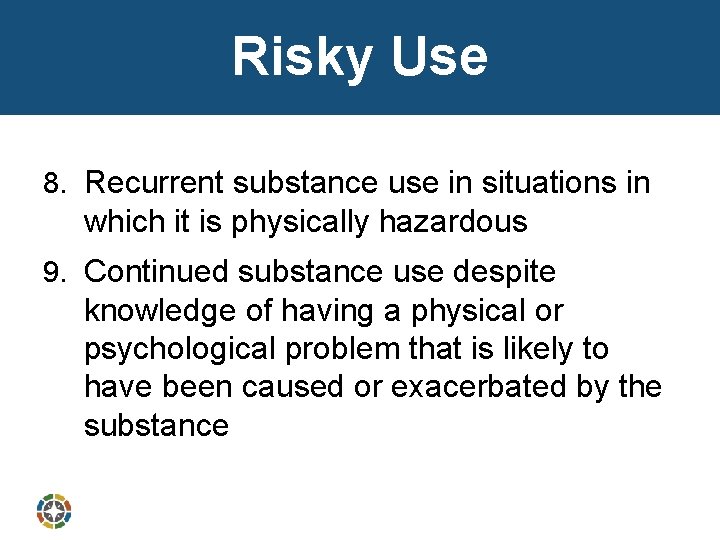
Risky Use 8. Recurrent substance use in situations in which it is physically hazardous 9. Continued substance use despite knowledge of having a physical or psychological problem that is likely to have been caused or exacerbated by the substance
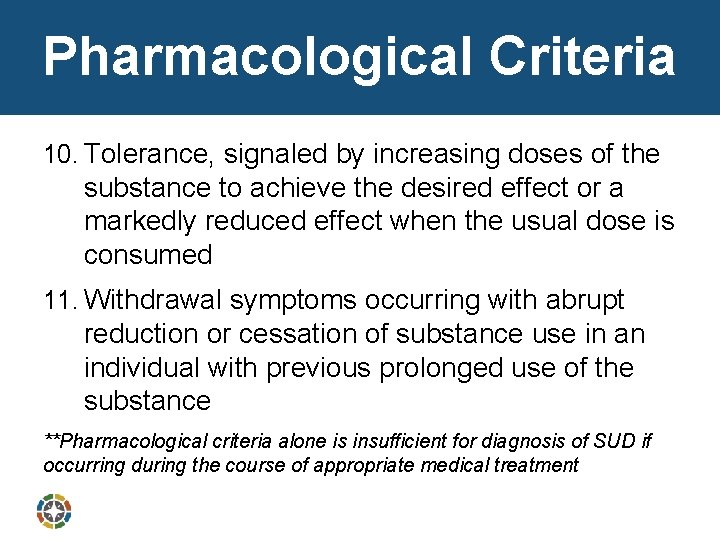
Pharmacological Criteria 10. Tolerance, signaled by increasing doses of the substance to achieve the desired effect or a markedly reduced effect when the usual dose is consumed 11. Withdrawal symptoms occurring with abrupt reduction or cessation of substance use in an individual with previous prolonged use of the substance **Pharmacological criteria alone is insufficient for diagnosis of SUD if occurring during the course of appropriate medical treatment
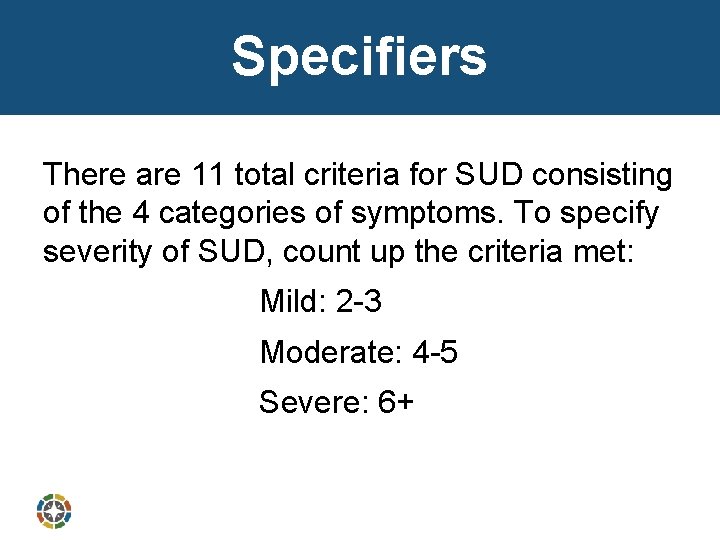
Specifiers There are 11 total criteria for SUD consisting of the 4 categories of symptoms. To specify severity of SUD, count up the criteria met: Mild: 2 -3 Moderate: 4 -5 Severe: 6+
Summary: Diagnosing SUD
Take-home points • Addiction is chronic, relapsing medical illness • The language that we use to describe addiction and patients with SUDs can help de-stigmatize these conditions • It doesn’t take much (2 symptoms) to meet criteria for a diagnosis of SUD using DSM-5
References Botticelli MP, Koh HK. Changing the language of addiction. JAMA. 2016; 316(13): 1361 -1362 Center for Behavioral Health Statistics and Quality. (2016). Key substance use and mental health indicators in the United States: Results from the 2015 National Survey on Drug Use and Health (HHS Publication No. SMA 16 -4984, NSDUH Series H-51). Retrieved from http: //www. samhsa. gov/data/ Center for Substance Abuse Treatment. Clinical Guidelines for the Use of Buprenorphine in the Treatment of Opioid Addiction. Treatment Improvement Protocol (TIP) Series 40. DHHS Publication No. (SMA) 04 -3939. Rockville, MD: Substance Abuse and Mental Health Services Administration, 2004. Grant BF, Goldstein RB, Saha TD, et al. Epidemiology of DSM-5 alcohol use disorder: Results from the National Hedegaard H, Warner M, Miniño AM. Drug overdose deaths in the United States, 1999– 2015. NCHS data brief, no 273. Hyattsville, MD: National Center for Health Statistics. 2017. Epidemiologic Survey on Alcohol and Related Conditions III. JAMA Psychiatry. 2015; 72(8): 757 -766 Grant BF, Saha TD, Ruan WJ, et al. Epidemiology of DSM-5 Drug Use Disorder: Results from the National Epidemiologic Survey on Alcohol and Related Conditions III. JAMA Psychiatry. 2016; 73(1): 39 -47. Mc. Lellan AT, Lewis DC, O’Brien CP et al. Drug Dependence: a Chronic Medical Illness. JAMA 200; 284(13): 1689 -1695. Rudd RA, Seth P, David F, Scholl L. Increases in Drug and Opioid-Involved Overdose Deaths — United States, 2010– 2015. MMWR Morb Mortal Wkly Rep 2016; 65: 1445– 1452. DOI: http: //dx. doi. org/10. 15585/mmwr. mm 655051 e 1 U. S. Department of Health and Human Services (HHS), Office of the Surgeon General, Facing Addiction in America: The Surgeon General’s Report on Alcohol, Drugs, and Health. Washington, DC: HHS, November 2016. Van Boekel LC, Brouwers EP, van Weeghel J, et al. Stigma among health professionals towards patients with substance use disorders and its consequences for healthcare delivery: systematic review. Drug Alcohol Depend. 2013 Jul 1; 131(12): 23 -35. Wakeman SE, Pham-Kanter G, Donelan K. Attitudes, practices and preparedness to care for patients with substance use disorder: Results form a survey of general internists. Substance Abuse. 2016; 47(4): 635 -641
Working with communities to address the opioid crisis. ² SAMHSA’s State Targeted Response Technical Assistance (STR-TA) Consortium assists STR grantees and other organizations, by providing the resources and technical assistance needed to address the opioid crisis. ² Technical assistance is available to support the evidence-based prevention, treatment, and recovery of opioid use disorders. Funding for this initiative was made possible (in part) by grant no. 6 H 79 TI 080816 from SAMHSA. The views expressed in written conference materials or publications and by speakers and moderators do not necessarily reflect the official policies of the Department of Health and Human Services; nor does mention of trade names, commercial practices, or organizations imply endorsement by the U. S. Government. 33
Working with communities to address the opioid crisis. ² The STR-TA Consortium provides local, experienced consultants to communities and organizations to help address the opioid public health crisis. ² The STR-TA Consortium accepts requests for education and training resources. ² Each state/territory has a designated team, led by a regional Technology Transfer Specialist (TTS) who is an expert in implementing evidence-based practices. Funding for this initiative was made possible (in part) by grant no. 6 H 79 TI 080816 from SAMHSA. The views expressed in written conference materials or publications and by speakers and moderators do not necessarily reflect the official policies of the Department of Health and Human Services; nor does mention of trade names, commercial practices, or organizations imply endorsement by the U. S. Government. 34
Contact the STR-TA Consortium ² To ask questions or submit a technical assistance request: • Visit www. opioidresponsenetwork. org • Email str-ta@aaap. org • Call 401 -270 -5900 Funding for this initiative was made possible (in part) by grant no. 6 H 79 TI 080816 from SAMHSA. The views expressed in written conference materials or publications and by speakers and moderators do not necessarily reflect the official policies of the Department of Health and Human Services; nor does mention of trade names, commercial practices, or organizations imply endorsement by the U. S. Government. 35