
Addiction Medicine Practitioner as Expert Witness A Clinical





- Slides: 104
Addiction Medicine Practitioner as Expert Witness A Clinical Master Class David Kan, MD VA Medical Center, San Francisco Health Sciences Assistant Clinical Professor of Psychiatry, UCSF Executive Board, California Society of Addiction Medicine 1
Disclosure No relevant financial relationship with commercial interests.
Why Forensics? n Already part of practice n Change of pace n Never a dull moment n Payment comes from another pocket 3
Case Example n n 46 -year-old woman Claims emotional damages from workplace harassment Her psychologist testifies that her depression was caused by hostile work environment You (as expert) diagnose Borderline Personality Disorder and alcoholism 4
Case Example n At Trial: n n n Attorney: Do you claim to know more about the plaintiff than her treating psychologist who has seen her more than 60 times? You (expert): Yes. Attorney: Could you explain how that is possible? 5
Expert Witness n What makes you an expert? n What is your role? n VOLUNTEERS 6
What Makes You an Expert? n KNOWLEDGE AND EXPERIENCE n Qualifications n ASAM/ABAM n Board Certification n Society membership n Faculty appointment n Publications n Research 7
Expert vs. Advocate n n n Although it is Appropriate for Treating Clinicians to Advocate for Their Patients… Independent Experts should NEVER “Play Lawyer” and Advocate for Plaintiff or Defendant. Independent Experts should only Advocate for their own Evidence-Based Opinions – Nothing More, Nothing Less. 8
Forensic Ethics n No doctor-patient relationship n Not “primum non nocere” n Lacks confidentiality n Informed consent applies n Lacks peer review n Is it the practice of medicine? 9
Forensic Ethics n Striving for objectivity n Bias universal n Full database n n Contingency Fees n n You know what you know based upon what you know No! No! Treater vs. Expert 10
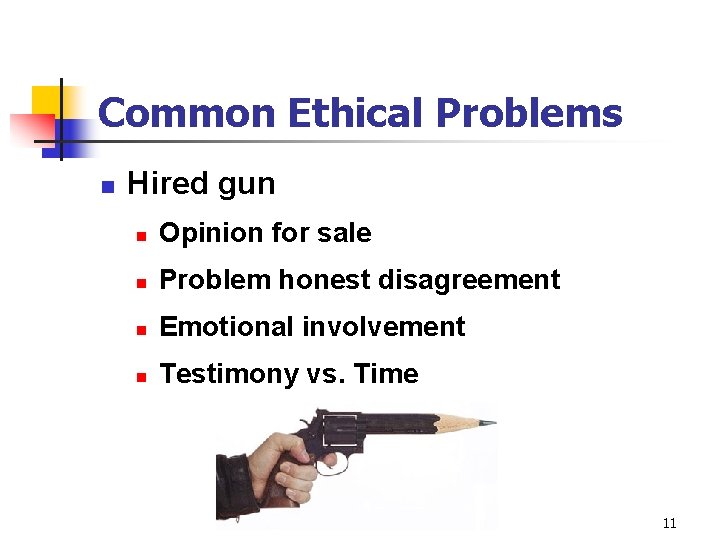
Common Ethical Problems n Hired gun n Opinion for sale n Problem honest disagreement n Emotional involvement n Testimony vs. Time 11
Common Ethical Problems n Being the Doctor n n Forensic-to-treatment mindset Warnings not issued n Confidentiality limits n Side of case n Refusal to answer questions n Breaks allowed 12
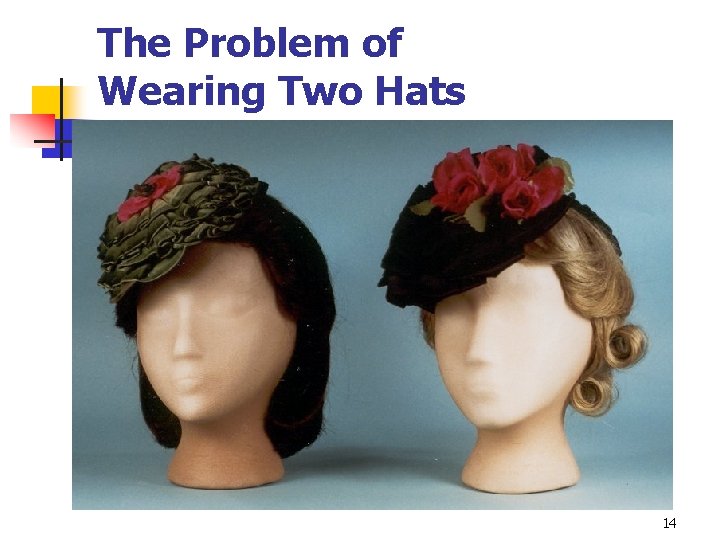
Advocacy Often Physicians Confuse Their Roles as Treating Clinicians with Their Roles As Independent Experts, Creating… 13
The Problem of Wearing Two Hats 14
The Problem is DUAL AGENCY …and ROLE CONFUSION 15
The Legal System 16
The Legal System n Case Law n n n Stare decisis – “let the decision stand” Common Law n Defines most crime n Defines civil actions “The legal system is not logical, it is legal” – Wm. Brandeis 17
Judicial Process n Adversarial vs. Inquisitional n Criminal Law n n State v. Defendant Civil Law n Plaintiff v. Defendant 18
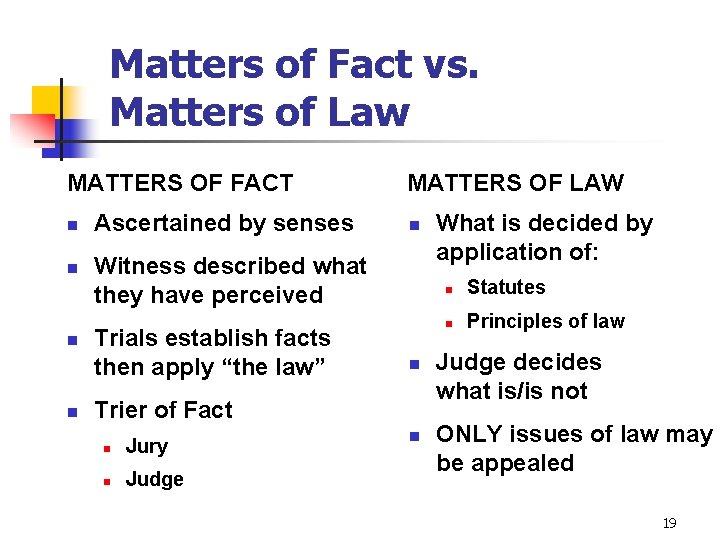
Matters of Fact vs. Matters of Law MATTERS OF FACT MATTERS OF LAW n n Ascertained by senses n Witness described what they have perceived Trials establish facts then apply “the law” n Trier of Fact n Jury n Judge n What is decided by application of: n Statutes n Principles of law Judge decides what is/is not ONLY issues of law may be appealed 19
Burden of Proof n Criminal n n n Except Insanity – Burden of Proof shifts to defendant Civil n n Prosecution One Party > Than the Other Worker’s Compensation n None per se 20
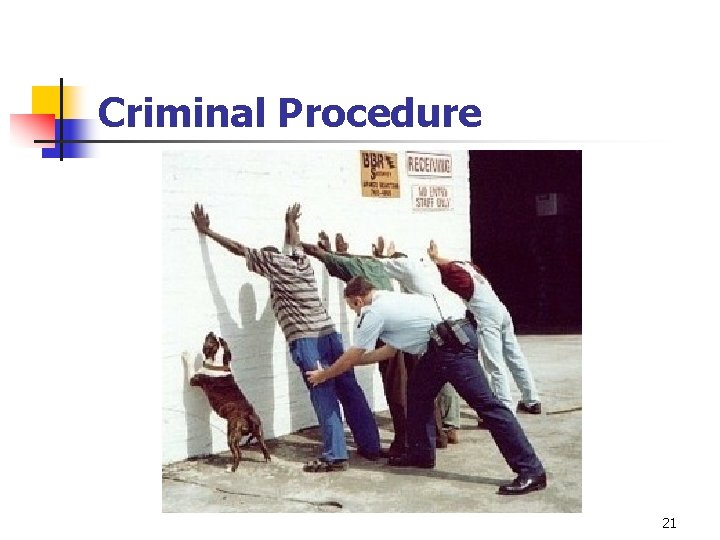
Criminal Procedure 21
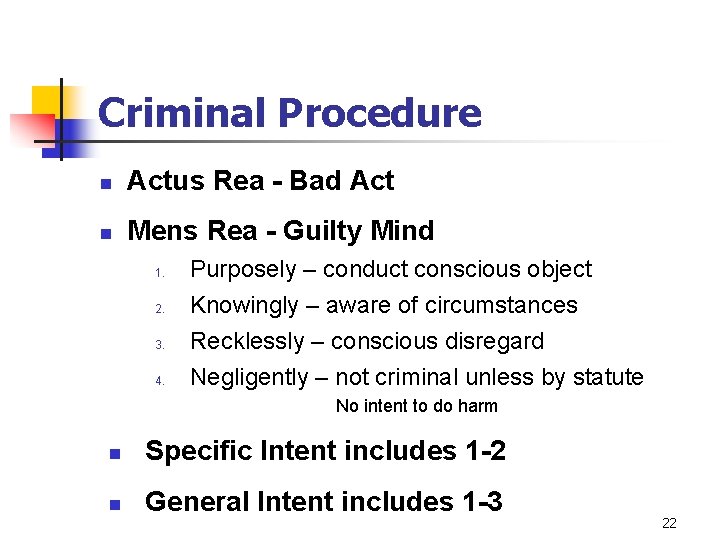
Criminal Procedure n Actus Rea - Bad Act n Mens Rea - Guilty Mind 1. 2. 3. 4. Purposely – conduct conscious object Knowingly – aware of circumstances Recklessly – conscious disregard Negligently – not criminal unless by statute No intent to do harm n Specific Intent includes 1 -2 n General Intent includes 1 -3 22
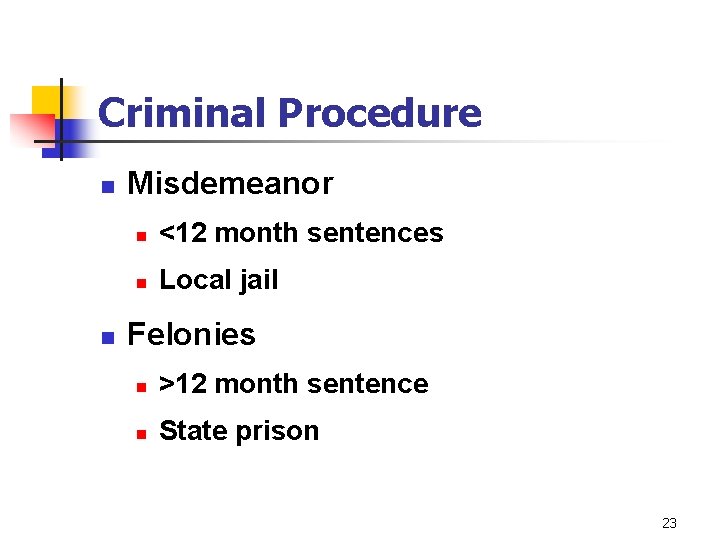
Criminal Procedure n n Misdemeanor n <12 month sentences n Local jail Felonies n >12 month sentence n State prison 23
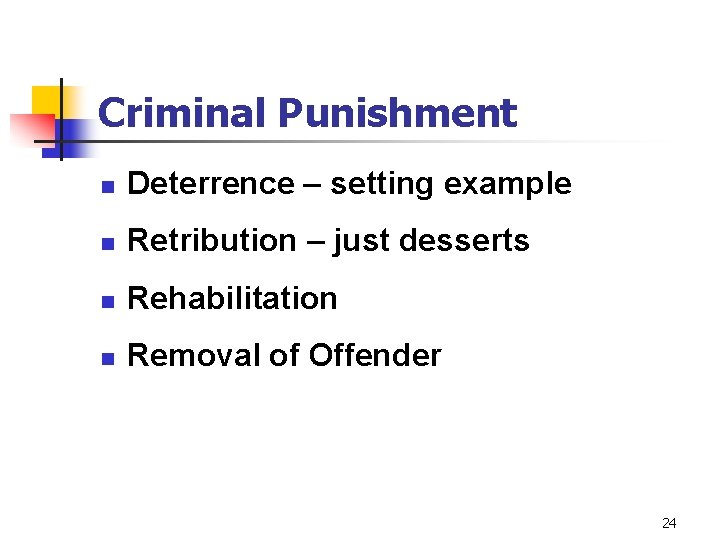
Criminal Punishment n Deterrence – setting example n Retribution – just desserts n Rehabilitation n Removal of Offender 24
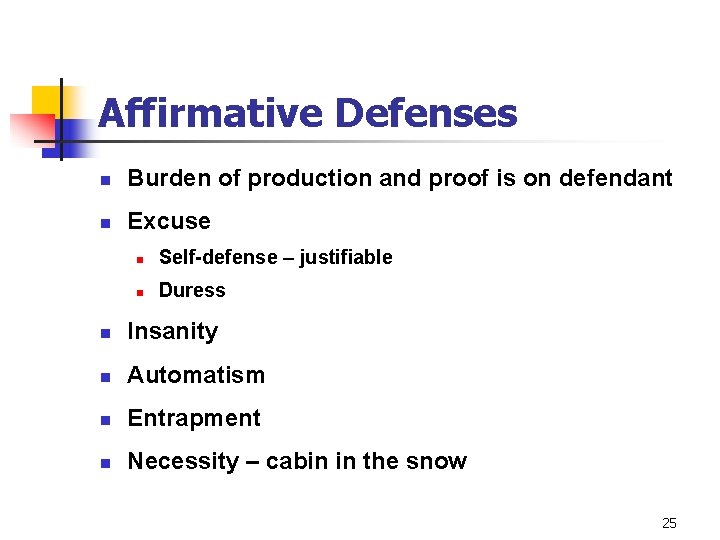
Affirmative Defenses n Burden of production and proof is on defendant n Excuse n Self-defense – justifiable n Duress n Insanity n Automatism n Entrapment n Necessity – cabin in the snow 25
Intoxication in Criminal Defense n Voluntary intoxication excluded n n Settled Psychosis n n May influence Actuality/Capacity May be exculpating DUI n Per se violation 26
Case Example n 50 -year-old man assaults wife n Shot her after argument n Claim: Intoxicated and can’t remember n n n Hx of Bipolar, family testifies not symptomatic Heavy drinker, 3 DUIs Threatens her – “you don’t have the balls to pull the trigger” – defendant then shoots wife 27
Case Example n Voluntary Intoxication n n Alcoholic blackout Bipolar Disorder n No evidence of symptoms 28
Civil Procedure n Discovery – exchange information n Interrogatories n Requests for documents (subpoena) n Depositions n Mental and Physical Examinations 29
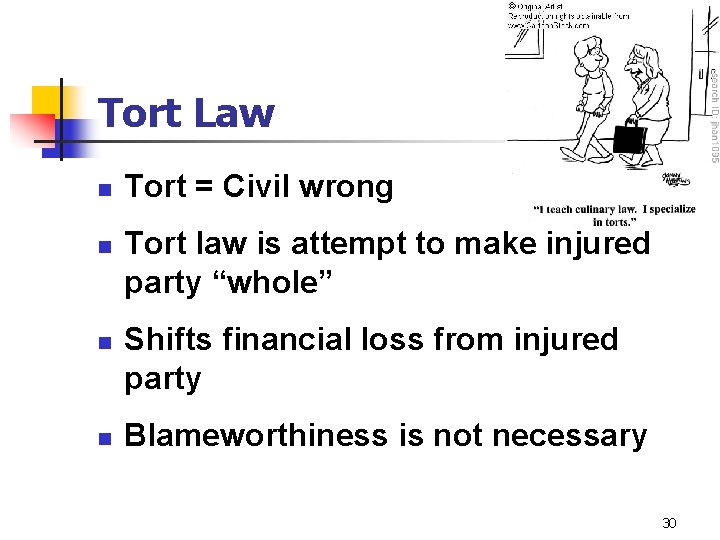
Tort Law n n Tort = Civil wrong Tort law is attempt to make injured party “whole” Shifts financial loss from injured party Blameworthiness is not necessary 30
Intentional Torts n Intentional – acts where damage should be expected n Assault and battery n Medical n n n False imprisonment Violate civil rights Sex with patients 31
Unintentional Torts n n Negligence – unreasonable risk of causing harm Medical Negligence n Duty n Dereliction n Direct Cause n Damages 32
Damage Types n n Actual – compensatory for loss Special – out-of-pocket expenses for injured Punitive – punish defendant; requires willful, malicious, wanton behavior Pain and Suffering – physical and mental discomfort 33
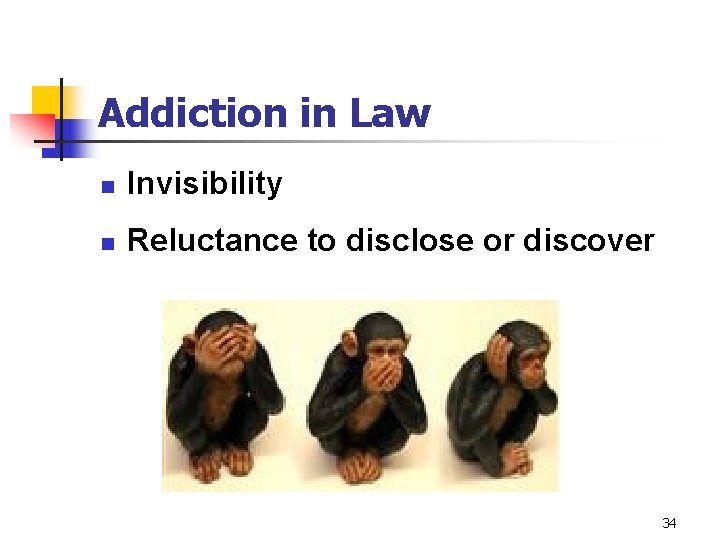
Addiction in Law n Invisibility n Reluctance to disclose or discover 34
Standard of Evidence n n Beyond a Reasonable Doubt n Criminal n >95% Clear and Convincing Evidence n n n Civil Commitment (Conservatorships / Sexually Violent Predator) >75% Preponderance of the Evidence n Most Civil Cases n 50%+1 35
Example n n 49 -year-old male accused of murdering ex-wife and boyfriend; no witnesses; lots of forensic evidence Criminal n n Not guilty Civil n Judgment goes against him 36
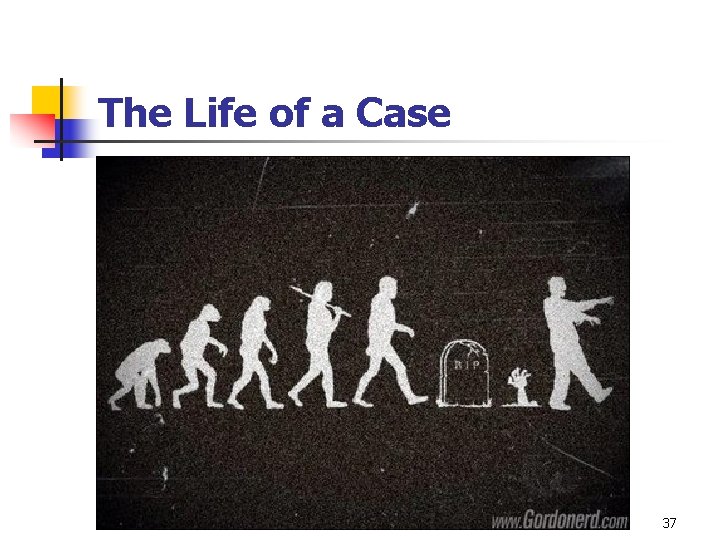
The Life of a Case 37
The Life of a Case n Initial Inquiry (typically phone call) n Attorney presents their construction of case n Discussion usually ensues n They want to know your fee n They ask for your CV n Conflicts of interest 38
The Initial Call n Get their name, number, and e-mail n Find out the calendar of the case n Give: n Fee and Retainer agreement n CV n Information that helps them (e. g. , article, Power. Point) 39
The Initial Call n Ask for all relevant information n Medical & Psychiatric Records n Drug Tests n Criminal Reports n Job Reviews n Depositions n Interrogatories 40
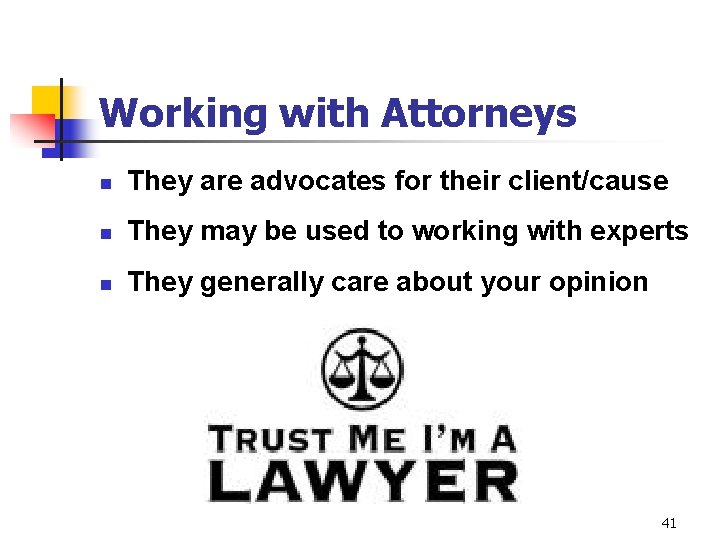
Working with Attorneys n They are advocates for their client/cause n They may be used to working with experts n They generally care about your opinion 41
Assessment n Review all records n n May want to dictate record review Interview n Informed consent n Record interview (video best, audio OK) n Observe behavior n Relevant history – medical/psych, work, functional, recreational 42
Behavior during the Assessment Behavior occurring during the clinical evaluation can provide valuable information. This may include: n n Unusual emotional states that seem strange or inappropriate to the situation Unusual or atypical motor behavior n restlessness n startle reactions n unusual or poor use of arms/hands/legs n unusual gait or posture n unusual or inappropriate facial expressions n Poor attention and concentration n Apparent lack of effort or fluctuating effort levels 43
Evaluating Addiction in Litigation n Drug / Alcohol Testing n Different detection windows n Multiple drug testing technologies n n n Blood – current intoxicants Urine – recent use Saliva – recent use; not good for Cannabis Hair – up to 3 months Invasiveness How much and diagnoses are far less important than impact of use 44
Evaluating Addiction in Litigation n Indirect Laboratory Testing n n Blood count, liver function tests Physical Examination / Observation n Sweating, pupillary dilation, agitation n Sequelae of Alcoholism n n n Alcohol on breath Rosacea, Angiomata Co-Occurring Physical Conditions 45
Evaluating Addiction in Litigation n Psychological Symptoms n Intoxication vs. Withdrawal n Toxidromes mimic psychiatric disorders n n n Depression Mania Anxiety states High rates of co-occurring disorders with addiction Cognitive Abnormalities n Intoxication vs. Kindled damage 46
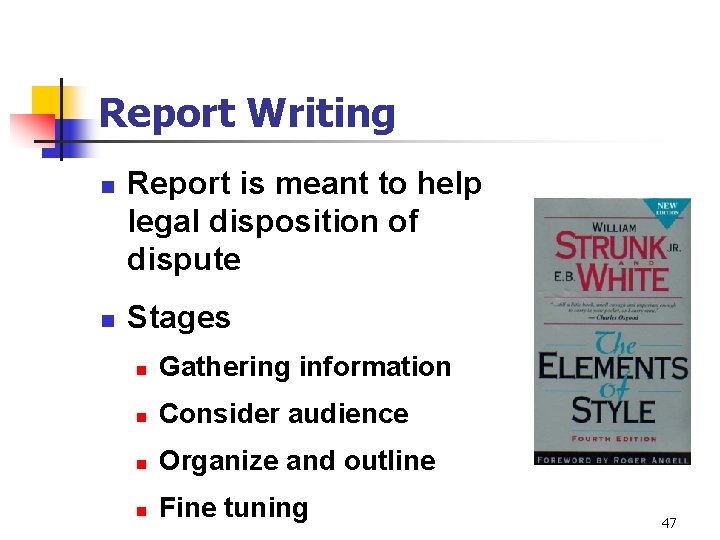
Report Writing n n Report is meant to help legal disposition of dispute Stages n Gathering information n Consider audience n Organize and outline n Fine tuning 47
Federal Rule of Civil Procedure Rule 26 n Written report n Complete statement of opinions n Basis and reasoning n Qualifications – CV is sufficient n Publications in last 10 years n Fees n List of cases depo/testified for 4 years 48
Report Writing n Label sections n Short paragraphs n Executive summary n Report should be self-sufficient n Reasoning is most critical part! 49
Report Content n Identifying Information n Case number, charges or allegations n Source of Referral n Referral Issue n Sources of Information n Interviews n Documents 50
Report Content n Qualifications n Statement of Non-Confidentiality n Past Personal History n Family History n Sexual and Marital History n Educational History 51
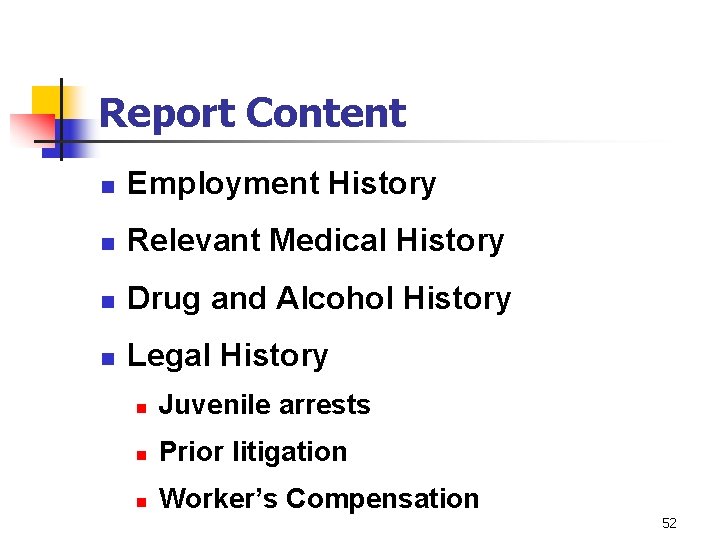
Report Content n Employment History n Relevant Medical History n Drug and Alcohol History n Legal History n Juvenile arrests n Prior litigation n Worker’s Compensation 52
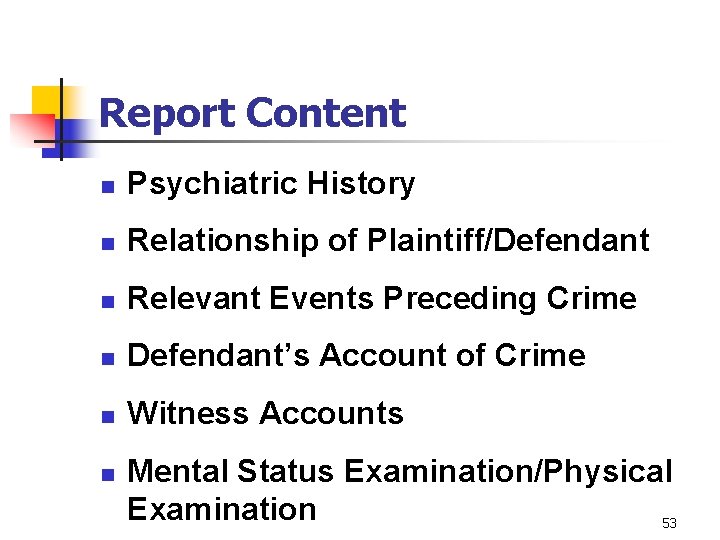
Report Content n Psychiatric History n Relationship of Plaintiff/Defendant n Relevant Events Preceding Crime n Defendant’s Account of Crime n Witness Accounts n Mental Status Examination/Physical Examination 53
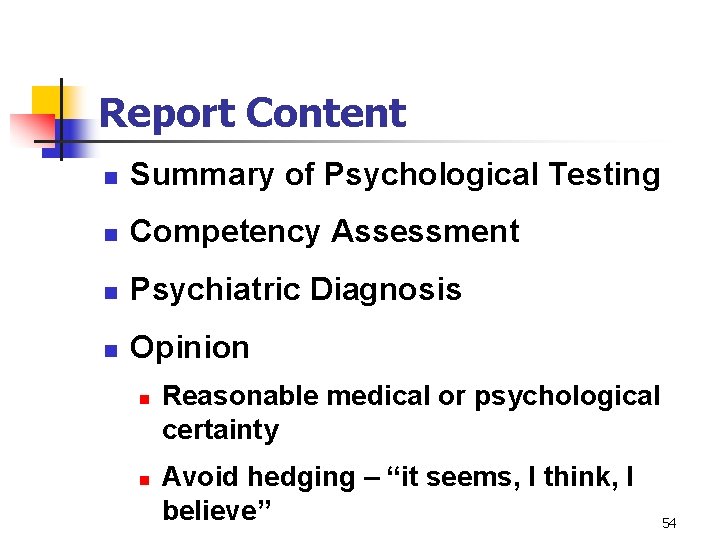
Report Content n Summary of Psychological Testing n Competency Assessment n Psychiatric Diagnosis n Opinion n n Reasonable medical or psychological certainty Avoid hedging – “it seems, I think, I believe” 54
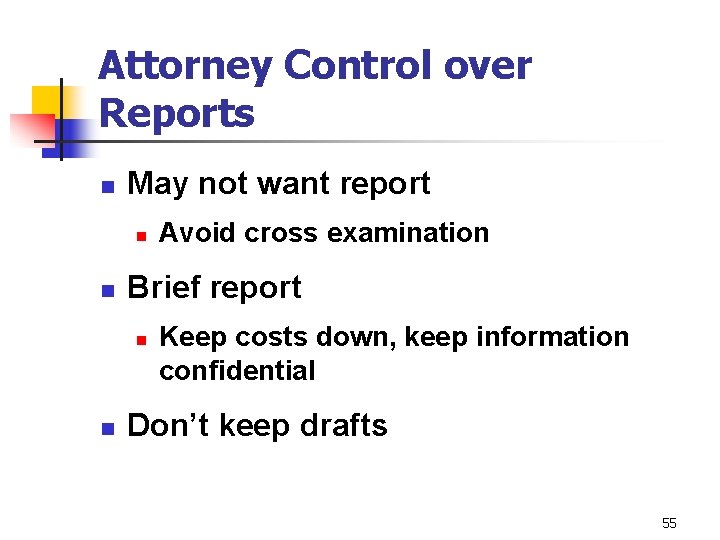
Attorney Control over Reports n May not want report n n Brief report n n Avoid cross examination Keep costs down, keep information confidential Don’t keep drafts 55
Report Writing Don'ts n Be snide/snarky n Make personal attacks n Use legal terms generally n Use terms as draft/confidential/work product n !, ____, Bold, Italics n http: //gunning-fog-index. com/ 56
Testimony n Deposition vs. Trial n Both n Expect an oath n Subpoena Duces Tecum n n Voir Dire n n Bring your documents Number of times contrary construction Anticipate and spell technical terms 57
Deposition 58
What gets Covered in Deposition n Qualifications? n Compensation? n n n Expert’s experience including % plaintiff vs. % defense? What was assignment? What work was done to fulfill assignment? 59
What gets Covered in Deposition n Reviewing Expert’s file material n Opinions formed? n Basis for each opinion? n n Additional work requested, if any? Whether changing particular facts would change Expert’s opinions? 60
Deposition n Cross examination n Provide opinions and basis for them n For the record n Speak clearly and slowly n Understand question n Feel free to repeat 61
Deposition n Answer question asked n Feel free to refer to documents n Don’t banter n Payment n n Paid by opposing counsel for time allotted Paid by your counsel for travel and expenses 62
Deposition n Don’t guess n “I don’t recall” is a fair answer n Objections n n Listen carefully Answer question unless instructed not to 63
Deposition Attorney Tricks n “Let’s have a conversation” n Scrambling the order n The Rhythm Method n Making you guess n Personal questions 64
Trial Testimony – 6 P’s 1. Preparation 2. Planning 3. Practice 4. Pretrial Conference 5. Pitfalls 6. Presentation 65
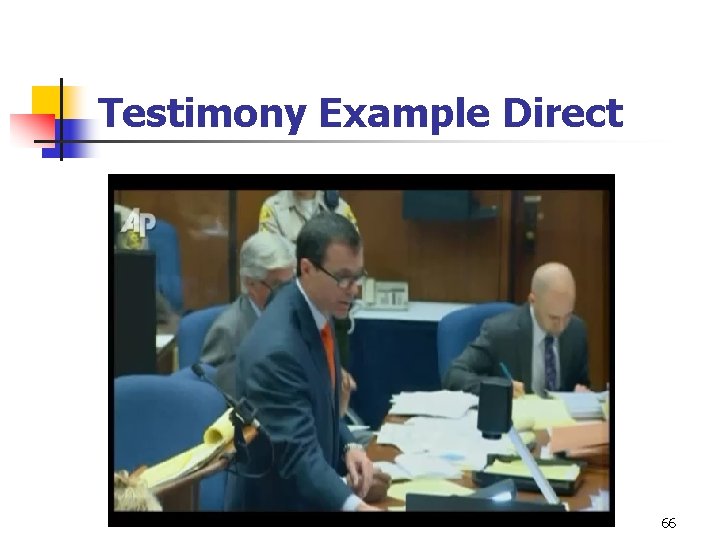
Testimony Example Direct 66
Testimony Example Cross 67
Attorney Preparation n Educate n Diagnosis, psycho/pharmacotherapy n Demystification n Limits of data n Be aware of ex-ference 68
Trial Testimony n Direct Examination n Your attorney makes the case You can help prepare your attorney for direct Cross Examination n n Opportunity for opposing counsel to poke you Don’t be rattled 69
Trial Testimony n Dress conservatively n Explain medical terminology n Think about answer first n Objections: n Wait for instructions from judge 70
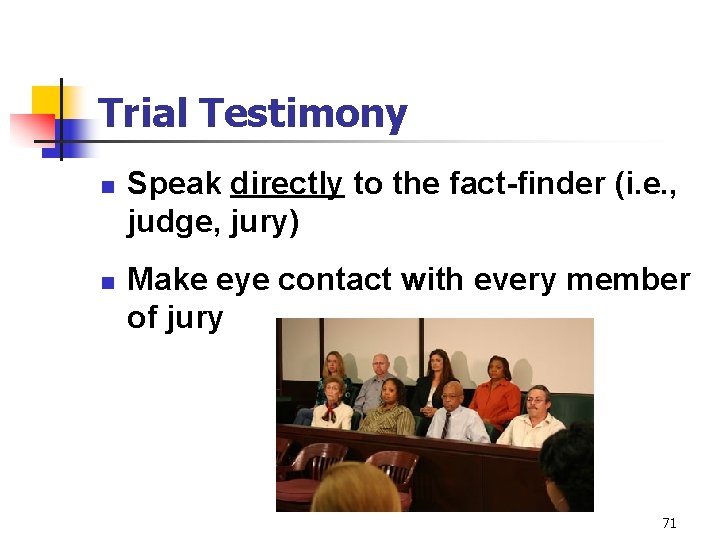
Trial Testimony n n Speak directly to the fact-finder (i. e. , judge, jury) Make eye contact with every member of jury 71
Trial Attorney Tricks n n “Isn’t it possible? ” “You’re being paid $X for your testimony? ” “You’re saying you know this case better than the treating physician? ” “Have you done a complete and thorough review? ” 72
Trial Attorney Tricks n Misquoting testimony n “Never” and “Always” n Simple harassment n Treat attorney like a Borderline patient n Impugning pretrial preparation n Patient is present 73
Expert Advice n “Based upon knowledge, training, experience” n Concede valid points n “Your honor may I explain? ” n “My job is educator” n “I’m here to advocate for my opinion” 74
Starting and Growing Your Practice n Advertising n Consultation n Fee and Retainer Agreements n n Sample included in CD Getting paid 75
Getting Your Name Out n Advertising n n Google Call local DA/PD to offer discounted work n Educational talks n Publish in law journals n Local bar association publications 76
Getting Your Name Out n Redacted reports n Never eat lunch alone n n Connect with experienced forensic practitioner Worker’s Compensation 77
Practice Management n n Billing software n Timeslips n i. Biz Storing Records n Ask permission prior to shredding 78
Money n 10 hour retainer n Nonrefundable? n Keep attorney appraised of cost n Stop work when money is out n Time estimates are not NTE quotes 79
Money n 10 hour per diem n Minimum ½ day for deposition/trial n Travel pay n Expenses 80
Selected Topics n Competency n Malpractice n Child Custody n Dram Shop n Drug-Free Workplace 81
Selected Topics n Impaired Professional n Prescription Drug Abuse n Toxidromes 82
Competency n To do what? n Testamentary n n Stand Trial n n Know natural heirs, make appropriate decision Know charges and court procedure Fitness for duty n Pettus v. Cole n Limits disclosure 83
Malpractice n Duty, Dereliction, Direct, Damages n Standard of Care n What a reasonable practitioner would do similarly situated n Guidelines n Hindsight Bias n n Perfect vs. Single lesion What was not written didn’t happen? 84
Child Custody n Best interests of child n Parent is accused of addiction n Evaluation n n Labs, testing Recommendations n Treatment, disulfiram, naltrexone 85
Dram Shop n Defendant walks into bar n Three drinks n DUI n n . 08 vs. . 25 Bar owner sued 86
Drug Free Workplace Act 1988 n TITLE 41 > CHAPTER 10 > § 701 n Prohibit use on job n Prohibit working under the influence n n Provides employee notification requirements Prohibits unlawful manufacture, distribution, dispensation, possession, or use of a controlled substance 87
ADA Title I and V Section 12114 c n n n Drug addiction may be a "disability" if it "substantially limits one or more. . . major life activities. " 42 U. S. C. Section 12102(2) Current use of illegal drugs does not make “qualified individual with disability” Can be qualified individual with disability n n Completed program and is now drug-free Participating in supervised rehabilitation program and is now drug free 88
Addiction and Americans with Disabilities Act n Brown v. Lucky Stores, 246 F. 3 d 1182 n n Employer permitted to terminate an alcoholic employee for violating a rational rule of conduct even if the misconduct was related to the employee's alcoholism Hernandez v. Hughes Missile Systems Co. , DJDAR 6518 (9 th Cir. June 11, 2002) n Hernandez fired after cocaine+ on Utox n Hernandez went to rehabilitation n 9 th Circuit ruled that Hernandez qualified as an individual with a disability, and that history of addiction alone, even related to reason for termination, was not grounds not to rehire 89
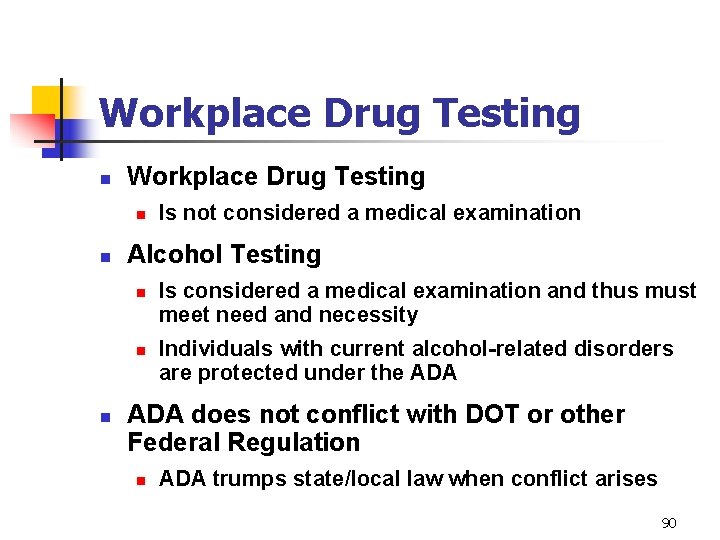
Workplace Drug Testing n n Alcohol Testing n n n Is not considered a medical examination Is considered a medical examination and thus must meet need and necessity Individuals with current alcohol-related disorders are protected under the ADA does not conflict with DOT or other Federal Regulation n ADA trumps state/local law when conflict arises 90
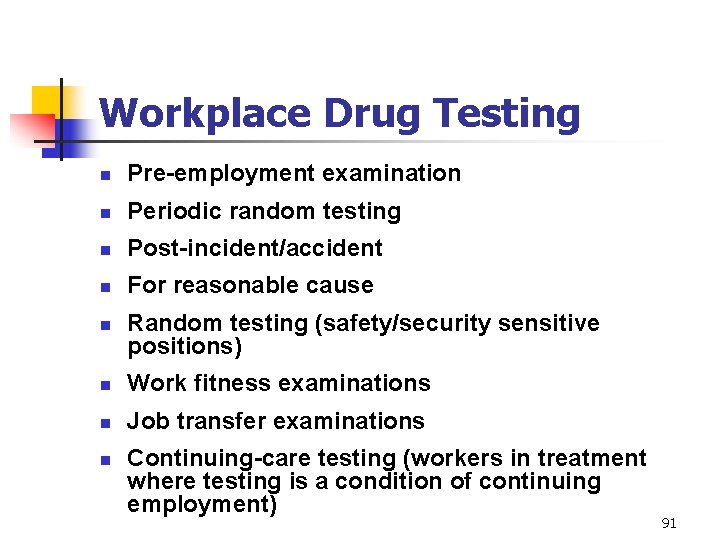
Workplace Drug Testing n Pre-employment examination n Periodic random testing n Post-incident/accident n For reasonable cause n Random testing (safety/security sensitive positions) n Work fitness examinations n Job transfer examinations n Continuing-care testing (workers in treatment where testing is a condition of continuing employment) 91
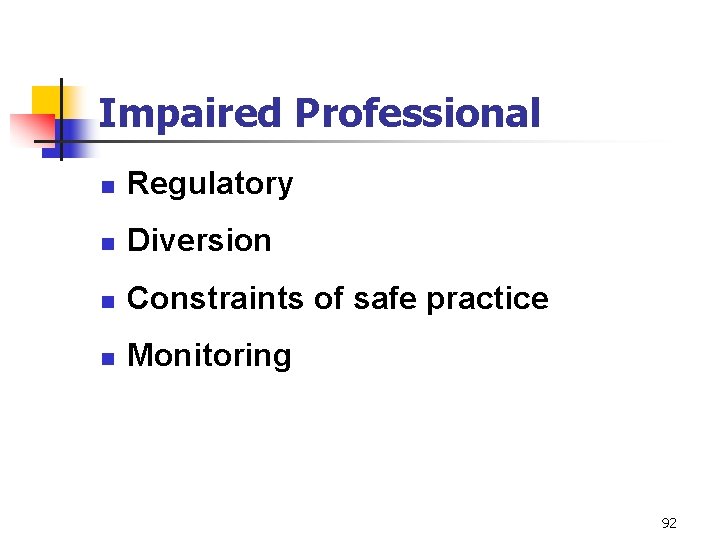
Impaired Professional n Regulatory n Diversion n Constraints of safe practice n Monitoring 92
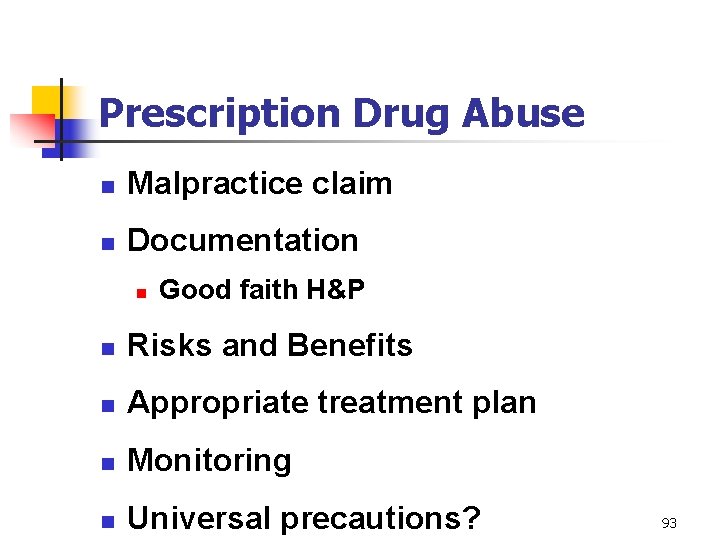
Prescription Drug Abuse n Malpractice claim n Documentation n Good faith H&P n Risks and Benefits n Appropriate treatment plan n Monitoring n Universal precautions? 93
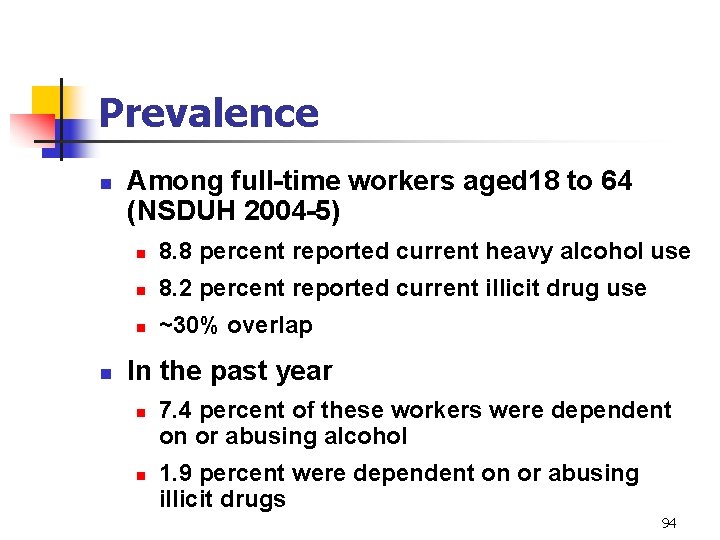
Prevalence n n Among full-time workers aged 18 to 64 (NSDUH 2004 -5) n 8. 8 percent reported current heavy alcohol use n 8. 2 percent reported current illicit drug use n ~30% overlap In the past year n n 7. 4 percent of these workers were dependent on or abusing alcohol 1. 9 percent were dependent on or abusing illicit drugs 94
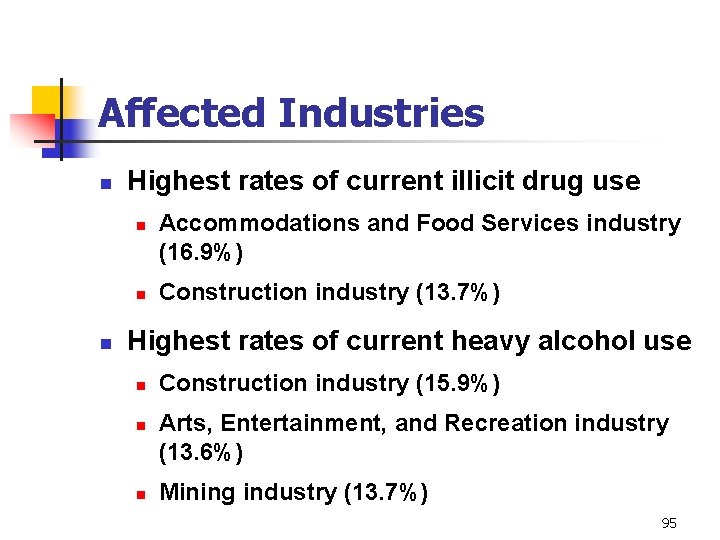
Affected Industries n Highest rates of current illicit drug use n n n Accommodations and Food Services industry (16. 9%) Construction industry (13. 7%) Highest rates of current heavy alcohol use n n n Construction industry (15. 9%) Arts, Entertainment, and Recreation industry (13. 6%) Mining industry (13. 7%) 95
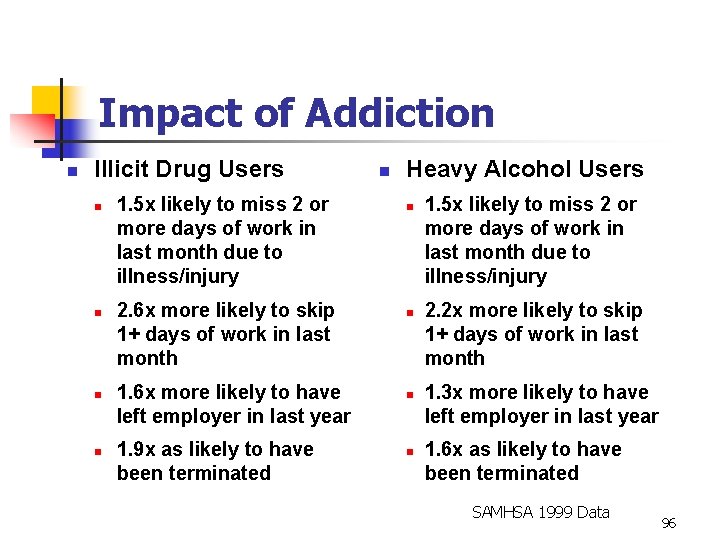
Impact of Addiction n Illicit Drug Users n n 1. 5 x likely to miss 2 or more days of work in last month due to illness/injury 2. 6 x more likely to skip 1+ days of work in last month 1. 6 x more likely to have left employer in last year 1. 9 x as likely to have been terminated n Heavy Alcohol Users n n 1. 5 x likely to miss 2 or more days of work in last month due to illness/injury 2. 2 x more likely to skip 1+ days of work in last month 1. 3 x more likely to have left employer in last year 1. 6 x as likely to have been terminated SAMHSA 1999 Data 96
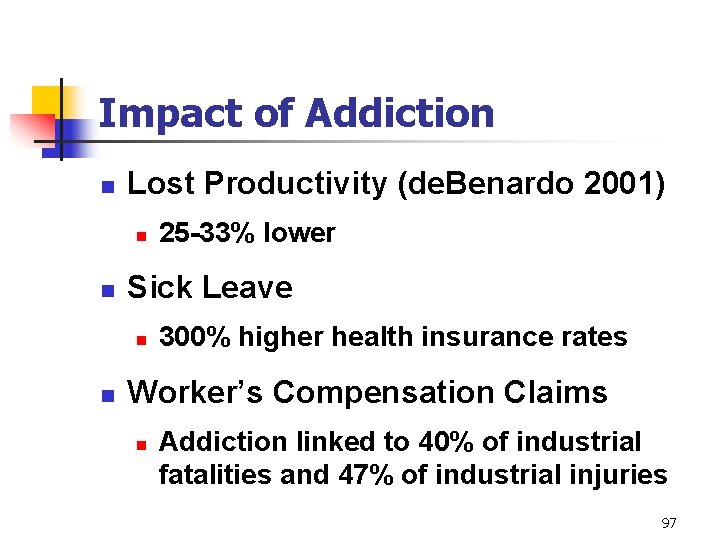
Impact of Addiction n Lost Productivity (de. Benardo 2001) n n Sick Leave n n 25 -33% lower 300% higher health insurance rates Worker’s Compensation Claims n Addiction linked to 40% of industrial fatalities and 47% of industrial injuries 97
Addiction Myths n Myth of Self Medication n Myth of Detoxification n Myth of Character Weakness n Myth of Treatment Ineffectiveness 98
Alcohol n Most prevalent n Intoxication effects well known n Problem drinking n Deleterious effects women > men n Patterns of absenteeism 99
Cannabis n Prop 215 contradicts Federal Law n “Medicinal marijuana” n Paranoia, psychosis, anxiety 100
Cocaine + Amphetamine n n Central Nervous System stimulants High doses and/or prolonged use can produce psychosis, agitation, anxiety, anger Cessation of use associated with dysphoria Amphetamine epidemic problematic, but somewhat overstated 101
Opiates n n n Non-prescribed use growing Chronic opiates rx’d for pain conditions generally NOT impairing when taken as prescribed Look for early refills, lost rx, multiple prescribers DOJ CURES form Methadone / Buprenorphine treatment of choice Detoxification of limited long-term efficacy 102
Other Issues n Testimony n n Orders in limine Report Writing n Editor n CALJIC/CALCRIM n Hindsight bias 103
Discussion 104