
Addiction Bell Work You have exactly 10 minutes
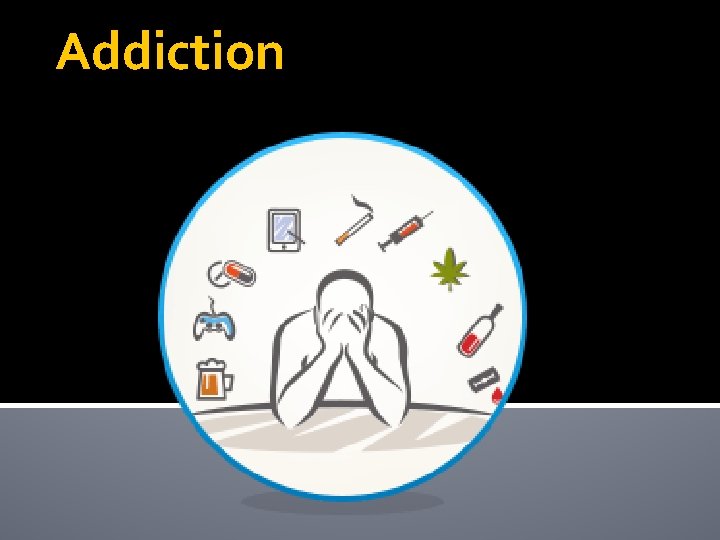
Addiction
Bell Work �You have exactly 10 minutes to complete your substance abuse research projects q 10 guided notes questions q Website evaluation tool for two websites q Power Point presentation
Addiction �All of you celebrities battled with addiction throughout their lifetime. Their addiction led to a higher risk of overuse/overdose.
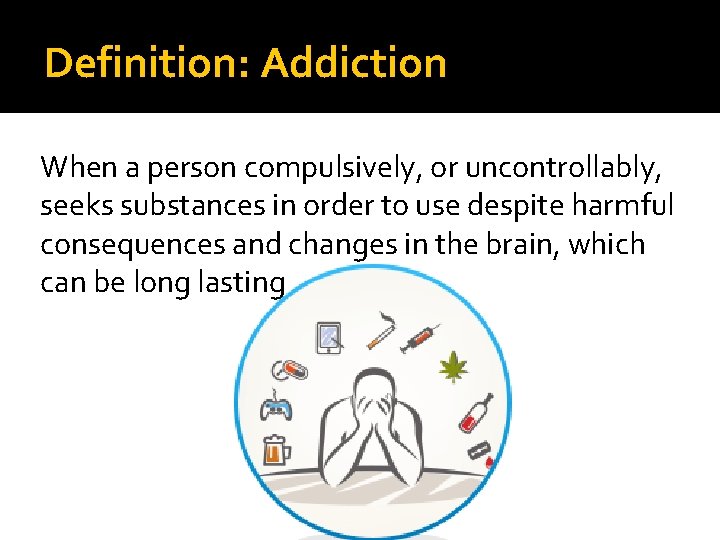
Definition: Addiction When a person compulsively, or uncontrollably, seeks substances in order to use despite harmful consequences and changes in the brain, which can be long lasting
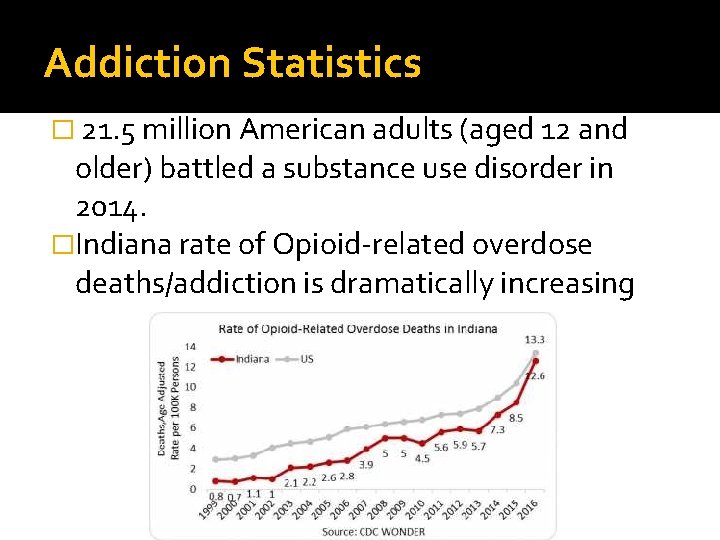
Addiction Statistics � 21. 5 million American adults (aged 12 and older) battled a substance use disorder in 2014. �Indiana rate of Opioid-related overdose deaths/addiction is dramatically increasing
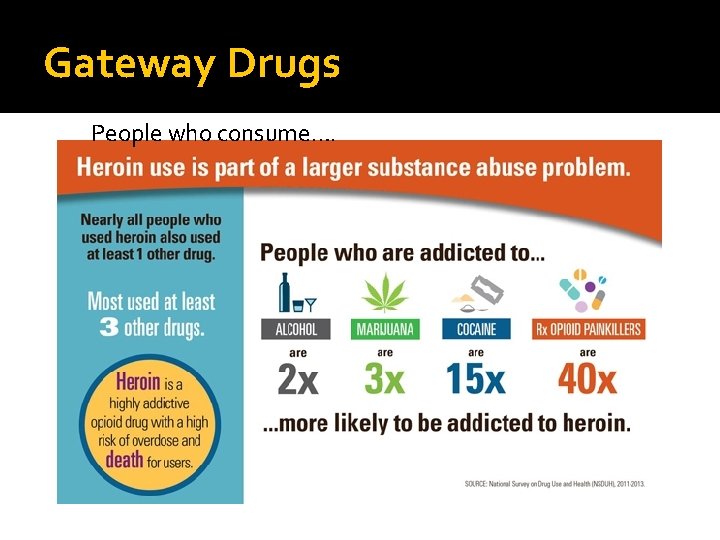
Gateway Drugs People who consume….
Causes of addiction �Addiction is considered to be, on average, heritable about 50 percent of the time �Genetics and environmental factors are thought to play equal roles in the onset of addiction �Abusing drugs or alcohol before the brain is fully developed, any time before a person’s mid-20 s, increases the risk for addiction later in life due to their potential influence on the still-developing brain
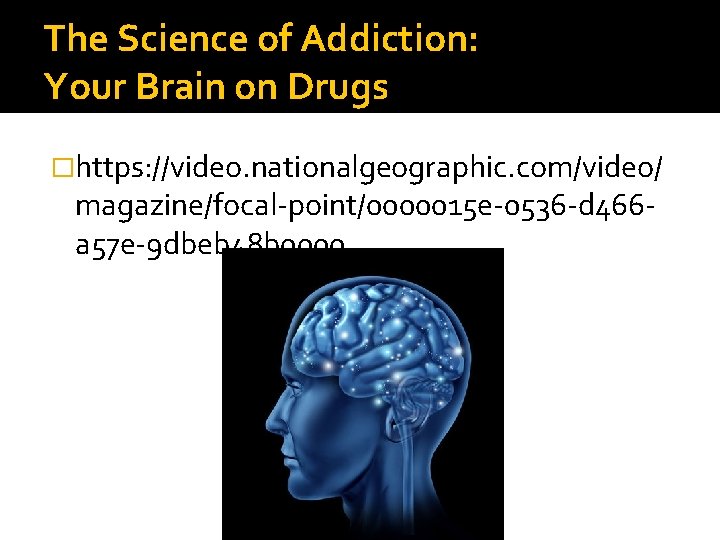
The Science of Addiction: Your Brain on Drugs �https: //video. nationalgeographic. com/video/ magazine/focal-point/0000015 e-0536 -d 466 a 57 e-9 dbeb 48 b 0000
Addiction & the brain To understand addiction, it’s helpful to begin with the brain’s elaborate reward system, built around a chemical called dopamine. When we do something that helps us survive, like eating, socializing, or procreating, the brain rewards us with a blast of dopamine across our cerebral circuitry, which we experience as pleasure. Drugs override the natural flow of dopamine and, in the process, “hijack” our reward system.
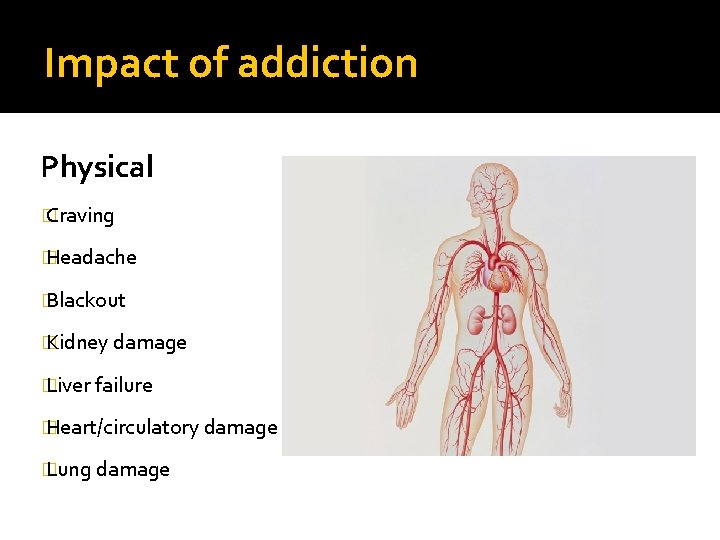
Impact of addiction Physical � Craving � Headache � Blackout � Kidney damage � Liver failure � Heart/circulatory damage � Lung damage
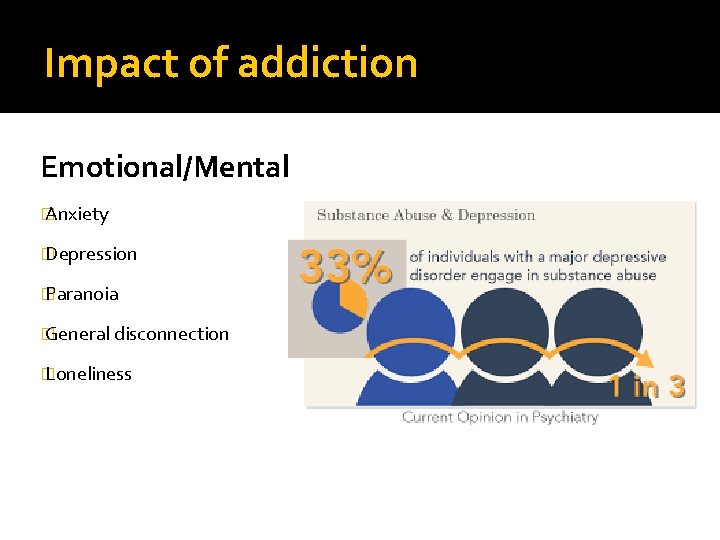
Impact of addiction Emotional/Mental � Anxiety � Depression � Paranoia � General disconnection � Loneliness
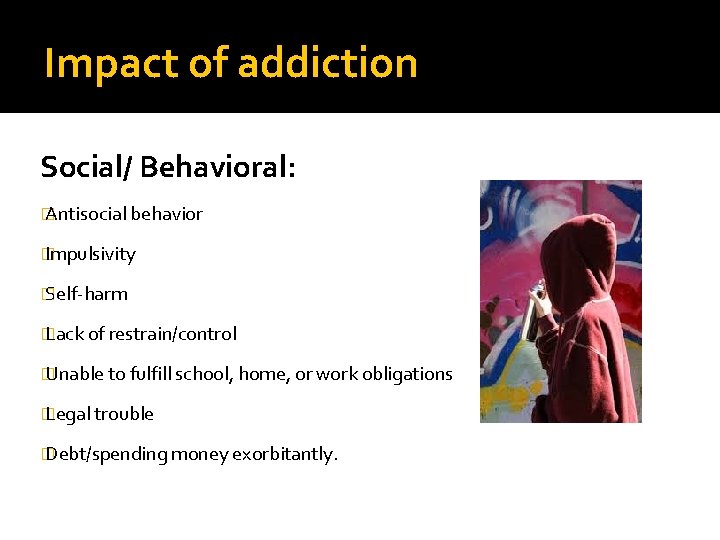
Impact of addiction Social/ Behavioral: � Antisocial behavior � Impulsivity � Self-harm � Lack of restrain/control � Unable to fulfill school, home, or work obligations � Legal trouble � Debt/spending money exorbitantly.
Withdrawal symptoms Mental and Emotional Withdrawal Symptoms �Anxiety: Anxiety, panic attacks, restlessness, irritability �Depression: Social isolation, lack of enjoyment, fatigue, poor appetite �Sleep: Insomnia, difficulty falling asleep or staying asleep �Cognitive: Poor concentration, poor memory
Withdrawal symptoms Physical Withdrawal Symptoms �Head: Headaches, dizziness �Chest: Chest tightness, difficulty breathing �Heart: Racing heart, skipped beats, palpitations �GI: Nausea, vomiting, diarrhea, stomach aches �Muscles: Muscle tension, twitches, tremors, shakes, muscle aches �Skin: Sweating, tingling
Treatment Cannot be cured, but can be treated: �Detoxing �Behavioral counseling �Medication �Medical devices and applications used to treat withdrawal symptoms or deliver skills training �Evaluation and treatment for co-occurring mental health issues Long-term follow-up to prevent relapse
National Drug Helpline �The National Drug Helpline offers 24/7 drug and alcohol help to those struggling with addiction. Call the national hotline for drug abuse today to receive information regarding treatment and recovery. Call 1 -888 -633 -3239
Unit 3 Assessment �Alcohol �Tobacco �Addiction
- Slides: 17