
Addiction 101 Stanford University In this presentation tobaccopreventiontoolkit
Addiction 101 © Stanford University
In this presentation: tobaccopreventiontoolkit. stanford. edu Definition of Addiction Physiology Addiction Myths Effects of Addiction
Definition of Addiction Image Credit: Pixabay. com
Pair-Share Brainstorm tobaccopreventiontoolkit. stanford. edu How do you define “addiction”? Give examples
What is Addiction? tobaccopreventiontoolkit. stanford. edu “Addiction is defined as a chronic, relapsing brain disease that is characterized by compulsive drug seeking and use, despite harmful consequences. It is considered a brain disease because drugs change the brain—they change its structure and how it works. These brain changes can be longlasting, and can lead to the harmful behaviors seen in people who abuse drugs. ” -NIDA
What is Addiction? tobaccopreventiontoolkit. stanford. edu “Addiction is defined as a chronic, relapsing brain disease that is characterized by compulsive drug seeking and use, despite harmful consequences. It is considered a brain disease because drugs change the brain—they change its structure and how it works. These brain changes can be long-lasting, and can lead to the harmful behaviors seen in people who abuse drugs. ” -NIDA
What is Addiction? tobaccopreventiontoolkit. stanford. edu “Addiction is a long-term disease where an individual has an overwhelming desire to find and use drugs, even though there are dangerous consequences. It is considered a brain disease because drugs change the brain—they change its structure and how it works. These brain changes can be long-lasting, and can lead to the harmful behaviors seen in people who abuse drugs. ” -NIDA
What is Addiction? tobaccopreventiontoolkit. stanford. edu “Addiction is a long-term disease where an individual has an overwhelming desire to find and use drugs, even though there are dangerous consequences. Addiction is a disease because it can result in long-term changes in the brain structure, function, and behaviors caused by drug use”
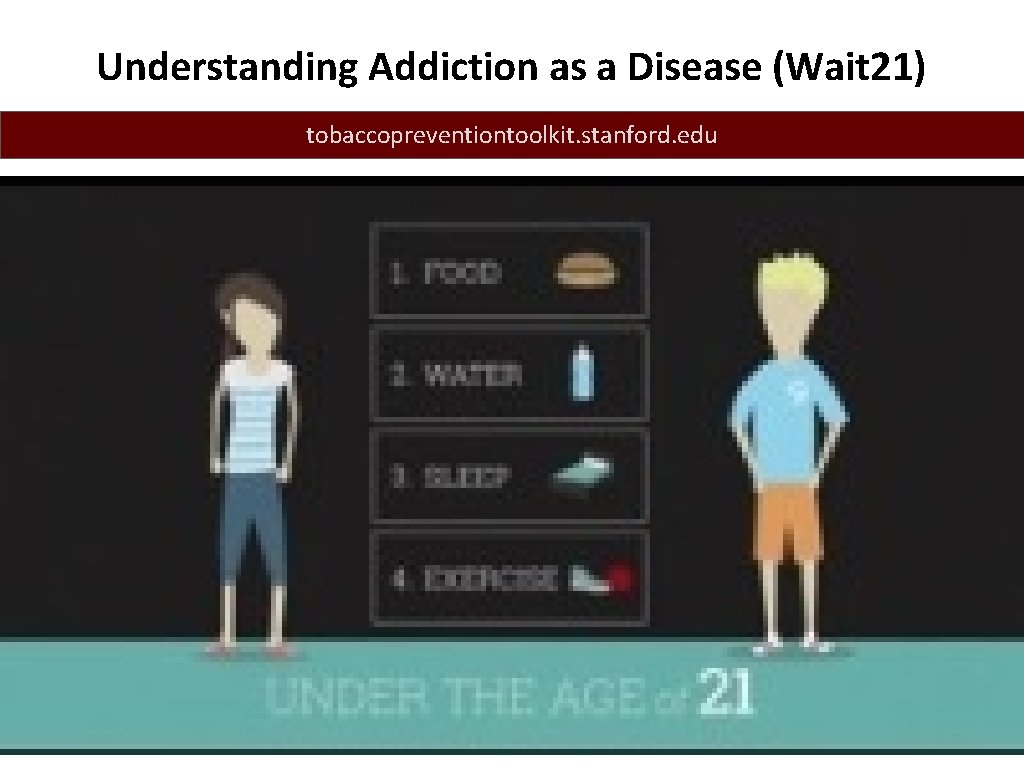
Understanding Addiction as a Disease (Wait 21) tobaccopreventiontoolkit. stanford. edu
Background on the Brain Image Credit: Pixabay. com
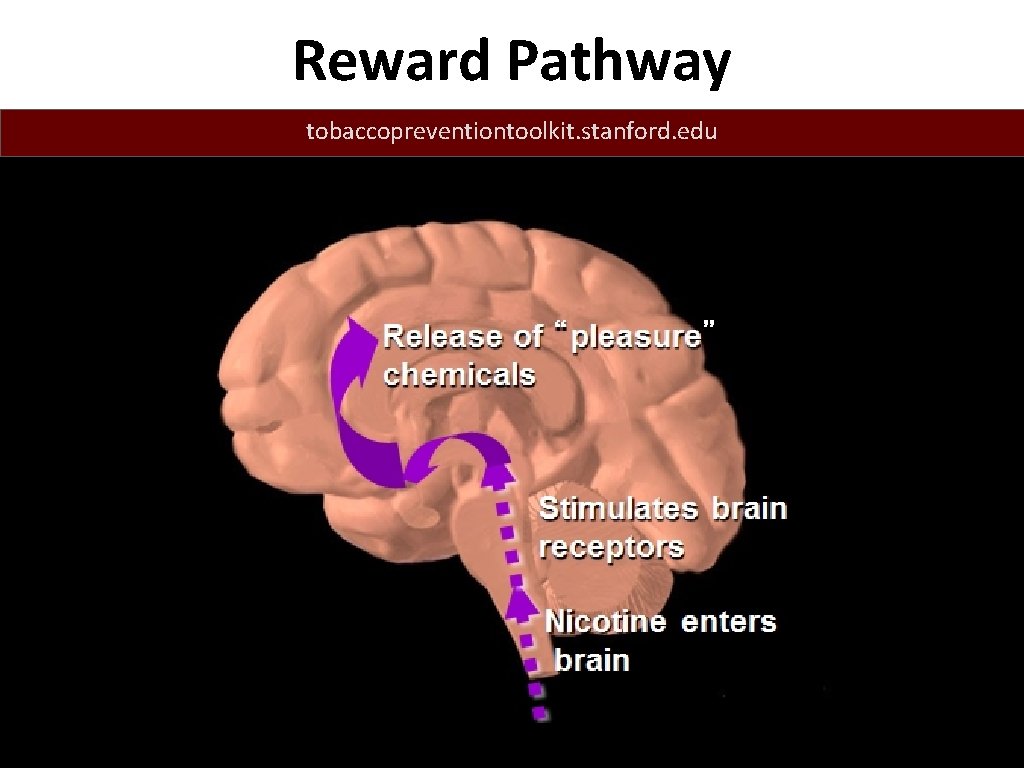
Reward Pathway tobaccopreventiontoolkit. stanford. edu
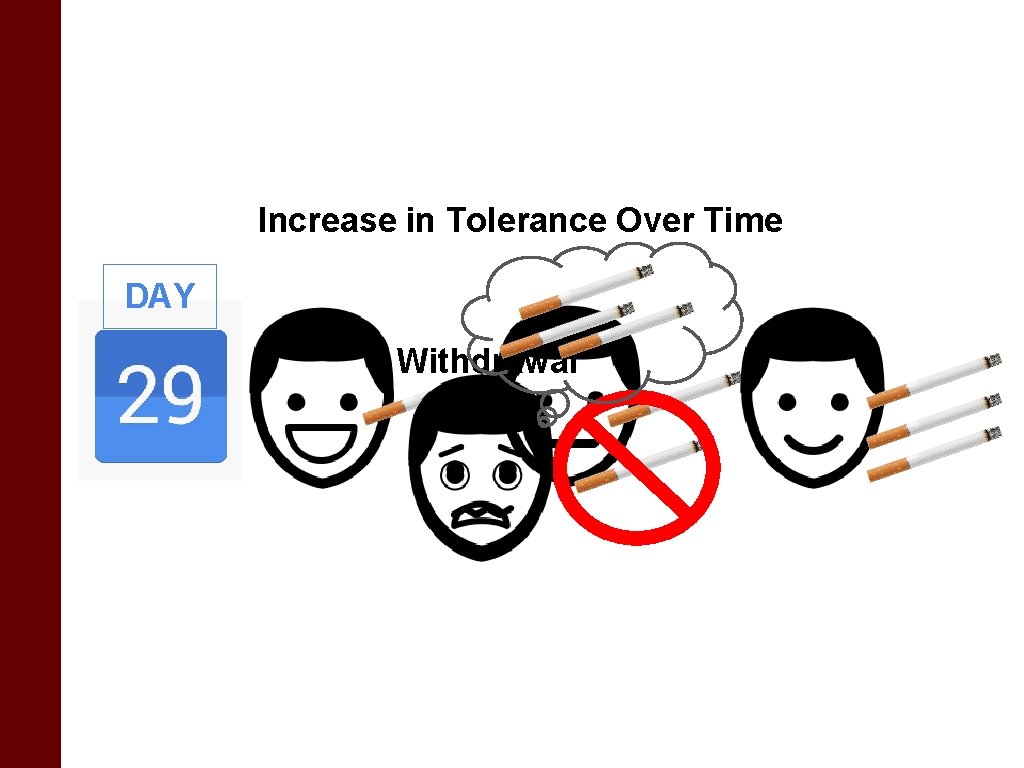
Increase in Tolerance Over Time DAY Withdrawal
Summary of Addiction Physiology tobaccopreventiontoolkit. stanford. edu
Addiction Myths Image Credit: Pixabay. com
Common Ideas Brainstorm tobaccopreventiontoolkit. stanford. edu When you hear the word “addiction, ” what things come to mind?
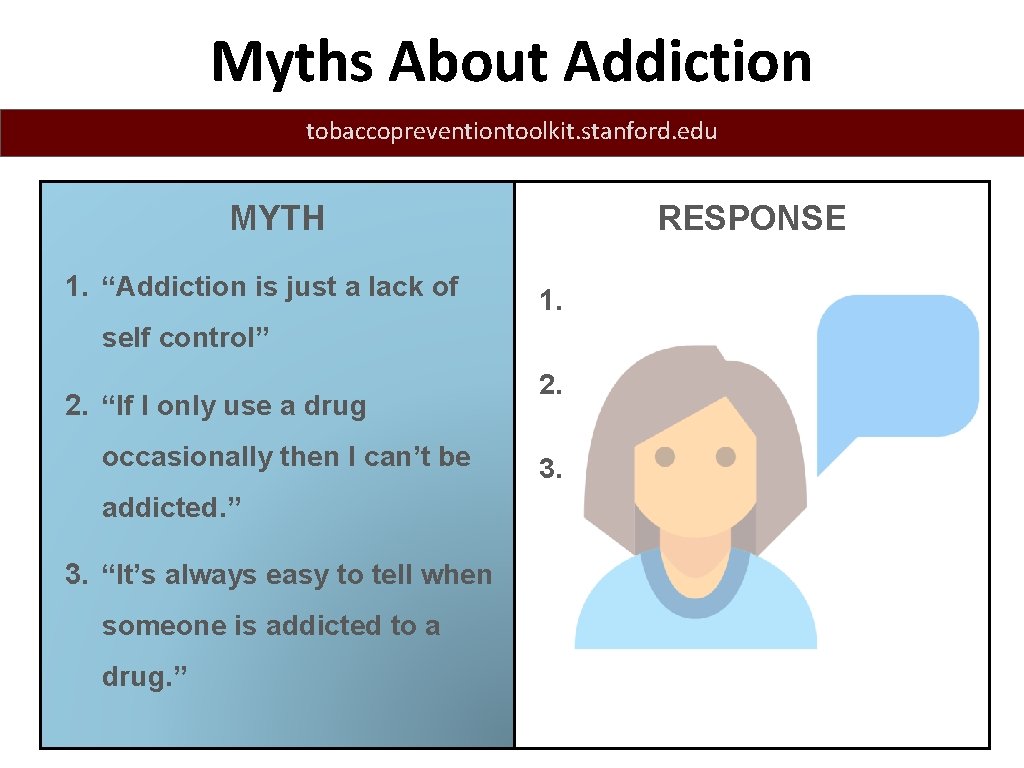
Myths About Addiction tobaccopreventiontoolkit. stanford. edu MYTH 1. “Addiction is just a lack of RESPONSE 1. self control” 2. “If I only use a drug occasionally then I can’t be addicted. ” 3. “It’s always easy to tell when someone is addicted to a drug. ” 2. 3.
Short Term and Long Term Effects Image Credit: Pixabay. com
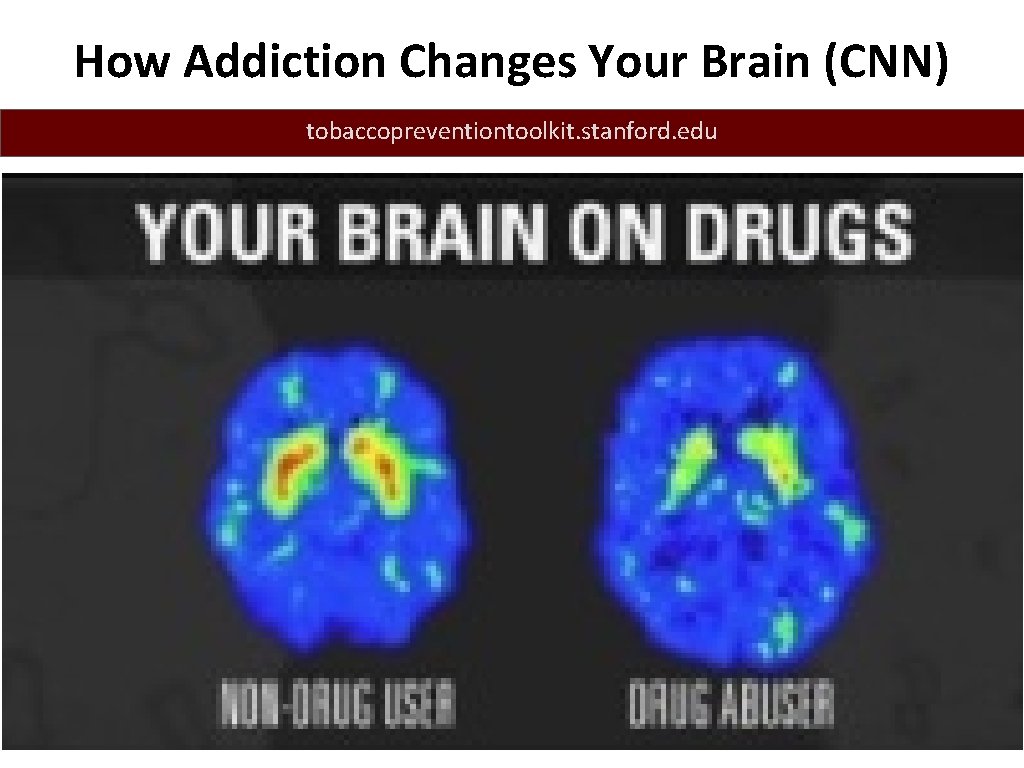
How Addiction Changes Your Brain (CNN) tobaccopreventiontoolkit. stanford. edu
Effects on Loved Ones tobaccopreventiontoolkit. stanford. edu Letter Writing Activity
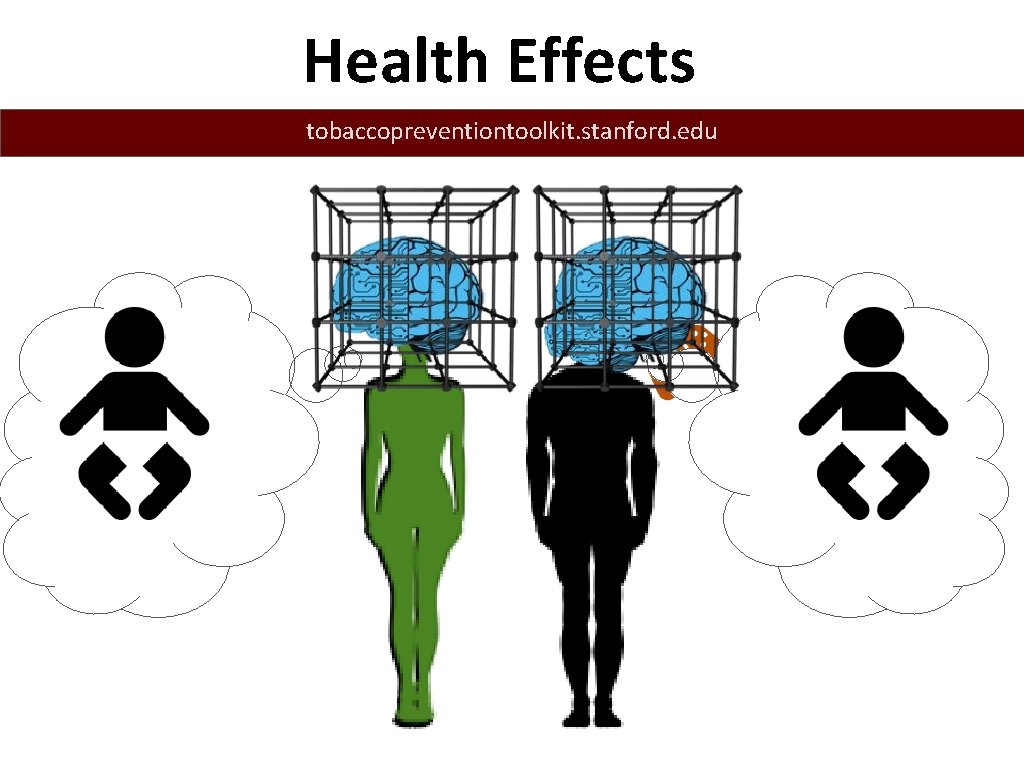
Health Effects tobaccopreventiontoolkit. stanford. edu

Teen. smokefree. gov 1 -800 -QUIT-NOW (1 -800 -784 -8669)
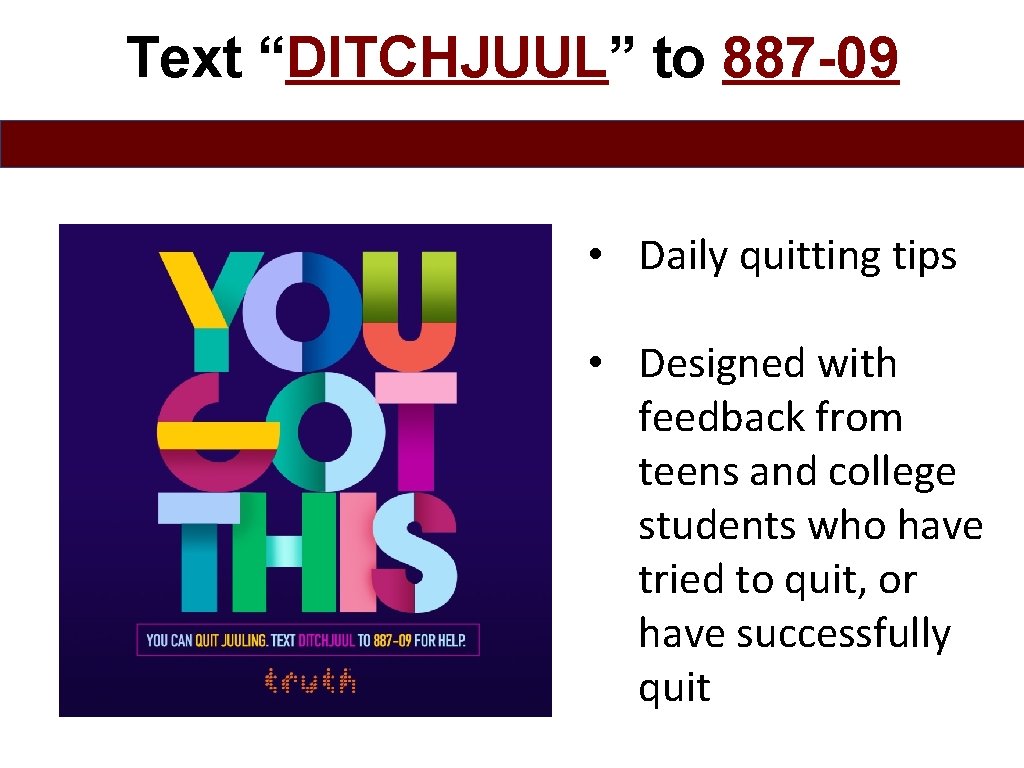
Text “DITCHJUUL” to 887 -09 • Daily quitting tips • Designed with feedback from teens and college students who have tried to quit, or have successfully quit
California Smoker’s Helpline 1 -844 -8 -NO-VAPE 1 -844 -866 -8273

My Life, My Quit https: //mylifemyquit. com Text “Start My Quit” to 855 -891 -9989
Unit Quiz tobaccopreventiontoolkit. stanford. edu
- Slides: 25