
ADAS model Aggregate Demand the National demand curve

- Slides: 6
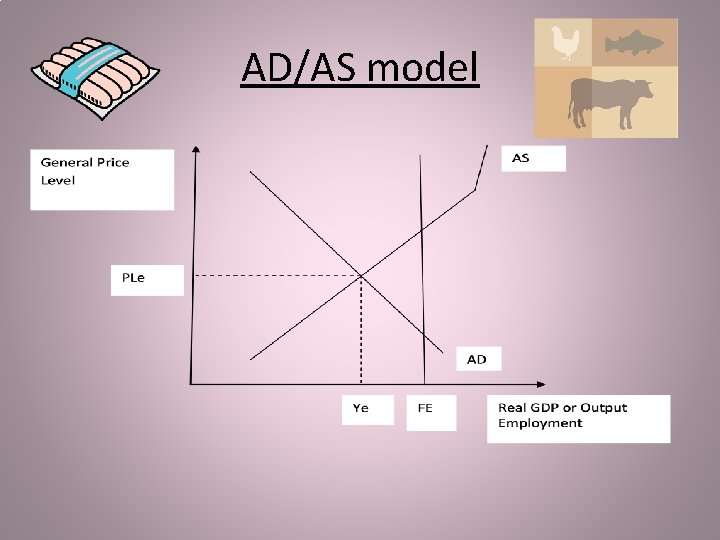
AD/AS model Aggregate Demand – the National demand curve calculated by adding C + I + G + (x – m) • C= Consumption spending caused by changes in income, interest rates and inflationary expectations. • I= Investment (Gross Fixed Capital Formation - National investment in capital goods • G= Government expenditure including local councils and central government. • (X – M) = Net exports depends on the exchange rate and overseas demand. • These result in shifts of the Aggregate demand Aggregate supply - National supply curve • Shows the total output of an economy at each price level. • This curve assumes nominal wages, input prices (cost of raw materials) and productivity are all constant. • If these change a shift of the supply curve results to the left or right. • Remember supply shifts operate in opposite directions to the costs of production e. g. COP Supply visa versa • Short run supply curve will have a steep tip due to higher costs as available resources decline.
AD/AS model
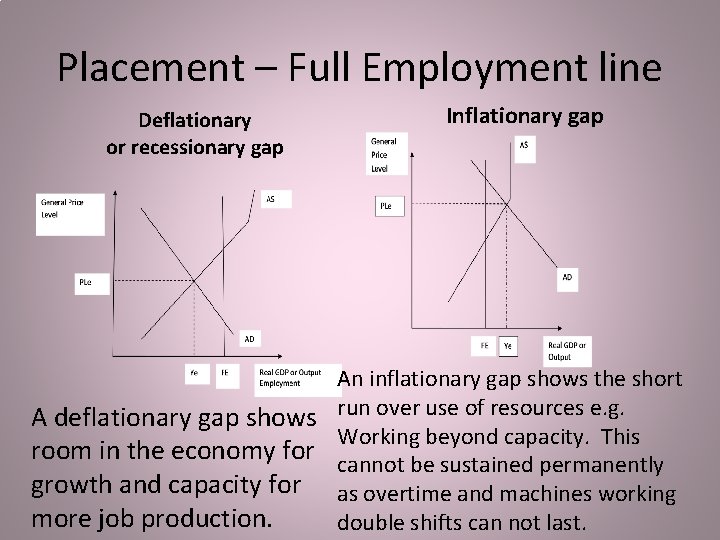
Placement – Full Employment line Deflationary or recessionary gap Inflationary gap An inflationary gap shows the short A deflationary gap shows run over use of resources e. g. Working beyond capacity. This room in the economy for cannot be sustained permanently growth and capacity for as overtime and machines working more job production. double shifts can not last.
Two ways for inflation to occur Demand Pull inflation • Shift right of the AD - Increase in demand • Caused by: • Income increases e. g. tax cuts or increase in minimum wages results in C increasing • Increase in population migration/consumption • Investment due to low interest rates and business confidence. • Export boom Exchange rate drops so X increases • Expansionary fiscal policy (government spends more than it earns) • Inflationary expectations – spend today before money loses purchasing power. • AD= C + I + G + (X – M) any components changes
Two ways for inflation to occur Cost Push inflation • Shift left of AS curve (decrease in supply) • Caused by: • Inputs(raw materials) increase so COP increase (usually a result of depreciation of exchange rate as many are imported and become more expensive to import/ to use). • Wages/salaries increase • Productivity decreases
Two inflation causes Demand Pull inflation Cost push inflation