
Adaptive Topology Discovery in Hybrid Wireless Networks Ranveer
Adaptive Topology Discovery in Hybrid Wireless Networks Ranveer Chandra Cornell University Joint work with Christof Fetzer and Karin Högstedt AT&T Labs-Research
Problem Description • Hybrid Wireless Network: – Ad hoc network with slow moving nodes – Presence of at least one relatively static node • Nearly all the links are bidirectional • A coordinator wants to know the topology of the network. – All the nodes – All the links
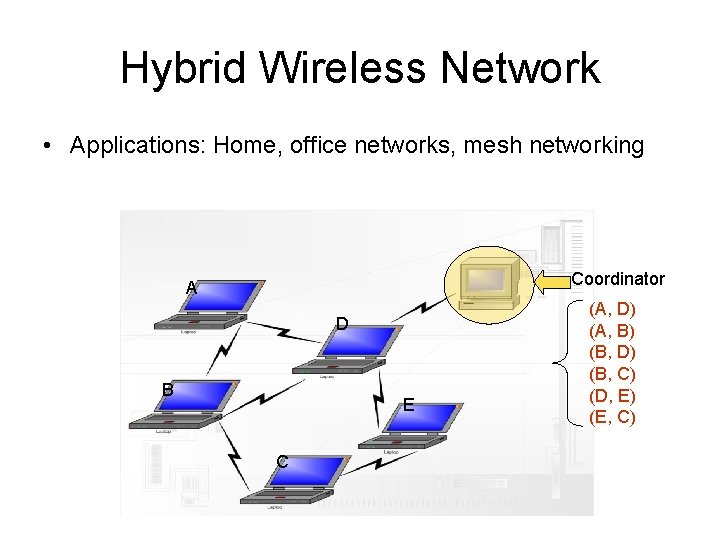
Hybrid Wireless Network • Applications: Home, office networks, mesh networking Coordinator A D B E C (A, D) (A, B) (B, D) (B, C) (D, E) (E, C)
Issues In Ad Hoc Networks • • • Communication is expensive Unreliable links No a priori knowledge of neighbors Possibility of unidirectional links Links could become stale due to mobility
Outline of the Talk • Introduction • Basic protocol • Enhancements for: – Unreliable broadcasts – Low mobility (low overhead) – High mobility (overhead depends on mobility) • Performance • Conclusion
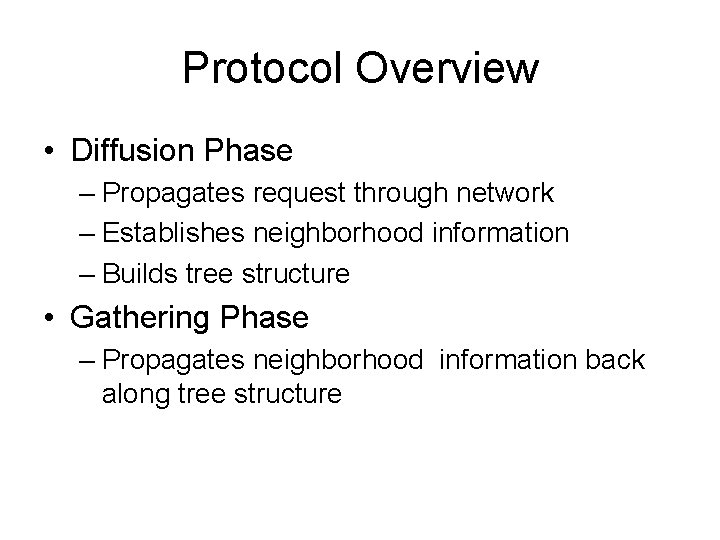
Protocol Overview • Diffusion Phase – Propagates request through network – Establishes neighborhood information – Builds tree structure • Gathering Phase – Propagates neighborhood information back along tree structure
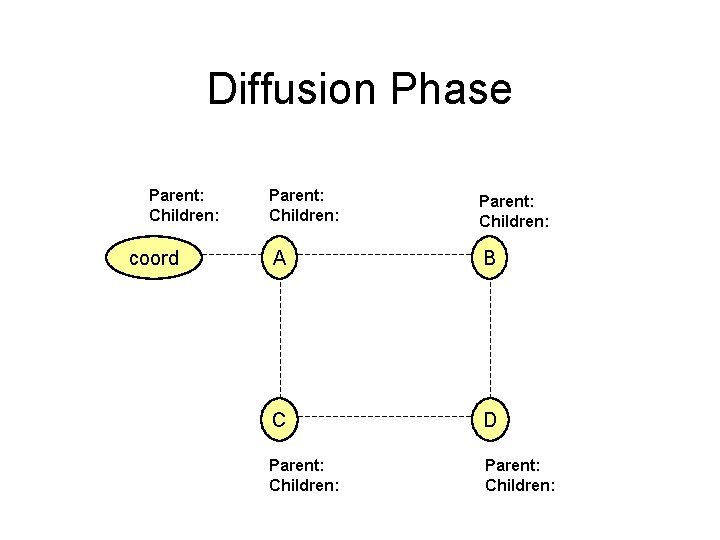
Diffusion Phase Parent: Children: coord Parent: Children: A B C D Parent: Children:
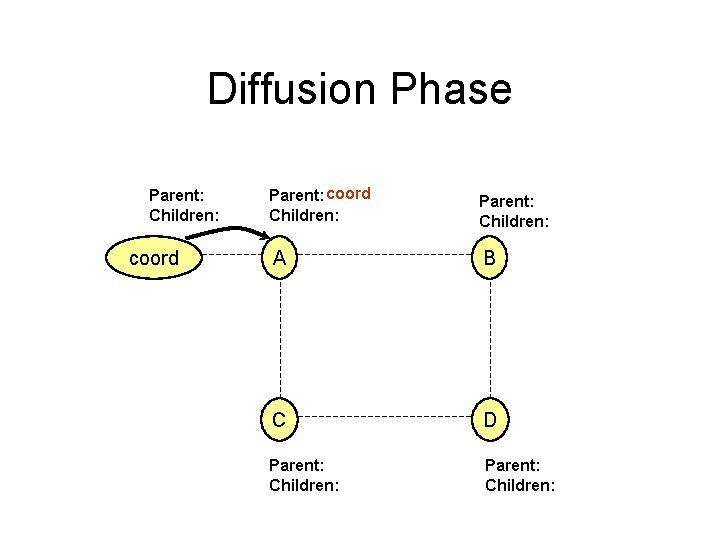
Diffusion Phase Parent: Children: coord Parent: coord Children: Parent: Children: A B C D Parent: Children:
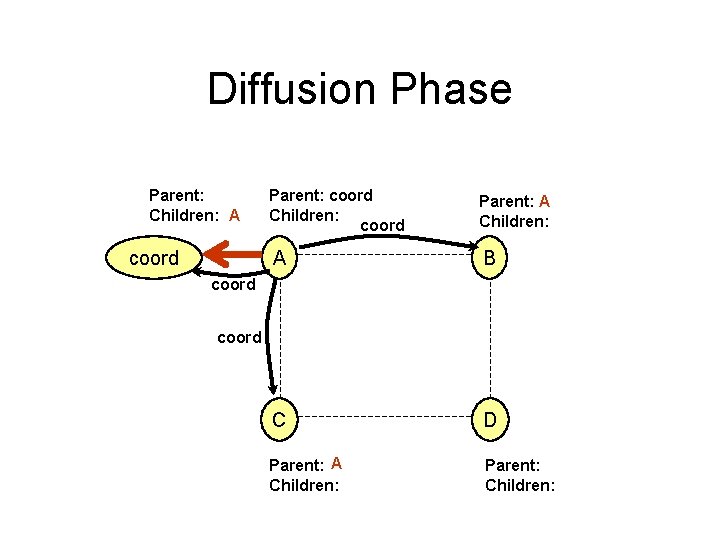
Diffusion Phase Parent: Children: A coord Parent: coord Children: coord Parent: A Children: A B C D Parent: A Children: Parent: Children: coord
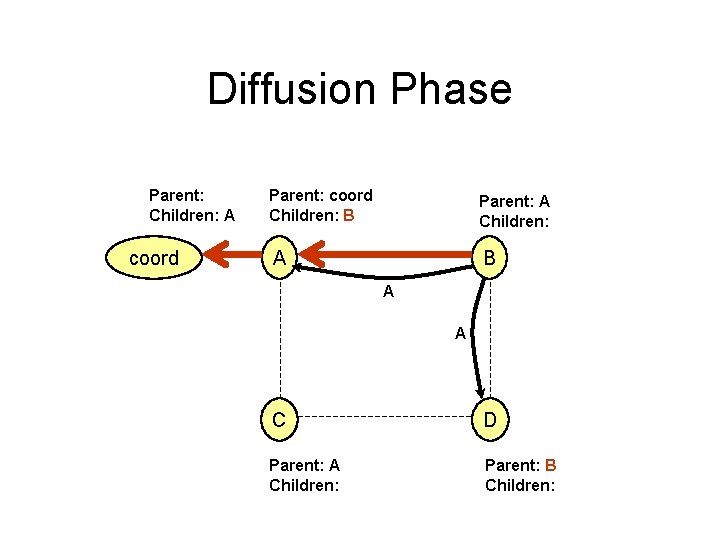
Diffusion Phase Parent: Children: A coord Parent: coord Children: B Parent: A Children: A B A A C D Parent: A Children: Parent: B Children:
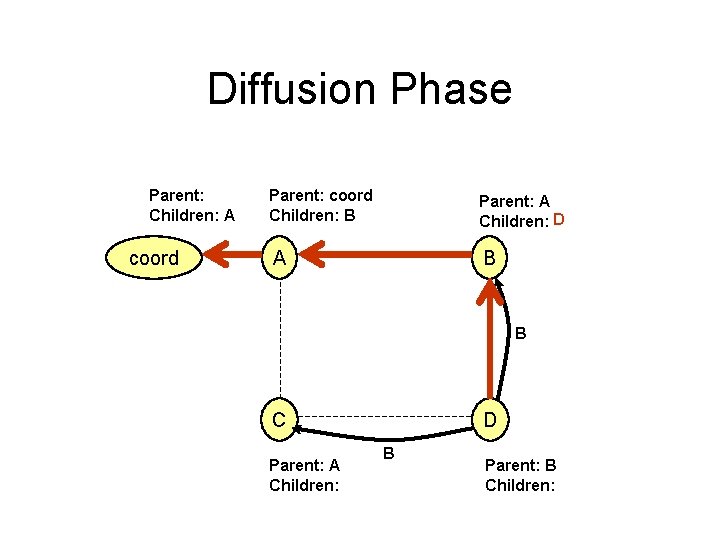
Diffusion Phase Parent: Children: A coord Parent: coord Children: B Parent: A Children: D A B B C Parent: A Children: D B Parent: B Children:
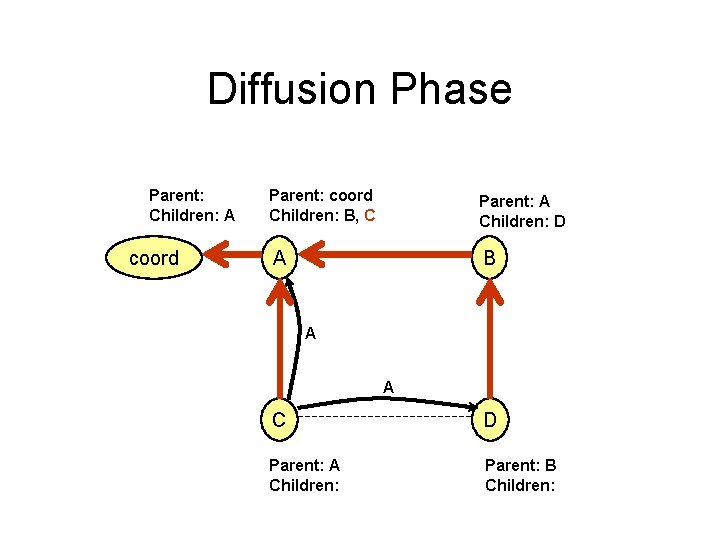
Diffusion Phase Parent: Children: A coord Parent: coord Children: B, C Parent: A Children: D A B A A C D Parent: A Children: Parent: B Children:
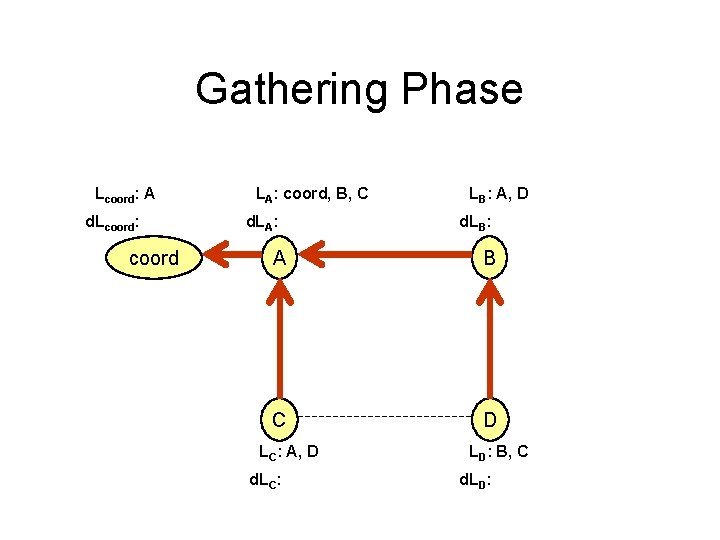
Gathering Phase Lcoord: A d. Lcoord: coord LA: coord, B, C d. LA: LB: A, D d. LB: A B C D LC: A, D d. LC: LD: B, C d. LD:
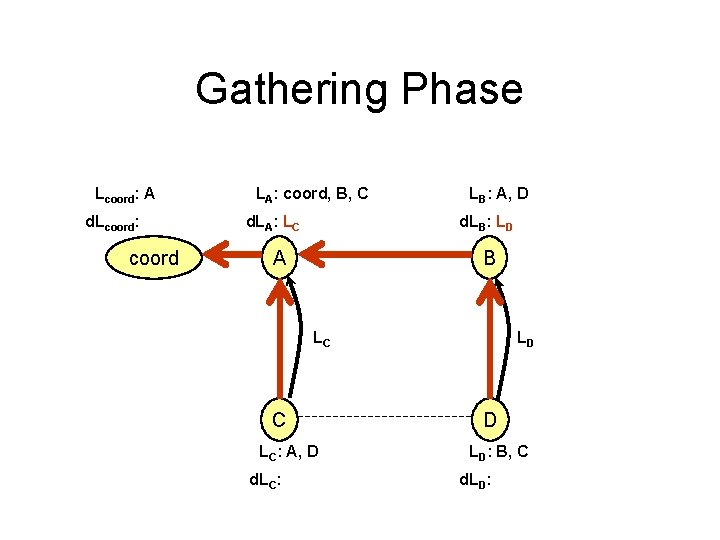
Gathering Phase Lcoord: A d. Lcoord: coord LA: coord, B, C d. LA: LC LB: A, D d. LB: LD A B LC C LC: A, D d. LC: LD D LD: B, C d. LD:
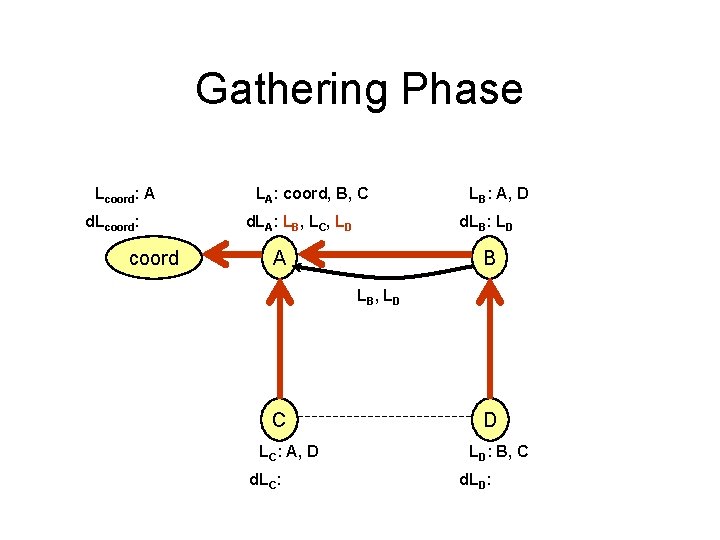
Gathering Phase Lcoord: A d. Lcoord: coord LA: coord, B, C d. LA: LB, LC, LD LB: A, D d. LB: LD A B L B, L D C LC: A, D d. LC: D LD: B, C d. LD:
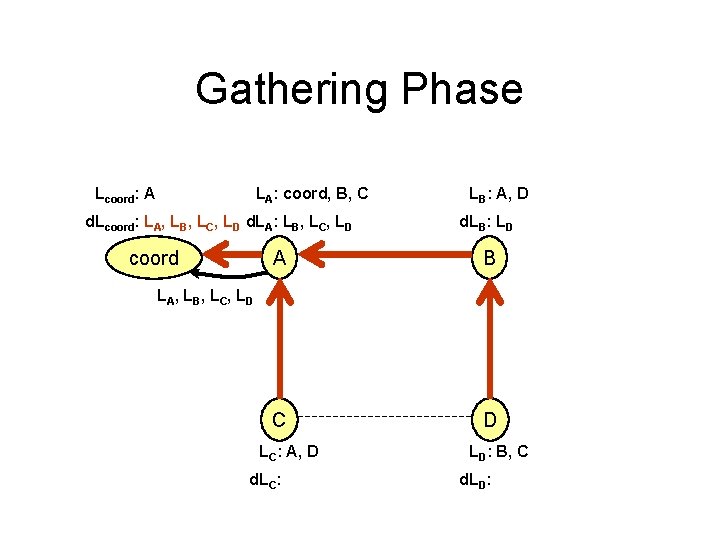
Gathering Phase Lcoord: A LA: coord, B, C d. Lcoord: LA, LB, LC, LD d. LA: LB, LC, LD coord LB: A, D d. LB: LD A B C D L A, L B, L C, L D LC: A, D d. LC: LD: B, C d. LD:
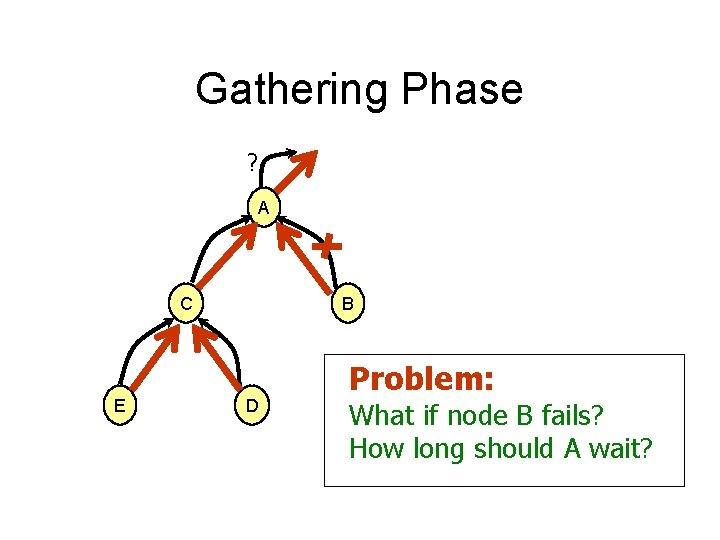
Gathering Phase ? A C E B D Problem: What if node B fails? How long should A wait?
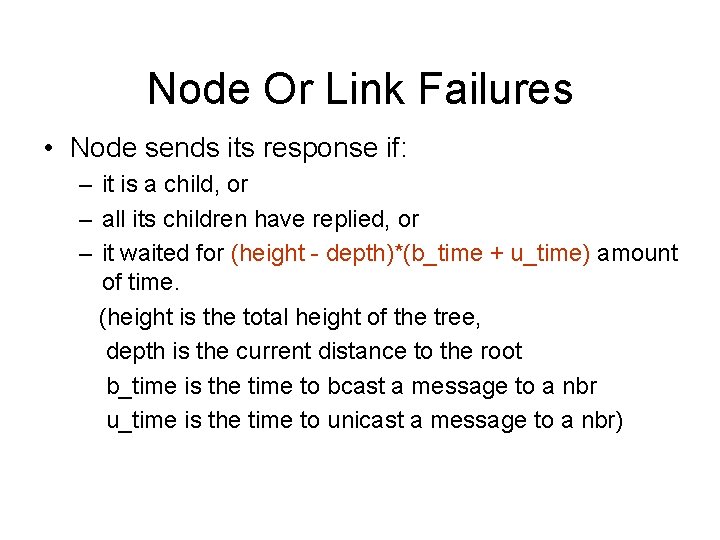
Node Or Link Failures • Node sends its response if: – it is a child, or – all its children have replied, or – it waited for (height - depth)*(b_time + u_time) amount of time. (height is the total height of the tree, depth is the current distance to the root b_time is the time to bcast a message to a nbr u_time is the time to unicast a message to a nbr)
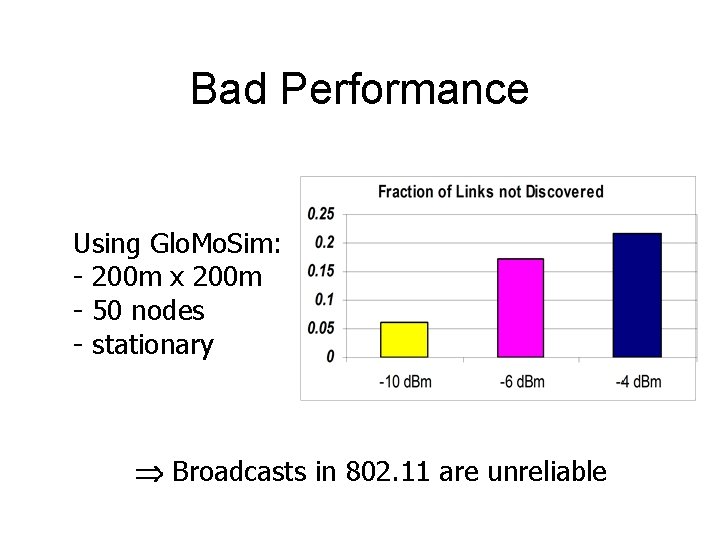
Bad Performance Using Glo. Mo. Sim: - 200 m x 200 m - 50 nodes - stationary Broadcasts in 802. 11 are unreliable
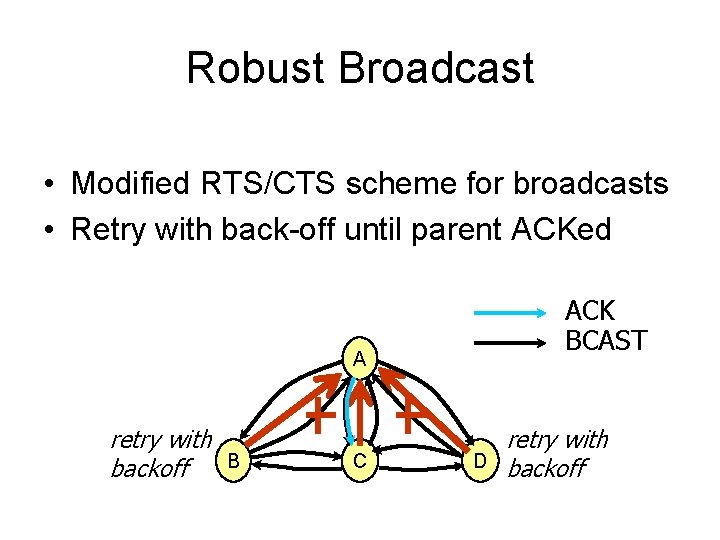
Robust Broadcast • Modified RTS/CTS scheme for broadcasts • Retry with back-off until parent ACKed ACK BCAST A retry with backoff B C D retry with backoff
Bad Performance In Mobile Networks ü Discovers nearly all links when nodes are stationary Performance suffers in a mobile network
Building A Mesh • Use the robustness of a mesh – A node can have multiple parents, max ‘k’ • Modified Algorithm: – On receiving the first ‘k’ distinct broadcasts, mark them as parents – Use distance from coordinator to avoid loops – A node sends ‘k’ broadcasts if it has ‘k’ parents robustness
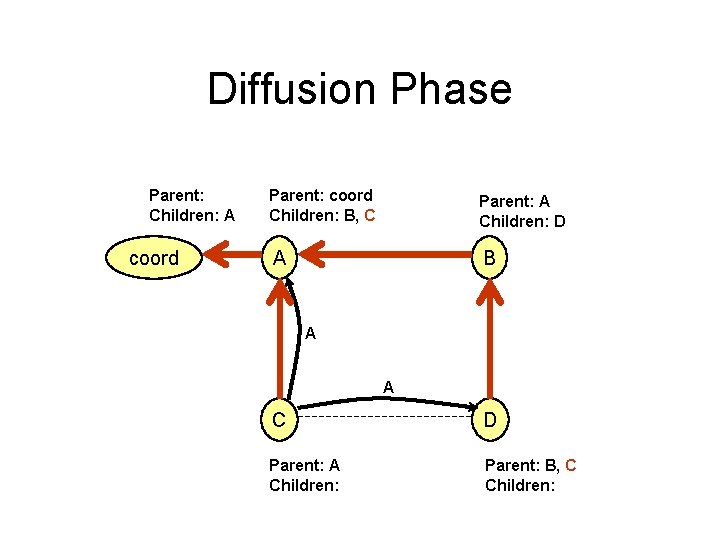
Diffusion Phase Parent: Children: A coord Parent: coord Children: B, C Parent: A Children: D A B A A C D Parent: A Children: Parent: B, C Children:
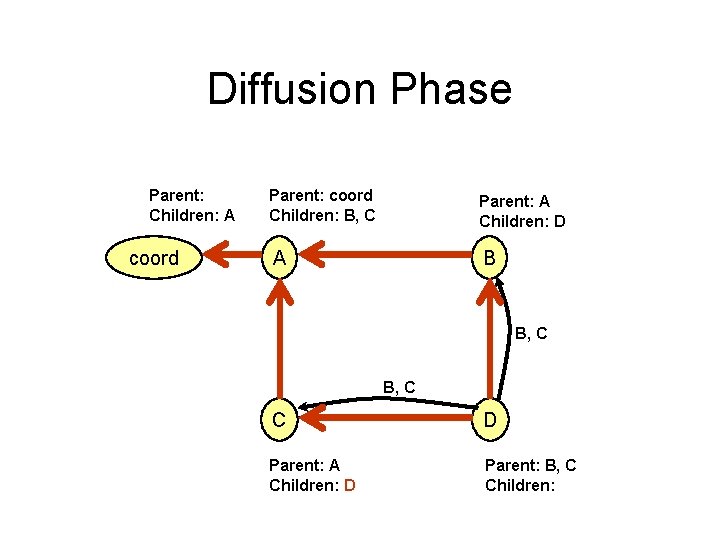
Diffusion Phase Parent: Children: A coord Parent: coord Children: B, C Parent: A Children: D A B B, C C D Parent: A Children: D Parent: B, C Children:
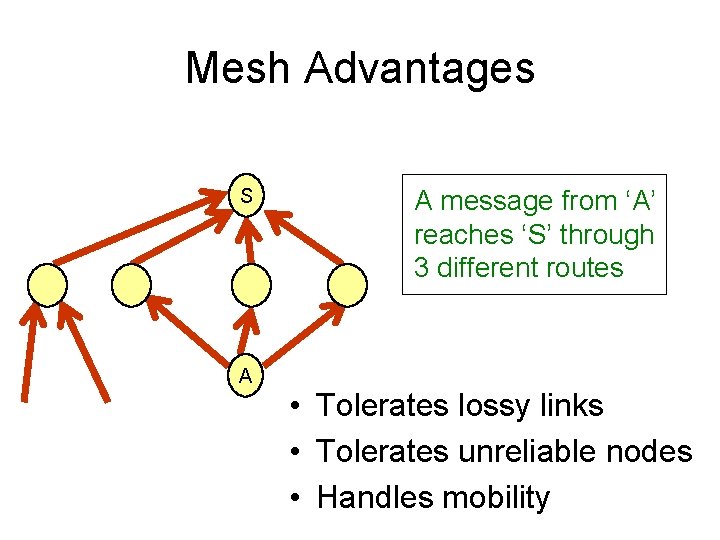
Mesh Advantages S A A message from ‘A’ reaches ‘S’ through 3 different routes • Tolerates lossy links • Tolerates unreliable nodes • Handles mobility
Mesh Failures What if links to all parents fail? Send information along alternate paths • If a node is unable to send to any parents, it enters Panic mode and broadcasts its message to all its nbrs.
Panic Mode When a node receives a bcast from a node in panic mode, • it removes sender from its list of parents, and • if message gives new information, and – if its parent list is non-empty, • it proceeds as before – if its parent list is empty, • it enters “Panic Mode” and bcasts to all nbrs
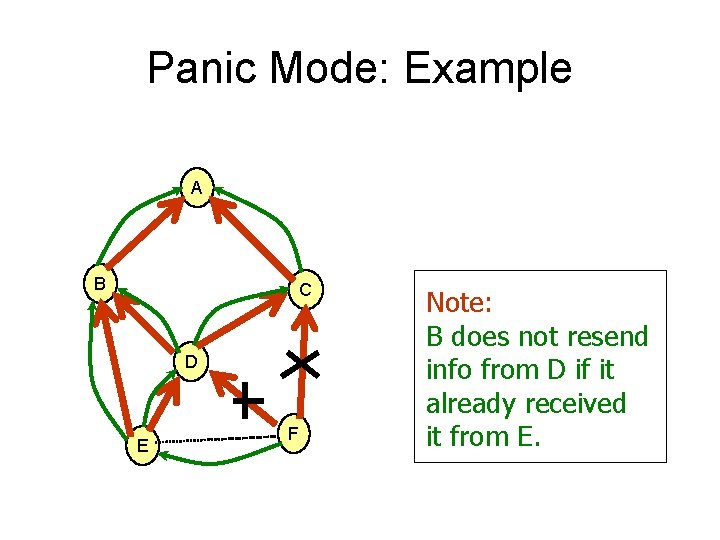
Panic Mode: Example A B C D E F Note: B does not resend info from D if it already received it from E.
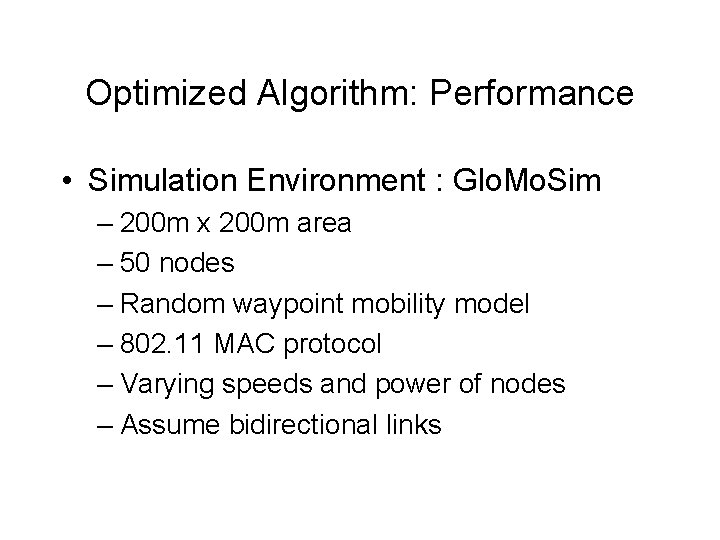
Optimized Algorithm: Performance • Simulation Environment : Glo. Mo. Sim – 200 m x 200 m area – 50 nodes – Random waypoint mobility model – 802. 11 MAC protocol – Varying speeds and power of nodes – Assume bidirectional links
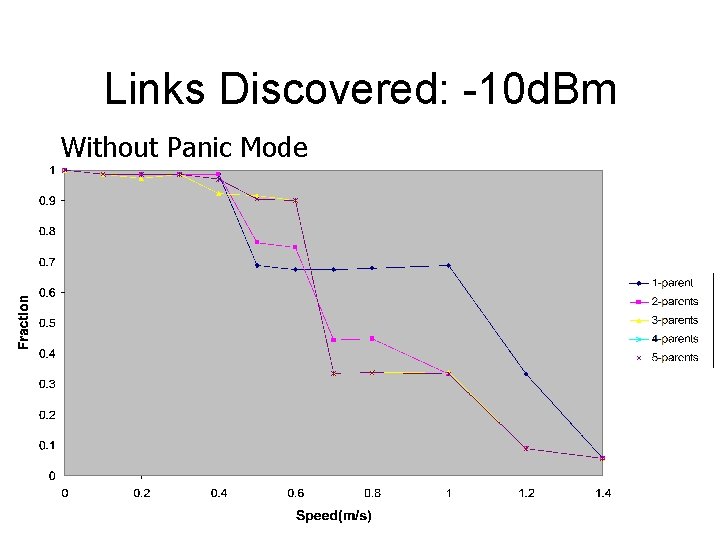
Links Discovered: -10 d. Bm Without Panic Mode
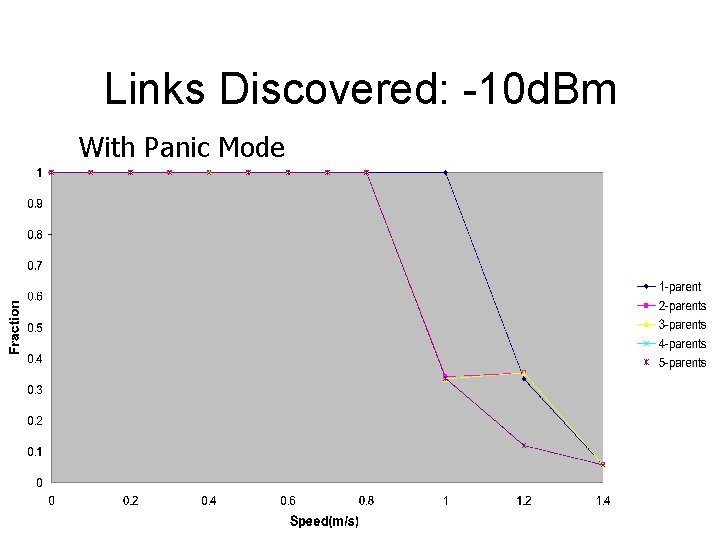
Links Discovered: -10 d. Bm With Panic Mode
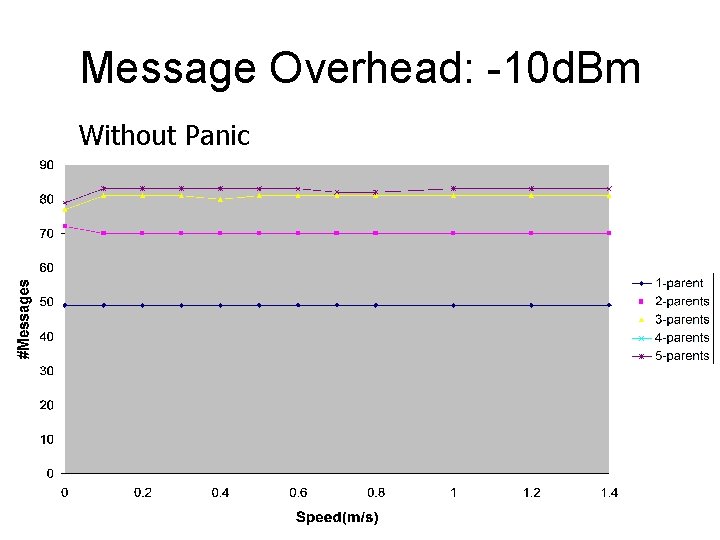
Message Overhead: -10 d. Bm Without Panic
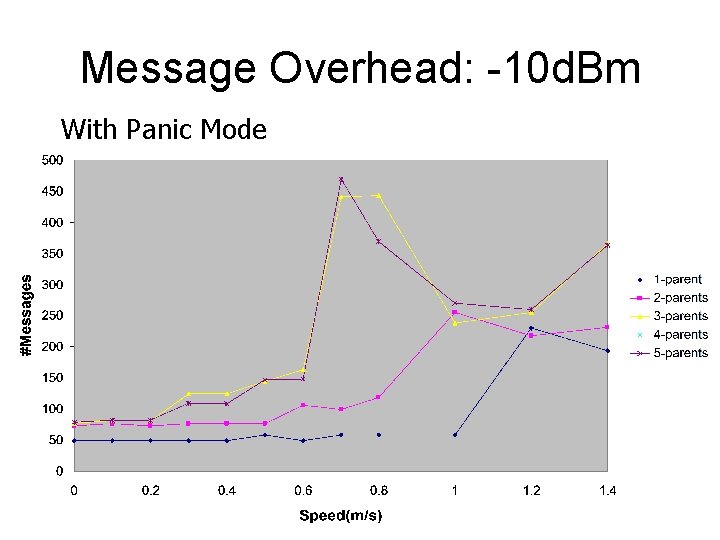
Message Overhead: -10 d. Bm With Panic Mode
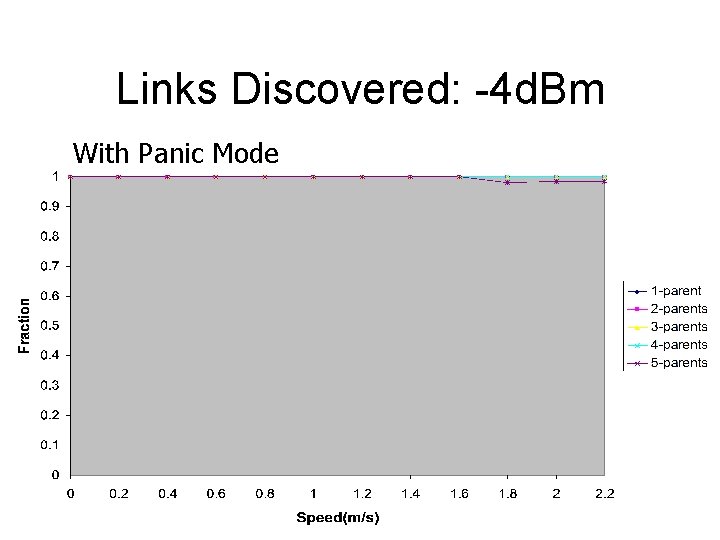
Links Discovered: -4 d. Bm With Panic Mode
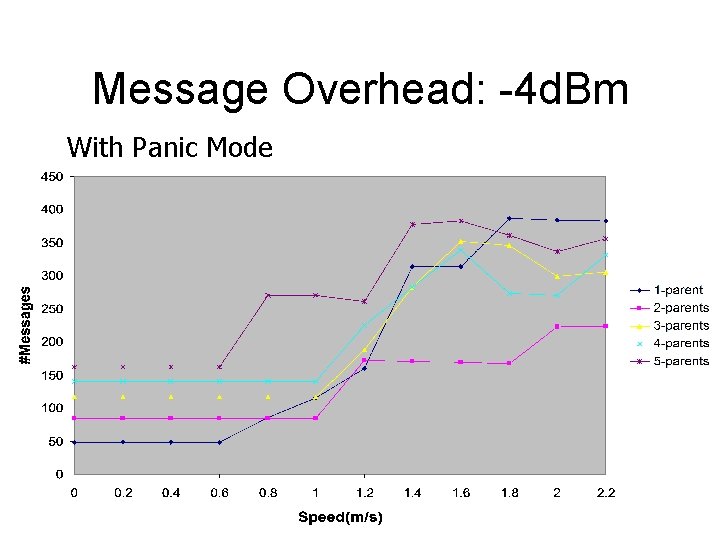
Message Overhead: -4 d. Bm With Panic Mode
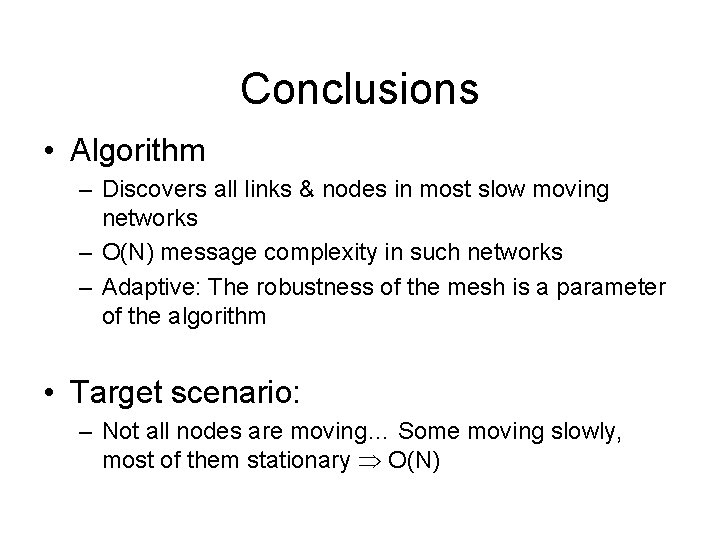
Conclusions • Algorithm – Discovers all links & nodes in most slow moving networks – O(N) message complexity in such networks – Adaptive: The robustness of the mesh is a parameter of the algorithm • Target scenario: – Not all nodes are moving… Some moving slowly, most of them stationary O(N)

Questions?
- Slides: 37