
Adaptive specific Immunity Adaptive immunity is a system
- Slides: 17
Adaptive (specific ) Immunity • Adaptive immunity is a system of defenses that specifically targets billions of different antigens an individual may encounter during its lifetime • Antigen – PAMP or other molecule the body recognizes as nonself that triggers an active immune response
Overview of Adaptive Immunity Vertebrate adaptive immunity adapts to different antigens it encounters during its lifetime • Lymphocytes and phagocytes interact to effect four defining characteristics: Self/nonself recognition, specificity, diversity, and memory
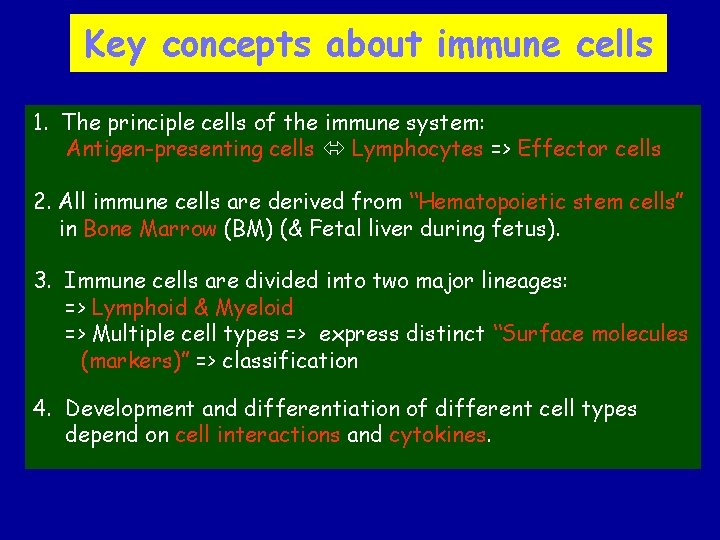
Key concepts about immune cells 1. The principle cells of the immune system: Antigen-presenting cells Lymphocytes => Effector cells 2. All immune cells are derived from “Hematopoietic stem cells” in Bone Marrow (BM) (& Fetal liver during fetus). 3. Immune cells are divided into two major lineages: => Lymphoid & Myeloid => Multiple cell types => express distinct “Surface molecules (markers)” => classification 4. Development and differentiation of different cell types depend on cell interactions and cytokines.
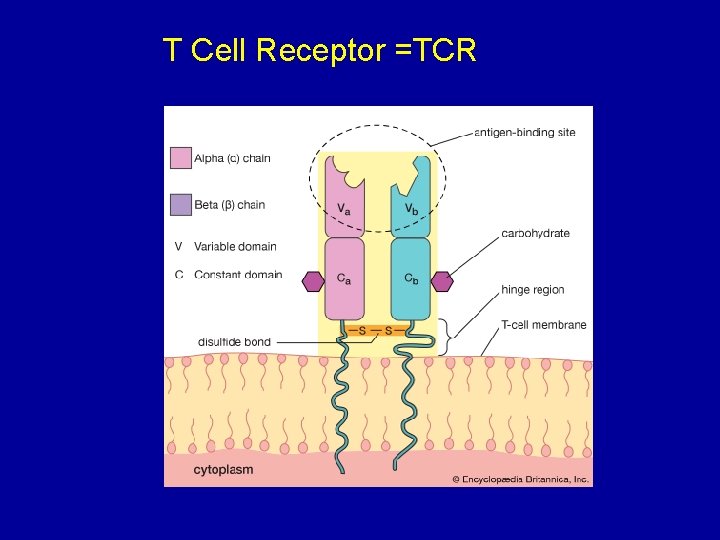
Self/Nonself Recognition • Self versus nonself recognition – Each kind of cell or virus has a unique identity • MHC markers – Plasma membrane self-recognition proteins • T cell receptors (TCRs) – Antigen receptors that recognize MHC markers as self, antigens as nonself
Specificity and Diversity Specificity – Defenses are tailored to target specific antigens Diversity – There are potentially billions of different antigen receptors on T and B cells
Memory • Memory – The capacity of the adaptive immune system to remember an antigen – If the same antigen appears again, B and T cells make a faster, stronger response
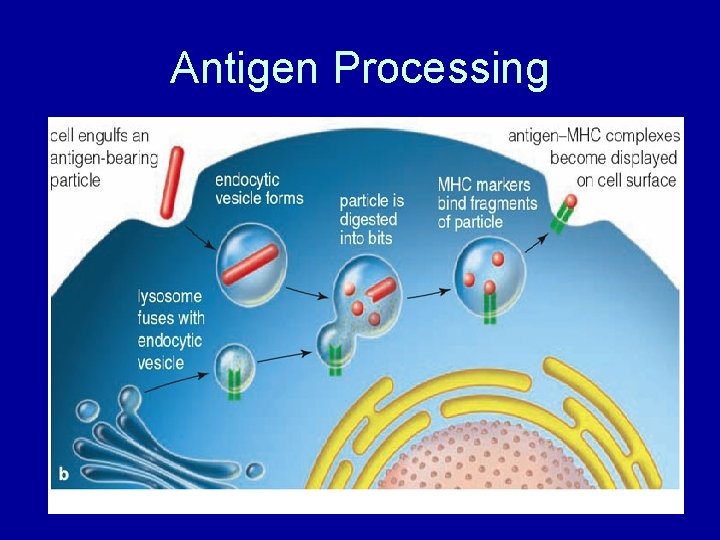
First Step – The Antigen Alert • Once a B or T cell recognizes and binds to a specific antigen, it begins to divide by mitosis – All descendent cells recognize the same antigen • T cells do not recognize an antigen unless it is presented by an antigen-presenting cell – Macrophages, B cells, and dendritic cells digest particles and display antigen-MHC complexes
Cell Types • Effector cells – Differentiated lymphocytes (B and T cells) that act at once to fight infection • Memory cells – Long-lived B and T cells reserved for future encounters with the same antigen
Antigen Processing
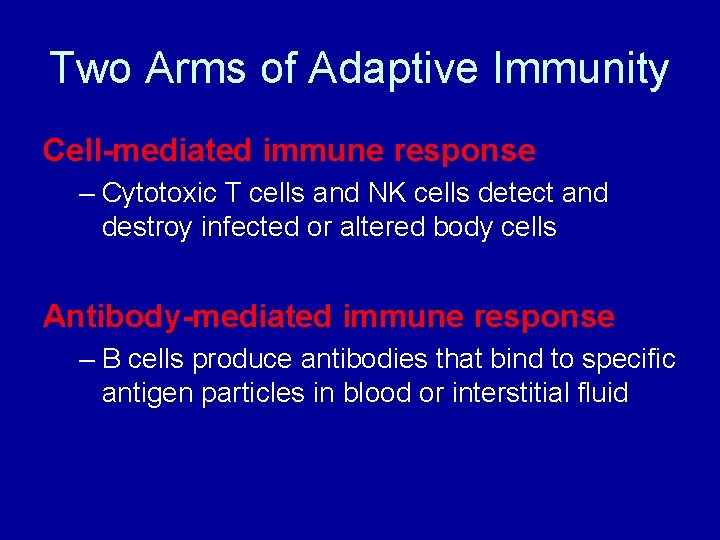
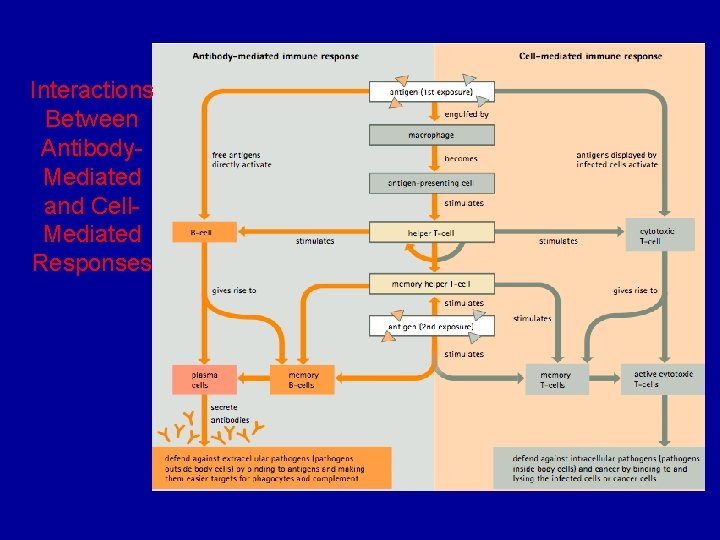
Two Arms of Adaptive Immunity Cell-mediated immune response – Cytotoxic T cells and NK cells detect and destroy infected or altered body cells Antibody-mediated immune response – B cells produce antibodies that bind to specific antigen particles in blood or interstitial fluid
Interactions Between Antibody. Mediated and Cell. Mediated Responses
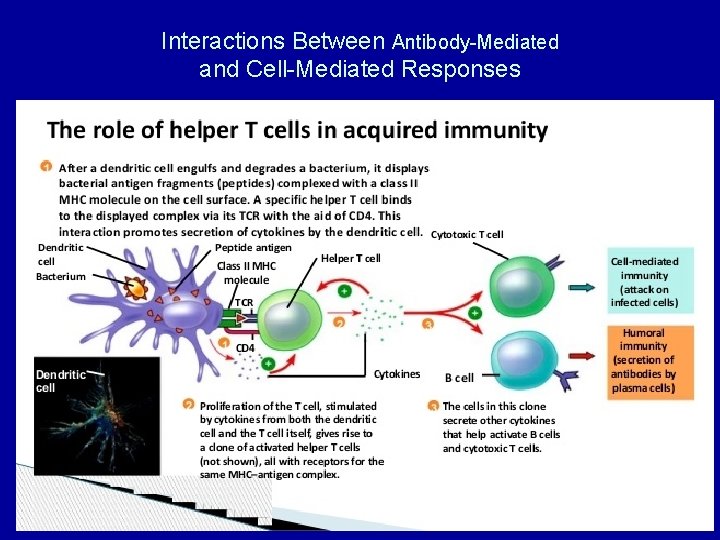
Interactions Between Antibody-Mediated and Cell-Mediated Responses
T Cell Receptor =TCR
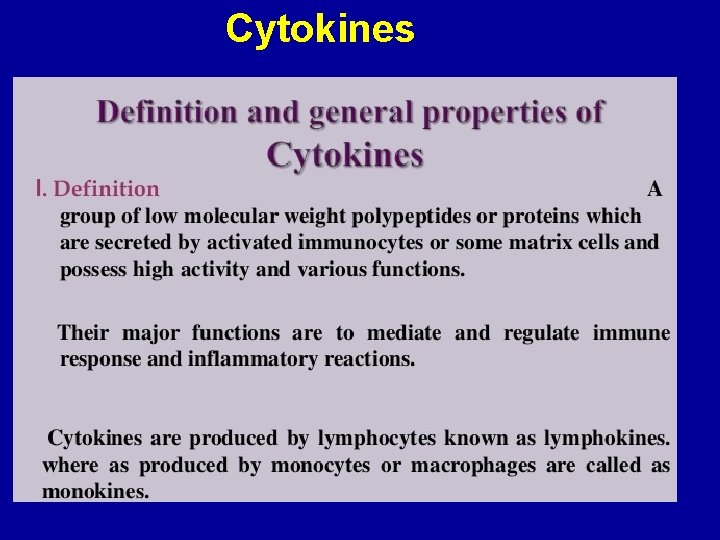
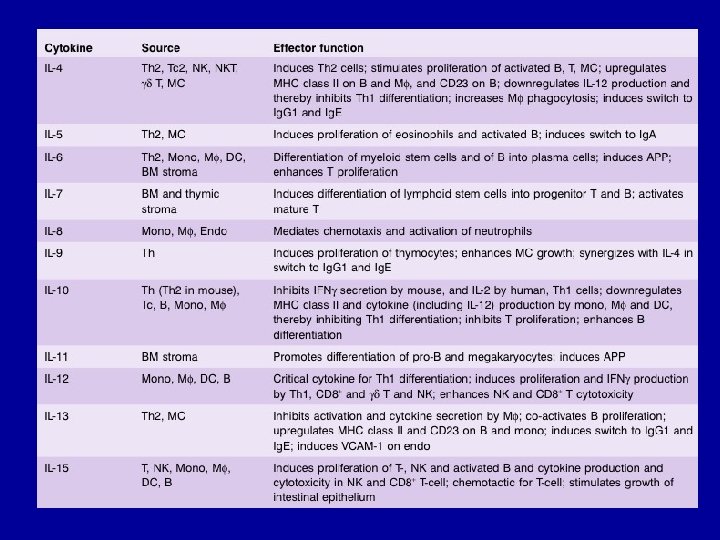
Cytokines
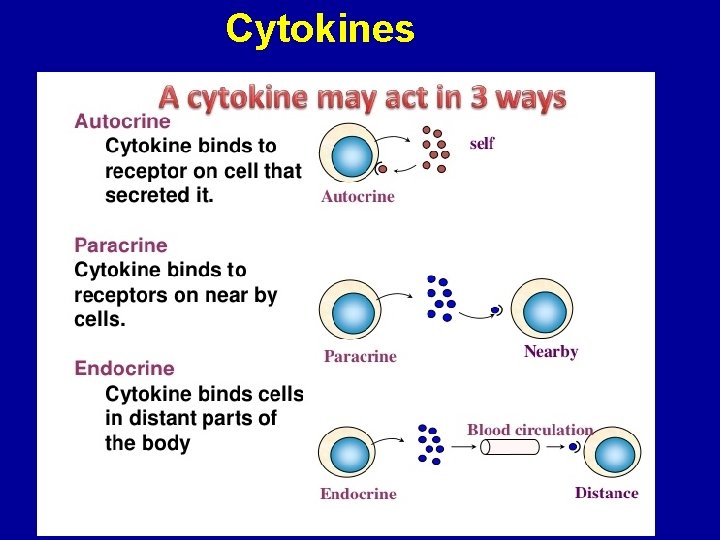
Cytokines
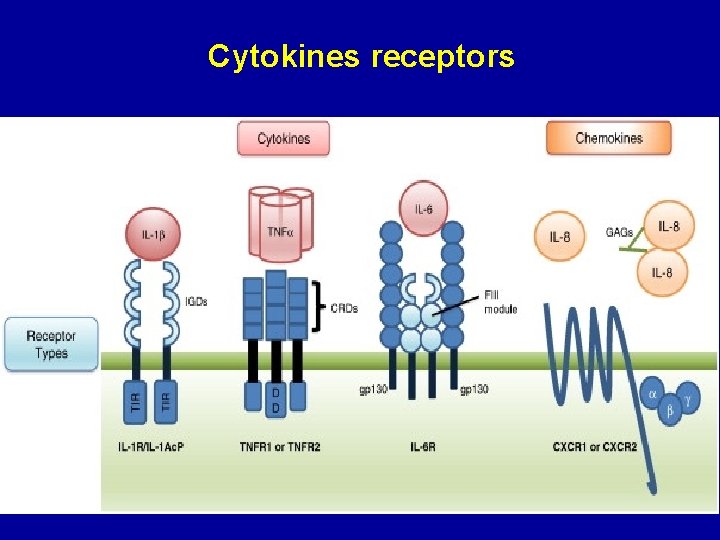
Cytokines receptors