
Adaptive Learning Background Applications and Lesson Building Autar
Adaptive Learning: Background, Applications and Lesson Building Autar Kaw Autar. Kaw. com Eleonora Delgado University of South Florida 2018 ASEE-SE Workshop – March 4, 2018
Acknowledgments This material is based upon work supported partially by the National Science Foundation under Grant Number #1609637, and the Research for Undergraduates Program in the College of Engineering at USF. Any opinions, findings, and conclusions or recommendations expressed in this material are those of the authors and do not necessarily reflect the views of the National Science Foundation.

BACKGROUND
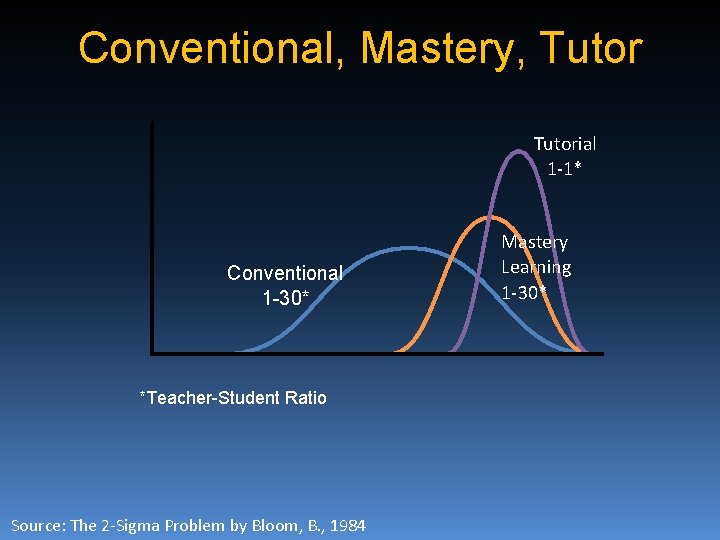
Conventional, Mastery, Tutorial 1 -1* Conventional 1 -30* *Teacher-Student Ratio Source: The 2 -Sigma Problem by Bloom, B. , 1984 Mastery Learning 1 -30*
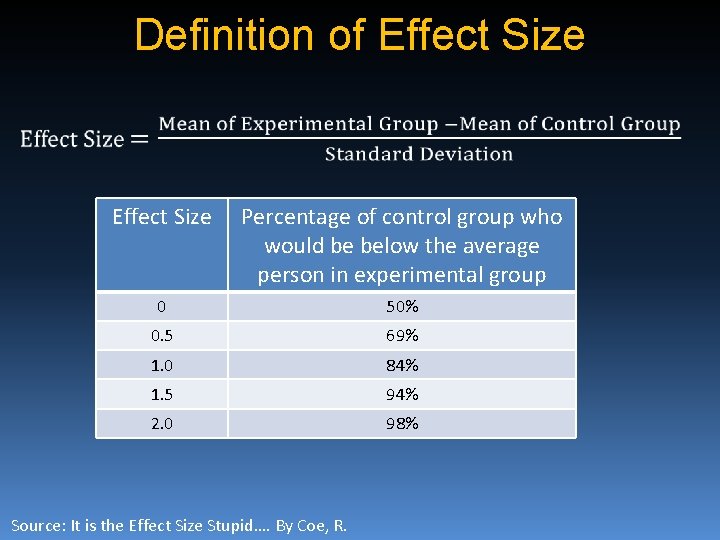
Definition of Effect Size Percentage of control group who would be below the average person in experimental group 0 50% 0. 5 69% 1. 0 84% 1. 5 94% 2. 0 98% Source: It is the Effect Size Stupid…. By Coe, R.

Effect Size Source: The Relative Effectiveness of Human Tutoring …. By Vanlehn, K. , 2011
What do you think is the actual effect size of human tutoring? A. 0. 5 B. 0. 7 C. 1. 0 D. 2. 0
Reflection Exercise What do you believe is adaptive learning?
What does adaptive learning involve? A. Uses data to give and improve pathways to learning B. Uses pre-set configurations C. Is rule-based and uses decision trees
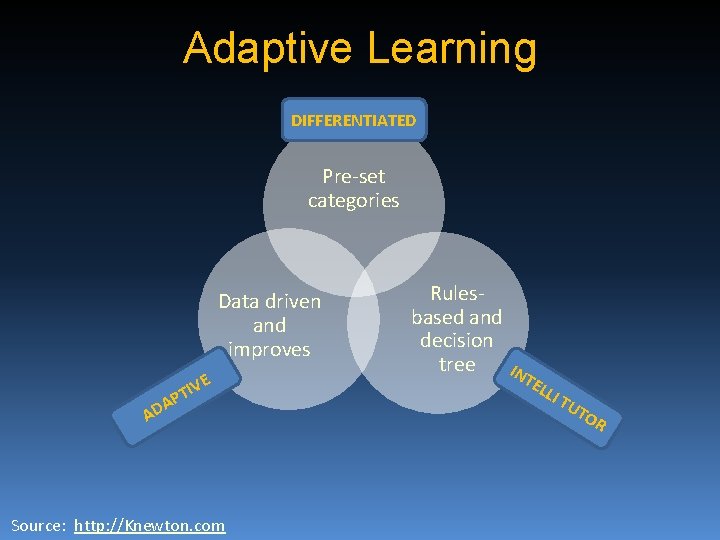
Adaptive Learning DIFFERENTIATED Pre-set categories Data driven and improves E TIV AP AD Source: http: //Knewton. com Rulesbased and decision tree IN TE LLI TU TO R
Platform Players • • • Knewton Smart Sparrow Realize. IT Pearson's Mc. Graw-Hill Wiley
PROCESS
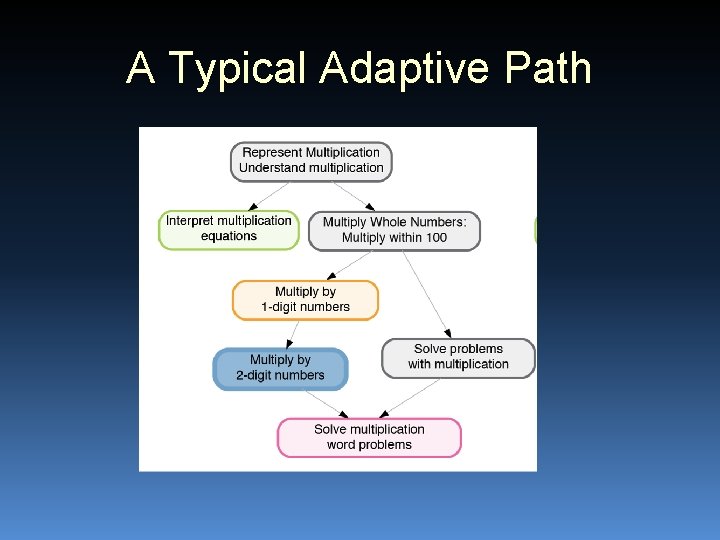
A Typical Adaptive Path
Reflection Exercise Think of your own course and imagine reasonable resources like video, text and questions are available to you for a single concept or topic. What path would you design for your students?
RESULTS
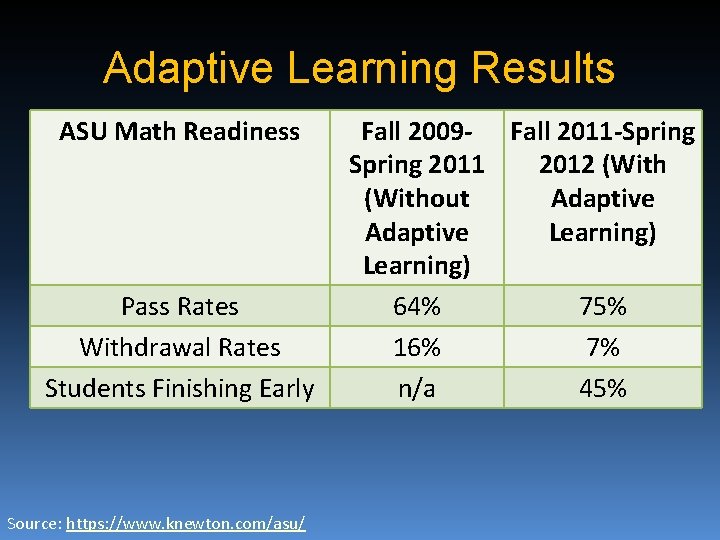
Adaptive Learning Results ASU Math Readiness Pass Rates Withdrawal Rates Students Finishing Early Source: https: //www. knewton. com/asu/ Fall 2009 - Fall 2011 -Spring 2011 2012 (Without Adaptive Learning) 64% 75% 16% 7% n/a 45%
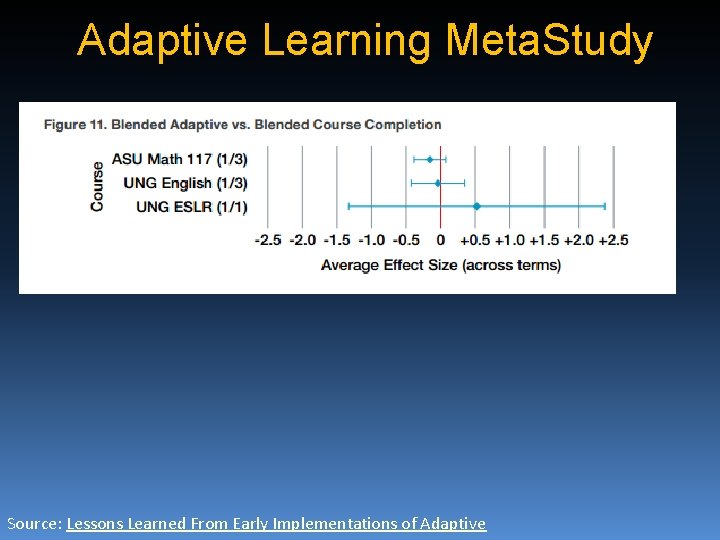
Adaptive Learning Meta. Study Source: Lessons Learned From Early Implementations of Adaptive
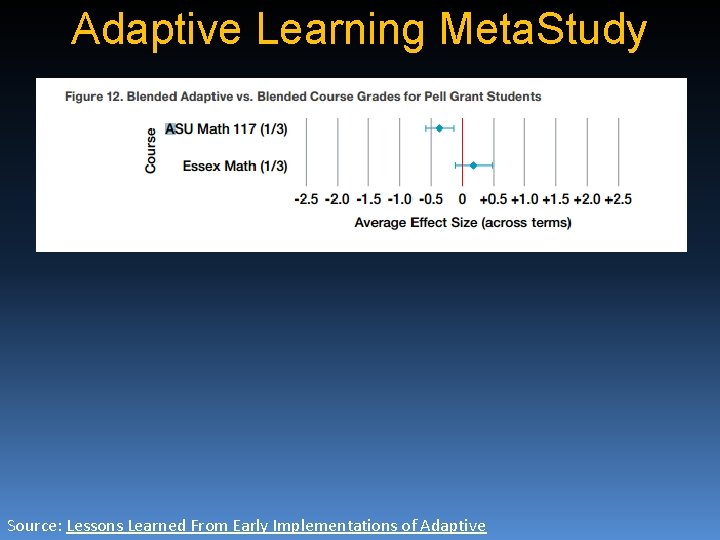
Adaptive Learning Meta. Study Source: Lessons Learned From Early Implementations of Adaptive
Our Use of Adaptive Learning
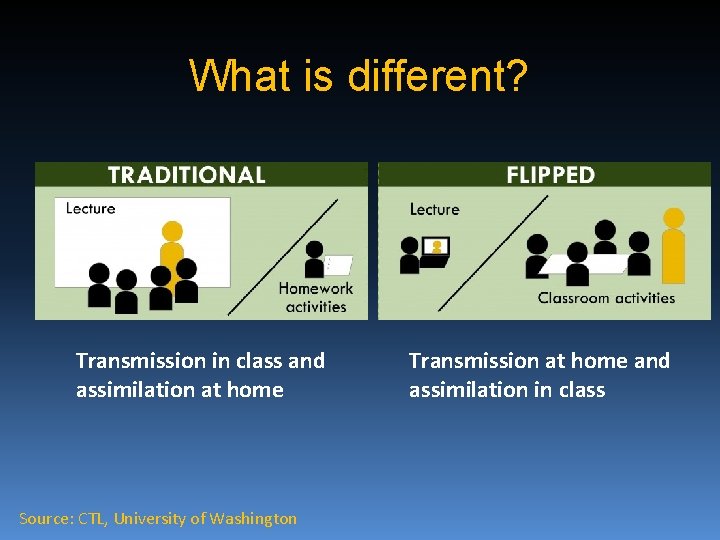
What is different? Transmission in class and assimilation at home Source: CTL, University of Washington Transmission at home and assimilation in class
What happens BEFORE class?
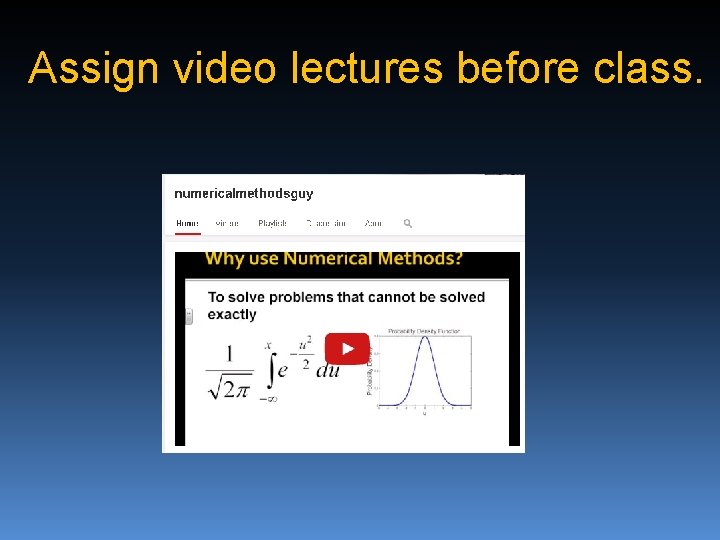
Assign video lectures before class.
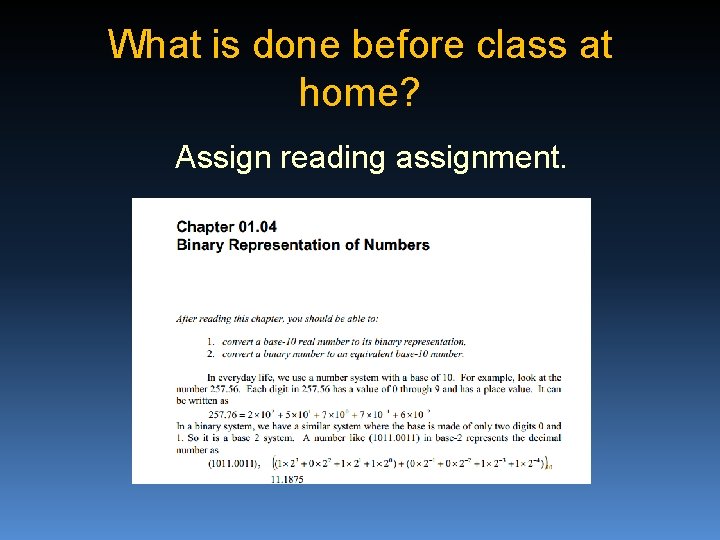
What is done before class at home? Assign reading assignment.
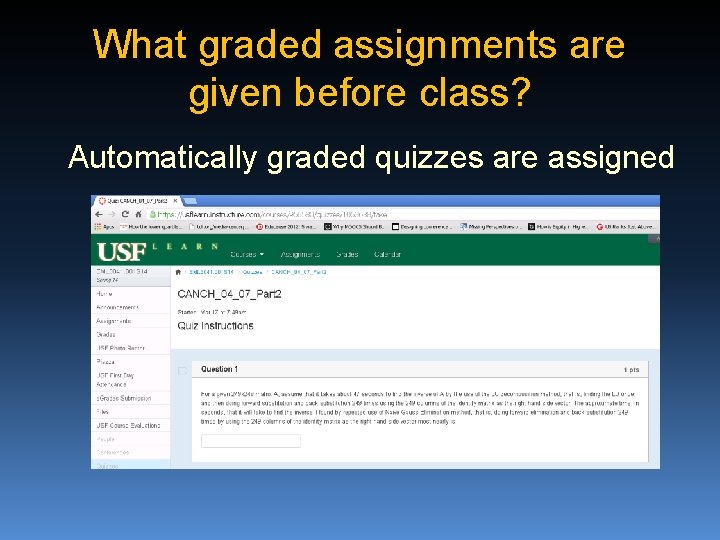
What graded assignments are given before class? Automatically graded quizzes are assigned
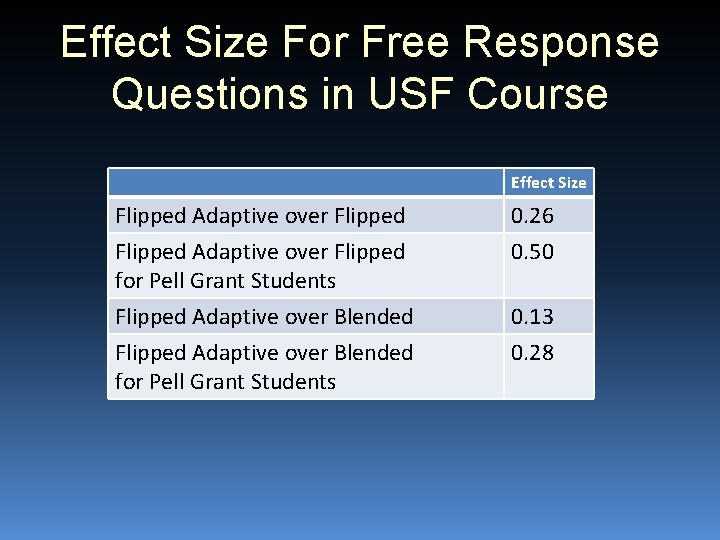
Effect Size For Free Response Questions in USF Course Effect Size Flipped Adaptive over Flipped for Pell Grant Students Flipped Adaptive over Blended for Pell Grant Students 0. 26 0. 50 0. 13 0. 28
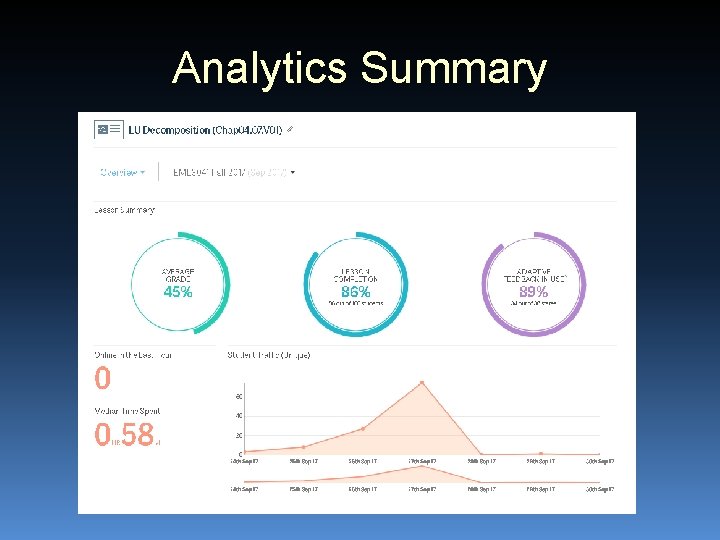
Analytics Summary
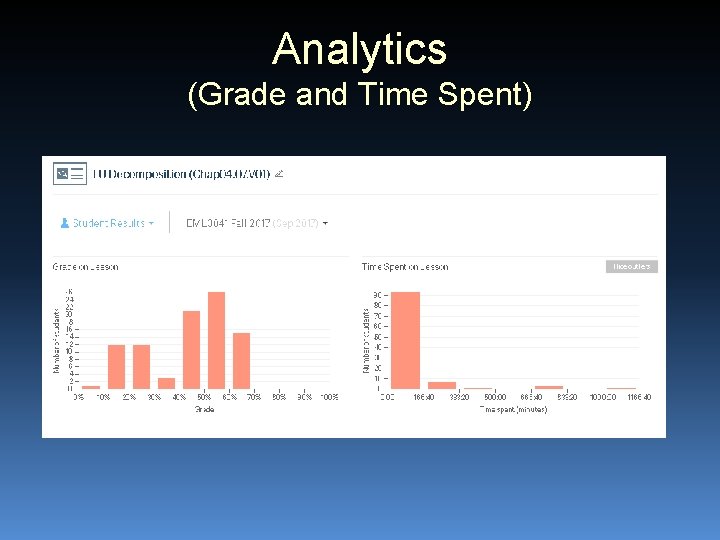
Analytics (Grade and Time Spent)
A LEARNING PHILOSOPHY
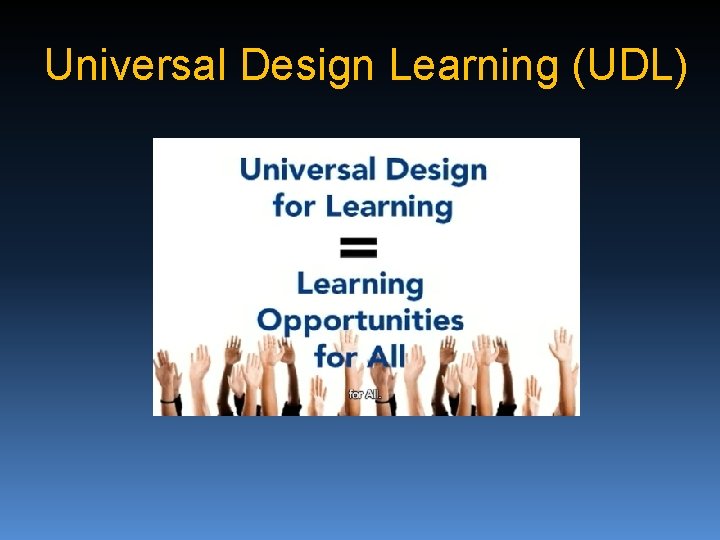
Universal Design Learning (UDL)
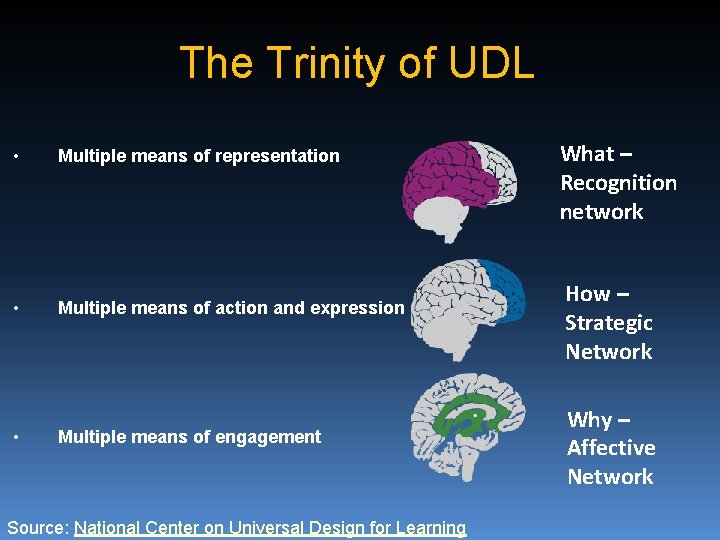
The Trinity of UDL • Multiple means of representation • Multiple means of action and expression • Multiple means of engagement Source: National Center on Universal Design for Learning What – Recognition network How – Strategic Network Why – Affective Network
Reflection Exercise Make a list of multiple means of a) representation b) action and expression c) engagement
LET’S BUILD A LESSON
Download files http: //www. eng. usf. edu/~kaw/download/workshop/ OR http: //bit. ly/2 FDc. Tuv
Adaptive Learning: Background, Applications and Lesson Building QUESTIONS? Contact: Autar Kaw kaw@usf. edu University of South Florida
- Slides: 34