
Adaptive immunity 2440 spring lecture 7 52710 Specific
- Slides: 35
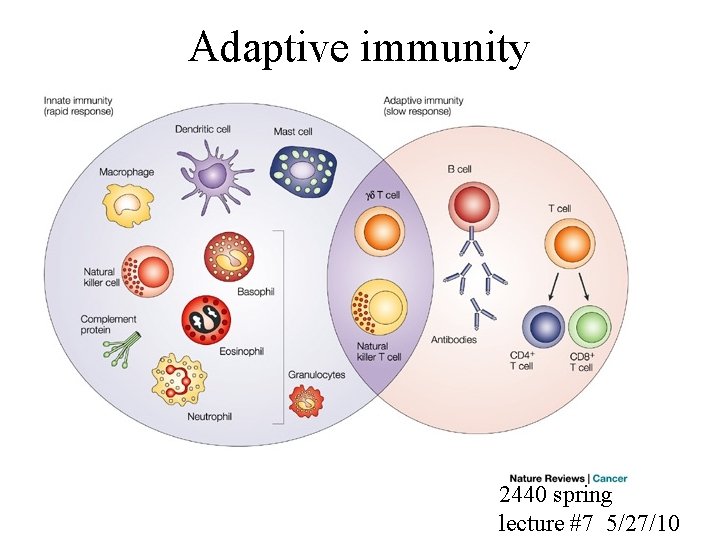
Adaptive immunity 2440 spring lecture #7 5/27/10
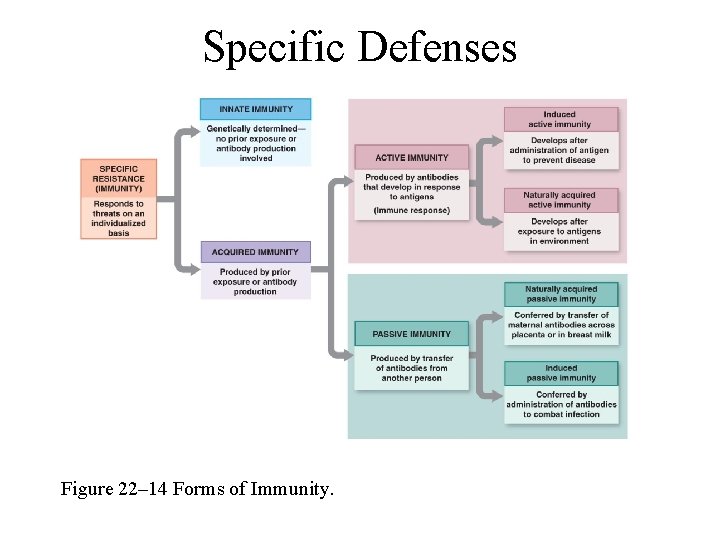
Specific Defenses Figure 22– 14 Forms of Immunity.
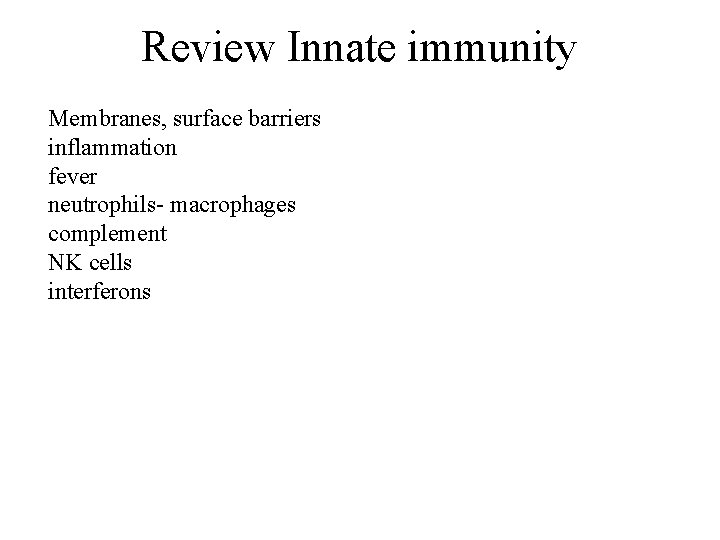
Review Innate immunity Membranes, surface barriers inflammation fever neutrophils- macrophages complement NK cells interferons
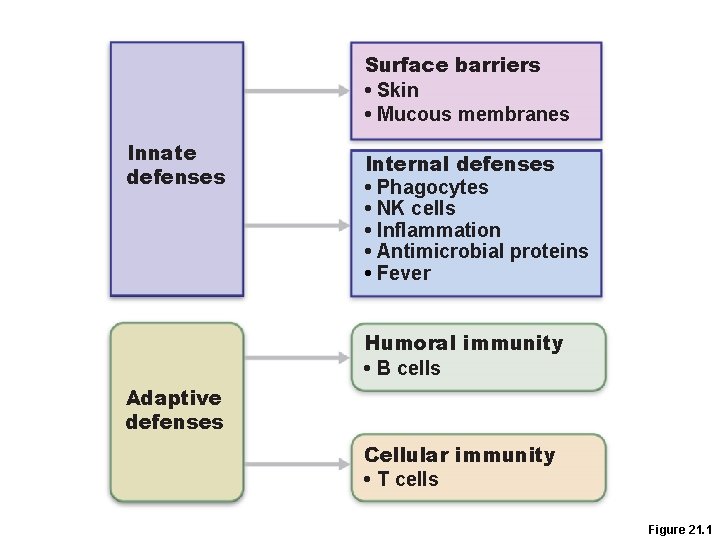
Surface barriers • Skin • Mucous membranes Innate defenses Internal defenses • Phagocytes • NK cells • Inflammation • Antimicrobial proteins • Fever Humoral immunity • B cells Adaptive defenses Cellular immunity • T cells Figure 21. 1
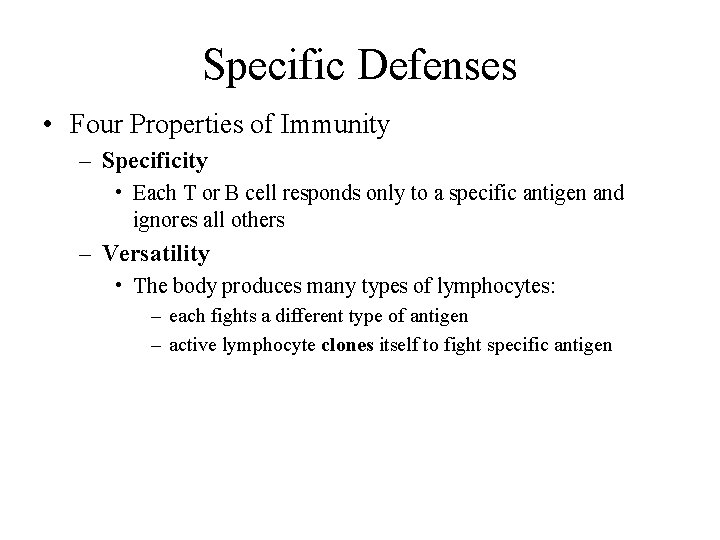
Specific Defenses • Four Properties of Immunity – Specificity • Each T or B cell responds only to a specific antigen and ignores all others – Versatility • The body produces many types of lymphocytes: – each fights a different type of antigen – active lymphocyte clones itself to fight specific antigen
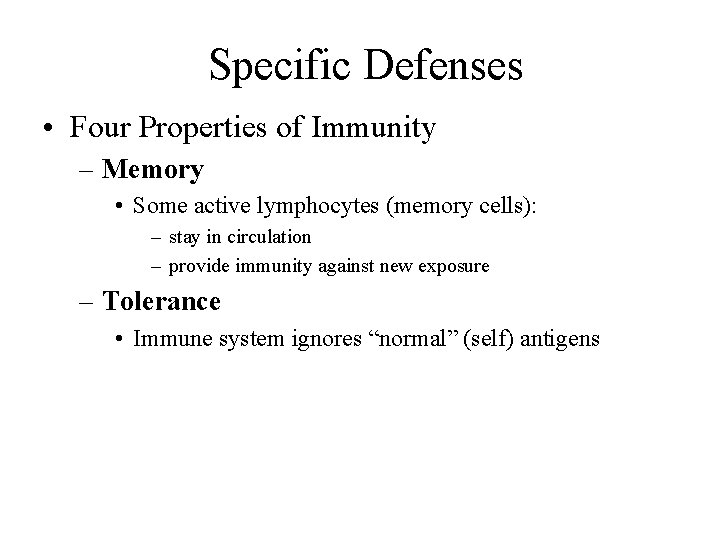
Specific Defenses • Four Properties of Immunity – Memory • Some active lymphocytes (memory cells): – stay in circulation – provide immunity against new exposure – Tolerance • Immune system ignores “normal” (self) antigens
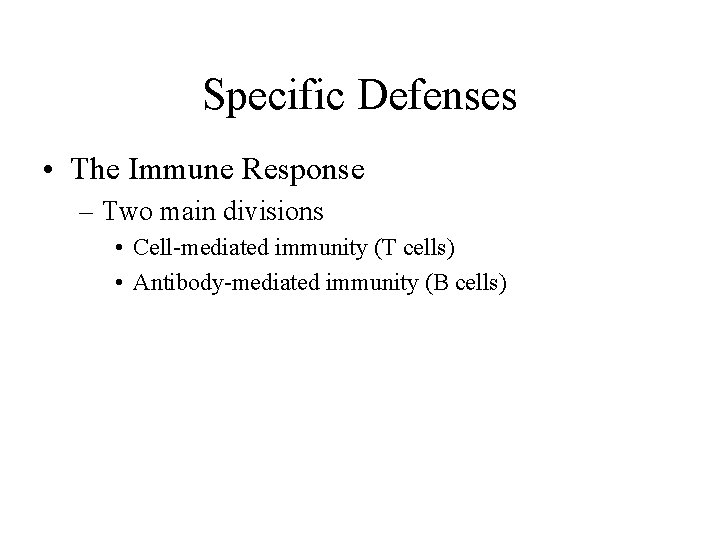
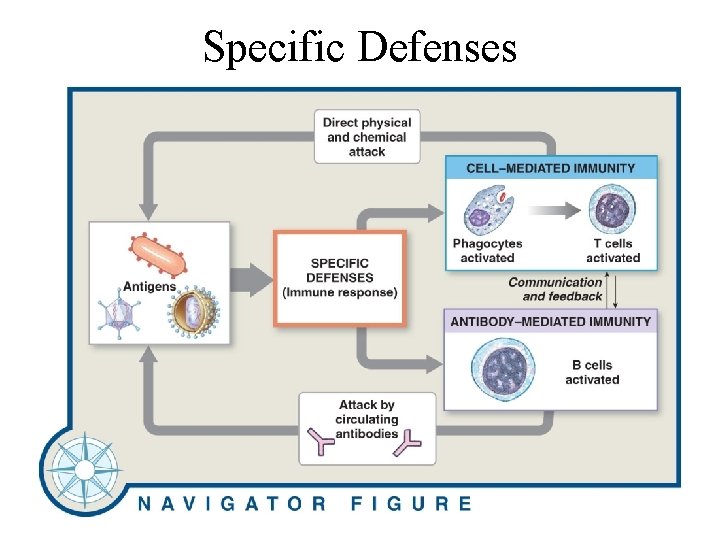
Specific Defenses • The Immune Response – Two main divisions • Cell-mediated immunity (T cells) • Antibody-mediated immunity (B cells)
Specific Defenses 22– 15 An Overview of the Immune Response.
T Cells and Immunity • Cell-mediated immunity (T cells) – Cytotoxic T cells (also called TC cells) • Attack cells infected by viruses • Responsible for cell-mediated immunity – Helper T cells (also called TH cells) • Stimulate function of T cells and B cells – Suppressor T cells (also called TS cells) • Inhibit function of T cells and B cells
T Cells and Immunity • MHC Proteins Involved in self/nonself recognition – The membrane glycoproteins that bind to antigens – Genetically coded in chromosome 6 • The major histocompatibility complex (MHC) • Differs among individuals
T Cells and Immunity • Antigen Recognition – T cells only recognize antigens that are bound to glycoproteins in plasma membranes Antigens must be presented
T Cells and Immunity • Antigen-Presenting Cells (APCs) – Responsible for activating T cells against foreign cells and proteins
Antigen-Presenting Cells (APCs) • Engulf antigens • Present fragments of antigens to be recognized by T cells • Major types – Dendritic cells in connective tissues and epidermis – Macrophages in connective tissues and lymphoid organs – B cells
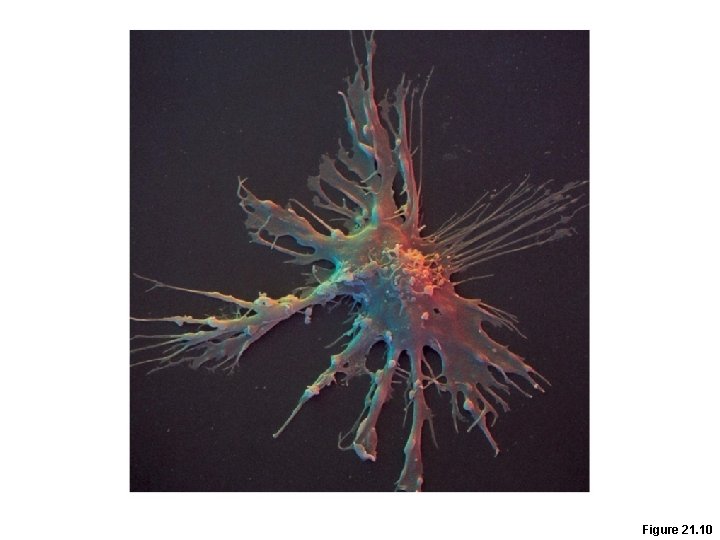
Macrophages and Dendritic Cells • Present antigens and activate T cells – Macrophages mostly remain fixed in the lymphoid organs – Dendritic cells internalize pathogens and enter lymphatics to present the antigens to T cells in lymphoid organs • Activated T cells release chemicals that – Prod macrophages to become insatiable phagocytes and to secrete bactericidal chemicals
Figure 21. 10
Self-Antigens: MHC Proteins • Protein molecules (self-antigens) on the surface of cells • Antigenic to others in transfusions or grafts • Example: MHC proteins – Coded for by genes of the major histocompatibility complex (MHC) and are unique to an individual
Diversity of antigen receptors – Human immune system able to recognize and bind to at least a billion different epitopes – Result of genetic recombination – shuffling and rearranging of a few hundred versions of several small gene segments • Major Histocompatibility Complex Antigens – MHC or human leukocyte antigens (HLA) – Normal function to help T cells recognize foreign or self – Class I MHC (MHC-I) – built into all body cells except RBCs – Class II MHC (MHC-II) – only on antigen presenting cells
T Cells and Immunity • Class I MHC Proteins – Pick up small peptides in cell and carry them to the surface • T cells ignore normal peptides • Abnormal peptides or viral proteins activate T cells to destroy cell
T Cells and Immunity • Class II MHC Proteins – Antigenic fragments • From antigenic processing of pathogens • Bind to Class II proteins • Inserted in plasma membrane to stimulate T cells
T Cells and Immunity • CD Markers – Also called cluster of differentiation markers • In T cell membranes • Molecular mechanism of antigen recognition • More than 70 types: – designated by an identifying number • CD 3 Receptor Complex – Found in all T cells
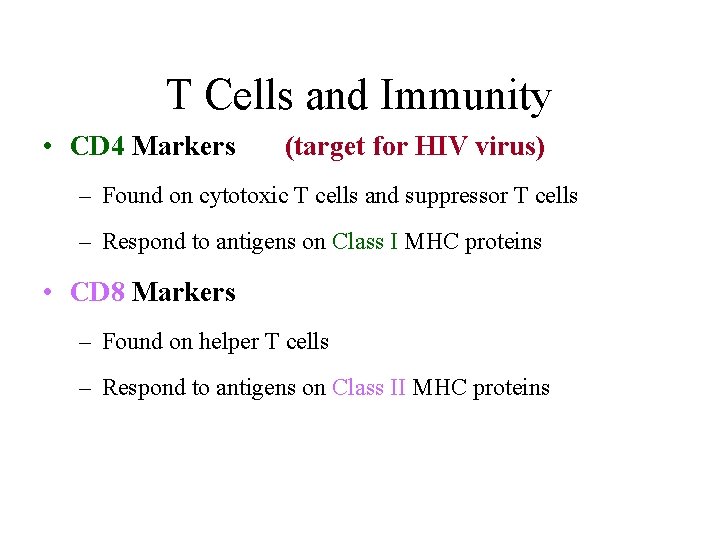
T Cells and Immunity • CD 4 Markers (target for HIV virus) – Found on cytotoxic T cells and suppressor T cells – Respond to antigens on Class I MHC proteins • CD 8 Markers – Found on helper T cells – Respond to antigens on Class II MHC proteins
T Cells and Immunity • CD 8 or CD 4 Markers – Bind to CD 3 receptor complex – Prepare cell for activation
MHC Proteins • Classes of MHC proteins – Class I MHC proteins, found on virtually all body cells – Class II MHC proteins, found on certain cells in the immune response (APCs) • MHC proteins display peptides (usually selfantigens) • In infected cells, MHC proteins display fragments of foreign antigens, which help mobilize
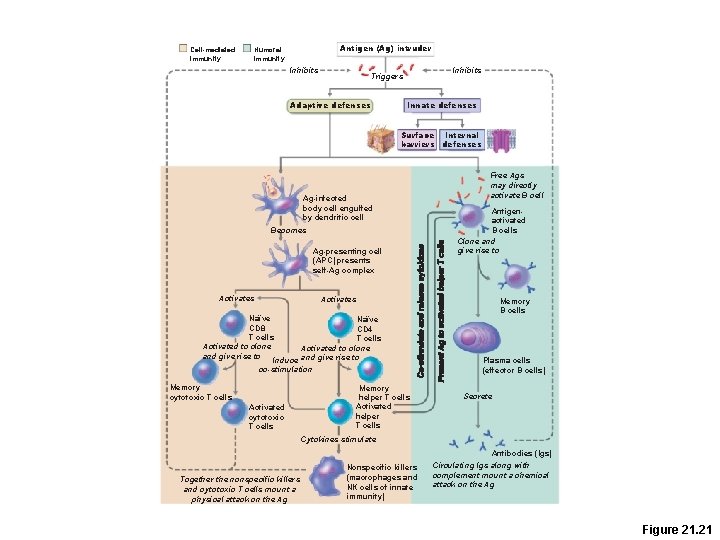
Cell-mediated immunity Antigen (Ag) intruder Humoral immunity Inhibits Triggers Adaptive defenses Innate defenses Surface Internal barriers defenses Ag-infected body cell engulfed by dendritic cell Becomes Ag-presenting cell (APC) presents self-Ag complex Activates Activated cytotoxic T cells Antigenactivated B cells Clone and give rise to Activates Naïve CD 8 CD 4 T cells Activated to clone and give rise to Induce and give rise to co-stimulation Memory cytotoxic T cells Free Ags may directly activate B cell Memory helper T cells Activated helper T cells Memory B cells Plasma cells (effector B cells) Secrete Cytokines stimulate Together the nonspecific killers and cytotoxic T cells mount a physical attack on the Ag Nonspecific killers (macrophages and NK cells of innate immunity) Antibodies (Igs) Circulating lgs along with complement mount a chemical attack on the Ag Figure 21. 21
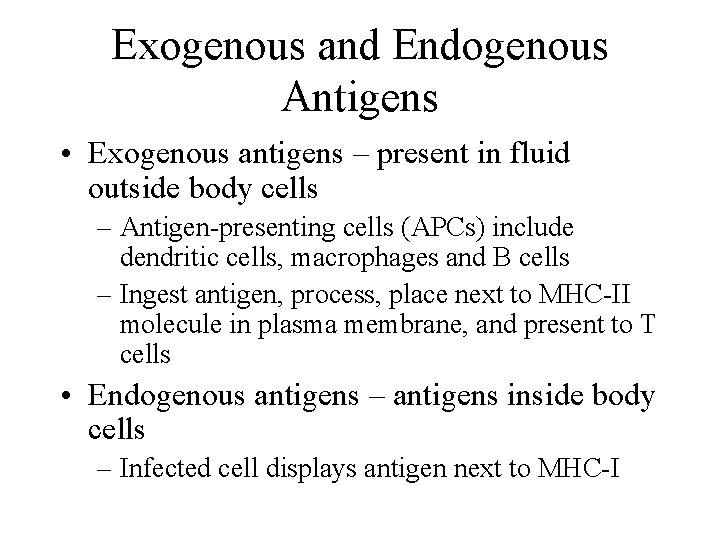
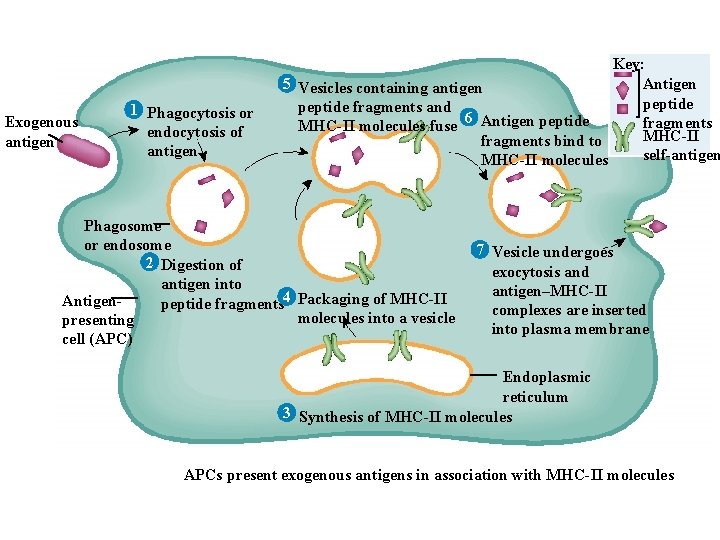
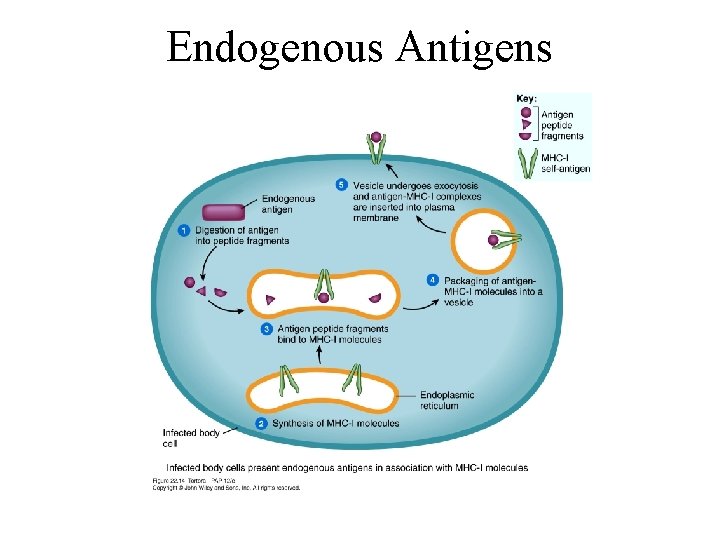
Exogenous and Endogenous Antigens • Exogenous antigens – present in fluid outside body cells – Antigen-presenting cells (APCs) include dendritic cells, macrophages and B cells – Ingest antigen, process, place next to MHC-II molecule in plasma membrane, and present to T cells • Endogenous antigens – antigens inside body cells – Infected cell displays antigen next to MHC-I
Exogenous antigen 1 Phagocytosis or endocytosis of antigen Key: 5 Vesicles containing antigen Antigen peptide fragments and 6 Antigen peptide fragments MHC-II molecules fuse MHC-II fragments bind to self-antigen MHC-II molecules Phagosome or endosome 2 Digestion of antigen into Antigenpeptide fragments 4 Packaging of MHC-II molecules into a vesicle presenting cell (APC) 7 Vesicle undergoes exocytosis and antigen–MHC-II complexes are inserted into plasma membrane Endoplasmic reticulum 3 Synthesis of MHC-II molecules APCs present exogenous antigens in association with MHC-II molecules
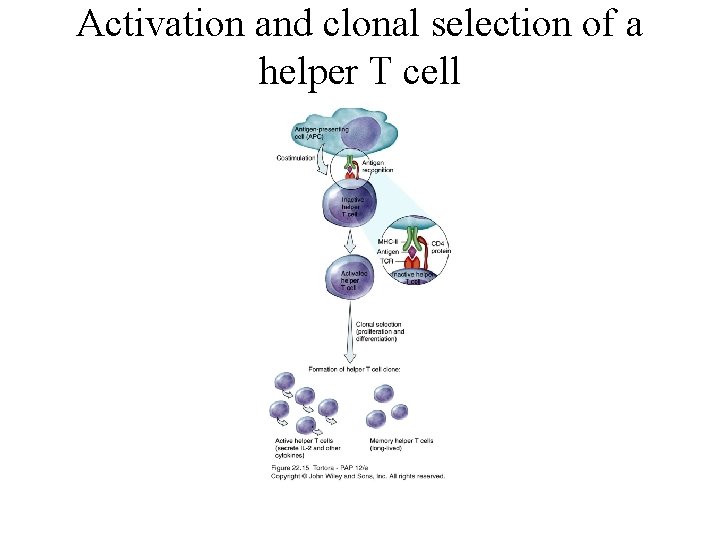
Activation and clonal selection of a helper T cell
Endogenous Antigens
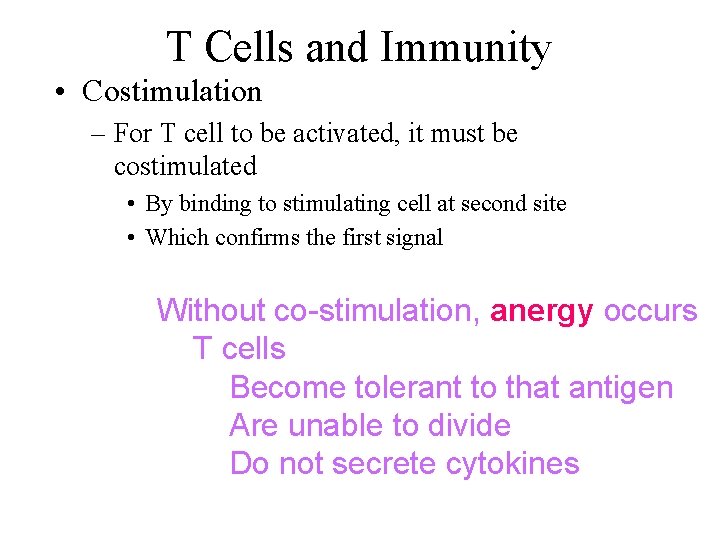
T Cells and Immunity • Costimulation – For T cell to be activated, it must be costimulated • By binding to stimulating cell at second site • Which confirms the first signal Without co-stimulation, anergy occurs T cells Become tolerant to that antigen Are unable to divide Do not secrete cytokines
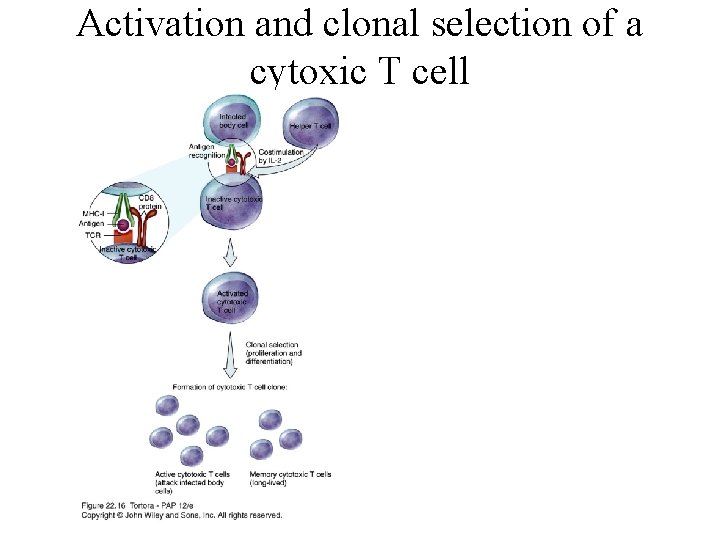
Activation and clonal selection of a cytoxic T cell
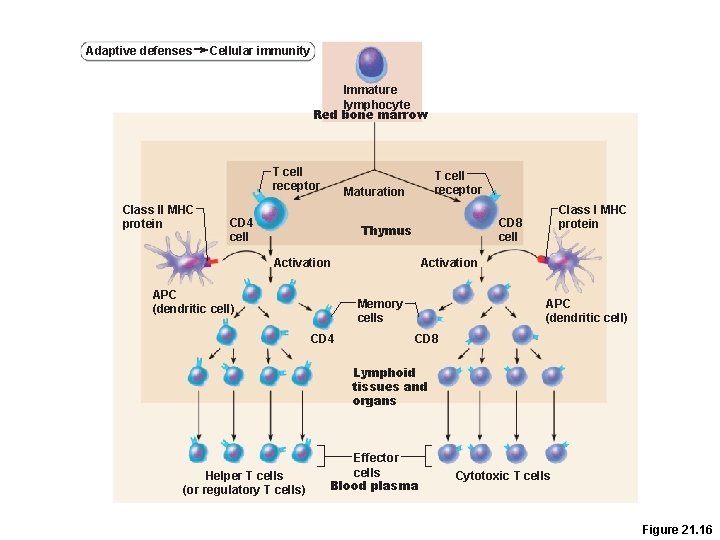
Adaptive defenses Cellular immunity Immature lymphocyte Red bone marrow T cell receptor Class II MHC protein T cell receptor Maturation CD 4 cell Thymus Activation APC (dendritic cell) Activation Memory cells CD 4 Class I MHC protein CD 8 cell APC (dendritic cell) CD 8 Lymphoid tissues and organs Helper T cells (or regulatory T cells) Effector cells Blood plasma Cytotoxic T cells Figure 21. 16
B Cells and Immunity • B Cell Division – Activated B cell divides into • Plasma cells • Memory B cells
B Cells and Immunity • Plasma Cells – Synthesize and secrete antibodies into interstitial fluid • Memory B Cells – Like memory T cells, remain in reserve to respond to next infection
Five Classes of Antibodies 1. Ig. G: the main class of antibodies found in the (Immunoglobulins) blood 2. Ig. A: occurs in small amounts in blood and in larger amounts in body secretions (tears, milk, saliva and mucus) 3. Ig. M: a huge antibody made up of five monomer units and is the first to arrive to neutralize antigen 4. Ig. E: has a special affinity for receptors on the plasma membranes of basophils in blood or mast cells in tissues 5. Ig. D: found mainly on B-cell membranes and is rarely secreted
Immune System Development • Four Effects of Aging on the Immune Response – – Thymic hormone production is greatly reduced T cells become less responsive to antigens Fewer T cells reduces responsiveness of B cells Immune surveillance against tumor cells declines