
Adapting to population ageing Lessons learned and challenges

- Slides: 11
Adapting to population ageing: Lessons learned and challenges ahead Erik van Ossenbruggen Consultant Urban and regional development Ecorys (Rotterdam, Netherlands) Erik. van. Ossenbruggen@ecorys. com +31 6 412 59 067
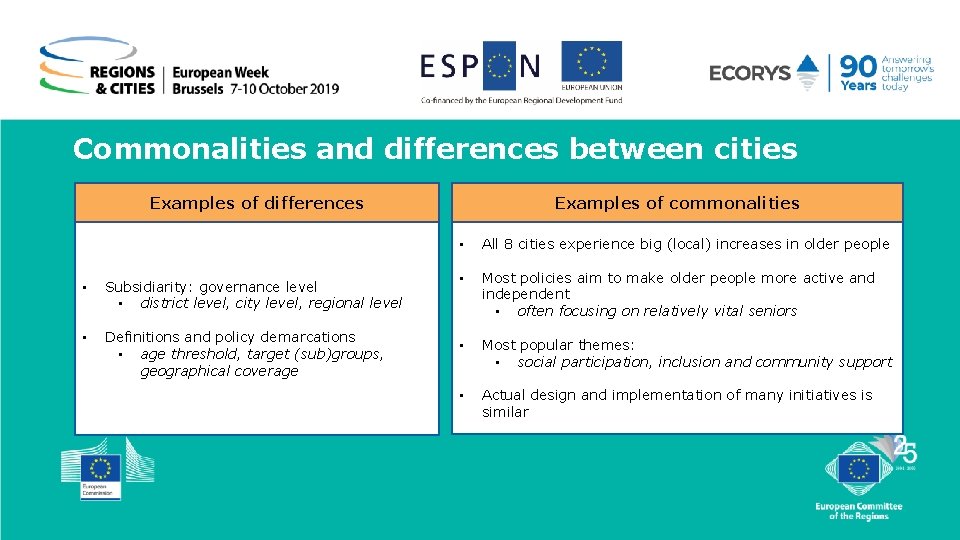
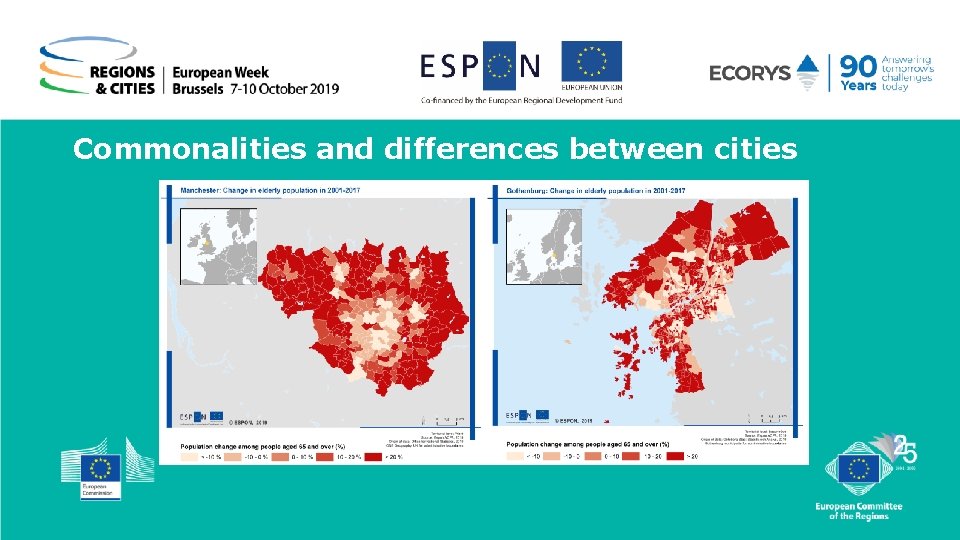
Commonalities and differences between cities Examples of differences • Subsidiarity: governance level • district level, city level, regional level • Definitions and policy demarcations • age threshold, target (sub)groups, geographical coverage Examples of commonalities • All 8 cities experience big (local) increases in older people • Most policies aim to make older people more active and independent • often focusing on relatively vital seniors • Most popular themes: • social participation, inclusion and community support • Actual design and implementation of many initiatives is similar
Commonalities and differences between cities
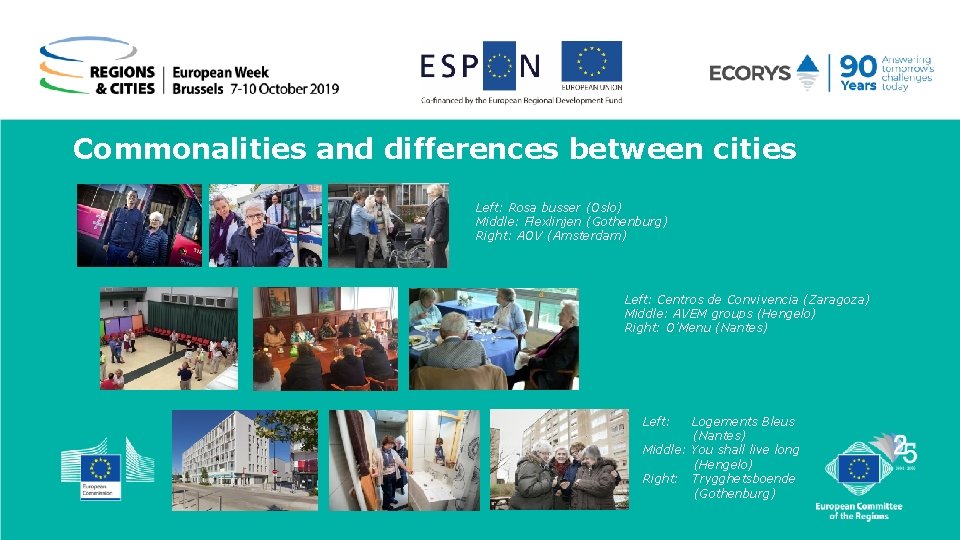
Commonalities and differences between cities Left: Rosa busser (Oslo) Middle: Flexlinjen (Gothenburg) Right: AOV (Amsterdam) Left: Centros de Convivencia (Zaragoza) Middle: AVEM groups (Hengelo) Right: O’Menu (Nantes) Left: Logements Bleus (Nantes) Middle: You shall live long (Hengelo) Right: Trygghetsboende (Gothenburg)
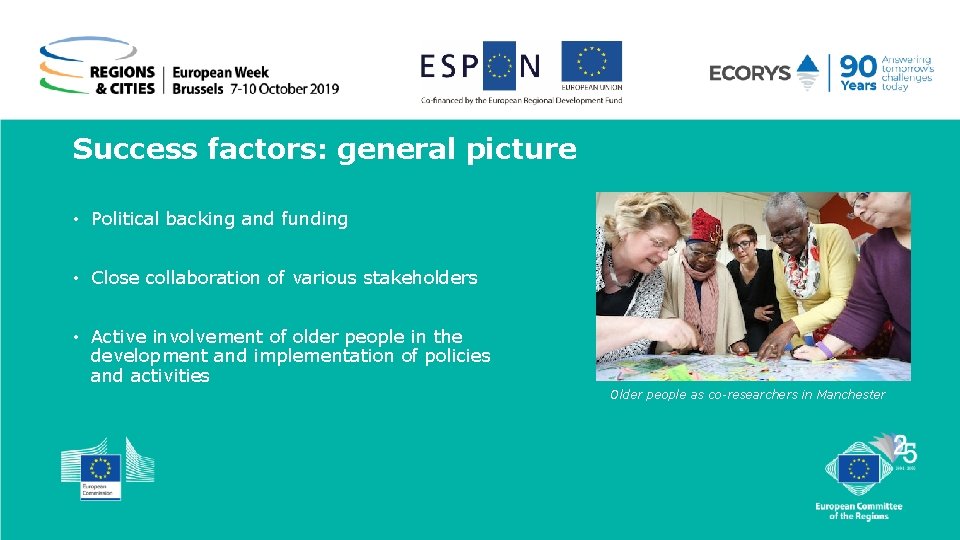
Success factors: general picture • Political backing and funding • Close collaboration of various stakeholders • Active involvement of older people in the development and implementation of policies and activities Older people as co-researchers in Manchester
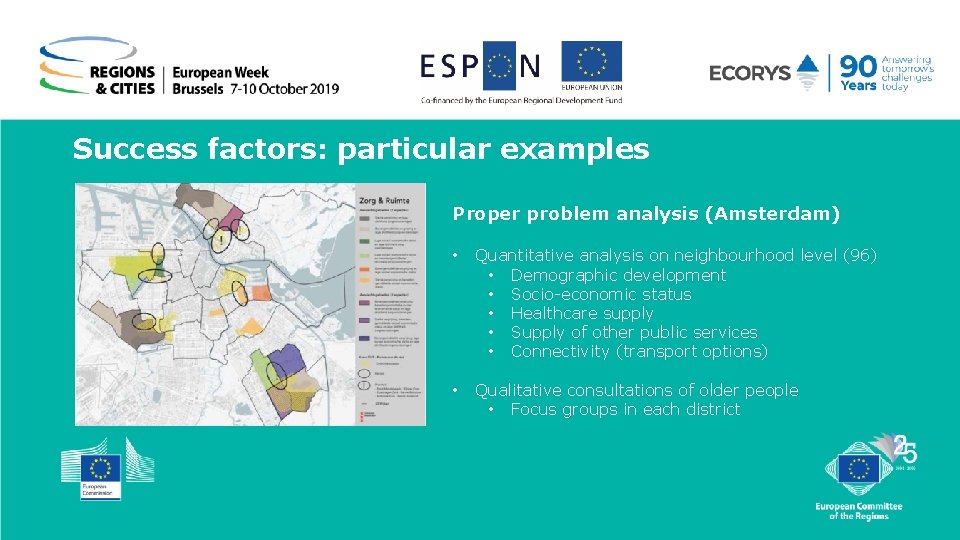
Success factors: particular examples Proper problem analysis (Amsterdam) • Quantitative analysis on neighbourhood level (96) • Demographic development • Socio-economic status • Healthcare supply • Supply of other public services • Connectivity (transport options) • Qualitative consultations of older people • Focus groups in each district
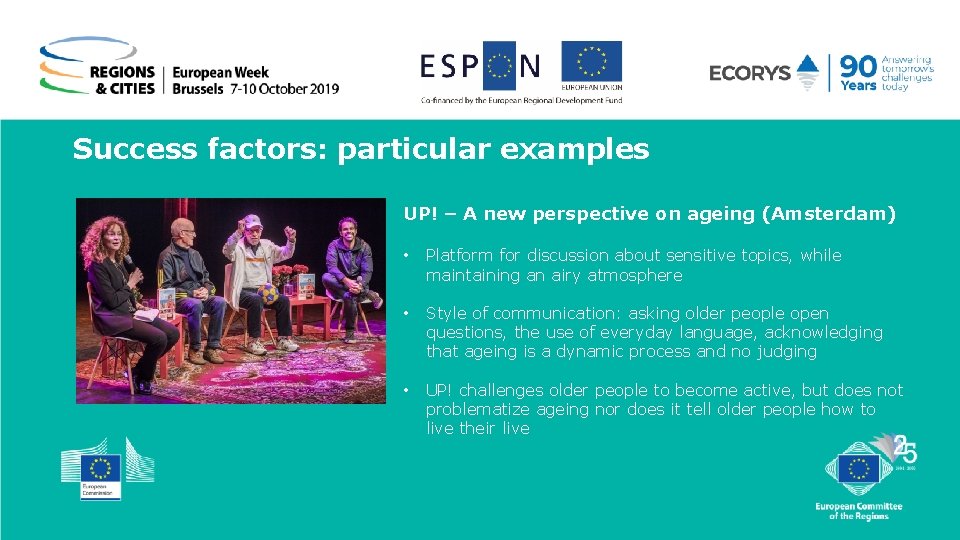
Success factors: particular examples UP! – A new perspective on ageing (Amsterdam) • Platform for discussion about sensitive topics, while maintaining an airy atmosphere • Style of communication: asking older people open questions, the use of everyday language, acknowledging that ageing is a dynamic process and no judging • UP! challenges older people to become active, but does not problematize ageing nor does it tell older people how to live their live
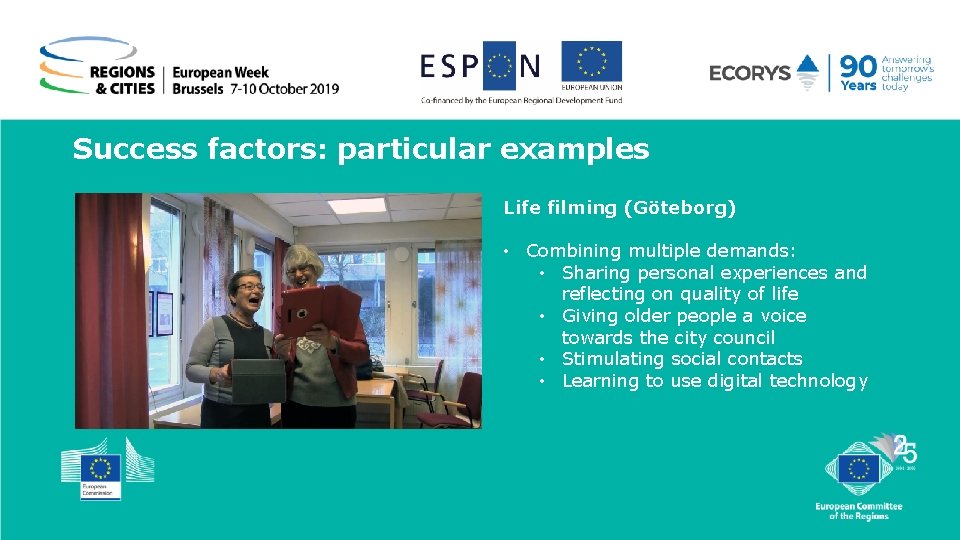
Success factors: particular examples Life filming (Göteborg) • Combining multiple demands: • Sharing personal experiences and reflecting on quality of life • Giving older people a voice towards the city council • Stimulating social contacts • Learning to use digital technology
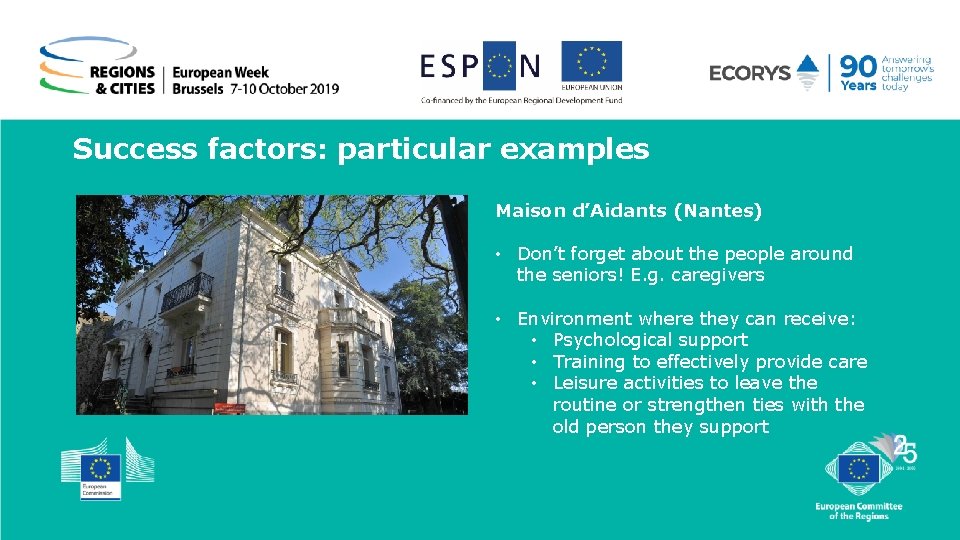
Success factors: particular examples Maison d’Aidants (Nantes) • Don’t forget about the people around the seniors! E. g. caregivers • Environment where they can receive: • Psychological support • Training to effectively provide care • Leisure activities to leave the routine or strengthen ties with the old person they support
Main lessons learned • Much room for improvement, though older people are relatively content with their situation • Eight WHO domains provide good starting point for understanding the relevant themes, but holistic approach necessary, with societal challenges as starting point • • 1. 2. 3. 4. Social participation and inclusion Healthcare and community support Mobility Housing and public space • It proves crucial to have a solid overview of both societal developments (‘policymaker’s view’) and understanding of how older people perceive their lives (‘senior’s view’) • Peer learning between cities provides very effective channel for policy development
Challenges ahead • Increase of older people (will require more funding, but also calibration of strategic focus areas) • Inclusion, due to: • • Financial segregation ● Risk of loneliness Digitalization ● Cultural differences • Overcoming negativism and stereotypes • Continuation of initiatives for older people (instead of occasional shortly running pilot projects) • Involvement of relevant European bodies • More and better learning from ageing policy: • • More peer learning between cities More and better monitoring and evaluation of policies and activities/interventions ESPON ACPA Visit www. espon. eu/acpa for more information