
ADAPTING TO PARENTHOOD THE AMAZING NEWBORN Use their

ADAPTING TO PARENTHOOD
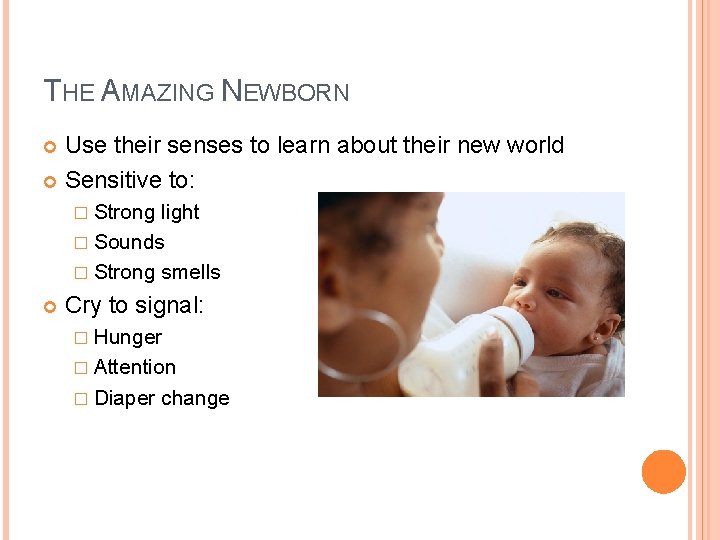
THE AMAZING NEWBORN Use their senses to learn about their new world Sensitive to: � Strong light � Sounds � Strong smells Cry to signal: � Hunger � Attention � Diaper change

NEWBORNS REFLEXES Instinctive automatic responses Involuntary Sneezing & swallowing continue throughout life Reflexes that last until voluntary control is developed: � Rooting � Grasp � Startle
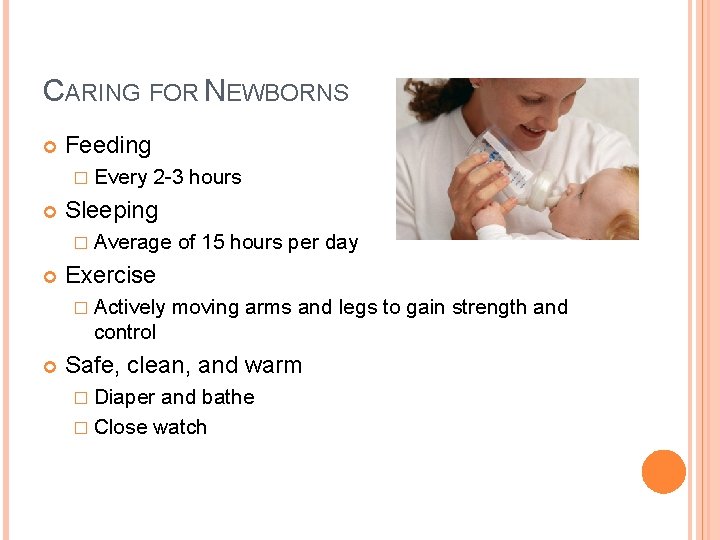
CARING FOR NEWBORNS Feeding � Every 2 -3 hours Sleeping � Average of 15 hours per day Exercise � Actively moving arms and legs to gain strength and control Safe, clean, and warm � Diaper and bathe � Close watch
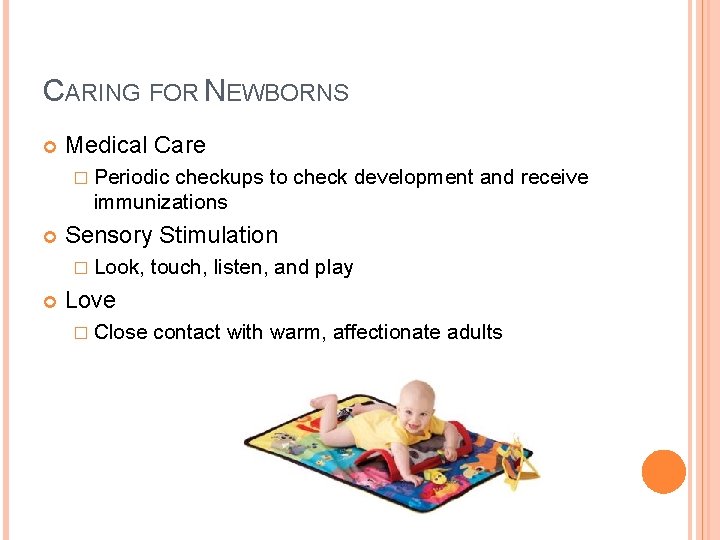
CARING FOR NEWBORNS Medical Care � Periodic checkups to check development and receive immunizations Sensory Stimulation � Look, touch, listen, and play Love � Close contact with warm, affectionate adults
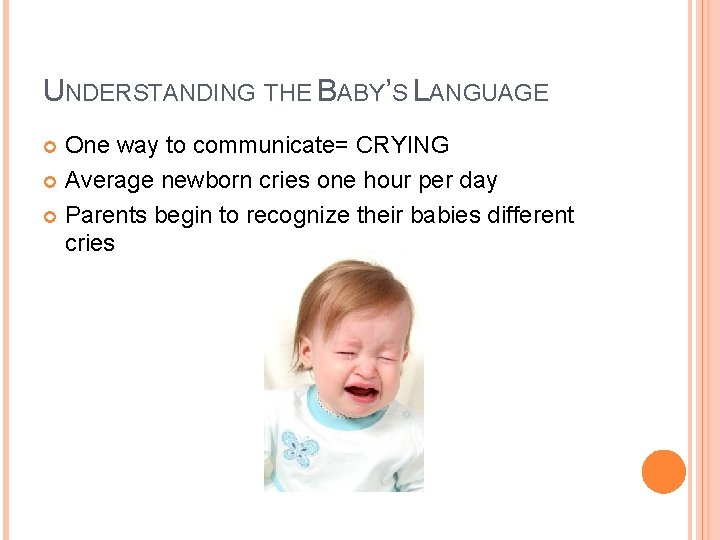
UNDERSTANDING THE BABY’S LANGUAGE One way to communicate= CRYING Average newborn cries one hour per day Parents begin to recognize their babies different cries
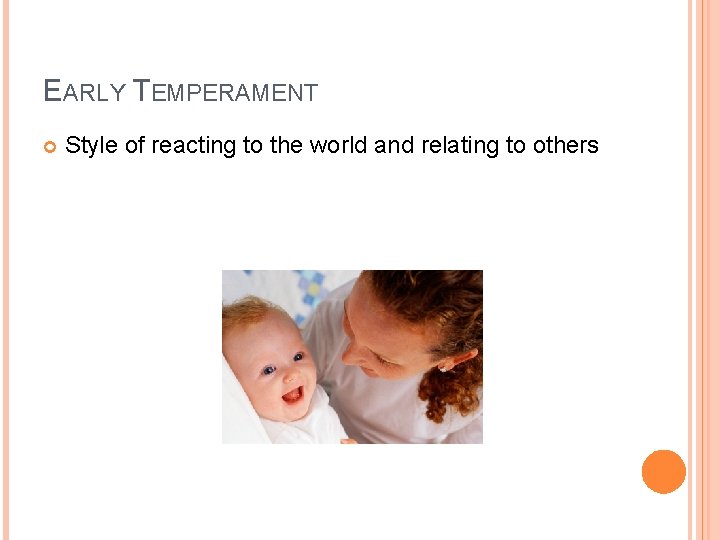
EARLY TEMPERAMENT Style of reacting to the world and relating to others
PARENTS NEEDS Knowledge of how to care for an infant Resources Time Financial planning
POST NATAL CARE OF THE MOTHER Natural for most of the attention to be focused on baby New mothers have specific physical and emotional needs � Doctor or nurse discuss these needs before mother and baby go home
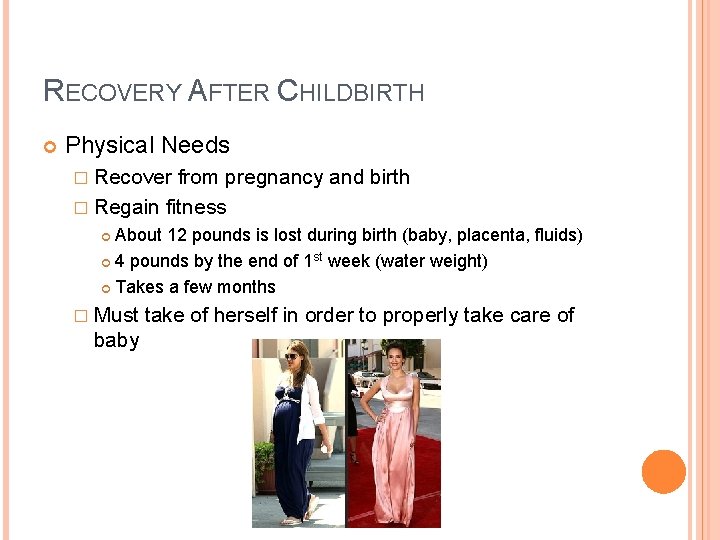
RECOVERY AFTER CHILDBIRTH Physical Needs � Recover from pregnancy and birth � Regain fitness About 12 pounds is lost during birth (baby, placenta, fluids) 4 pounds by the end of 1 st week (water weight) Takes a few months � Must baby take of herself in order to properly take care of
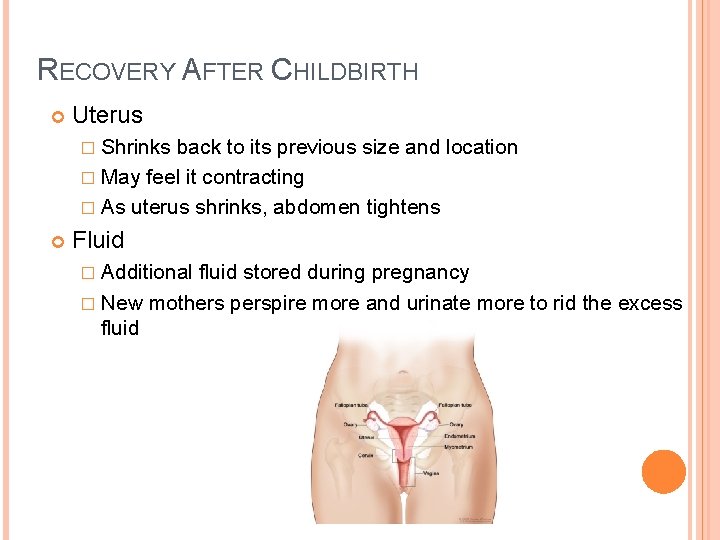
RECOVERY AFTER CHILDBIRTH Uterus � Shrinks back to its previous size and location � May feel it contracting � As uterus shrinks, abdomen tightens Fluid � Additional fluid stored during pregnancy � New mothers perspire more and urinate more to rid the excess fluid
RECOVERY AFTER CHILDBIRTH Physical Needs � Rest � Exercise � Nutrition � Medical Checkup 4 -6 weeks after birth Postnatal checkup Check uterus and any problems
RECOVERY AFTER CHILDBIRTH Postnatal Care (after childbirth) � Rest and sleep � Nutrition � Postnatal checkup � Exercise
POSTNATAL CARE OF THE MOTHER Emotional Needs � Having a baby is joyous, but stressful � Hormones- the body’s powerful chemical messgengers Shift � Many new mothers go through mild depression � New fathers may have these feelings too � Parents should: Talk about feelings Seek support Get needed sleep Avoid isolation
CHALLENGES FOR NEW PARENTS Adapting to Routines � New patterns of life � Round the clock care Sleep Feeding Diaper changing
CHALLENGES FOR NEW PARENTS Handling Mixed Emotions Gaining Confidence � Time and practice Strengthening the Parent-Child Bond Managing Multiple Roles � Set priorities � Use time efficiently � Get organized � Manage stress Develop a Support System
COUPLES AS PARENTS Adjust to new role as parents and continue to nurture their relationship Sharing responsibilities Discussing parenting philosophies Making time for each other Communicating as a couple
HELPING SIBLINGS ADJUST Involve siblings in baby’s care Spend some time alone with each older child Tolerate some babyish behavior Praise more mature actions Encourage siblings to talk about their feelings Tell them that they are loved
PARENTING If more serious or longer lasting depression: Post Partum Depression Topic Extension Project
- Slides: 19