
Adapting the US Forest Inventory and Analysis program
- Slides: 41
Adapting the US Forest Inventory and Analysis program to Puerto Rico and the US Virgin Islands Challenges and Lessons Learned Thomas J. Brandeis USDA Forest Service Southern Research Station
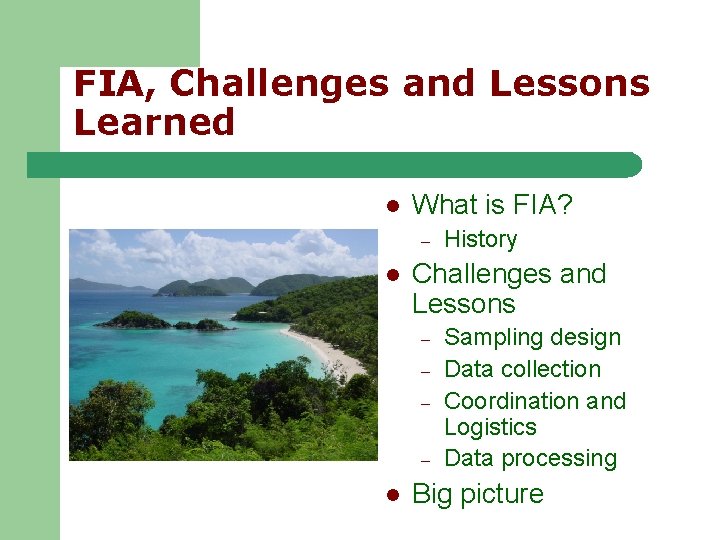
FIA, Challenges and Lessons Learned l What is FIA? – l Challenges and Lessons – – l History Sampling design Data collection Coordination and Logistics Data processing Big picture
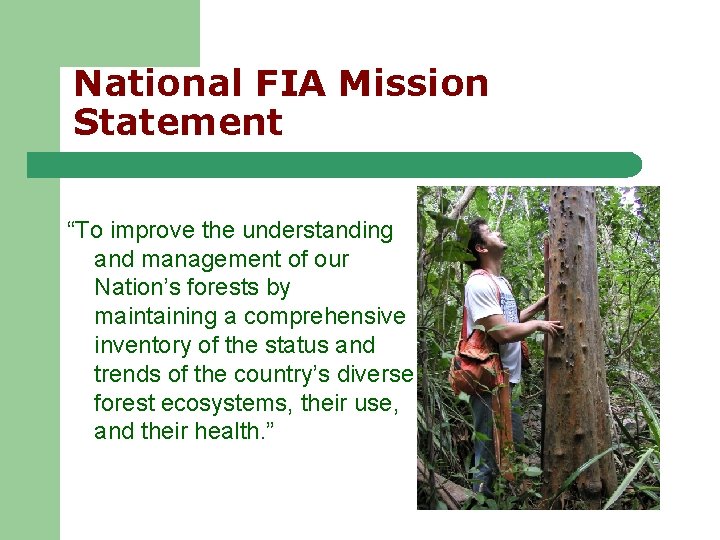
National FIA Mission Statement “To improve the understanding and management of our Nation’s forests by maintaining a comprehensive inventory of the status and trends of the country’s diverse forest ecosystems, their use, and their health. ”
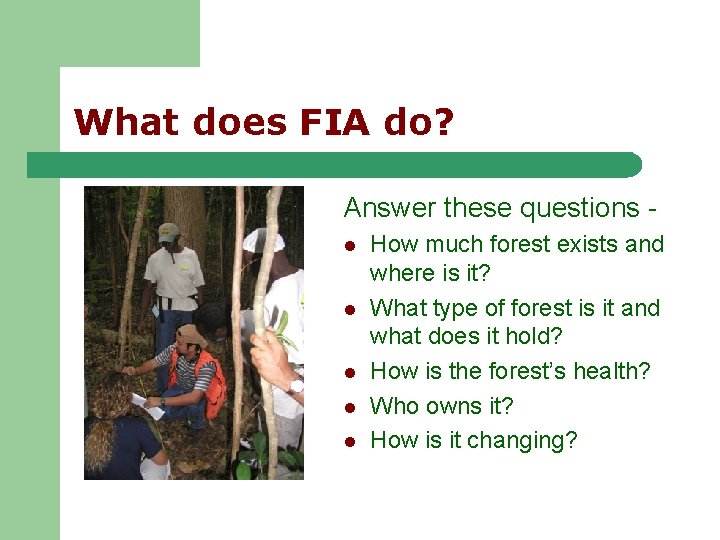
What does FIA do? Answer these questions l l l How much forest exists and where is it? What type of forest is it and what does it hold? How is the forest’s health? Who owns it? How is it changing?
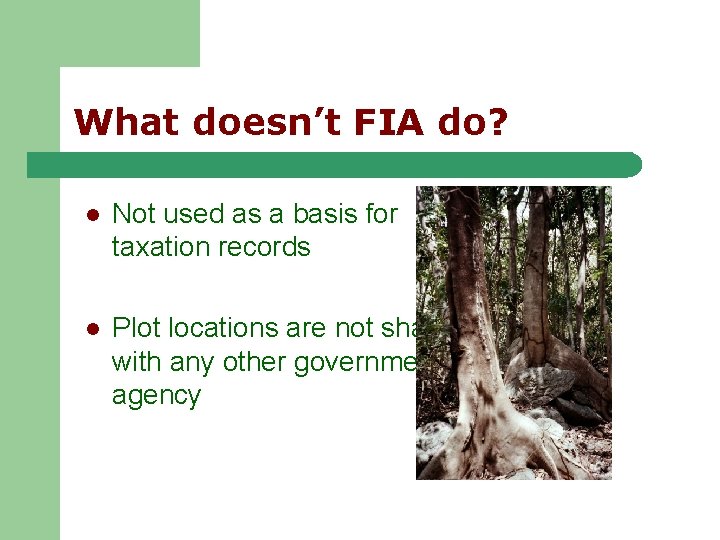
What doesn’t FIA do? l Not used as a basis for taxation records l Plot locations are not shared with any other government agency
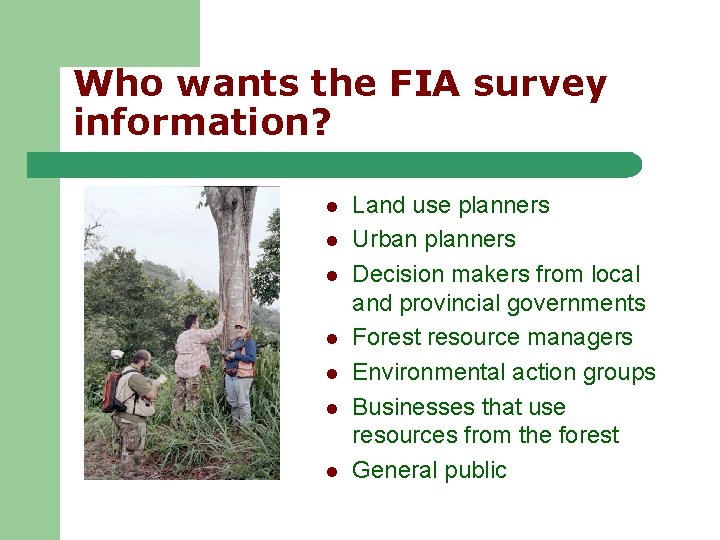
Who wants the FIA survey information? l l l l Land use planners Urban planners Decision makers from local and provincial governments Forest resource managers Environmental action groups Businesses that use resources from the forest General public
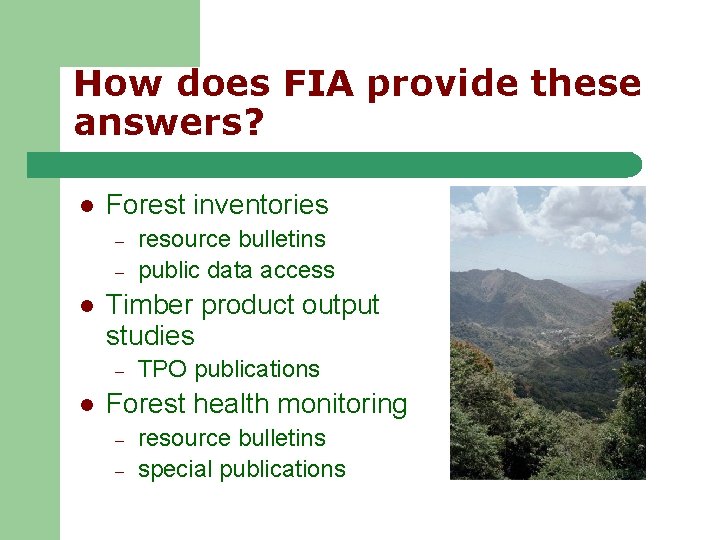
How does FIA provide these answers? l Forest inventories – – l Timber product output studies – l resource bulletins public data access TPO publications Forest health monitoring – – resource bulletins special publications
FIA’s goals in Puerto Rico and the US Virgin Islands l l Implement forest surveys tailored to the island’s unique tropical forests Establish a forest health monitoring network Sponsor R&D into improving island forest inventory and monitoring Get information about the islands’ forests to the public
History of Caribbean FIA work l Puerto Rico surveyed 1980 and 1990 by FIA with IITF assistance – – l l l Well planned and executed, but limited scope Resource bulletins and publications Intensifications in Toro Negro, Las Marias watershed Planned on 1990 USVI, but never implemented Forest inventory of St. Vincent
Previous Caribbean FIA Objectives and Strategies l l “Assess the timber-production potential of the island’s forest resources” Limited to potentially “productive” forest land “Traditional” forest inventory data collected Analysis focused on: – – – Island-wide forest area trends Forest composition and BA distribution Timber volume
Setting in 2000 l New national system – – – l l l 5 year cycle Include forest health All forests PR and the USVIs FIA (Knoxville) and IITF (San Juan) PRCF partner
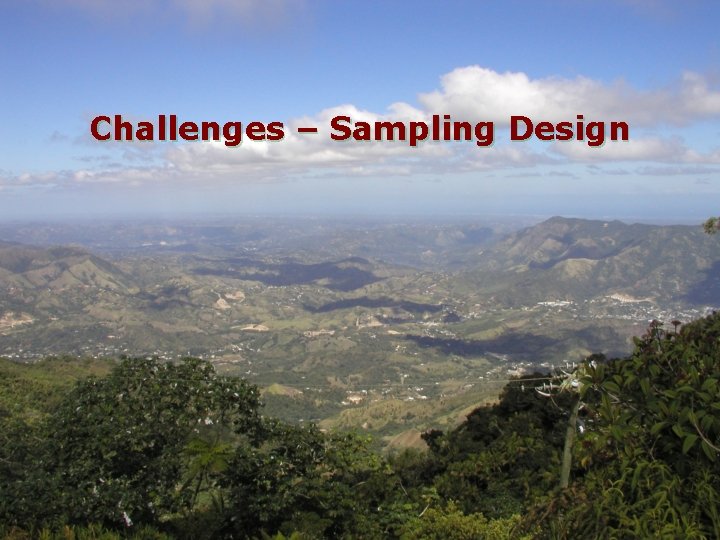
Challenges – Sampling Design
Challenge - Sampling Design l l l l Systematic sampling Adapting old grid to new grid Loss of old plots unavoidable Larger, more diverse sample area Needed flexibility to expand, intensify Statistically solid and unbiased Panels, how much each year?
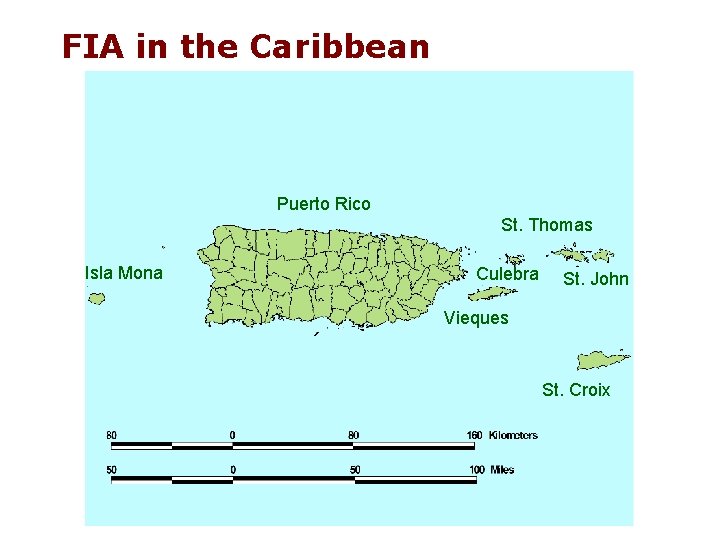
FIA in the Caribbean Puerto Rico St. Thomas Isla Mona Culebra St. John Vieques St. Croix
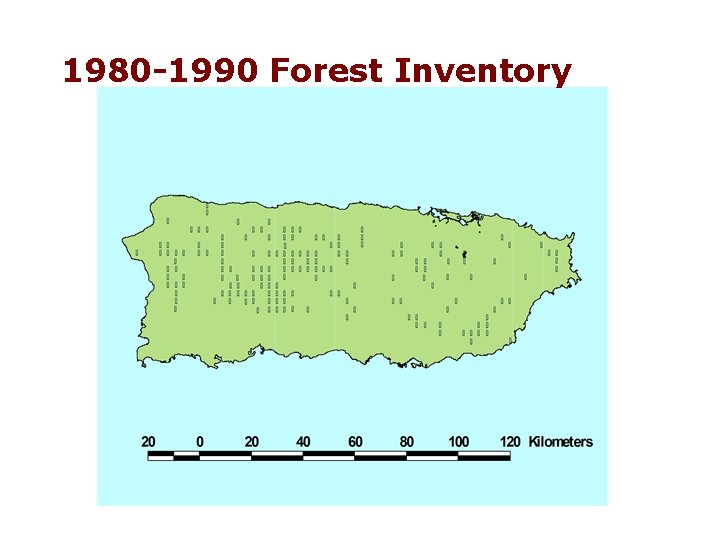
1980 -1990 Forest Inventory
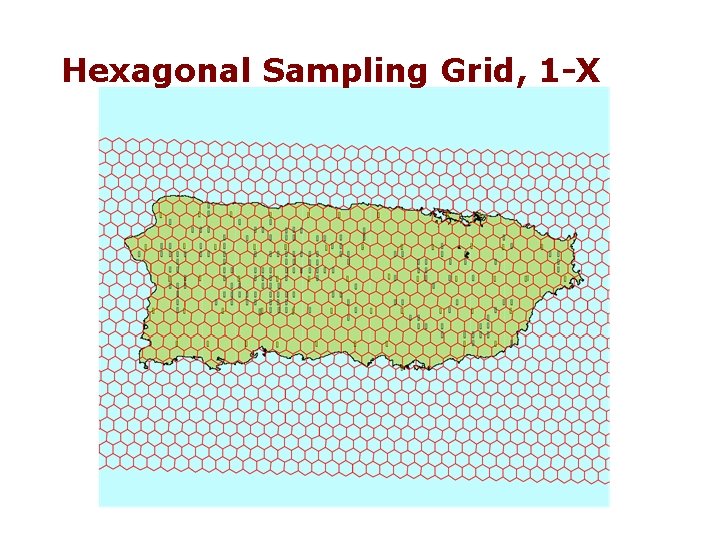
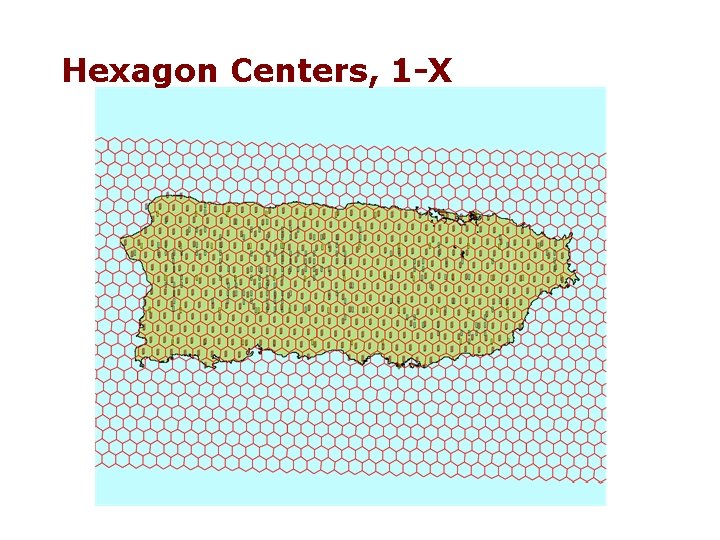
Hexagonal Sampling Grid, 1 -X
Hexagon Centers, 1 -X
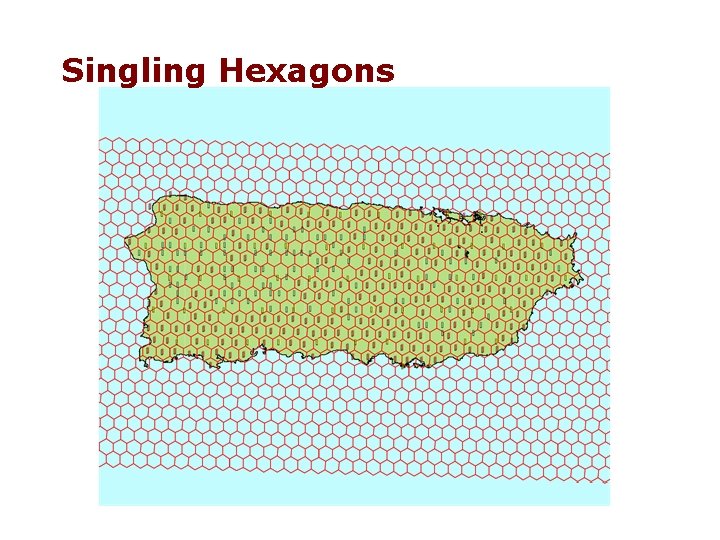
Singling Hexagons
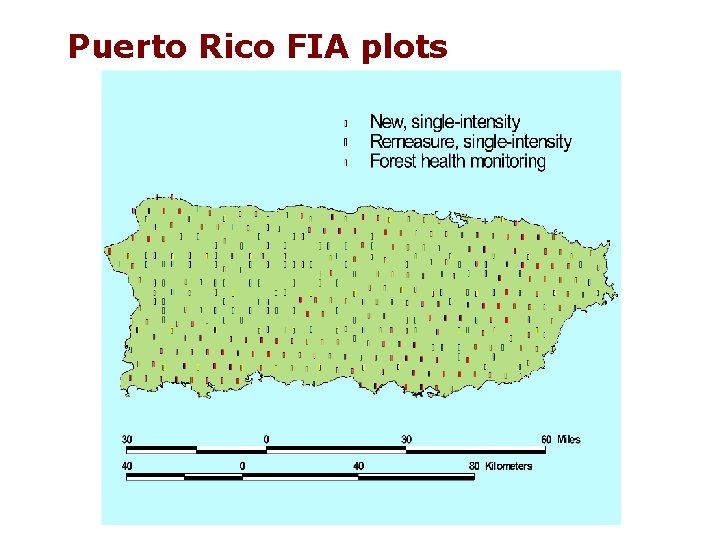
Puerto Rico FIA plots
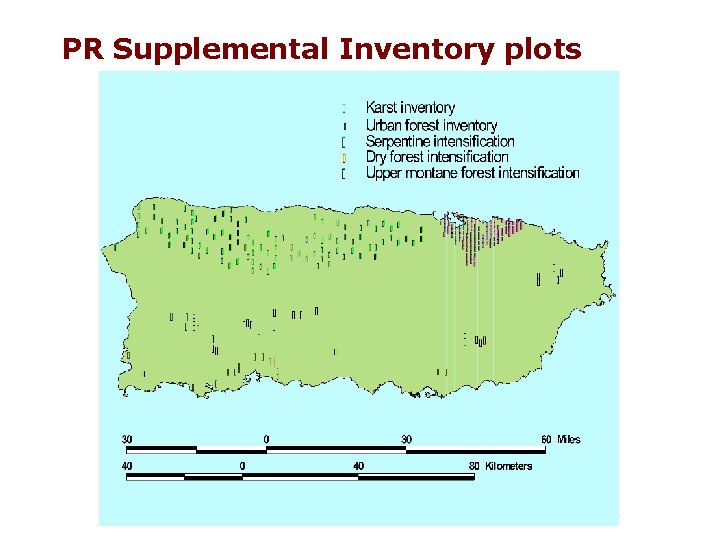
Supplemental inventories l San Juan Bay Estuary Watershed Urban Forest Inventory – l 109 points Northern Karst Belt – 94 points l l 44 forested 26 non-forested Non-access, 10 hazard, 13 camping, 1 denied Under-represented forest types – – – Dry, mature Serpentine Montane
PR Supplemental Inventory plots
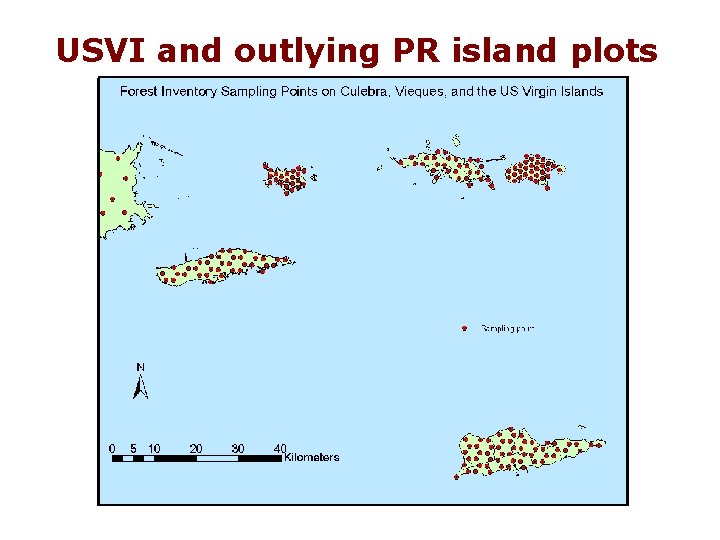
USVI and outlying PR island plots
Caribbean FIA Timeline l Mainland Puerto Rico (2001 -2003) – – – l All forest health monitoring plots done in 2001 Even-numbered forest inventory plots in 2002 Odd-numbered P 2 plots in 2003 US Virgin Islands and outlying Puerto Rican islands (2004) – – All plots on St. Croix, St. Thomas and St. John All plots on Vieques and Culebra
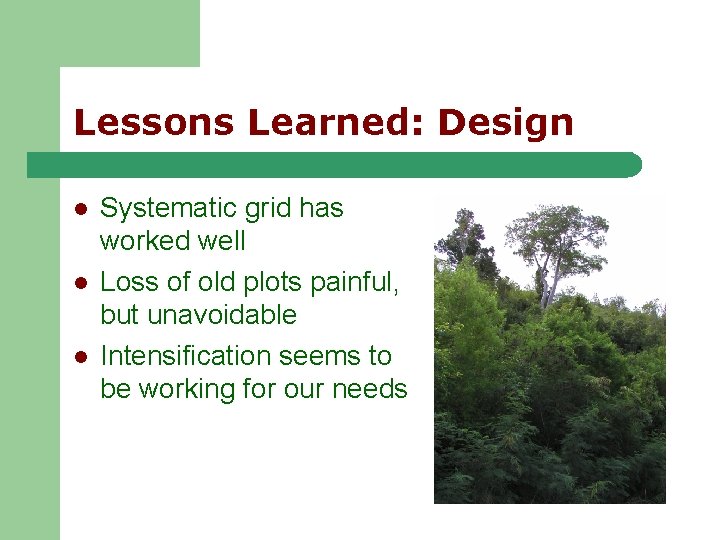
Lessons Learned: Design l l l Systematic grid has worked well Loss of old plots painful, but unavoidable Intensification seems to be working for our needs
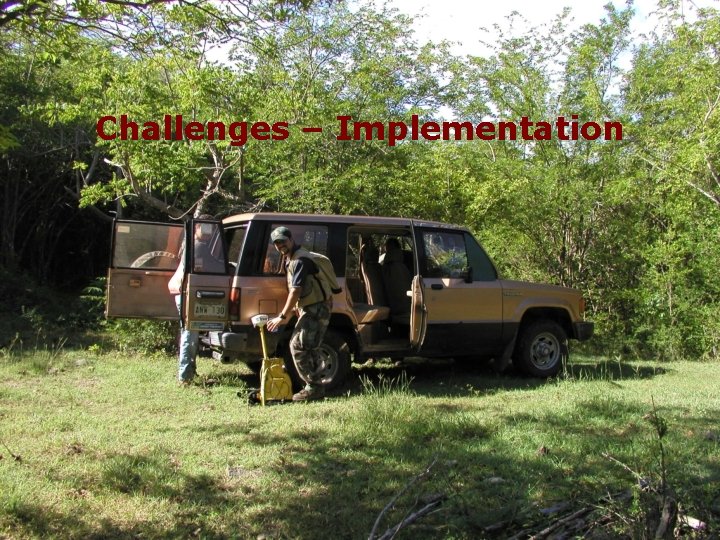
Challenges – Implementation
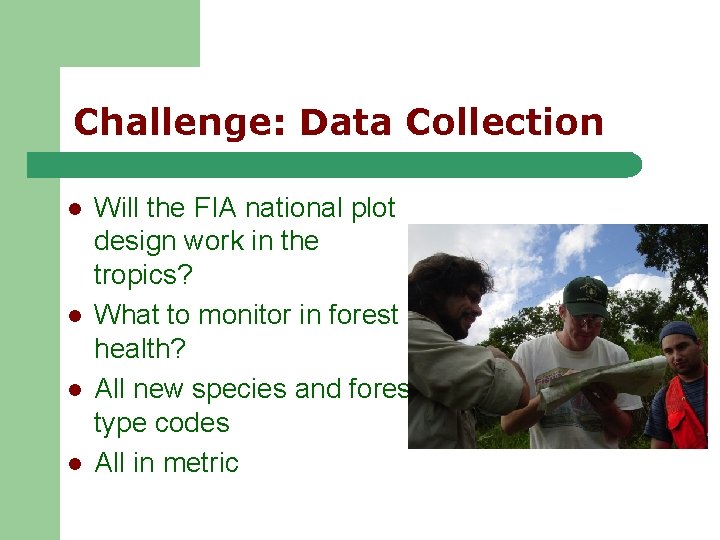
Challenge: Data Collection l l Will the FIA national plot design work in the tropics? What to monitor in forest health? All new species and forest type codes All in metric
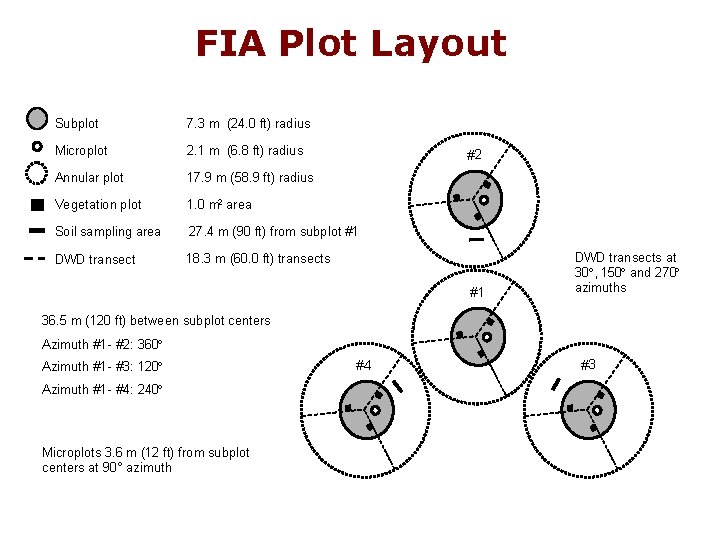
FIA Plot Layout Subplot 7. 3 m (24. 0 ft) radius Microplot 2. 1 m (6. 8 ft) radius Annular plot 17. 9 m (58. 9 ft) radius Vegetation plot 1. 0 m 2 area Soil sampling area 27. 4 m (90 ft) from subplot #1 DWD transect 18. 3 m (60. 0 ft) transects #2 #1 DWD transects at 30°, 150° and 270° azimuths 36. 5 m (120 ft) between subplot centers Azimuth #1 - #2: 360° Azimuth #1 - #3: 120° Azimuth #1 - #4: 240° Microplots 3. 6 m (12 ft) from subplot centers at 90° azimuth #4 #3
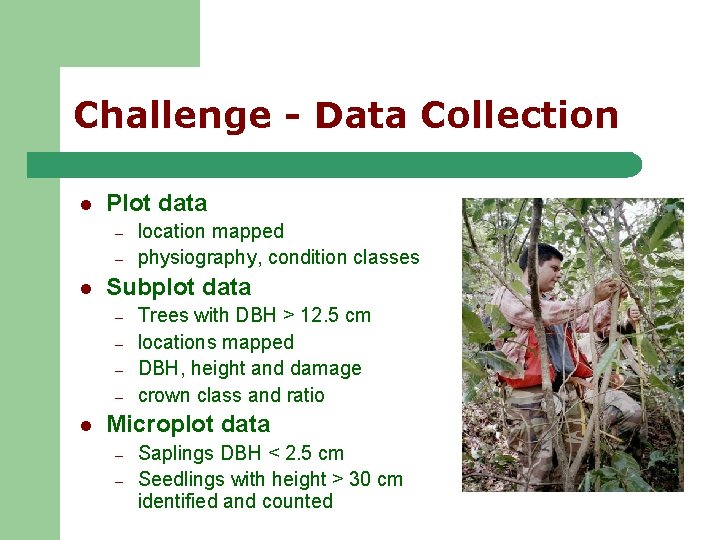
Challenge - Data Collection l Plot data – – l Subplot data – – l location mapped physiography, condition classes Trees with DBH > 12. 5 cm locations mapped DBH, height and damage crown class and ratio Microplot data – – Saplings DBH < 2. 5 cm Seedlings with height > 30 cm identified and counted
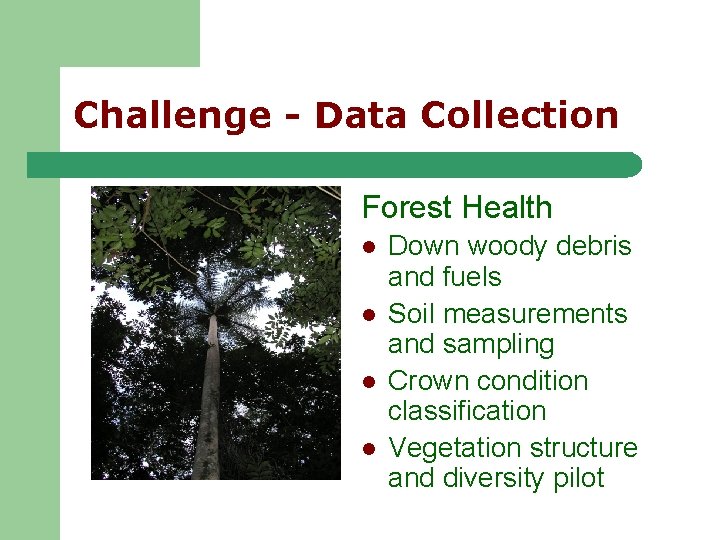
Challenge - Data Collection Forest Health l l Down woody debris and fuels Soil measurements and sampling Crown condition classification Vegetation structure and diversity pilot
Lesson Learned - Data Collection l Plot design has worked well – l l Difficult in very steep terrain Forest health monitoring appears successful New coding has been difficult to organize – – – Species list and synonyms Physiographic codes not performing well Forest types still obsolete
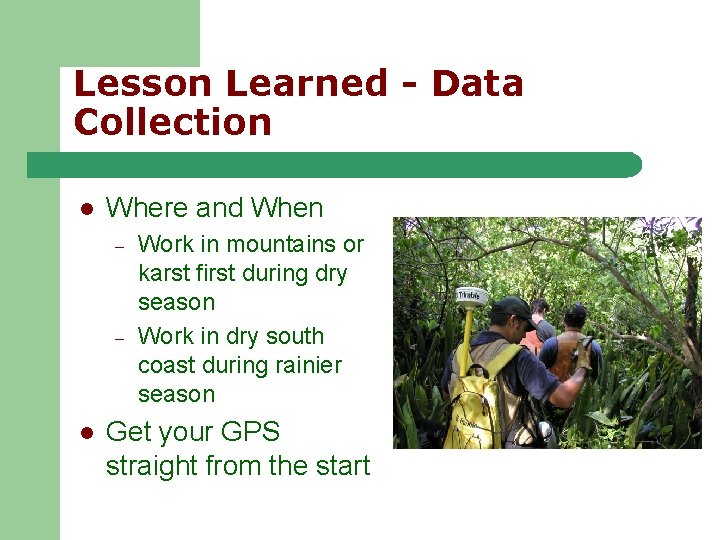
Lesson Learned - Data Collection l Where and When – – l Work in mountains or karst first during dry season Work in dry south coast during rainier season Get your GPS straight from the start
Challenge - Coordination and Logistics l l l Hire 2 -5 field technicians on 6 -month contracts and one data entry technician Work with 2 -3 SRS timber cruisers part of each year Work on intensification plots the rest of year SRS training and supervision SRS data compilation, analysis and reporting
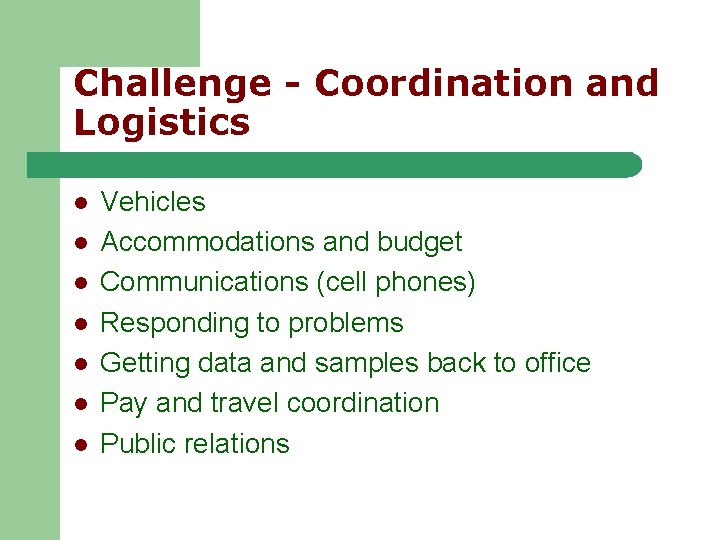
Challenge - Coordination and Logistics l l l l Vehicles Accommodations and budget Communications (cell phones) Responding to problems Getting data and samples back to office Pay and travel coordination Public relations
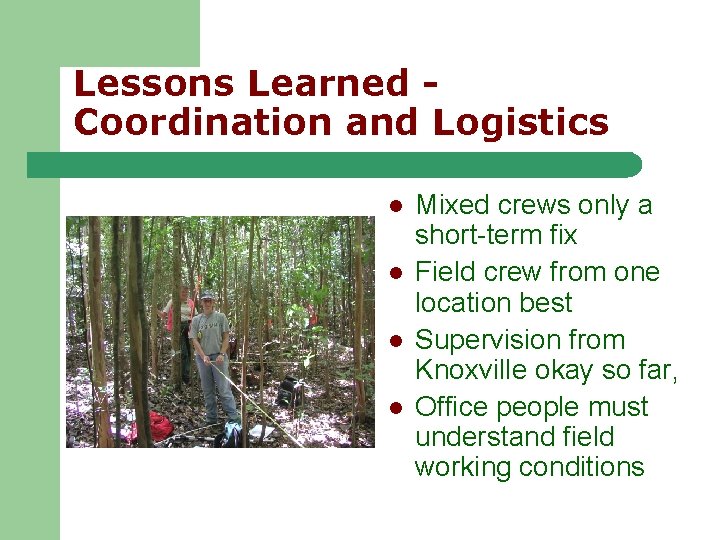
Lessons Learned Coordination and Logistics l l Mixed crews only a short-term fix Field crew from one location best Supervision from Knoxville okay so far, Office people must understand field working conditions
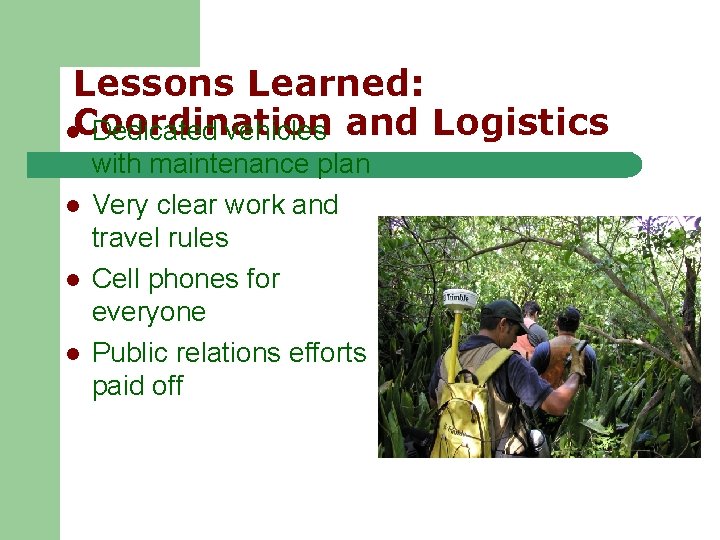
Lessons Learned: l. Coordination Dedicated vehicles and Logistics l l l with maintenance plan Very clear work and travel rules Cell phones for everyone Public relations efforts paid off
Challenges – Data Processing
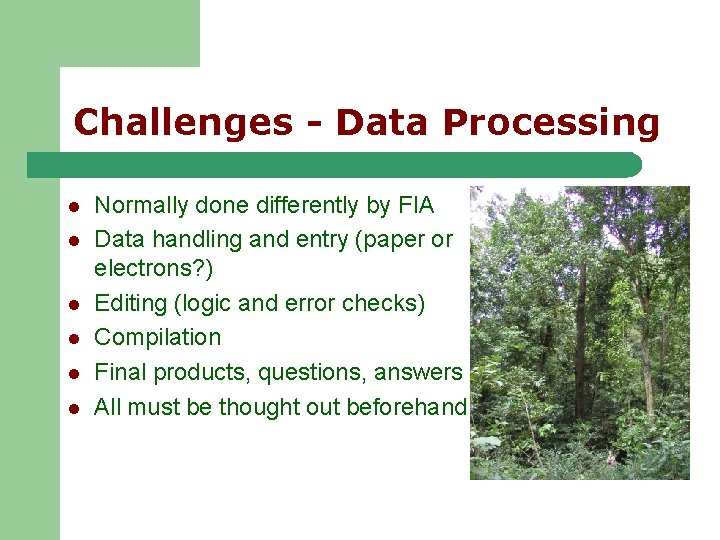
Challenges - Data Processing l l l Normally done differently by FIA Data handling and entry (paper or electrons? ) Editing (logic and error checks) Compilation Final products, questions, answers All must be thought out beforehand
Lessons Learned - Data Processing l l l Don’t underestimate this part! Key to future sustainability Consider PDR, but not necessary Skilled personnel in office Early decisions have large impact later on Have it all sorted out before measuring a single tree
Big picture l l Long term commitments Institutional memory Regional cooperation and international compatibility Complement other efforts – – l gain detail otherwise lacking gain scaling up to landscape level Collaborations
Thank you – Muchas Gracias
Contact information Thomas J. Brandeis Research Forester Southern Research Station, USDA Forest Service 4700 Old Kingston Pike Knoxville, TN 37919 (865) 862 -2030, (865) 862 -0262 fax tjbrandeis@fs. fed. us