
Adapted from S MORRIS 2006 Circulatory System Heart

- Slides: 27
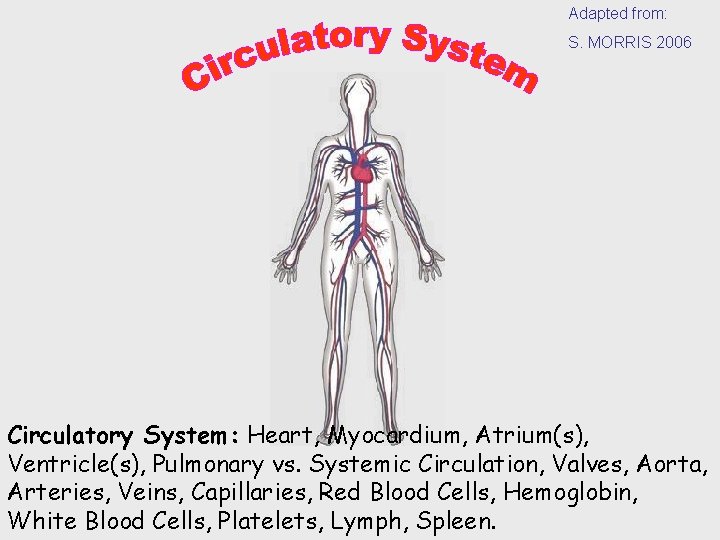
Adapted from: S. MORRIS 2006 Circulatory System: Heart, Myocardium, Atrium(s), Ventricle(s), Pulmonary vs. Systemic Circulation, Valves, Aorta, Arteries, Veins, Capillaries, Red Blood Cells, Hemoglobin, White Blood Cells, Platelets, Lymph, Spleen.
Functions 1. Transportation system by which oxygen and nutrients reach the body's cells, and waste materials are carried away. 2. Also carries substances called hormones, which control body processes, and antibodies to fight invading germs.
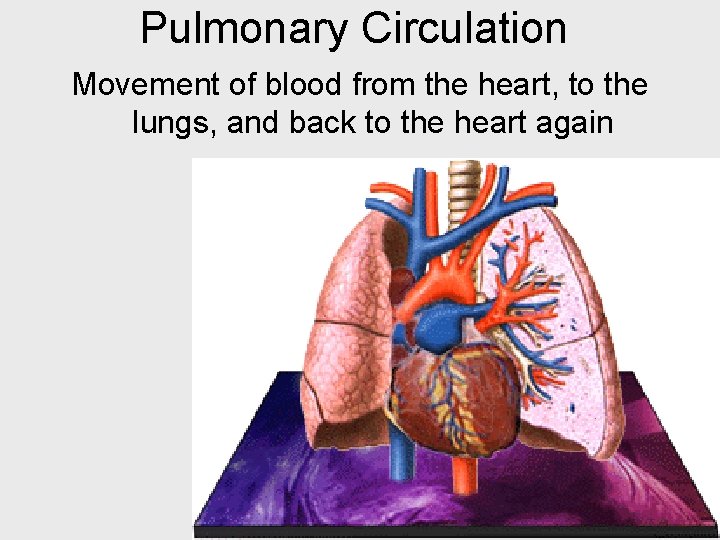
Pulmonary Circulation Movement of blood from the heart, to the lungs, and back to the heart again
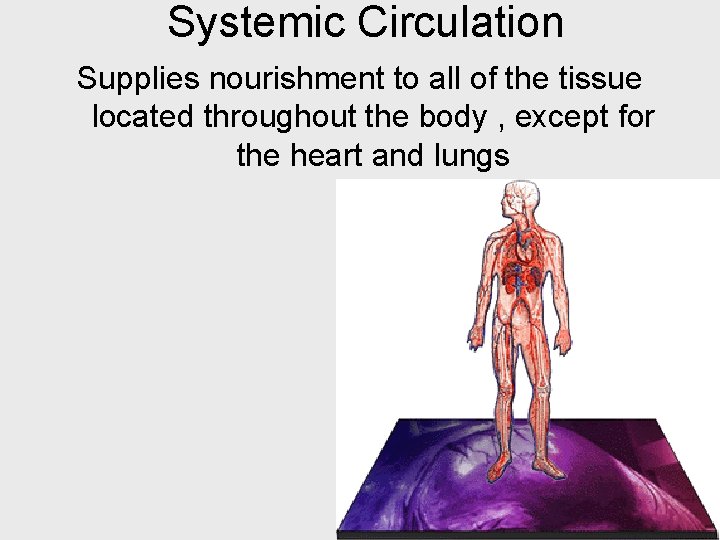
Systemic Circulation Supplies nourishment to all of the tissue located throughout the body , except for the heart and lungs
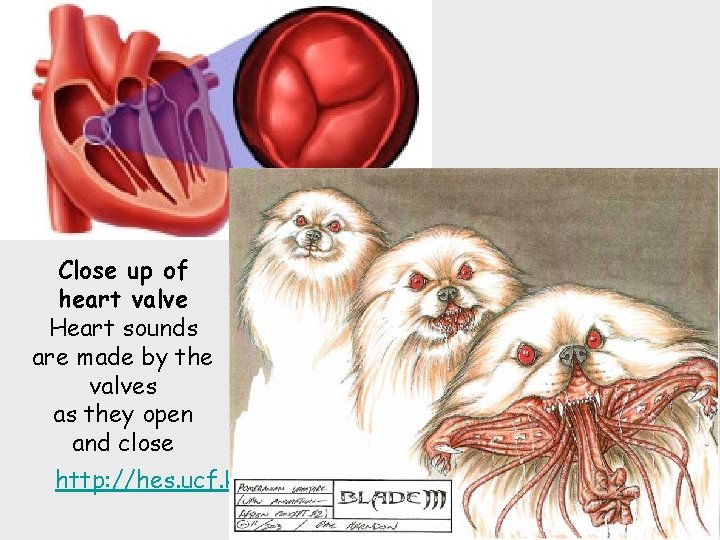
Close up of heart valve Heart sounds are made by the valves as they open and close http: //hes. ucf. k 12. pa. us/gclaypo/circdia. html
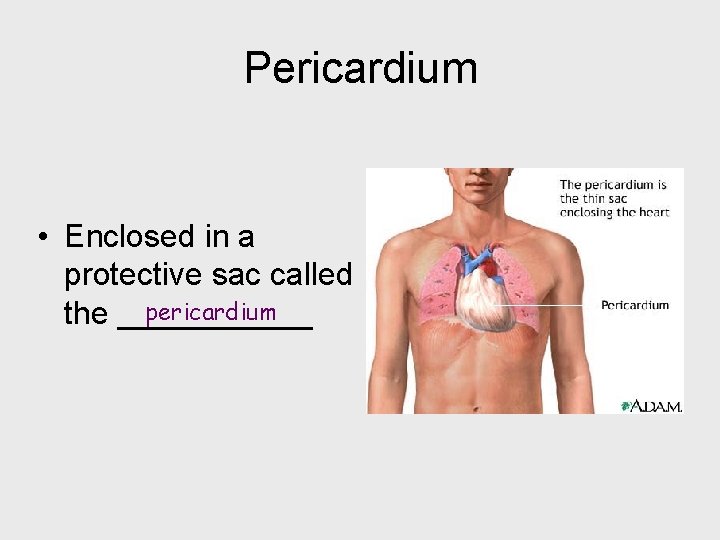
Pericardium • Enclosed in a protective sac called pericardium the ______
The Heart • The heart contracts about 72 times per minute • Pumps about 70 m. L of blood with each contraction.
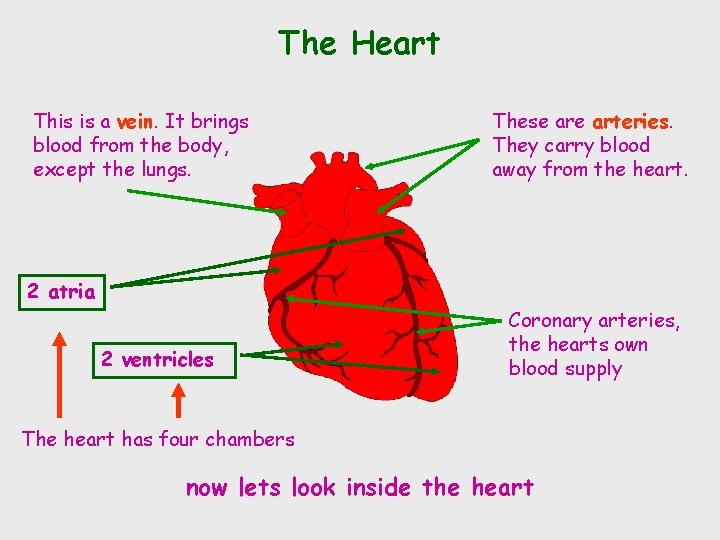
The Heart This is a vein. It brings blood from the body, except the lungs. These arteries. They carry blood away from the heart. 2 atria 2 ventricles Coronary arteries, the hearts own blood supply The heart has four chambers now lets look inside the heart
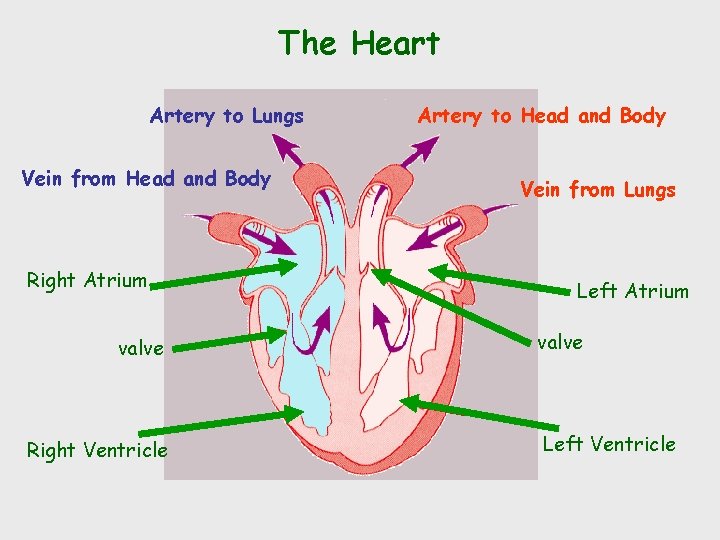
The Heart Artery to Lungs Vein from Head and Body Right Atrium valve Right Ventricle Artery to Head and Body Vein from Lungs Left Atrium valve Left Ventricle
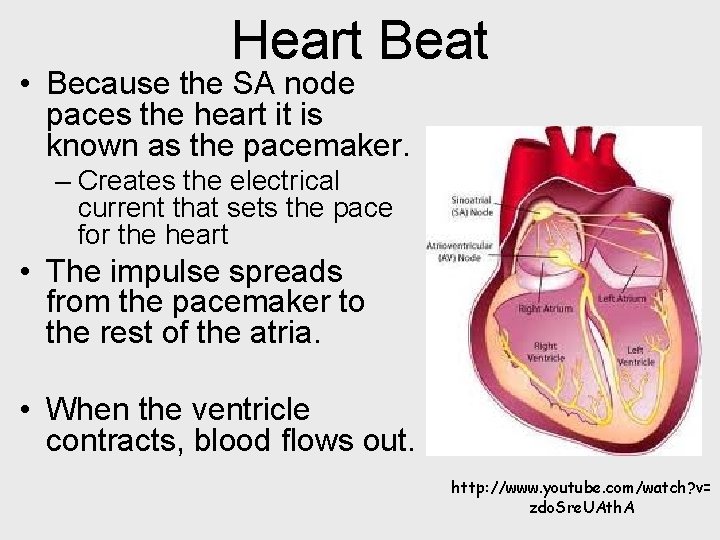
Heart Beat • Because the SA node paces the heart it is known as the pacemaker. – Creates the electrical current that sets the pace for the heart • The impulse spreads from the pacemaker to the rest of the atria. • When the ventricle contracts, blood flows out. http: //www. youtube. com/watch? v= zdo. Sre. UAth. A
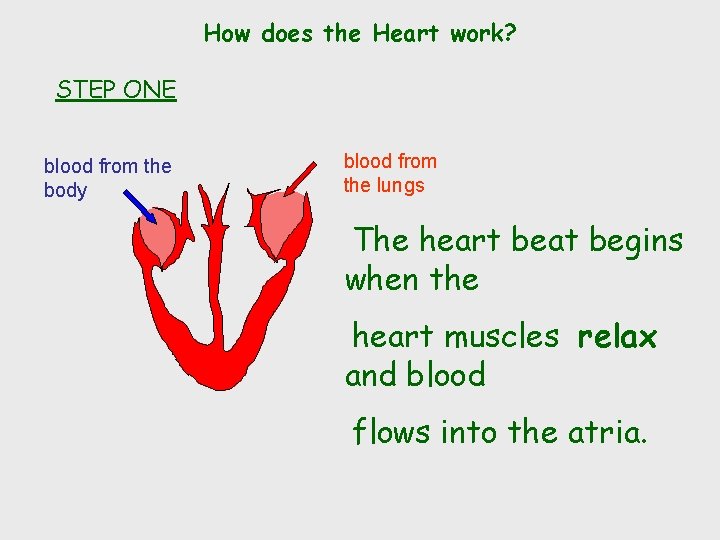
How does the Heart work? STEP ONE blood from the body blood from the lungs The heart beat begins when the heart muscles relax and blood flows into the atria.
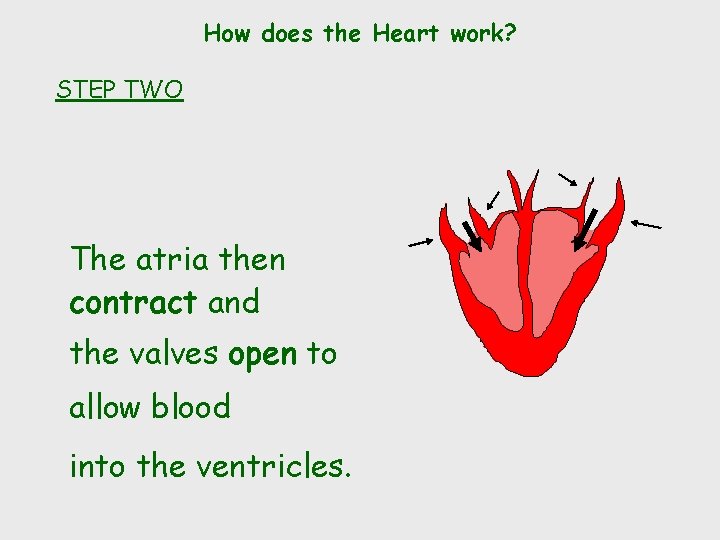
How does the Heart work? STEP TWO The atria then contract and the valves open to allow blood into the ventricles.
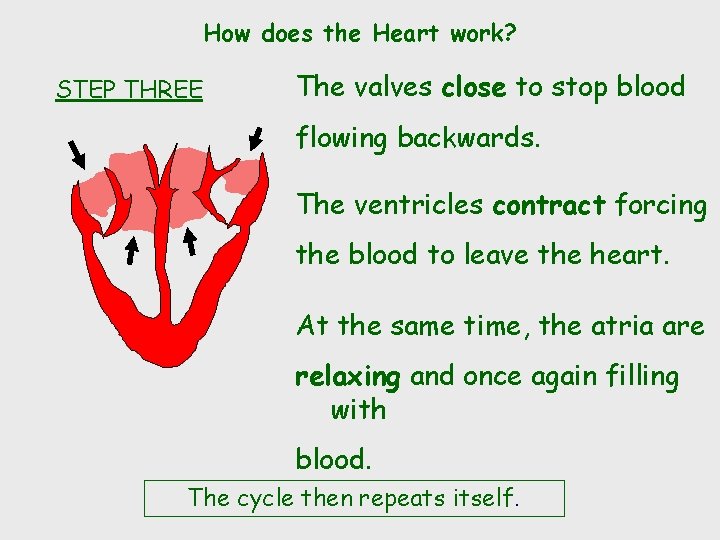
How does the Heart work? STEP THREE The valves close to stop blood flowing backwards. The ventricles contract forcing the blood to leave the heart. At the same time, the atria are relaxing and once again filling with blood. The cycle then repeats itself.
blood from the heart gets around the body through blood vessels There are 3 types of blood vessels a. ARTERY b. VEIN c. CAPILLARY
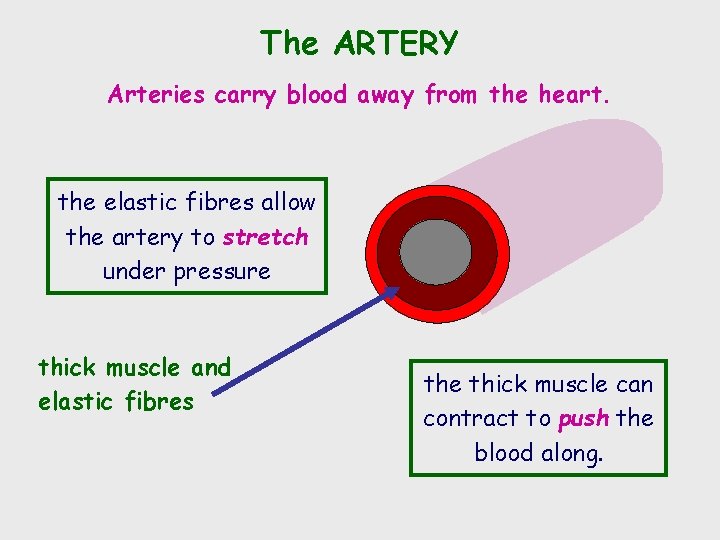
The ARTERY Arteries carry blood away from the heart. the elastic fibres allow the artery to stretch under pressure thick muscle and elastic fibres the thick muscle can contract to push the blood along.
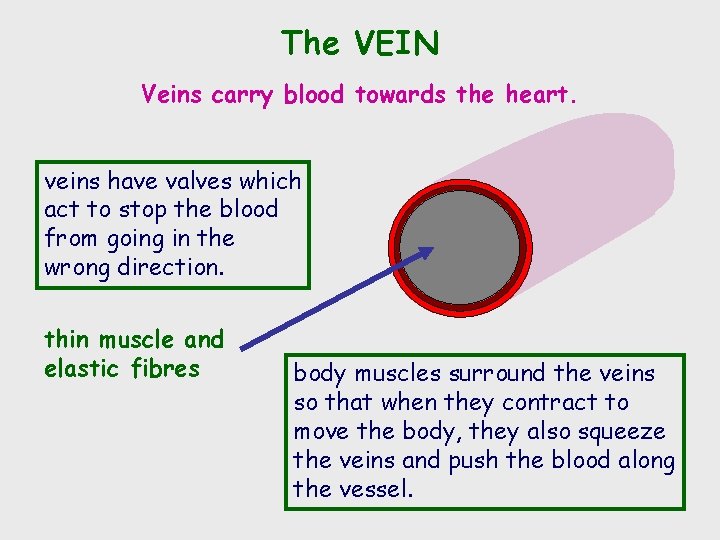
The VEIN Veins carry blood towards the heart. veins have valves which act to stop the blood from going in the wrong direction. thin muscle and elastic fibres body muscles surround the veins so that when they contract to move the body, they also squeeze the veins and push the blood along the vessel.
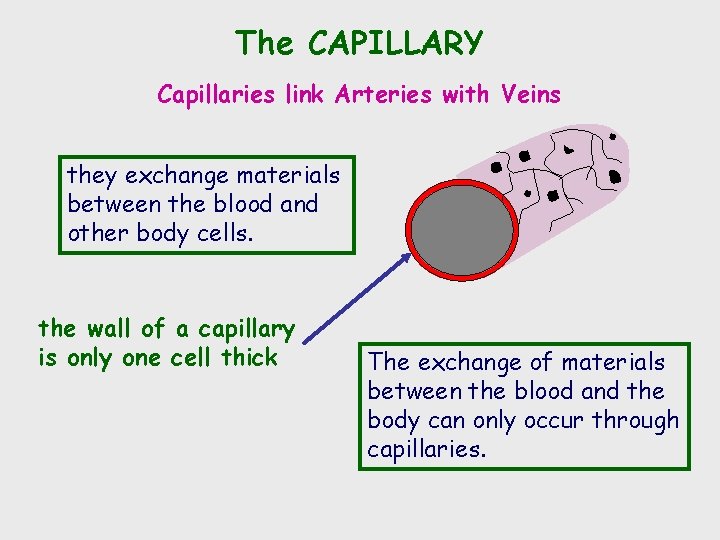
The CAPILLARY Capillaries link Arteries with Veins they exchange materials between the blood and other body cells. the wall of a capillary is only one cell thick The exchange of materials between the blood and the body can only occur through capillaries.
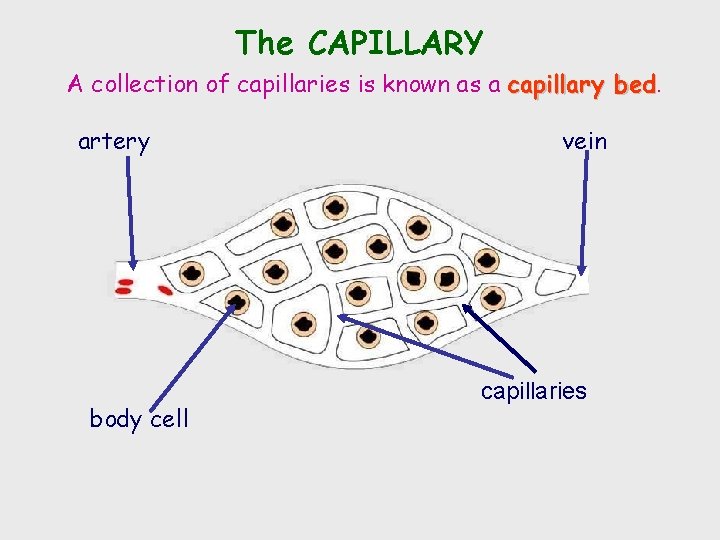
The CAPILLARY A collection of capillaries is known as a capillary bed artery body cell vein capillaries
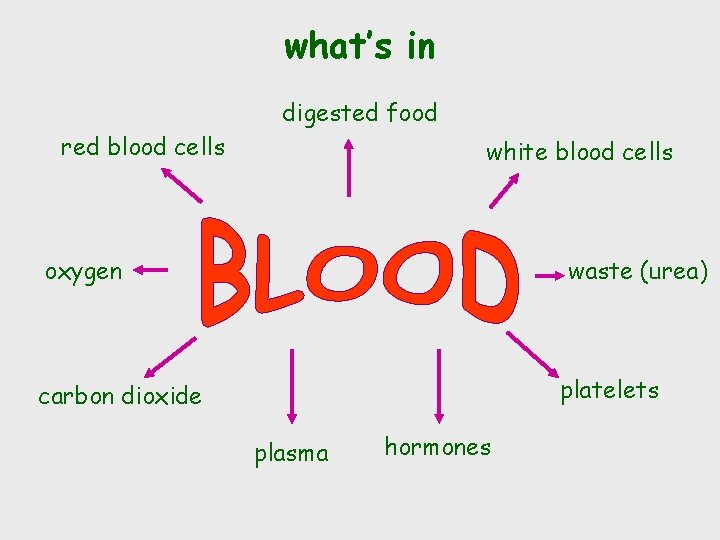
what’s in digested food red blood cells white blood cells oxygen waste (urea) platelets carbon dioxide plasma hormones
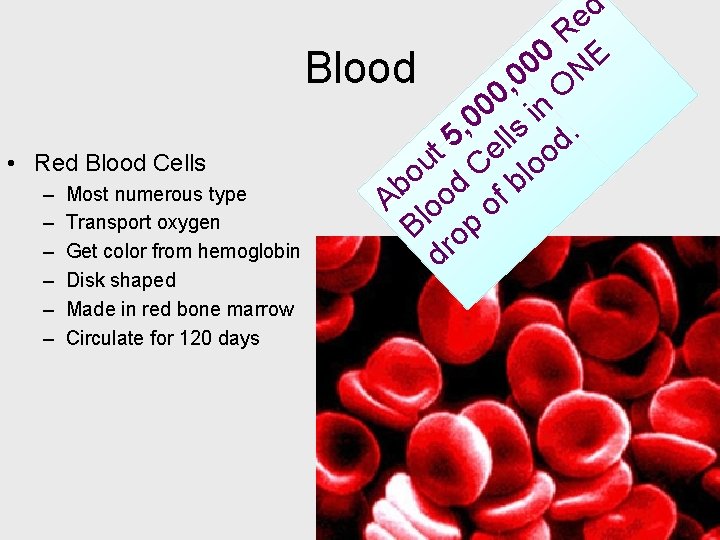
• d e R 0 E 0 Blood 0 ON , 0 n 0 i 0 , lls. 5 d t e o Red Blood Cells u C lo o b d b – Most numerous type f A loo o – Transport oxygen B rop – Get color from hemoglobin d – Disk shaped – Made in red bone marrow – Circulate for 120 days
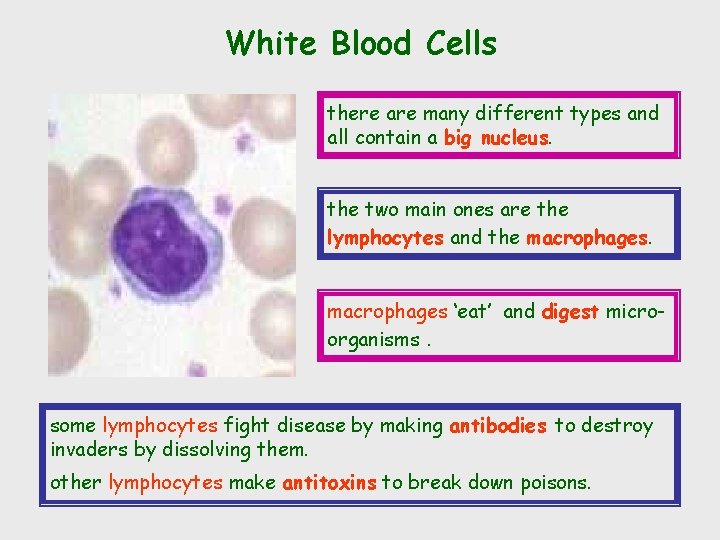
White Blood Cells there are many different types and all contain a big nucleus. the two main ones are the lymphocytes and the macrophages ‘eat’ and digest microorganisms. some lymphocytes fight disease by making antibodies to destroy invaders by dissolving them. other lymphocytes make antitoxins to break down poisons.
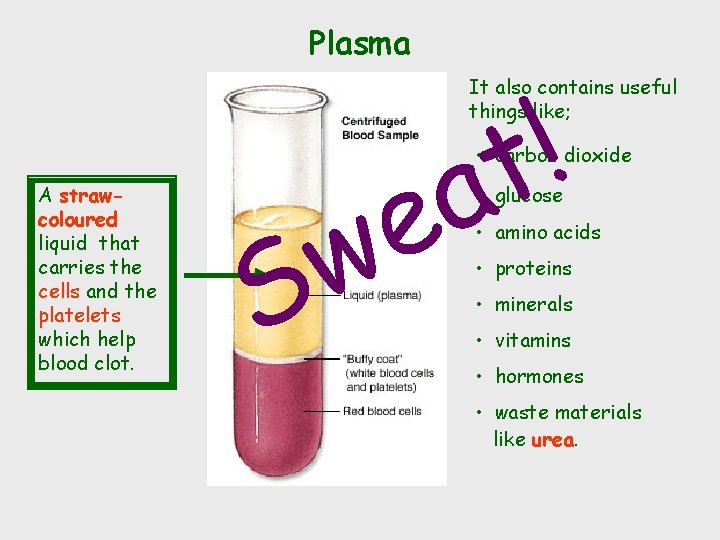
Plasma ! t a It also contains useful things like; A strawcoloured liquid that carries the cells and the platelets which help blood clot. S e w • carbon dioxide • glucose • amino acids • proteins • minerals • vitamins • hormones • waste materials like urea.
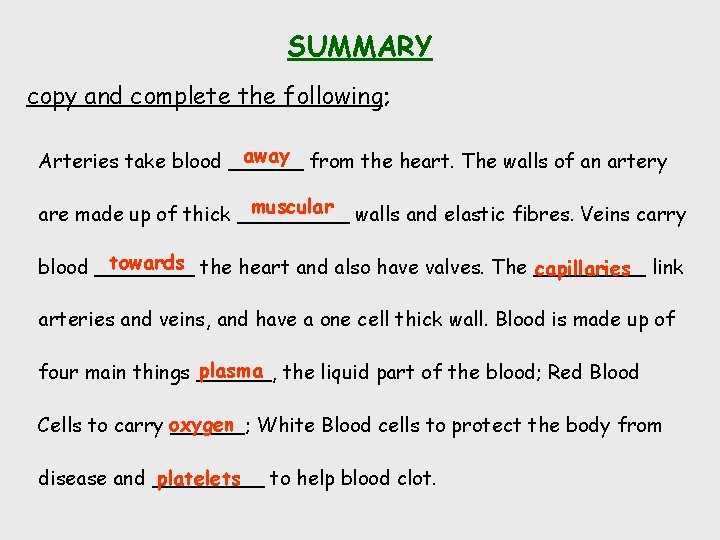
SUMMARY copy and complete the following; away from the heart. The walls of an artery Arteries take blood ______ muscular walls and elastic fibres. Veins carry are made up of thick _____ towards the heart and also have valves. The _____ blood ____ capillaries link arteries and veins, and have a one cell thick wall. Blood is made up of plasma the liquid part of the blood; Red Blood four main things ______, Cells to carry oxygen ______; White Blood cells to protect the body from platelets to help blood clot. disease and _____
Blood Clotting Problems • Hemophelia – Genetic disorder that disrupts clotting – People must be very careful to avoid injury – Can be treated by injecting extracts that contain the missing clotting factor.
Disorders of Circulatory System • Heart Attack – Due to atherosclerosis, coronary arteries may become blocked (blood can’t get to heart muscle) – Heart muscle begins to die due to lack of O 2
What is the benefit of a 4 chambered heart?
This powerpoint was kindly donated to www. worldofteaching. com http: //www. worldofteaching. com is home to over a thousand powerpoints submitted by teachers. This is a completely free site and requires no registration. Please visit and I hope it will help in your teaching.