
Adapted by Joanne Sweazey from Dr Merrill Winston
Adapted by Joanne Sweazey from Dr. Merrill Winston 2015 1
2
STUDENTS ARE IN SCHOOL 10% OF THEIR LIVES 3
4
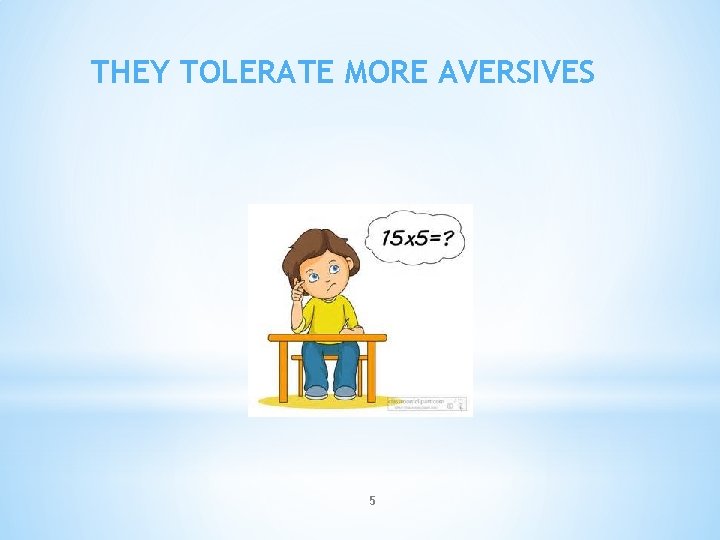
THEY TOLERATE MORE AVERSIVES 5
6
VERBAL PRAISE IS MORE VALUABLE Whatever… 7
Smart students don’t really need the relationship piece … they love learning 8
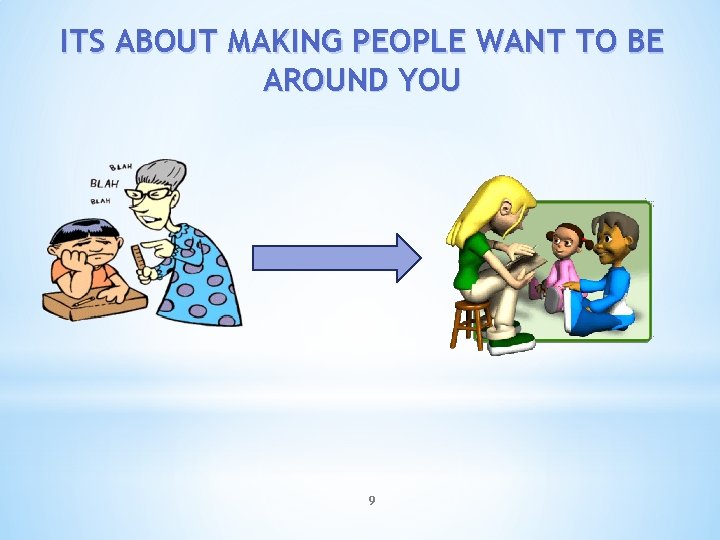
ITS ABOUT MAKING PEOPLE WANT TO BE AROUND YOU 9
10
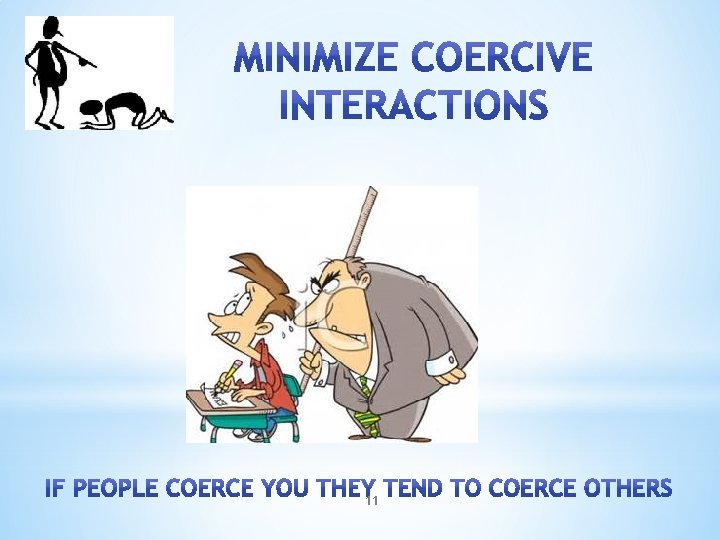
11
Interactions that are coercive Sarcasm Contradicting- argue where you say the opposite of what the person says Threatening/using force – because I said so that’s why Giving feedback in a negative way Using guilt Complaining about an individual’s behavior in their presence Reasoning (using logic) Being non sympathetic (what is it now? ) 12
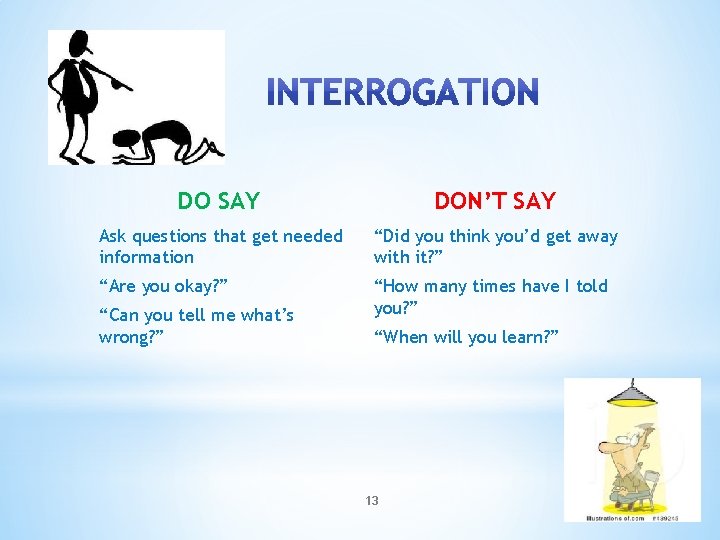
DO SAY DON’T SAY Ask questions that get needed information “Did you think you’d get away with it? ” “Are you okay? ” “How many times have I told you? ” “Can you tell me what’s wrong? ” “When will you learn? ” 13
Using Unplanned Negative Consequences Sometimes get back at people by announcing that they have lost a privilege or we might even take something away from them Giving people the cold shoulder because we are angry at them Statements such as “I’m so mad at you I’m going to ___”, but its never carried out 14
15
16
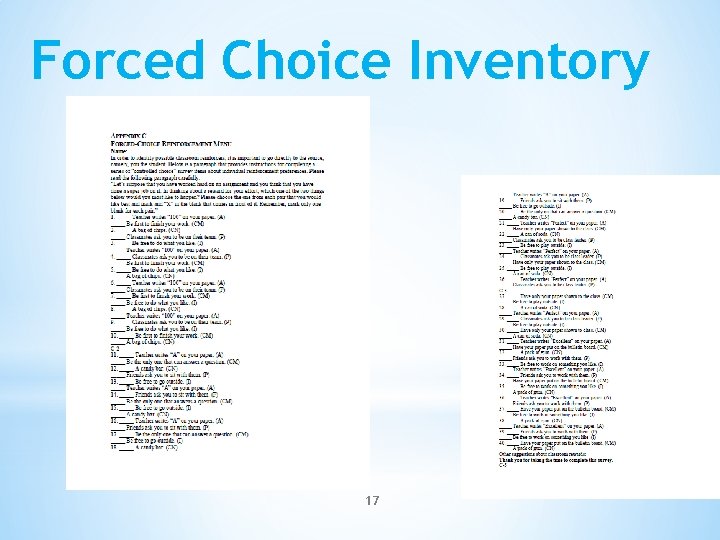
Forced Choice Inventory 17
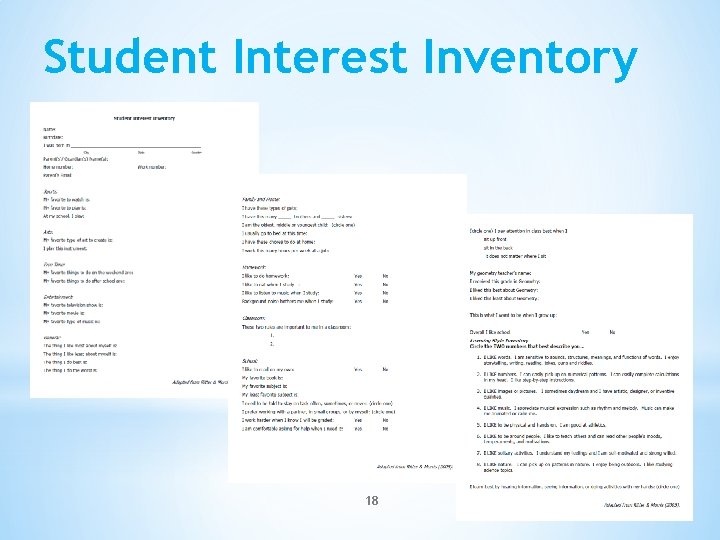
Student Interest Inventory * 18
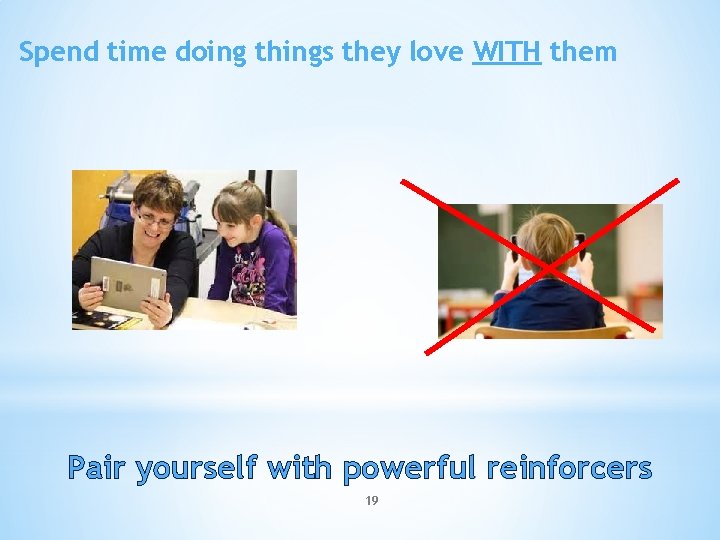
Spend time doing things they love WITH them Pair yourself with powerful reinforcers 19
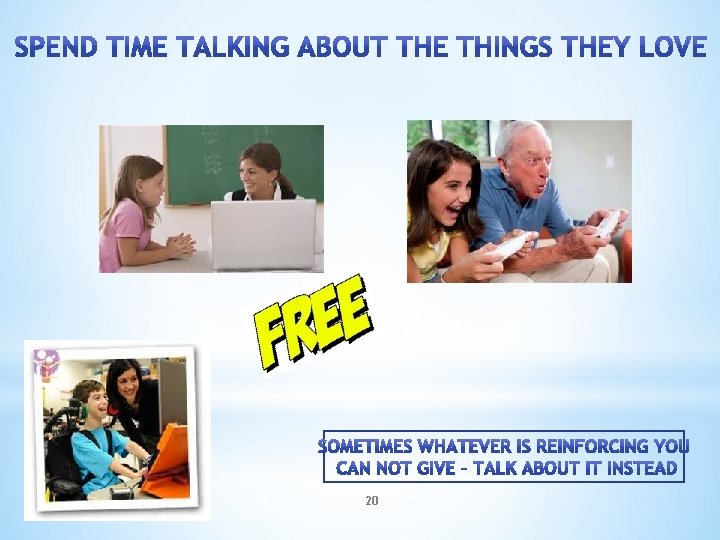
20
e v l s o t v s in que t o e n Pat on the shoulder, thumbs up, etc… r s r e Decreases the thought that every o D nds o time I come near you something bad a m or a demand is going to happen e d 21
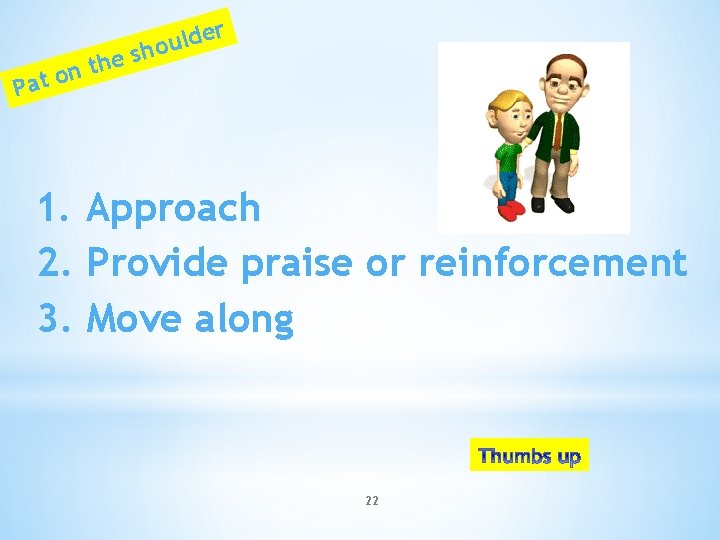
Pat he t n o r e d l hou s 1. Approach 2. Provide praise or reinforcement 3. Move along 22
STUDENTS WILL LEARN THAT YOUR PRESENCE DOESN’T ALWAYS MEAN A DEMAND IS COMING 23
24
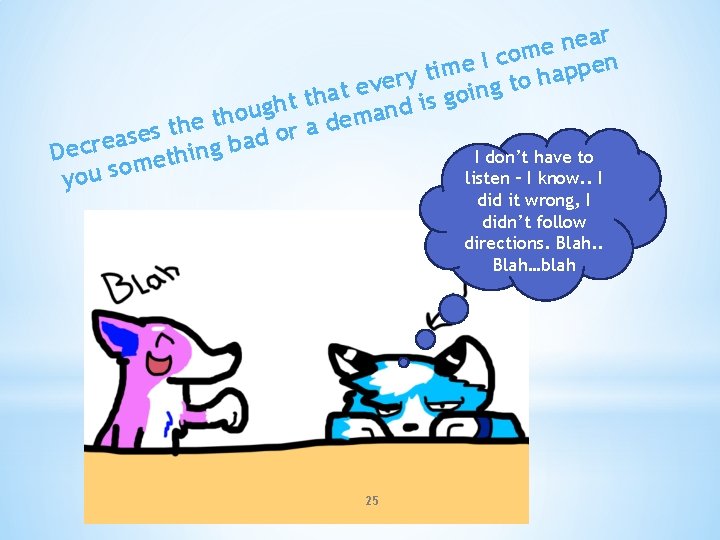
ar e n e om c I n e e p m i p t a h ry e o t v e g t n goi tha s t i h d g an ou h m t e e d a th r s o e s d a Decre mething ba I don’t have to o listen – I know. . I you s did it wrong, I didn’t follow directions. Blah…blah 25
Do drive bys all the time – not just during a problem Good tool during pre-crisis, but should be used even when stable 26
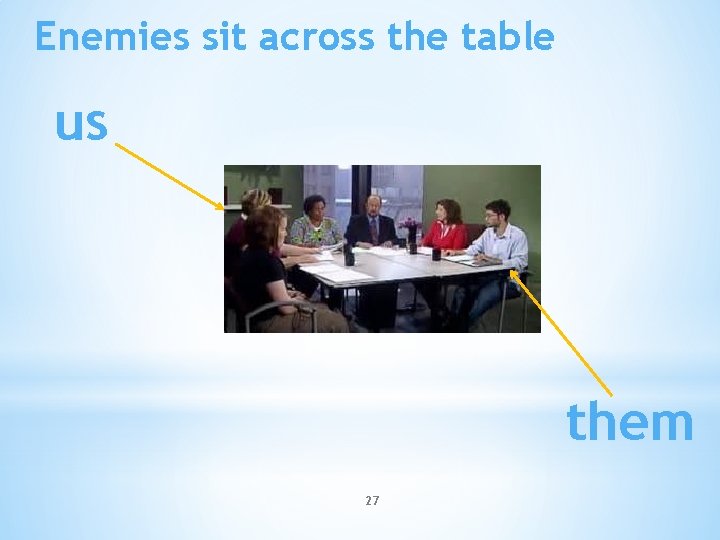
Enemies sit across the table us them 27
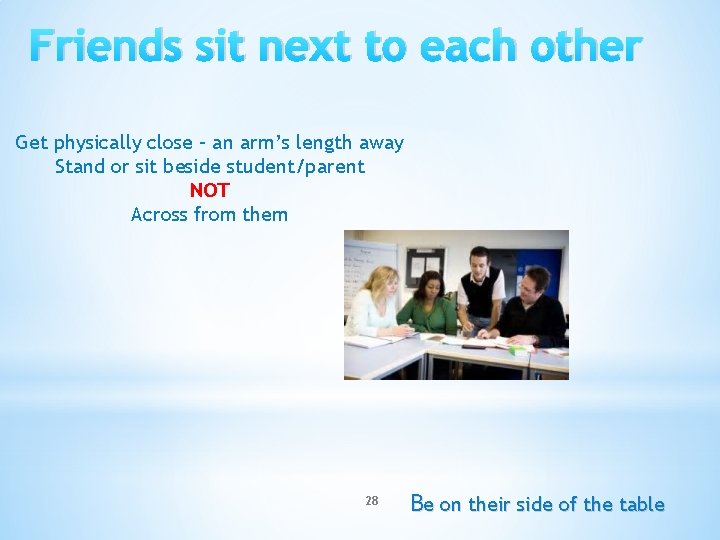
Friends sit next to each other Get physically close – an arm’s length away Stand or sit beside student/parent NOT Across from them 28 Be on their side of the table
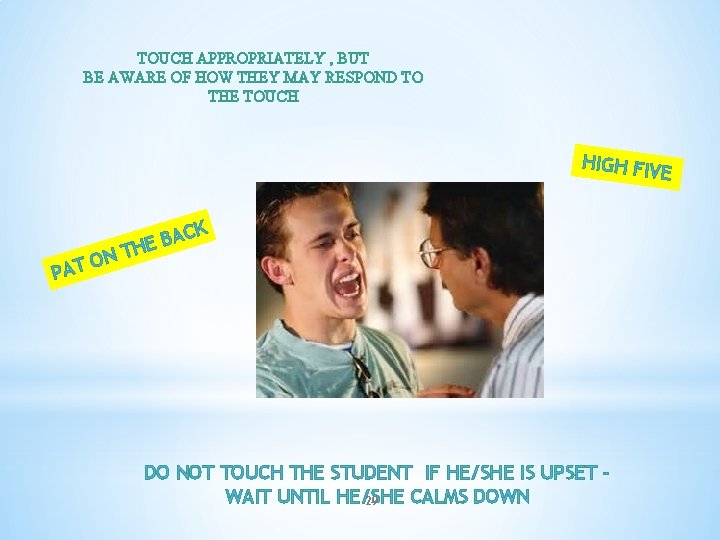
TOUCH APPROPRIATELY , BUT BE AWARE OF HOW THEY MAY RESPOND TO THE TOUCH HIGH FIV E N O PAT ACK B E TH DO NOT TOUCH THE STUDENT IF HE/SHE IS UPSET – WAIT UNTIL HE/SHE CALMS DOWN 29
ASK POSITIVE QUESTIONS DON’T ASK WHY IF STUDENT IS UPSET – THEY WOULD HAVE TO EXPLAIN THEIR BEHAVIOR ALLOW FOR 30 A NON VERBAL RESPONSE
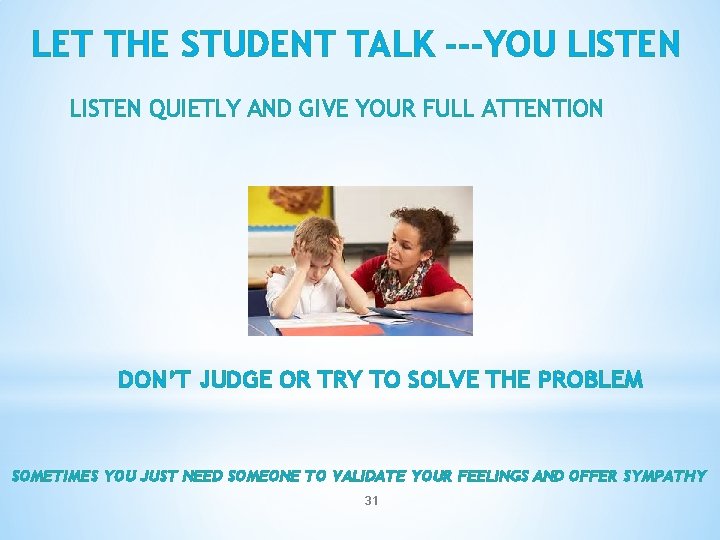
LET THE STUDENT TALK ---YOU LISTEN QUIETLY AND GIVE YOUR FULL ATTENTION DON’T JUDGE OR TRY TO SOLVE THE PROBLEM SOMETIMES YOU JUST NEED SOMEONE TO VALIDATE YOUR FEELINGS AND OFFER SYMPATHY 31
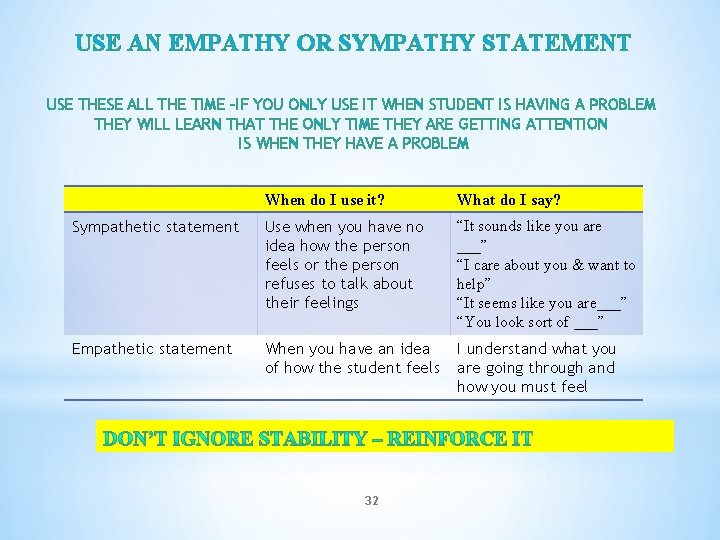
USE AN EMPATHY OR SYMPATHY STATEMENT USE THESE ALL THE TIME -IF YOU ONLY USE IT WHEN STUDENT IS HAVING A PROBLEM THEY WILL LEARN THAT THE ONLY TIME THEY ARE GETTING ATTENTION IS WHEN THEY HAVE A PROBLEM When do I use it? What do I say? Sympathetic statement Use when you have no idea how the person feels or the person refuses to talk about their feelings “It sounds like you are ___” “I care about you & want to help” “It seems like you are___” “You look sort of ___” Empathetic statement When you have an idea of how the student feels I understand what you are going through and how you must feel 32
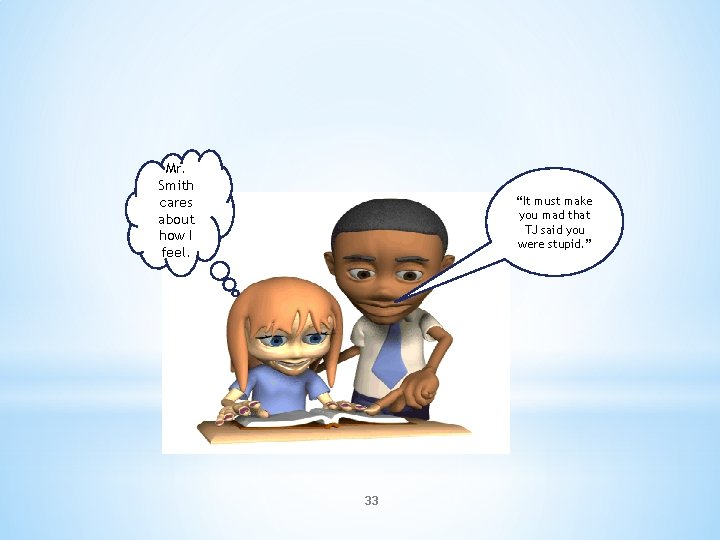
Mr. Smith cares about how I feel. “It must make you mad that TJ said you were stupid. ” 33
STAY RELAXED 34
- Slides: 34