
ADAPTATIONS OVER TIME WHAT IS EVOLUTION Evolution is
- Slides: 19
ADAPTATIONS OVER TIME
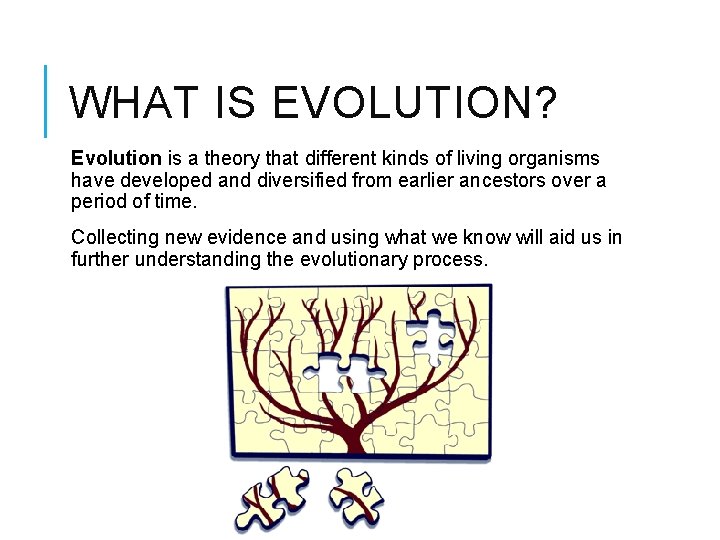
WHAT IS EVOLUTION? Evolution is a theory that different kinds of living organisms have developed and diversified from earlier ancestors over a period of time. Collecting new evidence and using what we know will aid us in further understanding the evolutionary process.
EARLY MODELS OF EVOLUTION For a long time… Many believed that organisms did not adapt, but rather, they were “just that way. ” But, people kept questioning this idea and came up with a few theories…
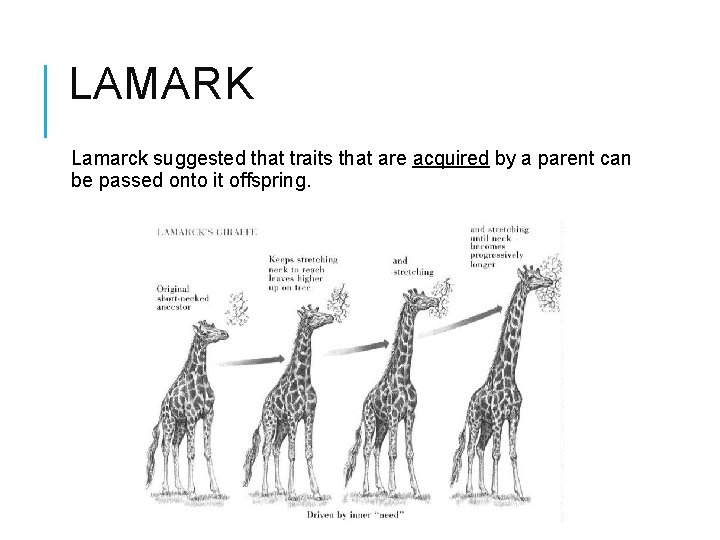
LAMARK Lamarck suggested that traits that are acquired by a parent can be passed onto it offspring.
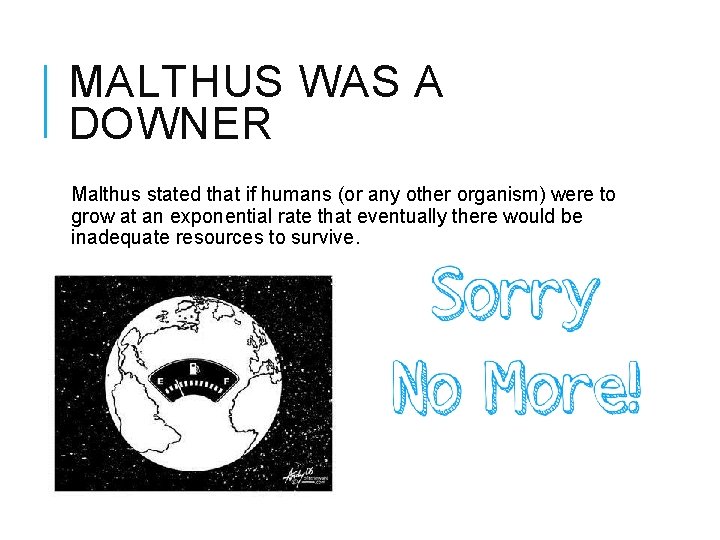
MALTHUS WAS A DOWNER Malthus stated that if humans (or any other organism) were to grow at an exponential rate that eventually there would be inadequate resources to survive.
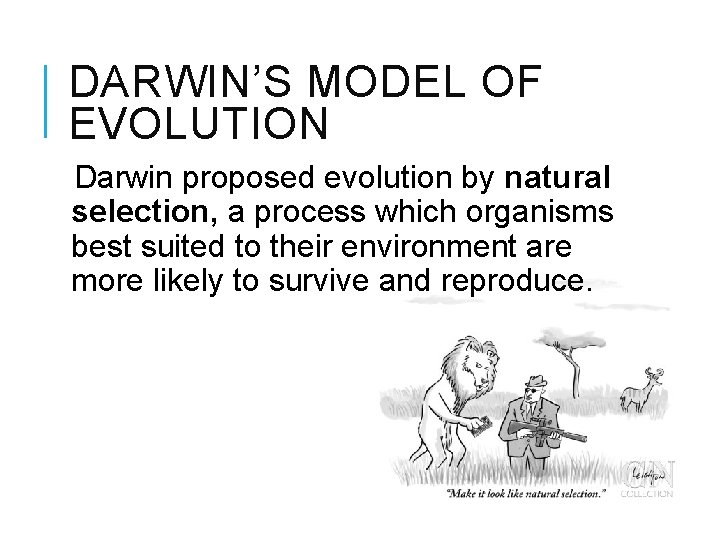
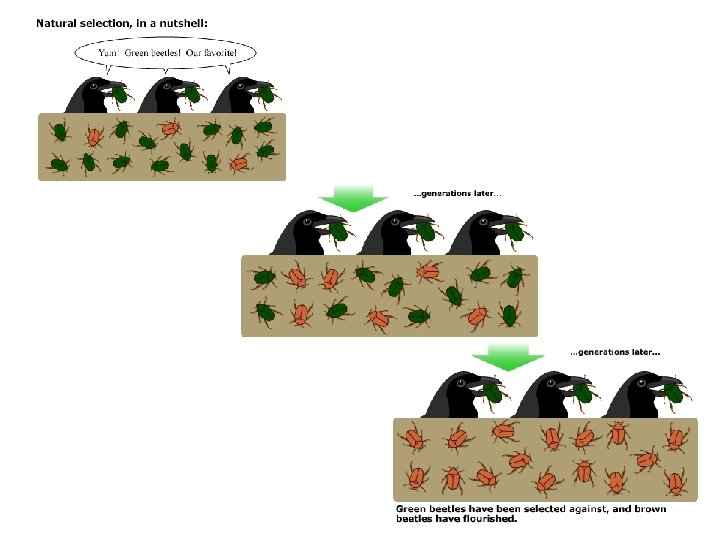
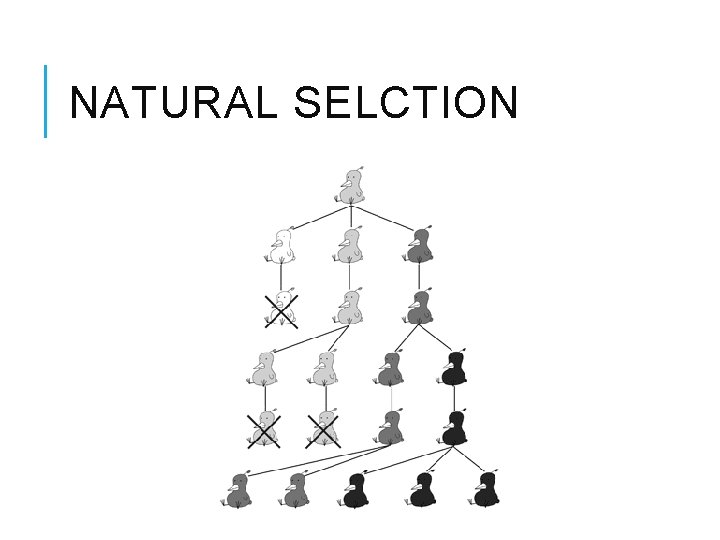
DARWIN’S MODEL OF EVOLUTION Darwin proposed evolution by natural selection, a process which organisms best suited to their environment are more likely to survive and reproduce.
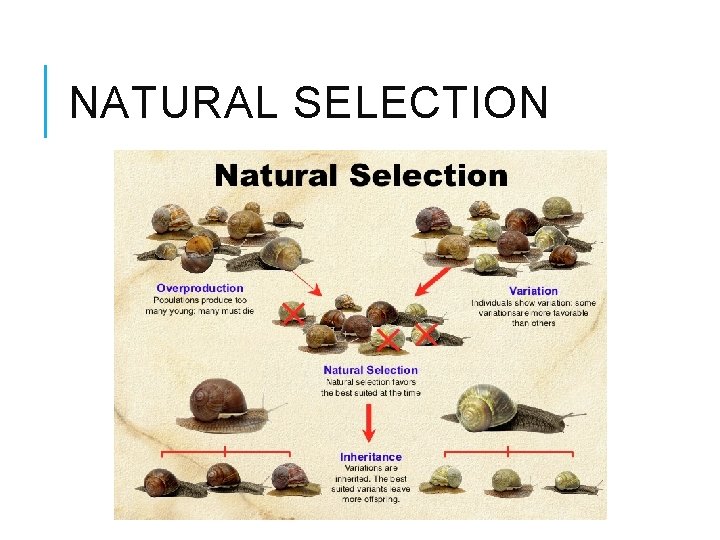
NATURAL SELECTION
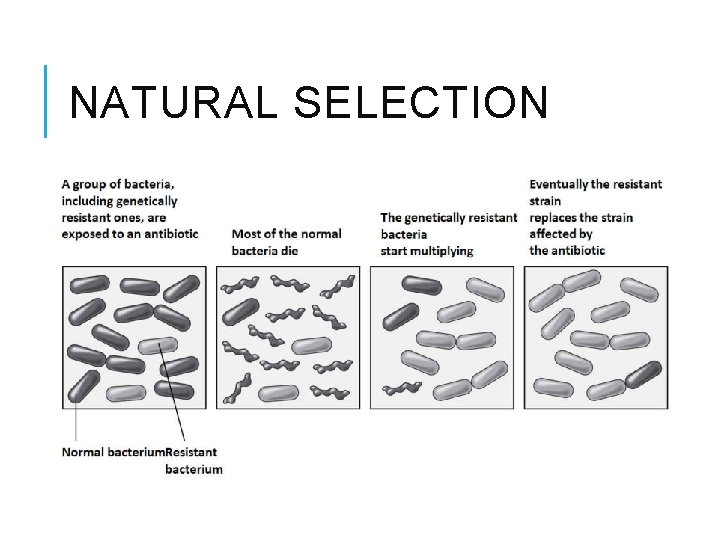
NATURAL SELECTION
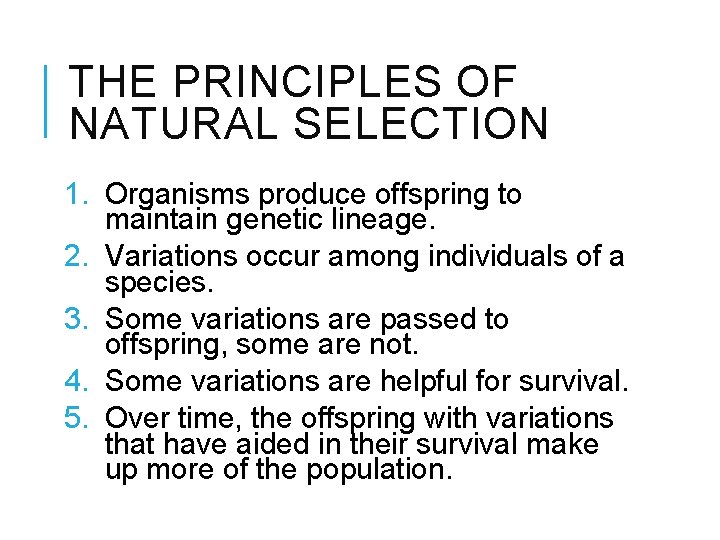
THE PRINCIPLES OF NATURAL SELECTION 1. Organisms produce offspring to maintain genetic lineage. 2. Variations occur among individuals of a species. 3. Some variations are passed to offspring, some are not. 4. Some variations are helpful for survival. 5. Over time, the offspring with variations that have aided in their survival make up more of the population.
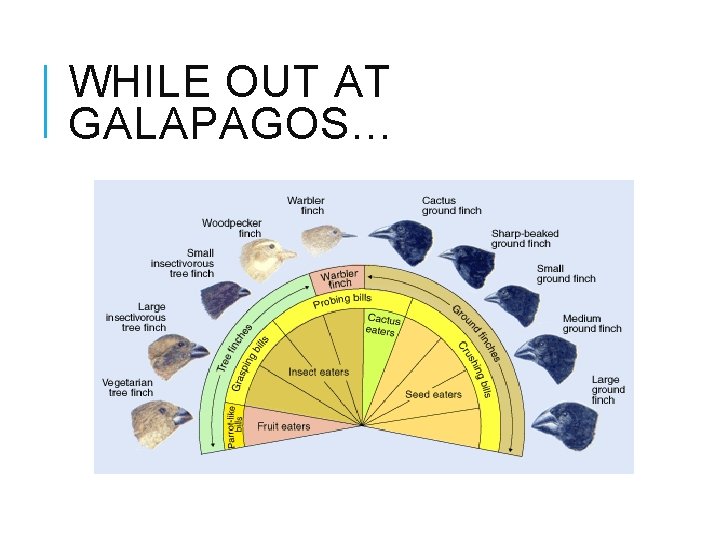
WHILE OUT AT GALAPAGOS…
The Galápagos Islands Darwin observed that the Galápagos Islands were close together, but had very different climates. Darwin wondered if animals living on different islands had once been members of the same species. These separate species would have started from original South American ancestor species and migrated.
NATURAL SELCTION
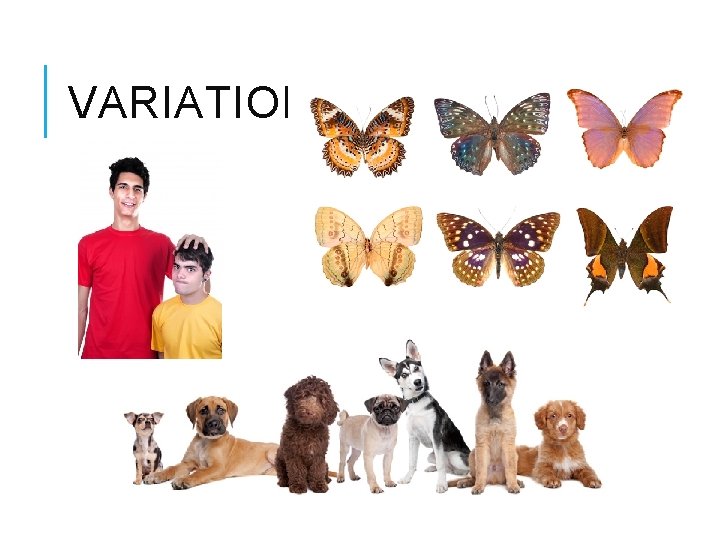
VARIATIONS OF A SPECIES Variation is a trait that makes an individual different from other members of the same species. Variation can be caused by genetics or environmental factors. Variation may be shown in physical appearance, metabolism, fertility, mode of reproduction, behavior, learning and mental ability, and other obvious or measurable characters.
VARIATION
REMEMBER Genetic changes can take a long time to happen, it is small adaptations of one generation to the next. Major source of new variations: Small genetic “mutations” and probability through genetics
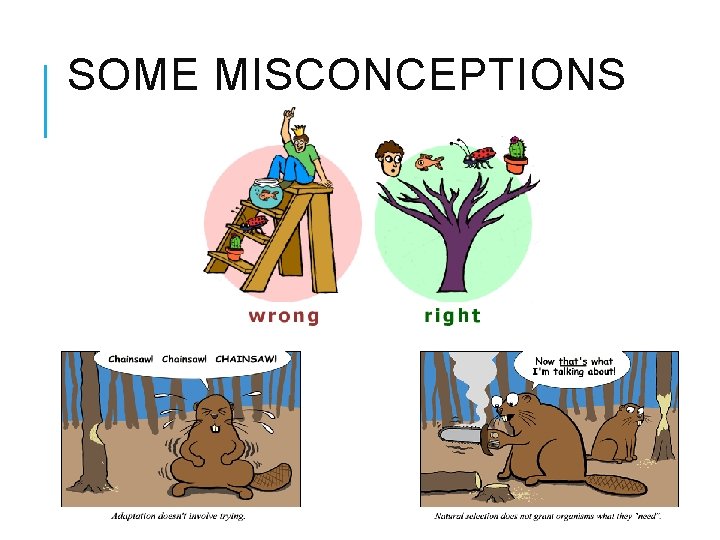
SOME MISCONCEPTIONS
WHEN THINKING ABOUT ADAPTATIONS… WHAT ARE ITS NEEDS? How will the organism collect food? How will it mate? What are its predators? What will it need to survive its environment? Is its environment changing? In the end Darwin coined the term “survival of the fittest”
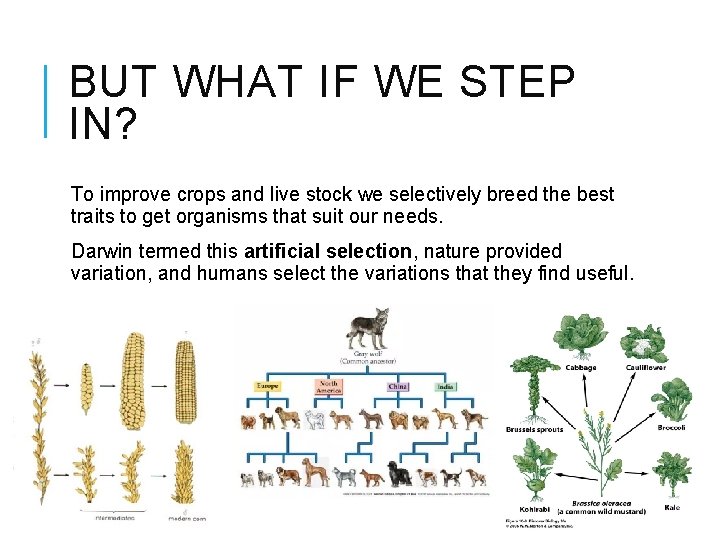
BUT WHAT IF WE STEP IN? To improve crops and live stock we selectively breed the best traits to get organisms that suit our needs. Darwin termed this artificial selection, nature provided variation, and humans select the variations that they find useful.