
Adaptations of the neonate Neonatal reflexes reflex description
- Slides: 9
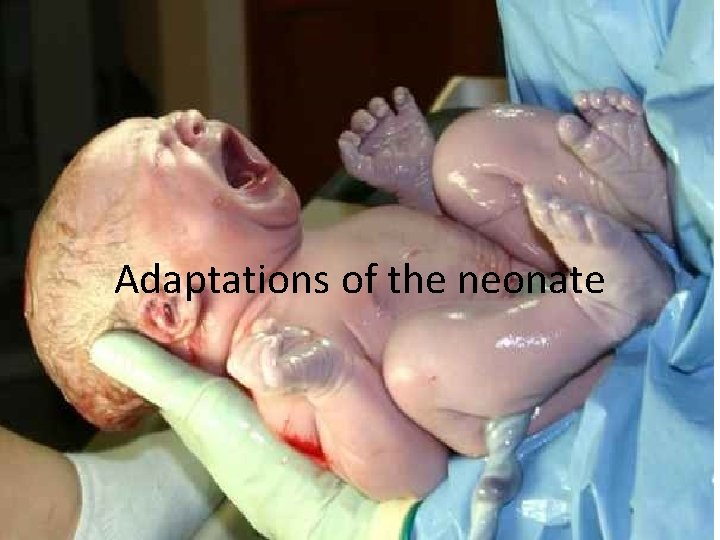
Adaptations of the neonate
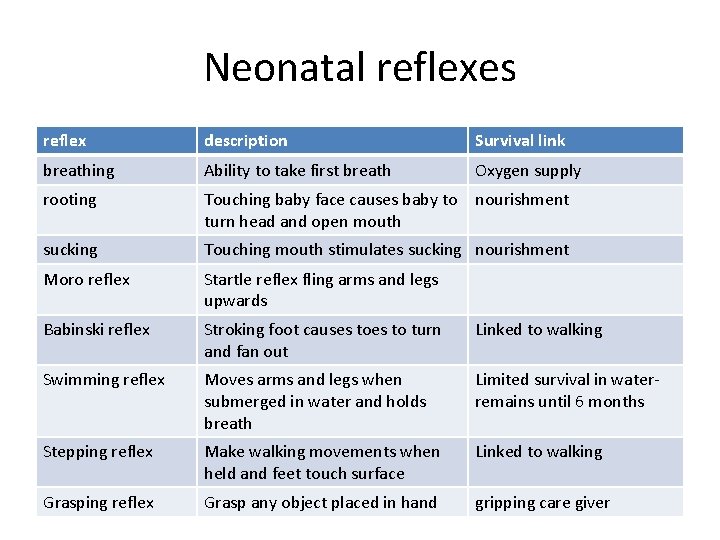
Neonatal reflexes reflex description Survival link breathing Ability to take first breath Oxygen supply rooting Touching baby face causes baby to nourishment turn head and open mouth sucking Touching mouth stimulates sucking nourishment Moro reflex Startle reflex fling arms and legs upwards Babinski reflex Stroking foot causes to turn and fan out Linked to walking Swimming reflex Moves arms and legs when submerged in water and holds breath Limited survival in waterremains until 6 months Stepping reflex Make walking movements when held and feet touch surface Linked to walking Grasping reflex Grasp any object placed in hand gripping care giver
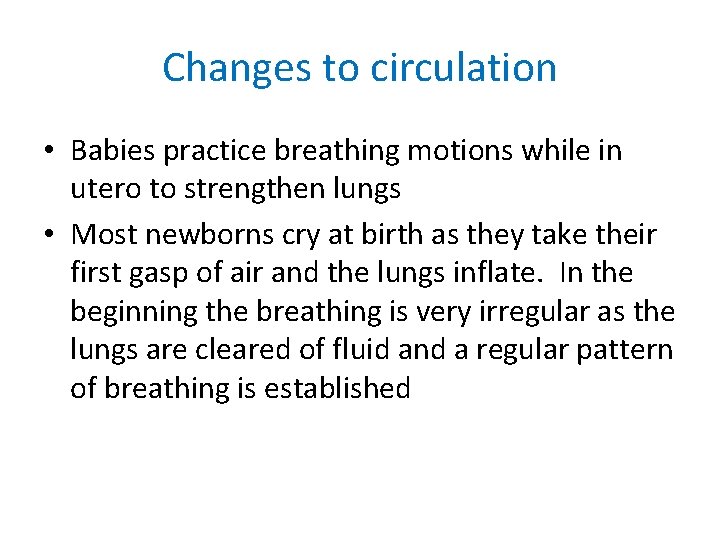
Changes to circulation • Babies practice breathing motions while in utero to strengthen lungs • Most newborns cry at birth as they take their first gasp of air and the lungs inflate. In the beginning the breathing is very irregular as the lungs are cleared of fluid and a regular pattern of breathing is established
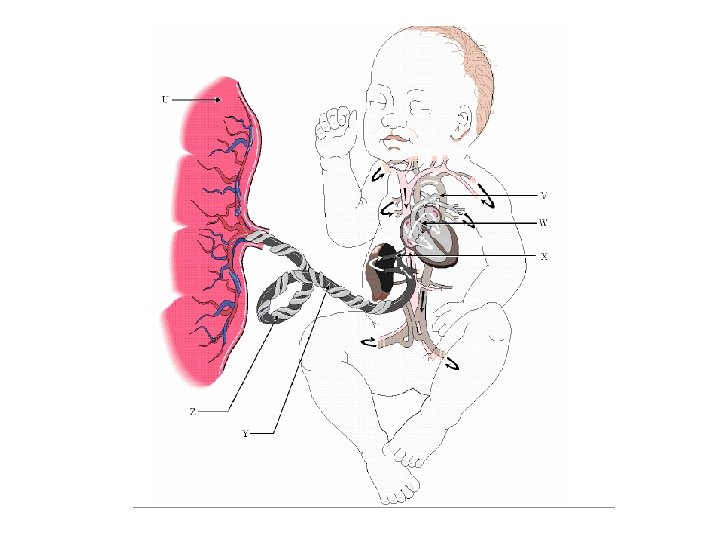
• Before birth blood passed from the umbilical cord to the heart and then around the body. After the umbilical cord is cut blood is redirected so that it passes from the heart to the lungs where oxygen can be collected and then back to the heart again so that oxygenated blood can be transported around the body with maximum force.
Temperature control • Before birth the mother’s body regulated the temperature. • After birth the must regulate its own temperature at a constant 37 ºC. • babies body have a very large surface area to lose heat from and very little fat deposition • Babies are only able to keep warm by increasing metabolism which requires a lot of energy, limited fat stores to utilise. • Babies have very few sweat glands therefore difficult to cool body when hot. Vunrable to heat stress
Digestion and waste removal • Babies are able to urinate prior to birth • Kidneys and liver are fully functioning at birth • First breastfeed colonises bowel with helpful bacteria to aid digestion • First bowel motion is called meconium and is black tar like substance. Changes in first week of life • Lung begin to function first minute of life and remove carbon dioxide
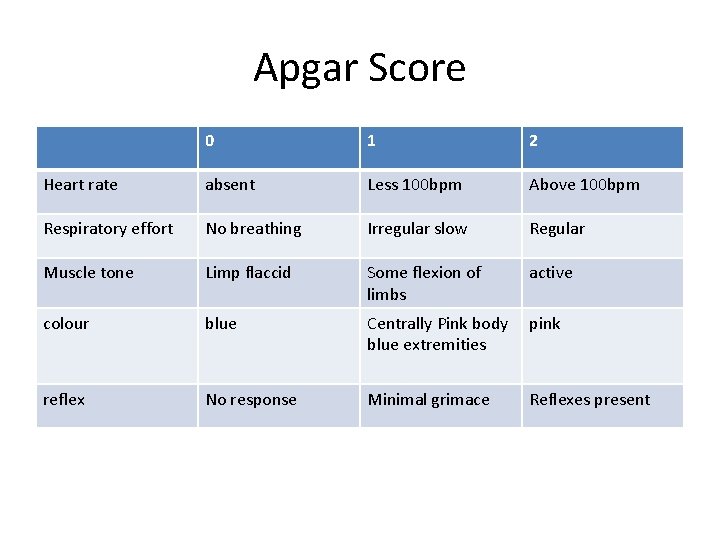
Apgar scores • Performed one minute and five minutes after birth • A score of 7 -10 is a baby who is does not require resuscitation • A score of 5 means baby requires medical attention i. e. assistance with breathing • A score of 3 or less means baby requires resuscitation, this is an emergency situation
Apgar Score 0 1 2 Heart rate absent Less 100 bpm Above 100 bpm Respiratory effort No breathing Irregular slow Regular Muscle tone Limp flaccid Some flexion of limbs active colour blue Centrally Pink body blue extremities pink reflex No response Minimal grimace Reflexes present