
Adaptations of Aquatic Life Post Scavenger Hunt Aquatic
- Slides: 22
Adaptations of Aquatic Life Post Scavenger Hunt
Aquatic Systems • https: //www. youtube. com/watch? v=k. L-9 TB 4 q. Aho • What are the 2 types of Aquatic Ecosystems? • What are some examples of Freshwater Systems? • What are some examples of Saltwater Systems?
Think about It! • What do all animals need to survive?
Animal Needs • Food – Food may be floating, at the surface or at the bottom, depends what area they live in. • Water (retention and supply) – Saltwater organisms need to retain freshwater to survive while freshwater organisms need to regularly remove water from their systems. • Gas exchange (oxygen) – Dissolved oxygen in water • Suitable shelter - what is available (eg. plants, rocks) • Temperature regulation – Ectothermic vs Endothermic, different environments
Scavenger Hunt • Make your way around the room and in the hallway area just outside of class to fill out the rest of your notes.
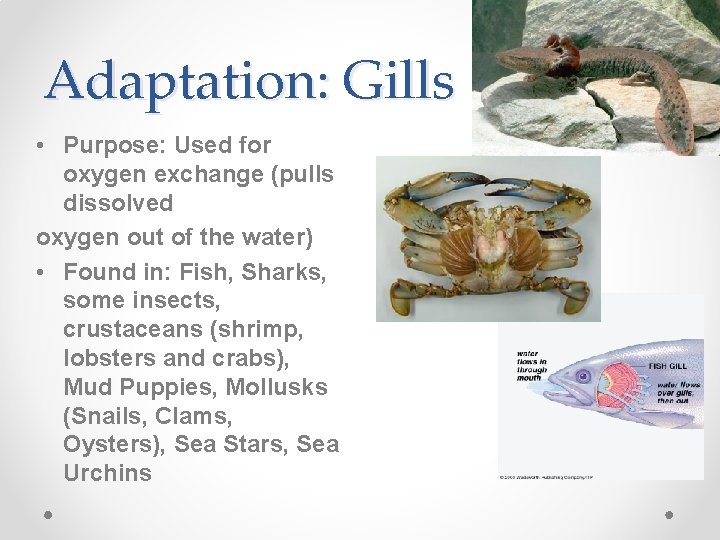
Adaptation: Gills • Purpose: Used for oxygen exchange (pulls dissolved oxygen out of the water) • Found in: Fish, Sharks, some insects, crustaceans (shrimp, lobsters and crabs), Mud Puppies, Mollusks (Snails, Clams, Oysters), Sea Stars, Sea Urchins
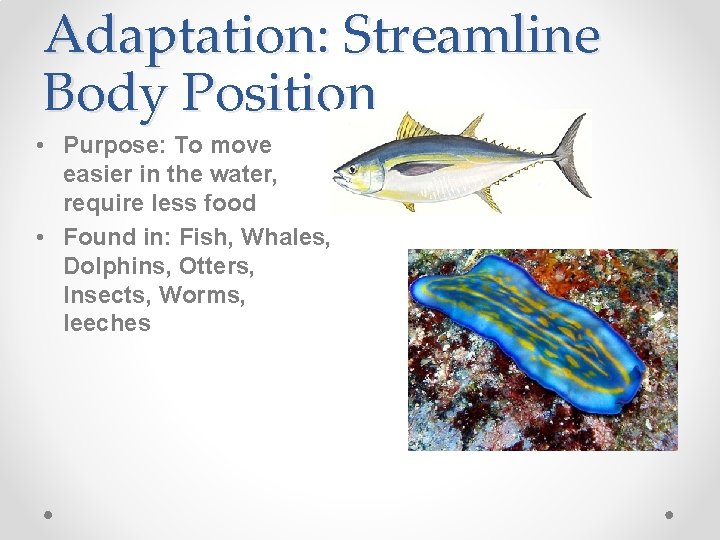
Adaptation: Streamline Body Position • Purpose: To move easier in the water, require less food • Found in: Fish, Whales, Dolphins, Otters, Insects, Worms, leeches
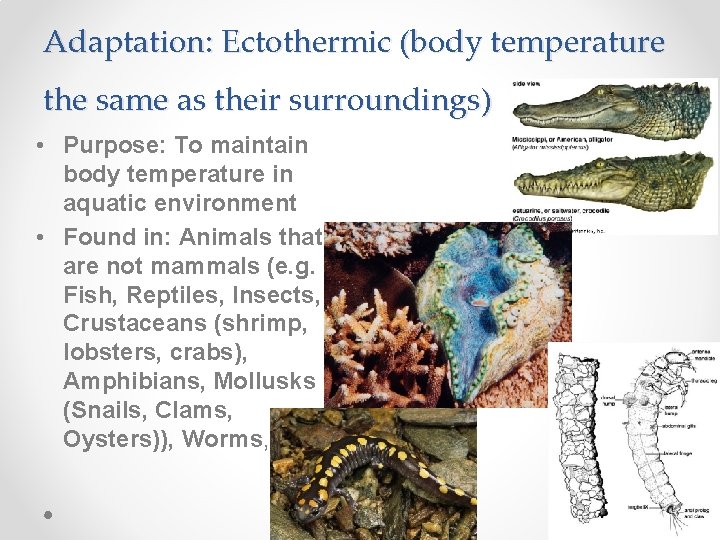
Adaptation: Ectothermic (body temperature the same as their surroundings) • Purpose: To maintain body temperature in aquatic environment • Found in: Animals that are not mammals (e. g. Fish, Reptiles, Insects, Crustaceans (shrimp, lobsters, crabs), Amphibians, Mollusks (Snails, Clams, Oysters)), Worms,
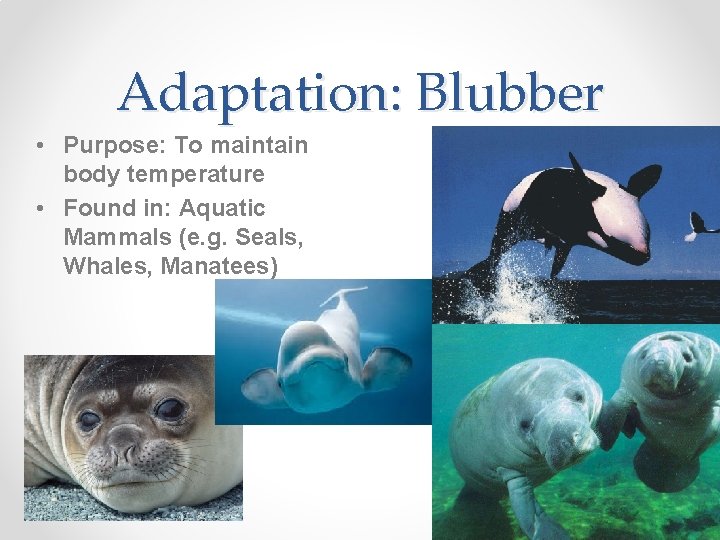
Adaptation: Blubber • Purpose: To maintain body temperature • Found in: Aquatic Mammals (e. g. Seals, Whales, Manatees)
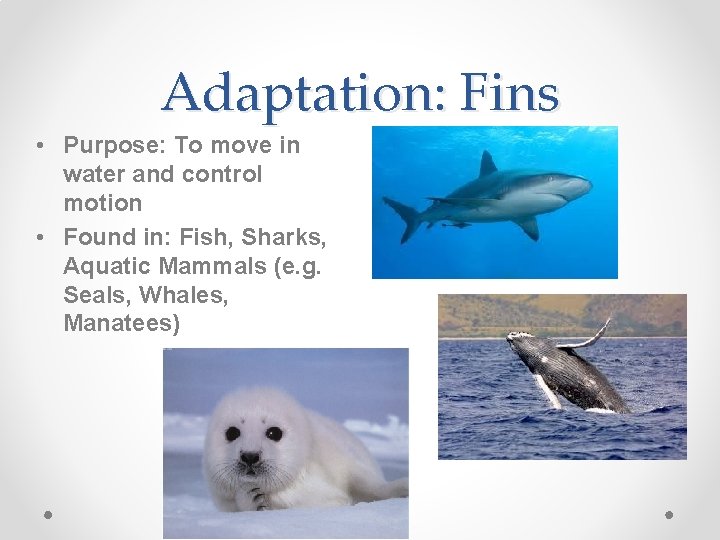
Adaptation: Fins • Purpose: To move in water and control motion • Found in: Fish, Sharks, Aquatic Mammals (e. g. Seals, Whales, Manatees)
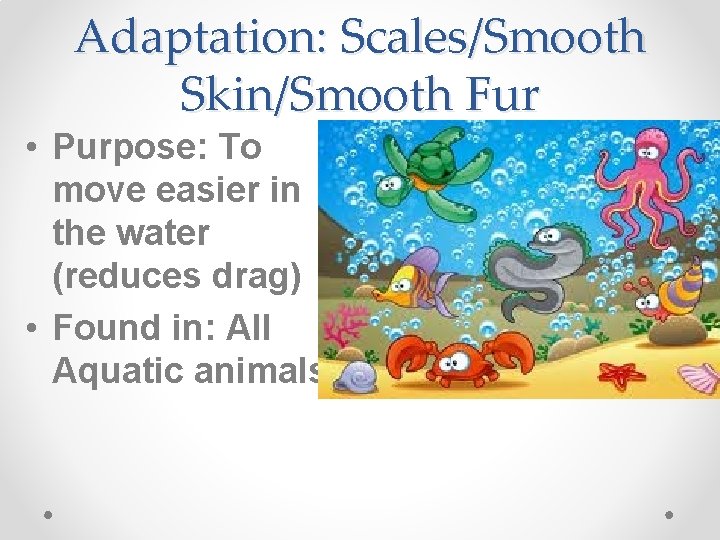
Adaptation: Scales/Smooth Skin/Smooth Fur • Purpose: To move easier in the water (reduces drag) • Found in: All Aquatic animals
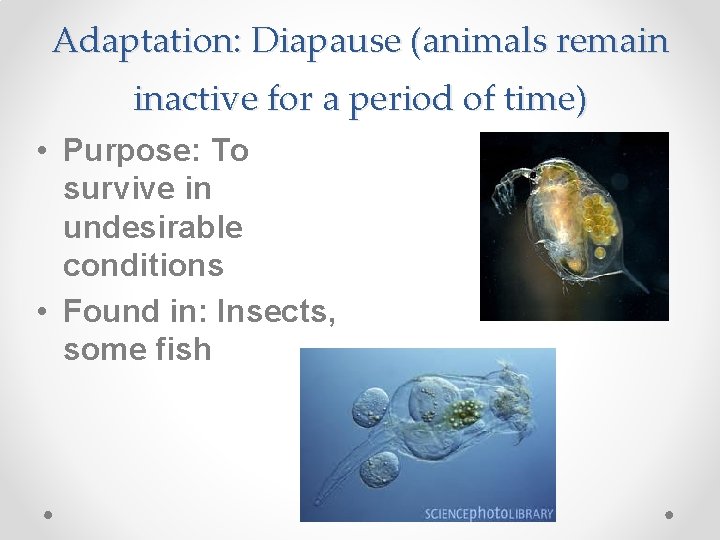
Adaptation: Diapause (animals remain inactive for a period of time) • Purpose: To survive in undesirable conditions • Found in: Insects, some fish
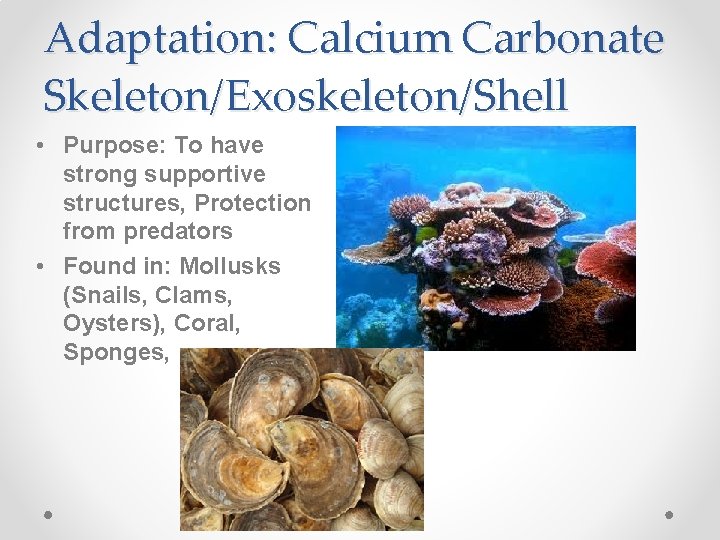
Adaptation: Calcium Carbonate Skeleton/Exoskeleton/Shell • Purpose: To have strong supportive structures, Protection from predators • Found in: Mollusks (Snails, Clams, Oysters), Coral, Sponges,
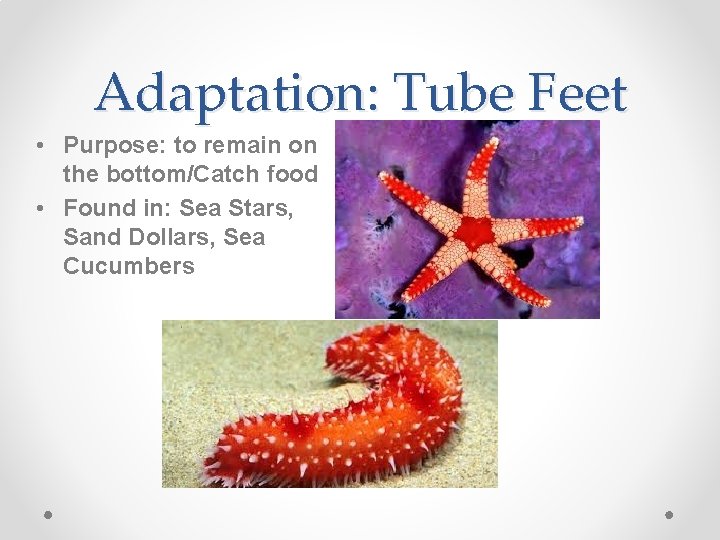
Adaptation: Tube Feet • Purpose: to remain on the bottom/Catch food • Found in: Sea Stars, Sand Dollars, Sea Cucumbers
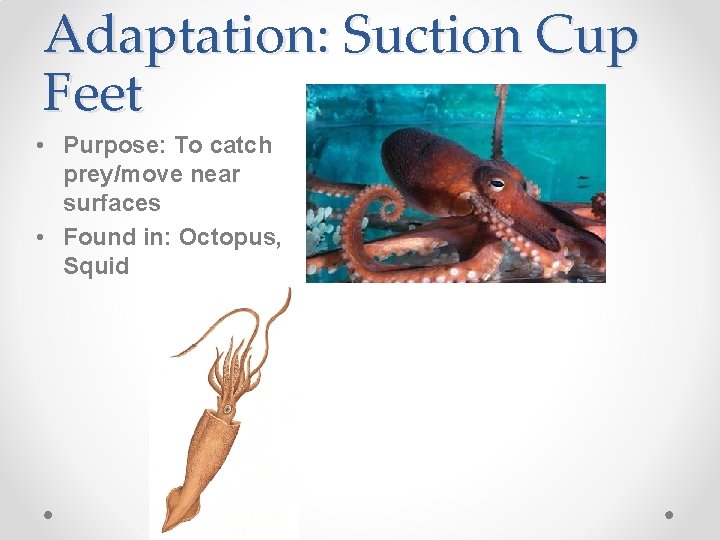
Adaptation: Suction Cup Feet • Purpose: To catch prey/move near surfaces • Found in: Octopus, Squid
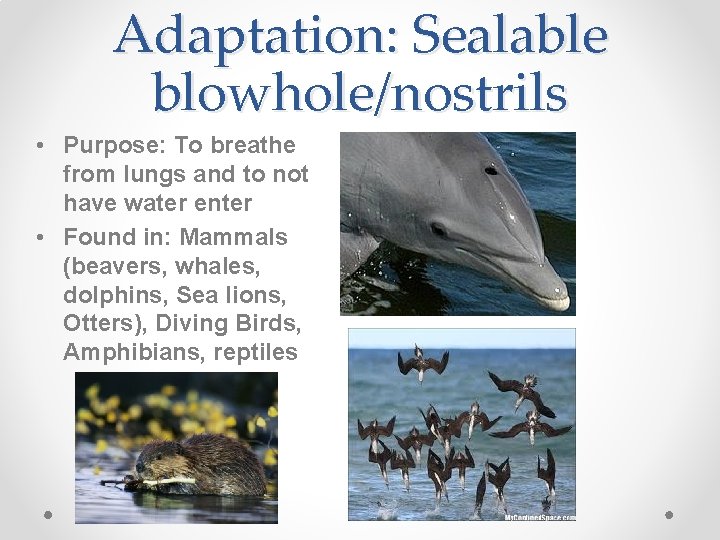
Adaptation: Sealable blowhole/nostrils • Purpose: To breathe from lungs and to not have water enter • Found in: Mammals (beavers, whales, dolphins, Sea lions, Otters), Diving Birds, Amphibians, reptiles
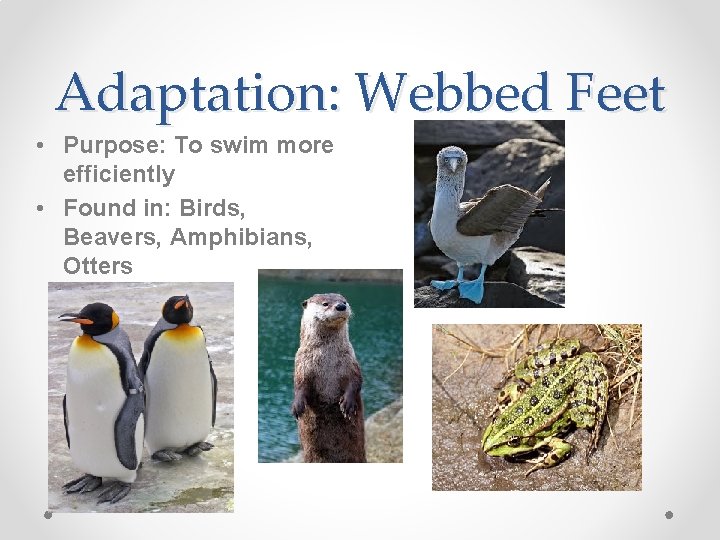
Adaptation: Webbed Feet • Purpose: To swim more efficiently • Found in: Birds, Beavers, Amphibians, Otters
Adaption: Permeable Skin • Purpose: To allow for water/oxygen to enter the body and to allow for salts to leave the body • Found in: Amphibians, worms
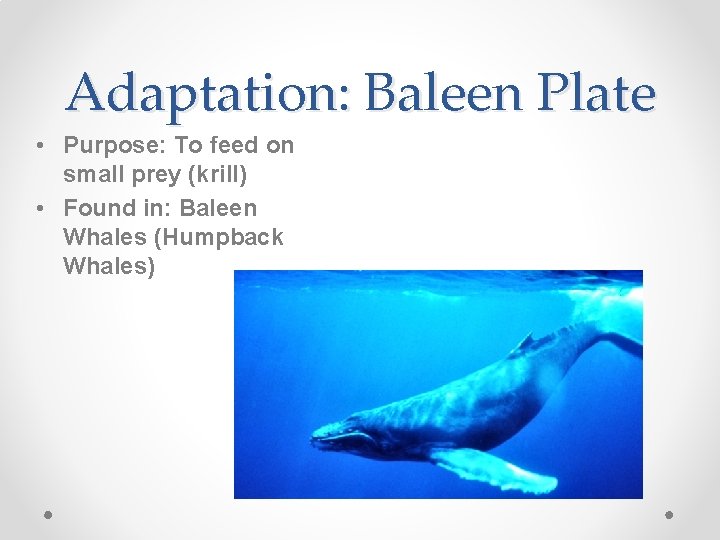
Adaptation: Baleen Plate • Purpose: To feed on small prey (krill) • Found in: Baleen Whales (Humpback Whales)
Adaptation: Migration Patterns • Purpose: To move between locations where different needs are met in different areas (example food in winter near equator and food in summer near the north) • Found in: Fish, Whales, Reptiles, Birds
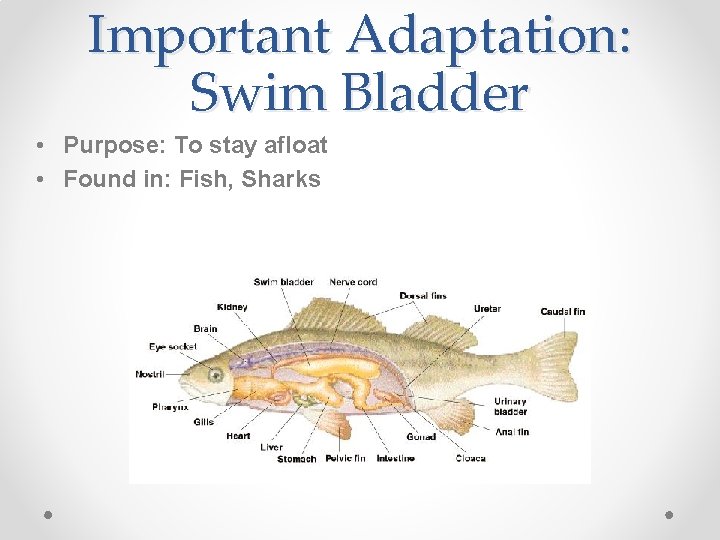
Important Adaptation: Swim Bladder • Purpose: To stay afloat • Found in: Fish, Sharks
Task: Create an Aquatic Animal • Your task is to make an animals with a minimum of 5 adaptations to an aquatic environment. With this, you can describe or draw and label the parts that are adaptations to your animal