
Adaptations of a polar bear Adaptations of a

Adaptations of a polar bear
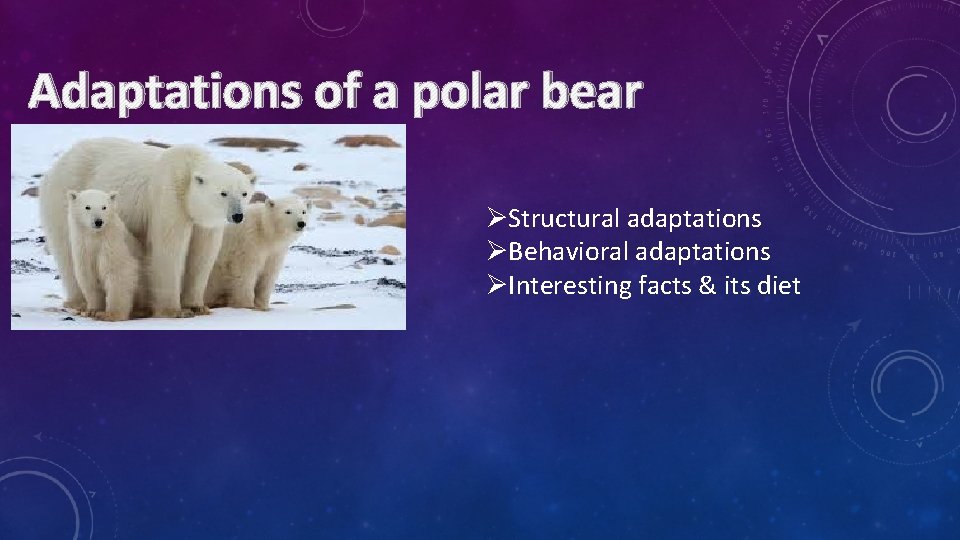
Adaptations of a polar bear ØStructural adaptations ØBehavioral adaptations ØInteresting facts & its diet
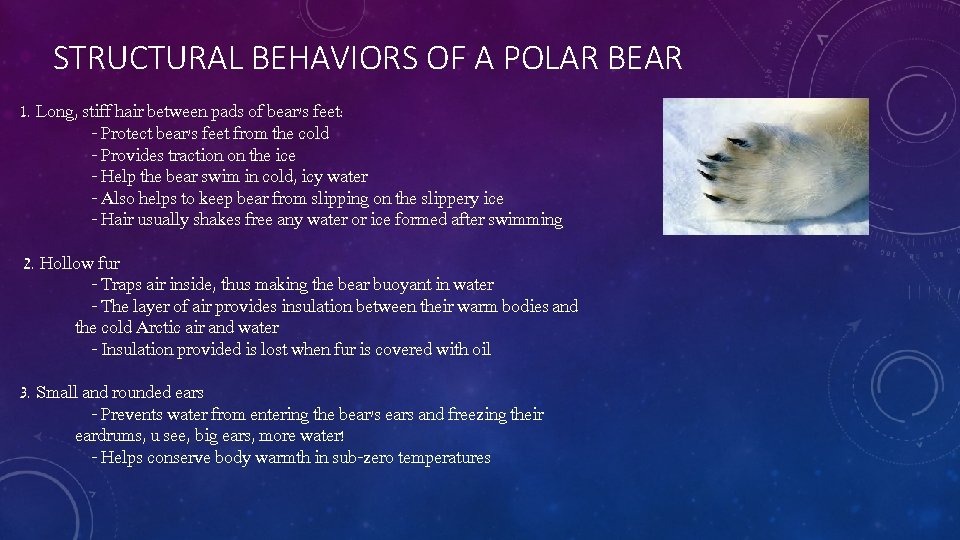
STRUCTURAL BEHAVIORS OF A POLAR BEAR 1. Long, stiff hair between pads of bear's feet: - Protect bear's feet from the cold - Provides traction on the ice - Help the bear swim in cold, icy water - Also helps to keep bear from slipping on the slippery ice - Hair usually shakes free any water or ice formed after swimming 2. Hollow fur - Traps air inside, thus making the bear buoyant in water - The layer of air provides insulation between their warm bodies and the cold Arctic air and water - Insulation provided is lost when fur is covered with oil 3. Small and rounded ears - Prevents water from entering the bear's ears and freezing their eardrums, u see, big ears, more water! - Helps conserve body warmth in sub-zero temperatures
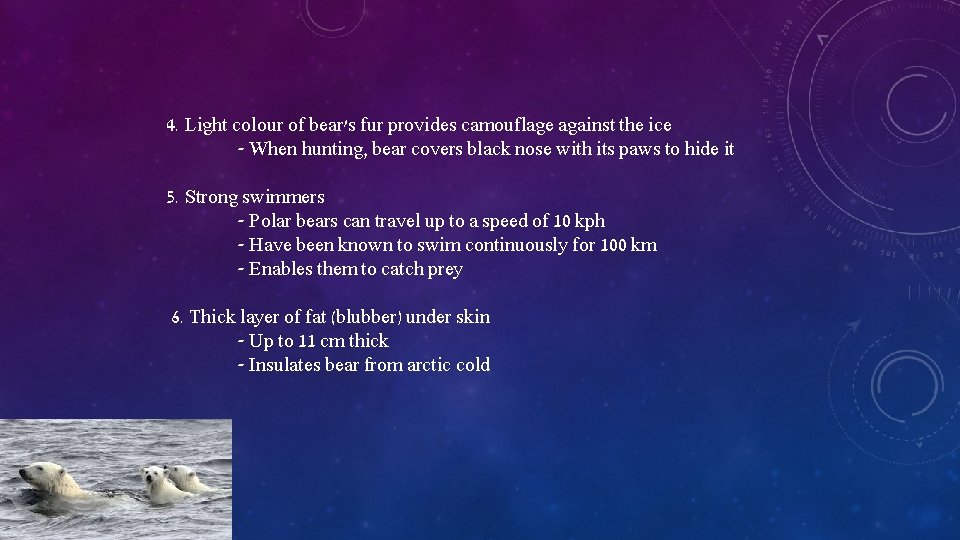
4. Light colour of bear's fur provides camouflage against the ice - When hunting, bear covers black nose with its paws to hide it 5. Strong swimmers - Polar bears can travel up to a speed of 10 kph - Have been known to swim continuously for 100 km - Enables them to catch prey 6. Thick layer of fat (blubber) under skin - Up to 11 cm thick - Insulates bear from arctic cold
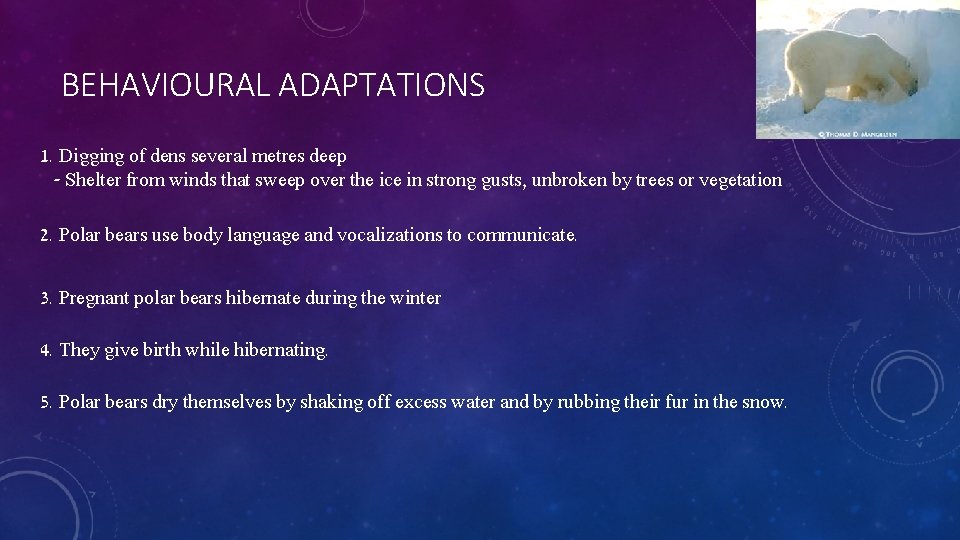
BEHAVIOURAL ADAPTATIONS 1. Digging of dens several metres deep - Shelter from winds that sweep over the ice in strong gusts, unbroken by trees or vegetation 2. Polar bears use body language and vocalizations to communicate. 3. Pregnant polar bears hibernate during the winter 4. They give birth while hibernating. 5. Polar bears dry themselves by shaking off excess water and by rubbing their fur in the snow.
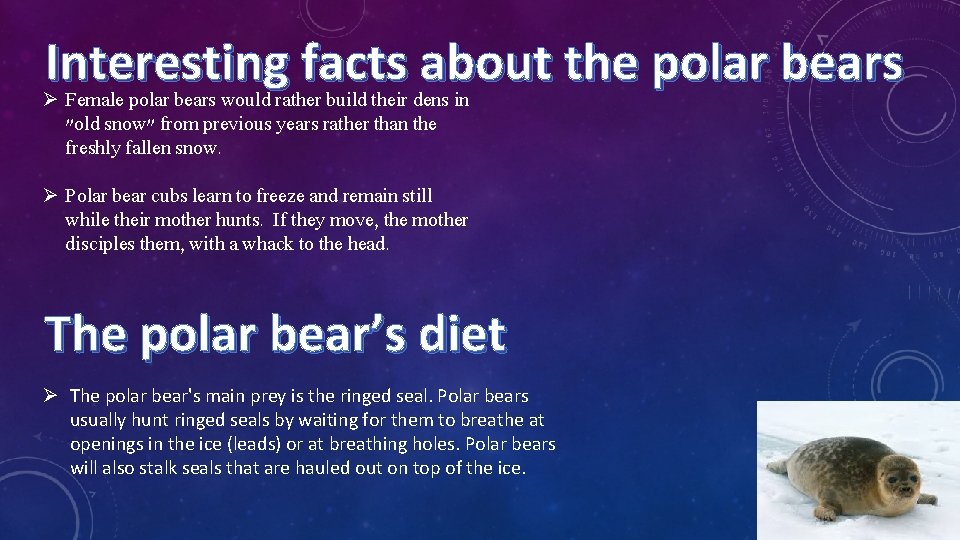
Interesting facts about the polar bears Ø Female polar bears would rather build their dens in "old snow" from previous years rather than the freshly fallen snow. Ø Polar bear cubs learn to freeze and remain still while their mother hunts. If they move, the mother disciples them, with a whack to the head. The polar bear’s diet Ø The polar bear's main prey is the ringed seal. Polar bears usually hunt ringed seals by waiting for them to breathe at openings in the ice (leads) or at breathing holes. Polar bears will also stalk seals that are hauled out on top of the ice.

- Slides: 7