
ADAPTATIONS IN PLANTS LESSON 5 SCIENCE CLASS IV
- Slides: 15
ADAPTATIONS IN PLANTS LESSON - 5 SCIENCE CLASS –IV
TERRESTRIAL PLANTS �Plants that grow on land : vmountains , vplains, vdeserts, and valong the sea coast are called terrestrial plants
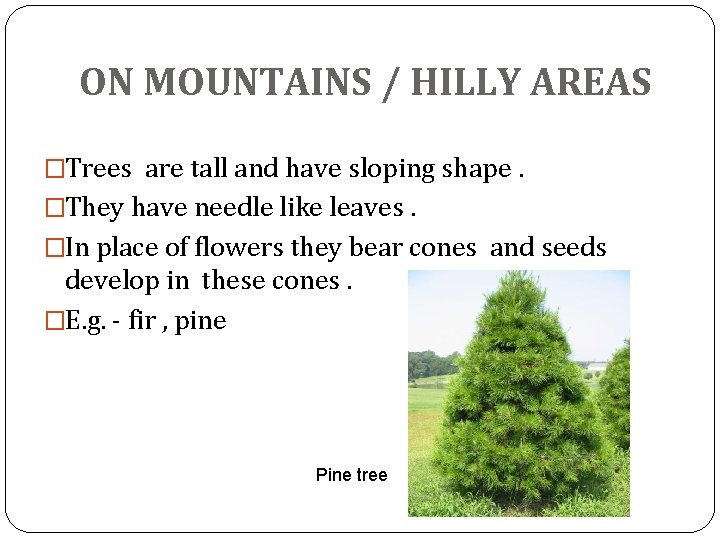
ON MOUNTAINS / HILLY AREAS �Trees are tall and have sloping shape. �They have needle like leaves. �In place of flowers they bear cones and seeds develop in these cones. �E. g. - fir , pine Pine tree
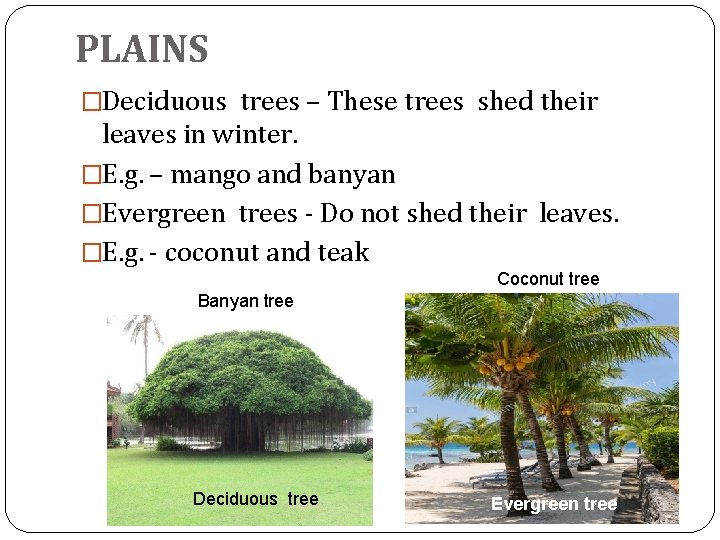
PLAINS �Deciduous trees – These trees shed their leaves in winter. �E. g. – mango and banyan �Evergreen trees - Do not shed their leaves. �E. g. - coconut and teak Coconut tree Banyan tree Deciduous tree Evergreen tree
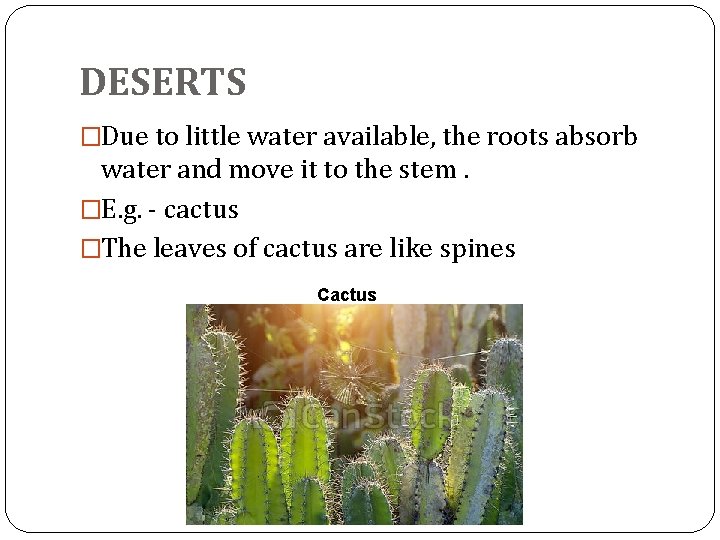
DESERTS �Due to little water available, the roots absorb water and move it to the stem. �E. g. - cactus �The leaves of cactus are like spines Cactus
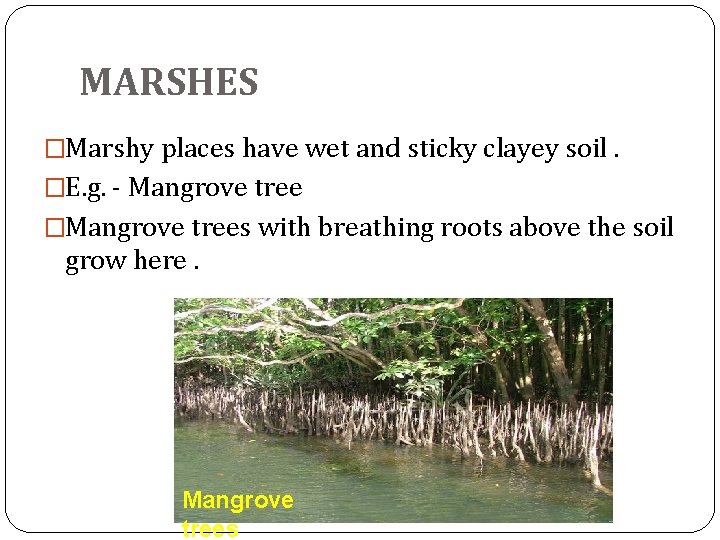
MARSHES �Marshy places have wet and sticky clayey soil. �E. g. - Mangrove tree �Mangrove trees with breathing roots above the soil grow here. Mangrove trees
ADAPTATIONS IN WATER PLANTS �Plants that grow in water are called aquatic plants �Three kinds of aquatic plants are: v. Floating plants, v. Fixed plants and v. Underwater plants
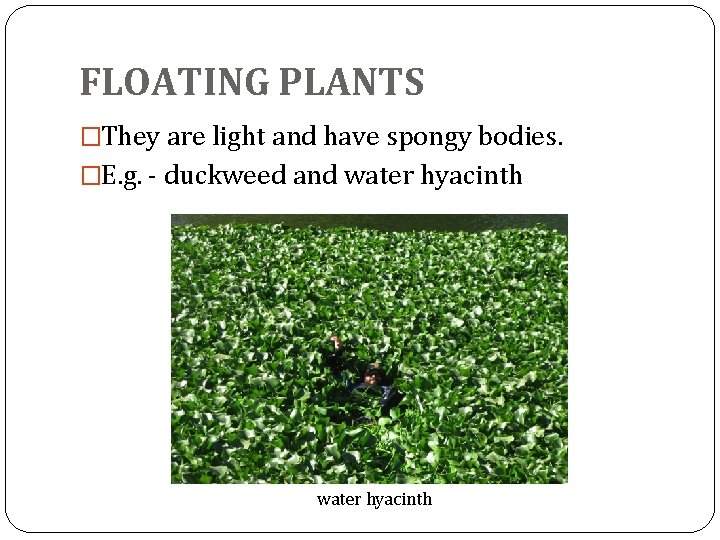
FLOATING PLANTS �They are light and have spongy bodies. �E. g. - duckweed and water hyacinth
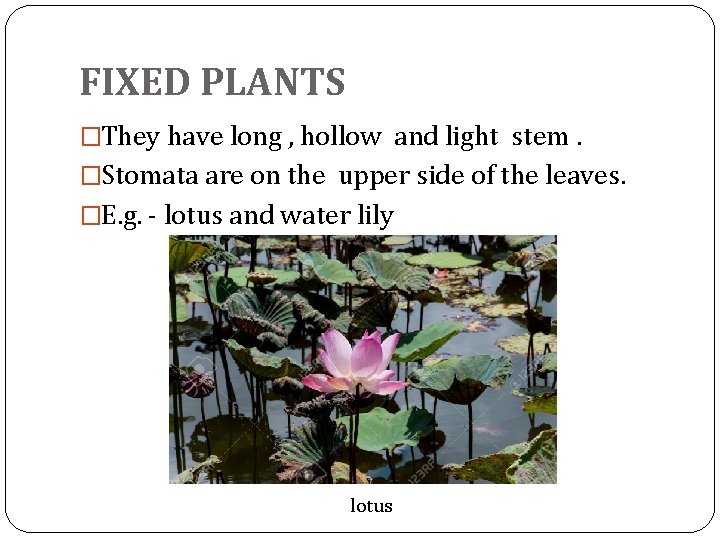
FIXED PLANTS �They have long , hollow and light stem. �Stomata are on the upper side of the leaves. �E. g. - lotus and water lily lotus
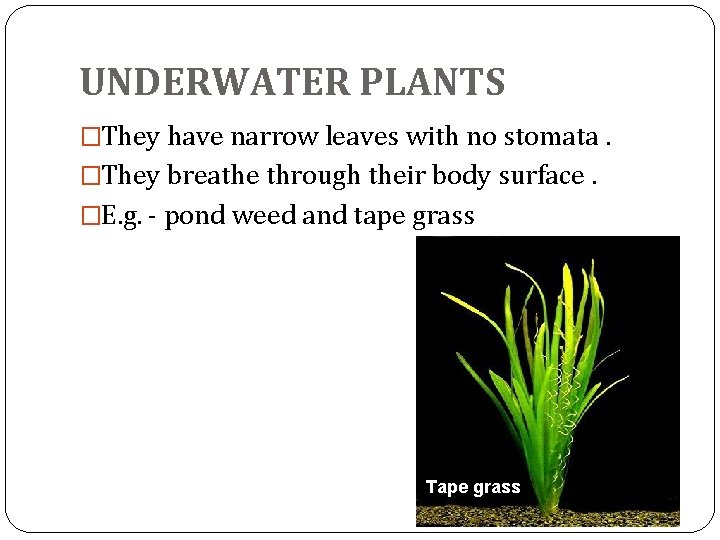
UNDERWATER PLANTS �They have narrow leaves with no stomata. �They breathe through their body surface. �E. g. - pond weed and tape grass Tape grass
PLANTS - ADAPTATIONS FOR GETTING FOOD �GREEN PLANTS �Prepare their own food with the help of q water, q sunlight, q carbon di-oxide and q chlorophyll.
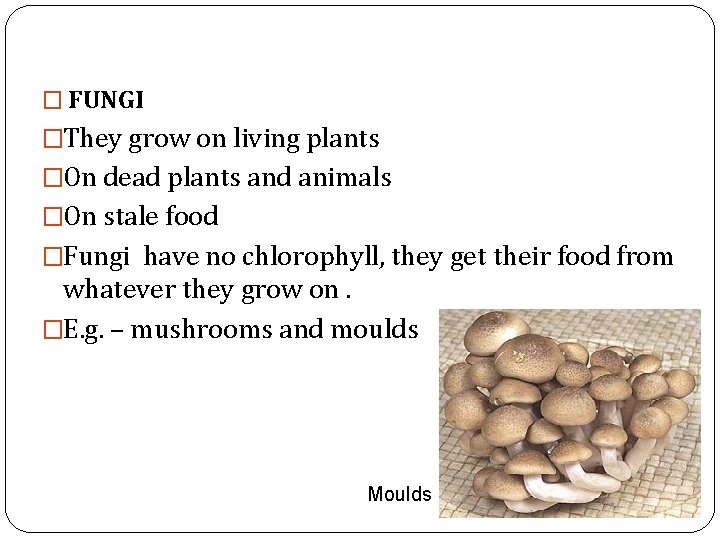
� FUNGI �They grow on living plants �On dead plants and animals �On stale food �Fungi have no chlorophyll, they get their food from whatever they grow on. �E. g. – mushrooms and moulds Moulds
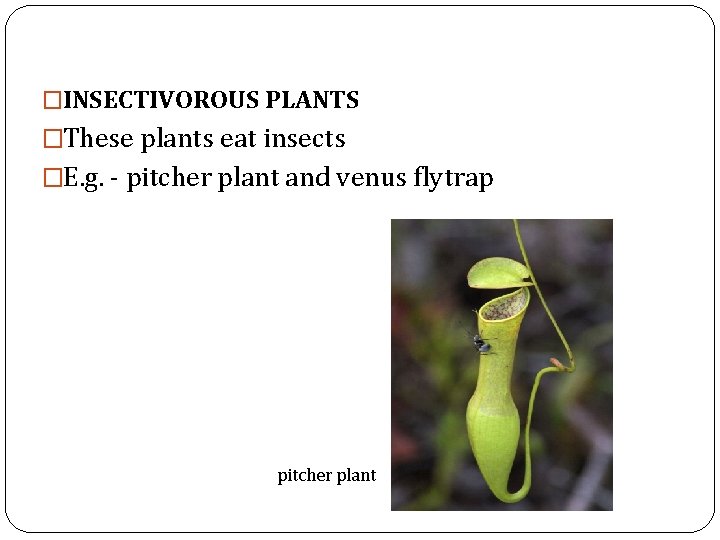
�INSECTIVOROUS PLANTS �These plants eat insects �E. g. - pitcher plant and venus flytrap pitcher plant
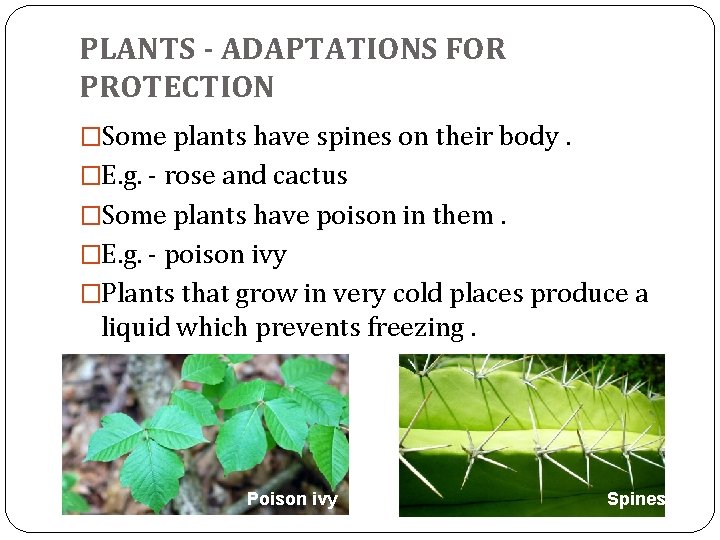
PLANTS - ADAPTATIONS FOR PROTECTION �Some plants have spines on their body. �E. g. - rose and cactus �Some plants have poison in them. �E. g. - poison ivy �Plants that grow in very cold places produce a liquid which prevents freezing. Poison ivy Spines
NOTE �Children go through the keywords and points to remember. �In next worksheet I will give you answers ANEETA SAXENA