
ADAPTATIONS and ECOSYSTEMS Relationships in Nature Adaptation A
- Slides: 16
ADAPTATIONS and ECOSYSTEMS Relationships in Nature
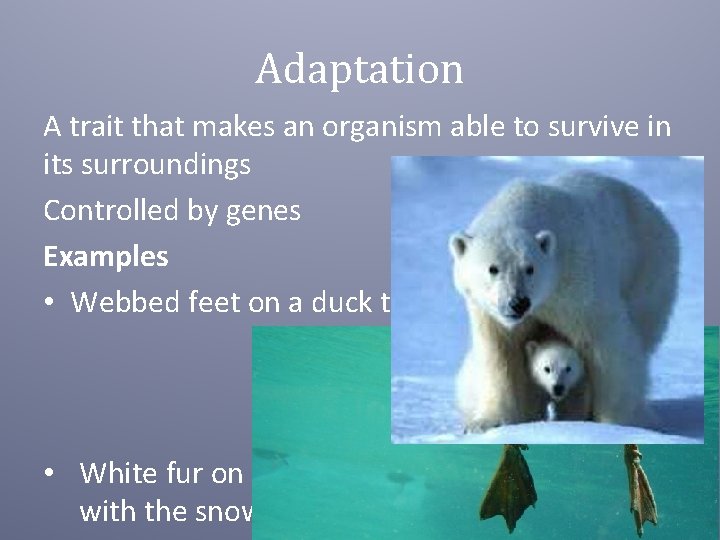
Adaptation A trait that makes an organism able to survive in its surroundings Controlled by genes Examples • Webbed feet on a duck to help it swim • White fur on a polar bear to help it blend in with the snow
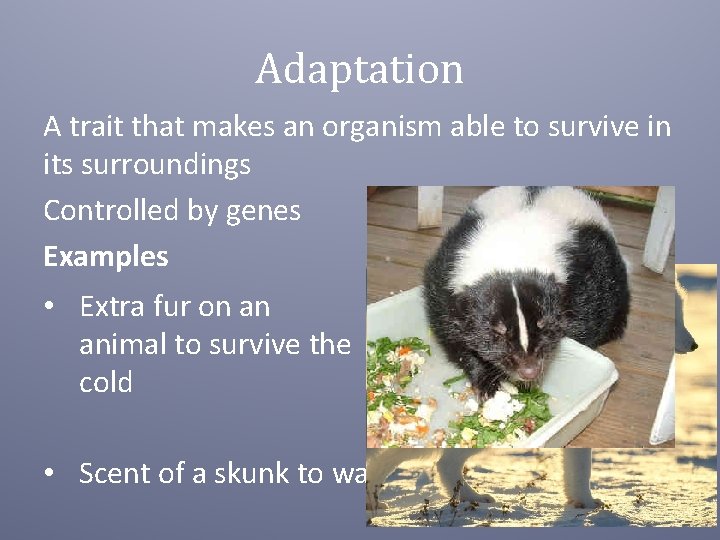
Adaptation A trait that makes an organism able to survive in its surroundings Controlled by genes Examples • Extra fur on an animal to survive the cold • Scent of a skunk to ward off enemies
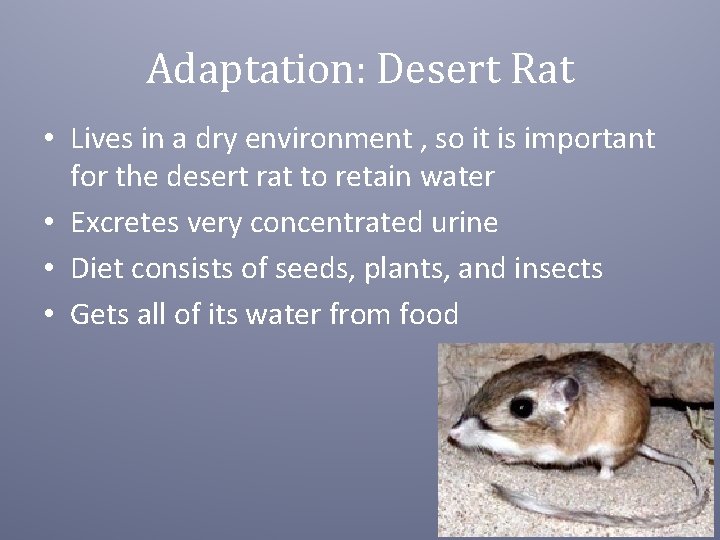
Adaptation: Desert Rat • Lives in a dry environment , so it is important for the desert rat to retain water • Excretes very concentrated urine • Diet consists of seeds, plants, and insects • Gets all of its water from food
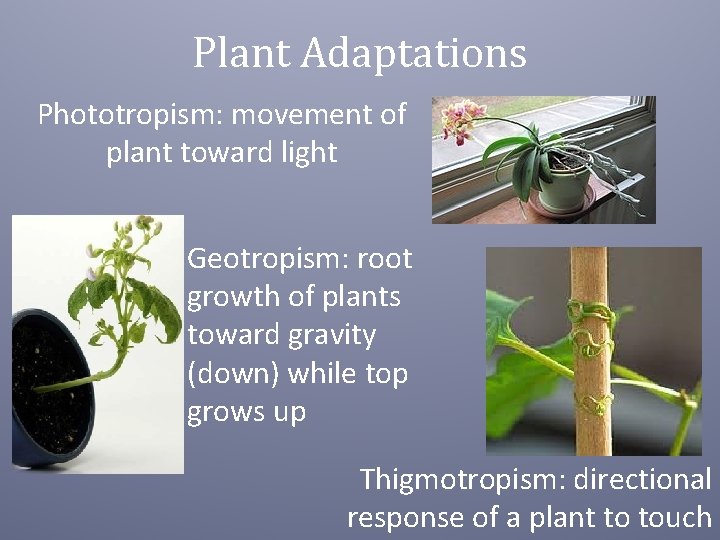
Plant Adaptations Phototropism: movement of plant toward light Geotropism: root growth of plants toward gravity (down) while top grows up Thigmotropism: directional response of a plant to touch
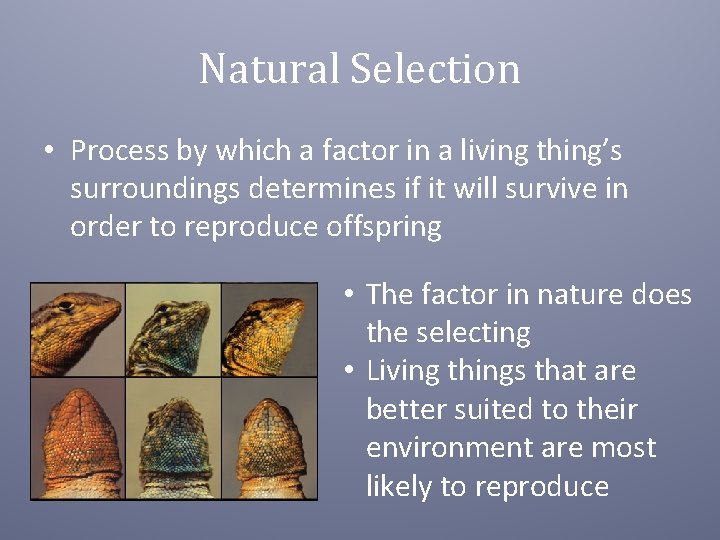
Natural Selection • Process by which a factor in a living thing’s surroundings determines if it will survive in order to reproduce offspring • The factor in nature does the selecting • Living things that are better suited to their environment are most likely to reproduce
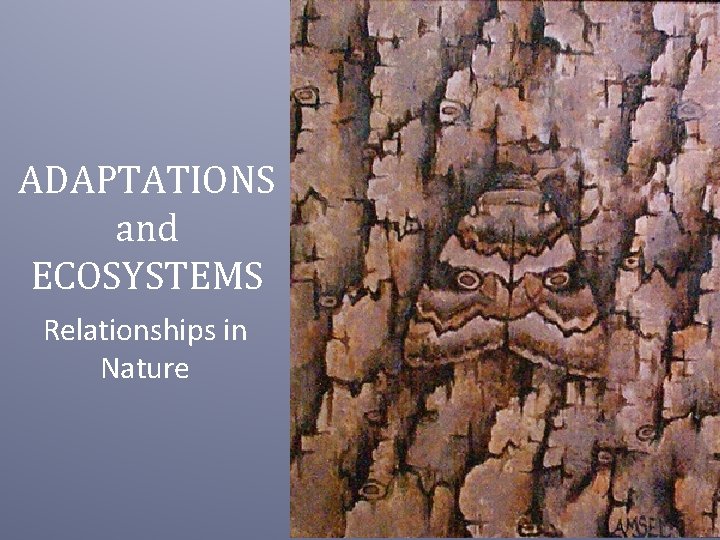
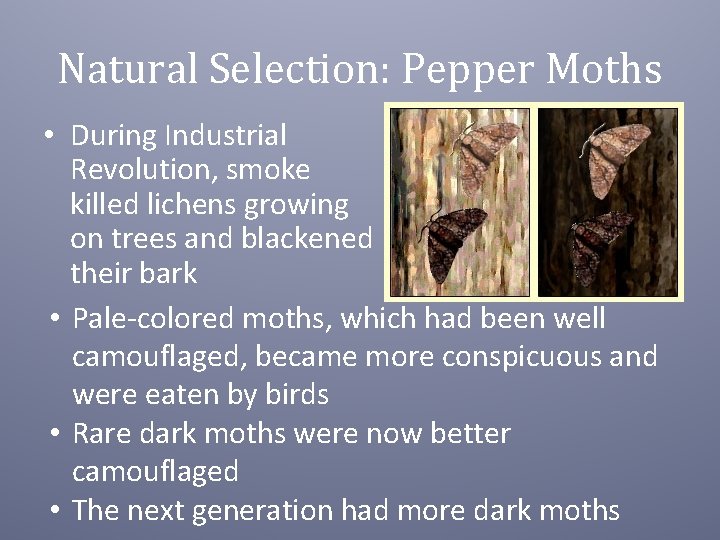
Natural Selection: Pepper Moths • During Industrial Revolution, smoke killed lichens growing on trees and blackened their bark • Pale-colored moths, which had been well camouflaged, became more conspicuous and were eaten by birds • Rare dark moths were now better camouflaged • The next generation had more dark moths
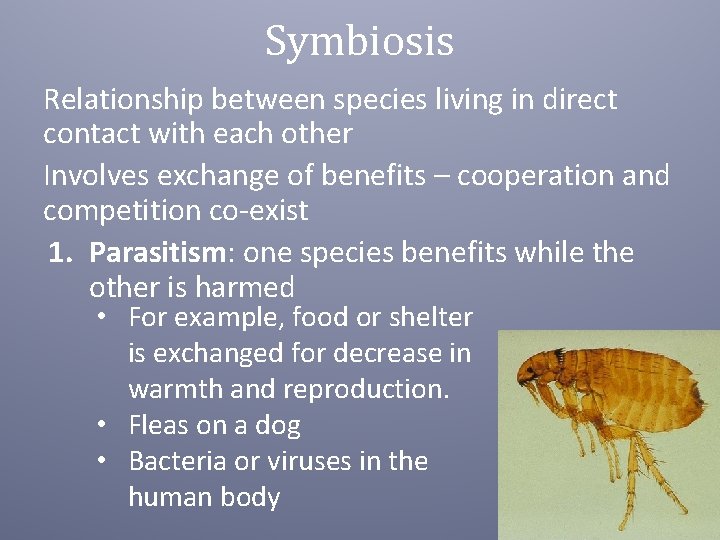
Symbiosis Relationship between species living in direct contact with each other Involves exchange of benefits – cooperation and competition co-exist 1. Parasitism: one species benefits while the other is harmed • For example, food or shelter is exchanged for decrease in warmth and reproduction. • Fleas on a dog • Bacteria or viruses in the human body
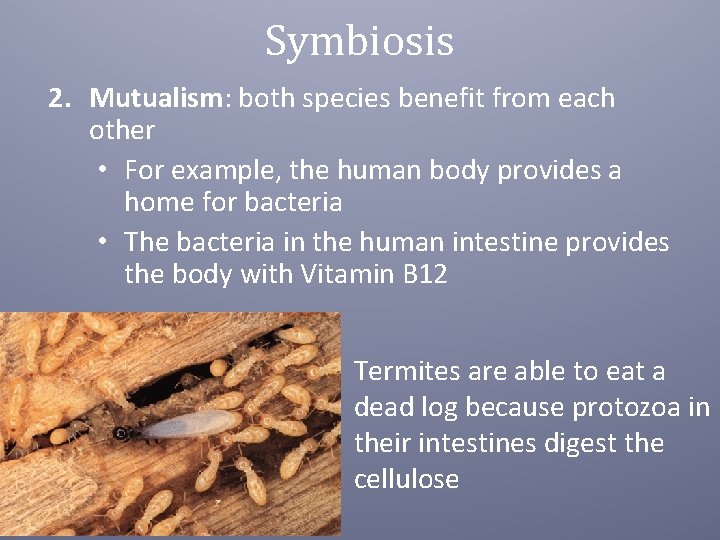
Symbiosis 2. Mutualism: both species benefit from each other • For example, the human body provides a home for bacteria • The bacteria in the human intestine provides the body with Vitamin B 12 Termites are able to eat a dead log because protozoa in their intestines digest the cellulose
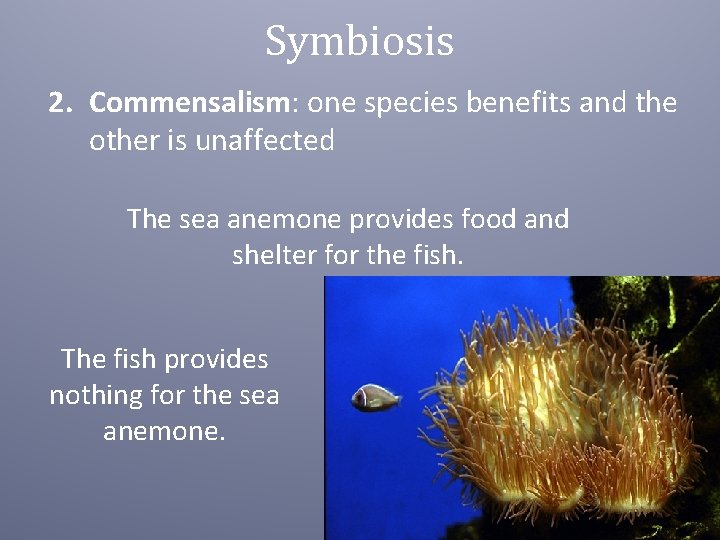
Symbiosis 2. Commensalism: one species benefits and the other is unaffected The sea anemone provides food and shelter for the fish. The fish provides nothing for the sea anemone.
Quick Quiz #1 1. A trait that makes a living thing able to survive in its adaptation surroundings is a(n) ________. 2. Give three examples of adaptations. • Duck’s webbed feet, white fur to blend with snow, extra fur in winter, scents 3. Process by which a factor in a living thing’s surroundings determines if it will survive in order to natural ______. selection reproduce offspring is _____ 4. Explain how bacteria become resistant to antibiotics. • Resistant bacteria survive to produce offspring. The next generation inherits this resistance.
Quick Quiz #2 1. In parasitism, one species benefits, and the harmed other is _____. benefit each other. 2. In mutualism, both species _______ 3. In commensalism, one species benefits, and the unaffected other species is ______. 4. Give an example of each type of symbiosis. • Parasitism: flea or tick on animal • Mutualism: bacteria in intestines • Commensalism: sea anemone and fish
Ecosystem • Ecosystem: ecological system encompassing a community and all the physical aspects of its habitat • Community: groups of different species living together; collection of interacting and dependent populations • Population: group of organisms of same species that interbreed and live together in the same place at the same time • Habitat: place/location where an organism lives • Niche: role or “occupation” of an organism within its habitat
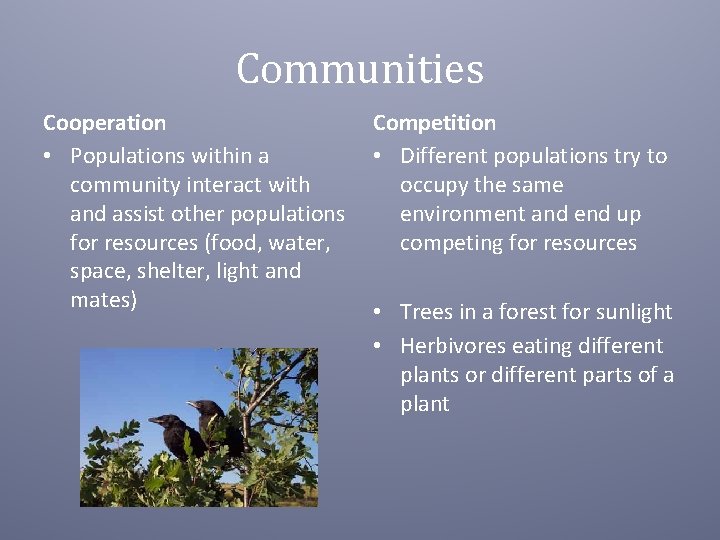
Communities Cooperation • Populations within a community interact with and assist other populations for resources (food, water, space, shelter, light and mates) Competition • Different populations try to occupy the same environment and end up competing for resources • Trees in a forest for sunlight • Herbivores eating different plants or different parts of a plant
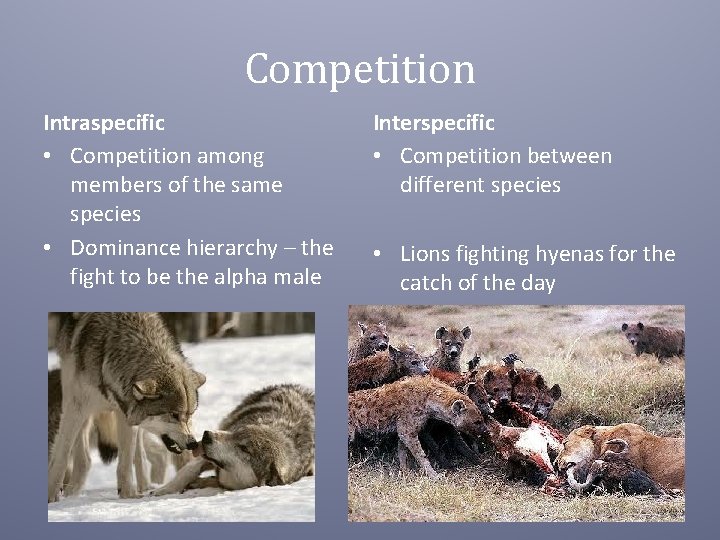
Competition Intraspecific • Competition among members of the same species • Dominance hierarchy – the fight to be the alpha male Interspecific • Competition between different species • Lions fighting hyenas for the catch of the day
Competition • No two species can occupy the same niche in the same habitat at the same time • Direct competition in nature results in a winner and a loser • Winners live, while losers die • Or, at least move somewhere else