
Adaptation of refrigeration compressors for JouleThomson cryocoolers fed

- Slides: 17
Adaptation of refrigeration compressors for Joule-Thomson cryocoolers fed with gas mixtures Agnieszka Piotrowska, Maciej Chorowski, Pawel Dorosz Wroclaw University of Technology, Poland CEC-ICMC 2015, June 29 th, 2015
Outlines 1. Joule-Thomson coolers – open system 2. Joule-Thomson coolers supplied with gas mixture – closed system 3. Refrigeration compressors 4. The possibility of the compressor cooling 5. Conclusions
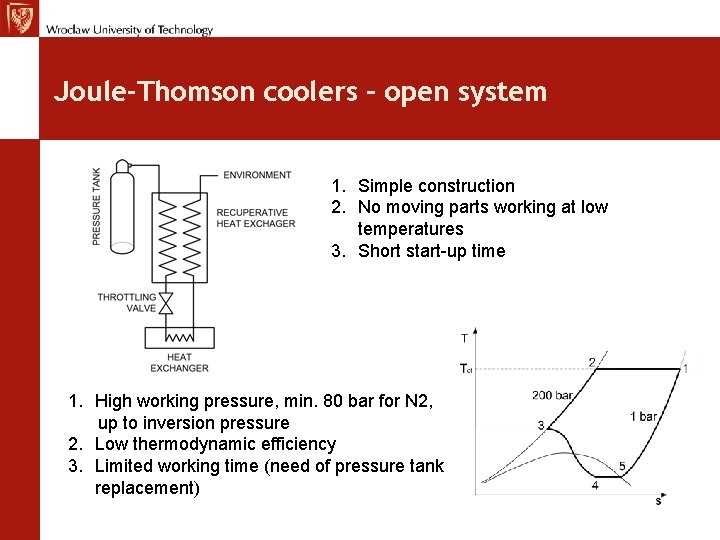
Joule-Thomson coolers – open system 1. Simple construction 2. No moving parts working at low temperatures 3. Short start-up time 1. High working pressure, min. 80 bar for N 2, up to inversion pressure 2. Low thermodynamic efficiency 3. Limited working time (need of pressure tank replacement)
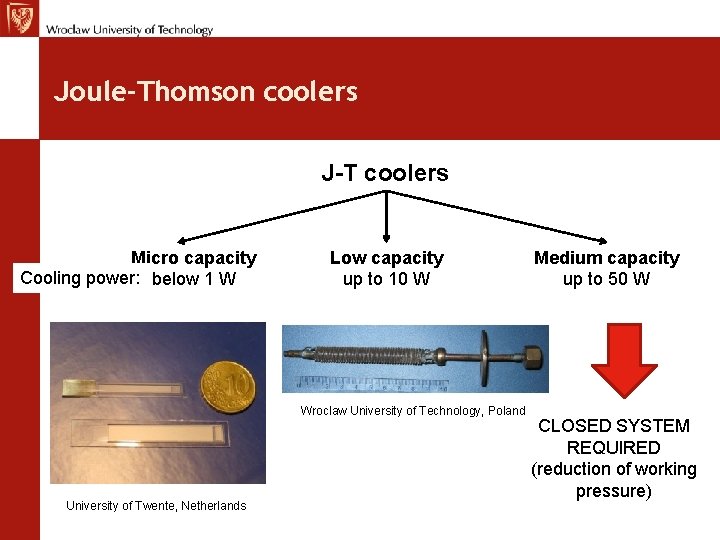
Joule-Thomson coolers J-T coolers Micro capacity Cooling power: below 1 W Low capacity up to 10 W Wroclaw University of Technology, Poland University of Twente, Netherlands Medium capacity up to 50 W CLOSED SYSTEM REQUIRED (reduction of working pressure)
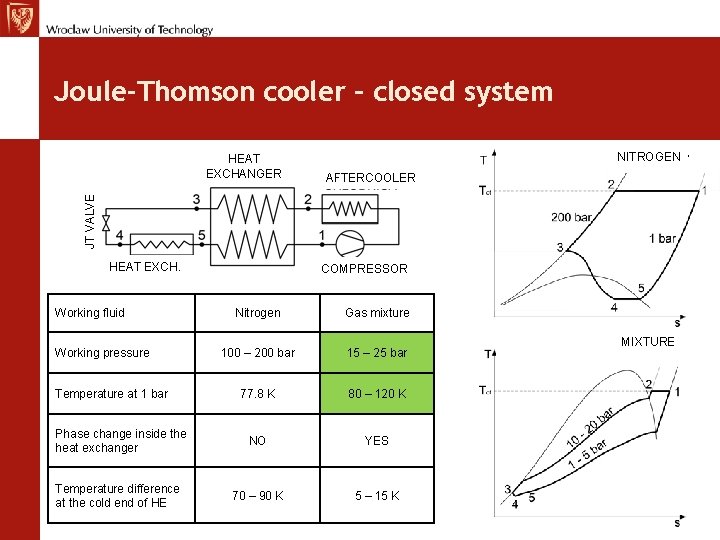
Joule-Thomson cooler – closed system NITROGEN AZOT AFTERCOOLER JT VALVE HEAT EXCHANGER HEAT EXCH. Working fluid COMPRESSOR Nitrogen Gas mixture 100 – 200 bar 15 – 25 bar 77. 8 K 80 – 120 K Phase change inside the heat exchanger NO YES Temperature difference at the cold end of HE 70 – 90 K 5 – 15 K Working pressure Temperature at 1 bar MIXTURE MIESZANINA
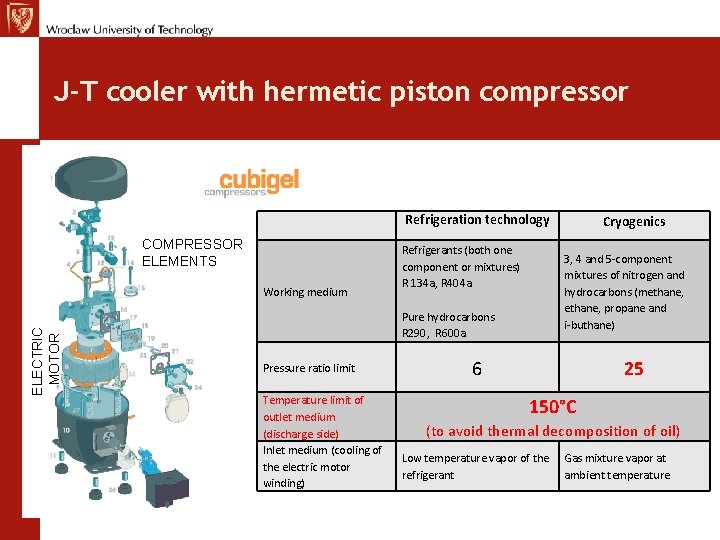
J-T cooler with hermetic piston compressor Refrigeration technology COMPRESSOR ELEMENTS ELECTRIC MOTOR Working medium Refrigerants (both one component or mixtures) R 134 a, R 404 a 3, 4 and 5 -component mixtures of nitrogen and hydrocarbons (methane, propane and i-buthane) Pure hydrocarbons R 290, R 600 a Pressure ratio limit Temperature limit of outlet medium (discharge side) Inlet medium (cooling of the electric motor winding) Cryogenics 6 25 150°C (to avoid thermal decomposition of oil) Low temperature vapor of the refrigerant Gas mixture vapor at ambient temperature
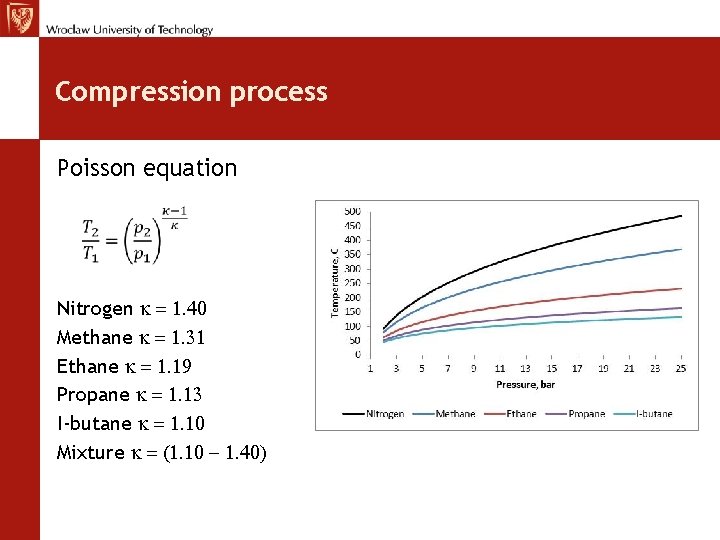
Compression process Poisson equation Nitrogen k = 1. 40 Methane k = 1. 31 Ethane k = 1. 19 Propane k = 1. 13 I-butane k = 1. 10 Mixture k = (1. 10 - 1. 40)
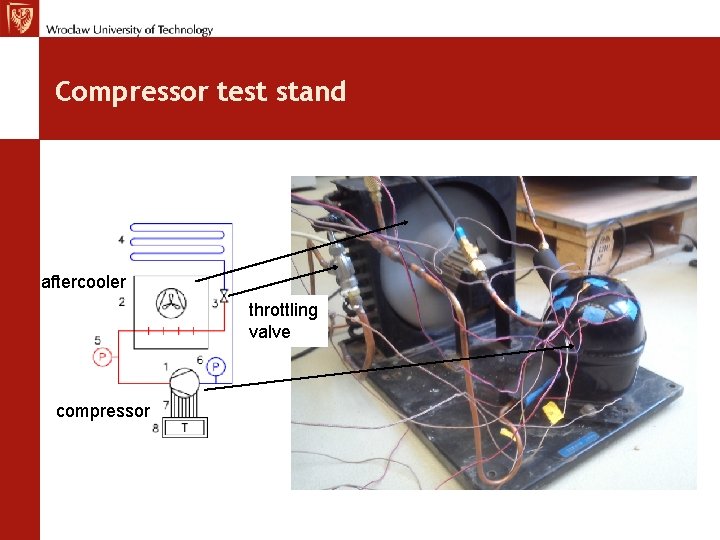
Compressor test stand aftercooler throttling valve compressor
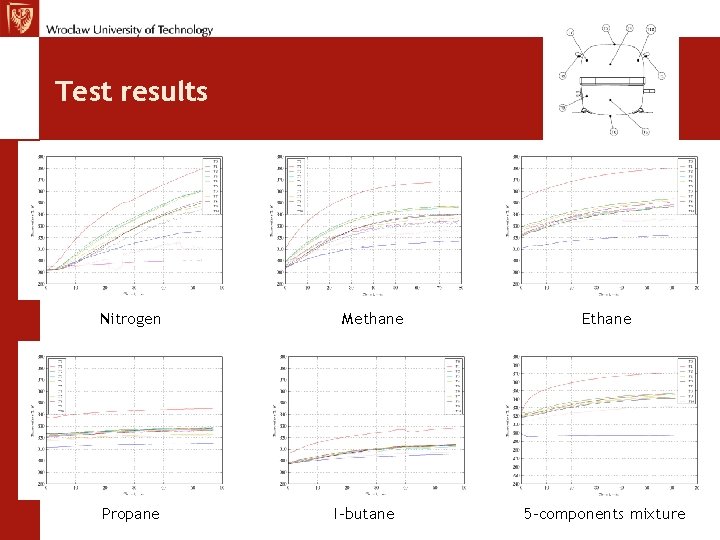
Test results Nitrogen Propane Methane I-butane Ethane 5 -components mixture
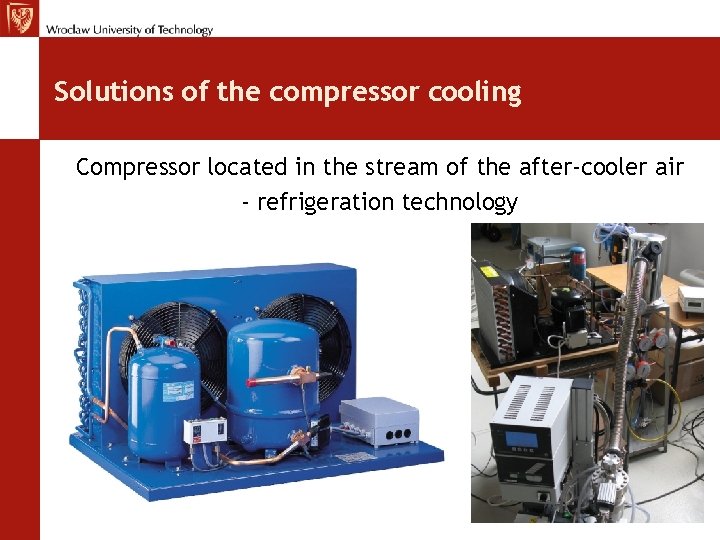
Solutions of the compressor cooling Compressor located in the stream of the after-cooler air - refrigeration technology v
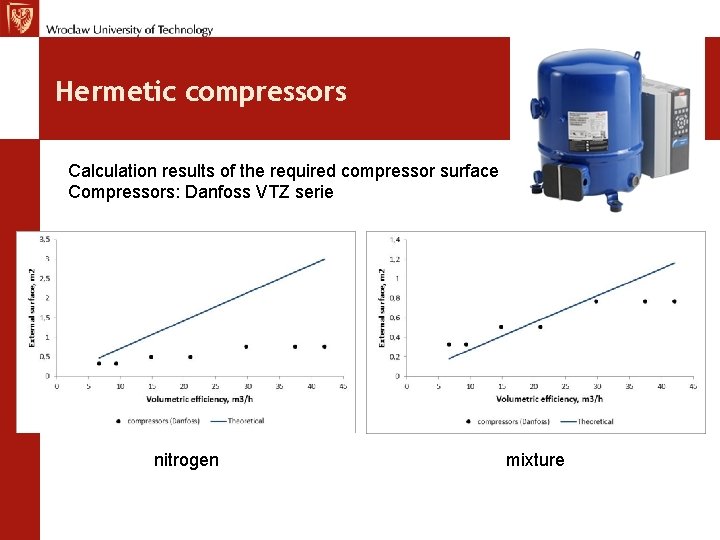
Hermetic compressors Calculation results of the required compressor surface Compressors: Danfoss VTZ serie nitrogen mixture
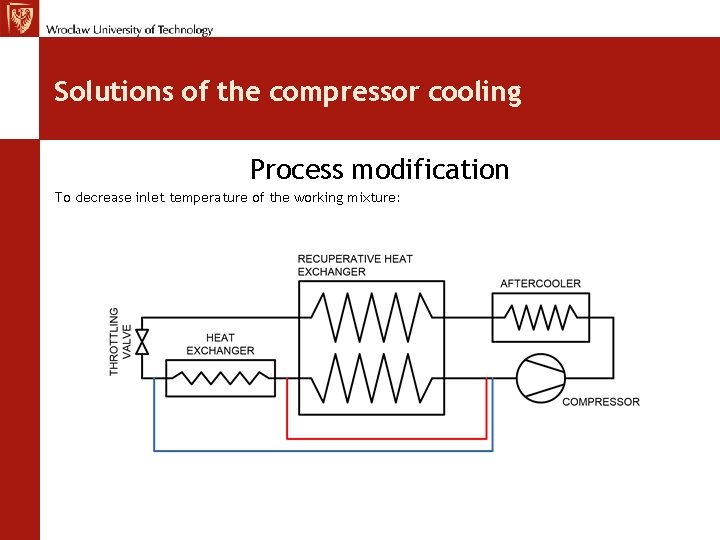
Solutions of the compressor cooling Process modification To decrease inlet temperature of the working mixture:
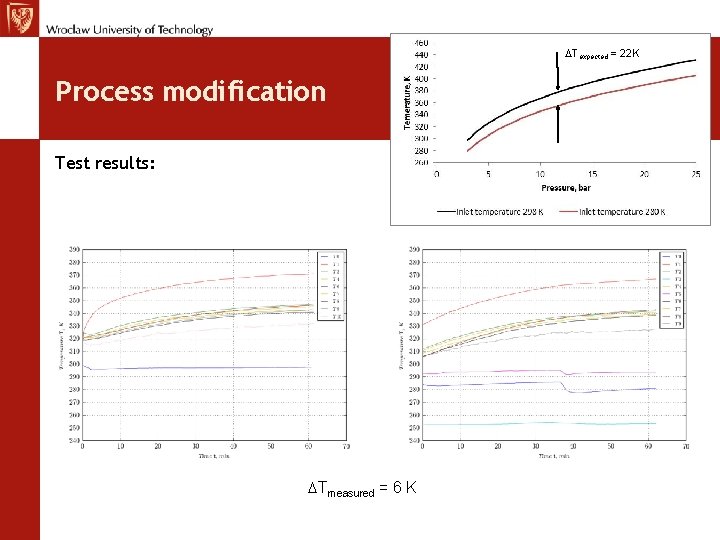
DTexpected = 22 K Process modification Test results: DTmeasured = 6 K
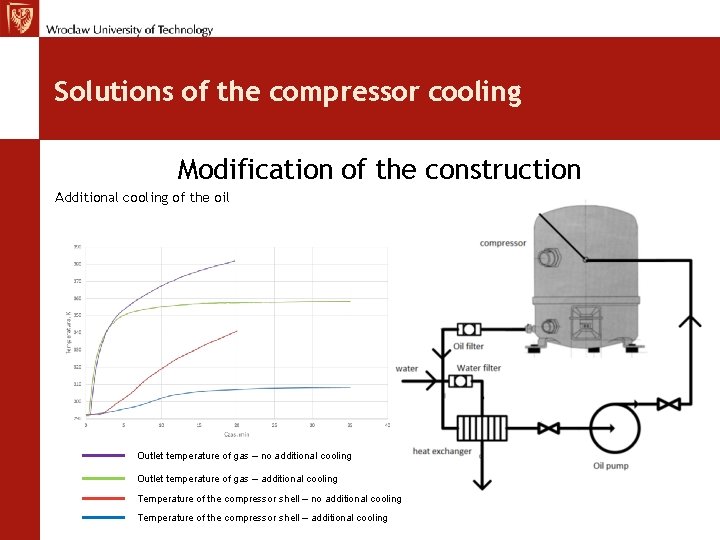
Solutions of the compressor cooling Modification of the construction Additional cooling of the oil Outlet temperature of gas – no additional cooling Outlet temperature of gas – additional cooling Temperature of the compressor shell – no additional cooling Temperature of the compressor shell – additional cooling
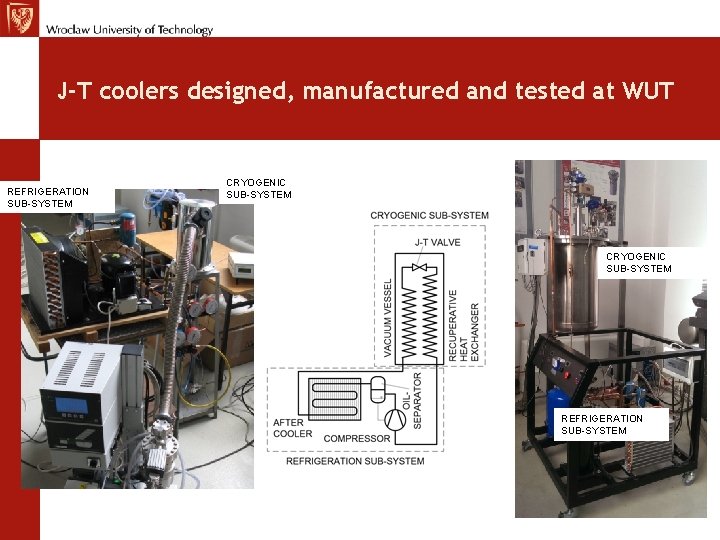
J-T coolers designed, manufactured and tested at WUT REFRIGERATION SUB-SYSTEM CRYOGENIC SUB-SYSTEM REFRIGERATION SUB-SYSTEM
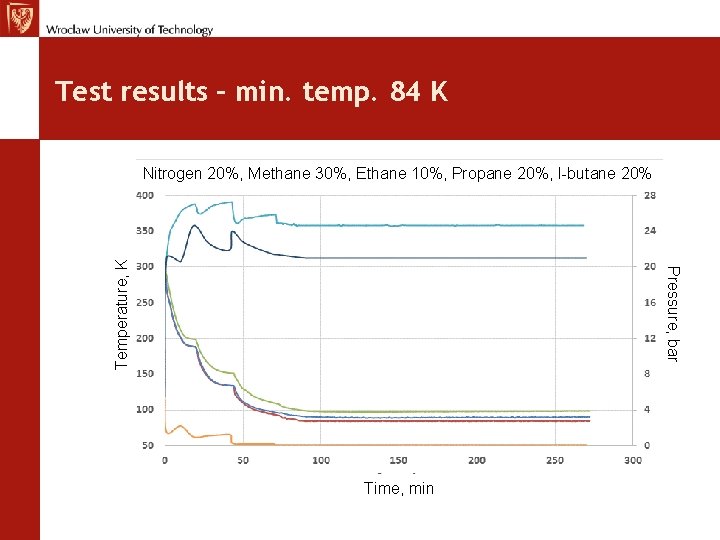
Test results – min. temp. 84 K Pressure, bar Temperature, K Nitrogen 20%, Methane 30%, Ethane 10%, Propane 20%, I-butane 20% Time, min
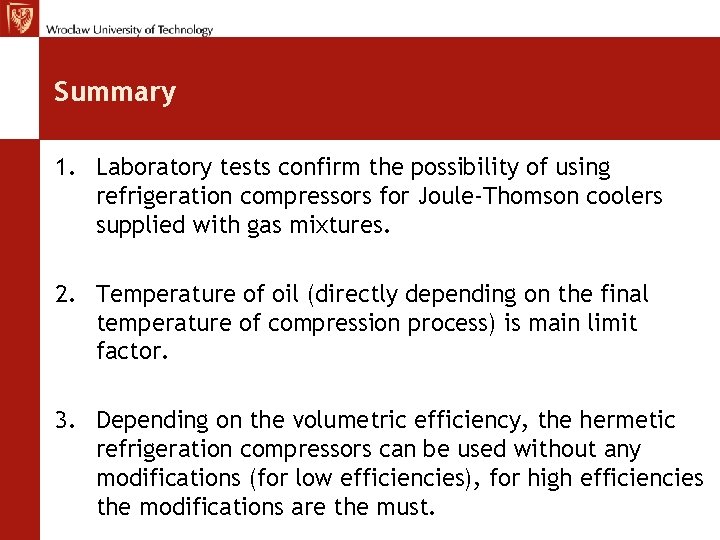
Summary 1. Laboratory tests confirm the possibility of using refrigeration compressors for Joule-Thomson coolers supplied with gas mixtures. 2. Temperature of oil (directly depending on the final temperature of compression process) is main limit factor. 3. Depending on the volumetric efficiency, the hermetic refrigeration compressors can be used without any modifications (for low efficiencies), for high efficiencies the modifications are the must.