
Adaptation of Personal Stereotypes to Cultural Stereotypes Suggestions

- Slides: 32
Adaptation of Personal Stereotypes to Cultural Stereotypes: Suggestions for Research and Initial Empirical Evidence Adrian Stanciu
Personal Biography: as an Academic § Research • • • § Four sub-components of stereotype content Stanciu et al. , manuscript in preparation Stereotype based faultlines Stanciu, manuscript under review Fabrication of science Kislioglu & Stanciu, work in progress Pronoun drop hypothesis coord. M. Kemmelmeier & I. Uz Fundamental motives coord. M. Varnum & D. Kenrick Cognitive behavioral therapy at a culture level coord. D. David, R. Di. Giuseppe, & K. A. Doyle Book chapter in • Cross-Cultural Advancements in Positive Psychology Ed. R. Dimitrova 2
Adaptation of Personal Stereotypes § Personal and Cultural Stereotypes 3
Personal and Cultural Stereotypes § Beliefs about characteristics, attributes of people Hilton & Hippel, 1996 § Personal – subjective to each individual Devine, 1989 § Cultural – culturally embedded Devine, 1989 4
Adaptation of Personal Stereotypes § Personal and Cultural Stereotypes § Culture and Stereotypes 5
Culture § System of meanings and behavioral tendencies cf. Baldwin et al. , 2006 § Socially shared cf. Baldwin et al. , 2006 § Influences cognition and behavior Gelfand et al. , 2011; Kitayama & Uskul, 2011; etc. 6
Adaptation of Personal Stereotypes § Personal and Cultural Stereotypes § Culture and Stereotypes § Framework: The Stereotype Content Model 7
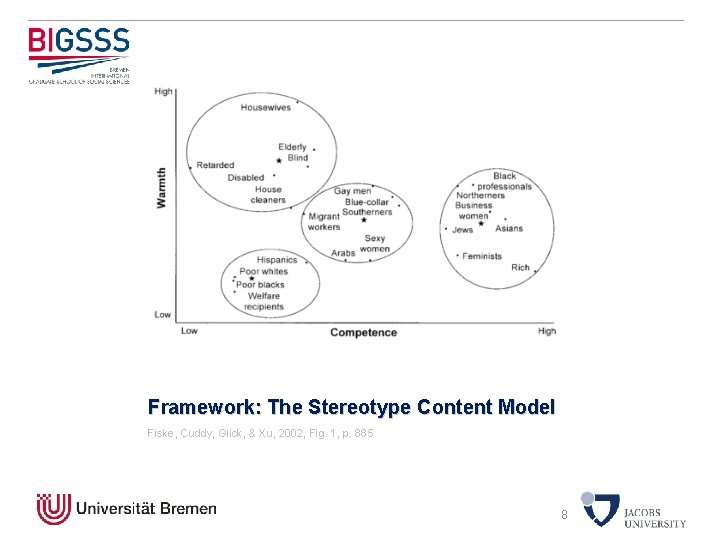
Framework: The Stereotype Content Model Fiske, Cuddy, Glick, & Xu, 2002, Fig. 1, p. 885 8
Adaptation of Personal Stereotypes § § Personal and Cultural Stereotypes Culture and Stereotypes Framework: The Stereotype Content Model Acculturation and Adaptation 9
Acculturation and Adaptation § Acculturaration – a process of experiencing home and host culture Sam & Berry, 2006 § Adaptation - a successful integration in host society Searle & Ward, 1990 § Mechanism of adaptation - desire to solve discrepancies Searle & Ward, 1990 10
Adaptation of Personal Stereotypes § § § Personal and Cultural Stereotypes Culture and Stereotypes Framework: The Stereotype Content Model Acculturation and Adaptation Culture Learning 11
Culture Learning Approach § Migrants are (can be) unaware of appropriate stereotype in host societies § There can be a discrepancy between one’s personal stereotype and the cultural stereotypes § A process of learning about cultural stereotypes Crisp & Turner, 2011 12
Adaptation of Personal Stereotypes § § § § Personal and Cultural Stereotypes Culture and Stereotypes Framework: The Stereotype Content Model Acculturation and Adaptation Culture Learning Mechanisms of Adaptation Prerequisites for Adaptation 13
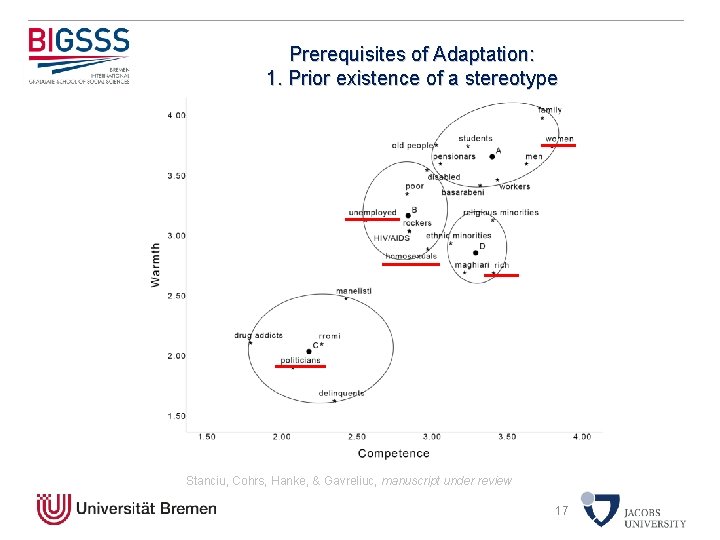
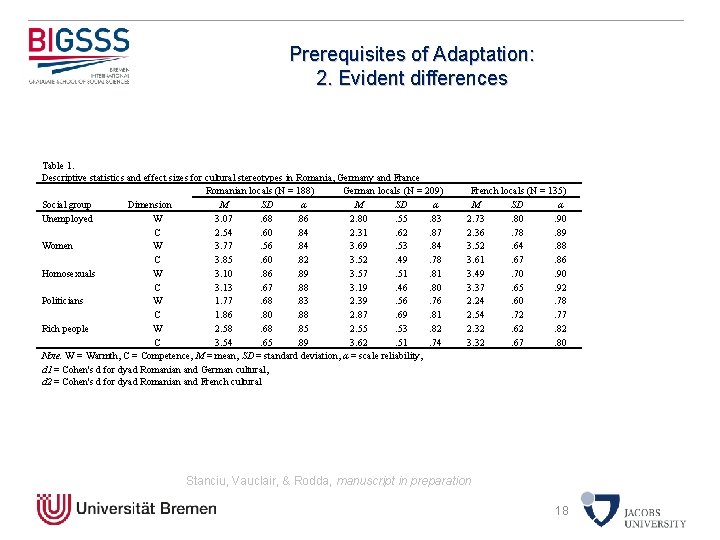
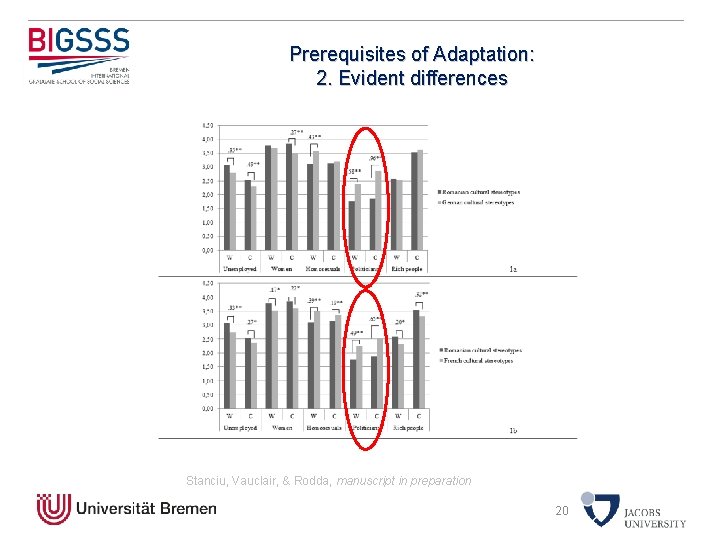
Prerequisites of Adaptation 1. 2. Prior existence of a stereotype Evident differences in cultural stereotypes between home and host societies 14
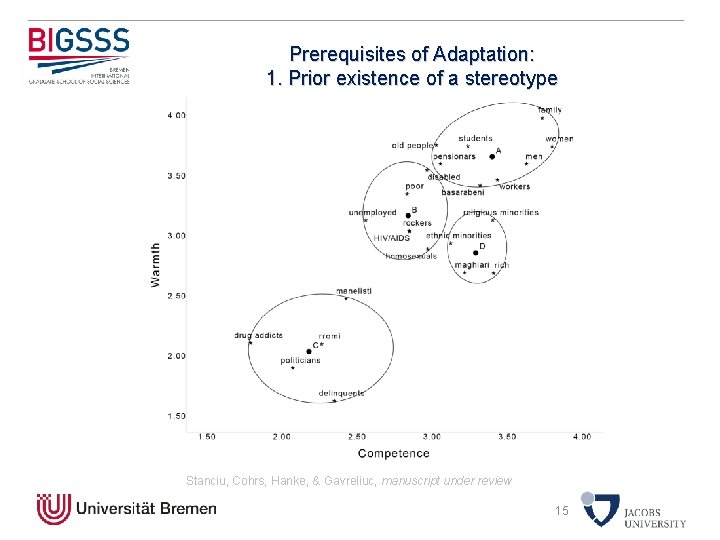
Prerequisites of Adaptation: 1. Prior existence of a stereotype Stanciu, Cohrs, Hanke, & Gavreliuc, manuscript under review 15
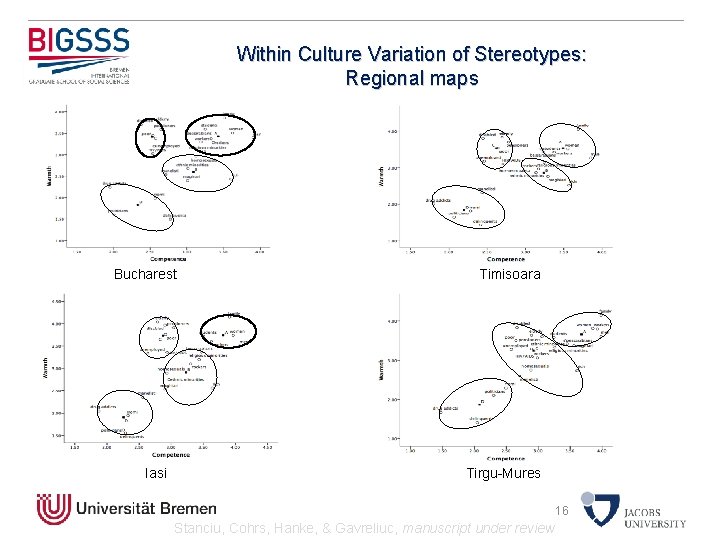
Within Culture Variation of Stereotypes: Regional maps Bucharest Iasi Timisoara Tirgu-Mures 16 Stanciu, Cohrs, Hanke, & Gavreliuc, manuscript under review
Prerequisites of Adaptation: 1. Prior existence of a stereotype Stanciu, Cohrs, Hanke, & Gavreliuc, manuscript under review 17
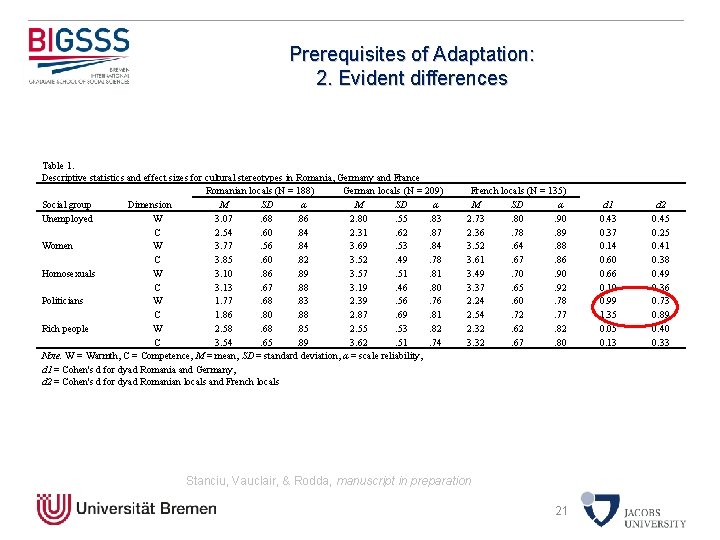
Prerequisites of Adaptation: 2. Evident differences Table 1. Descriptive statistics and effect sizes for cultural stereotypes in Romania, Germany and France Romanian locals (N = 188) German locals (N = 209) Social group Dimension M SD α Unemployed W 3. 07. 68. 86 2. 80. 55. 83 C 2. 54. 60. 84 2. 31. 62. 87 Women W 3. 77. 56. 84 3. 69. 53. 84 C 3. 85. 60. 82 3. 52. 49. 78 Homosexuals W 3. 10. 86. 89 3. 57. 51. 81 C 3. 13. 67. 88 3. 19. 46. 80 Politicians W 1. 77. 68. 83 2. 39. 56. 76 C 1. 86. 80. 88 2. 87. 69. 81 Rich people W 2. 58. 68. 85 2. 55. 53. 82 C 3. 54. 65. 89 3. 62. 51. 74 Note. W = Warmth, C = Competence, M = mean, SD = standard deviation, α = scale reliability, d 1 = Cohen's d for dyad Romanian and German cultural, d 2 = Cohen's d for dyad Romanian and French cultural French locals (N = 135) M SD α 2. 73. 80. 90 2. 36. 78. 89 3. 52. 64. 88 3. 61. 67. 86 3. 49. 70. 90 3. 37. 65. 92 2. 24. 60. 78 2. 54. 72. 77 2. 32. 62. 82 3. 32. 67. 80 Stanciu, Vauclair, & Rodda, manuscript in preparation 18 d 1 0. 43 0. 37 0. 14 0. 60 0. 66 0. 10 0. 99 1. 35 0. 05 0. 13 d 2 0. 45 0. 25 0. 41 0. 38 0. 49 0. 36 0. 73 0. 89 0. 40 0. 33
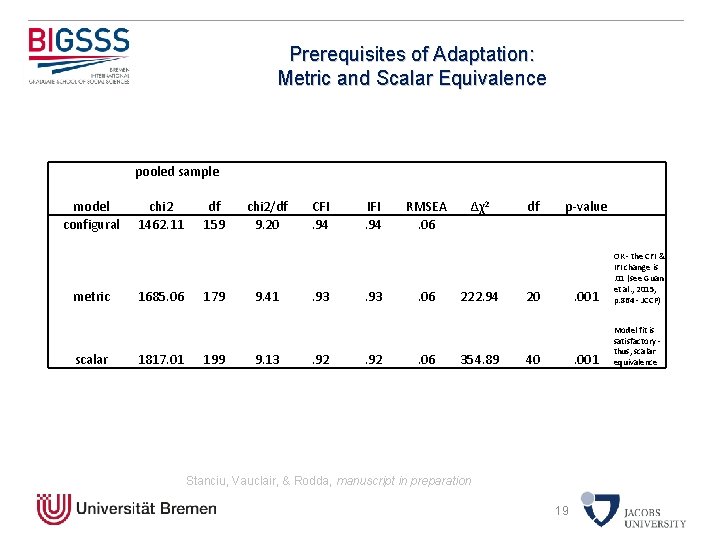
Prerequisites of Adaptation: Metric and Scalar Equivalence pooled sample model configural metric scalar chi 2 1462. 11 1685. 06 1817. 01 df 159 179 199 chi 2/df 9. 20 9. 41 9. 13 CFI. 94 . 93 . 92 IFI. 94 . 93 . 92 RMSEA. 06 Δχ2 222. 94 354. 89 df p-value 20 40 Stanciu, Vauclair, & Rodda, manuscript in preparation 19 . 001 OK - the CFI & IFI change is . 01 (see Guan et al. , 2015, p. 864 - JCCP) . 001 Model fit is satisfactory - thus, scalar equivalence
Prerequisites of Adaptation: 2. Evident differences Stanciu, Vauclair, & Rodda, manuscript in preparation 20
Prerequisites of Adaptation: 2. Evident differences Table 1. Descriptive statistics and effect sizes for cultural stereotypes in Romania, Germany and France Romanian locals (N = 188) German locals (N = 209) Social group Dimension M SD α Unemployed W 3. 07. 68. 86 2. 80. 55. 83 C 2. 54. 60. 84 2. 31. 62. 87 Women W 3. 77. 56. 84 3. 69. 53. 84 C 3. 85. 60. 82 3. 52. 49. 78 Homosexuals W 3. 10. 86. 89 3. 57. 51. 81 C 3. 13. 67. 88 3. 19. 46. 80 Politicians W 1. 77. 68. 83 2. 39. 56. 76 C 1. 86. 80. 88 2. 87. 69. 81 Rich people W 2. 58. 68. 85 2. 55. 53. 82 C 3. 54. 65. 89 3. 62. 51. 74 Note. W = Warmth, C = Competence, M = mean, SD = standard deviation, α = scale reliability, d 1 = Cohen's d for dyad Romania and Germany, d 2 = Cohen's d for dyad Romanian locals and French locals (N = 135) M SD α 2. 73. 80. 90 2. 36. 78. 89 3. 52. 64. 88 3. 61. 67. 86 3. 49. 70. 90 3. 37. 65. 92 2. 24. 60. 78 2. 54. 72. 77 2. 32. 62. 82 3. 32. 67. 80 Stanciu, Vauclair, & Rodda, manuscript in preparation 21 d 1 0. 43 0. 37 0. 14 0. 60 0. 66 0. 10 0. 99 1. 35 0. 05 0. 13 d 2 0. 45 0. 25 0. 41 0. 38 0. 49 0. 36 0. 73 0. 89 0. 40 0. 33
Adaptation of Personal Stereotypes § § § § Personal and Cultural Stereotypes Culture and Stereotypes Framework: The Stereotype Content Model Acculturation and Adaptation Culture Learning Mechanisms of Adaptation Prerequisites for Adaptation Factors that Influence Adaptation 22
Factors that Influence Adaptation Stanciu & Vauclair, manuscript in preparation 23
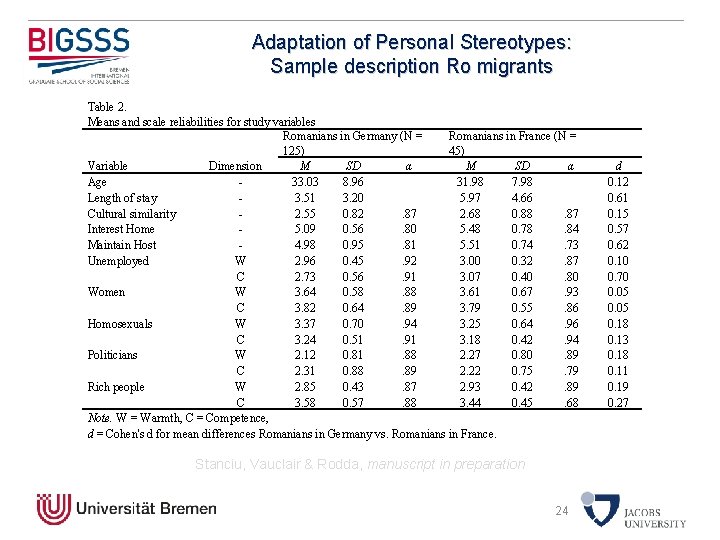
Adaptation of Personal Stereotypes: Sample description Ro migrants Table 2. Means and scale reliabilities for study variables Romanians in Germany (N = Romanians in France (N = 125) 45) Variable Dimension M SD α Age 33. 03 8. 96 31. 98 7. 98 Length of stay 3. 51 3. 20 5. 97 4. 66 Cultural similarity 2. 55 0. 82. 87 2. 68 0. 88. 87 Interest Home 5. 09 0. 56. 80 5. 48 0. 78. 84 Maintain Host 4. 98 0. 95. 81 5. 51 0. 74. 73 Unemployed W 2. 96 0. 45. 92 3. 00 0. 32. 87 C 2. 73 0. 56. 91 3. 07 0. 40. 80 Women W 3. 64 0. 58. 88 3. 61 0. 67. 93 C 3. 82 0. 64. 89 3. 79 0. 55. 86 Homosexuals W 3. 37 0. 70. 94 3. 25 0. 64. 96 C 3. 24 0. 51. 91 3. 18 0. 42. 94 Politicians W 2. 12 0. 81. 88 2. 27 0. 89 C 2. 31 0. 88. 89 2. 22 0. 75. 79 Rich people W 2. 85 0. 43. 87 2. 93 0. 42. 89 C 3. 58 0. 57. 88 3. 44 0. 45. 68 Note. W = Warmth, C = Competence, d = Cohen's d for mean differences Romanians in Germany vs. Romanians in France. Stanciu, Vauclair & Rodda, manuscript in preparation 24 d 0. 12 0. 61 0. 15 0. 57 0. 62 0. 10 0. 70 0. 05 0. 18 0. 13 0. 18 0. 11 0. 19 0. 27
Factors that Influence Adaptation Stanciu, Vauclair & Rodda, manuscript in preparation 25
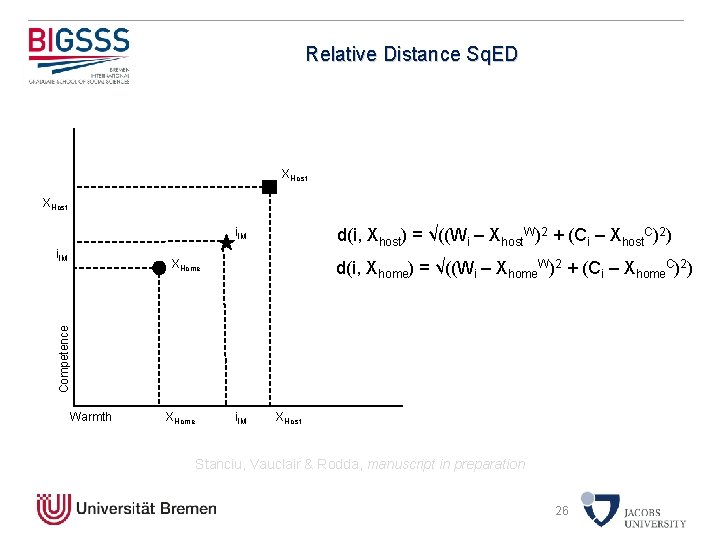
Relative Distance Sq. ED XHost i. IM d(i, Xhost) = √((Wi – Xhost. W)2 + (Ci – Xhost. C)2) d(i, Xhome) = √((Wi – Xhome. W)2 + (Ci – Xhome. C)2) Competence XHome Warmth XHome i. IM XHost Stanciu, Vauclair & Rodda, manuscript in preparation 26
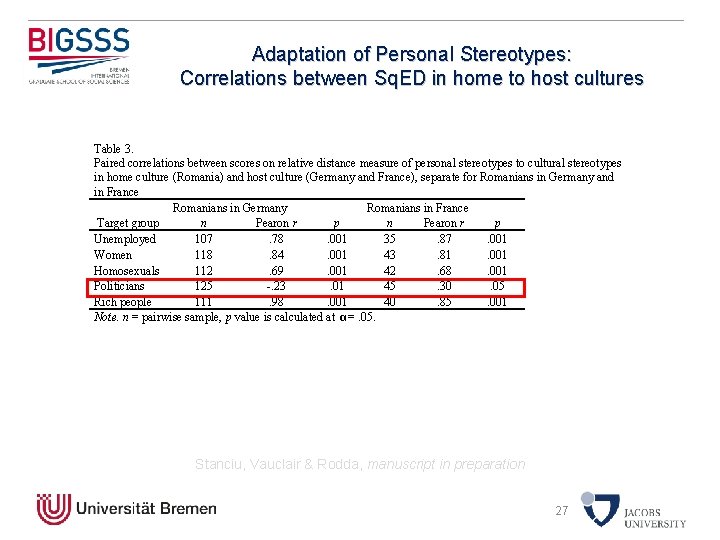
Adaptation of Personal Stereotypes: Correlations between Sq. ED in home to host cultures Table 3. Paired correlations between scores on relative distance measure of personal stereotypes to cultural stereotypes in home culture (Romania) and host culture (Germany and France), separate for Romanians in Germany and in France Romanians in Germany Romanians in France Target group n Pearon r p Unemployed 107. 78. 001 35. 87. 001 Women 118. 84. 001 43. 81. 001 Homosexuals 112. 69. 001 42. 68. 001 Politicians 125 -. 23. 01 45. 30. 05 Rich people 111. 98. 001 40. 85. 001 Note. n = pairwise sample, p value is calculated at α =. 05. Stanciu, Vauclair & Rodda, manuscript in preparation 27
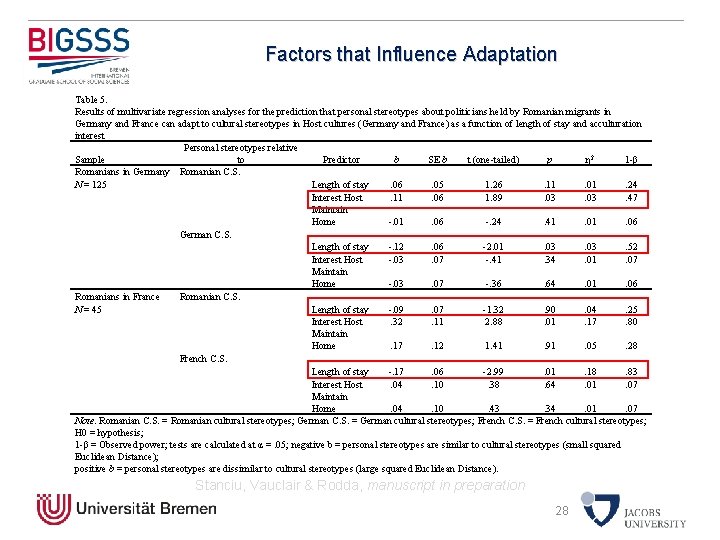
Factors that Influence Adaptation Table 5. Results of multivariate regression analyses for the prediction that personal stereotypes about politicians held by Romanian migrants in Germany and France can adapt to cultural stereotypes in Host cultures (Germany and France) as a function of length of stay and acculturation interest Personal stereotypes relative Sample to Predictor b SE b t (one-tailed) p ɳ 2 1 -β Romanians in Germany Romanian C. S. N = 125 Length of stay. 06. 05 1. 26. 11. 01. 24 Interest Host. 11. 06 1. 89. 03. 47 Maintain Home -. 01. 06 -. 24. 41. 06 German C. S. Length of stay -. 12. 06 -2. 01. 03. 52 Interest Host -. 03. 07 -. 41. 34. 01. 07 Maintain Home -. 03. 07 -. 36. 64. 01. 06 Romanians in France Romanian C. S. N = 45 Length of stay -. 09. 07 -1. 32. 90. 04. 25 Interest Host. 32. 11 2. 88. 01. 17. 80 Maintain Home. 17. 12 1. 41. 91. 05. 28 French C. S. Length of stay -. 17. 06 -2. 99. 01. 18. 83 Interest Host. 04. 10. 38. 64. 01. 07 Maintain Home. 04. 10. 43. 34. 01. 07 Note. Romanian C. S. = Romanian cultural stereotypes; German C. S. = German cultural stereotypes; French C. S. = French cultural stereotypes; H 0 = hypothesis; 1 -β = Observed power; tests are calculated at α =. 05; negative b = personal stereotypes are similar to cultural stereotypes (small squared Euclidean Distance); positive b = personal stereotypes are dissimilar to cultural stereotypes (large squared Euclidean Distance). Stanciu, Vauclair & Rodda, manuscript in preparation 28
Research Suggestions Stanciu & Vauclair, manuscript in preparation 29
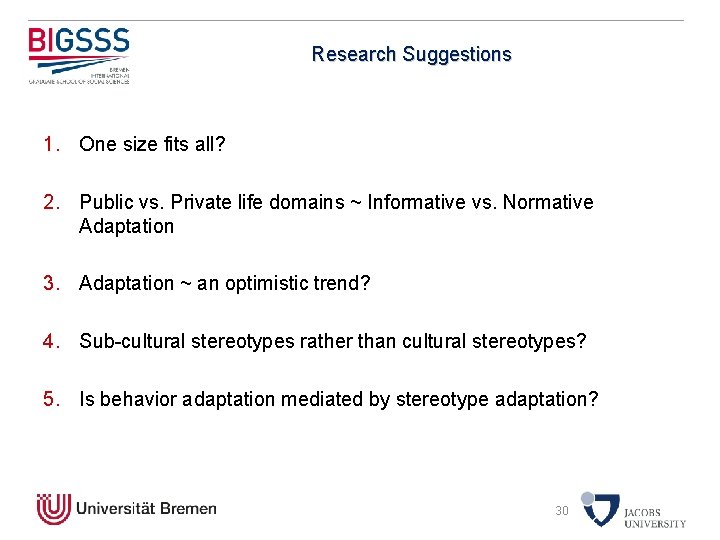
Research Suggestions 1. One size fits all? 2. Public vs. Private life domains ~ Informative vs. Normative Adaptation 3. Adaptation ~ an optimistic trend? 4. Sub-cultural stereotypes rather than cultural stereotypes? 5. Is behavior adaptation mediated by stereotype adaptation? 30
Statement In the context of today’s migration, where extreme right wing visibility is on the rise, the political actors and members of societies with incoming migration need to have, more than ever before, an unbiased understanding of culture differences. A systematic understanding that social interactions are governed by stereotypes, and that stereotypes are largely shaped by culture norms, may help in shifting the public discourse from blaming and ostracizing migrants to initiatives of encouraging a dynamic exchange of culture information. On the one hand, there can be a number of factors that educational strategies can tackle in order to develop an environment where migrants can learn what stereotypes are normative in the host society. Ideally, this will ameliorate perceptions that how migrants relate to specific social groups are peculiar. On the other hand, this is an implicit reiteration about the benefits of multiculturalism. The experience of varying cultures can be one route towards deconstructing negative stereotypes, and emphasizing positive stereotypes. 31
stanciu@bigsss-bremen. de Acknowledgments: Fons J. R. van de Vijver Alisia Muresan, Daniela Dumulescu, Valentina Axente, Cristina Bostan, Claudia-Roxana Rus, Alexandra Deliu LSRS 32